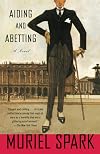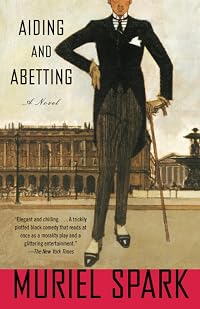
Aiding and Abetting
by Muriel Spark
On This Page
Description
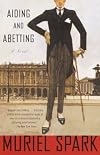
In Aiding and Abetting," "the doyenne of literary satire has written a wickedly amusing and subversive novel around the true-crime case of one of England's most notorious uppercrust scoundrels and the "aiders and abetters" who kept him on the loose. When Lord Lucan walks into psychiatrist Hildegard Wolf's Paris office, there is one problem: she already has a patient who says he's Lucan, the fugitive murderer who bludgeoned his children's nanny in a botched attempt to kill his wife. As Dr. show more Wolf sets about deciding which of her patients, if either, is the real Lucan, she finds herself in a fierce battle of wills and an exciting chase across Europe. For someone is deceiving someone, and it may be the good doctor, who, despite her unorthodox therapeutic method (she talks mainly about her own life), has a sinister past, too.Exhibiting Muriel Spark's boundless imagination and biting wit, Aiding and Abetting""is a brisk, clever, and deliciously entertaining tale by one of Britain's greatest living novelists. show lessTags
Recommendations
















Member Reviews
Anything but predictable, Spark chooses this novel to try out her own peculiar slant on "true crime". A man walks into the consulting room of a fashionable Paris psychotherapist and tells her that he is the 7th Earl of Lucan, on the run from the police for more than 25 years. A disturbing statement at the best of times, more so in this case, as Dr Wolf is already treating another patient who makes the same claim, and furthermore she appears to have something to hide herself...
Spark has fun playing around with the idea of what it would be like to spend such a large part of your life as a fugitive, and with such a nasty crime on your conscience (if indeed you have a conscience). And she enjoys hypothesising about how (and why) Lucan's show more friends could have protected him for so long. Interestingly, she has her imagined Lucan reflect that his fellow-peers mostly failed to exhibit class solidarity, and that it is his gambling pals who have been financing his undercover lifestyle. She resists the temptation to romanticise Lucan himself, though: he comes across as an arrogant, selfish bore. And he gets treated to a suitably Sparkish ending, too. show less
Spark has fun playing around with the idea of what it would be like to spend such a large part of your life as a fugitive, and with such a nasty crime on your conscience (if indeed you have a conscience). And she enjoys hypothesising about how (and why) Lucan's show more friends could have protected him for so long. Interestingly, she has her imagined Lucan reflect that his fellow-peers mostly failed to exhibit class solidarity, and that it is his gambling pals who have been financing his undercover lifestyle. She resists the temptation to romanticise Lucan himself, though: he comes across as an arrogant, selfish bore. And he gets treated to a suitably Sparkish ending, too. show less
What is Muriel Spark doing in this novel? On the surface it appears to be a fictional account of the real-life absconder, Lord Lucan, the infamous British murderer. Here he is living in Paris with a near-double. Both of them have sought the help of a psychiatrist. Though it quickly emerges that they’ve sought her aid with the aim of blackmail since she is herself an absconder, having run a fraudulent stigmata-based cure-all. Blood, certainly, abounds. And everyone is either aiding or abetting or positively chasing but without a real desire to capture. If it wasn’t so absurdly odd and funny, it would be just odd. Of course, since this is Muriel Spark, it is entirely possible that it is far, far cleverer than I’ve comprehended. And show more possibly even funnier.
It seems impossible not to recommend this novel even if I remain utterly bemused by it. show less
It seems impossible not to recommend this novel even if I remain utterly bemused by it. show less
And so I come to the last of Muriel Spark's 22 novellas, each available in all of Scotland's libraries. 'Aiding and Abetting' is Spark's witty theory about Lord Lucan's disappearance. It satirises snobbery and hypocrisy, while setting up a macabre ending for Lucan that has the feeling of poetic justice. She published it in 2000, at the age of 82. The narrative largely centres upon a successful psychiatrist who has two patients, both claiming to be Lord Lucan. Another novelist would have made the central tension in the plot which of them actually is Lucan; Spark is far too subtle for that. Hildegard, the psychiatrist, correctly deduces that the two are working together. One is Lucan, the other his paid double. Moreover, they have dual show more motives for approaching her: blackmail and a genuine wish for psychological help. The fact that Hildegard has fled her former identity after committing fraud makes her ostensibly ideal for both purposes. Like most of Spark's female leads, however, she is far too self-possessed to put up with this. She takes the initiative to hunt down Lucan herself, while in parallel two others do the same. The comical near misses in the search for Lucan are farcical, while the recurring motif of blood reminds the reader of how serious his crimes were:
Hildegard makes an excellent counterpart and quasi-adversary to the two potential Lucans. She is a truly self-made woman, with none of his inherited privilege. Her psychiatric trick is talking about herself until the patient feels compelled to reveal their secrets in order to get a word in edgeways. This proves highly successful. I particularly enjoyed this example of her method:
Hildegard's boyfriend Jean-Pierre shares her calm demeanour and shows himself a suitable paramour in his responses to various dubious characters visiting his workshop. The two final chapters wrap Lucan and Hildegard's stories up magnificently. 'Aiding and Abetting' is among the Spark novellas I've enjoyed most, as it fictionalises a deeply unpleasant murderer in an engagingly witty way without trivialising. As ever with Spark, not a word is wasted. A fitting conclusion to my journey through her novellas - although I still have her non-fiction, short stories, and poetry to explore.
The consistency of Spark's literary voice and distinctive style over so many decades really is nothing short of extraordinary. I recommend all 22 of her novels. Reading her succinct works has often acted as a palate-cleanser and morale-enhancer between longer and more turgid books. I am not by nature a completist and read in a deliberately erratic manner, so didn't initially intend to get through all 22. I continued to seek them out for two reasons: they're highly enjoyable and very easy to find in Edinburgh's libraries. I'm a simple creature, really. If I love an author's writing and can find many examples of it at my local branch library, I'll read them. My five favourites among the 22 follow in no particular order:
[b:Not to Disturb|514627|Not to Disturb|Muriel Spark|https://i.gr-assets.com/images/S/compressed.photo.goodreads.com/books/1175444468l/514627._SY75_.jpg|502591]
[b:Loitering with Intent|58677|Loitering with Intent|Muriel Spark|https://i.gr-assets.com/images/S/compressed.photo.goodreads.com/books/1430344701l/58677._SY75_.jpg|1725461]
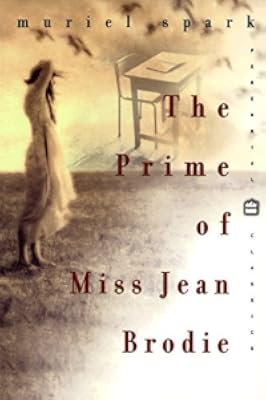
[b:The Prime of Miss Jean Brodie|517188|The Prime of Miss Jean Brodie|Muriel Spark|https://i.gr-assets.com/images/S/compressed.photo.goodreads.com/books/1379598918l/517188._SY75_.jpg|6132856]
[b:Symposium|69511|Symposium|Muriel Spark|https://i.gr-assets.com/images/S/compressed.photo.goodreads.com/books/1348558088l/69511._SY75_.jpg|1038970]
[b:The Hothouse by the East River|1592911|The Hothouse by the East River|Muriel Spark|https://i.gr-assets.com/images/S/compressed.photo.goodreads.com/books/1429735756l/1592911._SY75_.jpg|830605]
While all of Spark's books are brilliantly written, these five had particularly memorable qualities of wit, setting, characterisation, dialogue, and existential weirdness. show less
As Hildegard knew from her own experience as a stigmatic fraud, blood, once let loose, gets all over the place. It sticks, it flows, it garishly advertises itself or accumulates in dark thick puddles. Once it gets going, there is no stopping blood.
Hildegard makes an excellent counterpart and quasi-adversary to the two potential Lucans. She is a truly self-made woman, with none of his inherited privilege. Her psychiatric trick is talking about herself until the patient feels compelled to reveal their secrets in order to get a word in edgeways. This proves highly successful. I particularly enjoyed this example of her method:
"I've had a rough time. I've been on the run. Let me explain-"
"When I've had my sandwich." Hildegard kept silent till the girl arrived bearing a tray. She started to eat. Between mouthfuls she spoke on, but every time she took a bite he tried to speak, too. It was quite a battle, and Hildegard won it. "Sandwiches," she said, "like diamonds, are for ever. Children love them. They are the most useful, yet often the most despised of foods." She was carried away by fantasy. "My fondest memories of childhood are connected with sandwiches. At children's parties-"
Hildegard's boyfriend Jean-Pierre shares her calm demeanour and shows himself a suitable paramour in his responses to various dubious characters visiting his workshop. The two final chapters wrap Lucan and Hildegard's stories up magnificently. 'Aiding and Abetting' is among the Spark novellas I've enjoyed most, as it fictionalises a deeply unpleasant murderer in an engagingly witty way without trivialising. As ever with Spark, not a word is wasted. A fitting conclusion to my journey through her novellas - although I still have her non-fiction, short stories, and poetry to explore.
The consistency of Spark's literary voice and distinctive style over so many decades really is nothing short of extraordinary. I recommend all 22 of her novels. Reading her succinct works has often acted as a palate-cleanser and morale-enhancer between longer and more turgid books. I am not by nature a completist and read in a deliberately erratic manner, so didn't initially intend to get through all 22. I continued to seek them out for two reasons: they're highly enjoyable and very easy to find in Edinburgh's libraries. I'm a simple creature, really. If I love an author's writing and can find many examples of it at my local branch library, I'll read them. My five favourites among the 22 follow in no particular order:
[b:Not to Disturb|514627|Not to Disturb|Muriel Spark|https://i.gr-assets.com/images/S/compressed.photo.goodreads.com/books/1175444468l/514627._SY75_.jpg|502591]
[b:Loitering with Intent|58677|Loitering with Intent|Muriel Spark|https://i.gr-assets.com/images/S/compressed.photo.goodreads.com/books/1430344701l/58677._SY75_.jpg|1725461]
[b:The Prime of Miss Jean Brodie|517188|The Prime of Miss Jean Brodie|Muriel Spark|https://i.gr-assets.com/images/S/compressed.photo.goodreads.com/books/1379598918l/517188._SY75_.jpg|6132856]
[b:Symposium|69511|Symposium|Muriel Spark|https://i.gr-assets.com/images/S/compressed.photo.goodreads.com/books/1348558088l/69511._SY75_.jpg|1038970]
[b:The Hothouse by the East River|1592911|The Hothouse by the East River|Muriel Spark|https://i.gr-assets.com/images/S/compressed.photo.goodreads.com/books/1429735756l/1592911._SY75_.jpg|830605]
While all of Spark's books are brilliantly written, these five had particularly memorable qualities of wit, setting, characterisation, dialogue, and existential weirdness. show less
This short novel imaginatively riffing on a real murder mystery involving Lord Lucan's apparent murder of his children's nanny. The historical Lord Lucan disappeared or perhaps died, not one knows. Sparks creates an elaborate farce swirling with concealed, created, and mistaken identities. The plot centers around Lord Lucan in hiding, a double who pretends to be Lord Lucan (and it is often unclear which is which), and there interactions with a sham, but very successful female psychologist practicing to Paris upper echelon. The wit is as barbed as Waugh but more obviously farcical, and perhaps, less mean-spirited, in spite of the grisly fate dished out to some of the characters. A sardonically delightful book.
Odd novel in which two versions of Lord Lucan, a man on the run from charges that he murdered his children's nanny in mistake for his ex-wife, seek therapy or blackmail from a supposed psychiatrist with a background of having been a fraudulent stigmatist. Who is the real Lucan, who the fake and are they partners or competitors? Based on actual case, Lord Lucan did disappear, may have been aided by friends, was eventually declared dead.
Who's scamming whom, and which preposterous imposter is a killer, and who will find the real fugitive Earl of Lucan (or is he dead?) and who is more afraid of having the past revealed--the hunter or the hunted? Farcical, bloody and blackly humorous. Not, however laugh-out-loud funny, at least in my opinion, as promised by some reviewers.
Aiding and Abetting is based on a true story, but embellished upon by Muriel Spark. Lord (“Lucky” due to his successes at the gambling tables) Lucan disappeared from England in 1974 after bludgeoning his children’s nanny, intending for it to be his wife. Officially declared dead in 1999, this novel is a “what if?” about what happened. The story revolves around a psychotherapist, Hildegard Wolfe, who has a sinister past. One day two patients walk into her office declaring that he is the real Lord Lucan. Which one is which?
As with many of Muriel Spark novels, nothing is what it seems on the surface. It seems at first to be a case of mistaken or hidden identity, but the story evolves into much more than that. This is a pretty show more bizarre story, filled with farcical coincidences. All of them were “aiders and abetters” who apparently sought to confuse and befuddle the police. Added on top of this is an author looking to write Lord Lucan’s story and publish an exclusive interview with him. It’s interesting that Spark theorizes details of the case that were later verified or speculated upon—such as Lord Lucan having received plastic surgery after the murders. Everyone keeps seeing Lucan everywhere, “but it may not have been him.”
It’s an interesting case, and it’s fun to wonder about what really did happen to the missing Earl. Spark’s tale is purely fantasy, of course, though she sticks with many of the details of the case. In fact, she probably got the idea for the two Lord Lucans from the account of a close friend of Lucans, who saw him in Africa in the 1980s. According to the friend, he saw Lucan standing on a bridge and was later joined by a friend who claimed that he too was Lord Lucan. There are been over 70 “sightings” of him all over the world; in February 2012, new evidence came to light to support the claim that he was in Africa. The question remains, though: is Lucan really dead? By now I think so. show less
As with many of Muriel Spark novels, nothing is what it seems on the surface. It seems at first to be a case of mistaken or hidden identity, but the story evolves into much more than that. This is a pretty show more bizarre story, filled with farcical coincidences. All of them were “aiders and abetters” who apparently sought to confuse and befuddle the police. Added on top of this is an author looking to write Lord Lucan’s story and publish an exclusive interview with him. It’s interesting that Spark theorizes details of the case that were later verified or speculated upon—such as Lord Lucan having received plastic surgery after the murders. Everyone keeps seeing Lucan everywhere, “but it may not have been him.”
It’s an interesting case, and it’s fun to wonder about what really did happen to the missing Earl. Spark’s tale is purely fantasy, of course, though she sticks with many of the details of the case. In fact, she probably got the idea for the two Lord Lucans from the account of a close friend of Lucans, who saw him in Africa in the 1980s. According to the friend, he saw Lucan standing on a bridge and was later joined by a friend who claimed that he too was Lord Lucan. There are been over 70 “sightings” of him all over the world; in February 2012, new evidence came to light to support the claim that he was in Africa. The question remains, though: is Lucan really dead? By now I think so. show less
Members
- Recently Added By
Lists

Books Read in 2015
3,299 works; 126 members
Author Information

101+ Works 22,719 Members
Muriel Spark has been called "our most chillingly comic writer since Evelyn Waugh" by the London Spectator, and the New Yorker praised her novel Memento Mori ri (1959) as "flawless." Her fiction is marked by its remarkable diversity, wit, and craftsmanship. "She happens to be, by some rare concatenation of grace and talent, an artist, a show more serious---and most accomplished---writer, a moralist engaged with the human predicament, wildly entertaining, and a joy to read" (SRSR). She became widely known in the United States when the New Yorker devoted almost an entire issue to The Prime of Miss Jean Brodie (1961). Set in Edinburgh in the 1930s, this is the story of a schoolteacher, her unorthodox approach to life, and its effect on her select group of adolescent girls. Though their idol turns out to have feet of clay, she leaves an indelible mark on their lives. The Girls of Slender Means (1963), also warmly praised, is a sardonic look at the vivacity of youth and the anxieties of young womanhood. Reviewing The Mandelbaum Gate (1965) for the New Republic, Honor Tracy wrote: "There is an abundance here of invention, humor, poetry, wit, perception, that all but takes the breath away. . . . The story, in fact, is pure adventure, with the suspense as artfully maintained as anywhere by Graham Greene, but this is only one ingredient. There are memorable descriptions of the Holy Land, fascinating insights into the jumble of intrigue and piety surrounding the Holy Places, and penetrating studies of Arabs. . . . In each of [Spark's] novels heretofore one of her qualities has tended to predominate over the others. Here for the first time they are all impressively marshaled side by side, resulting in her best work so far." The daughter of an Englishwoman and a Scottish-Jewish father, Spark was born and educated in Edinburgh. After her marriage in 1938, she lived for some years in Central Africa, a period rarely reflected in her work. During World War II, she returned to Britain, where she worked in the Political Intelligence Department of the Foreign Office after the breakup of her marriage. She has been a magazine editor and written poetry and literary criticism. Spark has lived in London's Camberwell section, the setting of The Ballad of Peckham Rye (1960), but now makes her home in New York. Her novels reflect her conversion to Roman Catholicism. (Bowker Author Biography) Writer Muriel Spark was born in Edinburgh on February 1, 1918. In 1934-1935 she took a course in commercial correspondence and précis writing at Heriot-Watt College. After her marriage in 1937, she lived for some years in Central Africa. During World War II, she returned to Britain, where she worked in the Political Intelligence Department of the Foreign Office after the breakup of her marriage. After the war, she began her literary career. She became General Secretary of the Poetry Society, worked as an editor and wrote studies of Mary Shelley, John Masefield and the Brontë sisters. Her first book of poetry, The Fanfarlo and Other Verse, was published in 1952 and her first novel, The Comforters, was published in 1957. She wrote over twenty books including The Prime of Miss Jean Brodie and The Finishing School. She won numerous awards and honors including the 1965 James Tait Black Memorial Prize for The Mandelbaum Gate, the 1992 U. S. Ingersoll Foundation T. S. Eliot Award, the 1997 David Cohen British Literature Prize for Lifetime Achievement, and in 1993 she became Dame Commander of the Order of the British Empire in recognition of her services to literature. The Scottish Arts Council created the Muriel Spark International Fellowship in 2004. She died on April 13, 2006. (Bowker Author Biography) show less
Some Editions
Series
Belongs to Publisher Series
Work Relationships
Is contained in
Common Knowledge
- Canonical title
- Aiding and Abetting
- Original title
- Aiding and Abetting
- Original publication date
- 2000
- People/Characters
- Lord Lucan
- First words
- The receptionist looked tinier than ever as she showed the tall, tall Englishman into the studio of Dr. Hildegard Wolf, the psychiatrist who had come from Bavaria, then Prague, Dresden, Avila, Marseilles, then London, and now... (show all) settled in Paris.
- Last words
- (Click to show. Warning: May contain spoilers.)It looked cleaner than usual.
Classifications
Statistics
- Members
- 647
- Popularity
- 44,464
- Reviews
- 29
- Rating
- (3.34)
- Languages
- 7 — Chinese, Czech, English, French, German, Italian, Spanish
- Media
- Paper, Audiobook, Ebook
- ISBNs
- 31
- ASINs
- 7