On This Page
Description
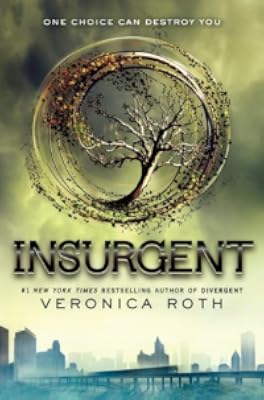
As war surges in the dystopian society around her, sixteen-year-old Divergent Tris Prior must continue trying to save those she loves--and herself--while grappling with haunting questions of grief and forgiveness, identity and loyalty, politics and love.Tags
Recommendations















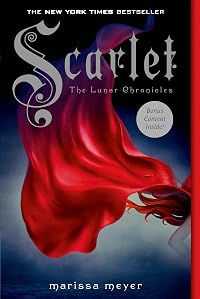
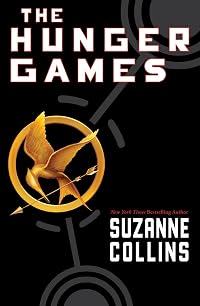
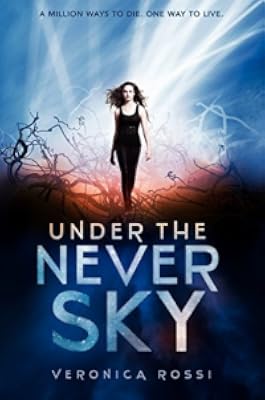
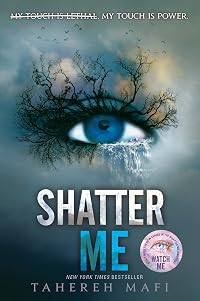

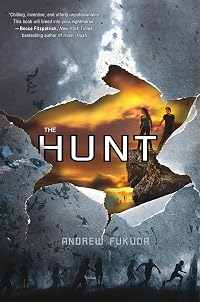
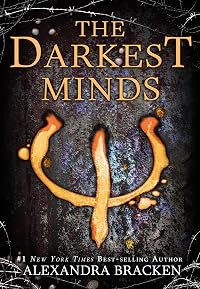
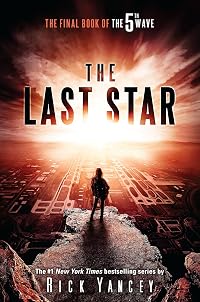

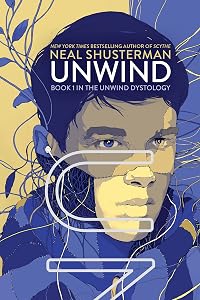






Member Recommendations


XVI by Julia Karr
kathleen.morrow Both are well-written dystopians with complicated and developed female protagonists and excellent plotting.

Waterbuggg Both books are action-packed and have a similar premise and secret.


Member Reviews
As soon as I finally finished Divergent about a month ago, I knew that I needed to get Insurgent into my hands as soon as possible. I was eager for more Tris, more Tobias, and of course to find out what was going to happen next. When my library finally announced that I was next on the waiting list I was ecstatic! I dove into this book with all the fervor that I had within me. Let me tell you, it was so worth the wait.
Tris and Tobias are back, and this time around Veronica Roth proves she isn't just using this book as a filler for what's to come. The story line that is crafted here is expertly done, and there is raw emotion on every single page. I think what I liked best about Insurgent as a whole was seeing Tris really come into her show more own. In the first book we saw a girl who was ready to break out of her shell. In this one she's already there. Filled with guilt, anger, and a bit of confusion, Tris is a well fleshed out character. Sure, she might seem a little angst ridden some of the time, but it is this total spectrum of emotion that fuels her choices. I loved it.
Insurgent also brings to light a lot more about the factions themselves, as well as the people that reside within them. Roth shows readers who these people really are at their core. It's a lot simpler to understand why they might choose the way they do. If you were curious about Amity, this is your time! A lot of the story takes place in their headquarters, which was a nice change of pace. Best of all, the chemistry between Tris and Tobias is still present and, in my opinion, better than ever. Thank goodness for the lack of a love triangle! All I need are Tris and Tobias. Tobias and Tris. Dysfunctional maybe, but totally worth it.
Anyway I know I'm rambling. Let's just leave it at this. Although I didn't quite fall in love with Insurgent as much as I did Roth's first installment, I'm happy to report that there was a lot that I did completely enjoy. This is not a filler book. It is a well-written, beautifully paced, middle part to a so far amazing trilogy. The ending is killer. You've been warned. Now all I can think about is getting my hands on the next book in the series so I can sate my need for completion. Definitely one of my new favorite series. show less
Tris and Tobias are back, and this time around Veronica Roth proves she isn't just using this book as a filler for what's to come. The story line that is crafted here is expertly done, and there is raw emotion on every single page. I think what I liked best about Insurgent as a whole was seeing Tris really come into her show more own. In the first book we saw a girl who was ready to break out of her shell. In this one she's already there. Filled with guilt, anger, and a bit of confusion, Tris is a well fleshed out character. Sure, she might seem a little angst ridden some of the time, but it is this total spectrum of emotion that fuels her choices. I loved it.
Insurgent also brings to light a lot more about the factions themselves, as well as the people that reside within them. Roth shows readers who these people really are at their core. It's a lot simpler to understand why they might choose the way they do. If you were curious about Amity, this is your time! A lot of the story takes place in their headquarters, which was a nice change of pace. Best of all, the chemistry between Tris and Tobias is still present and, in my opinion, better than ever. Thank goodness for the lack of a love triangle! All I need are Tris and Tobias. Tobias and Tris. Dysfunctional maybe, but totally worth it.
Anyway I know I'm rambling. Let's just leave it at this. Although I didn't quite fall in love with Insurgent as much as I did Roth's first installment, I'm happy to report that there was a lot that I did completely enjoy. This is not a filler book. It is a well-written, beautifully paced, middle part to a so far amazing trilogy. The ending is killer. You've been warned. Now all I can think about is getting my hands on the next book in the series so I can sate my need for completion. Definitely one of my new favorite series. show less
I loved Divergent. It was everything a book should be: smart, philosophical, funny and sad in all the right places. Although the premise was a bit unlikely, the world building was first-rate, and I was able to willingly suspend my disbelief long enough to enjoy the book.
However, there was something wrong with the ending. While a war between the factions was entirely likely, it just seemed a bit...rushed. Like the author had all of these cool things she wanted to write about and couldn't be bothered to wait until it made sense to introduce them, so she skipped all of the boring build-up and got right down to it. I hoped Insurgent would be better.
For the first half, it was. Roth took us to the other factions' compounds, and we got a show more glimpse of what their daily life is like. There were moments of raw beauty and power, like when Tris witnesses an Amity religious service, or when Tris and Tobias are interrogated by Candor. There were moments of chilling horror as well, like when a certain faction leader is executed. Those moments were when Roth's writing really shone.
Sadly, I don't think Roth recognized these moments for the gems that they were. As she is her own person, I understand that. Sometimes, readers and writers like different things. The trick is to craft each scene as if it were your favourite, even if you hate it: to polish each scene to perfection. Unfortunately, Roth did not do this. She seemed impatient to get to "the good stuff." While this would be fine if the "good stuff" was as good as she seemed to think it was, it wasn't. The scenes Roth seemed to enjoy writing the most were often the most illogical.
*The following section contains spoilers.*
Take Erudite's big plan, for instance. Jeanine has infected a third to a half of the Dauntless with a serum that basically allows her to control their minds for a short time. Imagine what a ruthless dictator could do with a weapon like that. This isn't the simulation serum Erudite used to make the Dauntless attack Abnegation, kids; this is something far stronger. We see Jeanine speak through two Dauntless (telling Tris that Jeanine will kill two Dauntless every two days until the Divergent surrender) and then force them to throw themselves off a building. Given that introduction, the opening act is going to be pretty intense, right?
Wrong. That's all Jeanine uses it for. She doesn't force the Dauntless to attack each other, thus thinning the ranks of loyal Dauntless. She doesn't access all of them at once and have them capture Tris and Tobias and bring them to the Erudite compound. Nope. She just has them deliver their message and then kills them. Well, she kills one. Tris catches Hector, an eight-year-old boy who is Lynn’s sister, before he falls. For the rest of the book, she chooses to remember it as the time she "chose not to save Marlene." That doesn't ring true, Roth: a real person would remember it as the time they "couldn't save Marlene," "didn't make it in time," or even "saved Hector but lost Marlene."
It gets worse: After that "attack," Tris catches a train to the Erudite compound. Alone. With the full intention of giving herself up to experimentation--which will only increase Jeanine's power, as she has said to her that her goal is to learn how to control the Divergent--and eventual death. She doesn't even think of telling her friends, who would gladly suit up, arm themselves, and mount a surprise attack on Erudite to avenge the death of one of their own. She doesn't consider the fact that Erudite didn't implant the serum in all Dauntless; those could easily be left back at the compound behind three feet of reinforced steel to keep them from causing any damage, should Jeanine choose to activate said implants. No, Tris decides she's going to "die like the Abnegation" and makes the "selfless" choice to give herself up.
So Jeanine experiments on her. She puts Tris under simulation after simulation, but Tris sees each one for what it is. This sends Jeanine into orbit, who then decides that Tris is going to be executed the next morning. Now, I had heard something about a fantastic twist that no one saw coming, so when I got to this part, I thought Tris was going to die. I actually got excited. How would Roth carry the rest of the series, without Tris to narrate? Would she shift the viewpoint to Tobias, or maybe another Dauntless like Lynn? Unfortunately, Roth didn't even attempt this twist. Peter (yes, Peter, the traitor Dauntless who is now with Erudite, the Peter who stabbed Edward in the eyeball in the last book, and who tried to kill Tris so he could rise to the top) switches the death serum (they call it that) with a paralysation serum (they call it that too) and rigs the heart monitor to flat line right about the time the death serum (seriously, Roth? could you have given it a more stupid name?) will take effect. Wow! I had no idea Erudite faction's equipment was so easily tampered with! How incredibly convenient for our plucky young heroine! How wonderfully coincidental that Peter would have a change of heart just in time to save our narrator's life!
I could go on about the lack of logic involved with Tobias surrendering himself and telling Tris about a rescue operation that's going to take place in two weeks, but I want to skip ahead to the part where Tris and a few others invade the Erudite compound AGAIN, this time so they can help Marcus (yes, that Marcus) steal the information the Priors died for.
First, Tris doesn't stop to think that maybe Marcus is lying to her. He's lied about a lot of stuff so far, but he chooses to tell the truth now, and Tris automatically believes him.
Second, she doesn't tell Tobias or anyone else that they're going to be helping Marcus while everyone else is attacking the compound. She could have just said "Hey, Tobias. Listen, the Erudite have this information. My parents died trying to get it, and it's probably really important for the rest of us, too. So if you could just give us some cover and explain this to the Dauntless authorities when it's all over, I'd really appreciate it." Nope, she just angsts about how what she's doing is treason to Tobias and Dauntless, and when it's over, she angsts about how now she's a traitor. And it all could have been avoided if she told the other Dauntless in the first place.
Third, they sneak in dressed like the Erudite. Including Tris, who had just spent a considerable amount of time at the compound being introduced to doctors and interns waiting to experiment on her, as well as passing countless Erudite who saw her face. And nobody recognizes her, because Erudite clothes are magic or something. So the geniuses of Erudite can’t recognise possibly the single most important girl in existence? And I thought Erudite was loaded with security cameras. Apparently not.
Fourth, Jeanine's office. It's heavily guarded, not by a spray of bullets (which would make the most sense) but by a computer system. Tris tries to enter, but a voice conveniently announces her name, age, faction, and the fact that she is "confirmed Divergent." It then plunges her into a simulation.
A simulation.
Just after spending the past five chapters learning that you can’t control the Divergent into a simulation.
Anyway, Tris makes it past the simulation. Naturally. If I were Jeanine, I would have set it up so that if an intruder is confirmed Divergent, they would be subjected to a hail of bullets, an RPG, or another reliable instrument of death. But Jeanine was apparently created by someone who was not Erudite, and thus did not fully understand what the term "applying logic to a situation" means.
The ending twist isn't as good as I heard it was. So the city was designed to be a utopia. When the Divergent began appearing, the city was supposed to give the keys to Amity, unlock the gates, and go forth into the big bad world and save it with their awesome utopian powers. Okay...so if this was supposed to be a utopia, why divide people into factions where they embrace the most simplistic lines of thinking? Why would people who can think along multiple lines be so special that they would need to open the city gates? Why would they erase the memories of people who decided to join this utopia? If they had memory-erasing technology, why hasn't Jeanine gotten hold of it and used it to control the city, which is apparently what she's dreamed about ever since she was a little girl?
And with that, the book ends.
But the book wasn’t completely filled with logical fallacies, and I think what really made the book pick itself off the ground was Roth’s way with words. She creates such a strong, vivid image of everything that happens, thus creating an immersive experience. I ended up reading this book twice before making this review reading it the first time round was great! It was only after I had read it a second time that all these logical fallacies were thrown in my face. So unless you are a very perceptive first-time reader, you should enjoy it the first time round.
I would recommend this book to readers aged 12-30 and I would rate this book 3 stars. show less
However, there was something wrong with the ending. While a war between the factions was entirely likely, it just seemed a bit...rushed. Like the author had all of these cool things she wanted to write about and couldn't be bothered to wait until it made sense to introduce them, so she skipped all of the boring build-up and got right down to it. I hoped Insurgent would be better.
For the first half, it was. Roth took us to the other factions' compounds, and we got a show more glimpse of what their daily life is like. There were moments of raw beauty and power, like when Tris witnesses an Amity religious service, or when Tris and Tobias are interrogated by Candor. There were moments of chilling horror as well, like when a certain faction leader is executed. Those moments were when Roth's writing really shone.
Sadly, I don't think Roth recognized these moments for the gems that they were. As she is her own person, I understand that. Sometimes, readers and writers like different things. The trick is to craft each scene as if it were your favourite, even if you hate it: to polish each scene to perfection. Unfortunately, Roth did not do this. She seemed impatient to get to "the good stuff." While this would be fine if the "good stuff" was as good as she seemed to think it was, it wasn't. The scenes Roth seemed to enjoy writing the most were often the most illogical.
*The following section contains spoilers.*
Take Erudite's big plan, for instance. Jeanine has infected a third to a half of the Dauntless with a serum that basically allows her to control their minds for a short time. Imagine what a ruthless dictator could do with a weapon like that. This isn't the simulation serum Erudite used to make the Dauntless attack Abnegation, kids; this is something far stronger. We see Jeanine speak through two Dauntless (telling Tris that Jeanine will kill two Dauntless every two days until the Divergent surrender) and then force them to throw themselves off a building. Given that introduction, the opening act is going to be pretty intense, right?
Wrong. That's all Jeanine uses it for. She doesn't force the Dauntless to attack each other, thus thinning the ranks of loyal Dauntless. She doesn't access all of them at once and have them capture Tris and Tobias and bring them to the Erudite compound. Nope. She just has them deliver their message and then kills them. Well, she kills one. Tris catches Hector, an eight-year-old boy who is Lynn’s sister, before he falls. For the rest of the book, she chooses to remember it as the time she "chose not to save Marlene." That doesn't ring true, Roth: a real person would remember it as the time they "couldn't save Marlene," "didn't make it in time," or even "saved Hector but lost Marlene."
It gets worse: After that "attack," Tris catches a train to the Erudite compound. Alone. With the full intention of giving herself up to experimentation--which will only increase Jeanine's power, as she has said to her that her goal is to learn how to control the Divergent--and eventual death. She doesn't even think of telling her friends, who would gladly suit up, arm themselves, and mount a surprise attack on Erudite to avenge the death of one of their own. She doesn't consider the fact that Erudite didn't implant the serum in all Dauntless; those could easily be left back at the compound behind three feet of reinforced steel to keep them from causing any damage, should Jeanine choose to activate said implants. No, Tris decides she's going to "die like the Abnegation" and makes the "selfless" choice to give herself up.
So Jeanine experiments on her. She puts Tris under simulation after simulation, but Tris sees each one for what it is. This sends Jeanine into orbit, who then decides that Tris is going to be executed the next morning. Now, I had heard something about a fantastic twist that no one saw coming, so when I got to this part, I thought Tris was going to die. I actually got excited. How would Roth carry the rest of the series, without Tris to narrate? Would she shift the viewpoint to Tobias, or maybe another Dauntless like Lynn? Unfortunately, Roth didn't even attempt this twist. Peter (yes, Peter, the traitor Dauntless who is now with Erudite, the Peter who stabbed Edward in the eyeball in the last book, and who tried to kill Tris so he could rise to the top) switches the death serum (they call it that) with a paralysation serum (they call it that too) and rigs the heart monitor to flat line right about the time the death serum (seriously, Roth? could you have given it a more stupid name?) will take effect. Wow! I had no idea Erudite faction's equipment was so easily tampered with! How incredibly convenient for our plucky young heroine! How wonderfully coincidental that Peter would have a change of heart just in time to save our narrator's life!
I could go on about the lack of logic involved with Tobias surrendering himself and telling Tris about a rescue operation that's going to take place in two weeks, but I want to skip ahead to the part where Tris and a few others invade the Erudite compound AGAIN, this time so they can help Marcus (yes, that Marcus) steal the information the Priors died for.
First, Tris doesn't stop to think that maybe Marcus is lying to her. He's lied about a lot of stuff so far, but he chooses to tell the truth now, and Tris automatically believes him.
Second, she doesn't tell Tobias or anyone else that they're going to be helping Marcus while everyone else is attacking the compound. She could have just said "Hey, Tobias. Listen, the Erudite have this information. My parents died trying to get it, and it's probably really important for the rest of us, too. So if you could just give us some cover and explain this to the Dauntless authorities when it's all over, I'd really appreciate it." Nope, she just angsts about how what she's doing is treason to Tobias and Dauntless, and when it's over, she angsts about how now she's a traitor. And it all could have been avoided if she told the other Dauntless in the first place.
Third, they sneak in dressed like the Erudite. Including Tris, who had just spent a considerable amount of time at the compound being introduced to doctors and interns waiting to experiment on her, as well as passing countless Erudite who saw her face. And nobody recognizes her, because Erudite clothes are magic or something. So the geniuses of Erudite can’t recognise possibly the single most important girl in existence? And I thought Erudite was loaded with security cameras. Apparently not.
Fourth, Jeanine's office. It's heavily guarded, not by a spray of bullets (which would make the most sense) but by a computer system. Tris tries to enter, but a voice conveniently announces her name, age, faction, and the fact that she is "confirmed Divergent." It then plunges her into a simulation.
A simulation.
Just after spending the past five chapters learning that you can’t control the Divergent into a simulation.
Anyway, Tris makes it past the simulation. Naturally. If I were Jeanine, I would have set it up so that if an intruder is confirmed Divergent, they would be subjected to a hail of bullets, an RPG, or another reliable instrument of death. But Jeanine was apparently created by someone who was not Erudite, and thus did not fully understand what the term "applying logic to a situation" means.
The ending twist isn't as good as I heard it was. So the city was designed to be a utopia. When the Divergent began appearing, the city was supposed to give the keys to Amity, unlock the gates, and go forth into the big bad world and save it with their awesome utopian powers. Okay...so if this was supposed to be a utopia, why divide people into factions where they embrace the most simplistic lines of thinking? Why would people who can think along multiple lines be so special that they would need to open the city gates? Why would they erase the memories of people who decided to join this utopia? If they had memory-erasing technology, why hasn't Jeanine gotten hold of it and used it to control the city, which is apparently what she's dreamed about ever since she was a little girl?
And with that, the book ends.
But the book wasn’t completely filled with logical fallacies, and I think what really made the book pick itself off the ground was Roth’s way with words. She creates such a strong, vivid image of everything that happens, thus creating an immersive experience. I ended up reading this book twice before making this review reading it the first time round was great! It was only after I had read it a second time that all these logical fallacies were thrown in my face. So unless you are a very perceptive first-time reader, you should enjoy it the first time round.
I would recommend this book to readers aged 12-30 and I would rate this book 3 stars. show less
Why did I just now read this?!? It was a pretty damn good follow up to Divergent, the action never lets up and you're left racing to the end hoping to get some things wrapped up but when you get there, BAM, you're left hanging. You have to wait for the final book in the trilogy. I've heard a lot of mixed reviews about the last book so I'm scared to start it, but at the same time I have to find out what in the hell is going on!!
In Isurgent Tris has to learn to cope with the death of her parents and Will, she's scared to use a gun, but not afraid to rip people apart with her bare hands. She and Four (Tobias, that sexy dreamboat) are constantly arguing in this book. They can't agree on anything and are convinced that they're lying to each show more other. Together they team up with some loyal dauntless, factionless, Candor, and some other people to try and take down the evil Euradite woman, Jeanine, and her posse of evildoers.
Like I said it's fast paced and the action never lets up. Super quick read. Be warned though that if you haven't read Divergent you will be hopelessly lost. show less
In Isurgent Tris has to learn to cope with the death of her parents and Will, she's scared to use a gun, but not afraid to rip people apart with her bare hands. She and Four (Tobias, that sexy dreamboat) are constantly arguing in this book. They can't agree on anything and are convinced that they're lying to each show more other. Together they team up with some loyal dauntless, factionless, Candor, and some other people to try and take down the evil Euradite woman, Jeanine, and her posse of evildoers.
Like I said it's fast paced and the action never lets up. Super quick read. Be warned though that if you haven't read Divergent you will be hopelessly lost. show less
Divergent made me like this series, but Insurgent made me LOVE it! Picking up where Divergent left off. Tris and Tobias are on their way to Amity. The Erudite come looking for them and they must run. This is when they meet the Factionless and their surprising leader from Tobias's past. The Erudite are targeting the Divergent and are injecting people with long term simulation serum, essentially making everyone walking time bombs. Tris is unsure about the result of a Dauntless/Factionless alliance and wants to know the secret information Jeanine has about the factions.
This book was just AMAZING with all the rebellion action and the mystery about the origin of the faction society. I love Tris and Tobias and how their relationship was show more tested. Tris is struggling to come to terms with the deaths she witnessed and her own actions during the war (reminded me of Katniss in Mockingjay).I loved all the surprise twists to the story and pieces of the puzzle that came together throughout the book. We also get to learn lots of great information about all the factions! I will definitely be re-reading both books waiting for book 3!!! show less
This book was just AMAZING with all the rebellion action and the mystery about the origin of the faction society. I love Tris and Tobias and how their relationship was show more tested. Tris is struggling to come to terms with the deaths she witnessed and her own actions during the war (reminded me of Katniss in Mockingjay).I loved all the surprise twists to the story and pieces of the puzzle that came together throughout the book. We also get to learn lots of great information about all the factions! I will definitely be re-reading both books waiting for book 3!!! show less
Sequels always concern me. There is a lot potential for the second book in a series to be great, but also to be terrible. With the amazingness of Divergent, Insurgent had a high bar to meet. Luckily it did.
Insurgent picks up right off where Divergent left off, and doesn't waste time with a lot of back story. Tris is in survival mode. People she loves have died, she's killed, and she's almost been killed. All of this is impacting how she reacts to Four and even her brother. Tris's transformation in this book is what really kept me invested. The plot was good, but I wanted to know what she would choose to do about what was happening. Roth does an amazing job of breaking Tris down to her lowest point, in making her realize how her actions show more are what is keeping her from moving forward. I am sooo tempted to go into detail, because there are a few scenes that really gripped me and brought me to tears, but I have no desire to spoil it for anyone, even those looking for spoilers.
I usually get frustrated with the ending of sequels because I know they're going to leave a lot of things hanging in order to care on with the third book in the series. With Insurgent Roth doesn't really leave us hanging. The entire book is focused on what the leaders are trying to hide, and we do get our answer. It wasn't what I'd been expecting, but it definitely intrigued me and I am now waiting anxiously for the nest book in the series to come out! show less
Insurgent picks up right off where Divergent left off, and doesn't waste time with a lot of back story. Tris is in survival mode. People she loves have died, she's killed, and she's almost been killed. All of this is impacting how she reacts to Four and even her brother. Tris's transformation in this book is what really kept me invested. The plot was good, but I wanted to know what she would choose to do about what was happening. Roth does an amazing job of breaking Tris down to her lowest point, in making her realize how her actions show more are what is keeping her from moving forward. I am sooo tempted to go into detail, because there are a few scenes that really gripped me and brought me to tears, but I have no desire to spoil it for anyone, even those looking for spoilers.
I usually get frustrated with the ending of sequels because I know they're going to leave a lot of things hanging in order to care on with the third book in the series. With Insurgent Roth doesn't really leave us hanging. The entire book is focused on what the leaders are trying to hide, and we do get our answer. It wasn't what I'd been expecting, but it definitely intrigued me and I am now waiting anxiously for the nest book in the series to come out! show less
I'll just start out by saying that I "finished" [b:Insurgent|11735983|Insurgent (Divergent, #2)|Veronica Roth|https://images.gr-assets.com/books/1325667729s/11735983.jpg|15524542]. And by "finish" I mean that I became so frustrated with the book after a little over a hundred pages in that I actually skipped to the end to see how interested I was in reading what was in between, and ended up skimming the intervening material.
First, I've got to ask: What did scholars and scientists ever do to this author? What is up with this? Is she somehow related to Mao or dictators in Cambodia?
Or is this an expression of broader insecurity about how widespread science and technology have become in real life, and how dependent most people have become show more on it, even though they don't understand it? After all, Beatrice says, "It doesn’t sit well with me, how much our society needs Erudite to function." (Page 34).
Moving on, now that I've read more about Amity and Candor, I also started thinking about Candor and its apparent role in this society. From "Divergent" we know that the members of Candor appear to specialize in law. But this doesn't seem to be the best or smartest use of their abilities. Rather, the members of Candor should be fulfilling the special role of speaking truth to power, telling people things they might not want to hear, stopping groupthink, and in general preventing the governing council from turning into an Abnegation echo chamber. That would actually be an incredibly important role, especially in a society where only one faction is supposed to be doing the governing. Also, one would think you'd want Candor overseeing whatever treasury or other financial arrangements this government has, but it doesn't appear to.
It also seems to me that Candor's motto could easily be "You shall know the truth and the truth will set you free." However, to speak the truth and for it to set you free, you have to know it. And near the end it becomes clear that the relationship between the truth and the characters is tenuous at best.
Perhaps that is why Candor is not portrayed more positively; after all, its truthfulness is equated with tactlessness, and honesty equated to making uncalled-for personal remarks. It may also be why Candor is considered the only disposable faction.
Furthermore, it would also seem that Candor's epistemological quest would be assisted by logic and philosophy, and yet those subjects are portrayed as more within the realm of Erudite. So Erudite should get along well with both Candor and Amity, but this is never discussed. In fact, I think interfactional relations should have been discussed more at some point, because it might explain some of the distrust and tension in this society. If we have Erudite-Amity, Erudite-Candor, and Candor-Dauntless, then the only faction that it appears no one really wants to interact with is Abnegation, which is nevertheless in charge of the entire government.
Also, how is it that it's some big secret that there's a larger society outside of Chicago? Shouldn't at least some of their resources be coming from somewhere outside Chicago? For example, unless everyone is getting their power from the photovoltaic cells Erudite is making, it is almost certain that Chicago is getting at least some of its electricity from a power plant somewhere outside the city. Has no one followed the power lines? Speaking of the photovoltaic cells, where is Erudite getting its lab supplies and everything else it would need to create and maintain its technology? If the city really is running solely off solar power in the day and rechargeable batteries at night, that suggests considerable technological industrial capacity and the need for rare earth metals, and so far as I know there are not large deposits of cerium, lanthanum, neodymium, or any of the others near Chicago, so they have to be coming from mines somewhere else. Where? And have Amity and Erudite really figured out how to grow cocoa and sugar cane in Chicago? Because Dauntless's chocolate cake and Erudite's fizzy drinks have to be coming from somewhere. Where is Dauntless getting its ammunition? How about fuel for the trucks, buses, and The El? And Chicago is COLD during the winter, so they'd need fuel for heating as well. And just how does this population manage to import/export nothing and yet keep their city and economy at least semi-functional?
As for the outside society, it seems they were the ones who had a terrible war of some kind, but apparently it didn't go nuclear for some reason (otherwise Chicago would be suffering from fallout, assuming Chicago still existed at all). And Amanda Ritter's video makes it sound like most people lost their moral compasses during that war. And it comes out that the people in what remains of Chicago were deliberately isolated from the rest of the world so that they could regain their moral compasses and then help the rest of the population.
The only problem is that these people don't seem to have much in the way of moral compasses either: Beatrice shoots her friend to kill even though all she needed to do was shoot to disable, while Marcus abused his son Tobias and had an affair, which resulted in Tobias's mother walking out on them. Dauntless exiles/kills its elderly (and presumably its physically disabled) and its members don't seem to care about how the faction as a whole is contributing to the factionless population and its suffering. Meanwhile, a violent wing of Erudite has attempted to commit genocide against the Abnegation, and the factionless-Dauntless are plotting genocide against Erudite. Even Beatrice says part of her wants to destroy “every single Erudite and everything they hold dear.” (Page 419). And then a majority of Amity refuse to get involved even to protect the innocent.
Furthermore, it's also been stated that Amity and Erudite must work together to ensure there is a stable food supply. If Erudite and its knowledge are completely destroyed, the entire population of the city might starve to death, but no one seems to care too much about that. And the heroine's attitude about all this? "It doesn’t sit well with me, how much our society needs Erudite to function. But they are essential – without them there would be inefficient farming, insufficient medical treatments, and no technological advance.” (Page 34). But she doesn't seem to actually worry about any of that when it comes to an indiscriminate attack on Erudite. “And then I’m standing in front of Erudite headquarters. Inside, crowds of blue-shirted people sit around tables, typing on computers or bent over books or passing sheets of paper back and forth. Some of them are decent people who do not understand what their faction has done, but if their entire building collapsed in on them before my eyes, I might not find it in me to care.” (Page 319). Even after admitting what she admitted on page 34? Does no one in this society realize they live in one?
And there is more than enough of fighting, destruction, betrayal, and bloodshed to go around. It's pretty clear that this is a very violent society in which very few people are trustworthy and almost all lack compassion. And these are the people deemed fit to restore anyone's moral compass? That of an entire society? Really?
Then too, Amanda Ritter says the fight is against human nature. Are these people not human as well? To be honest, the whole video montage she shows sounds a lot like what's been going on in Chicago - family members, friends, neighbors, and coworkers engaging in vicious hand-to-hand combat and emotionlessly shooting one another.
Oh, and it's hinted that this isolated population is supposed to genetically improve. Has no one heard of inbreeding depression?
Paradoxically, it seems to me that while non-fictional stories don't have to make sense, fictional stories do, and it's frustrating when they don't.
*Resists urge to throw book against wall, as it might damage the wall* show less
First, I've got to ask: What did scholars and scientists ever do to this author? What is up with this? Is she somehow related to Mao or dictators in Cambodia?
Or is this an expression of broader insecurity about how widespread science and technology have become in real life, and how dependent most people have become show more on it, even though they don't understand it? After all, Beatrice says, "It doesn’t sit well with me, how much our society needs Erudite to function." (Page 34).
Moving on, now that I've read more about Amity and Candor, I also started thinking about Candor and its apparent role in this society. From "Divergent" we know that the members of Candor appear to specialize in law. But this doesn't seem to be the best or smartest use of their abilities. Rather, the members of Candor should be fulfilling the special role of speaking truth to power, telling people things they might not want to hear, stopping groupthink, and in general preventing the governing council from turning into an Abnegation echo chamber. That would actually be an incredibly important role, especially in a society where only one faction is supposed to be doing the governing. Also, one would think you'd want Candor overseeing whatever treasury or other financial arrangements this government has, but it doesn't appear to.
It also seems to me that Candor's motto could easily be "You shall know the truth and the truth will set you free." However, to speak the truth and for it to set you free, you have to know it. And near the end it becomes clear that the relationship between the truth and the characters is tenuous at best.
Perhaps that is why Candor is not portrayed more positively; after all, its truthfulness is equated with tactlessness, and honesty equated to making uncalled-for personal remarks. It may also be why Candor is considered the only disposable faction.
Furthermore, it would also seem that Candor's epistemological quest would be assisted by logic and philosophy, and yet those subjects are portrayed as more within the realm of Erudite. So Erudite should get along well with both Candor and Amity, but this is never discussed. In fact, I think interfactional relations should have been discussed more at some point, because it might explain some of the distrust and tension in this society. If we have Erudite-Amity, Erudite-Candor, and Candor-Dauntless, then the only faction that it appears no one really wants to interact with is Abnegation, which is nevertheless in charge of the entire government.
Also, how is it that it's some big secret that there's a larger society outside of Chicago? Shouldn't at least some of their resources be coming from somewhere outside Chicago? For example, unless everyone is getting their power from the photovoltaic cells Erudite is making, it is almost certain that Chicago is getting at least some of its electricity from a power plant somewhere outside the city. Has no one followed the power lines? Speaking of the photovoltaic cells, where is Erudite getting its lab supplies and everything else it would need to create and maintain its technology? If the city really is running solely off solar power in the day and rechargeable batteries at night, that suggests considerable technological industrial capacity and the need for rare earth metals, and so far as I know there are not large deposits of cerium, lanthanum, neodymium, or any of the others near Chicago, so they have to be coming from mines somewhere else. Where? And have Amity and Erudite really figured out how to grow cocoa and sugar cane in Chicago? Because Dauntless's chocolate cake and Erudite's fizzy drinks have to be coming from somewhere. Where is Dauntless getting its ammunition? How about fuel for the trucks, buses, and The El? And Chicago is COLD during the winter, so they'd need fuel for heating as well. And just how does this population manage to import/export nothing and yet keep their city and economy at least semi-functional?
As for the outside society, it seems they were the ones who had a terrible war of some kind, but apparently it didn't go nuclear for some reason (otherwise Chicago would be suffering from fallout, assuming Chicago still existed at all). And Amanda Ritter's video makes it sound like most people lost their moral compasses during that war. And it comes out that the people in what remains of Chicago were deliberately isolated from the rest of the world so that they could regain their moral compasses and then help the rest of the population.
The only problem is that these people don't seem to have much in the way of moral compasses either: Beatrice shoots her friend to kill even though all she needed to do was shoot to disable, while Marcus abused his son Tobias and had an affair, which resulted in Tobias's mother walking out on them. Dauntless exiles/kills its elderly (and presumably its physically disabled) and its members don't seem to care about how the faction as a whole is contributing to the factionless population and its suffering. Meanwhile, a violent wing of Erudite has attempted to commit genocide against the Abnegation, and the factionless-Dauntless are plotting genocide against Erudite. Even Beatrice says part of her wants to destroy “every single Erudite and everything they hold dear.” (Page 419). And then a majority of Amity refuse to get involved even to protect the innocent.
Furthermore, it's also been stated that Amity and Erudite must work together to ensure there is a stable food supply. If Erudite and its knowledge are completely destroyed, the entire population of the city might starve to death, but no one seems to care too much about that. And the heroine's attitude about all this? "It doesn’t sit well with me, how much our society needs Erudite to function. But they are essential – without them there would be inefficient farming, insufficient medical treatments, and no technological advance.” (Page 34). But she doesn't seem to actually worry about any of that when it comes to an indiscriminate attack on Erudite. “And then I’m standing in front of Erudite headquarters. Inside, crowds of blue-shirted people sit around tables, typing on computers or bent over books or passing sheets of paper back and forth. Some of them are decent people who do not understand what their faction has done, but if their entire building collapsed in on them before my eyes, I might not find it in me to care.” (Page 319). Even after admitting what she admitted on page 34? Does no one in this society realize they live in one?
And there is more than enough of fighting, destruction, betrayal, and bloodshed to go around. It's pretty clear that this is a very violent society in which very few people are trustworthy and almost all lack compassion. And these are the people deemed fit to restore anyone's moral compass? That of an entire society? Really?
Then too, Amanda Ritter says the fight is against human nature. Are these people not human as well? To be honest, the whole video montage she shows sounds a lot like what's been going on in Chicago - family members, friends, neighbors, and coworkers engaging in vicious hand-to-hand combat and emotionlessly shooting one another.
Oh, and it's hinted that this isolated population is supposed to genetically improve. Has no one heard of inbreeding depression?
Paradoxically, it seems to me that while non-fictional stories don't have to make sense, fictional stories do, and it's frustrating when they don't.
*Resists urge to throw book against wall, as it might damage the wall* show less
I'll just start out by saying that I "finished" [b:Insurgent|11735983|Insurgent (Divergent, #2)|Veronica Roth|https://images.gr-assets.com/books/1325667729s/11735983.jpg|15524542]. And by "finish" I mean that I became so frustrated with the book after a little over a hundred pages in that I actually skipped to the end to see how interested I was in reading what was in between, and ended up skimming the intervening material.
First, I've got to ask: What did scholars and scientists ever do to this author? What is up with this? Is she somehow related to Mao or dictators in Cambodia?
Or is this an expression of broader insecurity about how widespread science and technology have become in real life, and how dependent most people have become show more on it, even though they don't understand it? After all, Beatrice says, "It doesn’t sit well with me, how much our society needs Erudite to function." (Page 34).
Moving on, now that I've read more about Amity and Candor, I also started thinking about Candor and its apparent role in this society. From "Divergent" we know that the members of Candor appear to specialize in law. But this doesn't seem to be the best or smartest use of their abilities. Rather, the members of Candor should be fulfilling the special role of speaking truth to power, telling people things they might not want to hear, stopping groupthink, and in general preventing the governing council from turning into an Abnegation echo chamber. That would actually be an incredibly important role, especially in a society where only one faction is supposed to be doing the governing. Also, one would think you'd want Candor overseeing whatever treasury or other financial arrangements this government has, but it doesn't appear to.
It also seems to me that Candor's motto could easily be "You shall know the truth and the truth will set you free." However, to speak the truth and for it to set you free, you have to know it. And near the end it becomes clear that the relationship between the truth and the characters is tenuous at best.
Perhaps that is why Candor is not portrayed more positively; after all, its truthfulness is equated with tactlessness, and honesty equated to making uncalled-for personal remarks. It may also be why Candor is considered the only disposable faction.
Furthermore, it would also seem that Candor's epistemological quest would be assisted by logic and philosophy, and yet those subjects are portrayed as more within the realm of Erudite. So Erudite should get along well with both Candor and Amity, but this is never discussed. In fact, I think interfactional relations should have been discussed more at some point, because it might explain some of the distrust and tension in this society. If we have Erudite-Amity, Erudite-Candor, and Candor-Dauntless, then the only faction that it appears no one really wants to interact with is Abnegation, which is nevertheless in charge of the entire government.
Also, how is it that it's some big secret that there's a larger society outside of Chicago? Shouldn't at least some of their resources be coming from somewhere outside Chicago? For example, unless everyone is getting their power from the photovoltaic cells Erudite is making, it is almost certain that Chicago is getting at least some of its electricity from a power plant somewhere outside the city. Has no one followed the power lines? Speaking of the photovoltaic cells, where is Erudite getting its lab supplies and everything else it would need to create and maintain its technology? If the city really is running solely off solar power in the day and rechargeable batteries at night, that suggests considerable technological industrial capacity and the need for rare earth metals, and so far as I know there are not large deposits of cerium, lanthanum, neodymium, or any of the others near Chicago, so they have to be coming from mines somewhere else. Where? And have Amity and Erudite really figured out how to grow cocoa and sugar cane in Chicago? Because Dauntless's chocolate cake and Erudite's fizzy drinks have to be coming from somewhere. Where is Dauntless getting its ammunition? How about fuel for the trucks, buses, and The El? And Chicago is COLD during the winter, so they'd need fuel for heating as well. And just how does this population manage to import/export nothing and yet keep their city and economy at least semi-functional?
As for the outside society, it seems they were the ones who had a terrible war of some kind, but apparently it didn't go nuclear for some reason (otherwise Chicago would be suffering from fallout, assuming Chicago still existed at all). And Amanda Ritter's video makes it sound like most people lost their moral compasses during that war. And it comes out that the people in what remains of Chicago were deliberately isolated from the rest of the world so that they could regain their moral compasses and then help the rest of the population.
The only problem is that these people don't seem to have much in the way of moral compasses either: Beatrice shoots her friend to kill even though all she needed to do was shoot to disable, while Marcus abused his son Tobias and had an affair, which resulted in Tobias's mother walking out on them. Dauntless exiles/kills its elderly (and presumably its physically disabled) and its members don't seem to care about how the faction as a whole is contributing to the factionless population and its suffering. Meanwhile, a violent wing of Erudite has attempted to commit genocide against the Abnegation, and the factionless-Dauntless are plotting genocide against Erudite. Even Beatrice says part of her wants to destroy “every single Erudite and everything they hold dear.” (Page 419). And then a majority of Amity refuse to get involved even to protect the innocent.
Furthermore, it's also been stated that Amity and Erudite must work together to ensure there is a stable food supply. If Erudite and its knowledge are completely destroyed, the entire population of the city might starve to death, but no one seems to care too much about that. And the heroine's attitude about all this? "It doesn’t sit well with me, how much our society needs Erudite to function. But they are essential – without them there would be inefficient farming, insufficient medical treatments, and no technological advance.” (Page 34). But she doesn't seem to actually worry about any of that when it comes to an indiscriminate attack on Erudite. “And then I’m standing in front of Erudite headquarters. Inside, crowds of blue-shirted people sit around tables, typing on computers or bent over books or passing sheets of paper back and forth. Some of them are decent people who do not understand what their faction has done, but if their entire building collapsed in on them before my eyes, I might not find it in me to care.” (Page 319). Even after admitting what she admitted on page 34? Does no one in this society realize they live in one?
And there is more than enough of fighting, destruction, betrayal, and bloodshed to go around. It's pretty clear that this is a very violent society in which very few people are trustworthy and almost all lack compassion. And these are the people deemed fit to restore anyone's moral compass? That of an entire society? Really?
Then too, Amanda Ritter says the fight is against human nature. Are these people not human as well? To be honest, the whole video montage she shows sounds a lot like what's been going on in Chicago - family members, friends, neighbors, and coworkers engaging in vicious hand-to-hand combat and emotionlessly shooting one another.
Oh, and it's hinted that this isolated population is supposed to genetically improve. Has no one heard of inbreeding depression?
Paradoxically, it seems to me that while non-fictional stories don't have to make sense, fictional stories do, and it's frustrating when they don't.
*Resists urge to throw book against wall, as it might damage the wall* show less
First, I've got to ask: What did scholars and scientists ever do to this author? What is up with this? Is she somehow related to Mao or dictators in Cambodia?
Or is this an expression of broader insecurity about how widespread science and technology have become in real life, and how dependent most people have become show more on it, even though they don't understand it? After all, Beatrice says, "It doesn’t sit well with me, how much our society needs Erudite to function." (Page 34).
Moving on, now that I've read more about Amity and Candor, I also started thinking about Candor and its apparent role in this society. From "Divergent" we know that the members of Candor appear to specialize in law. But this doesn't seem to be the best or smartest use of their abilities. Rather, the members of Candor should be fulfilling the special role of speaking truth to power, telling people things they might not want to hear, stopping groupthink, and in general preventing the governing council from turning into an Abnegation echo chamber. That would actually be an incredibly important role, especially in a society where only one faction is supposed to be doing the governing. Also, one would think you'd want Candor overseeing whatever treasury or other financial arrangements this government has, but it doesn't appear to.
It also seems to me that Candor's motto could easily be "You shall know the truth and the truth will set you free." However, to speak the truth and for it to set you free, you have to know it. And near the end it becomes clear that the relationship between the truth and the characters is tenuous at best.
Perhaps that is why Candor is not portrayed more positively; after all, its truthfulness is equated with tactlessness, and honesty equated to making uncalled-for personal remarks. It may also be why Candor is considered the only disposable faction.
Furthermore, it would also seem that Candor's epistemological quest would be assisted by logic and philosophy, and yet those subjects are portrayed as more within the realm of Erudite. So Erudite should get along well with both Candor and Amity, but this is never discussed. In fact, I think interfactional relations should have been discussed more at some point, because it might explain some of the distrust and tension in this society. If we have Erudite-Amity, Erudite-Candor, and Candor-Dauntless, then the only faction that it appears no one really wants to interact with is Abnegation, which is nevertheless in charge of the entire government.
Also, how is it that it's some big secret that there's a larger society outside of Chicago? Shouldn't at least some of their resources be coming from somewhere outside Chicago? For example, unless everyone is getting their power from the photovoltaic cells Erudite is making, it is almost certain that Chicago is getting at least some of its electricity from a power plant somewhere outside the city. Has no one followed the power lines? Speaking of the photovoltaic cells, where is Erudite getting its lab supplies and everything else it would need to create and maintain its technology? If the city really is running solely off solar power in the day and rechargeable batteries at night, that suggests considerable technological industrial capacity and the need for rare earth metals, and so far as I know there are not large deposits of cerium, lanthanum, neodymium, or any of the others near Chicago, so they have to be coming from mines somewhere else. Where? And have Amity and Erudite really figured out how to grow cocoa and sugar cane in Chicago? Because Dauntless's chocolate cake and Erudite's fizzy drinks have to be coming from somewhere. Where is Dauntless getting its ammunition? How about fuel for the trucks, buses, and The El? And Chicago is COLD during the winter, so they'd need fuel for heating as well. And just how does this population manage to import/export nothing and yet keep their city and economy at least semi-functional?
As for the outside society, it seems they were the ones who had a terrible war of some kind, but apparently it didn't go nuclear for some reason (otherwise Chicago would be suffering from fallout, assuming Chicago still existed at all). And Amanda Ritter's video makes it sound like most people lost their moral compasses during that war. And it comes out that the people in what remains of Chicago were deliberately isolated from the rest of the world so that they could regain their moral compasses and then help the rest of the population.
The only problem is that these people don't seem to have much in the way of moral compasses either: Beatrice shoots her friend to kill even though all she needed to do was shoot to disable, while Marcus abused his son Tobias and had an affair, which resulted in Tobias's mother walking out on them. Dauntless exiles/kills its elderly (and presumably its physically disabled) and its members don't seem to care about how the faction as a whole is contributing to the factionless population and its suffering. Meanwhile, a violent wing of Erudite has attempted to commit genocide against the Abnegation, and the factionless-Dauntless are plotting genocide against Erudite. Even Beatrice says part of her wants to destroy “every single Erudite and everything they hold dear.” (Page 419). And then a majority of Amity refuse to get involved even to protect the innocent.
Furthermore, it's also been stated that Amity and Erudite must work together to ensure there is a stable food supply. If Erudite and its knowledge are completely destroyed, the entire population of the city might starve to death, but no one seems to care too much about that. And the heroine's attitude about all this? "It doesn’t sit well with me, how much our society needs Erudite to function. But they are essential – without them there would be inefficient farming, insufficient medical treatments, and no technological advance.” (Page 34). But she doesn't seem to actually worry about any of that when it comes to an indiscriminate attack on Erudite. “And then I’m standing in front of Erudite headquarters. Inside, crowds of blue-shirted people sit around tables, typing on computers or bent over books or passing sheets of paper back and forth. Some of them are decent people who do not understand what their faction has done, but if their entire building collapsed in on them before my eyes, I might not find it in me to care.” (Page 319). Even after admitting what she admitted on page 34? Does no one in this society realize they live in one?
And there is more than enough of fighting, destruction, betrayal, and bloodshed to go around. It's pretty clear that this is a very violent society in which very few people are trustworthy and almost all lack compassion. And these are the people deemed fit to restore anyone's moral compass? That of an entire society? Really?
Then too, Amanda Ritter says the fight is against human nature. Are these people not human as well? To be honest, the whole video montage she shows sounds a lot like what's been going on in Chicago - family members, friends, neighbors, and coworkers engaging in vicious hand-to-hand combat and emotionlessly shooting one another.
Oh, and it's hinted that this isolated population is supposed to genetically improve. Has no one heard of inbreeding depression?
Paradoxically, it seems to me that while non-fictional stories don't have to make sense, fictional stories do, and it's frustrating when they don't.
*Resists urge to throw book against wall, as it might damage the wall* show less
Members
- Recently Added By
Published Reviews
ThingScore 100
I won't write a spoiler here, but Veronica Roth really has a way of wrapping up the end of the story while leaving the reader gasping at the revelation, and desperate to read more.
added by WellReadinYA
Lists

Best Dystopias
280 works; 277 members

Read the book and saw the movie
1,170 works; 195 members

NPRs your favorites: 100 Best Ever Teen Novels
237 works; 49 members

Dystopian and Apocalyptic Literature
350 works; 74 members

SLJ's 100 Must-Have YA books
36 works; 2 members

Top Five Books of 2014
1,064 works; 398 members

Literature for Children and Teens
41 works; 2 members

Independent Reading Suggestions
69 works; 3 members

Most-anticipated future releases
40 works; 25 members

Books Read in 2015
3,299 works; 129 members

Children's and YA Dystopias
123 works; 11 members

2016 Book Club Choices
52 works; 7 members

Books read in 2015
213 works; 5 members
Books Read in 2016
4,666 works; 199 members

Most Popular Young Adult Lit on LT
100 works; 4 members

Books Read in 2014
2,343 works; 89 members

Young Adult Books Ranked
12 works; 1 member

Books Read in 2012
816 works; 31 members

Books Read in 2012
59 works; 1 member

Elaina's
183 works; 1 member

Best Young Adult
400 works; 101 members
Author Information

62+ Works 91,113 Members
Veronica Roth was born on August 19, 1988 in New York. She graduated from Northwestern University's creative writing program. She is a full-time author whose books include Divergent, Insurgent, and Allegiant. Divergent was adapted into a movie in 2014. In 2015 Insurgent made The New York Time Best Seller List. She also wrote four short stories show more from Divergent's character, Tobias Eaton's point of view. That book, entitled Four: A Divergent Collection, made the New York Times bestseller list in 2014. She wrote Carve the Mark which made the bestseller list in February 2017. The Fates Divided, which is the sequel to Carve the Mark, was publised April 2018. (Bowker Author Biography) show less
Some Editions
Awards and Honors
Awards
Distinctions
Series

Work Relationships
Is contained in
Has the adaptation
Common Knowledge
- Canonical title
- Insurgent
- Original title
- Insurgent
- Alternate titles*
- Povstalecká trilogie ; 2
- Original publication date
- 2012-05-01
- People/Characters
- Beatrice 'Tris' Prior; Tobias 'Four' Eaton; Marcus Eaton; Caleb Prior; Christina; Peter (show all 12); Eric; Jeanine Matthews; Johanna Reyes; Jack Kang; Tori Wu; Evelyn Johnson
- Related movies
- Insurgent (2015 | IMDb)
- Epigraph
- Like a wild animal, the truth is too powerful to remain caged.
-From the Candor faction manifesto - Dedication
- To Nelson,
who was worth every risk - First words
- I wake with his name in my mouth.
- Last words
- (Click to show. Warning: May contain spoilers.)Then the shouting begins.
- Original language
- English
*Some information comes from Common Knowledge in other languages. Click "Edit" for more information.
Classifications
- Genres
- Teen, Young Adult, Fiction and Literature, Science Fiction
- DDC/MDS
- 813.6 — Literature & rhetoric American literature in English American fiction in English 2000-
- LCC
- PZ7 .R7375 .I — Language and Literature Fiction and juvenile belles lettres Fiction and juvenile belles lettres Juvenile belles lettres
- BISAC
Statistics
- Members
- 20,416
- Popularity
- 283
- Reviews
- 723
- Rating
- (3.79)
- Languages
- 23 — Catalan, Chinese, Czech, Danish, Dutch, English, Estonian, Finnish, French, German, Greek, Hungarian, Indonesian, Italian, Korean, Norwegian (Bokmål), Polish, Romanian, Russian, Spanish, Swedish, Turkish, Portuguese (Portugal)
- Media
- Paper, Audiobook, Ebook
- ISBNs
- 130
- UPCs
- 1
- ASINs
- 43