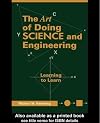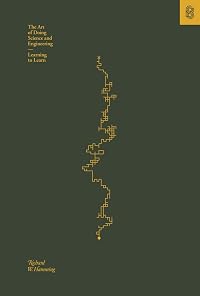
The Art of Doing Science and Engineering: Learning to Learn
by Richard W. Hamming
On This Page
Description
Highly effective thinking is an art that engineers and scientists can be taught to develop. By presenting actual experiences and analyzing them as they are described, the author conveys the developmental thought processes employed and shows a style of thinking that leads to successful results is something that can be learned.Tags
Recommendations











Member Reviews
Hamming invented a lot of cool stuff, but he is best known for sitting down and asking people why they weren't working on the most important problems in their domain. Presumably he didn't make a lot of friends with this strategy, but his is the name we remember, not theirs.
This book is excellent excellent excellent. The thesis is that a life lived without producing excellent work isn't one worth living. Hamming describes the book as a manual of style; while university is good at teaching technical skills, it's not very good at teaching the important stuff that falls /between/ the discrete subjects. Like how to choose important problems to work on, or where insight comes from, or how to stay ahead of the trend and not become obsolete.
To show more this extent, Hamming talks about his own successes and failures (though mostly his successes --- he says it's more important to study success than failure, since you'd like to replicate only the former.) He's obviously proud of his accomplishments, which is a refreshing note from most technical autobiographies, in which the authors present a cool, modest description of their work. Hamming provides commentary behind each of his wins, describing the circumstances that lead to it, and how having a "prepared mind" helped him jump on it before others did. He further notes how he could have done better, and gives explicit advice to the reader for how to do a better job than he did.
This is a wonderfully insightful book, and is chocked full inspiration and interesting technical topics. If you're in a technical field and you'd like to do great work, this is mandatory reading. show less
This book is excellent excellent excellent. The thesis is that a life lived without producing excellent work isn't one worth living. Hamming describes the book as a manual of style; while university is good at teaching technical skills, it's not very good at teaching the important stuff that falls /between/ the discrete subjects. Like how to choose important problems to work on, or where insight comes from, or how to stay ahead of the trend and not become obsolete.
To show more this extent, Hamming talks about his own successes and failures (though mostly his successes --- he says it's more important to study success than failure, since you'd like to replicate only the former.) He's obviously proud of his accomplishments, which is a refreshing note from most technical autobiographies, in which the authors present a cool, modest description of their work. Hamming provides commentary behind each of his wins, describing the circumstances that lead to it, and how having a "prepared mind" helped him jump on it before others did. He further notes how he could have done better, and gives explicit advice to the reader for how to do a better job than he did.
This is a wonderfully insightful book, and is chocked full inspiration and interesting technical topics. If you're in a technical field and you'd like to do great work, this is mandatory reading. show less
I read this because Bret Victor really likes it. There's a lot in here and I will probably get a lot out of it if I read it again later.
What did I expect going in? Some sort of philosophy or method that Hamming synthesized through his own experience - how Hamming thinks about doing meaningful technical work.
What did I get? A sense of the man himself, and how he went about thinking about various fields. I think each set of lectures has an interesting insight. The subject matter, although interesting and applicable in its own right, is strictly illustrative (as he indicates in the intro).
It's also provided an interesting framework for thinking about general direction of work, and a reminder of how much I enjoy math (and how it can show more provide important perspectives!).
I read it kind of skipping around - first the intro and the more obviously general closing chapters, then the middle, then skimmed the closing chapters again. I felt like that gave me a bit more of a framework for understanding what was important and not important in the middle - so if you feel like the technical stuff is getting to be a slog try taking a break and reading some of the more philosophical stuff in the back. show less
What did I expect going in? Some sort of philosophy or method that Hamming synthesized through his own experience - how Hamming thinks about doing meaningful technical work.
What did I get? A sense of the man himself, and how he went about thinking about various fields. I think each set of lectures has an interesting insight. The subject matter, although interesting and applicable in its own right, is strictly illustrative (as he indicates in the intro).
It's also provided an interesting framework for thinking about general direction of work, and a reminder of how much I enjoy math (and how it can show more provide important perspectives!).
I read it kind of skipping around - first the intro and the more obviously general closing chapters, then the middle, then skimmed the closing chapters again. I felt like that gave me a bit more of a framework for understanding what was important and not important in the middle - so if you feel like the technical stuff is getting to be a slog try taking a break and reading some of the more philosophical stuff in the back. show less
Ratings
Members
- Recently Added By
Lists

Bret Victor's Five-Star List
46 works; 5 members

Finished in 2026
9 works; 1 member
Author Information
14+ Works 989 Members
Common Knowledge
- Canonical title
- The Art of Doing Science and Engineering: Learning to Learn
Classifications
Statistics
- Members
- 398
- Popularity
- 78,440
- Reviews
- 2
- Rating
- (4.23)
- Languages
- English
- Media
- Paper, Ebook
- ISBNs
- 6
- ASINs
- 3