Aura
by Carlos Fuentes
On This Page
Description
This eBook edition of Carlos Fuentes' novel includes only the English translation by Lysander Kemp. The Spanish text is not included. Felipe Montero is employed in the house of an aged widow to edit her deceased husband's memoirs. There Felipe meets her beautiful green-eyed niece, Aura. His passion for Aura and his gradual discovery of the true relationship between the young woman and her aunt propel the story to its extraordinary conclusion.Tags
Recommendations













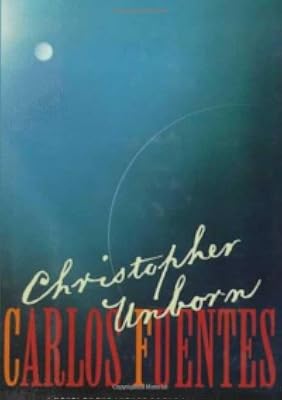

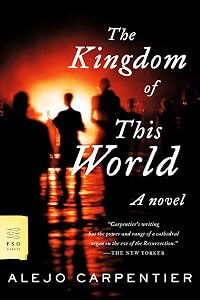
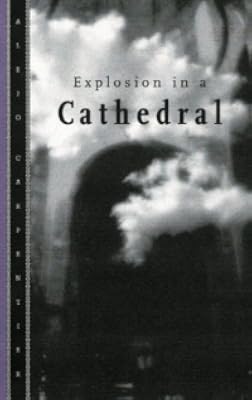
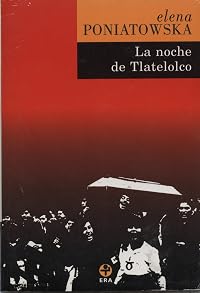












Member Recommendations
Member Reviews
Told with all the dreaminess of Borges and all the madness of Poe, Aura is a neat little novella that plays with concepts of time, obsession, and desire. Think "The Circular Ruins" meets "The Fall of the House of Usher." The narrative is remarkably fluid and unsettling, perfectly capturing the sensation of becoming unglued, unmoored.
This bilingual edition features a facing translation—the original Spanish on the verso and Lysander Kemp's English interpretation on the recto. Kemp's translation is solid, from what I could see; any excisions he made were to keep the English and Spanish texts roughly in line on the page and I don't think any meaning was lost. The only weird thing is that in one instance he translates "tres mil" to "four show more thousand," but then later the original text switches, when referring to the same thing, to "cuatro mil." So it's probably a [sic] situation where Kemp was trying to rectify an error in the original Spanish. Anyway, facing translations are super cool and this is a great piece for it, as it's short and tight and easily readable in both languages, with its arresting second-person present tense.
____________________
Global Challenge: Mexico show less
This bilingual edition features a facing translation—the original Spanish on the verso and Lysander Kemp's English interpretation on the recto. Kemp's translation is solid, from what I could see; any excisions he made were to keep the English and Spanish texts roughly in line on the page and I don't think any meaning was lost. The only weird thing is that in one instance he translates "tres mil" to "four show more thousand," but then later the original text switches, when referring to the same thing, to "cuatro mil." So it's probably a [sic] situation where Kemp was trying to rectify an error in the original Spanish. Anyway, facing translations are super cool and this is a great piece for it, as it's short and tight and easily readable in both languages, with its arresting second-person present tense.
____________________
Global Challenge: Mexico show less
When I heard that Carlos Fuentes (1928-2012), the famous Mexican writer, had died I immediately decided it was time for me to investigate his oeuvre. I selected his 1962 novella Aura, translated by Lysander Kemp; having previously read his short story ‘The Doll Queen’ in an anthology, I now believe he had not only great talent as a writer, but also (rather more surprisingly) a stylish way with horror fiction.
As a word of advice, my own experience of reading the book is that it demands the reader to be at ease. I was midway through the second chapter when I realised I wasn’t enjoying the story because I was reading it much too fast. I put it aside, returning later to start at the beginning and give it my undivided attention. Aura show more is short, so make it last. Take your time and savour it.
The cast consists of four characters: Felipe Montero, a young historian; long deceased General Llorente, whose memoirs Felipe is meant to put in order; Consuelo Llorente, the decrepit still-living wife; and Aura, her bewitching green-eyed niece. The novella begins with a poetic quote from French historian Jules Michelet (1798-1874): "Man hunts and struggles. Woman intrigues and dreams; she is the mother of fantasy, the mother of the gods. She has second sight, the wings that enable her to fly to the infinite of desire and the imagination… The gods are like men: they are born and they die on a woman’s breast…" Fuentes undoubtedly used this quote to draw attention to one of the subtexts of the story. Felipe and the General are preoccupied with history, consistency and rationality while the women form expressions of timelessness and the uncanny. I do not feel free to discuss the plot in depth so will try to leave it vague and move on to the style.
Perhaps the first thing you’ll notice about Aura is that it’s written in second person present-tense, a notoriously difficult style to do well. Why did Fuentes choose it? It obviously wasn’t to 'put yourself in this man’s boots,' since Felipe is too distinct an entity for that to work. It seems rather to mimic the style of dream. "You eat in silence. You drink that thick wine, occasionally shifting your glance so that Aura won’t catch you in the hypnotized stare that you can’t control. You’d like to fix the girl’s features in your mind. Every time you look away you forget them again, and an irresistible urge forces you to look at her once more." In the wavering details, in the manner of Felipe’s behaviour, and in the blatant irrationality of the setting, Aura mimics a dreamscape perfectly without once devolving into unreadable surrealism. For that alone, it should be highly commended.
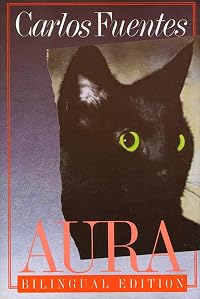
And as such, the cover art manages to be completely misleading and all the more accurate for that. Aura is described in colours and ages, her features never pinned down, so to have an actual woman on the cover would be to destroy the effect. Nor does a cat belong there. The suffering of felines is a peripheral theme of horror that has trickled down from Poe’s ‘The Black Cat’ to something as obscure as the Joan Aiken story ‘Listening’ and Aura joins their ranks, though the cats are so incidental to the plot that I cannot begin to grasp their significance. That’s possibly the point….
The book tends to induce a sense of unease. I like my horror oblique so the balance here is almost perfect and if you let it, it will give you the creeps. It is however in the self-conscious literary department, so if you’re looking for thrills and chills upfront, look elsewhere. Here there’s just a house lost in the middle of a city with a garden that isn’t accessible and a servant that’s never seen. The set-up - Felipe inveigled to stay in this rat-infested mausoleum and the obsession of Consuelo Llorente with reclaiming her vanished youth – puts one in mind of Sunset Boulevard, while Consuelo’s manner of living seems a deliberate evocation of Miss Havisham. I can’t discuss most any of this in detail, save the presence of religious imagery - from Consuelo’s room lit with votive candles to the General, grieving in his memoirs: “Consuelo, my poor Consuelo! Even the devil was an angel once,” to the comparison between Aura’s body during sex with that of Christ’s on the cross. Mixing the sacred and the profane can be used as a shock tactic or as an above-board interpretation of a spiritual experience. Aura manages to do both.
The liberal use of French in the text leads me to the belief that Carlos Fuentes was a closet Francophile, but in terms of readability that is the only challenge it offers. Otherwise, Fuentes’ writing has a simple clarity that serves to highlight the restrained lushness of the prose and it reads beautifully. "The woman, you repeat as she comes close, the woman, not the girl of yesterday: the girl of yesterday – you touch Aura’s fingers, her waist – couldn’t have been more than twenty; the woman of today – you caress her loose black hair, her pallid cheeks – seems to be forty. Between yesterday and today, something about her green eyes has turned hard; the red of her lips has strayed beyond their former outlines, as if she wanted to fix them in a happy grimace, a troubled smile; as if, like the plant in the patio, her smile combined the taste of honey and the taste of gall." It is this element of beauty that gives the story its impact. There is an allure in what is depicted and at the same time a repulsion – and that, to my mind, is the essence of the macabre.
It’s a bit early for me to make any sweeping pronouncements but from what I’ve read I feel confident in saying this: Carlos Fuentes was a great writer and an artist. Recommended.
http://pseudointellectualreviews.wordpress.com/2012/05/18/aura-carlos-fuentes/ show less
As a word of advice, my own experience of reading the book is that it demands the reader to be at ease. I was midway through the second chapter when I realised I wasn’t enjoying the story because I was reading it much too fast. I put it aside, returning later to start at the beginning and give it my undivided attention. Aura show more is short, so make it last. Take your time and savour it.
The cast consists of four characters: Felipe Montero, a young historian; long deceased General Llorente, whose memoirs Felipe is meant to put in order; Consuelo Llorente, the decrepit still-living wife; and Aura, her bewitching green-eyed niece. The novella begins with a poetic quote from French historian Jules Michelet (1798-1874): "Man hunts and struggles. Woman intrigues and dreams; she is the mother of fantasy, the mother of the gods. She has second sight, the wings that enable her to fly to the infinite of desire and the imagination… The gods are like men: they are born and they die on a woman’s breast…" Fuentes undoubtedly used this quote to draw attention to one of the subtexts of the story. Felipe and the General are preoccupied with history, consistency and rationality while the women form expressions of timelessness and the uncanny. I do not feel free to discuss the plot in depth so will try to leave it vague and move on to the style.
Perhaps the first thing you’ll notice about Aura is that it’s written in second person present-tense, a notoriously difficult style to do well. Why did Fuentes choose it? It obviously wasn’t to 'put yourself in this man’s boots,' since Felipe is too distinct an entity for that to work. It seems rather to mimic the style of dream. "You eat in silence. You drink that thick wine, occasionally shifting your glance so that Aura won’t catch you in the hypnotized stare that you can’t control. You’d like to fix the girl’s features in your mind. Every time you look away you forget them again, and an irresistible urge forces you to look at her once more." In the wavering details, in the manner of Felipe’s behaviour, and in the blatant irrationality of the setting, Aura mimics a dreamscape perfectly without once devolving into unreadable surrealism. For that alone, it should be highly commended.
And as such, the cover art manages to be completely misleading and all the more accurate for that. Aura is described in colours and ages, her features never pinned down, so to have an actual woman on the cover would be to destroy the effect. Nor does a cat belong there. The suffering of felines is a peripheral theme of horror that has trickled down from Poe’s ‘The Black Cat’ to something as obscure as the Joan Aiken story ‘Listening’ and Aura joins their ranks, though the cats are so incidental to the plot that I cannot begin to grasp their significance. That’s possibly the point….
The book tends to induce a sense of unease. I like my horror oblique so the balance here is almost perfect and if you let it, it will give you the creeps. It is however in the self-conscious literary department, so if you’re looking for thrills and chills upfront, look elsewhere. Here there’s just a house lost in the middle of a city with a garden that isn’t accessible and a servant that’s never seen. The set-up - Felipe inveigled to stay in this rat-infested mausoleum and the obsession of Consuelo Llorente with reclaiming her vanished youth – puts one in mind of Sunset Boulevard, while Consuelo’s manner of living seems a deliberate evocation of Miss Havisham. I can’t discuss most any of this in detail, save the presence of religious imagery - from Consuelo’s room lit with votive candles to the General, grieving in his memoirs: “Consuelo, my poor Consuelo! Even the devil was an angel once,” to the comparison between Aura’s body during sex with that of Christ’s on the cross. Mixing the sacred and the profane can be used as a shock tactic or as an above-board interpretation of a spiritual experience. Aura manages to do both.
The liberal use of French in the text leads me to the belief that Carlos Fuentes was a closet Francophile, but in terms of readability that is the only challenge it offers. Otherwise, Fuentes’ writing has a simple clarity that serves to highlight the restrained lushness of the prose and it reads beautifully. "The woman, you repeat as she comes close, the woman, not the girl of yesterday: the girl of yesterday – you touch Aura’s fingers, her waist – couldn’t have been more than twenty; the woman of today – you caress her loose black hair, her pallid cheeks – seems to be forty. Between yesterday and today, something about her green eyes has turned hard; the red of her lips has strayed beyond their former outlines, as if she wanted to fix them in a happy grimace, a troubled smile; as if, like the plant in the patio, her smile combined the taste of honey and the taste of gall." It is this element of beauty that gives the story its impact. There is an allure in what is depicted and at the same time a repulsion – and that, to my mind, is the essence of the macabre.
It’s a bit early for me to make any sweeping pronouncements but from what I’ve read I feel confident in saying this: Carlos Fuentes was a great writer and an artist. Recommended.
http://pseudointellectualreviews.wordpress.com/2012/05/18/aura-carlos-fuentes/ show less
Pasado un tiempo de que leí este libro no puedo más que decir que sigo teniendo un grave problema con él, la historia va en un crescendo donde poco a poco se nos muestra quien es Aura, no obstante la narración es muy rápida, como si a Fuentes le hibieran dicho que tenia limitado número de hojas y, al no ocurrírsele otra historia, se puso a apretujar todos los elementos necesarios en un espacio muy pequeño. Esto tal vez no me molestaría tanto de no ser porque la historia es bastante buena.
Tenemos varios elementos del gótico, los necesarios para lograr una ambientación que puede llevar a cualquier persona que haya vivido en la Ciudad de México, o en cualquier ciudad con casas coloniales, a imaginar que esta situación podría show more pasar ahí, y salir huyendo sólo de pensarlo. Por el contrario los personajes no están muy profundisados, pasan de manera rápida por la historia a pesar de que no salen de ella, dado que en realidad sólo están tres personas en la narración: Felipe, la vieja (cuyo nombre no recuerdo porque primordialmente se le llama de esta manera) y Aura.
Con tan pocos personajes, encerrados todos en el pequeño espacio que comprnede la casa, la sensación de claustrofobia y de que se tienen sólo los unos a los otros se logra de una manera bastante buena, poco a poco puedes incluso a ver como es que Felipe cae en un enamoramiento tan enorme por Aura, porque a pesar de la rápidez de los acontecimientos no podemos obviar el hecho de que los sentimientos no se sientes acelerados, incluso se puede sentir que es en esa parte donde más esfuerzo puso el autor.
En conclusión, Aura es una obra que sabe a poco cuando se considera su potencial, eso no la convierte en algo malo, sino que queda la sensación de que es como el agua simple, buena pero insipida. show less
Tenemos varios elementos del gótico, los necesarios para lograr una ambientación que puede llevar a cualquier persona que haya vivido en la Ciudad de México, o en cualquier ciudad con casas coloniales, a imaginar que esta situación podría show more pasar ahí, y salir huyendo sólo de pensarlo. Por el contrario los personajes no están muy profundisados, pasan de manera rápida por la historia a pesar de que no salen de ella, dado que en realidad sólo están tres personas en la narración: Felipe, la vieja (cuyo nombre no recuerdo porque primordialmente se le llama de esta manera) y Aura.
Con tan pocos personajes, encerrados todos en el pequeño espacio que comprnede la casa, la sensación de claustrofobia y de que se tienen sólo los unos a los otros se logra de una manera bastante buena, poco a poco puedes incluso a ver como es que Felipe cae en un enamoramiento tan enorme por Aura, porque a pesar de la rápidez de los acontecimientos no podemos obviar el hecho de que los sentimientos no se sientes acelerados, incluso se puede sentir que es en esa parte donde más esfuerzo puso el autor.
En conclusión, Aura es una obra que sabe a poco cuando se considera su potencial, eso no la convierte en algo malo, sino que queda la sensación de que es como el agua simple, buena pero insipida. show less
Realismo mágico gótico? Tá tendo.
Novelinha curtíssima, mas com uma atmosfera fantástica, especialmente porque usa um dos artifícios que mais gosto em literatura gótica: estaria o protagonista tendo sonhos diurnos ou de fato estaria presenciando tudo aquilo?
Não por acaso o Damiano Damiani o adaptou para cinema quatro anos depois do Fuentes tê-lo escrito (o filme tá num dos boxes da Versátil de Horror Gótico Italiano).
Novelinha curtíssima, mas com uma atmosfera fantástica, especialmente porque usa um dos artifícios que mais gosto em literatura gótica: estaria o protagonista tendo sonhos diurnos ou de fato estaria presenciando tudo aquilo?
Não por acaso o Damiano Damiani o adaptou para cinema quatro anos depois do Fuentes tê-lo escrito (o filme tá num dos boxes da Versátil de Horror Gótico Italiano).
Felipe Montero, a young historian, accepts a live-in position, editing the memoirs of General Llorente, whose elderly widow, Consuelo, seeks their publication before her death. In the dark, enclosed house, filled with the perfumes of medicinal plants, Felipe dreams of sexual union, and escape, with the young beautiful niece, Aura; and he reads of Consuelo's infertility, her fantasy of medicinally creating a spiritual child, her delirium of walking toward her youth. Intoxicated by desire and the stifling atmosphere, Felipe embraces Aura, who transforms into the 109-year-old widow. Consuelo promises, "She will return, Felipe. Together, we will bring her back."
From descriptions I'd read before starting this, I was expecting something in the vein of Gabriel Garcia Marquez. But no, the aesthetic here is much closer to Poe or Baudelaire. I'd call this a classic horror tale, more than 'magical realism.'
A young man, Felipe Montero, answers a help-wanted ad that seems tailor-made for him. It shouldn't be too difficult to prepare a widow's late husband's memoirs for a vanity publication, and the generous salary will allow him the leisure to pursue his own studies.
Still, once he meets his prospective employer, the widow is so clearly eccentric that he hesitates... until he is introduced to her lovely niece, Aura. The presence of an alluring woman tilts the balance of his decision, and he agrees to show more live in their home until the job is completed.
It's not giving anything away to hint that more weird and disturbing revelations are to come...
The flow of the story is lovely, and while a reader might guess at part of the truth, the full finale is sure to come as a surprise.
Excellent story - I do have to say, however, that the way expectations change over time is on full display here. 'Aura' was published as a 'novel' - today, it'd be classified as a short story; not even a novella. show less
A young man, Felipe Montero, answers a help-wanted ad that seems tailor-made for him. It shouldn't be too difficult to prepare a widow's late husband's memoirs for a vanity publication, and the generous salary will allow him the leisure to pursue his own studies.
Still, once he meets his prospective employer, the widow is so clearly eccentric that he hesitates... until he is introduced to her lovely niece, Aura. The presence of an alluring woman tilts the balance of his decision, and he agrees to show more live in their home until the job is completed.
It's not giving anything away to hint that more weird and disturbing revelations are to come...
The flow of the story is lovely, and while a reader might guess at part of the truth, the full finale is sure to come as a surprise.
Excellent story - I do have to say, however, that the way expectations change over time is on full display here. 'Aura' was published as a 'novel' - today, it'd be classified as a short story; not even a novella. show less
This short 1.5-hour audiobook was narrated in beautiful Mexican Spanish. It started off creepy with the main character entering a house and describing everything in rich detail. Halfway through the story, I realized that, despite understanding most of the words, I still didn't have a clue what was going on. So I read a summary in English, and went, "Oh, okay. Got it!"
With no more worries about the plot, I started again from the beginning, relaxed into the musical language, and found a few things interesting. The story is told in present tense (which is common) and, toward the end, in future tense (which is uncommon). The POV is in second-person (e.g. "you enter the room," or "entras el cuarto") which is unusual, but not unheard of.
The show more only other second-person POV story I can think of is: "If You Give a Mouse a Cookie" and all its related tales. (A series not to be missed, BTW, for all ages, young and old!) show less
With no more worries about the plot, I started again from the beginning, relaxed into the musical language, and found a few things interesting. The story is told in present tense (which is common) and, toward the end, in future tense (which is uncommon). The POV is in second-person (e.g. "you enter the room," or "entras el cuarto") which is unusual, but not unheard of.
The show more only other second-person POV story I can think of is: "If You Give a Mouse a Cookie" and all its related tales. (A series not to be missed, BTW, for all ages, young and old!) show less
Members
- Recently Added By
Lists

Second-person fiction
63 works; 3 members

Speculative Fiction from around the World
610 works; 18 members

Magia en los Adoquines: Fantasía Urbana y Realismo Mágico
7 works; 1 member
Author Information

198+ Works 15,041 Members
Carlos Fuentes was born in Panama on November 11, 1928. He studied law at the National University of Mexico and did graduate work at the Institute des Hautes Etudes in Switzerland. He entered Mexico's diplomatic service and wrote in his spare time. His first novel, Where the Air Is Clear, was published in 1958. His other works include The Death of show more Artemio Cruz, Destiny and Desire, and Vlad. The Old Gringo was later adapted as a film starring Gregory Peck and Jane Fonda in 1989. He won numerous awards including the Fuentes the Romulo Gallegos Prize in Venezuela for Terra Nostra, the National Order of Merit in France, the Cervantes Prize in 1987, and Spain's Prince of Asturias Award for literature in 1994. He also wrote essays, short stories, screenplays, and political nonfiction. In addition to writing, he taught at numerous universities, including Columbia, Harvard, Princeton, and Brown. He served as the ambassador of Mexico to France. He died on May 15, 2012 at the age of 83. (Bowker Author Biography) show less
Some Editions
Series
Belongs to Publisher Series
Witte Beertjes (1062)
Alianza Cien (26)
Work Relationships
Is contained in
Common Knowledge
- Canonical title
- Aura
- Original title
- Aura
- Original publication date
- 1962
- People/Characters
- Felipe Montero; Aura; Consuelo Llorente
- Epigraph
- El hombre caza y lucha,
La mujer intriga y sueña;
es la madre de la fantasia,
de los dioses.
Posee la segunda visión,
las alas que le permiten volar hacia
el infinito del
deseo y de la imaginación...
nacen y mueren sobre
el pecho de una mujer...
Man hunts and struggles.
Woman intrigues and dreams;
she is the mother of fantasy,
the mother of the gods.
She has second sight,
the wings that enable her to fly
to the infinite of
desire and the imaginat... (show all)ion...
The gods are like men:
they are born and they die
on a woman's breast...
JULES MICHELET - Dedication
- a Manolo e Tere Barbachano
- First words
- Lees ese anuncio: una oferta de esa naturaleza no se hace todos los dias.
You're reading the advertisement: an offer like this isn't made every day. - Last words
- (Click to show. Warning: May contain spoilers.)Deja que recupere fuerzas y la haré regresar...
(Click to show. Warning: May contain spoilers.)Let me recover my strength and I'll bring her back..."
Classifications
Statistics
- Members
- 1,391
- Popularity
- 17,085
- Reviews
- 30
- Rating
- (3.66)
- Languages
- 13 — Armenian, Danish, Dutch, English, Finnish, German, Italian, Farsi/Persian, Portuguese, Russian, Spanish, Swedish, Turkish
- Media
- Paper, Audiobook, Ebook
- ISBNs
- 37
- ASINs
- 15