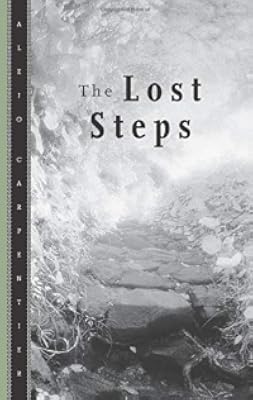
The Lost Steps
by Alejo Carpentier
On This Page
Description
"Dissatisfied with his empty, Sisyphus-like existence in New York City, where he has abandoned his creative dreams for a job in corporate advertising, a highly cultured aspiring composer wants nothing more than to tear his life up from the root. He soon finds his escape hatch: a university-sponsored mission to South America to look for indigenous musical instruments in one of the few areas of the world not yet touched by civilization. Retracing the steps of time, he voyages with his lover show more into a land that feels outside of history, searching not just for music but ultimately for himself, and turning away from modernity toward the very heart of what makes us human"-- show lessTags
Recommendations




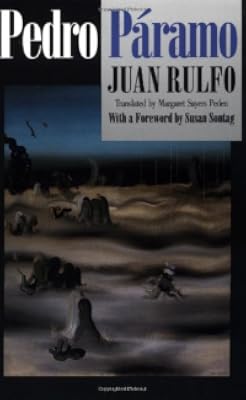



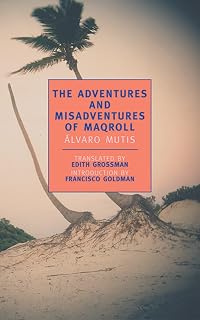
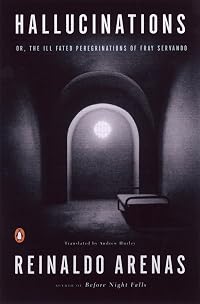


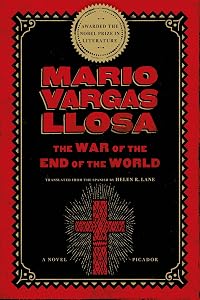
















Member Recommendations

by chrisharpe


Member Reviews
Like all of Carpentier's books that I've read so far, this turns out to be about the contrast between the rich, "baroque" post-colonial culture of Latin America and the failed enlightenment rationalism of the Old World. The narrator is a composer, Cuban-born but living in Europe (or possibly the USA - Carpentier likes to keep things unspecified). He has an unfulfilling but well-paid job writing music for advertising films, and is married to Ruth, an actor.
He's just finished work on a film project, and Ruth has gone off on tour, when he gets an invitation from one of his university contacts to make a journey to the South-American rainforest to look for musical instruments used by indigenous people. He's reluctant, but his girlfriend show more Mouche proposes that they go and spend a couple of weeks together at the university's expense in a nice hotel in the South American capital city and browse the local antique shops for drums and flutes.
Needless to say, it doesn't work out like that, and they have to make the full journey after all, travelling through a succession of zones that illustrate the rich complexity of the local culture, with its intertwined threads of Conquistador, African and Indigenous influence, increasingly dominated as they get nearer to the forest by the astonishing energy of the natural environment. The narrator transfers his affections from Mouche, who turns out not to be sufficiently crease-resistant for up-river travel, to Rosario, a fully-attuned local woman who embodies everything the narrator likes about where he is and, as a bonus, even reminds him of his Cuban mother. And they find themselves in a simple rainforest community, where time seems to have been frozen since the stone age, and where the narrator would have been perfectly happy to spend the rest of his life in harmony with nature.
Whilst the Edenic valley inevitably turns out not to be the escape he thought it was going to be, the journey helps him to see the metropolitan world he's been living in more clearly, and understand how futile and tired its cultural themes are without the enriching elements the post-colonial world offers.
This is a full-on symbolic journey through all the senses, where the impressions the narrator gets from the world around him are more important than the concrete events of the plot: it's a book full of scents and tastes and images and textures as well as language, natural sounds and music. Beethoven, Bach, botany, birdsong, 17th century painters, Homer, Shelley, Goethe and Shakespeare, ... even Alberic Magnard gets a look-in. But Stravinsky and Picasso are conspicuous by their absence: Carpentier obviously doesn't hold with the modernists' way of rediscovering the Primitive. Very interesting! show less
He's just finished work on a film project, and Ruth has gone off on tour, when he gets an invitation from one of his university contacts to make a journey to the South-American rainforest to look for musical instruments used by indigenous people. He's reluctant, but his girlfriend show more Mouche proposes that they go and spend a couple of weeks together at the university's expense in a nice hotel in the South American capital city and browse the local antique shops for drums and flutes.
Needless to say, it doesn't work out like that, and they have to make the full journey after all, travelling through a succession of zones that illustrate the rich complexity of the local culture, with its intertwined threads of Conquistador, African and Indigenous influence, increasingly dominated as they get nearer to the forest by the astonishing energy of the natural environment. The narrator transfers his affections from Mouche, who turns out not to be sufficiently crease-resistant for up-river travel, to Rosario, a fully-attuned local woman who embodies everything the narrator likes about where he is and, as a bonus, even reminds him of his Cuban mother. And they find themselves in a simple rainforest community, where time seems to have been frozen since the stone age, and where the narrator would have been perfectly happy to spend the rest of his life in harmony with nature.
Whilst the Edenic valley inevitably turns out not to be the escape he thought it was going to be, the journey helps him to see the metropolitan world he's been living in more clearly, and understand how futile and tired its cultural themes are without the enriching elements the post-colonial world offers.
This is a full-on symbolic journey through all the senses, where the impressions the narrator gets from the world around him are more important than the concrete events of the plot: it's a book full of scents and tastes and images and textures as well as language, natural sounds and music. Beethoven, Bach, botany, birdsong, 17th century painters, Homer, Shelley, Goethe and Shakespeare, ... even Alberic Magnard gets a look-in. But Stravinsky and Picasso are conspicuous by their absence: Carpentier obviously doesn't hold with the modernists' way of rediscovering the Primitive. Very interesting! show less
Devo confessar que fiquei com sentimentos contraditórios com relação a esse livro. Muito bem escrito numa prosa fluida em fluxo de consciência que nos prende numa estória interessante. O protagonista porém é um narcisista egocêntrico e machista bastante infantil com uma personalidade fraca de jovem adolescente quando é na realidade um homem feito. Não consegue convencer como tendo conseguido mudar ao longo da estória, e por isso decepciona. Parece que no final está igual a onde começou em termos psicológicos. A estória em si é interessante pois é como uma viagem no tempo em que o personagem vai deslizando pouco a pouco para o passado quando visita cidades no interior da America Latina que ainda estariam no sec XVII ou show more vilas no interior que parecem medievais até chegar no paleolítico quando se encontra com os índios amazônicos. A visão eurocêntrica que tenta estabelecer uma dualidade entre o momento presente (no caso 1950) e esses passados é frágil e o personagem fica preso em sua própria ego trip. O machismo do personagem nos irrita e reforça sua visão conservadora e moralista. Não fica claro se se trata de uma construção do personagem ou a própria visão do autor. O autor usa frases de efeito e citações para tentar conquistar o leitor com sua cultura, mas essa tática não convence e em muitos casos apenas entedia. Os personagens masculinos parecem todos muito simples e esquemáticos com exceção do frei enquanto as 3 personagens femininas parecem mais um desdobramento da mesma mulher idealizada do autor. Cada uma serve mais para apresentar os medos e inseguranças do próprio narrador e para colocar uma lupa na sua personalidade frágil. O melhor personagem é o frei que tenta levar o cristianismo para os nativos da floresta. Recomendo a leitura pois aparentemente essa obra permite uma leitura totalmente diversa da que eu fiz que pode ser muito gratificante para algumas pessoas. show less
The central character, a composer, has become dissatisfied with his life in New York City. He has abandoned his artistic ambitions for a job that provides him with monetary rewards but not much personal satisfaction. His marriage has become empty with his actress wife often on the road. A museum curator friend asks him to use his three-week vacation to fly to South America to obtain examples of primitive musical instruments from the jungle. He declines the offer but mentions it later to his mistress, Mouche, who immediately latches on to the trip with the plan of spending the entire three weeks partying in the South American capital and paying a friend to forge primitive instruments to give to the museum on their return. Lacking the show more energy or initiative to resist her plans, the composer goes along.
Soon after the couple arrives in the city the country erupts into civil war. Trapped in the hotel whose waiters had all run off to join the revolution, it’s difficult to say whether they are more troubled by the lack of water or the shortage of tobacco. On the plus side the composer is reconnecting to the language, as well as the scents and sights of his youth in Latin America, and he begins to emerge from the ennui that plagued him in New York. Step by step they move further upcountry as the composer progressively becomes disenchanted with his mistress, who does not improve when removed from her native habitat of Manhattan, and begins to assert his own will. They also meet a native woman, Rosario, while traveling who embodies many of the qualities that Mouche so obviously lacks. Mouche serves as a stand in for the lifestyle that the composer has left behind among the intellectual dilettantes of a modern metropolis such as New York. Rosario, on the other hand, represents the simpler virtues of an earlier age.
The composer’s trip deeper into the jungle is a trip back through time. The smaller towns where they wait for a boat upriver are a throwback to the middle ages with their festivals and pomp centered on the church and village. Further on he regresses back to the Stone Age as he is welcomed into a new community founded as a utopia hidden away on an unexplored plateau. His priorities change with the settings and for a while he throws away all of the baggage of civilization to embrace this newfound Eden.
Obviously no reader expects Edens or Utopias to endure, and the composer’s place in this village is no exception. As the urge to compose returns to him he makes some decisions with fateful consequences. There is also plenty of foreshadowing that the community itself will not remain in balance regardless of which path the composer chooses.
Carpentier is a musicologist by training and is considered one of the forefathers of Latin American magical realism. Unfortunately I’m fairly musically illiterate so I could not fully appreciate the numerous musical themes throughout the book. I’m a zoologist by training and therefore was able to enjoy his writing about the natural history aspects of the jungle journey. His descriptions of the insects invading through the dry water pipes of the capital city during the revolution and the rapidly advancing decay of the rainy season in the jungle were particularly vivid. show less
Soon after the couple arrives in the city the country erupts into civil war. Trapped in the hotel whose waiters had all run off to join the revolution, it’s difficult to say whether they are more troubled by the lack of water or the shortage of tobacco. On the plus side the composer is reconnecting to the language, as well as the scents and sights of his youth in Latin America, and he begins to emerge from the ennui that plagued him in New York. Step by step they move further upcountry as the composer progressively becomes disenchanted with his mistress, who does not improve when removed from her native habitat of Manhattan, and begins to assert his own will. They also meet a native woman, Rosario, while traveling who embodies many of the qualities that Mouche so obviously lacks. Mouche serves as a stand in for the lifestyle that the composer has left behind among the intellectual dilettantes of a modern metropolis such as New York. Rosario, on the other hand, represents the simpler virtues of an earlier age.
The composer’s trip deeper into the jungle is a trip back through time. The smaller towns where they wait for a boat upriver are a throwback to the middle ages with their festivals and pomp centered on the church and village. Further on he regresses back to the Stone Age as he is welcomed into a new community founded as a utopia hidden away on an unexplored plateau. His priorities change with the settings and for a while he throws away all of the baggage of civilization to embrace this newfound Eden.
Obviously no reader expects Edens or Utopias to endure, and the composer’s place in this village is no exception. As the urge to compose returns to him he makes some decisions with fateful consequences. There is also plenty of foreshadowing that the community itself will not remain in balance regardless of which path the composer chooses.
Carpentier is a musicologist by training and is considered one of the forefathers of Latin American magical realism. Unfortunately I’m fairly musically illiterate so I could not fully appreciate the numerous musical themes throughout the book. I’m a zoologist by training and therefore was able to enjoy his writing about the natural history aspects of the jungle journey. His descriptions of the insects invading through the dry water pipes of the capital city during the revolution and the rapidly advancing decay of the rainy season in the jungle were particularly vivid. show less
These were the days for the accumulation of humus, the rotting and decay of the fallen leaves, in keeping with the law decreeing that all generation shall take place in the neighborhood of excretion, that organs of generation shall be intertwined with those of urination, and that all that is born shall come into the world enveloped in mucus, serum, and blood--just as out of manure comes the purity of the asparagus and the green of mint. p. 229This was my first exposure to Carpentier and I was immediately struck by the quality of his sentences. He writes a dense sentence, almost wild in its serpentine way, easy to get lost in. It feels a bit like you're in a jungle and the words are vines climbing up your leg. This became especially show more effective in chapter four, when our protagonist actually enters the jungle... the prose achieved a sort of ultimate mirroring of its content.
One felt the presence of rampant fauna, of the primeval slime, of the green fermentation beneath the dark waters, which gave off a sour reek like a mud of vinegar and carrion, over whose oily surface moved insects made to walk on the water: chinch-bugs, white fleas, high-jointed flies, tiny mosquitoes that were hardly more than shimmering dots in the green light, for the green, shot through by an occasional ray of sun, was so intense that the light as it filtered through the leaves had the color of moss dyed the hue of the swamp-bottoms as it sought the roots of the plants. p. 161Though his prose was thrilling, it was also a little exhausting because it never lets up. At times, when I was really tuned in to what he was saying, it was like crawling into the dense undergrowth and feeling completely at home. But other times, when my attention was flagging after a long day, I could hardly concentrate on the complex workings of what he was saying. I had to read sentences over and over, as if grasping for a downed limb.
Because here, amidst the multitude that surrounded me and rushed madly and submissively, I saw many faces and few destinies. And this was because, behind these faces, every deep desire, every act of revolt, every impulse was hobbled by fear. Fear of rebuke, of time, of the news of the collectivity that multiplied its forms of slavery. There was fear of one's own body, of the sanctions and pointing fingers of publicity; there was fear of the womb that opens to the seed, fear of the fruits and of the water; fear of the calendar, fear of the law, fear of slogans, fear of mistakes, fear of the sealed envelope, fear of what might happen.The adventure story itself was exciting, but as you probably know by now, plot alone doesn't do it for me. So what else interested me? First: the narrator, aside from the immense prose he writes, is also psychologically a very interesting dude. To me, he lies somewhere in between the unreliable narrator and the reliable one. You can see his pitfalls miles before they come, and perhaps he can too, but he is so good at convincing himself and you, piling illusion atop illusion. But these aren't crazy illusions, they are common ones, about civilization, nature, modernity vs. primitivity, art etc.
What I really found attractive about him was that he was so... malleable, but also so strong inside. At times he seemed normal, not like a typical 'crazy' unreliable narrator with unpredictable moodswings. He is actually quite consistent and sane, but open to being changed by the world, and always struggling to reach a place of well-being, though often in vain. He can be despicable at times, and selfish and unfair, and though he doesn't see these aspects in himself, I think the author intended for them to be apparent to the reader. I don't think Carpentier was painting the narrator to be an example to be followed above judgement, but rather as an example of the futility of our condition in the world--how we can't go back to a simpler state, and how we cannot stay here either in the time of the 'galley master'.
The thought invariably struck me that the only difference between my previous birthday and this one was the extra candle on the cake, which tasted like the last one... But to evade this, in the world that was my lot, was as impossible as trying to revive today certain epics of heroes or saints. We had fallen upon the era of the Wasp-Man, the No-Man, when souls were no longer sold to the Devil, but to the Bookkeeper or the Galley Master. p. 9The second thing about this story is that, even though it's straight forward, it is full of asides, tangents, and opportunities for our narrator to muse about this topic or that. These I found highly entertaining and often insightful, and always perfectly phrased. I wouldn't have enjoyed the direct route as much as the one provided here, with all the views and vistas of his mind.
Overhead, into the thinning mist, rose the peaks of the city: the patinaless spires of the Christian churches, the dome of the Green Orthodox church, the large hospital where White Eminences officiated beneath classical entablatures designed by those architects who, early in the century, sought to lose their way in an increase of verticality. p. 10show less
I suppose that everyone has places on his mental map of the world that resonate for him with an almost innate affinity. (I love all things French, but Spain calls me; China is oceanic, but my heart wants India; not the Arctic but Antarctica; and rather than Africa, South America.) Alejo Carpentier caters to my romantic vision of the mystery of South America in The Lost Steps. His writing is as lush as the rivers and jungles that he describes, and the narrator-protagonist allows himself to be swept away to my great, vicarious pleasure.
The narrator is a modern man who realizes that the farther he travels in space, the farther he is moving back in time. He becomes happier and happier to give up the trappings of his life and to live simply show more and fully - except that he is a composer who lacks paper.
I conscientiously try not to impose my 21st century mores on earlier writers, but the women in the book arouse my great curiosity. I wish that he had done more with Ruth, the actress-wife, barred from creativity in a long-running play that parallels the couple's long-running relationship. That would, I realize, be another book. I wish that some contemporary Jean Rhys would write her story. The other two women, Mouche and Rosario, are developed even less well, being plot devices not central to the narrator and his odyssey. So while this is a wonderful book, I come away wishing for more - unfair or not. show less
The narrator is a modern man who realizes that the farther he travels in space, the farther he is moving back in time. He becomes happier and happier to give up the trappings of his life and to live simply show more and fully - except that he is a composer who lacks paper.
I conscientiously try not to impose my 21st century mores on earlier writers, but the women in the book arouse my great curiosity. I wish that he had done more with Ruth, the actress-wife, barred from creativity in a long-running play that parallels the couple's long-running relationship. That would, I realize, be another book. I wish that some contemporary Jean Rhys would write her story. The other two women, Mouche and Rosario, are developed even less well, being plot devices not central to the narrator and his odyssey. So while this is a wonderful book, I come away wishing for more - unfair or not. show less
I had a lot of thoughts going through my head as I re-read this book, so I think I’ll begin by trying to describe it and see where I end up. It´s been about three years since I read it for the first time, and I liked it every bit as much as I did then. It is about a man who lives in a city (unnamed, but purportedly New York), and is a musician but has sold out to a normal 9-to-5 job doing scores for promotional ads so that he can support his wife, a theater actress who he never sees because their schedules only coincide on Sunday mornings, when they habitually meet in bed, less out of passion than out of habit. He is cheating on her with an astrologist who has a bunch of new-agey friends. One day he runs into an old colleague from show more the university where he did research on primitive instruments and music theory. His colleague gives him the opportunity to go to the depths of the jungle in search of instruments that will help prove his long-set-aside yet revolutionary theory on the origins of music. He decides to go, and takes his mistress with him. As he journeys deeper into the jungle, he becomes entranced with the people and the life that surround him, and feels a greater and greater desire to leave behind his frustrating and unfulfilling existence back in the city.
The story of an escape from civilization is not remarkable or unique, but it is written in a fantastically musical and flowing manner that I find hypnotic. In one of my favorite chapters, the protagonist hears Beethoven on the radio in a town on the edge of the jungle, and his thoughts flow in and out of the music, taking him to his childhood, the stories of his parents, his experiences in World War II, and his disillusionment with the clash between his father’s Europe (idealistic, intellectual) and the world of fascism and Nazism that he saw during the war. His thoughts in this chapter, as in the rest of the book, parallel the action and help situate the character in two worlds: the one that he yearns to leave behind and the one that he wishes to become a part of, the world of the jungle. The language that Carpentier uses is cultured and his vocabulary is large and at first intimidating. To tell the truth, the first time I began this book I thought it was going to be a really hard read (paragraphs are also often pages long). I find, however, that this isn’t the case, because he employs an almost universal sort of Spanish that for the most part avoids the colloquialisms and local vocabulary that make earlier regionalist novels hard for me at times. It is remarkably readable, which is a testament to the way Carpentier wields words, thoughts and ideas, joining them into his narrative and composing them almost as if they were parts of a symphony.
It is also remarkable stylistically as an antecedent to Gabriel García Márquez´s Magical Realism. As I understand Carpentier´s idea of Marvelous Realism (realismo maravilloso), it is a way of expressing that there are so many places, people, and occurrences across Latin America that are marvelous, awesome, at times hard to believe, yet real. This book is a journey into the marvelous, but it is firmly grounded in reality. Things happen, but they happen for reasons. For example, after a character dies in a town on the edge of the jungle, the next day, during the wake, a swarm of butterflies flood the sky, blocking the sun and creating an eclipse-like state. Carpentier explains the phenomenon as a migration not altogether uncommon in the jungle, and even comes back to the event later in the book, when the protagonist sees hoards of young butterflies and realizes that these are the creatures that will grow to someday flood the sky in some corner of the jungle. I believe that there is a nearly identical flood of butterflies, or something similar, falling from the sky after a death in 100 Years of Solitude, but in Márquez´s case, no explanation is given or really necessary in the world of Macondo. From Carpentier to Márquez, the world of Latin America has changed from a marvelous land to a magical one, and explanations for the fantastic and unbelievable events that happen are prescindable. I feel that Márquez is heavily indebted to Carpentier, both stylistically and thematically, and I enjoy reading Carpentier and experiencing a voice that is still connected to reality as it depicts the wonders of Latin America.
I really, really like this book, for the reasons I´ve mentioned above and because I feel a personal connection with this book and the story it narrates, having spent time in a rural, foreign setting as a Peace Corps volunteer and having related the story of the protagonist´s escape from civilization to my own trip from America to the Mongolian steppe (I had to replace the jungle, full of life, with the steppe, barren and bleak; besides that, I saw a lot of similarities). I read it for the first time during my summer training, and I often imagined my later trips from Ulaanbaatar to the provincial capital to my countryside home in comparison to what I read in this book. It is at the same time a paean to life away from civilization and a stark reminder of the chasm that separates the world of cities, universities and high culture from the isolated communities of Latin America and other parts of the world. I, like I´m sure many volunteers do, daydreamed of what it would be like to just stay in my community, and not go back to America. This book examines just how hard it is for an individual to do just that, and how much a person has to leave behind in order to stay. The narrator seems at times ugly and absurd the farther he journeys into the jungle, and his desires to embrace the simple life (and a native woman) were distasteful to me then, and a reminder of how different I was as an American in a very foreign place. I am glad that Carpentier´s protagonist is more of an antihero than a swashbuckling adventurer, because his flaws and presumptions helped me examine my own existence away from my native civilization. If anyone I know decides to join the Peace Corps, I think that I will send them a translation of this book, because it does an excellent job of illustrating the magical pull of rural life, while at the same time illustrating the barriers that separate us as urban, cultured individuals from the “simple life” to which we often yearn to return. show less
The story of an escape from civilization is not remarkable or unique, but it is written in a fantastically musical and flowing manner that I find hypnotic. In one of my favorite chapters, the protagonist hears Beethoven on the radio in a town on the edge of the jungle, and his thoughts flow in and out of the music, taking him to his childhood, the stories of his parents, his experiences in World War II, and his disillusionment with the clash between his father’s Europe (idealistic, intellectual) and the world of fascism and Nazism that he saw during the war. His thoughts in this chapter, as in the rest of the book, parallel the action and help situate the character in two worlds: the one that he yearns to leave behind and the one that he wishes to become a part of, the world of the jungle. The language that Carpentier uses is cultured and his vocabulary is large and at first intimidating. To tell the truth, the first time I began this book I thought it was going to be a really hard read (paragraphs are also often pages long). I find, however, that this isn’t the case, because he employs an almost universal sort of Spanish that for the most part avoids the colloquialisms and local vocabulary that make earlier regionalist novels hard for me at times. It is remarkably readable, which is a testament to the way Carpentier wields words, thoughts and ideas, joining them into his narrative and composing them almost as if they were parts of a symphony.
It is also remarkable stylistically as an antecedent to Gabriel García Márquez´s Magical Realism. As I understand Carpentier´s idea of Marvelous Realism (realismo maravilloso), it is a way of expressing that there are so many places, people, and occurrences across Latin America that are marvelous, awesome, at times hard to believe, yet real. This book is a journey into the marvelous, but it is firmly grounded in reality. Things happen, but they happen for reasons. For example, after a character dies in a town on the edge of the jungle, the next day, during the wake, a swarm of butterflies flood the sky, blocking the sun and creating an eclipse-like state. Carpentier explains the phenomenon as a migration not altogether uncommon in the jungle, and even comes back to the event later in the book, when the protagonist sees hoards of young butterflies and realizes that these are the creatures that will grow to someday flood the sky in some corner of the jungle. I believe that there is a nearly identical flood of butterflies, or something similar, falling from the sky after a death in 100 Years of Solitude, but in Márquez´s case, no explanation is given or really necessary in the world of Macondo. From Carpentier to Márquez, the world of Latin America has changed from a marvelous land to a magical one, and explanations for the fantastic and unbelievable events that happen are prescindable. I feel that Márquez is heavily indebted to Carpentier, both stylistically and thematically, and I enjoy reading Carpentier and experiencing a voice that is still connected to reality as it depicts the wonders of Latin America.
I really, really like this book, for the reasons I´ve mentioned above and because I feel a personal connection with this book and the story it narrates, having spent time in a rural, foreign setting as a Peace Corps volunteer and having related the story of the protagonist´s escape from civilization to my own trip from America to the Mongolian steppe (I had to replace the jungle, full of life, with the steppe, barren and bleak; besides that, I saw a lot of similarities). I read it for the first time during my summer training, and I often imagined my later trips from Ulaanbaatar to the provincial capital to my countryside home in comparison to what I read in this book. It is at the same time a paean to life away from civilization and a stark reminder of the chasm that separates the world of cities, universities and high culture from the isolated communities of Latin America and other parts of the world. I, like I´m sure many volunteers do, daydreamed of what it would be like to just stay in my community, and not go back to America. This book examines just how hard it is for an individual to do just that, and how much a person has to leave behind in order to stay. The narrator seems at times ugly and absurd the farther he journeys into the jungle, and his desires to embrace the simple life (and a native woman) were distasteful to me then, and a reminder of how different I was as an American in a very foreign place. I am glad that Carpentier´s protagonist is more of an antihero than a swashbuckling adventurer, because his flaws and presumptions helped me examine my own existence away from my native civilization. If anyone I know decides to join the Peace Corps, I think that I will send them a translation of this book, because it does an excellent job of illustrating the magical pull of rural life, while at the same time illustrating the barriers that separate us as urban, cultured individuals from the “simple life” to which we often yearn to return. show less
This is a fascinating, multilayered novel that I discovered when it was recommended for the Reading Globally theme read on Journeys. The outline of the story is simple: an educated and cultured musician, originally of European parentage but living in New York shortly after the second world war, has been reduced to working in advertising to support his wife, an actress whom he almost never sees because of their different schedules, and himself; he also has a mistress who is devoted to astrology and various poorly thought out bohemian ideas. Frustrated, dissatisfied with his life, he accidentally encounters someone from his past, a museum curator who decides to send him on an expedition to the South American jungle to find some primitive show more musical instruments. The core of the novel is the narrator's journey up a nameless river, through the jungles, to a hidden village; his somewhat unwilling return to New York, and then a failed attempt to return to the hidden village.
But that is only the outline. The real journey is one of time, time both in the sense of going back through history to earlier eras, because there are people in South America still living as people did centuries and millennia earlier, and in the musical sense. Music, myth, and a stunning, rich, almost hypnotic, use of of language dominate this book; I needed to look up a lot of words and terminology. Carpentier's depiction of the jungle is dramatic and beautiful, based partly on a trip he actually took up the Orinoco.
As the narrator goes up the river and back in time, he recovers a sense of who he really is, independent of the trappings of modern "civilization," and falls in love with a woman who is at once both primitive and modern. He even begins to compose again, and believes he wants to spend the rest of his life there. But first his former life intervenes, in the form of rescuers sent by his wife, and then later, when he returns to South America, he discovers that the people of the remote village always saw him as an outsider. The introduction to the edition I read, by Timothy Brennan, makes clear, as does Carpentier's writing itself, that Carpentier did not believe in romantic notions of the "noble savage" but rather that people must live as best they can in their own world and time period.
This book is one of those books that, when I finished reading it, I felt I should start again at the beginning, because I understood much more of what it was about at the end. I really enjoyed it. show less
But that is only the outline. The real journey is one of time, time both in the sense of going back through history to earlier eras, because there are people in South America still living as people did centuries and millennia earlier, and in the musical sense. Music, myth, and a stunning, rich, almost hypnotic, use of of language dominate this book; I needed to look up a lot of words and terminology. Carpentier's depiction of the jungle is dramatic and beautiful, based partly on a trip he actually took up the Orinoco.
As the narrator goes up the river and back in time, he recovers a sense of who he really is, independent of the trappings of modern "civilization," and falls in love with a woman who is at once both primitive and modern. He even begins to compose again, and believes he wants to spend the rest of his life there. But first his former life intervenes, in the form of rescuers sent by his wife, and then later, when he returns to South America, he discovers that the people of the remote village always saw him as an outsider. The introduction to the edition I read, by Timothy Brennan, makes clear, as does Carpentier's writing itself, that Carpentier did not believe in romantic notions of the "noble savage" but rather that people must live as best they can in their own world and time period.
This book is one of those books that, when I finished reading it, I felt I should start again at the beginning, because I understood much more of what it was about at the end. I really enjoyed it. show less
Members
- Recently Added By
Lists

This is the Canon: Decolonize Your Bookshelf in 50 Books
51 works; 5 members

Harold Bloom - The Western Canon: D. The Chaotic Age
833 works; 24 members

My TBR
371 works; 3 members

Philip Ward's Lifetime Reading Plan
592 works; 22 members

Slightly Foxed 1
22 works; 1 member
Author Information

123+ Works 6,234 Members
Alejo Carpentier was director of Cuba's National Press, which published many millions of volumes in an ambitious program, and for some years was Cuba's ambassador to France. A composer and musicologist, he consciously applied the principles of musical composition in much of his work. Imprisoned for political activity in 1928, he escaped with the show more aid of Robert Desnos, a French surrealist poet, to Paris, where he joined the literary circle of surrealists Louis Aragon, Tristan Tzara, and Paul Eluard. According to Carpentier surrealism influenced his style and helped him to see "aspects of American life he had not previously seen, in their telluric, epic, and poetic contexts." Carpentier articulated a theory of marvelous reality, "lo real maravilloso," with an almost surrealistic sense of the relationship among unrelated, or antithetical, elements, often from distinct ethnic and cultural backgrounds. The Lost Steps (1953) takes the form of a diary of a Cuban musician and intellectual who seeks escape from civilization during his trip to a remote Amazon village in search of native musical instruments. The short stories "The Road to Santiago," "Journey to the Seed," and "Similar to Night," present time as subjective rather than historical, and capable of remarkable personal variations. In his novel The Pursuit, printed in The War of Time (1958), whose title is an allusion to a line from Lope de Vega defining a man as "a soldier in the war of time, presents time similarly. "The Kingdom of This World (1949) deals with the period of Henri Christophe and the slave revolts in Haiti. Its circular structure presents the inevitable recurrence of tyranny and the need for eternal struggle against it. Reasons of State (1976), is another notable addition to the gallery of Latin American fictional portraits of dictators. It uses Carpentier's love for baroque style and parody to raise complex questions about the nature of revolution. (Bowker Author Biography) show less
Some Editions
Awards and Honors
Notable Lists
Series
Belongs to Publisher Series
Work Relationships
Is contained in
Common Knowledge
- Canonical title
- The Lost Steps
- Original title
- Los pasos perdidos
- Alternate titles*
- De guillotine op de voorsteven
- Original publication date
- 1953
- Important places
- Venezuela
- First words
- Hacía cuatro años y nueve meses que no había vuelto a ver la casa de columnas blancas...
Four years and seven months had passed since I had seen the white-pillared house, with the austere pediment that gave it the ... (show all)severity of a courthouse; now, among the furniture and decorations, whose positions never varied, I had the distressing sensation that time had turned back. - Last words
- (Click to show. Warning: May contain spoilers.)...el Signo dibujado en la corteza, a punta de cuchillo, unos tres palmos bajo el nivel de las aguas.
On one scaly trunk, a trunk of ochre streaked with pale green, there would become visible, when the waters settled, the Sign carved on its bark with the point of a knife some three handspans above the level of the waters. - Original language
- Spanish
*Some information comes from Common Knowledge in other languages. Click "Edit" for more information.
Classifications
- Genres
- Fiction and Literature, General Fiction
- DDC/MDS
- 863.64 — Literature & rhetoric Spanish Literature Spanish fiction 20th Century 1945-2000
- LCC
- PQ7389 .C263 .P313 — Language and Literature French, Italian, Spanish and Portuguese literatures Spanish literature Provincial, local, colonial, etc. Spanish America
- BISAC
Statistics
- Members
- 1,303
- Popularity
- 18,669
- Reviews
- 21
- Rating
- (3.74)
- Languages
- 24 — Arabic, Catalan, Czech, Danish, Dutch, English, Estonian, Finnish, French, German, Hungarian, Italian, Japanese, Norwegian (Bokmål), Norwegian, Polish, Russian, Serbian, Croatian, Slovenian, Spanish, Swedish, Turkish, Portuguese (Portugal)
- Media
- Paper, Audiobook, Ebook
- ISBNs
- 61
- ASINs
- 22