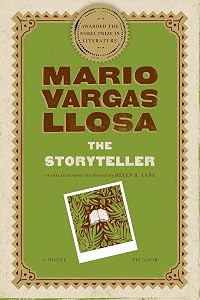
The Storyteller
by Mario Vargas Llosa
On This Page
Description
At a small gallery in Florence, a Peruvian writer happens upon a photograph of a tribal storyteller deep in the jungles of the Amazon. He is overcome with the eerie sense that he knows this man...that the storyteller is not an Indian at all but an old school friend, Saul Zuratas. As recollections of Zuratas flow through his mind, the writer begins to imagine Zuratas's transformation from a modern to a central member of the unacculturated Machiguenga tribe. Weaving the mysteries of identity, show more storytelling, and truth, Vargas Llosa has created a spellbinding tale of one man's journey from the modern world to our origins, abandoning one in order to find meaning in both. show lessTags
Recommendations



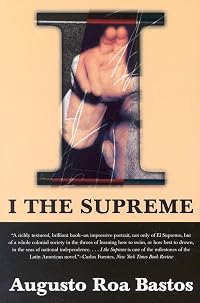
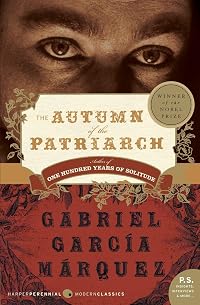
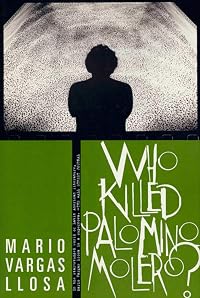
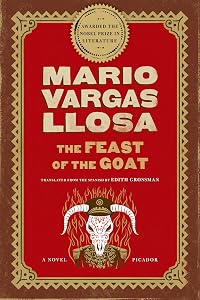







Member Recommendations
Member Reviews
I picked this up rather at random for the next stage of my campaign to consolidate my Spanish by immersion. Possibly not the best choice, as the effect relies partly on deliberately unfamiliar vocabulary, so I spent a lot of time looking words up to find out whether they were names of Amazonian plants and animals I was expected to know, or invented words used to reinforce the strangeness of Manchiguenga culture.
The book is essentially about the ways indigenous traditional cultures work and how they are affected by external change. It's not really a novel in the conventional sense, but more a frame on which to hang thoughts about the collision between "western" and "traditional" culture and experiments aimed at capturing — or rather show more imagining and representing — the form a narrative by a traditional storyteller might take. To do this, Vargas Llosa alternates chapters in the voice of the storyteller with chapters narrated in conventional style by a narrator who seems to be a slightly-fictionalised version of himself.
The political and ethical message of the book is more nuanced than I was expecting: although part of the book's aim is certainly to show us the elegance and harmony of the timeless and sustainable lifestyle of the Manchiguengas and the way this is threatened by any contact with the outside world, Vargas Llosa also wants us to see that it isn't as simple as that: human beings are not wild animals that we can lock up in a wilderness reserve as an ecological monument. There are benefits to living in modern society as well as drawbacks, and indigenous people shouldn't have to be exposed to the negative side only. For Vargas Llosa, the culture of his fictional indigenous tribe, the Manchiguengas, is not a static tradition, but it is one that has adapted with their conditions of living. Even if contact with the modern world brings big changes to their outward way of life, their culture seems to be robust enough to take this in its stride. Especially if they have a storyteller with the chutzpah to translate Kafka and the Jewish diaspora into the narrative idiom of the rainforest. show less
The book is essentially about the ways indigenous traditional cultures work and how they are affected by external change. It's not really a novel in the conventional sense, but more a frame on which to hang thoughts about the collision between "western" and "traditional" culture and experiments aimed at capturing — or rather show more imagining and representing — the form a narrative by a traditional storyteller might take. To do this, Vargas Llosa alternates chapters in the voice of the storyteller with chapters narrated in conventional style by a narrator who seems to be a slightly-fictionalised version of himself.
The political and ethical message of the book is more nuanced than I was expecting: although part of the book's aim is certainly to show us the elegance and harmony of the timeless and sustainable lifestyle of the Manchiguengas and the way this is threatened by any contact with the outside world, Vargas Llosa also wants us to see that it isn't as simple as that: human beings are not wild animals that we can lock up in a wilderness reserve as an ecological monument. There are benefits to living in modern society as well as drawbacks, and indigenous people shouldn't have to be exposed to the negative side only. For Vargas Llosa, the culture of his fictional indigenous tribe, the Manchiguengas, is not a static tradition, but it is one that has adapted with their conditions of living. Even if contact with the modern world brings big changes to their outward way of life, their culture seems to be robust enough to take this in its stride. Especially if they have a storyteller with the chutzpah to translate Kafka and the Jewish diaspora into the narrative idiom of the rainforest. show less
In a Florentine shop, a Peruvian writer sees a photo of a Peruvian tribe mesmerized by a tribal storyteller, an almost mystical and mythical person rarely mentioned or even acknowledged to outsiders to exist. For years the writer has been searching for information on this tribe, and also for news of an old school friend who'd disappeared years ago. In the photo, he believes he sees his friend: the storyteller, fully assimilated into this primitive culture hiding in the Amazon. So opens a novel which is told in long, alternating chapters, first by the writer and then by the storyteller. The underlying debate: should isolated and primitive groups be Westernized or allowed to live their own culture? This is a question the two friends had show more often argued about at university, and here we are presented with both the writer's version of events leading him to discover his friend's destiny, if only in a photo, and the storyteller's tales of his people, their struggles to maintain their nomadic lifestyle (and therefore protect the world from the sun falling permanently into darkness), and stories of the invention of the world and its various supernatural, human, and animal inhabitants.
Although it's initially a challenge to adjust to the storyteller's language and cadence, his stories soon become the most interesting part of the novel as he recounts the tribe's mythology and his own adventures, interweaving tales from his culture of origin couched in the tribe's way of seeing the world. The author's own story very logically lays out the ethical questions in cultural clashes, but these sections pale in comparison to the storyteller's magical words. Highly recommended! show less
Although it's initially a challenge to adjust to the storyteller's language and cadence, his stories soon become the most interesting part of the novel as he recounts the tribe's mythology and his own adventures, interweaving tales from his culture of origin couched in the tribe's way of seeing the world. The author's own story very logically lays out the ethical questions in cultural clashes, but these sections pale in comparison to the storyteller's magical words. Highly recommended! show less
A work of genius, and in my opinion, the best from this author. It's not an easy read, but on the second or third read-through it yields treasures that have permanently inflected my ways of seeing the world and the people in it, of telling stories, and of finding voice. Most of my students hated it, despite my enthusiasm for it, but the brightest ones gradually realized its power.
My first comment is to not read this book like I did. I started it as my 'read in bed' book before falling sleep. That did not work well for me as: 1) I tend to fall asleep after about 10 pages of reading; and 2) to properly appreciate the story being told here, and the shifting points of view, it is best to set aside uninterrupted, wide awake reading time. If you do this, you will be rewarded with Llosa's intimate sweeping inclusion of folklore, legends and beliefs of the Machiguenga, an indigenous Amazonian tribe, to the broader, modern examination of the culture clash between 'traditional' and 'modern' as we slowly lose all of the traditional customs and beliefs of indigenous people who share this planet with us. Everything from show more religion to linguistics to sociology, politics and ethnography is examined or touched upon in this quasi-memoir-styled story that, in the end, left me feeling that there is more fact and truth than fiction and fabrication in this one. It is very much a call to examine and to be willing to be accountable for the damage we as a modern race are doing to our cultural history and our environment.
A richly textured read worthy of a reader's full, undivided attention. show less
A richly textured read worthy of a reader's full, undivided attention. show less
It is easier to live with a bad book with low aspirations than a mediocre book with high ones. I was mad much of the way through Mario Vargas Llosa's THE STORY TELLER because I wanted to love it but he wouldn't let me. Llosa touches on many themes that touch me including displaced cultures, indigenous mythology, cultural and personal identity, comparative religions, man vs. nature, media vs. culture, art as communication and communication as art. After an introduction that teases a great mystery, we know almost immediately what the answer to the mystery will be and that it will not be satisfying. In the meantime we are held at bay as the author plays out his themes as if in a series of writing exercises. The indigenous myths are meant show more to parallel the progression of the story in fact and structure but they are slapped onto the narrative in such a ham fisted manner that I felt like I had to wade through them rather than have them rise and lift me. There is some jumping back in forth in time that only accentuates the lack for forward movement the narrative. It's like reading Conrad's HEART OF DARKNESS if Marlow talked about the river but never got into the boat. There are interesting parts where he touches on the history and politics of Peru and the history of indigenous tribes and the missionaries who live with them and working within the Peruvian TV industry--but it all feels disjointed like many separate small streams that never meet to form that mighty river. show less
This story will remain with me for awhile- makes you question so many assumptions and understandings of civilization. Also, I love how the story is told- the format of alternate protagonists telling alternate stories.
Yüzünde ürkütücü bir doğum lekesiyle dünyaya gelmiş Perulu bir Yahudinin, çağdaş yaşamın ikiyüzlülüklerine başkaldıran Saul Zuratas'ın akıllara durgunluk veren "değişim"inin öyküsü. Üniversitedeki parlak geleceğini elinin tersiyle iten Saul, yoksa yazgısını Amazon ormanlarında soyu tükenmekte olan ilkel bir kabileyle mi birleştirmiştir? Machiguenga kabilesinin herkesten sır gibi sakladığı Masalcı, Saul mudur yoksa? Kendini Floransa'ya, Dante'nin, Leonardo'nun, Botticelli'nin dünyasına atan Perulu bir aydın, bir sanat galerisinde rastladığı bir fotoğraftan yola çıkarak, eski arkadaşı Saul'un izini sürecektir. Bir yönüyle Dostoyevski'nin "Budala"sındaki Prens Mışkin'i, bir yönüyle show more Kafka romanlarından fırlamış bir kişiliği anımsatan Saul, Mario Vargas Llosa'nın bugüne kadar yarattığı en çarpıcı, en olağandışı karakterlerden biri. "Kent ve Köpekler", "Üveyanneye Övgü", "Yeşil Ev", "Yüzbaşı ve Kadınlar Taburu", "Julia Teyze", "Palomino Molero'yu Kim Oldürdü?", "Mayta'nın Öyküsü", "And Dağlarında Terör" gibi romanlarında modern dünyanın toplumsal ve ruhsal haritasını çıkaran Vargas Llosa, "Masalcı"da, yitirdiğimiz bir dünyaya, kökenlerimizin dünyasına götürüyor okuru. show less
Members
- Recently Added By
Lists

Latin America
26 works; 9 members

School Made Us Read It
380 works; 196 members
Author Information

388+ Works 34,583 Members
Mario Vargas Llosa was born in Arequipa, Peru on March 28, 1936. He studied literature and law at the National University of San Marcos and received a Ph.D from the University of Madrid in 1959. He is a writer, politician, and journalist. His works vary in genre from literary criticism and journalism to comedies, murder mysteries, historical show more novels, and political thrillers. His books include The Time of the Hero, The Green House, Conversation in the Cathedral, Aunt Julia and the Scriptwriter, The Feast of the Goat, and The War of the End of the World. He has received numerous awards including the Rómulo Gallegos International Novel Prize, the Premio Leopoldo Alas in 1959, the Premio Biblioteca Breve in 1962, the Premio Planeta in 1993, the Miguel de Cervantes Prize in 1994, the Jerusalem Prize in 1995, and the Nobel Prize in Literature in 2010. (Bowker Author Biography) show less
Some Editions
Awards and Honors
Series
Belongs to Publisher Series
Work Relationships
Is contained in
Was inspired by
Common Knowledge
- Canonical title*
- 密林の語り部
- Original title
- El hablador
- Alternate titles*
- قصهگو
- Original publication date
- 1987
- Dedication
- A Luis Llosa Ureta, en su silencio, y a los kenkitsatatsirira machiguengas
口を閉ざすルイス・リョサ・ウレータとマチゲンガ族の語り部(ケンキツァタツィリラ)に捧ぐ (Japanese) - First words
- I came to Firenze to forget Peru and the Peruvians for a while, and suddenly my unfortunate country forced itself upon me this morning in the most unexpected way.
Talking the way a storyteller talks means being able to feel and live in the very heart of that culture, means having penetrated its essence, reached the marrow of its history and mythology, given body to its taboos, images, ... (show all)ancestral desires and terrors.
Each man who walks has his animal which follows him.
I could tell dozens of stories like this one. And many others to illustrate what is perhaps the very symbol of underdevelopment: the divorce between theory and practice, decisions and facts. During those six months we suffere... (show all)d from this irreducible distance at every stage of our work. There were schedules that gave each of the various producers their fair share of time in the cutting rooms and the sound studios. But in point of fact it was not the schedules but the cunning and the clever maneuvering of each producer or technician that determined who would have more or less time for editing and recording, and who would count on the best equipment.
*Some information comes from Common Knowledge in other languages. Click "Edit" for more information.
Classifications
Statistics
- Members
- 1,290
- Popularity
- 18,914
- Reviews
- 27
- Rating
- (3.62)
- Languages
- 27 — Bulgarian, Czech, Danish, Dutch, English, Finnish, French, German, Greek, Hebrew, Hindi, Hungarian, Indonesian, Italian, Japanese, Norwegian (Bokmål), Farsi/Persian, Polish, Romanian, Croatian, Slovak, Slovenian, Spanish, Swedish, Turkish, Portuguese (Portugal), Portuguese (Brazil)
- Media
- Paper, Audiobook, Ebook
- ISBNs
- 61
- ASINs
- 22