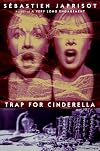
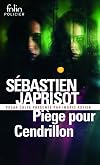
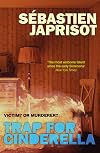
Trap for Cinderella
by Sébastien Japrisot
On This Page
Description
A young woman wakes in a hospital room. What happened to her and why is a mystery. Is she victim or murderer? The young woman has been badly injured in a fire and has amnesia. But what happened to her? Is she Mi, Micky or Michèle, or Do, Dominique? As she struggles to rebuild her identity, she starts to recall the crime that was committed and the house on the French Riviera. She remembers the rich heiress and the faithful friend - but which is she?Tags
Recommendations
























Member Reviews
I RECEIVED THIS DRC FROM THE PUBLISHER VIA EDELWEISS+. THANK YOU.
STRONG CONTENT WARNING FOR ENCAVMAPHOBIA
My Review: As ever with this author, do not expect the usual, simple setting down of sentences to form beautiful images and sanguine characters, but the unsettling reversals of point of view and the sheer variety of events as told by people with different viewpoints.
Even when those people are in the same body. And no, there are no external markers of the changes. You have to work for your pleasures!
Pleasures there are, and aplenty, in this twisty tale of utterly unreliable narrators. Mi, Michèle, or Do, Domenica, or whoever she might be, is unreliable because her trauma...caught in a fire, either the perpetrartix or the intended show more victim of it, makes little difference after simply being trapped in a fire...has robbed her of her memory. Those around her are, to put it mildly, motivated by pecuniary gain and thus aren't entirely to be trusted. The doctor is no help to her in recovering her true self. But the more questions the narrator asks, the more she realizes that it's very, very possible that she simply does not want the answers to those questions.
What's wrong with simply...existing. Allowing the tidal wave of love and sympathy to sustain her. Whether or not she "deserves" it.
The concept of merit, of being worthy, of having one's just deserts, is a huge issue in this story. While there is no way that such a tale would be possible in the twenty-first century, when a simple DNA test would establish instantly and once and for all who she was, the way the plastic surgeon worked miracles for her is the primary obstacle to believability in this psychological horror story. I have seen a truly badly burned person and let me assure you they would not be passable in social settings. For the amnesia plot to work, however, there is a need to suspend this level of disbelief.
The sense of dread, of not knowing where one is in the life one is living, is a palpable horror. The idea of surviving a fire is traumatic enough...but to then realize that everyone around one is lying by omission, or directly...? How can that possibly be anything but a waking nightmare?
It is at this Rebecca-meets-Gaslight level that the book works best. Let go of the practical knowledge you possess as a 21st-century reader and travel back to 1963 (when the book first appeared in French) to allow this fearsome reality to submerge your sense of the firmess of your own foundations. Be there with Michèle...Domenica...whatever her name is.
Be there. That might very well be the epitaph of each of the people who die in this book, especially the ones sentenced to prison for crimes they might have, or did, commit. The crimes that, in the end, meant nothing...caused nothing that had not already happened. And isn't that just the awful way of crime? It's really, in the end, pointless.
Agonizing pain for pointless goals. How very, very noir. show less
STRONG CONTENT WARNING FOR ENCAVMAPHOBIA
My Review: As ever with this author, do not expect the usual, simple setting down of sentences to form beautiful images and sanguine characters, but the unsettling reversals of point of view and the sheer variety of events as told by people with different viewpoints.
Even when those people are in the same body. And no, there are no external markers of the changes. You have to work for your pleasures!
Pleasures there are, and aplenty, in this twisty tale of utterly unreliable narrators. Mi, Michèle, or Do, Domenica, or whoever she might be, is unreliable because her trauma...caught in a fire, either the perpetrartix or the intended show more victim of it, makes little difference after simply being trapped in a fire...has robbed her of her memory. Those around her are, to put it mildly, motivated by pecuniary gain and thus aren't entirely to be trusted. The doctor is no help to her in recovering her true self. But the more questions the narrator asks, the more she realizes that it's very, very possible that she simply does not want the answers to those questions.
What's wrong with simply...existing. Allowing the tidal wave of love and sympathy to sustain her. Whether or not she "deserves" it.
The concept of merit, of being worthy, of having one's just deserts, is a huge issue in this story. While there is no way that such a tale would be possible in the twenty-first century, when a simple DNA test would establish instantly and once and for all who she was, the way the plastic surgeon worked miracles for her is the primary obstacle to believability in this psychological horror story. I have seen a truly badly burned person and let me assure you they would not be passable in social settings. For the amnesia plot to work, however, there is a need to suspend this level of disbelief.
The sense of dread, of not knowing where one is in the life one is living, is a palpable horror. The idea of surviving a fire is traumatic enough...but to then realize that everyone around one is lying by omission, or directly...? How can that possibly be anything but a waking nightmare?
It is at this Rebecca-meets-Gaslight level that the book works best. Let go of the practical knowledge you possess as a 21st-century reader and travel back to 1963 (when the book first appeared in French) to allow this fearsome reality to submerge your sense of the firmess of your own foundations. Be there with Michèle...Domenica...whatever her name is.
Be there. That might very well be the epitaph of each of the people who die in this book, especially the ones sentenced to prison for crimes they might have, or did, commit. The crimes that, in the end, meant nothing...caused nothing that had not already happened. And isn't that just the awful way of crime? It's really, in the end, pointless.
Agonizing pain for pointless goals. How very, very noir. show less
That was one wild noir thriller ride! By the end of the book, you think you know what happened but you are not one hundred percent sure. The story, although ridiculously improbable, was nonetheless well constructed from a mystery point-of-view. Between all the twists and turns and interesting personalities, one scenario seems as plausible as another. By the end, your mind is spinning but it's fun, like a carnival ride!
What is really the mystery here is an existential one: what is truth, and what is identity? No character is completely blameless or completely culpable. The narrator says, "I was the detective, the murderer, the victim, and the witness, all at once," which is an accurate statement no matter who she really is.
Qualificada millor novel·la policíaca de França del 1962, no m'estranya mica. Tot encaixa com una maquinària de rellotgeria i manté el misteri fins al final (i més enllà). Si, a més, la traducció al català és de Manuel de Pedrolo, no es pot demanar més.
Trap for Cinderella is a story about a beautiful, rich, spoiled, self-centered young woman, Michele, who magnetically draws people into her life, and then flings them aside as soon as the novelty of them wears off. But one old childhood girlfriend, Domenica, manages to enter the inner circle, and submits to both physical and mental abuse, obsessively clinging to Michele for the glamorous life of luxury and extravagance.
And then there is a fire. One of the two young women survives with disfiguring burns on the face and hands, and amnesia. Is it Michele or Domenica? The survivor doesn't know! Everyone is calling her Michele but to her horror, a close confidant (and conspirator) is telling her she is really Domenica, the fire was show more intentional, and apparently, she set the fire strategically burned herself on the face and hands, and murdered Michele with the intention of assuming her identity.
Trap for Cinderella is worth reading for the suspense and psychological aspects. The survivor is in a "no win" situation. She is psychologically tortured with the uncertainty of who she really is. From an objective amnesiac's point of view, she doesn't want to be Domenica the murderer, nor does she want to be the loathsome naracissist, Michele, in spite of the huge inheritence. The plot involves her search for the truth about what really happened, and her true identity. It is a little farfetched to beleive that this could have really happened, in fact, absurd, but if it could happen, and did, it makes an intense story. show less
And then there is a fire. One of the two young women survives with disfiguring burns on the face and hands, and amnesia. Is it Michele or Domenica? The survivor doesn't know! Everyone is calling her Michele but to her horror, a close confidant (and conspirator) is telling her she is really Domenica, the fire was show more intentional, and apparently, she set the fire strategically burned herself on the face and hands, and murdered Michele with the intention of assuming her identity.
Trap for Cinderella is worth reading for the suspense and psychological aspects. The survivor is in a "no win" situation. She is psychologically tortured with the uncertainty of who she really is. From an objective amnesiac's point of view, she doesn't want to be Domenica the murderer, nor does she want to be the loathsome naracissist, Michele, in spite of the huge inheritence. The plot involves her search for the truth about what really happened, and her true identity. It is a little farfetched to beleive that this could have really happened, in fact, absurd, but if it could happen, and did, it makes an intense story. show less
Brilliant and Fun. I found the story to be thought provoking. Such a simple book, a quick read and brilliantly told! I would love to know what I would have thought about this book if I had read it at this same age but 40 years ago!! I will read this again some day! I loved it!
I have read this probably more times than any other book I own - that is how much I love this noir thriller about an amnesiac's search for identity. Really top notch.
Members
- Recently Added By
Lists

Books mentioned in Julian Symons’ Bloody Murder
438 works; 6 members

Tozai Mystery Best 100 | The Top 100 Mystery Novels
111 works; 3 members
Author Information

21+ Works 3,355 Members
Some Editions
Awards and Honors
Series
Belongs to Publisher Series
Work Relationships
Is contained in
Common Knowledge
- Canonical title
- Trap for Cinderella
- Original title
- Piège pour Cendrillon
- Original publication date
- 1962
- People/Characters*
- Michèle Isola; Domenica Loï; Jeanne Murnau; Serge Reppo; François Chance
- First words
- Il était une fois, il y a bien longtemps, trois petites filles, la première Mi, la seconde Do, la troisième La.
- Last words
- (Click to show. Warning: May contain spoilers.)Une nuit d'été, dans un voiture, il lui avait dit la marque, quelque chose d'attendrissant et de soldatesque, presque aussi infect que l'odeur : Piège pour Cendrillon.
- Original language
- French
*Some information comes from Common Knowledge in other languages. Click "Edit" for more information.
Classifications
Statistics
- Members
- 284
- Popularity
- 113,758
- Reviews
- 9
- Rating
- (3.84)
- Languages
- 14 — Catalan, Czech, Danish, English, French, German, Hungarian, Italian, Norwegian (Bokmål), Norwegian, Polish, Russian, Spanish, Swedish
- Media
- Paper, Audiobook, Ebook
- ISBNs
- 31
- UPCs
- 1
- ASINs
- 11