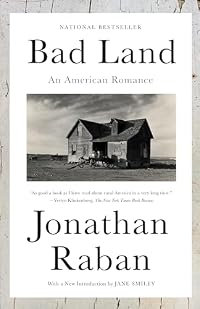
Bad Land: An American Romance
by Jonathan Raban
On This Page
Description
Seduced by the government's offer of 320 acres per homesteader, Americans and Europeans rushed to Montana and the Dakotas to fulfill their own American dream in the first decade of this century. Raban's stunning evocation of the harrowing, desperate reality behind the homesteader's dream strips away the myth--while preserving the romance--that has shrouded our understanding of our own heartland.Tags
Recommendations














Member Recommendations
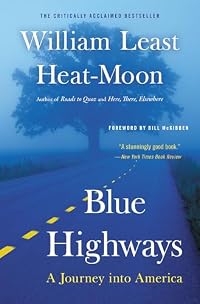
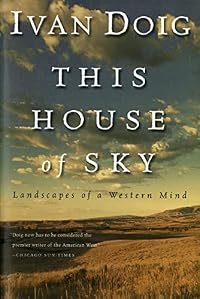
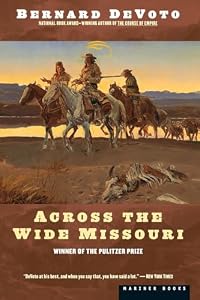
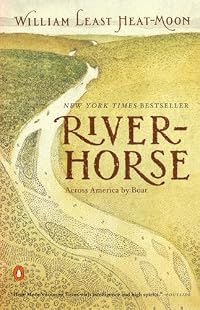
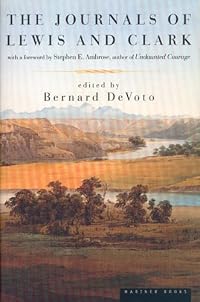
davidcla One of the source narratives for Raban's Bad Land.
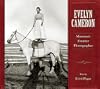
anonymous user More on the frontier photographer.
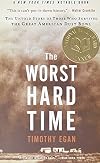
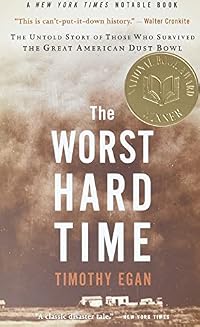
The Worst Hard Time: The Untold Story of Those Who Survived the Great American Dust Bowl by Timothy Egan
RidgewayGirl A different part of the country, but a similar tale of immigrant farmers and enormous determination.
John_Vaughan Despite a time seperation these two works, both from English authors, reflect similar viewpoints.
Member Reviews
Like Michael Pollan's "The Omnivore's Dilemma," I still can't really tell you what this book "is" or why I liked it so much. I suppose its most proper generic category would be "cultural geography," which is really a short-hand way of saying travelogue/memoir/biography/political history.
What makes it so different from other histories is that the main character is a PLACE rather than a PERSON. And in an era of character-driven literature, such a focus makes this book both odd and oddly compelling.
It doesn't hurt anything that Raban writes with that remarkable verve and clarity peculiar to the British, though he's lived a good while in the USA. And it probably didn't hurt anything either that I also grew up on another patch of homestead show more territory, the south-central plains of Nebraska, once identified on maps as part of the "Great American Desert." If I replaced the name "Wollaston" with "Broeker" or "Bose," I'd be well-nigh telling stories of my grandfather's neighbors.
However, I think Raban's narrative is so compelling because he has uncovered here something essential to the American character...a kind of stubbornness both admirable and pitiable, a deep-set dreaminess that lives on after any particular manifestation of itself has gone bust. And, in that sense, the book becomes a crucial piece of "American" literature, destined, I believe, to a place of honor in the hall of American letters. show less
What makes it so different from other histories is that the main character is a PLACE rather than a PERSON. And in an era of character-driven literature, such a focus makes this book both odd and oddly compelling.
It doesn't hurt anything that Raban writes with that remarkable verve and clarity peculiar to the British, though he's lived a good while in the USA. And it probably didn't hurt anything either that I also grew up on another patch of homestead show more territory, the south-central plains of Nebraska, once identified on maps as part of the "Great American Desert." If I replaced the name "Wollaston" with "Broeker" or "Bose," I'd be well-nigh telling stories of my grandfather's neighbors.
However, I think Raban's narrative is so compelling because he has uncovered here something essential to the American character...a kind of stubbornness both admirable and pitiable, a deep-set dreaminess that lives on after any particular manifestation of itself has gone bust. And, in that sense, the book becomes a crucial piece of "American" literature, destined, I believe, to a place of honor in the hall of American letters. show less
This is the story of one of the last homesteading opportunities of the American west. A hundred years ago a railway was built from Chicago to Puget Sound, across the great, unsettled expanse of North Dakota and Montana. Now railroads need customers and so "The Big Open" was advertised as a great opportunity, with homesteads carved from what previously only held a few ranches. New, scientific farming methods were sure to bring prosperity to all who farmed there. By the middle of the Great Depression, the land was almost as empty as it had been before the homesteaders arrived, the decaying towns and abandoned farmhouses the only evidence of what had once been.
Jonathan Raban, a transplanted Brit, explores the geography and the history of show more eastern Montana, learning about the kind of person who stayed through the worst of it and about the people who still remain. Bad Land is an intriguing combination of a social history and a contemporary look at the people who live there today. He's clearly fascinated by the place and it's impossible not to get caught up in the passion he feels for this difficult land. show less
Jonathan Raban, a transplanted Brit, explores the geography and the history of show more eastern Montana, learning about the kind of person who stayed through the worst of it and about the people who still remain. Bad Land is an intriguing combination of a social history and a contemporary look at the people who live there today. He's clearly fascinated by the place and it's impossible not to get caught up in the passion he feels for this difficult land. show less
Winner of the National Book Critics Circle Award for Non-Fiction, this book on the history of the railroads and settlers in Montana earns its ratings. Partly history, partly a travelogue across desolate and partially abandoned territory, author Raban does a good job of writing and holding the reader's attention as his journey unfolds.
Evocative. The Big Sky Country of Montana is a powerfully lonely place full of the abandoned houses and broken dreams of those who fell for what the railroads were selling.
Bonus for me was the Evelyn Cameron material. How nice for me that Bad Land included stories that didn’t make it into the book about her photography. She had a pretty good frame of mind for all the hard labor she did, keeping lists of the “Chores Galore!” In her diary. I liked learning that she got herself a banjo and a Victrola for entertainment.
Bonus for me was the Evelyn Cameron material. How nice for me that Bad Land included stories that didn’t make it into the book about her photography. She had a pretty good frame of mind for all the hard labor she did, keeping lists of the “Chores Galore!” In her diary. I liked learning that she got herself a banjo and a Victrola for entertainment.
This haunting book, winner of the National Book Critics Circle Award, tells the story of the homesteaders, many of them immigrants, who arrived on the Montana and Dakota prairies in the early 1900s. The federal government had given the railroads vast tracts of land to encourage them to build transcontinental rail routes. The railroads heavily promoted the advantages of settling in these semidesert areas, because the settlements would create ongoing business for the railroads.
Weather and climate issues raised in this book are also covered in Beyond the Hundredth Meridian by Wallace Stegner and The Children's Blizzard by David Laskin.
As I write this, Bad Land is my favorite work by Raban. By tomorrow I could be back to Hunting Mister show more Heartbreak. show less
Weather and climate issues raised in this book are also covered in Beyond the Hundredth Meridian by Wallace Stegner and The Children's Blizzard by David Laskin.
As I write this, Bad Land is my favorite work by Raban. By tomorrow I could be back to Hunting Mister show more Heartbreak. show less
This book has taught me more about the American past than all my studies taken together. Maybe several assumptions in the train of thought, but highly plausible and well-researched. As for the writing - I'm glad he hasn't decided to present his findings in scholarly prose, as Schama would. Makes it all the more readable and enjoyable without making it less scholarly!
"Bad Land" is the first book of Q2, 17th of the year, rated 2 1/2 roses. So what's the book about - the author answered the question this way - Montana. Homesteads. Deserted Houses. The empty prairie. Dry farming. You know......I would add: early 1900's, failure, survival, weather, 160 acres, toughness, independence. It's NOT history, it's almost a collection of interwoven essays. It's unusual......but at times it was also boring - it didn't work for me. But it won an NBA (pub 1996), and received excellent reviews from all the right places. So I understand Montana a bit more than I did before reading this, but I ain't itchin' to go see it.
Members
- Recently Added By
Published Reviews
(Entire Review)From Drought to Dissent in the Western Plains
In the present-day West he explores so engagingly in his new book, ''Bad Land: An American Romance,'' Jonathan Raban meets many people hostile to the Federal Government. These dissenters are not only extremists like the members of the Militia of Montana who refuse even to look at him as he eats breakfast in the Landmark Cafe, show more ''evidently the regimental mess,'' in Noxon, Mont. show less
In the present-day West he explores so engagingly in his new book, ''Bad Land: An American Romance,'' Jonathan Raban meets many people hostile to the Federal Government. These dissenters are not only extremists like the members of the Militia of Montana who refuse even to look at him as he eats breakfast in the Landmark Cafe, show more ''evidently the regimental mess,'' in Noxon, Mont. show less
added by John_Vaughan
Lists

Best of Travel Narratives
142 works; 28 members
Author Information

26+ Works 5,336 Members
Jonathan Raban, author of Passage to Juneau, brings eloquent intellect and wry wit to his exploration of the American scene. Written over the past two decades, roughly the span of Raban's residence in his adopted city of Seattle, these essays delve into what it means, as immigrant, to feel rooted in America. Driving Home charts a course through show more the Pacific Northwest, American history, and current events as witnessed by a keenly observant visitor who is able to glean meanings and patterns that have become invisible to the natives. Raban spends much time on, near, and in water, and his ruminations on sailing and the sea are a welcome thread. Whether the topic is other writers or various painters and explorers, or the patrons of a Montana bar, who have engaged with our mythical and actual landscape, Raban has a visitor s eye for the absurd, and his tone is intimate, never nostalgic, and always fresh. show less
Awards and Honors
Awards
Distinctions
Series
Belongs to Publisher Series
Common Knowledge
- Canonical title*
- Bad Land : Ein amerikanisches Abenteuer
- Original title
- Bad Land: An American Romance
- Original publication date
- 1996
- People/Characters
- Joe Montana; Evelyn Cameron; Hardy W. Campbell; Percy Wollaston; Worsell; Ned Wollaston (show all 16); Ralph Norris; Frank Zehm; Wynona Breem; Lynn Householder; James J. Hill; Art Docken; Bud Brown; Merle Clark; Myrtle Amundson; Ted Kaczynski
- Important places
- Joe, Montana, USA; Baker, Montana, USA; Ismay, Montana, USA; Marmarth, North Dakota, USA; Lincoln, Montana, USA; Montana, USA (show all 7); North Dakota, USA
- Dedication
- For Paul and Sheila Theroux (m. 18 November 1995)
- First words
- Breasting the regular swells of land, on a red dirt road as true as a line of longitude, the car was like a boat at sea.
- Last words
- (Click to show. Warning: May contain spoilers.)Anybody home?
- Blurbers
- Frazier, Ian; Ford, Richard
- Canonical DDC/MDS
- 978
- Canonical LCC
- F591
*Some information comes from Common Knowledge in other languages. Click "Edit" for more information.
Classifications
Statistics
- Members
- 1,001
- Popularity
- 25,925
- Reviews
- 14
- Rating
- (3.94)
- Languages
- 7 — Dutch, English, French, German, Italian, Spanish, Swedish
- Media
- Paper, Audiobook, Ebook
- ISBNs
- 20
- ASINs
- 7