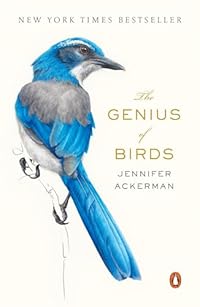
The Genius of Birds
by Jennifer Ackerman
On This Page
Description
"Birds are astonishingly intelligent creatures. In fact, according to revolutionary new research, some birds rival primates and even humans in their remarkable forms of intelligence. Like humans, many birds have enormous brains relative to their size. Although small, bird brains are packed with neurons that allow them to punch well above their weight. In The Genius of Birds, acclaimed author Jennifer Ackerman explores the newly discovered brilliance of birds and how it came about."--provided show more by publisher. show lessTags
Recommendations


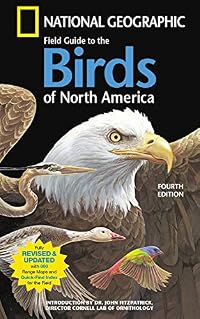



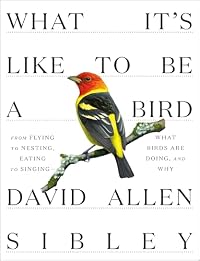
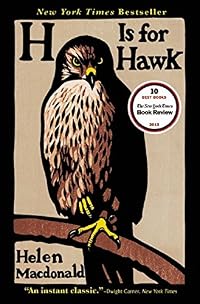
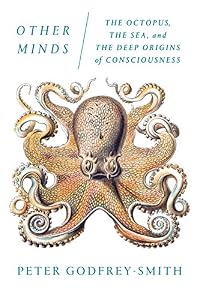
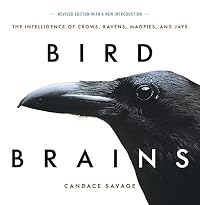
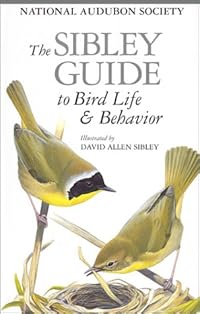



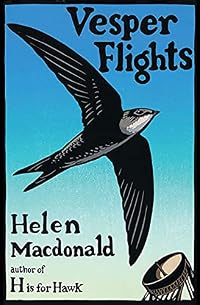
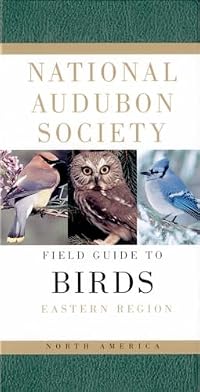
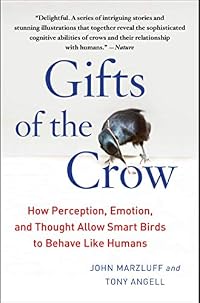
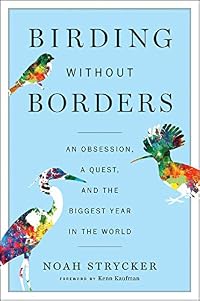
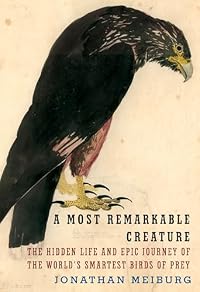
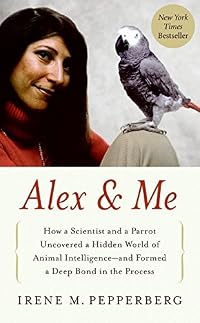
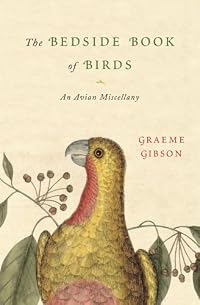
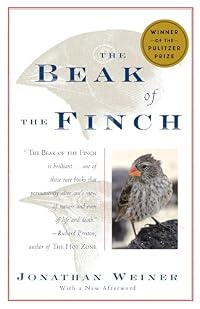
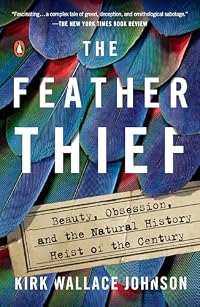

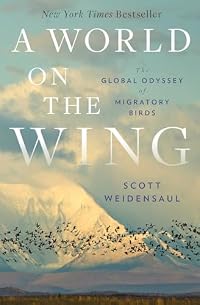
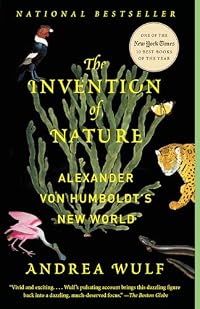

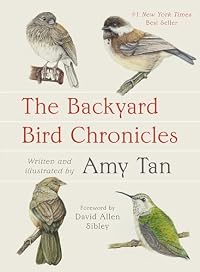
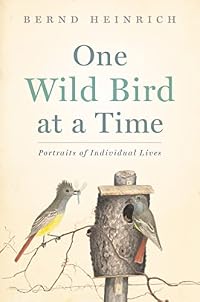
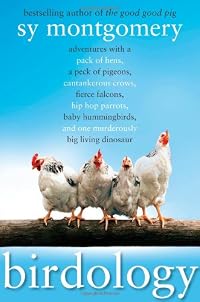
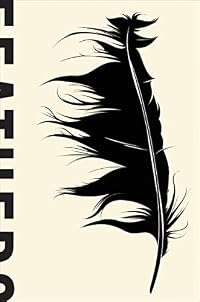
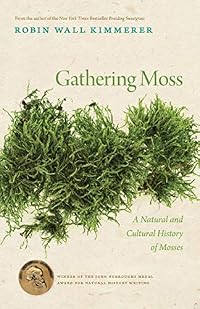
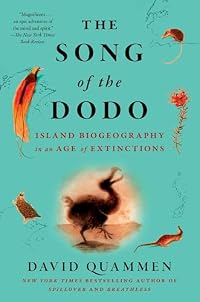
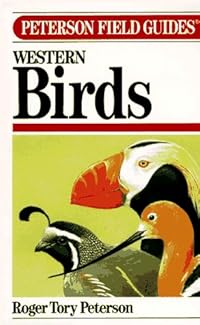
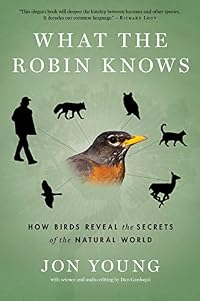
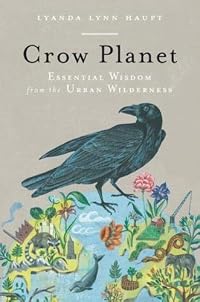
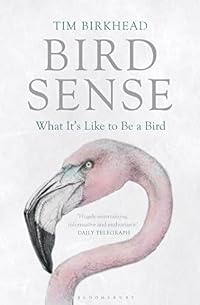

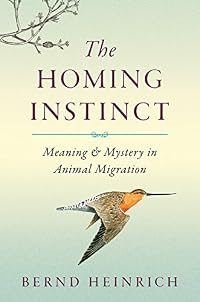
Member Recommendations
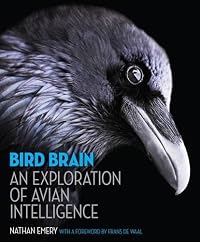
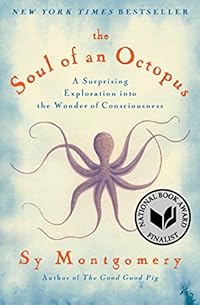
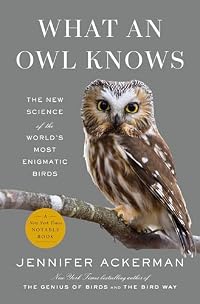
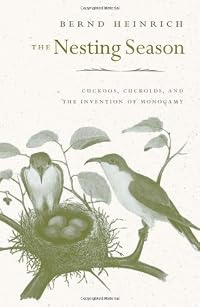
Bookmarque Having read these close together, I found them good companions.
20
Member Reviews
It occurred to me that those drawn to birds are drawn to the reflection of humanity. This book clarifies why so much of bird behavior resembles our own in remarkably familiar, yet novel, ways.Art, innovation, mental-mapping, collaboration, fidelity, adventurism, and romanticism. It is for a love of the human species that that birds are worth protecting. They are an early indicator of humanity's own demise or continuation. They are canaries in this big coal mine.
Accurately measuring intelligence requires the right yardstick, except that there is no such thing. There are just too many kinds of intelligence for one yardstick to measure. Jennifer Ackerman concedes in “The Genius of Birds” (2016), "I would flunk these sorts of intelligence tests readily as birds might fail mine." She is speaking of the intelligence tests that various species of birds can pass with ease. Take for instance the ability of some birds to hide thousands of seeds and then remember where to find them months later or the ability of a homing pigeon to find its way home from hundreds of miles away.
Scientists might frown on my use of the word intelligence because it sounds to them like anthropomorphizing. They prefer the show more word cognition when talking about birds and other animals. Give Ackerman credit for being intelligent enough to use the word, however, because it is intelligence that we are talking about.
Even the word cognition has been something of a concession for science, which had long preferred thinking of every amazing thing an animal does as just instinct. By now there have been enough experiments and observations to recognize that birds, more than most animal species, can solve challenging problems. Young birds don't know their songs by instinct but must learn them over a long period of trial and error, just as a child learns to talk. Sparrows in New Zealand learned to use the sensors for a cafeteria's automatic doors so they could fly in to steal food, then fly out again.
Ackerman covers many different kinds of intelligence in birds, including the artistry of bowerbirds and the ability of mockingbirds to learn not only their own song but the songs of many other species of birds.
Some birds seem to be smarter than others, and Ackerman devotes much of her book puzzling over why. Are species that eat a variety of foods smarter than those with a more limited diet? Are birds that live in social groups smarter than loners? Are birds that migrate smarter than those that stay in one place? While discussing such questions, she describes the work of numerous authorities in the field without ever losing her audience, made up of readers of ordinary intelligence, like me, who are humbled by the genius of birds. show less
Scientists might frown on my use of the word intelligence because it sounds to them like anthropomorphizing. They prefer the show more word cognition when talking about birds and other animals. Give Ackerman credit for being intelligent enough to use the word, however, because it is intelligence that we are talking about.
Even the word cognition has been something of a concession for science, which had long preferred thinking of every amazing thing an animal does as just instinct. By now there have been enough experiments and observations to recognize that birds, more than most animal species, can solve challenging problems. Young birds don't know their songs by instinct but must learn them over a long period of trial and error, just as a child learns to talk. Sparrows in New Zealand learned to use the sensors for a cafeteria's automatic doors so they could fly in to steal food, then fly out again.
Ackerman covers many different kinds of intelligence in birds, including the artistry of bowerbirds and the ability of mockingbirds to learn not only their own song but the songs of many other species of birds.
Some birds seem to be smarter than others, and Ackerman devotes much of her book puzzling over why. Are species that eat a variety of foods smarter than those with a more limited diet? Are birds that live in social groups smarter than loners? Are birds that migrate smarter than those that stay in one place? While discussing such questions, she describes the work of numerous authorities in the field without ever losing her audience, made up of readers of ordinary intelligence, like me, who are humbled by the genius of birds. show less
The Genius of Birds - Jennifer Ackerman
4 stars
At some point in my childhood, I was told that I was eating like a bird. Being a very nerdy kid, I was able to spout facts about the number of worms a bird must eat relative to its size. I was definitely not eating like a bird. I was also not a ‘birdbrain’. I’m not that smart.
I do have a degree in human developmental psychology and a background in education. Consequently, I do know a little bit about conducting observational studies and some of what neurological brain studies are telling us, at least as far as it applies to classroom teaching.What I know about human learning was surprisingly similar to what Jennifer Ackerman had to say about avian intelligence.
In eight chapters she show more looks at evidence of of avian intelligence in areas such as ‘Technical Wizardry’, ‘Social Savvy’, ‘Vocal Virtuosity’, ‘Aesthetic Aptitude’, ‘Spatial Ingenuity’, and ‘Adaptive Genius’. Ackerman isn’t a scientist. She’s an observer of birds and the people who study them. The book includes numerous interviews. She cites endless studies and speculates on what current findings might mean. Sometimes, she includes a great deal of technical detail, but this is balanced with personal anecdotes.
This book was packed with information. Fortunately, Ackerman’s lively descriptions and witty writing prevented it from becoming a tedious compilation of research findings. For example,in a chapter discussing the amazing navigational ability of small birds, she said, “A white-crowned sparrow may be nut brained, but it’s far more gifted at navigation than most modern humans.” and she gave each of these birds credit for being “ a single feathered ounce of fortitude”. In the same chapter, discussing avian memory for sources of food, she describes hummingbirds as “energy make visible, their wings a guazy blur.” The science was interesting, but Ackerman also conveyed a joyful appreciation of the creatures that were being studied. show less
4 stars
At some point in my childhood, I was told that I was eating like a bird. Being a very nerdy kid, I was able to spout facts about the number of worms a bird must eat relative to its size. I was definitely not eating like a bird. I was also not a ‘birdbrain’. I’m not that smart.
I do have a degree in human developmental psychology and a background in education. Consequently, I do know a little bit about conducting observational studies and some of what neurological brain studies are telling us, at least as far as it applies to classroom teaching.What I know about human learning was surprisingly similar to what Jennifer Ackerman had to say about avian intelligence.
In eight chapters she show more looks at evidence of of avian intelligence in areas such as ‘Technical Wizardry’, ‘Social Savvy’, ‘Vocal Virtuosity’, ‘Aesthetic Aptitude’, ‘Spatial Ingenuity’, and ‘Adaptive Genius’. Ackerman isn’t a scientist. She’s an observer of birds and the people who study them. The book includes numerous interviews. She cites endless studies and speculates on what current findings might mean. Sometimes, she includes a great deal of technical detail, but this is balanced with personal anecdotes.
This book was packed with information. Fortunately, Ackerman’s lively descriptions and witty writing prevented it from becoming a tedious compilation of research findings. For example,in a chapter discussing the amazing navigational ability of small birds, she said, “A white-crowned sparrow may be nut brained, but it’s far more gifted at navigation than most modern humans.” and she gave each of these birds credit for being “ a single feathered ounce of fortitude”. In the same chapter, discussing avian memory for sources of food, she describes hummingbirds as “energy make visible, their wings a guazy blur.” The science was interesting, but Ackerman also conveyed a joyful appreciation of the creatures that were being studied. show less
It seemed natural to move from a book about earthworms to a book about birds, and while the reading demographic for this one will naturally be larger, it's still not a book that will appeal to the masses.
It should though. I'm not a dedicated birdwatcher, but I find them fascinating, endearing, entertaining and sometimes comical. And it turns out some of them are impressively clever. In fact, accuse me of anthropomorphism if you'd like, but I'll go so far as to say intelligent.
Not all of them of course; 15 seconds with any one of my chickens would put paid to that idea. But we all know about crows and their ability to make and use tools; they can also play the game known as Concentration - the memory game where you have to match up show more images. Going one step further, the crows, when asked to match a card with another that had a corresponding theme (i.e. match a card with 2 yellow squares with a card that has 2 yellow circles), the crows could immediately do it successfully. That's cognition.
Then there's Alex, the African Grey Parrot who not only knew hundreds of vocabulary words and how to use them in correct context, but could also categorise objects correctly and when asked how many objects were in a category could correctly answer 8 out of 10 times.
Clark's nutcrackers and scrub jays collect food for the winter and hide it in hidden caches. These hidden caches can number up to 5,000 different locations in a single season for nutcrackers, and for scrub jays those caches include fresh fruit, insects and other perishable items. 7 out of 10 times the nutcrackers will go directly to the precise location of their stashes - that's 3500 little caches of food, buried anywhere in an area from a dozen square miles to hundreds of square miles, that they can immediately recall to the millimetre, as necessary. The scrub jays keep track of what is in each of their caches, which caches have perishable items that need to be eaten first, and where those caches are.
I'm lucky if I can keep track of my keys and phone for more than 24 hours.
There's so much more, but I'll stick with the highlights. And my personal favourite (I think - it's hard to choose): The Satin Bowerbird. The male satin bowerbird builds bowers as a way to woo a female (or females). These aren't nests - no mating or rearing takes place in these bowers. Rather they are monuments to, and for, seduction; the stage and props he'll use as the backdrop for his wooing dance.
Each species of bower building bowerbirds is partial to a specific color. Satin bowerbirds are all about the blues; in fact when scientists placed scarlet items in their bowers, the birds immediately ran in and removed those items and made sure they could not be seen from their bower. When they couldn't be removed, they buried them.
The Genius of Birds is full of information like this, written in an easy conversational style but including the science, the studies, the theories and counter-theories. Not enough to scare off the non-science bird-lovers, but more than enough to satisfy the armchair naturalist. What's missing is referenced in a very comprehensive notes section at the back. There are a few references to types of studies I abhor, no matter what anyone would argue about their scientific merit, but they're passed over quickly.
If you're interested in a broad overview of the under appreciated gifts birds have, and their misunderstood intelligence, this is a great book. show less
It should though. I'm not a dedicated birdwatcher, but I find them fascinating, endearing, entertaining and sometimes comical. And it turns out some of them are impressively clever. In fact, accuse me of anthropomorphism if you'd like, but I'll go so far as to say intelligent.
Not all of them of course; 15 seconds with any one of my chickens would put paid to that idea. But we all know about crows and their ability to make and use tools; they can also play the game known as Concentration - the memory game where you have to match up show more images. Going one step further, the crows, when asked to match a card with another that had a corresponding theme (i.e. match a card with 2 yellow squares with a card that has 2 yellow circles), the crows could immediately do it successfully. That's cognition.
Then there's Alex, the African Grey Parrot who not only knew hundreds of vocabulary words and how to use them in correct context, but could also categorise objects correctly and when asked how many objects were in a category could correctly answer 8 out of 10 times.
Clark's nutcrackers and scrub jays collect food for the winter and hide it in hidden caches. These hidden caches can number up to 5,000 different locations in a single season for nutcrackers, and for scrub jays those caches include fresh fruit, insects and other perishable items. 7 out of 10 times the nutcrackers will go directly to the precise location of their stashes - that's 3500 little caches of food, buried anywhere in an area from a dozen square miles to hundreds of square miles, that they can immediately recall to the millimetre, as necessary. The scrub jays keep track of what is in each of their caches, which caches have perishable items that need to be eaten first, and where those caches are.
I'm lucky if I can keep track of my keys and phone for more than 24 hours.
There's so much more, but I'll stick with the highlights. And my personal favourite (I think - it's hard to choose): The Satin Bowerbird. The male satin bowerbird builds bowers as a way to woo a female (or females). These aren't nests - no mating or rearing takes place in these bowers. Rather they are monuments to, and for, seduction; the stage and props he'll use as the backdrop for his wooing dance.
Each species of bower building bowerbirds is partial to a specific color. Satin bowerbirds are all about the blues; in fact when scientists placed scarlet items in their bowers, the birds immediately ran in and removed those items and made sure they could not be seen from their bower. When they couldn't be removed, they buried them.
The Genius of Birds is full of information like this, written in an easy conversational style but including the science, the studies, the theories and counter-theories. Not enough to scare off the non-science bird-lovers, but more than enough to satisfy the armchair naturalist. What's missing is referenced in a very comprehensive notes section at the back. There are a few references to types of studies I abhor, no matter what anyone would argue about their scientific merit, but they're passed over quickly.
If you're interested in a broad overview of the under appreciated gifts birds have, and their misunderstood intelligence, this is a great book. show less
The expression bird-brain is immediately debunked in the opening chapters, as the author lays out the argument that birds are one of the most complex and intelligent species on the planet. A chickadee can hide as many as 30,000 seeds over large distances and remember the location of each one, months later; songbirds, that can store 200 to 2,000 different songs in a brain a thousand times smaller than ours and of course the genius and mind-blowing art of migration.
This is an academic book, but the author keeps the narrative light and easy to follow. It may have bogged down at times with repetition and scientific jargon but for the most part I found it informative and entertaining and the timing, for me, has perfectly coincided with my show more recent interest in “birding”. Bird-lovers rejoice. show less
This is an academic book, but the author keeps the narrative light and easy to follow. It may have bogged down at times with repetition and scientific jargon but for the most part I found it informative and entertaining and the timing, for me, has perfectly coincided with my show more recent interest in “birding”. Bird-lovers rejoice. show less
I thought this was a very readable look into research into the Iives of birds around the world, including the more bizarre (like the Bower Bird above) and the everyday sparrow. She includes all sorts of mad anecdotes about bird behaviour (such as the homing pigeon that turned up five years late) along with a sense of humour. She considers the role intelligence may have in different kinds of birds, how birds are dealing with environmental change, as well as considering how some species manage such significant migration pattern (maybe even by their sense of smell). By the end of the book, where she was describing how researchers cut olfactory nerves in birds, and may have caused birds to abandon nests due to early tagging, I did begin to show more wonder how permission was approved for some of these experiments. Some of the material overlapped with Attenborough documentaries I've seen, which meant I had a picture in my head to go with her more detailed discussions.Copy provided by Netgalley. show less
"Birdbrain" has long been a term that meant stupid or foolish. Birds have tiny brains, therefore they must be pretty stupid, right?
This book is about just how wrong that perception is.
Ackerman uses both personal anecdotes and solid scientific research from a variety of researchers to show us the real intelligence and variety of birds.
Crows and ravens get a fair amount of recognition as brighter than most birds, though they're also often considered loud and obnoxious. They can do some impressively complex things. New Caledonian crows, for instance can make compound tools, which an ability pretty much limited to them and humans.
But as intriguing as crows are, Ackerman talks about a wide variety of birds and their skills. Mockingbirds are show more notable for imitating the songs of other birds, animals, and even the sounds of human machinery, but recent research shows that they learn, and practice, and ultimately perfect their songs in a process very much like how humans learn language. The same is true of many songbirds; different populations of the same species will have songs that are perhaps similar, but not identical. If a male from one area finds his way into another area with a different "dialect," the local females tend to find him less attractive--perhaps because, being obviously not a local, he may not be as good a forager in local conditions.
Bower birds build elaborate and colorful structures that aren't nests; they're solely for courtship purposes. Females evaluate the bowers carefully; they visit several, repeatedly, before choosing a male to breed with. This highlights two important point. First, the males aren't born knowing how to build bower that will win the favor of a female who will breed with him; they're born with the inclination, but it takes both observation and practice to master the skill successfully. Secondly, the females are able to keep rather impressive mental maps in their tiny heads, enabling them to retain the locations of several different candidates who may be scattered over large distances.
Ackerman also takes us through the complexities of avian navigation, an area where the humble pigeon shines bright.
I'm barely touching on the fascinating information in this audiobook. Highly recommended.
I bought this audiobook. show less
This book is about just how wrong that perception is.
Ackerman uses both personal anecdotes and solid scientific research from a variety of researchers to show us the real intelligence and variety of birds.
Crows and ravens get a fair amount of recognition as brighter than most birds, though they're also often considered loud and obnoxious. They can do some impressively complex things. New Caledonian crows, for instance can make compound tools, which an ability pretty much limited to them and humans.
But as intriguing as crows are, Ackerman talks about a wide variety of birds and their skills. Mockingbirds are show more notable for imitating the songs of other birds, animals, and even the sounds of human machinery, but recent research shows that they learn, and practice, and ultimately perfect their songs in a process very much like how humans learn language. The same is true of many songbirds; different populations of the same species will have songs that are perhaps similar, but not identical. If a male from one area finds his way into another area with a different "dialect," the local females tend to find him less attractive--perhaps because, being obviously not a local, he may not be as good a forager in local conditions.
Bower birds build elaborate and colorful structures that aren't nests; they're solely for courtship purposes. Females evaluate the bowers carefully; they visit several, repeatedly, before choosing a male to breed with. This highlights two important point. First, the males aren't born knowing how to build bower that will win the favor of a female who will breed with him; they're born with the inclination, but it takes both observation and practice to master the skill successfully. Secondly, the females are able to keep rather impressive mental maps in their tiny heads, enabling them to retain the locations of several different candidates who may be scattered over large distances.
Ackerman also takes us through the complexities of avian navigation, an area where the humble pigeon shines bright.
I'm barely touching on the fascinating information in this audiobook. Highly recommended.
I bought this audiobook. show less
Members
- Recently Added By
Published Reviews
ThingScore 100
Ackerman wants us to “appreciate the complex cognitive abilities of birds in their own right and not because they look like some aspect of our own.”
"Often, you feel her wonderment, faintly recognizing another, strange intelligence covertly operating in a world we presume to be ours: the one pecking at our muffin crumbs, the quick specks in the sky."
"Often, you feel her wonderment, faintly recognizing another, strange intelligence covertly operating in a world we presume to be ours: the one pecking at our muffin crumbs, the quick specks in the sky."
added by rybie2
Lists

Recommended Nature Writing
346 works; 180 members

Top Five Books of 2018
802 works; 265 members

Top Five Books of 2016
795 works; 228 members

Books Read in 2016
4,666 works; 199 members

Books Read in 2017
4,249 works; 129 members

Books Read in 2018
4,360 works; 110 members

Books about Animals
86 works; 4 members

Five star books
1,755 works; 107 members

Books Read in 2020
4,379 works; 123 members

Favorite Animal Non-Fiction
293 works; 144 members
Author Information

16+ Works 3,723 Members
Jennifer G. Ackerman is a writer specializing in the sciences. A contributor to the "New York Times", "National Geographic", & many other publications, she is a former staff writer & researcher for the book division of the National Geographic Society. She has lectured at Harvard, MIT, the University of Virginia, the Nature Conservancy, & other show more institutions. Her first book, "Notes from the Shore", was published in 1995. Ackerman won a Bunting fellowship & a grant from the Alfred P. Sloan Foundation to write "Chance in the House of Fate". She is married to the novelist Karl Ackerman & has two daughters. (Bowker Author Biography) show less
Some Editions
Awards and Honors
Distinctions
Notable Lists
Work Relationships
Is contained in
Common Knowledge
- Canonical title*
- De genialiteit van vogels
- Original title
- The Genius of Birds
- Original publication date
- 2016
- People/Characters
- birds
- Dedication
- FOR KARL, WITH ALL MY LOVE
- First words
- For a long time, the knock on birds was that they're stupid.
- Last words
- (Click to show. Warning: May contain spoilers.)These are wonderful puzzles to keep around on our intellectual bookshelf, to remind us how little we still know.
- Blurbers
- Safina, Carl; Bass, Rick
- Original language
- English
*Some information comes from Common Knowledge in other languages. Click "Edit" for more information.
Classifications
Statistics
- Members
- 1,691
- Popularity
- 13,104
- Reviews
- 57
- Rating
- (3.98)
- Languages
- 13 — Catalan, Czech, Dutch, English, Estonian, Finnish, French, German, Italian, Korean, Polish, Spanish, Swedish
- Media
- Paper, Audiobook, Ebook
- ISBNs
- 39
- ASINs
- 14