On This Page
Description
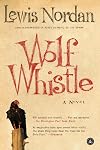
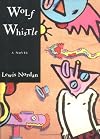
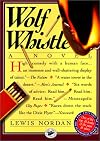
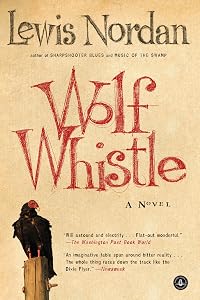
ALA Notable Book; 1994 Mississippi Writers Award for Fiction; 1994 Southern Book Critics Circle Award for Fiction. In WOLF WHISTLE, Lewis Nordan unleashes the hellhounds of his prodigious imagination on one of the most notorious racial killings of the century, the Emmett Till murder. Soon we're on a magical mystery tour of the Southern psyche of the mid-1950s and the dawning of guilt and recognition in a whole generation of white Southerners. "An immense and wall-shattering display of show more talent. WOLF WHISTLE will help usher Lewis Nordan into the Hall of Fame of American Letters."--Randall Kenan, The Nation. show lessTags
Recommendations













Member Recommendations
Member Reviews
Lewis Nordan works on the edge of magic. In Wolf Whistle the harsh reality of deeply ingrained racism and outright murder blends into fantasy and beauty and back again to real and ugly. In Arrow Catcher, Mississippi a black boy from Chicago named Bobo makes a weak and unsuccessful proposition to a wealthy white woman. She gives him a ride home to get him safely away from the scene of what she knows is considered a crime in the south.
Bobo turns up dead and two white suspects are put on trial, including the woman’s husband. That’s not the entire story. Nordan intertwines the lives of several of Arrow Catcher’s residents. Glenn Gregg is a nine year-old that severely burned himself trying to set his daddy, Solon, on fire. Alice, the show more new and innocently adulterous fourth grade teacher takes her students on a field trip to visit their burned classmate, as well as to the morgue, a sewage treatment plant and the murder trial. She’s still in love with an old college professor and although she feels almost like Jesus, being surrounded by children, she has “excellent reason to believe that Jesus never would in one million years have slept with a married man.”
Wolf Whistle combines the horrific with black humor and makes it sing. The blues of course, like Robert Johnson would. show less
Bobo turns up dead and two white suspects are put on trial, including the woman’s husband. That’s not the entire story. Nordan intertwines the lives of several of Arrow Catcher’s residents. Glenn Gregg is a nine year-old that severely burned himself trying to set his daddy, Solon, on fire. Alice, the show more new and innocently adulterous fourth grade teacher takes her students on a field trip to visit their burned classmate, as well as to the morgue, a sewage treatment plant and the murder trial. She’s still in love with an old college professor and although she feels almost like Jesus, being surrounded by children, she has “excellent reason to believe that Jesus never would in one million years have slept with a married man.”
Wolf Whistle combines the horrific with black humor and makes it sing. The blues of course, like Robert Johnson would. show less
If I were to choose three words to describe Nordan's work, it would be haunting, hilarious, and tragic. Usually such elements are a recipe for disaster, or at the very least a digressive narrative train wreck , but Nordan seamlessly weaves together elements of humor and tragedy, the grotesque and absurd with verdant beauty. Wolf Whistle is a novel whose images will linger with you long after the reading has ended.
Wolf Whistle is based on the 1955 murder of Emmett Till, whose life was taken because he allegedly "wolf whistled" a white woman. This event would ultimately catalyze momentum for civil rights activism in the decade. Jordan sublimates this memory of the tragic event, which impacted his own childhood, into a collective show more meditation on the nature of Southern culture in the 1950s. Set in the fictional one horse town of Arrow Cather, Mississippi, no facet of society remains unexamined. Irony, satire and caricature are applied to all of his characters, except to Bobo, the murdered boy, who remains the pure and moral center of the novel. It is around Bobo's murder that the complex racial and cultural relations of this novel pivot. The murder reverberates through each character, no matter how major or minor. Each chapter oscillates from a different character's perspective/ reaction to the tragedy. In result, the reader is able to experience the true ethos of the era: the struggle of the white working class, intense racial segregation, the failings of the justice system, and of course, the cathartic power of the Blues.
In an interview with the author, Nordan states that his novel is ultimately "a serious story about death and grief and broken hearts" but that it exists on "a plane, sometimes comic, even burlesque, just askew of the real historical universe." And it is in his sensuous, evocative prose that we are taken into the surreal setting of the Delta, where elements of magical realism are melded with historical fact. By mythologizing this event, I believe the reader experiences the tragedy all the more profoundly. Nordan will truly be remembered by this haunting and remarkable piece. show less
Wolf Whistle is based on the 1955 murder of Emmett Till, whose life was taken because he allegedly "wolf whistled" a white woman. This event would ultimately catalyze momentum for civil rights activism in the decade. Jordan sublimates this memory of the tragic event, which impacted his own childhood, into a collective show more meditation on the nature of Southern culture in the 1950s. Set in the fictional one horse town of Arrow Cather, Mississippi, no facet of society remains unexamined. Irony, satire and caricature are applied to all of his characters, except to Bobo, the murdered boy, who remains the pure and moral center of the novel. It is around Bobo's murder that the complex racial and cultural relations of this novel pivot. The murder reverberates through each character, no matter how major or minor. Each chapter oscillates from a different character's perspective/ reaction to the tragedy. In result, the reader is able to experience the true ethos of the era: the struggle of the white working class, intense racial segregation, the failings of the justice system, and of course, the cathartic power of the Blues.
In an interview with the author, Nordan states that his novel is ultimately "a serious story about death and grief and broken hearts" but that it exists on "a plane, sometimes comic, even burlesque, just askew of the real historical universe." And it is in his sensuous, evocative prose that we are taken into the surreal setting of the Delta, where elements of magical realism are melded with historical fact. By mythologizing this event, I believe the reader experiences the tragedy all the more profoundly. Nordan will truly be remembered by this haunting and remarkable piece. show less
I wonder what a native Mississippian who was around when Jim Crow was in full force would say about this novel. Thankfully, I was not around during that hateful time, so I can only perceive what it must have been like to live in a world where the murder of a teenaged boy was deemed justifiable to grown men. What happened to Emmett Till is an unutterable shame that will haunt my home state for years to come, and since I did not come from that time I have no idea what it was like to live in that shadowy world.
Lewis Nordan's writing has a way of seizing you by the collar and giving you a good shake. It's almost as if he's standing beside you at a particularly dark scene of one of his novels pointing and saying, "this is what it was really show more like. Pay attention."
I highly recommend this novel, but it's not exactly a barrel of laughs. I don't think that was Nordan's intention, so no harm done. show less
Lewis Nordan's writing has a way of seizing you by the collar and giving you a good shake. It's almost as if he's standing beside you at a particularly dark scene of one of his novels pointing and saying, "this is what it was really show more like. Pay attention."
I highly recommend this novel, but it's not exactly a barrel of laughs. I don't think that was Nordan's intention, so no harm done. show less
Nordan's writing was masterful. A surreal look at the 1955 lynching of Emmett Till in Money, Mississippi led me, of course, to seek out some of the real facts. But the book itself, with it's unusual "magical" aspect (Till's 'demon eye' viewing the murder scene and his murderer) kept me anxious to finish reading the book. Comical scenes (the parrot in the courthouse, "Peter Skeeter", Sally Anne's purchase of feminine products at Red's Good Lookin Bar & Gro) juxtaposed with unexpected poignant ones (Solon--the 'bad' guy-and family playing wash tub music for the dying son) made this a fine book in spite of the depressing historical background of the Till lynching. This is a book I would have never chosen to read if not for the local show more library's program "Let's Talk About It" discussion funded by the N. C. Humanities Council. show less
Good: the description and characterization were excellent. Everyone had their own believable backstory.
Bad: the plot didn't really go anywhere. It was more of a slice-of-life picture than a story.
Certainly worth reading, but I'm not sure I'll actively search out other books by Nordan. I'll be curious to see what the next person thinks of it.
Bad: the plot didn't really go anywhere. It was more of a slice-of-life picture than a story.
Certainly worth reading, but I'm not sure I'll actively search out other books by Nordan. I'll be curious to see what the next person thinks of it.
Based on the Emmett Till lynching. Fascinating study of southern poverty, loneliness, alcoholism, and brutality, told with a certain lyricism.
This is a quick touching work which I would recommend to anyone. The absurdist qualities serve to highlight the absurdity of the history that back up the novel.
Members
- Recently Added By
Lists

Five star books
1,755 works; 107 members

Animals in the Title
498 works; 11 members
Author Information

12+ Works 1,063 Members
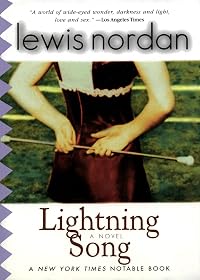
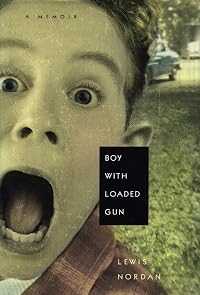
Lewis Nordan was born in Forest, Mississippi on August 23, 1939. He received a bachelor's degree from Millsaps College, a master's degree from Mississippi State University, and a Ph.D. from Auburn University. He taught at the University of Arkansas and elsewhere before joining the faculty at the University of Pittsburgh. He retired from there in show more 2005. His first book, Welcome to the Arrow-Catcher Fair, was published in 1983. His other works include Wolf Whistle, Lightning Song, Sugar among the Freaks, and Boy with Loaded Gun. He died due to complications of pneumonia on April 13, 2012 at the age of 72. (Bowker Author Biography) show less
Awards and Honors
Awards
Distinctions
Notable Lists
Series

Common Knowledge
- Original publication date
- 1993
- Important places
- Mississippi, USA
Classifications
Statistics
- Members
- 307
- Popularity
- 104,193
- Reviews
- 9
- Rating
- (3.93)
- Languages
- English
- Media
- Paper, Ebook
- ISBNs
- 5
- UPCs
- 1
- ASINs
- 2