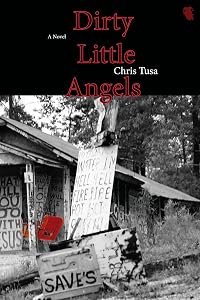
Dirty Little Angels
by Chris Tusa 
On This Page
Description
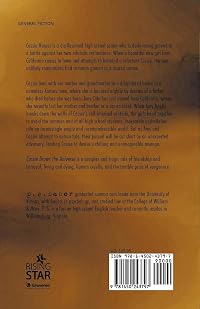
Set in the slums of New Orleans, among crack houses and abandoned buildings, Dirty Little Angels is the story of 16-year-old Hailey Trosclair. When the Trosclair family suffers financial hardship and a miscarriage, Hailey finds herself looking to God to save her family. When her prayers go unanswered, Hailey puts her faith in Moses Watkins, a failed preacher and ex-con. Fascinated by Moses¿ lopsided view of religion, Hailey and her brother Cyrus begin spending time at an abandoned bank that show more Moses plans to convert into a drive-through church. Gradually, Moses¿ twisted religious beliefs become increasingly more violent, and Hailey and Cyrus find themselves trapped in a world of danger and fear from which there may be no escape. show lessTags
Recommendations



















Member Recommendations
JessiAdams Similar style and visuals, and a lot of similarities between the stories.
41

WSB7 A better vision of soul-sucking modernity's effects.
WSB7 Another version (and funnier) of soul-eating/soul-sucking modernity.
Member Reviews
The Publisher Says: Set in the slums of New Orleans, among crack houses and abandoned buildings, Dirty Little Angels is the story of 16-year-old Hailey Trosclair. When the Trosclair family suffers financial hardship and a miscarriage, Hailey finds herself looking to God to save her family. When her prayers go unanswered, Hailey puts her faith in Moses Watkins, a failed preacher and ex-con.
Fascinated by Moses' lopsided view of religion, Hailey and her brother Cyrus begin spending time at an abandoned bank that Moses plans to convert into a drive-through church. Gradually, Moses' twisted religious beliefs become increasingly more violent, and Hailey and Cyrus find themselves trapped in a world of danger and fear from which there may be no show more escape.
I RECEIVED AN ARC FROM THE PUBLISHER. THANK YOU.
My Review: The thing about receiving author-supplied DRCs is that one never knows whether they're the author's own files or the typeset and formatted files the publisher sells on ebook sites. Luckily for me, I'm acquainted with this publisher so I asked for and received a tree book copy of it.
When you start reading this bitter, sour-faced story of a family's complete collapse, you're expecting more Southern Gothic. Failed fathers, hate-stuffed mothers, frail, failing children, all the usual trappings...set in New Orleans, a place that (to me) reeks of failure on a generational time-scale...and what more fertile ground can there be for a teenage girl to discover the nasty, brutish, short nature of most of humanity's lives.
Hailey is desperate. She's trapped in a web of emotional blackmail and the sticky sap of rage and blame in a marriage that failed the test of character. She's savvy, sensing the sap is slowly turning into amber as pressure and heat build in her parents. Not very surprisingly, she opts to try putting her faith in the christian god. She's from the South, and it's a space hag-ridden by the manifold evils of that religion's ripeness for exploitive behavior. Of course Hailey falls in with an abusive, evil preacher called "Moses" (how original that alias is!) whose plans are just loopy enough to seem visionary to a desperate girl.
The problems that the adult reader sees instantly Hailey sees as positives...the idea of a drive-through church is simply ludicrous...but only long enough to discover that Moses is not there to help her but to use her. It's a horrible realization and it's an angry world that popped Hailey up, so it's no surprise how she ends up behaving in the end.
It's not a long story, and it's not a cheery one, but it's very tellingly presented as a slice of life. Hailey's growing into her full power of womanhood doesn't, in the end, break the mold set by her unhappy family.
It takes a fucking sledgehammer to the whole structure.
If you're up for a bracingly told, frankly and honestly observed coming-of-age story set in an iconic if still catatonic since Katrina location, this is a story you'll love. I did. show less
Fascinated by Moses' lopsided view of religion, Hailey and her brother Cyrus begin spending time at an abandoned bank that Moses plans to convert into a drive-through church. Gradually, Moses' twisted religious beliefs become increasingly more violent, and Hailey and Cyrus find themselves trapped in a world of danger and fear from which there may be no show more escape.
I RECEIVED AN ARC FROM THE PUBLISHER. THANK YOU.
My Review: The thing about receiving author-supplied DRCs is that one never knows whether they're the author's own files or the typeset and formatted files the publisher sells on ebook sites. Luckily for me, I'm acquainted with this publisher so I asked for and received a tree book copy of it.
When you start reading this bitter, sour-faced story of a family's complete collapse, you're expecting more Southern Gothic. Failed fathers, hate-stuffed mothers, frail, failing children, all the usual trappings...set in New Orleans, a place that (to me) reeks of failure on a generational time-scale...and what more fertile ground can there be for a teenage girl to discover the nasty, brutish, short nature of most of humanity's lives.
Hailey is desperate. She's trapped in a web of emotional blackmail and the sticky sap of rage and blame in a marriage that failed the test of character. She's savvy, sensing the sap is slowly turning into amber as pressure and heat build in her parents. Not very surprisingly, she opts to try putting her faith in the christian god. She's from the South, and it's a space hag-ridden by the manifold evils of that religion's ripeness for exploitive behavior. Of course Hailey falls in with an abusive, evil preacher called "Moses" (how original that alias is!) whose plans are just loopy enough to seem visionary to a desperate girl.
The problems that the adult reader sees instantly Hailey sees as positives...the idea of a drive-through church is simply ludicrous...but only long enough to discover that Moses is not there to help her but to use her. It's a horrible realization and it's an angry world that popped Hailey up, so it's no surprise how she ends up behaving in the end.
It's not a long story, and it's not a cheery one, but it's very tellingly presented as a slice of life. Hailey's growing into her full power of womanhood doesn't, in the end, break the mold set by her unhappy family.
It takes a fucking sledgehammer to the whole structure.
If you're up for a bracingly told, frankly and honestly observed coming-of-age story set in an iconic if still catatonic since Katrina location, this is a story you'll love. I did. show less
This review was written for LibraryThing Member Giveaways.
Other reviews have called this a brutal, gritty coming-of-age novel, and it is that.
However I feel such a description might place this story in the wrong category. It is a coming-of-age story in the same way Bastard out of Carolina was; basically a story of someone growing up and into the cruelest knowledge that those around her are damaged and not nearly good enough to be ushering a young soul into adulthood.
Hailey Trosclair is a sixteen year old girl in New Orleans whose father is an unmotivated and unemployed alcoholic and whose mother is a depressive living in the past and clinging to resentments. These people live in only the dreariest sepia tones, and from them springs young Hailey, our first person protagonist who is show more suffocating for the lack of color. Brother Cyrus is a protective if misguided delinquent, and all adults - save the compassionate neighbor, Verma - fail both Hailey and Cyrus utterly. Her peers don't do much better, as friend Meridian and the inconstant Chase (aptly named) also betray her.
Hailey's coming-of-age is then coming into the knowledge that no one can really be counted upon, and leaving childhood is ugly, demonic work. Even the dirty angels of our world are less dangerous than the wolves in adult clothing.
Reading Dirty Little Angels was an almost effortless experience. Characterizations were rich enough to add rather than detract from the story. Hailey's narrative voice was engaging, even when she was at a loss due to her own splintering despair. The plot rang true, even throughout the more gruesome or depraved acts of some of the characters.
However, this review would not be complete if I did not mention Tusa's gift of imagery. So few novels really pull it off these days, so I was extremely grateful to be carried into this novel by the rich visualizations Tusa's words created.
I was sent this ebook for a review, and I thank for the author for the experience. I certainly hope Chris Tusa continues to write. show less
However I feel such a description might place this story in the wrong category. It is a coming-of-age story in the same way Bastard out of Carolina was; basically a story of someone growing up and into the cruelest knowledge that those around her are damaged and not nearly good enough to be ushering a young soul into adulthood.
Hailey Trosclair is a sixteen year old girl in New Orleans whose father is an unmotivated and unemployed alcoholic and whose mother is a depressive living in the past and clinging to resentments. These people live in only the dreariest sepia tones, and from them springs young Hailey, our first person protagonist who is show more suffocating for the lack of color. Brother Cyrus is a protective if misguided delinquent, and all adults - save the compassionate neighbor, Verma - fail both Hailey and Cyrus utterly. Her peers don't do much better, as friend Meridian and the inconstant Chase (aptly named) also betray her.
Hailey's coming-of-age is then coming into the knowledge that no one can really be counted upon, and leaving childhood is ugly, demonic work. Even the dirty angels of our world are less dangerous than the wolves in adult clothing.
Reading Dirty Little Angels was an almost effortless experience. Characterizations were rich enough to add rather than detract from the story. Hailey's narrative voice was engaging, even when she was at a loss due to her own splintering despair. The plot rang true, even throughout the more gruesome or depraved acts of some of the characters.
However, this review would not be complete if I did not mention Tusa's gift of imagery. So few novels really pull it off these days, so I was extremely grateful to be carried into this novel by the rich visualizations Tusa's words created.
I was sent this ebook for a review, and I thank for the author for the experience. I certainly hope Chris Tusa continues to write. show less
This review was written for LibraryThing Member Giveaways.
In Dirty Little Angels, by Chris Tusa, Hailey Trosclair is a teenage girl living in New Orleans, post Hurricane Camille, but nearly post-apocalyptic (and though Katrina is not mentioned, the feel of despair and desolation soaks the story). "Like most people in New Orleans, Verma [a woman who lives near Hailey and a family friend] had lived through Hurricane Camille, and whenever the sky turned black, or a hurricane started brewing in the Gulf, you could see the fear drifting across her face." The impending doom is not just geographical, however. It is spiritual, mental and physical. The actors in this drama are mentally and bodily deformed and scarred. This is reminiscent of the religious, darkly humorous South of Flannery O'Connor. The show more metaphors and similes that make the setting and characters come alive are repulsive and compelling. When Hailey meets a friend of a friend she describes him: "an older-looking guy with slick black hair that looked like it had been painted onto his skull." A ghoulish image with religious undertones (the image of death, but also of sainthood, of relics, the living, somehow already dead). Even the places they hang out, like The Dead Goat and the old bank, which one of the characters, Moses, wants to turn into a drive-thru church, are gutted, barren places.
Although Hailey lives among the ruins and is damaged herself, thanks in part to her parents (her mother had a miscarriage and lays in bed all day, her father is a drunk of long standing) and in part to her own poor choices (her best friend is less than wholesome), she's sympathetic. We associate with her pain and also with her empathy. Sure she's angry and she wants someone to blame, but the story is about accountability, choices and familial responsibility, and ultimately, I think she takes responsibility for her own actions. Those are tough themes, but Tusa does a fantastic job of plowing us through in such a short period. I largely attribute this to the author's excellent ability to create characters, settings and images. By the first page, I knew I was going to like the novel because of just such images: "I imagined the stitches in her stomach, tiny black mouths puckering between the folds of her belly." Such disgust and delight; such childlike wonder and adult despair.
We don't find out what the title refers to until near the end of the novel (almost a novella really) when one of the characters says that the "dirty little angels" she sees everywhere "'have to eat our souls before we can go to Heaven ... The dirt's from our souls. It rubs off on their hands and their mouth when they eat it.'" And when we finish up, it's hard to say whether or not the angels are dirtier or fewer or less voracious. And that ambiguity is so impressively formed. We're left with questions, but questions we feel like we can make an educated guess about. And in part, that judgment is about the reader as much as the characters; it's about how we see the world and all the dirty little angels that populate it. show less
Although Hailey lives among the ruins and is damaged herself, thanks in part to her parents (her mother had a miscarriage and lays in bed all day, her father is a drunk of long standing) and in part to her own poor choices (her best friend is less than wholesome), she's sympathetic. We associate with her pain and also with her empathy. Sure she's angry and she wants someone to blame, but the story is about accountability, choices and familial responsibility, and ultimately, I think she takes responsibility for her own actions. Those are tough themes, but Tusa does a fantastic job of plowing us through in such a short period. I largely attribute this to the author's excellent ability to create characters, settings and images. By the first page, I knew I was going to like the novel because of just such images: "I imagined the stitches in her stomach, tiny black mouths puckering between the folds of her belly." Such disgust and delight; such childlike wonder and adult despair.
We don't find out what the title refers to until near the end of the novel (almost a novella really) when one of the characters says that the "dirty little angels" she sees everywhere "'have to eat our souls before we can go to Heaven ... The dirt's from our souls. It rubs off on their hands and their mouth when they eat it.'" And when we finish up, it's hard to say whether or not the angels are dirtier or fewer or less voracious. And that ambiguity is so impressively formed. We're left with questions, but questions we feel like we can make an educated guess about. And in part, that judgment is about the reader as much as the characters; it's about how we see the world and all the dirty little angels that populate it. show less
Seventy years ago, the poet May Sarton wrote about a debut novel “When one puts it down it is not with a feeling of emptiness and despair (which an outline of the plot might suggest), but with a feeling of having been nourished by the truth.” She was writing about Carson McCullers’ The Heart is a Lonely Hunter, but she might have written the same observation today about Chris Tusa’s Dirty Little Angels.
Each story is told from the perspective of a young girl in the American South, though Tusa’s Hailey Trosclair is a few years older and a little ‘harder’ than McCullers’ Mick Kelly. Both girls come of age in households where the father’s unemployment and the mother’s bitterness at slipping down the socio-economic show more ladder preoccupy them to the point that their children are forced out of the house to learn life’s lessons. On the way to learning those lessons, both girls deal with issues as banal as classroom popularity and as serious as death.
Like McCullers, Tusa eschews the happy ending. If angels must eat the souls of the departed on their way to Heaven they will get dirty indeed covering Hailey Trosclair’s New Orleans neighborhood, where the truth is that violence is part of life’s fabric and death happens easily. But true to New Orleans tradition, Tusa offers lagniappes — over the bleak canvas of his plot he paints beautiful word-pictures that let us see what Hailey sees, creating an empathy that make us care deeply about his characters and enjoy reading his story. show less
Each story is told from the perspective of a young girl in the American South, though Tusa’s Hailey Trosclair is a few years older and a little ‘harder’ than McCullers’ Mick Kelly. Both girls come of age in households where the father’s unemployment and the mother’s bitterness at slipping down the socio-economic show more ladder preoccupy them to the point that their children are forced out of the house to learn life’s lessons. On the way to learning those lessons, both girls deal with issues as banal as classroom popularity and as serious as death.
Like McCullers, Tusa eschews the happy ending. If angels must eat the souls of the departed on their way to Heaven they will get dirty indeed covering Hailey Trosclair’s New Orleans neighborhood, where the truth is that violence is part of life’s fabric and death happens easily. But true to New Orleans tradition, Tusa offers lagniappes — over the bleak canvas of his plot he paints beautiful word-pictures that let us see what Hailey sees, creating an empathy that make us care deeply about his characters and enjoy reading his story. show less
A brief stumble into a bleak world, Dirty Little Angels mesmerizes the reader in much the same way a horrible car wreck captivates other drivers. This novel offers a glimpse into the stark reality of growing up poor, confused, and pinned down--the main character accepts her lowly position in life, yet fights with her entire being to keep the shoddy fabric of that life stitched together. In other words, she's real. How many of us are just trying to survive with what life has handed us, unwilling to hurt others yet desperate to save what we hold most dear? Hailey deals with these dilemmas as best she can, even when the pain gets to be too much. She's strong, in her own way, and I know for a fact that there are countless young girls that show more are living her life right now in their own way. Though she is never perfect, she lends out something of herself for us all to use.
In short, all of the characters and situations in Tusa's novel are raw and horribly lifelike. It is all too true, and captured impeccably. The joy in experiencing this book comes from Tusa's astonishing use of imagery. Though the language is simple and minimalistic, there is a gritty poetry coursing just below the surface of this story. It pulls at the reader, forcing eyes to see everything in pristine detail whether they want to or not. It is the same poetry found in the squeal of a subway car or in the barrel of fire warming hands beneath an overpass.
That being said, I only wish the novel could have drawn itself out--developing lesser characters, interpreting more situations, and generally just living more life. Though the simplicity was an extremely important function of the book, I still finished it wanting more. At times, the scenes were rushed through, almost unheeded, which sometimes isn't the way life is lived. I thought there were times when more focus could be useful.
What could definitely be useful to this novel is a skilled editor with an eagle eye. I don't know if I was reading a manuscript or a finished copy (as it was an e-book), but there were quite a few petty grammatical mistakes which could annoy much more forgiving readers than I. I am almost of a mind to print the copy, go over it with a read pen, and send it back to Tusa. As if you needed a reminder, Dirty Little Angels burrows into you and lets you know that we're not all perfect. But at least the writing should be.
That being said show less
In short, all of the characters and situations in Tusa's novel are raw and horribly lifelike. It is all too true, and captured impeccably. The joy in experiencing this book comes from Tusa's astonishing use of imagery. Though the language is simple and minimalistic, there is a gritty poetry coursing just below the surface of this story. It pulls at the reader, forcing eyes to see everything in pristine detail whether they want to or not. It is the same poetry found in the squeal of a subway car or in the barrel of fire warming hands beneath an overpass.
That being said, I only wish the novel could have drawn itself out--developing lesser characters, interpreting more situations, and generally just living more life. Though the simplicity was an extremely important function of the book, I still finished it wanting more. At times, the scenes were rushed through, almost unheeded, which sometimes isn't the way life is lived. I thought there were times when more focus could be useful.
What could definitely be useful to this novel is a skilled editor with an eagle eye. I don't know if I was reading a manuscript or a finished copy (as it was an e-book), but there were quite a few petty grammatical mistakes which could annoy much more forgiving readers than I. I am almost of a mind to print the copy, go over it with a read pen, and send it back to Tusa. As if you needed a reminder, Dirty Little Angels burrows into you and lets you know that we're not all perfect. But at least the writing should be.
That being said show less
Dirty Little Angels is like a slightly overripe peach that you've dropped in the dirt accidentally. The dirt sticks, and there are bruises on top of bruises, but you want the sweetness, and you want to salvage what you can. There is despair and hell in this story, but somehow, in a twisted, roundabout way, there is hope and the possibility of salvation.
The main character, Hailey, takes a little while to develop into three dimensions. Once she does, though, her experiences come through powerfully, sometimes staggeringly so.
This book is a window into what so many young people live on a daily basis... makes one stop and think about the world we live in.
The main character, Hailey, takes a little while to develop into three dimensions. Once she does, though, her experiences come through powerfully, sometimes staggeringly so.
This book is a window into what so many young people live on a daily basis... makes one stop and think about the world we live in.
In Dirty Little Angels, Chris Tusa tells the story of Hailey Trosclair. Her father has lost his job and spends most of his time in a pool hall. Her mother is mostly bed ridden due to grief from a miscarriage. Hailey has no one to help her with the roaches that are crawling through her mind.
Hailey tries to figure out what life is all about. She turns to her brother and her best friend Meridian. Meridian is fake, in personality as well as her enhanced teenage body. Her brother introduces her to his friend Moses. Moses is a bad individual who is trying to convert an old bank into a drive through church.
Hailey experiences some of the worst parts of being human, murder, rape, death, betrayal, infidelity and hopelessness. Her thoughts crawl show more around in her head like roaches and she doesn't know how to stop them. She heads down a path that will change her life forever.
Chris Tusa is able to convey more through his characters' dialogue than most people can with a photograph. The story comes to life quickly and believably. This is a very fast read that you will find hard to step away from.
This book is bold and a little uncomfortable with it's message. The author dives deep into the darker side of human nature. The action is captivating even though the message is very depressing.
I encourage you to read this, but don't expect the typical cookie cutter type story. This book gets better the more you think about the characters, even after the story is over. show less
Hailey tries to figure out what life is all about. She turns to her brother and her best friend Meridian. Meridian is fake, in personality as well as her enhanced teenage body. Her brother introduces her to his friend Moses. Moses is a bad individual who is trying to convert an old bank into a drive through church.
Hailey experiences some of the worst parts of being human, murder, rape, death, betrayal, infidelity and hopelessness. Her thoughts crawl show more around in her head like roaches and she doesn't know how to stop them. She heads down a path that will change her life forever.
Chris Tusa is able to convey more through his characters' dialogue than most people can with a photograph. The story comes to life quickly and believably. This is a very fast read that you will find hard to step away from.
This book is bold and a little uncomfortable with it's message. The author dives deep into the darker side of human nature. The action is captivating even though the message is very depressing.
I encourage you to read this, but don't expect the typical cookie cutter type story. This book gets better the more you think about the characters, even after the story is over. show less
This review was written for LibraryThing Member Giveaways.
Members
- Recently Added By
Lists

Books Read in 2009
464 works; 11 members
Author Information

4 Works 772 Members
Chris Tusa is a LibraryThing Author, an author who lists their personal library on LibraryThing.
Common Knowledge
- Canonical title
- Dirty Little Angels
- Original publication date
- 2009-03-01
- People/Characters
- Hailey Trosclair; Cyrus Trosclair; Chase Haydel; Meridian Fairfield; Moses Watkins; Verma (show all 31); Jules Trosclair; Lena Trosclair; Cory Rabalais; Iris Guidry; Garrett Guidry; Uncle Errol; Jay; Seth Connors; Yvette; Ms. Thibodeaux; Brian Berton; Penny; Raynelle; Moonie; Lavonia; Chloe; Maynard; Malcom; Catina; Cedric; Idouma; Lorelei Evans; Smiley; Doctor Gaudet; Clarence
- Important places
- New Orleans, Louisiana, USA
- Dedication
- for Pamela
- First words
- The baby was a white fist of flesh.
- Last words
- (Click to show. Warning: May contain spoilers.)I began to think about the dirty little angels Chloe told me about, how they have to eat your soul before you can get into Heaven, and for a minute, as I listened to the crackle of dead leaves outside my window, I couldn't help but imagine the glorious sound of angels' teeth chewing through my tiny black soul.
- Blurbers
- Pollock, Donald Ray; Russell, Josh; Marshall, Bev; Domingue, Ronlyn
Classifications
Statistics
- Members
- 734
- Popularity
- 38,467
- Reviews
- 533
- Rating
- (3.45)
- Languages
- English
- Media
- Paper, Ebook
- ISBNs
- 2
- ASINs
- 1