
C. R. Hindmarsh
Author of The Man Who Crossed Worlds
About the Author
Series
Works by C. R. Hindmarsh
The Man Who Lost Everything 1 copy
The Man Who Broke the World 1 copy
Tagged
Common Knowledge
- Other names
- Strange, Chris
- Gender
- male
- Short biography
- C. R. Hindmarsh is a twenty-something fantasy author born and raised in New Zealand. He is fond of fiction that balances dark grittiness with subtle humor.
- Nationality
- New Zealand
- Places of residence
- New Zealand
- Associated Place (for map)
- New Zealand
Members
Reviews

These days it seems like the title of Urban Fantasy can be given out to anything that so much as involves a city somewhere. This book is Urban with a capital U; you can practically smell the stench of Bluegate, a city that’s fallen a long, long way from grace. There’s nothing remotely pretty about this story.
Miles Franco is a Tunneler, which means he can do entertaining stuff with reality and pop off to another dimension anytime he feels like it. But that isn’t too rare a skill in show more Bluegate. What’s unusual about him is that, unlike almost everyone else in the city, he honestly means well. He could’ve taken a well-paid job with one of the many city gangs if he didn’t mind too much about incidental things like morality. But he does, so he doesn’t, and ends up living pretty rough in an apartment barely better than a shed.
Being the only decent bloke also gets him into trouble. When a dangerous new drug seems set to hit city circulation, Miles is dragged into the mess that’s rapidly developing. Really, with the number of beatings Miles seems to attract it’s amazing he’s survived this long. All the more so given what a naive, easily manipulated chump he is. But he manages to be likeable in spite of being constantly duped.
This is a well-written story, very noir with a clear and diverting narrative voice. Miles’s sense of humour is enjoyable, and one of the most likeable things about him is that his sense of the ridiculous never fails, even when he’s in deep trouble. He’s got a line ready for all circumstances. Perhaps it’s the only defence this shrimp can manage to muster, albeit a poor one. Shrimp he may be, by the way, but he certainly doesn’t lack courage.
This story is full of twists and turns and Miles would do well to avoid trusting anyone too much. Most of the twists are well done, and kept me guessing until almost the end. The final one let me down a little when it turned out to be exactly what I was hoping wouldn’t happen. That aside, this was a really strong book and an entertaining read. I’m hoping Miles will grow a bit of a brain in time for the next book, though; maybe next time he won’t be duped by almost everyone. show less
Miles Franco is a Tunneler, which means he can do entertaining stuff with reality and pop off to another dimension anytime he feels like it. But that isn’t too rare a skill in show more Bluegate. What’s unusual about him is that, unlike almost everyone else in the city, he honestly means well. He could’ve taken a well-paid job with one of the many city gangs if he didn’t mind too much about incidental things like morality. But he does, so he doesn’t, and ends up living pretty rough in an apartment barely better than a shed.
Being the only decent bloke also gets him into trouble. When a dangerous new drug seems set to hit city circulation, Miles is dragged into the mess that’s rapidly developing. Really, with the number of beatings Miles seems to attract it’s amazing he’s survived this long. All the more so given what a naive, easily manipulated chump he is. But he manages to be likeable in spite of being constantly duped.
This is a well-written story, very noir with a clear and diverting narrative voice. Miles’s sense of humour is enjoyable, and one of the most likeable things about him is that his sense of the ridiculous never fails, even when he’s in deep trouble. He’s got a line ready for all circumstances. Perhaps it’s the only defence this shrimp can manage to muster, albeit a poor one. Shrimp he may be, by the way, but he certainly doesn’t lack courage.
This story is full of twists and turns and Miles would do well to avoid trusting anyone too much. Most of the twists are well done, and kept me guessing until almost the end. The final one let me down a little when it turned out to be exactly what I was hoping wouldn’t happen. That aside, this was a really strong book and an entertaining read. I’m hoping Miles will grow a bit of a brain in time for the next book, though; maybe next time he won’t be duped by almost everyone. show less
This review was written for LibraryThing Member Giveaways.
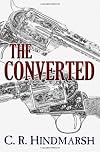
Part western, part sci fi thriller, C. R. Hindmarsh's novel The Converted gives a glimpse into a society where technology pairs with unbridled greed creating not just physical monsters, but figurative ones as well.
In the novel, Dr. Anton Springmann journies into the frontier country of New Alania hoping to escape his past and start his life over with a clean page. But it doesn't take long for him to realize that he's left a bad situation only to enter a worse one. When he arrives in New show more Alania, he finds that monstrous creatures are threatening the human population there. And when one of his patients, a young girl, is attacked, Dr. Springmann is determined to rescue the child no matter what, and in the process, redeem himself for his past crimes.
Hindmarsh is a solid writer. His plot moves swiftly, and his characters are interesting. He brings the tragedies in the story to life, making the reader care about what happens. From the very beginning of the story, Hindmarsh draws his readers into his world and keeps them there until the final page.
But not everything in this books works. The story contains elements of steampunk and science fiction and even fantasy, but unfortunately, these diverse things do not blend well. Instead of complimenting each other, the genres clash.
For example, it stretches credibility to think that a society could produce complex genetic mutations while, at the same time, having no technology beyond diesel engines and steam locomotives. The genetic research in the book was as out of place as a nuclear reactor in the middle of the "Little House on the Prairie" series.
An additional concern was that the only point of the genetic research in the story was to alter people's appearances. Since New Alania was an agrarian society, it would have made more sense for the gene technology to be used to create drought-resistant crops or heal injuries, and have the cosmetics spring up as a by-product of that technology.
Although C. R. Hindmarsh is a gifted writer, the plot for this book didn't work as well as it could have. Hopefully, his next book will work out some of these kinks. show less
In the novel, Dr. Anton Springmann journies into the frontier country of New Alania hoping to escape his past and start his life over with a clean page. But it doesn't take long for him to realize that he's left a bad situation only to enter a worse one. When he arrives in New show more Alania, he finds that monstrous creatures are threatening the human population there. And when one of his patients, a young girl, is attacked, Dr. Springmann is determined to rescue the child no matter what, and in the process, redeem himself for his past crimes.
Hindmarsh is a solid writer. His plot moves swiftly, and his characters are interesting. He brings the tragedies in the story to life, making the reader care about what happens. From the very beginning of the story, Hindmarsh draws his readers into his world and keeps them there until the final page.
But not everything in this books works. The story contains elements of steampunk and science fiction and even fantasy, but unfortunately, these diverse things do not blend well. Instead of complimenting each other, the genres clash.
For example, it stretches credibility to think that a society could produce complex genetic mutations while, at the same time, having no technology beyond diesel engines and steam locomotives. The genetic research in the book was as out of place as a nuclear reactor in the middle of the "Little House on the Prairie" series.
An additional concern was that the only point of the genetic research in the story was to alter people's appearances. Since New Alania was an agrarian society, it would have made more sense for the gene technology to be used to create drought-resistant crops or heal injuries, and have the cosmetics spring up as a by-product of that technology.
Although C. R. Hindmarsh is a gifted writer, the plot for this book didn't work as well as it could have. Hopefully, his next book will work out some of these kinks. show less

I received this book as a Member Giveaway.
A dark superhero crime novel, Chris Strange's "Don't be a Hero" explores a world where superheroes exist, but only grudgingly. Former heroes Spook and the Carpenter get by as under-the-table private investigators, until they are hired to solve a kidnapping. But the job unravels when the duo discover the kidnapper is a super-villain with a diabolical plan to bring super-humans (metas) back to the attention of a distrusting and disinterested show more society.
Strange does a good job of creating an interesting, reality-based universe, which is quite challenging in a genre that is so popular and widely explored. While some characters and actions seem familiar (eg- absorbing powers from brain matter a la Syler from Heroes), most characters and scenarios are fairly original. The level of violence is a bit more than I usually like, but it does give the novel a very gritty, noir kind of feel.
Overall, I would recommend "Don't Be a Hero" for anyone who enjoys a good crime novel and/or the superhero genre. It's an exciting read that I simply couldn't put down until it was done. show less
A dark superhero crime novel, Chris Strange's "Don't be a Hero" explores a world where superheroes exist, but only grudgingly. Former heroes Spook and the Carpenter get by as under-the-table private investigators, until they are hired to solve a kidnapping. But the job unravels when the duo discover the kidnapper is a super-villain with a diabolical plan to bring super-humans (metas) back to the attention of a distrusting and disinterested show more society.
Strange does a good job of creating an interesting, reality-based universe, which is quite challenging in a genre that is so popular and widely explored. While some characters and actions seem familiar (eg- absorbing powers from brain matter a la Syler from Heroes), most characters and scenarios are fairly original. The level of violence is a bit more than I usually like, but it does give the novel a very gritty, noir kind of feel.
Overall, I would recommend "Don't Be a Hero" for anyone who enjoys a good crime novel and/or the superhero genre. It's an exciting read that I simply couldn't put down until it was done. show less
This review was written for LibraryThing Member Giveaways.

About 19 years ago, enormous monsters that were later dubbed “Maydays” appeared all over the world. Over the course of 9 years, they killed 1.1 billion people. Nothing anyone did seemed to have any effect on the Maydays, until Professor Nikolai Volkov unleashed his newly invented mind control technology. Humans still couldn’t harm Maydays, but now they could at least control them. Volkov decided to combine entertainment and punishment and created Volkov Entertainment Incorporated, a show more company specializing in broadcasting “Mayday vs. Mayday” battles.
The company has been doing pretty well for the past 10 years. Then something shocking and supposedly impossible happens: Yllia, one of the Maydays, dies. Jay Escobar, head of Volkov Entertainment’s Investigative Division, declares that Yllia was murdered. But who could murder a Mayday? Nukes couldn’t put a scratch on them, and even other Maydays are only able to do a little damage.
Mayday: A Kaiju Thriller was one of my impulse buys. The premise sounded interesting and the excerpt seemed readable, so I figured why not?
The beginning read like a hardboiled detective story. About halfway through, the story morphed into a sci-fi thriller that reminded me of Jurassic Park (the movie more so than the book), complete with deaths, severed body parts, and the booming footsteps of enormous and deadly monsters. I loved the book’s premise, the Mayday battles were loads of fun, and the Maydays themselves were each unique and fascinating.
I wish I’d gotten a chance to see Yllia as a living being, since she was probably my favorite of the bunch - my mental image of her looked a lot like Mothra. Serraton was another Mayday whose design I liked: a slim and agile snake with legs, a lot like a Chinese dragon. I don’t think there was a single Mayday I didn’t enjoy reading about (in the sense of getting to see them in action), although I liked Tempest (spider-like), Nasir (squat and humanoid), and Grotesque (crocodilian, with poison-filled pustules along its back) less than Yllia and Serraton.
The mystery could have been better, since I figured out a large part of it only a third of the way through. However, the action helped make up for the weak mystery - even if Escobar and the others had managed to figure things out faster, they’d still have had their hands full trying to keep from being killed by the Maydays.
That said, one of the book’s biggest weaknesses was Escobar. Everything was written in first-person POV from his perspective, and I really, really disliked him. He was overconfident, misogynistic, and unnecessarily violent. His inability to dial down his general jerkishness hurt his investigation and led to the deaths of maybe thousands of people. I frequently found myself wishing that someone else had been the main character. Healy would have been great, or maybe Priya. Healy seemed like a decent enough guy, and he was certainly steadier and smarter than Escobar. Priya’s POV would have removed a few of the book’s surprises, but I’d still have preferred her determination and anger over Escobar’s...everything. I really hated that guy.
I saw one review in which Escobar was referred to as “self-aware,” but that was only later on, after several people had had cause to tell him that he was a ham-handed investigator and terrible human being. And the thing was, he didn’t change his ways after he realized how awful he’d been - he just made more conscious use of his terribleness. I couldn’t really blame him for killing one particular character, but shooting another character he’d hoped to interrogate further was just plain stupid.
One bit that really bugged me was when Escobar was trying to distract Tempest. The best thing he could come up with to keep Tempest’s attention was to comment on Tempest’s lack of a penis and apparent inability to have sex (either due to a lack of a partner or a complete physical inability). Those two long paragraphs didn’t seem to have much of an effect on Tempest’s emotional state, but they did say an awful lot about Escobar.
The mystery was interesting, even though I was able to figure out a good chunk of it early on, and the Maydays and Mayday battles were wonderful. I just wish the book had been written from some other character’s POV.
Additional Comments:
At one point, a character bit a chunk out of Escobar's left hand. Later, Escobar broke what I assume was his right wrist. I don't recall Escobar ever getting proper treatment for his left hand (no time), so it bugged me that he kept using what I assumed was his bitten hand to hold his broken wrist against his body with no mention of his hand hurting. Even if the pain in his wrist was overshadowing the pain in his hand, his bitten hand would have still been difficult to use, and I'd have expected that, at least, to be mentioned. Other than that, though, I didn't notice much in the way of errors.
(Original review posted on A Library Girl's Familiar Diversions.) show less
The company has been doing pretty well for the past 10 years. Then something shocking and supposedly impossible happens: Yllia, one of the Maydays, dies. Jay Escobar, head of Volkov Entertainment’s Investigative Division, declares that Yllia was murdered. But who could murder a Mayday? Nukes couldn’t put a scratch on them, and even other Maydays are only able to do a little damage.
Mayday: A Kaiju Thriller was one of my impulse buys. The premise sounded interesting and the excerpt seemed readable, so I figured why not?
The beginning read like a hardboiled detective story. About halfway through, the story morphed into a sci-fi thriller that reminded me of Jurassic Park (the movie more so than the book), complete with deaths, severed body parts, and the booming footsteps of enormous and deadly monsters. I loved the book’s premise, the Mayday battles were loads of fun, and the Maydays themselves were each unique and fascinating.
I wish I’d gotten a chance to see Yllia as a living being, since she was probably my favorite of the bunch - my mental image of her looked a lot like Mothra. Serraton was another Mayday whose design I liked: a slim and agile snake with legs, a lot like a Chinese dragon. I don’t think there was a single Mayday I didn’t enjoy reading about (in the sense of getting to see them in action), although I liked Tempest (spider-like), Nasir (squat and humanoid), and Grotesque (crocodilian, with poison-filled pustules along its back) less than Yllia and Serraton.
The mystery could have been better, since I figured out a large part of it only a third of the way through. However, the action helped make up for the weak mystery - even if Escobar and the others had managed to figure things out faster, they’d still have had their hands full trying to keep from being killed by the Maydays.
That said, one of the book’s biggest weaknesses was Escobar. Everything was written in first-person POV from his perspective, and I really, really disliked him. He was overconfident, misogynistic, and unnecessarily violent. His inability to dial down his general jerkishness hurt his investigation and led to the deaths of maybe thousands of people. I frequently found myself wishing that someone else had been the main character. Healy would have been great, or maybe Priya. Healy seemed like a decent enough guy, and he was certainly steadier and smarter than Escobar. Priya’s POV would have removed a few of the book’s surprises, but I’d still have preferred her determination and anger over Escobar’s...everything. I really hated that guy.
I saw one review in which Escobar was referred to as “self-aware,” but that was only later on, after several people had had cause to tell him that he was a ham-handed investigator and terrible human being. And the thing was, he didn’t change his ways after he realized how awful he’d been - he just made more conscious use of his terribleness. I couldn’t really blame him for killing one particular character, but shooting another character he’d hoped to interrogate further was just plain stupid.
One bit that really bugged me was when Escobar was trying to distract Tempest. The best thing he could come up with to keep Tempest’s attention was to comment on Tempest’s lack of a penis and apparent inability to have sex (either due to a lack of a partner or a complete physical inability). Those two long paragraphs didn’t seem to have much of an effect on Tempest’s emotional state, but they did say an awful lot about Escobar.
The mystery was interesting, even though I was able to figure out a good chunk of it early on, and the Maydays and Mayday battles were wonderful. I just wish the book had been written from some other character’s POV.
Additional Comments:
At one point, a character bit a chunk out of Escobar's left hand. Later, Escobar broke what I assume was his right wrist. I don't recall Escobar ever getting proper treatment for his left hand (no time), so it bugged me that he kept using what I assumed was his bitten hand to hold his broken wrist against his body with no mention of his hand hurting. Even if the pain in his wrist was overshadowing the pain in his hand, his bitten hand would have still been difficult to use, and I'd have expected that, at least, to be mentioned. Other than that, though, I didn't notice much in the way of errors.
(Original review posted on A Library Girl's Familiar Diversions.) show less
Awards

You May Also Like


Statistics
- Works
- 11
- Members
- 183
- Popularity
- #118,258
- Rating
- 4.0
- Reviews
- 49
- ISBNs
- 13
