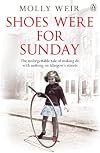
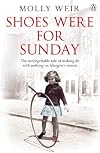
Shoes Were for Sunday
by Molly Weir
On This Page
Description
'Poverty is a very exacting teacher and I had been taught well' The post-war urban jungle of the Glasgow tenements was the setting for Molly Weir's childhood. From sharing a pull-out bed in her mother's tiny kitchen to running in terror from the fever van, it was an upbringing that was cemented in hardship. Hunger, cold and sickness was an everyday reality and complaining was not an option. Despite the crippling poverty, there was a vivacity to the tenements that kept spirits high. Whether show more Molly was brushing the hair of her wizened neighbour Mrs MacKay, running to Jimmy's chip shop for a ha'penny of crimps or dancing at the annual fair, there wasn't a moment to spare for self-pity. Molly never let it get her down as she and the other urchins knew how to make do with nothing. And at the centre of her world was her fearsome but loving Grannie, whose tough, independent spirit taught Molly to rise above her pitiful surroundings and achieve her dreams. show lessTags
Recommendations


































Member Recommendations


Member Reviews
Molly Weir, who later became a relatively known TV actress, chronicles her childhood, growing up between the wars in Springburn, a Glasgow slum that's still notorious for being the poorest parliamentary constituency in the United Kingdom. She was the youngest in a large family, born in 1910; her father was killed in War War I. Weir does nothing to romanticize her surroundings and makes it clear just how poor everyone was, and how hard life was, how there was no extra money for anything, but this book cannot be described as sad or depressing. She came from a warm, loving family that lived in an overcrowded apartment in a close-knit neighborhood where everyone looked out for each other, and she has a knack for describing the details of show more her life: the way her mother was able to hunt out bargains and using a bit of sewing magic to turn an adult's dress into a child's school uniform, for example.
I highly recommend this book to anyone who's interest in the lives of the poor and working-class in the UK and Scotland in particular during this period. I'd be interested in checking out the other two books in the trilogy Weir wrote about her childhood. show less
I highly recommend this book to anyone who's interest in the lives of the poor and working-class in the UK and Scotland in particular during this period. I'd be interested in checking out the other two books in the trilogy Weir wrote about her childhood. show less
George Bernard Shaw once wrote that poverty was the greatest evil in the world, but somehow no one every told Molly Weir that. The daughter of a working widow living in a Glasgow tenement between The Wars, Weir grew up in a loving environment with two women, her mother and her grandmother, who taught her responsibility at an early age. This book covers her earliest years and depicts slum life in Glasgow with a light hand. I sometimes learned more about the details of life with the Weir family than I wanted to know, but this is a charming story. It's evident from the first that Molly had character and drive. Continued by Best Foot Forward.
Ratings
Members
- Recently Added By
Author Information
13 Works 135 Members
Work Relationships
Is contained in
Classifications
Statistics
- Members
- 42
- Popularity
- 699,650
- Reviews
- 2
- Rating
- (4.38)
- Languages
- English
- Media
- Paper, Audiobook, Ebook
- ISBNs
- 10
- ASINs
- 1