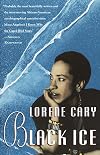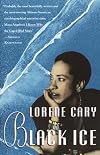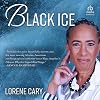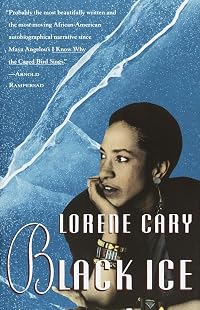
Black Ice
by Lorene Cary
On This Page
Description
In 1972 Lorene Cary, a bright, ambitious black teenager from Philadelphia, was transplanted into the formerly all-white, all-male environs of the elite St. Paul's School in New Hampshire, where she became a scholarship student in a "boot camp" for future American leaders.nbsp;nbsp;Like any good student, she was determined to succeed.nbsp;nbsp;But Cary was also determined to succeed without selling out.nbsp;nbsp;This wonderfully frank and perceptive memoir describes the perils and ambiguities show more of that double role, in which failing calculus and winning a student election could both be interpreted as betrayals of one's skin.nbsp;nbsp;Black Ice is also a universally recognizable document of a woman's adolescence; it is, as Houston Baker says, "a journey into selfhood that resonates with sober reflection, intellignet passion, and joyous love." show lessTags
Recommendations















Member Reviews
Beautifully written but, for this reader, ultimately unsatisfying, look at a black girl's years at a prestigious prep school in New Hampshire. Lorene Cary leaves a middle class life in Philadelphia in her HS sophomore year to attend St. Paul High School, circa 1972. While she feels some degree of "other-ness" she becomes amazingly assimilated into this world of prestige and money. She arrives wanting to "turn it out!" and, in the end, graduates with a respectable (if not stellar) academic career and winning the prestigious "Rector's Award." Along the way, she loses her virginity (in a most unromantic way), is challenged to study harder and learn more than she ever thought possible (Calculus remains her nemesis) deals with plebian summer show more jobs back in Phily. This reader was never sure if she "liked" St Paul's, or not. Her subsequent career brought her back to teach there and with all the detail she devotes to the various traditions, it would seem that she does. Leaving one to wonder: Did she sell out? Did she "drink the kool aid"? This reader was left wanting more and feeling somewhat cheated of the "real" story. I'd have traded all of the beautiful prose for a moment or two of real feeling. show less
This was sitting on my shelf for over four years. During that time, I occasionally glanced at it while looking for something to read. It never seemed like the right thing. Recently, though, it did. I snapped it up and read it quickly.
It's a memoir by an African-American woman who was given the chance to attend an eastern boarding school for her 11th and 12th grades (fifth and sixth forms). Her family was not affluent enough to afford the school on its own, but Cary qualified for financial help. Apparently the school was attempting to diversify, both by accepting girls and by accepting students of color. Clearly they had a winner by accepting a girl of color, especially given her academic qualities. She was a serious student.
It was not show more an easy transition to go from a Philadelphia public school to former all-boys private school in New Hampshire. She was especially aware of the differences in upbringing: the privileged class vs the working class. She was suspicious that teachers were prejudiced, that they did not expect much of her, that they were giving her gifts in their grades or, conversely, not acknowledging her ability, not believing she was as capable as she was. She ran into both students and teachers who fell into these stereotypes, but she also came across many who didn't fit her expectations.
At times I felt she protested too much. I suppose this is a typical reaction from a white middle class woman who did not face the prejudices she did. However, I had my own set to face. I often find myself envious of those who had a more "normal" childhood, a childhood where weight and ungainliness did not get in the way, for example. In this way I was envious of Lorene Cary.
After graduating from Saint Paul's School, Cary later returned as a teacher. I think she wanted to help others adjust to the eastern establishment expectations, without "selling out".
Living near a college with a high percentage of students from affluent backgrounds, I am often aware of how these students tend to float from school to school, never really touching the ground. They are protected all the way into their prestigious occupations and beyond. Some of them never get down and dirty in this respect. So I think I understand the conflicts within Lorene Cary as she navigated the prep school, trying to be true to herself and her culture.
It's a thoughtful memoir about those who find the black ice and stay on it, and those who don't. show less
It's a memoir by an African-American woman who was given the chance to attend an eastern boarding school for her 11th and 12th grades (fifth and sixth forms). Her family was not affluent enough to afford the school on its own, but Cary qualified for financial help. Apparently the school was attempting to diversify, both by accepting girls and by accepting students of color. Clearly they had a winner by accepting a girl of color, especially given her academic qualities. She was a serious student.
It was not show more an easy transition to go from a Philadelphia public school to former all-boys private school in New Hampshire. She was especially aware of the differences in upbringing: the privileged class vs the working class. She was suspicious that teachers were prejudiced, that they did not expect much of her, that they were giving her gifts in their grades or, conversely, not acknowledging her ability, not believing she was as capable as she was. She ran into both students and teachers who fell into these stereotypes, but she also came across many who didn't fit her expectations.
At times I felt she protested too much. I suppose this is a typical reaction from a white middle class woman who did not face the prejudices she did. However, I had my own set to face. I often find myself envious of those who had a more "normal" childhood, a childhood where weight and ungainliness did not get in the way, for example. In this way I was envious of Lorene Cary.
After graduating from Saint Paul's School, Cary later returned as a teacher. I think she wanted to help others adjust to the eastern establishment expectations, without "selling out".
Living near a college with a high percentage of students from affluent backgrounds, I am often aware of how these students tend to float from school to school, never really touching the ground. They are protected all the way into their prestigious occupations and beyond. Some of them never get down and dirty in this respect. So I think I understand the conflicts within Lorene Cary as she navigated the prep school, trying to be true to herself and her culture.
It's a thoughtful memoir about those who find the black ice and stay on it, and those who don't. show less
St. Paul's is an elite prep school in New Hampshire. Lorene Cary's _Black Ice_ is a memoir of her time at the school, as an African-American girl from Philadelphia she finds herself in an alien environment. Unfortunately, the memories here are typical coming-of-age encounters with drugs, sex, academic and social competitiveness; the central conflict presented of trying to fit in as a minority in a traditionally white environment is not analyzed. Perhaps Cary's race did not end up mattering that much - we do not see the incidents of racism that we expect.
This book was interesting from a historical perspective. It covers the author's high school years where she is one of the first people to cross the color barrier in a New England prep school. It took me a long time to read this book - somehow it didn't "grab" me, but in the end I was glad I had taken time to read it.
I read this book because it was referenced in [Notes on a Silencing: A Memoir]. I just didn't feel much emotional resonance with the author, and that could very well be due to my white privilege.
About her years at a northern mostly white boarding school. Couldn't identify much. Would read part 2 but she's 60 and hasn't written it.
www.barnesandnoble.com
Annotation
In a strong, often funny, and revealing narrative, Lorene Cary recounts how she found herself suddenly catapulted into a world of privilege, when she left a black section of Philadelphia to attend a New Hampshire boarding school in 1971. Cary also describes returning to St. Paul's to teach in this fresh, compelling American story.
From the Publisher
In 1972 Lorene Cary, a bright, ambitious black teenager from Philadelphia, was transplanted into the formerly all-white, all-male environs of the elite St. Paul's School in New Hampshire, where she became a scholarship student in a "boot camp" for future American leaders. Like any good student, she was determined to succeed. But Cary was also determined to show more succeed without selling out. This wonderfully frank and perceptive memoir describes the perils and ambiguities of that double role, in which failing calculus and winning a student election could both be interpreted as betrayals of one's skin. Black Ice is also a universally recognizable document of a woman's adolescence; it is, as Houston Baker says, "a journey into selfhood that resonates with sober reflection, intellignet passion, and joyous love." show less
Annotation
In a strong, often funny, and revealing narrative, Lorene Cary recounts how she found herself suddenly catapulted into a world of privilege, when she left a black section of Philadelphia to attend a New Hampshire boarding school in 1971. Cary also describes returning to St. Paul's to teach in this fresh, compelling American story.
From the Publisher
In 1972 Lorene Cary, a bright, ambitious black teenager from Philadelphia, was transplanted into the formerly all-white, all-male environs of the elite St. Paul's School in New Hampshire, where she became a scholarship student in a "boot camp" for future American leaders. Like any good student, she was determined to succeed. But Cary was also determined to show more succeed without selling out. This wonderfully frank and perceptive memoir describes the perils and ambiguities of that double role, in which failing calculus and winning a student election could both be interpreted as betrayals of one's skin. Black Ice is also a universally recognizable document of a woman's adolescence; it is, as Houston Baker says, "a journey into selfhood that resonates with sober reflection, intellignet passion, and joyous love." show less
Members
- Recently Added By
Lists

500 Great Books by Women
507 works; 60 members

Penguin Random House
458 works; 4 members
Author Information

7+ Works 852 Members
Lorene Cary penned the highly acclaimed book, Black Ice, an autobiographical account of her years at St. Paul's Prep School in New Hampshire. Cary was among the first African American women to break into the predominantly white male establishment at the school. She believes that her primary role as an author is to "deliver a story that matters and show more tell it until it sings." In earlier years, Cary worked at TV Guide as an assistant editor, and as a writer for Newsweek. Cary now resides with her family in Philadelphia, where she is a lecturer at the University of Pennsylvania. (Bowker Author Biography) show less
Awards and Honors
Distinctions
Work Relationships
Classifications
Statistics
- Members
- 463
- Popularity
- 66,132
- Reviews
- 7
- Rating
- (3.44)
- Languages
- English, German
- Media
- Paper, Audiobook, Ebook
- ISBNs
- 9
- ASINs
- 6