The Queue
by Basma Abdel Aziz
On This Page
Description
"Set against the backdrop of a failed political uprising, The Queue is a chilling debut that evokes Orwellian dystopia, Kafkaesque surrealism, and a very real vision of life after the Arab Spring. In a surreal, but familiar, vision of modern day Egypt, a centralized authority known as 'the Gate' has risen to power in the aftermath of the 'Disgraceful Events,' a failed popular uprising. Citizens are required to obtain permission from the Gate in order to take care of even the most basic of show more their daily affairs, yet the Gate never opens, and the queue in front of it grows longer. Citizens from all walks of life mix and wait in the sun: a revolutionary journalist, a sheikh, a poor woman concerned for her daughter's health, and even the brother of a security officer killed in clashes with protestors. Among them is Yehia, a man who was shot during the Events and is waiting for permission from the Gate to remove a bullet that remains lodged in his pelvis. Yehia's health steadily declines, yet at every turn, officials refuse to assist him, actively denying the very existence of the bullet. Ultimately it is Tarek, the principled doctor tending to Yehia's case, who must decide whether to follow protocol as he has always done, or to disobey the law and risk his career to operate on Yehia and save his life. Written with dark, subtle humor, The Queue describes the sinister nature of authoritarianism, and illuminates the way that absolute authority manipulates information, mobilizes others in service to it, and fails to uphold the rights of even those faithful to it"-- show lessTags
Recommendations








Member Reviews
Egyptian writer Basma Abdel Aziz (b. 1976) ventures into her own Orwellian dystopia here. It is set in a city completely under the spell of The Gate, a colossal building from which the entire society is controlled. People queue for miles to get their documents in order, but the building never opens.
The central figure is the young man Yehya, who was shot during protests against the regime (“the Disgraceful Events”). But that bullet cannot be removed as long as The Gate does not grant permission. And that permission is not forthcoming; moreover, it seems that the regime is doing everything it can to conceal the existence of the bullet. We follow a group of people surrounding Yehya, as well as the doctor who was supposed to treat him. show more We see despair, opportunism, defiant resistance, resignation, and so on—all human reactions under a totalitarian regime.
Apparently, it is no coincidence that this book was written just after the outbreak of the Arab Spring in 2011 in various countries in the Middle East and North Africa. In Egypt, in particular, that popular protest ended disastrously. The author has not specifically set her story, but everything suggests that it must take place in her region.
There are constant echoes of Orwell, Kafka, and other dystopian writers. Yet, literarily, this novel remains substandard. Abdel Aziz's writing style is very dry, there is little to no psychological depth, and above all, very little humor. Her story is naturally interesting, but at the same time, very depressing. show less
The central figure is the young man Yehya, who was shot during protests against the regime (“the Disgraceful Events”). But that bullet cannot be removed as long as The Gate does not grant permission. And that permission is not forthcoming; moreover, it seems that the regime is doing everything it can to conceal the existence of the bullet. We follow a group of people surrounding Yehya, as well as the doctor who was supposed to treat him. show more We see despair, opportunism, defiant resistance, resignation, and so on—all human reactions under a totalitarian regime.
Apparently, it is no coincidence that this book was written just after the outbreak of the Arab Spring in 2011 in various countries in the Middle East and North Africa. In Egypt, in particular, that popular protest ended disastrously. The author has not specifically set her story, but everything suggests that it must take place in her region.
There are constant echoes of Orwell, Kafka, and other dystopian writers. Yet, literarily, this novel remains substandard. Abdel Aziz's writing style is very dry, there is little to no psychological depth, and above all, very little humor. Her story is naturally interesting, but at the same time, very depressing. show less
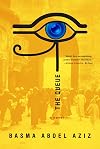
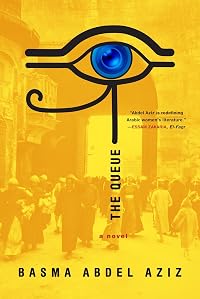
The world-building and the atmosphere setting were really well done. Assigning architectural feature names to the state institutions such as "The Main Gate of the Northern Building", "The Gate of Maladies" & "The Booth" gave them an additional impersonal aura. Naming military units by their end-result goals such as "The Quell Force', "The Deterrence Force" & "The Conciliatory Force" gave them an added coldness. Using the Eye of Horus on the cover as an all-seeing symbol of state surveillance was a further convincing visual touch.
The energy was dissipated though by being spread thinly across too many protagonists with not enough drama. There is a main story of innocent by-stander Yehya who is wounded in the suppression of a "Disgraceful show more Event" (the regime's name for protests) who is seeking to have a bullet removed by a Doctor who is facing a system that denies the bullet's existence and therefore will not give approval for its removal. That setup is more of a story of a bureaucratic nightmare than of rebellion and resistance. The other stories are of Yehya's friends Nagy and Amani who try to help him, a teacher Ines who makes a slip in the curriculum, a mother Um Mabrouk who is seeking medical care for her children, a regime supporter Shalaby who is seeking a commendation for his slain soldier cousin etc. Tarek, the doctor does seem to take a stand at the end, or does he?
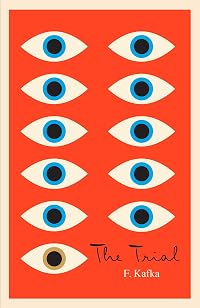
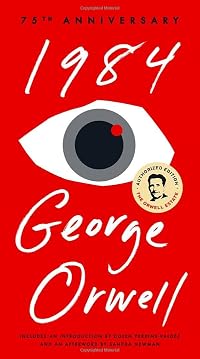
Various reviews compare this to Orwell's "1984" or Kafka's "The Trial", but it doesn't give you a strong single protagonist to latch onto such as Winston Smith or Josef K. But the overall atmosphere of bureaucratic repression is strong and it stays with you. show less
The energy was dissipated though by being spread thinly across too many protagonists with not enough drama. There is a main story of innocent by-stander Yehya who is wounded in the suppression of a "Disgraceful show more Event" (the regime's name for protests) who is seeking to have a bullet removed by a Doctor who is facing a system that denies the bullet's existence and therefore will not give approval for its removal. That setup is more of a story of a bureaucratic nightmare than of rebellion and resistance. The other stories are of Yehya's friends Nagy and Amani who try to help him, a teacher Ines who makes a slip in the curriculum, a mother Um Mabrouk who is seeking medical care for her children, a regime supporter Shalaby who is seeking a commendation for his slain soldier cousin etc. Tarek, the doctor does seem to take a stand at the end, or does he?
Various reviews compare this to Orwell's "1984" or Kafka's "The Trial", but it doesn't give you a strong single protagonist to latch onto such as Winston Smith or Josef K. But the overall atmosphere of bureaucratic repression is strong and it stays with you. show less
Aziz tells a hauntingly realistic story of an unnamed society where everyday life eventually takes place in a long queue. People are waiting for a gate to open to receive special permits for everything from proof of citizenship in order to obtain permits for other things, to permission for medical treatment. The gate issues orders and fatwas regarding permissible behavior. The country seems to be in an Arab country and the discussion of fatwas indicates it is Muslim.
The intrigue and ethical dilemmas presented in the queue are what make the novel so fascinating. There are those who disagree with the edicts coming from the gate as freedoms contract. But Aziz makes us question how far a human being can go to contradict a government into show more which she has no input and where the consequences seem dire. Skirmishes develop yet the gate denies they ever occurred. The main character is dying of a bullet wound but the government insists no bullets were fired. People disappear. Will people rise up against the gate? The people had become powerless in a society "where rules and restrictions were stronger than everything else, stronger than the ruler himself,...stronger than even the Gate." Is it even possible for those who challenge the rules and restrictions to be successful when everyone is being watched and outliers are severely punished?
This is a very disarming novel told in rich details that make one appreciate their freedoms. It is a very relevant novel with what is occurring in the world right now. show less
The intrigue and ethical dilemmas presented in the queue are what make the novel so fascinating. There are those who disagree with the edicts coming from the gate as freedoms contract. But Aziz makes us question how far a human being can go to contradict a government into show more which she has no input and where the consequences seem dire. Skirmishes develop yet the gate denies they ever occurred. The main character is dying of a bullet wound but the government insists no bullets were fired. People disappear. Will people rise up against the gate? The people had become powerless in a society "where rules and restrictions were stronger than everything else, stronger than the ruler himself,...stronger than even the Gate." Is it even possible for those who challenge the rules and restrictions to be successful when everyone is being watched and outliers are severely punished?
This is a very disarming novel told in rich details that make one appreciate their freedoms. It is a very relevant novel with what is occurring in the world right now. show less
I have been reading a few more books by Muslim authors recently but I still can't say that I am well read in that culture. And I still have trouble keeping the difference between Sunni and Shia Muslims straight in my head. I am determined to persevere though and that's one of the reasons I picked this book up when I saw a used copy in my favourite bookstore, Whodunit. Then a younger relative highlighted this book as one that had an impact on him so my curiousity was really piqued.
The author is Egyptian but this book is set in some unnamed Middle East country that is governed by a totalitarian regime. The author is a doctor so it perhaps is not surprising that one of the main characters is a physician called Tarek. The other main show more character is a man named Yehya who was wounded during an uprising against the government; his friends carried him to the hospital Tarek works at and Tarek examined him. Yehya had been shot and the bullet was still lodged in his abdomen but before Tarek could operate to remove the bullet he was reminded by a colleague that he could not remove a bullet until there was written permission from the government. Yehya would have to stand in the Queue before The Gate to obtain this permission. Many other people were standing in the Queue to also ask for various types of permits but The Gate had closed down when the popular uprising (called The Disgraceful Events) occurred and had not reopened. So day after day Yehya, bleeding and in pain, stood in the Queue with many other people. His girlfriend and his best friend tried to support and aid him; his girlfriend even tried to steal the X-Ray taken when Yehya was first examined by Tarek. It is clear that the government is spying on the people and sometimes people disappear. As Yehya gets weaker and weaker Tarek becomes more conflicted about his duty.
As a citizen of a country that accords its people many rights and freedoms it is hard for me to believe this tale but, even though I know it is fiction, I do understand that many people are not so lucky as I am. I think Aziz is exaggerating for effect but so did Margaret Atwood in The Handmaid's Tale. And Atwood has said that everything she posited for that book was based upon real occurrences; I suspect the same could be said of The Queue. show less
The author is Egyptian but this book is set in some unnamed Middle East country that is governed by a totalitarian regime. The author is a doctor so it perhaps is not surprising that one of the main characters is a physician called Tarek. The other main show more character is a man named Yehya who was wounded during an uprising against the government; his friends carried him to the hospital Tarek works at and Tarek examined him. Yehya had been shot and the bullet was still lodged in his abdomen but before Tarek could operate to remove the bullet he was reminded by a colleague that he could not remove a bullet until there was written permission from the government. Yehya would have to stand in the Queue before The Gate to obtain this permission. Many other people were standing in the Queue to also ask for various types of permits but The Gate had closed down when the popular uprising (called The Disgraceful Events) occurred and had not reopened. So day after day Yehya, bleeding and in pain, stood in the Queue with many other people. His girlfriend and his best friend tried to support and aid him; his girlfriend even tried to steal the X-Ray taken when Yehya was first examined by Tarek. It is clear that the government is spying on the people and sometimes people disappear. As Yehya gets weaker and weaker Tarek becomes more conflicted about his duty.
As a citizen of a country that accords its people many rights and freedoms it is hard for me to believe this tale but, even though I know it is fiction, I do understand that many people are not so lucky as I am. I think Aziz is exaggerating for effect but so did Margaret Atwood in The Handmaid's Tale. And Atwood has said that everything she posited for that book was based upon real occurrences; I suspect the same could be said of The Queue. show less
The overview describes it as a mix of Orwell, Kafka, & life in the aftermath of the Arab Spring. Comparisons to Orwell & Kafka are lofty & would be a high bar for any writer to meet. It does have shades of their work -- the relentless feeling of being watched, monitored, not knowing what is going on, how to proceed, or who to trust; just the blatant, unrelenting oppression -- but somehow lacks the intensity. I do fully appreciate an Egyptian woman writing this book after the Arab Spring; this is the work of a brave woman. (Looking at her profile, one of the places she works is the Nadeem Center for the Rehabilitation of Victims of Torture, something I would guess would give her some unusual & haunting insights when writing.) What I both show more liked & disliked about this dystopian work was that it seemed to hit a little too close to home; it's fiction, but some pieces are not too far from realities.
A reasonable book for the genre, mostly worth reading for dystopian fans & for (perhaps) a unique angle of dystopian fiction inspired by fairly recent events. show less
A reasonable book for the genre, mostly worth reading for dystopian fans & for (perhaps) a unique angle of dystopian fiction inspired by fairly recent events. show less
I really enjoyed reading The Queue. It is very well written, with lovely prose, a testament to the author and the translator. That said, the first half of the book can feel a little long and can be a bit difficult to get through. A number of characters are introduced rather rapidly in fairly short chapters, which does make the reading easier. The second half of the novel is much easier to get through and focuses more on the main character, his dilemma, and his friends.
The story itself definitely has a Godo-esque quality to it. Our main character, and most of the supporting cast, are waiting at The Gate - a mysterious structure appearing virtually overnight, which, one day soon, they promise, will open for business. Here, they will take show more care of all manner of documentation - citizenship, medical procedure approval, everything. And, as the government cracks down harder, virtually everything needs approval at the gate. Hundreds line up. Then thousands. And, as the novel progresses, peoples lives become waiting perpetually at the Gate.
As much as I love this book, I don't think its for everyone. If you enjoy Orwell, Kafka and the like you'll probably enjoy this one too. And, personally, I think The Queue can absolutely hold its own against them.
I received this book through a Goodreads Giveaway in exchange for an honest review. show less
The story itself definitely has a Godo-esque quality to it. Our main character, and most of the supporting cast, are waiting at The Gate - a mysterious structure appearing virtually overnight, which, one day soon, they promise, will open for business. Here, they will take show more care of all manner of documentation - citizenship, medical procedure approval, everything. And, as the government cracks down harder, virtually everything needs approval at the gate. Hundreds line up. Then thousands. And, as the novel progresses, peoples lives become waiting perpetually at the Gate.
As much as I love this book, I don't think its for everyone. If you enjoy Orwell, Kafka and the like you'll probably enjoy this one too. And, personally, I think The Queue can absolutely hold its own against them.
I received this book through a Goodreads Giveaway in exchange for an honest review. show less
I think this book would have made a better novella than a novel. I quit about half way in. I have a feeling it would have picked up for me had I stuck with it, but I just couldn't - it would have been dutiful reading, and I don't do that any more. Life's too short. If you like Kafka, you will probably like this as well, but I don't and I didn't. Wrong book, wrong reader.
Members
- Recently Added By
Lists

Queues
9 works; 2 members

Bureaucracies
25 works; 2 members

Best Science Fiction Originally Published in a Language Other Than English
449 works; 34 members

Arab and Arab Diaspora Literature We Recommend
112 works; 53 members

Not the NYT list of top 100 21st century books
100 works; 6 members
Author Information

4+ Works 315 Members
Some Editions
Awards and Honors
Awards
Notable Lists
Common Knowledge
- Canonical title*
- La fila
- Original publication date
- 2012
- Important places
- Egypt
- Important events
- Arab Spring
- First words
- The first thing Tarek did when he arrived that morning was ask the head nurse for the file. She brought hi a transparent plastic folder that appeared to be sealed around the edges, with the words Suspended Pending Approval... (show all) by the Gate written on the cover. He contemplated this weighty phrase, printed diagonally across a corner in bright red ink. The name Yehya Gad el Rab Saeed was written on the rectangular white identification card affixed in the very center, and at the bottom of the card was a seven-digit number. The first half was probably part of the patient's national ID number, and the second half was a code referring to a type of file, something only the filing personnel really understood. Below the number came the name of the attending physician, his own nae: Dr. Tarek Fahmy. Hundreds of ties he had wished it would be struck from the label, but there was nothing to be done. It would remain thee, a thorn in his side, until fate willed otherwise. -One
- Original language
- Arabic
- Canonical DDC/MDS
- 892.7
- Canonical LCC
- PJ7904.A95 T3313
*Some information comes from Common Knowledge in other languages. Click "Edit" for more information.
Classifications
- Genres
- Fiction and Literature, General Fiction, Science Fiction
- DDC/MDS
- 892.7 — Literature & rhetoric Literatures of other languages Afro-Asiatic literatures Arabic (Egypt, Lebanon, Palestine, Saudi Arabia, Sudan)
- LCC
- PJ7904 .A95 .T3313 — Language and Literature Oriental languages and literatures Oriental philology and literature Arabic Arabic literature Individual authors or works
- BISAC
Statistics
- Members
- 307
- Popularity
- 104,319
- Reviews
- 9
- Rating
- (3.46)
- Languages
- English, German, Italian
- Media
- Paper, Audiobook, Ebook
- ISBNs
- 9
- ASINs
- 5