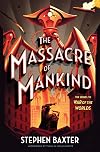
The Massacre of Mankind: Sequel to The War of the Worlds
by Stephen Baxter
War of the Worlds sequels (Baxter) (2)
On This Page
Description
It has been 14 years since the Martians invaded England. The world has moved on, always watching the skies but content that we know how to defeat the Martian menace. Machinery looted from the abandoned capsules and war-machines has led to technological leaps forward. The Martians are vulnerable to earth germs. The Army is prepared. So when the signs of launches on Mars are seen, there seems little reason to worry. Unless you listen to one man, Walter Jenkins, the narrator of Wells' book. He show more is sure that the Martians have learned, adapted, understood their defeat. He is right. Thrust into the chaos of a new invasion, a journalist - sister-in-law to Walter Jenkins - must survive, escape, and report on the war. The Massacre of Mankind has begun. show lessTags
Recommendations










Member Recommendations
Member Reviews
Thanks to Netgalley for the ARC!
I felt trepidation before beginning this because I kept seeing unfavorable reviews, but fortunately, I thought it was pretty awesome after finishing. I might have a bit of an issue with the end, and I think that's where most people are complaining, but it wasn't as bad as all that.
I remembered that the original [b:The War of the Worlds|8909|The War of the Worlds|H.G. Wells|https://images.gr-assets.com/books/1320391644s/8909.jpg|3194841] was written as an account, a narrative, and as such, there's generally no good wrap-ups unless forced... and that's true for reality, too.
That's the bad... but Now for the great!
The World-building is very, very neat, as is the sheer amount of research and history and show more tactics carefully laid out.
There's a comprehensive account of a much longer war that comes in several waves and with much greater numbers, and we get to see the horrible effects of the invasion and colonization of Earth from Martians across continents and over a good deal of time.
In a lot of ways, this reads as a pure and horrific tragedy where we know what's coming but we have no way to stop it. It keeps the blood pumping, that's for sure. The first invasion was just a scouting mission and they fixed the little issue with the pathogens, which is very reasonable considering just how much tech and implied tech these aliens have.
This is also set in an alternate timeline that takes into account exploited tech after the first war, and even though WWI happened again, the outcome was very different with a victorious Kaiser and an occupied England. It's little details like this that keep popping up that made this novel really delicious, but that's not to say the characters weren't fun as well. :)
This novel is a fully-authorized sequel from the Well's estate, and Baxter put a lot of time and research into making this one of the most thoughtful world-building exercises out there.
I'm a Baxter-phile. I remember the fantastic job he'd done on his direct-sequel to [b:The Time Machine|2493|The Time Machine|H.G. Wells|https://images.gr-assets.com/books/1327942880s/2493.jpg|3234863] back in the nineties. I also remember enjoying his sequel more than the original, too, making things much bigger, broad-scale, and utterly fascinating. He does the same here, with this, turning it truly into a war of worlds, including the entire Earth and it's population, and this is what makes this novel fantastic. Horrifying, but also fantastic.
Goodbye, humanity! show less
I felt trepidation before beginning this because I kept seeing unfavorable reviews, but fortunately, I thought it was pretty awesome after finishing. I might have a bit of an issue with the end, and I think that's where most people are complaining, but it wasn't as bad as all that.
I remembered that the original [b:The War of the Worlds|8909|The War of the Worlds|H.G. Wells|https://images.gr-assets.com/books/1320391644s/8909.jpg|3194841] was written as an account, a narrative, and as such, there's generally no good wrap-ups unless forced... and that's true for reality, too.
That's the bad... but Now for the great!
The World-building is very, very neat, as is the sheer amount of research and history and show more tactics carefully laid out.
There's a comprehensive account of a much longer war that comes in several waves and with much greater numbers, and we get to see the horrible effects of the invasion and colonization of Earth from Martians across continents and over a good deal of time.
In a lot of ways, this reads as a pure and horrific tragedy where we know what's coming but we have no way to stop it. It keeps the blood pumping, that's for sure. The first invasion was just a scouting mission and they fixed the little issue with the pathogens, which is very reasonable considering just how much tech and implied tech these aliens have.
This is also set in an alternate timeline that takes into account exploited tech after the first war, and even though WWI happened again, the outcome was very different with a victorious Kaiser and an occupied England. It's little details like this that keep popping up that made this novel really delicious, but that's not to say the characters weren't fun as well. :)
This novel is a fully-authorized sequel from the Well's estate, and Baxter put a lot of time and research into making this one of the most thoughtful world-building exercises out there.
I'm a Baxter-phile. I remember the fantastic job he'd done on his direct-sequel to [b:The Time Machine|2493|The Time Machine|H.G. Wells|https://images.gr-assets.com/books/1327942880s/2493.jpg|3234863] back in the nineties. I also remember enjoying his sequel more than the original, too, making things much bigger, broad-scale, and utterly fascinating. He does the same here, with this, turning it truly into a war of worlds, including the entire Earth and it's population, and this is what makes this novel fantastic. Horrifying, but also fantastic.
Goodbye, humanity! show less
You still ain’t seeing it clearly. The Martians, you know, would say they are doing us a favor. Lifting us up, as if we made a chimp smart as a college professor. And who’s to say, by their lights, they are wrong? And – pain? What of it? You clever-clogs keep telling me the Martians are above us mere mortals. Perhaps, with their heads detached from their bodies, they are above pain as above pleasure. And what need they care about the pain they inflict on us? And more’n we care about the pain of the animal in the slaughterhouse – or the tree we cut down. To recoil from this is hypocritical – d’ye see?
That’s Bert Cook, merely called “the artilleryman” in Walter Jenkins’ Narratives of the Martian Wars. Jenkins is the show more man we know as the unnamed narrator of H. G. Wells’ The War of the Worlds. Cook isn’t the only one to complain Jenkins misrepresented him in his account of the 1907 Martian invasion. That’s the year Baxter, after consulting the astronomical clues in Wells’ story and Wells scholars, places the time of Wells’ novel.
Julie Elphinstone, the narrator of this novel and a reporter presenting us a history of the Second Martian War, isn’t too pleased with Jenkins’ depiction of her either, but at least she got a name and ended up married, briefly, to Jenkins’ brother, the Frank who supplies the London detail in Wells’ novel.
Walter’s history lead to fame and fortune and important government connections in an England that has militarized after 1907 in preparation for another invasion. (It’s also made the private ownership of telescopes illegal to clamp down on panic and stock market manipulation.)
But Walter’s increasing detachment from life and human society after the war irks Frank. Walter’s account ends with him holding Carolyne’s hand after they are reunited when the Martian invasion ends, but they didn’t stay married.
Baxter’s novel is many things: a thorough and complex mining of story resources from Wells’ novel, an alternate history, a continuation of Wells’ commentary on English society and colonialism, a story of war and occupation and collaboration, and a commentary on Wells and his legacy. It’s also a family story and not just about Julie’s relatives but the human family and even the family of conscious life in the solar system.
Baxter alters Wells’ setting to bring in intelligent Jovians. (Martians landing on Venus gets mentioned at the end of Wells’ novel.) As he states in the book’s interesting afterword on scholarship and literature that fed into his story, Baxter used the obsolete “nebular hypothesis” theory of the solar system’s formation which had the most outlying planets as the oldest and, therefore, the civilization and power of the Jovians bests that of the Martians who best us.
In Baxter’s novel, the massacre of mankind doesn’t, ultimately, refer to just dead bodies struck down by the “black smoke” or “Heat Rays” of the Martians. It is about the massacre of man’s soul.
The story opens in 1920 on the eve of the Second Martian War.
Walter, with his access to government secrets on more launches of cylinders from Mars, tells Elphinstone, Frank, Bert Cook, and British Army officer Eric Eden that a new Martian landing will take place.
Cook, a celebrity after writing his Memoirs of an Artilleryman; Eden distinguished by actually spending some time in a Martian cylinder during the First Martian war, and Frank, now a medical officer in England’s home guard, the Fyrd, rush to the projected front. Julie goes to take care of her one-time sister-in-law.
A militarized England may have developed a defense plan, even salvaged Martian materials and weapons, but the Martians have learned too. No slow emergence from their cylinders, no opportunities given to be annihilated by a massed British response. They quickly overcome British resistance, and Julie and her sister-in-law end up as refugees in France, a France occupied in 1914 by the Germans in the Schlieffen War. This universe’s version of World War One still continues in 1920, and Russia and Germany (with covert British aid) are still battling it out.
Two years later, Juliet is recruited by Walter for a diplomatic mission to end the war of the worlds. Walter, like his friend Ogilvy the astronomer, one of the first in Wells’ novel to be killed by the Martians, thinks communication is possible between the man and Martian.
But the British government has other ideas, namely a weaponized version of what ended the First Martian War: bacteria lethal to Martians.
On the brink of another Martian landing, Julie is infiltrated into the Cordon, Martian-occupied Britain, with the help of Eden.
There she meets Frank and Verity Bliss, an heroic, clear-sighted, volunteer nurse. They and others in scattered settlements live by permission of the roving Martian fighting machines. Man, to Martian, is a combination rat, ant, and beef on the hoof. They are only worth killing when they use some forbidden piece of technology, get underfoot or their blood is needed.
But, if the accommodations these people have made with the Martians disturbs Julie, it’s nothing compared to Bert Cook’s.
Far from the ineffectual blow-hard depicted by Jenkins, this Cook is a cunning, far-sighted survivor whose detached views on humanity’s place in the cosmic order and its moral consequences form a sort of dark shadow to Walter’s.
It is this section, which includes a look at the humanoid Martian and Venusian foodstock the invaders brought with them and Martian experiments on human society and the reason for those experiments, that is the most memorable and powerful part of the book besides its concluding two chapters.
The mechanism of the climax was a bit unconvincing, if logical in terms of theme and the background Baxter established.
I think at least one of the chapters depicting the Martian landings in North America, Africa, Australia, and Asia could have been struck though most contribute to Wells’ theme of comparing European and Martian colonialism. The afterword confirms that some of them were also inspired by another War of the Worlds’ sequel, the Kevin J. Anderson-edited anthology War of the Worlds: Global Dispatches. (There are several hat tips to early science fiction writers throughout Baxter’s story.)
Those are minor quibbles. Baxter has not only paid close attention to his source material but written a compelling story both disturbing and poignant.
Definitely and highly recommended for admirers of Wells’ original novel. show less
That’s Bert Cook, merely called “the artilleryman” in Walter Jenkins’ Narratives of the Martian Wars. Jenkins is the show more man we know as the unnamed narrator of H. G. Wells’ The War of the Worlds. Cook isn’t the only one to complain Jenkins misrepresented him in his account of the 1907 Martian invasion. That’s the year Baxter, after consulting the astronomical clues in Wells’ story and Wells scholars, places the time of Wells’ novel.
Julie Elphinstone, the narrator of this novel and a reporter presenting us a history of the Second Martian War, isn’t too pleased with Jenkins’ depiction of her either, but at least she got a name and ended up married, briefly, to Jenkins’ brother, the Frank who supplies the London detail in Wells’ novel.
Walter’s history lead to fame and fortune and important government connections in an England that has militarized after 1907 in preparation for another invasion. (It’s also made the private ownership of telescopes illegal to clamp down on panic and stock market manipulation.)
But Walter’s increasing detachment from life and human society after the war irks Frank. Walter’s account ends with him holding Carolyne’s hand after they are reunited when the Martian invasion ends, but they didn’t stay married.
Baxter’s novel is many things: a thorough and complex mining of story resources from Wells’ novel, an alternate history, a continuation of Wells’ commentary on English society and colonialism, a story of war and occupation and collaboration, and a commentary on Wells and his legacy. It’s also a family story and not just about Julie’s relatives but the human family and even the family of conscious life in the solar system.
Baxter alters Wells’ setting to bring in intelligent Jovians. (Martians landing on Venus gets mentioned at the end of Wells’ novel.) As he states in the book’s interesting afterword on scholarship and literature that fed into his story, Baxter used the obsolete “nebular hypothesis” theory of the solar system’s formation which had the most outlying planets as the oldest and, therefore, the civilization and power of the Jovians bests that of the Martians who best us.
In Baxter’s novel, the massacre of mankind doesn’t, ultimately, refer to just dead bodies struck down by the “black smoke” or “Heat Rays” of the Martians. It is about the massacre of man’s soul.
The story opens in 1920 on the eve of the Second Martian War.
Walter, with his access to government secrets on more launches of cylinders from Mars, tells Elphinstone, Frank, Bert Cook, and British Army officer Eric Eden that a new Martian landing will take place.
Cook, a celebrity after writing his Memoirs of an Artilleryman; Eden distinguished by actually spending some time in a Martian cylinder during the First Martian war, and Frank, now a medical officer in England’s home guard, the Fyrd, rush to the projected front. Julie goes to take care of her one-time sister-in-law.
A militarized England may have developed a defense plan, even salvaged Martian materials and weapons, but the Martians have learned too. No slow emergence from their cylinders, no opportunities given to be annihilated by a massed British response. They quickly overcome British resistance, and Julie and her sister-in-law end up as refugees in France, a France occupied in 1914 by the Germans in the Schlieffen War. This universe’s version of World War One still continues in 1920, and Russia and Germany (with covert British aid) are still battling it out.
Two years later, Juliet is recruited by Walter for a diplomatic mission to end the war of the worlds. Walter, like his friend Ogilvy the astronomer, one of the first in Wells’ novel to be killed by the Martians, thinks communication is possible between the man and Martian.
But the British government has other ideas, namely a weaponized version of what ended the First Martian War: bacteria lethal to Martians.
On the brink of another Martian landing, Julie is infiltrated into the Cordon, Martian-occupied Britain, with the help of Eden.
There she meets Frank and Verity Bliss, an heroic, clear-sighted, volunteer nurse. They and others in scattered settlements live by permission of the roving Martian fighting machines. Man, to Martian, is a combination rat, ant, and beef on the hoof. They are only worth killing when they use some forbidden piece of technology, get underfoot or their blood is needed.
But, if the accommodations these people have made with the Martians disturbs Julie, it’s nothing compared to Bert Cook’s.
Far from the ineffectual blow-hard depicted by Jenkins, this Cook is a cunning, far-sighted survivor whose detached views on humanity’s place in the cosmic order and its moral consequences form a sort of dark shadow to Walter’s.
It is this section, which includes a look at the humanoid Martian and Venusian foodstock the invaders brought with them and Martian experiments on human society and the reason for those experiments, that is the most memorable and powerful part of the book besides its concluding two chapters.
The mechanism of the climax was a bit unconvincing, if logical in terms of theme and the background Baxter established.
I think at least one of the chapters depicting the Martian landings in North America, Africa, Australia, and Asia could have been struck though most contribute to Wells’ theme of comparing European and Martian colonialism. The afterword confirms that some of them were also inspired by another War of the Worlds’ sequel, the Kevin J. Anderson-edited anthology War of the Worlds: Global Dispatches. (There are several hat tips to early science fiction writers throughout Baxter’s story.)
Those are minor quibbles. Baxter has not only paid close attention to his source material but written a compelling story both disturbing and poignant.
Definitely and highly recommended for admirers of Wells’ original novel. show less
I really wanted to like this book. H. G. Wells's original novel was one of my favorite books growing up, and I really enjoyed Stephen Baxter's sequel to [b:The Time Machine|2493|The Time Machine|H.G. Wells|https://images.gr-assets.com/books/1327942880s/2493.jpg|3234863]. And by and large what he has written is an entertaining book, filled with action and brimming with speculation as to how, in its aftermath, a turn-of-the-century world might have been changed by the first Martian invasion.
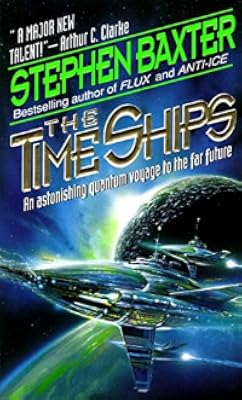
And yet there are serious flaws that prevent this from being as successful of a work as Baxter's [b:The Time Ships|62992|The Time Ships|Stephen Baxter|https://images.gr-assets.com/books/1300997637s/62992.jpg|61184]. The main problem is the mismatch of show more structure and scope, as Baxter attempts as he did in his previous sequel to apply Wells's approach of relating events primarily through a single narrator to a book in which the plot unfolds on a global scale. While Julie Elphinstone is effective as a character, her inability to be everywhere at once means relying upon other characters (interviewed by Julie after the events), all of whom relate their stories with implausible accuracy. Perhaps Baxter would have been better off relying upon the "oral history" approach Max Brooks used so successfully in [b:World War Z|8908|World War Z An Oral History of the Zombie War|Max Brooks|https://images.gr-assets.com/books/1528312647s/8908.jpg|817]. While the result would have been less Wellsian than Baxter intended, it would have been a better way to convey the epic scale to which he so clearly aspired. show less
And yet there are serious flaws that prevent this from being as successful of a work as Baxter's [b:The Time Ships|62992|The Time Ships|Stephen Baxter|https://images.gr-assets.com/books/1300997637s/62992.jpg|61184]. The main problem is the mismatch of show more structure and scope, as Baxter attempts as he did in his previous sequel to apply Wells's approach of relating events primarily through a single narrator to a book in which the plot unfolds on a global scale. While Julie Elphinstone is effective as a character, her inability to be everywhere at once means relying upon other characters (interviewed by Julie after the events), all of whom relate their stories with implausible accuracy. Perhaps Baxter would have been better off relying upon the "oral history" approach Max Brooks used so successfully in [b:World War Z|8908|World War Z An Oral History of the Zombie War|Max Brooks|https://images.gr-assets.com/books/1528312647s/8908.jpg|817]. While the result would have been less Wellsian than Baxter intended, it would have been a better way to convey the epic scale to which he so clearly aspired. show less
https://fromtheheartofeurope.eu/the-massacre-of-mankind-by-stephen-baxter/
This is a sequel to The War of the Worlds, authorised as such by the H.G. Wells estate, set in an Earth which overcame the original Martian invasion and where England has become a dystopian dictatorship. The narrator is the suffragette sister-in-law of the narrator of The War of the Worlds, with vignettes from all over the world as the Martians launch another assault, having learned lessons from their first unsuccessful attempt.
It’s an interesting contrast with the two sequels to The Time Machine that I have read in recent years, The Time Ships, also by Stephen Baxter, and The Space Machine, by Christopher Priest, which also has some Martian sequences in it. show more Unfortunately it’s not quite as good as either; there are some vivid set-pieces, but otherwise the plot rather plods along from place to place and battle to battle. show less
This is a sequel to The War of the Worlds, authorised as such by the H.G. Wells estate, set in an Earth which overcame the original Martian invasion and where England has become a dystopian dictatorship. The narrator is the suffragette sister-in-law of the narrator of The War of the Worlds, with vignettes from all over the world as the Martians launch another assault, having learned lessons from their first unsuccessful attempt.
It’s an interesting contrast with the two sequels to The Time Machine that I have read in recent years, The Time Ships, also by Stephen Baxter, and The Space Machine, by Christopher Priest, which also has some Martian sequences in it. show more Unfortunately it’s not quite as good as either; there are some vivid set-pieces, but otherwise the plot rather plods along from place to place and battle to battle. show less
Tuesday, August 22, saw the release of The Massacre of Mankind by Stephen Baxter. This is a sequel to H.G. Wells The War of the Worlds. The premise is rather straightforward. The orbits of Mars and Earth are drawing them closer to one another, closer than usual, at least. The Martians attack the Earth once more, plunging us into war once more.
First, it is apparent that Baxter did his research. Any reading of interviews or the author notes at the end of the text make that very clear. This does come through, at least in certain sections, in the writing. Certain things are mentioned for a specific reason. However, I don’t think many readers will fully appreciate some of them, at least not before reading Baxter’s own words at the show more conclusion of the text. For example, a weapon made by Edison is mentioned, which is a nod to a very early sequel to The War of the Worlds by a different author. While a touching tribute in its own right, just how many people would understand this at first glance is most likely a rather small number. Tributes and diligence to sticking to the original, while very admirable, does seem to get in the way of the storytelling. (I feel much the same about certain works of Tolkien which have been compiled and edited by Christopher Tolkien.)
The pacing in this book, overall, is very slow. The beginning of the narrative crawls along at a snails pace, inching its way towards something that resembles plot. The majority of the first one hundred pages or so is filled with characters from the first book getting back together in order to receive overseas phone calls from Walter, the narrator of the original tale. Of course, nothing quite happens in any of these phone calls besides the obvious – Martians are probably coming.
Here, I believe, is the first major issue with the story. While very true to the original in world building and voice, the narrative lacks a true plot. The aliens are coming only carries the story so far. The War of the Worlds did have the narrators searching for his wife and wanting to get back to her as the main characters motivation (even if, as this book points out, he wound up traveling towards the Martians more often than traveling from them). This book does not have anything of the sort to help propel it forward.
Not having any meaningful reasoning behind characters actions, or the group of original characters getting back together in the first place causes the first half of the novel to feel dull and tedious. Combining this with the fact that no sort of action is seen at all until roughly two hundred pages into the text make this book much more of a chore to read than I ever expected.
That’s right, no invasion takes place until two hundred pages in. Which, for those playing along at home, is almost the length of the entirety of The War of the Worlds.
Simply put, there’s just too many words and not enough action. While the writing style does resemble the time period in which the original was written, it doesn’t feel like the tight prose of Wells. Instead, we have the long, rambling passages and descriptions of the scenery more normally found in the works of an author like Dickens.
I understand how this story was written. I do. The language is beautiful, to be sure. There are beautiful lines and lots of description. We learn a lot about the characters’ lives after the first book. There are some haunting passages about what the Martians are doing to the inhabitants of Venus and what their ultimate goal of conquering the Earth is, and what that would bring about. There are sections I truly enjoyed in this book. But, for the most part, the delivery inhibited the story. Very little of real impact happens on screen.
What do I mean by this?
Well, events like to be explained in long, sometimes agonizing detail. The main character, or whomever we are currently following when the point of view switches, does not always experience things first hand. A great deal is simply explained to the main characters when they arrive at their destination. This takes away a lot impact. I don’t want to hear about the inhabitants of Venus living on the Earth and what happens to them, I want to see it. I don’t want to hear other characters theories about what happens to people the Martians capture and how they manipulate the humans in their capture, I want to see it in all its (probably gory) detail.
The impact on very meaningful scenes is sometimes lost amongst the admittedly beautiful prose. This is doubled by one crucial factor – all of the changing of point of view. The book starts out from a first person narrative, quite the same as the War of the Worlds was written. However, first person point of view shifts to the third person point of view, following separate characters introduced in Wells’s original work as they have their own encounters with the Martians.
At first I was happy the point of view had switched. I found Julie to be a rather unlikable main character. She lacked any and all empathy and, despite staying in London to report on what occurred, did quite literally nothing besides talk to people and read the newspaper.
However, I do not understand the decision to write in the third person with Julie relaying events of other characters after hearing their side of things after the war. Particularly confusing is the third person viewpoint of Harry’s actions, Julie’s ex-husband. He was stated as having kept a journal of his own chronicling his own adventures, which do become rather interesting. Of course, none of these are chronicled by Harry, but only through Julie’s secondhand telling or, more infuriatingly, described by people Julie speak to.
There is simply too much distance between the action and the reader. It is hard to care for the characters as I first wanted to. Even during exciting sequences there is a very real distance between the characters, the action, and the reader. That chasm is never fully crossed, even in very meaningful, deep scenes. Characters are described as not making it through the war, but their deaths never shown in the actual text, rendering moments with potential meaning and deep character growth quite meaningless.
Another infuriating habit was the characters to reminisce about what happened during ‘the first war’, referring to the events of War of the Worlds. Once or twice is fine. There will undoubtedly be readers who either didn’t read Wells’ book or else read it so long ago that certain plot points have become muddled. Some reminiscing is understandable. A paragraph here or there relaying very important information is to be expected. But the sheer amount of it was daunting and largely unnecessary. At that point it would have been faster to merely read the first book than all of the descriptions of it in the sequel.
Also found in this book is quite a bit of alternate history. World War I was lost, not won, by the UK. Britain is now occupied by Germany. And, while I love a good alternate history and agree that Martians coming to take over the Earth would probably have a major impact on society, thereby changing ways of thinking and certain major events, this alternate world building had very little impact on any actual plot.
What did have impact was the very real ways which the first Martian landing had on the main characters of this book. Events had very real impact on personalities, familial ties, and relationships with spouses. Actually having this addressed was quite a welcome relief from the ‘happily ever after for everyone’ trope that proliferates across science fiction and fantasy. Still, it would have been nice for at least one character to not have their marriage torn apart, their family not liking or speaking with regularity, or have deep mental scarring. I just wanted someone, anyone to be happy.
The Massacre of Mankind by Stephen Baxter did have some good points. There were sections that I liked. However, this novel did have more flaws than not. While quite excited to begin this novel, I was left rather disappointed. A very hard-core fan of Wells who read all of his books and essays may find some very interesting nods to the author and his work within this novel. However, its rambling nature and lack of action will most likely be turn off for many readers. Unfortunately, I would up giving this novel a much lower rating than expected upon reading the opening pages.
*This book was received for free from the publisher in exchange for an honest review.*
This review and more can be found at Looking Glass Reads. show less
First, it is apparent that Baxter did his research. Any reading of interviews or the author notes at the end of the text make that very clear. This does come through, at least in certain sections, in the writing. Certain things are mentioned for a specific reason. However, I don’t think many readers will fully appreciate some of them, at least not before reading Baxter’s own words at the show more conclusion of the text. For example, a weapon made by Edison is mentioned, which is a nod to a very early sequel to The War of the Worlds by a different author. While a touching tribute in its own right, just how many people would understand this at first glance is most likely a rather small number. Tributes and diligence to sticking to the original, while very admirable, does seem to get in the way of the storytelling. (I feel much the same about certain works of Tolkien which have been compiled and edited by Christopher Tolkien.)
The pacing in this book, overall, is very slow. The beginning of the narrative crawls along at a snails pace, inching its way towards something that resembles plot. The majority of the first one hundred pages or so is filled with characters from the first book getting back together in order to receive overseas phone calls from Walter, the narrator of the original tale. Of course, nothing quite happens in any of these phone calls besides the obvious – Martians are probably coming.
Here, I believe, is the first major issue with the story. While very true to the original in world building and voice, the narrative lacks a true plot. The aliens are coming only carries the story so far. The War of the Worlds did have the narrators searching for his wife and wanting to get back to her as the main characters motivation (even if, as this book points out, he wound up traveling towards the Martians more often than traveling from them). This book does not have anything of the sort to help propel it forward.
Not having any meaningful reasoning behind characters actions, or the group of original characters getting back together in the first place causes the first half of the novel to feel dull and tedious. Combining this with the fact that no sort of action is seen at all until roughly two hundred pages into the text make this book much more of a chore to read than I ever expected.
That’s right, no invasion takes place until two hundred pages in. Which, for those playing along at home, is almost the length of the entirety of The War of the Worlds.
Simply put, there’s just too many words and not enough action. While the writing style does resemble the time period in which the original was written, it doesn’t feel like the tight prose of Wells. Instead, we have the long, rambling passages and descriptions of the scenery more normally found in the works of an author like Dickens.
I understand how this story was written. I do. The language is beautiful, to be sure. There are beautiful lines and lots of description. We learn a lot about the characters’ lives after the first book. There are some haunting passages about what the Martians are doing to the inhabitants of Venus and what their ultimate goal of conquering the Earth is, and what that would bring about. There are sections I truly enjoyed in this book. But, for the most part, the delivery inhibited the story. Very little of real impact happens on screen.
What do I mean by this?
Well, events like to be explained in long, sometimes agonizing detail. The main character, or whomever we are currently following when the point of view switches, does not always experience things first hand. A great deal is simply explained to the main characters when they arrive at their destination. This takes away a lot impact. I don’t want to hear about the inhabitants of Venus living on the Earth and what happens to them, I want to see it. I don’t want to hear other characters theories about what happens to people the Martians capture and how they manipulate the humans in their capture, I want to see it in all its (probably gory) detail.
The impact on very meaningful scenes is sometimes lost amongst the admittedly beautiful prose. This is doubled by one crucial factor – all of the changing of point of view. The book starts out from a first person narrative, quite the same as the War of the Worlds was written. However, first person point of view shifts to the third person point of view, following separate characters introduced in Wells’s original work as they have their own encounters with the Martians.
At first I was happy the point of view had switched. I found Julie to be a rather unlikable main character. She lacked any and all empathy and, despite staying in London to report on what occurred, did quite literally nothing besides talk to people and read the newspaper.
However, I do not understand the decision to write in the third person with Julie relaying events of other characters after hearing their side of things after the war. Particularly confusing is the third person viewpoint of Harry’s actions, Julie’s ex-husband. He was stated as having kept a journal of his own chronicling his own adventures, which do become rather interesting. Of course, none of these are chronicled by Harry, but only through Julie’s secondhand telling or, more infuriatingly, described by people Julie speak to.
There is simply too much distance between the action and the reader. It is hard to care for the characters as I first wanted to. Even during exciting sequences there is a very real distance between the characters, the action, and the reader. That chasm is never fully crossed, even in very meaningful, deep scenes. Characters are described as not making it through the war, but their deaths never shown in the actual text, rendering moments with potential meaning and deep character growth quite meaningless.
Another infuriating habit was the characters to reminisce about what happened during ‘the first war’, referring to the events of War of the Worlds. Once or twice is fine. There will undoubtedly be readers who either didn’t read Wells’ book or else read it so long ago that certain plot points have become muddled. Some reminiscing is understandable. A paragraph here or there relaying very important information is to be expected. But the sheer amount of it was daunting and largely unnecessary. At that point it would have been faster to merely read the first book than all of the descriptions of it in the sequel.
Also found in this book is quite a bit of alternate history. World War I was lost, not won, by the UK. Britain is now occupied by Germany. And, while I love a good alternate history and agree that Martians coming to take over the Earth would probably have a major impact on society, thereby changing ways of thinking and certain major events, this alternate world building had very little impact on any actual plot.
What did have impact was the very real ways which the first Martian landing had on the main characters of this book. Events had very real impact on personalities, familial ties, and relationships with spouses. Actually having this addressed was quite a welcome relief from the ‘happily ever after for everyone’ trope that proliferates across science fiction and fantasy. Still, it would have been nice for at least one character to not have their marriage torn apart, their family not liking or speaking with regularity, or have deep mental scarring. I just wanted someone, anyone to be happy.
The Massacre of Mankind by Stephen Baxter did have some good points. There were sections that I liked. However, this novel did have more flaws than not. While quite excited to begin this novel, I was left rather disappointed. A very hard-core fan of Wells who read all of his books and essays may find some very interesting nods to the author and his work within this novel. However, its rambling nature and lack of action will most likely be turn off for many readers. Unfortunately, I would up giving this novel a much lower rating than expected upon reading the opening pages.
*This book was received for free from the publisher in exchange for an honest review.*
This review and more can be found at Looking Glass Reads. show less
This is an authorized (by HG Well’s estate) sequel to [b:The War of the Worlds|8909|The War of the Worlds|H.G. Wells|https://images.gr-assets.com/books/1320391644s/8909.jpg|3194841] by [a:H.G. Wells|880695|H.G. Wells|https://images.gr-assets.com/authors/1515507862p2/880695.jpg]. Firstly, I have to admit that I am wary about any sequels, especially written by someone other than the original author. I think that the majority of such sequels are just an attempt to milk the existing money cow a bit more. However, bearing in mind that the original is 120 years old and not exactly a fresh bestseller and also that I heard accolades regarding the author’s other books, I decided to give it a try. I wasn’t disappointed.
There are several show more layers in the original book.
Firstly, it was one of the earliest stories of an alien invasion, but if 99% books of later books in this sub-genre of SF have a final win for the humankind, in the original the humanity is mere anthill, which can do nothing against technologically superior aliens. In this novel, the Great Britain elects a military dictatorship and prepares for the second invasion: now our anthill will be ready! :) This part is kept close to the original narrative in spirit, except maybe closer to the end (no spoilers!)
Secondly, the sequel actively debates with the original narrative. For example, in the original the narrator says that he want to get to his wife, but as story progresses, he move further away from the place she should be and into the danger. The sequel, written by the former wife of the original narrator’s brother from the start shows similar ‘holes’ in the Narrative, as the war of the worlds is known in this world, creating the great case of an unreliable narrator. Great work there.
Thirdly, Wells was a social reformer and the war of the worlds was an inti-colonialist pamphlet. Here the sequel falls short – it mentions different social issues, from suffragist movement to inequality and downsides of dictatorships, but doesn’t dwell on it.
Unlike the war of the worlds, where most characters went unnamed, here we have a lot of names, including many real life people like Churchill, Tsiolkovsky or Patton. This creates nice allusions for everyone, who knows a bit about the XXth century, absent in the original. It even indirectly mentions Wells himself!
Overall, as a sequel it is quite nice, especially if prior to reading it you read the war of the worlds and then the wiki page about it. show less
There are several show more layers in the original book.
Firstly, it was one of the earliest stories of an alien invasion, but if 99% books of later books in this sub-genre of SF have a final win for the humankind, in the original the humanity is mere anthill, which can do nothing against technologically superior aliens. In this novel, the Great Britain elects a military dictatorship and prepares for the second invasion: now our anthill will be ready! :) This part is kept close to the original narrative in spirit, except maybe closer to the end (no spoilers!)
Secondly, the sequel actively debates with the original narrative. For example, in the original the narrator says that he want to get to his wife, but as story progresses, he move further away from the place she should be and into the danger. The sequel, written by the former wife of the original narrator’s brother from the start shows similar ‘holes’ in the Narrative, as the war of the worlds is known in this world, creating the great case of an unreliable narrator. Great work there.
Thirdly, Wells was a social reformer and the war of the worlds was an inti-colonialist pamphlet. Here the sequel falls short – it mentions different social issues, from suffragist movement to inequality and downsides of dictatorships, but doesn’t dwell on it.
Unlike the war of the worlds, where most characters went unnamed, here we have a lot of names, including many real life people like Churchill, Tsiolkovsky or Patton. This creates nice allusions for everyone, who knows a bit about the XXth century, absent in the original. It even indirectly mentions Wells himself!
Overall, as a sequel it is quite nice, especially if prior to reading it you read the war of the worlds and then the wiki page about it. show less
Baxter, of course, wrote the official sequel to Wells’s The Time Machine, The Time Ships, back in 1995, so I guess and official sequel to The War of the Worlds was always on the cards… even if shitloads of other people have had a bash at an unofficial sequel – of which the best is probably the graphic novel Scarlet Traces by Ian Edginton and D’israeli. The Massacre of Mankind is set decades after the events of the original book, and is narrated by Julie – the character played, I think, by Julie Covington in Jeff Wayne’s version. She’s a journalist and suffragette, and when she’s contacted by the narrator of Wells’s novel, now a recluse in Italy, she gets dragged into preparations for a fresh invasion from Mars, a much show more bigger invasion. The Martians target Britain and create a zone fifty miles across in the Home Counties, and those caught within it are left to struggle without technology… so the Martians can harvest them as and when needed (they’ve already imported two slave races from Mars). The British build a massive trench around the Martian zone, but every attack is thwarted. Then a third invasion arrives, targetted at major cities around the globe (Baxter focuses on New York so he can do a Great Gatsby type thing). This time germs are not going to do the trick. To defeat the Martians, Earth needs something else. Something, or someone, perhaps from another planet… On the one hand, Baxter took Wells’s story in a direction I had not expected and the early twentieth century ambience did not feel, er, paper-thin. On the other, the prose is functional at best, and some parts do read a bit juvenile. I’m not sure how it reads as a sequel to Wells’s novel, given I’m more familiar with Baxter’s work than I am Wells’s. It did all feel a bit in places like it wanted to have its cake and eat it too, but given it kept me reasonably entertained for a couple of days – although a part of me thinks a sequel to a Wells novel should do more – I can’t complain over much. show less
Members
- Recently Added By
Lists

2018 Hugo Eligible Novels
170 works; 16 members

2017 Locus recommended reading list SciFi
28 works; 2 members
Author Information

260+ Works 43,820 Members
Awards and Honors
Distinctions
The Guardian Book of the Day (2017-01-14)
Series

Work Relationships
Is a (non-series) sequel to
Common Knowledge
- Original publication date
- 2017-01
- People/Characters
- Julie Elphinstone; Albert Cook; Walter Jenkins; Eric Eden
- Important events
- Alien Invasion; Martian invasion of Earth
- Epigraph
- If astronomy teaches anything, it teaches that man is but a detail in the evolution of the universe, and that resemblant though diverse details are inevitably to be expected in the host of orbs around him. He learns that, tho... (show all)ugh he will probably never find his double anywhere, he is destined to find any number of cousins scattered through space. -Percival Lowell, Mars, 1985
It seemed to me that humanity was on the verge of a deep apprehension of its place in the cosmos. The intellectual world was alive with speculation and hope. Then the Martians came again. -Walter Jenkins, Narratives of the... (show all) Martin Wars, 1913 & 1928 - Dedication
- To
H.G. WELLS
This Extending Of His Idea and
The H.G. Wells Society - First words
- To those of us who survived it, the First Martian War was a cataclysm. And yet, to minds far greater than our own and older even than the Martians, minds who regard our world from the cold outer reaches of space, that conflic... (show all)t must have seemed a trivial affair indeed, an unworthy. -Chapter 1, A Call to Arms
- Last words
- (Click to show. Warning: May contain spoilers.)He bowed his head. And he took the phone from my hands.
- Original language
- English
- Canonical DDC/MDS
- 823.0876231
- Canonical LCC
- PR6052.A849 M37
Classifications
- Genres
- Science Fiction, Fiction and Literature
- DDC/MDS
- 823.0876231 — Literature & rhetoric English & Old English literatures English fiction By type Genre fiction Adventure fiction Speculative fiction Science fiction Military science fiction Alien invasion
- LCC
- PR6052 .A849 .M37 — Language and Literature English English Literature 1961-2000
- BISAC
Statistics
- Members
- 375
- Popularity
- 83,767
- Reviews
- 16
- Rating
- (3.20)
- Languages
- English, German, Polish
- Media
- Paper, Audiobook, Ebook
- ISBNs
- 14
- ASINs
- 4