A Bridge for Passing
by Pearl S. Buck
On This Page
Description
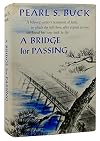
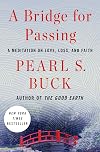
The Nobel Prize-winning and New York Times-bestselling author's memoir of making a movie in 1960s Japan, while mourning the loss of her husband. Pearl S. Buck's children's story, The Big Wave, about two young friends whose lives are transformed when a volcano erupts and a tidal wave engulfs their village, was eventually optioned as a movie. A Bridge for Passing narrates the resulting adventure, the story of the people involved in the movie-making process (including Polish director Tad show more Danielewski), their many complications while shooting, and the experience of working in Japan at a time when memories of the war remained strong. As much as all this, the book is a poignant reflection on personal crisis, and relates Buck's grief over the death of her husband of twenty-five years, Richard Walsh, who was also her editor. A Bridge for Passing offers an intimate view of postwar Japan mixed with Buck's heartrending meditation on loss and love. This ebook features an illustrated biography of Pearl S. Buck including rare images from the author's estate. show lessTags
Recommendations

















Member Reviews
Pearl S. Buck’s children’s story, The Big Wave, about two young friends whose lives are transformed when a volcano erupts and a tidal wave engulfs their village, was eventually optioned as a movie. A Bridge for Passing narrates the resulting adventure, the story of the people involved in the movie-making process (including Polish director Tad Danielewski), their many complications while shooting, and the experience of working in Japan at a time when memories of the war remained strong. As much as all this, the book is a poignant reflection on personal crisis, and relates Buck’s grief over the death of her husband of twenty-five years, Richard Walsh, who was also her editor. A Bridge for Passing offers an intimate view of postwar show more Japan mixed with Buck’s heartrending meditation on loss and love. show less
Underlying the theme of the process of turning a book into a movie [The Big Wave] on-site in Japan, Buck deals with the grief process of the loss of her husband. Buck vividly describes the country and the culture as only she can; I loved this book.
When Pearl Buck’s novel The Big Wave was made into a movie in Japan, she wanted to be on the set to help. She was only in Japan for a few days before her husband, who had been ill for years, passed away. After returning to their home in Pennsylvania for his funeral, she decided to return to Japan so that she would have something to occupy her time and mind. This memoir is her description of the process of making the film, how she mourned for her husband, and how she moved on after his death.
Buck certainly led an interesting life. I found the description of how the movie was made to be the most interesting parts of the book. Buck’s reflections on her husband were slow and got a bit tedious after a while, but it’s hard to criticize show more her for that. show less
Buck certainly led an interesting life. I found the description of how the movie was made to be the most interesting parts of the book. Buck’s reflections on her husband were slow and got a bit tedious after a while, but it’s hard to criticize show more her for that. show less
I-2
Sep 15, 2020Catalan
Ratings
Members
- Recently Added By
Author Information

440+ Works 37,222 Members
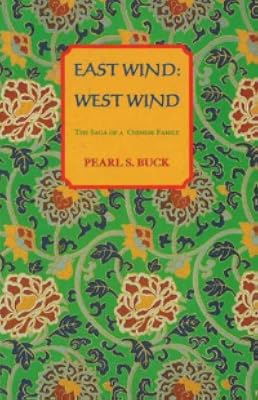
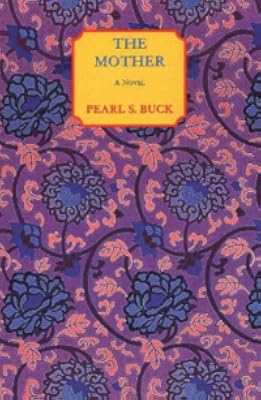
Pearl S. Buck, June 26, 1892 - March 6, 1973 Pearl Sydenstricker Buck was an American author, best know for her novels about China. Buck was born on June 26, 1892, in Hillsboro, West Virginia, but as the daughter of Presbyterian missionaries she was taken to China in infancy. She received her early education in Shanghai, but returned to the United show more States to attend college, and graduated from Randolph-Macon Woman's College in Virginia in 1914. Buck became a university teacher there and married John Lossing Buck, an agricultural economist, in 1917. Buck and her husband both taught in China, and she published magazine articles about life there. Her first novel East Wind, West Wind was published in 1930. Buck achieved international success with The Good Earth, which won the Pulitzer Prize in 1932. This story of a Chinese peasant family's struggle for survival was later made into a MGM film. Buck resigned from the Presbyterian Board of Foreign Missions after publishing an article that was critical of missionaries. She returned to the United States because of political unrest in China. Buck's novels during this period include Sons, A House Divided, and The Mother. She also wrote biographies of her father (Fighting Angel) and her mother (The Exile). She won the Nobel Prize for Literature in 1938. During her career, Buck published over 70 books: novels, nonfiction, story collections, children's books, and translations from the Chinese. She also wrote under the pseudonym John Sedges. In the United States, Buck was active in the civil rights and women's rights movements. In 1942 she founded the East and West Association to promote understanding between Asia and the West. In 1949, Buck established Welcome House, the first international interracial adoption agency. In 1964, she established the Pearl S. Buck foundation to sponsor support for Amerasian children who were not considered adoptable. Pearl Buck died in Danbury, Vermont, on March 6, 1973. (Bowker Author Biography) show less
Series
Belongs to Publisher Series
Work Relationships
Is abridged in
Common Knowledge
- Canonical title*
- Van over de horizon
- Original title
- A bridge for passing
- People/Characters
- Pearl S. Buck
*Some information comes from Common Knowledge in other languages. Click "Edit" for more information.
Classifications
Statistics
- Members
- 187
- Popularity
- 175,805
- Reviews
- 4
- Rating
- (3.43)
- Languages
- 8 — Dutch, English, French, German, Norwegian (Bokmål), Norwegian, Portuguese, Spanish
- Media
- Paper, Ebook
- ISBNs
- 12
- ASINs
- 15