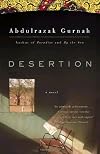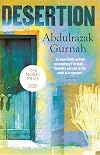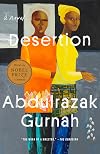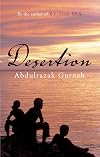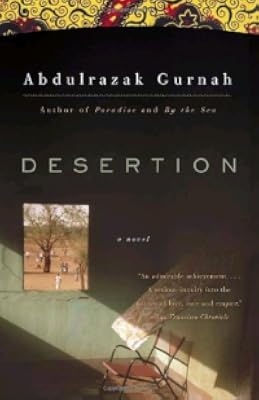
Desertion
by Abdulrazak Gurnah
On This Page
Description
Early one morning in 1899, an Englishman named Martin Pearce stumbles out of the desert into an East African coastal town and collapses at the feet of Hassanali, a local shopkeeper. When Hassanali's sister, the beautiful and disillusioned Rehana, nurses Pearce back to health, a love affair sparks, with consequences that will ripple decades into the future when another clandestine affair bursts into flame with equally unforeseen and dramatic consequences. In this devastating and ingeniously show more spun tale, Nobelist Abdulrazak Gurnah brilliantly dramatises the personal and political legacies of colonialism. show lessTags
Recommendations

















Member Reviews
The more I read of Gurnah, the more sympathetic I am to the Swedish Academy’s award to him for his body of work rather than a single volume. Gurnah was exiled to England at 18, returning for the first time at the age of 36. His characters—at least in the novels I have read so far and perhaps not surprisingly—often find themselves in a cultural limbo, stuck between places continents apart, not wholly belonging to either. And I get the consistent feeling that they will never find a resolution, deepening the tragedy. The first part of Desertion takes place in Kenya at the turn of the last century when Englishman Martin Pearce collapses in the street, having been robbed and left helpless in the desert by his guides. He is taken in by show more a local family but, since he speaks Arabic, his story takes a different turn than would the story of almost any other Westerner. He and the sister of his host fall in love and the first part ends in a way I found both expectable and shocking. The second, longer portion of the novel skips ahead a couple generations to a completely different story of forbidden love. Plus ça change of course. There is, not surprisingly, a family connection between the stories. Among other things, however, the very existence of narrator of the second part is an implicit recognition that the first part—contrary to expectation—did not end as might have been expected. The meaning of our story, we learn, is “about how one story contains many and how they belong not to us but are part of the random currents of our time, and about how stories capture us and entangle us for all time.” As in previous novels (this is his seventh), Gurnah is expert at drawing torn, conflicted characters and situations. He is concerned with individuals, he is concerned with the colonial legacy, he is concerned with power in all of its many manifestations. Another impressive novel by a writer I am coming to have greater respect for each time I read him. show less
There are all kinds of desertions going on here: the relationship between an English traveller and an East African woman in 1899 ends — inevitably — in a way that hurts her (and her descendants) more than it does him; much the same thing happens with Britain's withdrawal from Zanzibar at the end of 1963, leaving an unviable minority government and a messy revolution waiting to happen; and the narrator also feels his own failure to return to Zanzibar and his family after completing his studies in Britain — he's been advised to stay away for his own safety and theirs — as a kind of desertion.
Using an exploitative sexual relationship to stand as a metaphor for colonialism is not exactly original, but it's never put as crudely as show more that of course. Gurnah presents it with his usual magnificent storytelling flair, presenting his imagined lovers of 1899 just as vividly as the more autobiographical parts of the story, set in a family rather like his own in the Zanzibar of the years immediately before independence. Tremendously engaging characters and a convincing portrayal of family life in both cases. show less
Using an exploitative sexual relationship to stand as a metaphor for colonialism is not exactly original, but it's never put as crudely as show more that of course. Gurnah presents it with his usual magnificent storytelling flair, presenting his imagined lovers of 1899 just as vividly as the more autobiographical parts of the story, set in a family rather like his own in the Zanzibar of the years immediately before independence. Tremendously engaging characters and a convincing portrayal of family life in both cases. show less
Much of this book is historical fiction: the first part is set in the 1890s, as a Zanzibari village shopkeeper takes in an Englishman found wandering the desert, which leads to an interracial love affair. The second part is set in the 1950s and deals with a schoolboy secretly falling in love with an older divorcee as Zanzibar/Tanzania moves towards Independence. This part turns into a fictionalized autobiography of sorts, with the narrator moving to England and detailing his experiences there. This, too, includes a romantic attraction that contemporary society and the narrator’s family might not be all that fond of.
The transition between the 1890s and the 1950s sections is deliberately sudden, and while I did get a sense that the show more characters were related in some way to the ones 60 years earlier, Gurnah chooses not to tell us until quite late into the second part.
I really enjoyed reading this book: it was very well written, the prose flowed neatly and very deliberately. I liked how Gurnah used the jarring transition between storylines to reinforce the thread of abandonment and, well, desertion that permeates the relationships portrayed in the novel -- not just in the various illicit or taboo romantic attractions, but in the way family ties change over time and drift apart as various members change their minds and/or respond to society’s changing mores. No high-stakes melodrama, merely people dealing with trying to fit in with others’ ideas of proper behaviour, even when those ideas change, or when multiple conflicting in-groups demand to be satisfied.
A very powerful book. Possibly one of the best I’ll read this year. show less
The transition between the 1890s and the 1950s sections is deliberately sudden, and while I did get a sense that the show more characters were related in some way to the ones 60 years earlier, Gurnah chooses not to tell us until quite late into the second part.
I really enjoyed reading this book: it was very well written, the prose flowed neatly and very deliberately. I liked how Gurnah used the jarring transition between storylines to reinforce the thread of abandonment and, well, desertion that permeates the relationships portrayed in the novel -- not just in the various illicit or taboo romantic attractions, but in the way family ties change over time and drift apart as various members change their minds and/or respond to society’s changing mores. No high-stakes melodrama, merely people dealing with trying to fit in with others’ ideas of proper behaviour, even when those ideas change, or when multiple conflicting in-groups demand to be satisfied.
A very powerful book. Possibly one of the best I’ll read this year. show less
Desertion opens with an Englishman, Martin Pearce, stumbling into an east African town, exhausted and potentially injured. He is taken in by Hassanali, who found him in the streets. During his recovery, Pearce falls in love with Hassanali's sister Rehana. The stage is set for a tale of interracial love in colonial Africa, c. 1899. And then suddenly, as Part I comes to an end, it becomes clear there is more to this story than the European man and native woman. As the narrator says, It is about how one story contains many and how they belong not to us but are part of the random currents of our time, and about how stories capture us and entangle us for all time. (p. 120). I read that passage and was hooked; entangled for all time, so to show more speak.
Gurnah fast-forwards from the story of Martin and Rehana to 1960s Zanzibar on the brink of independence. The narrator is Rashid, the youngest in a family that includes sister Farida and brother Amin. Farida doesn't do well in school, and takes up dressmaking while secretly writing poetry. Amin finishes school, but certain events keep him rooted in Zanzibar. He cares for his parents and shepherds the family through tumultuous years of government unrest. Rashid appears to be an underachiever, and yet is the only one to qualify for university education in England. He leaves Zanzibar just before independence, and struggles with finding his way in a strange land. He is not entirely happy with what he becomes:
In time I drifted into a tolerable alienness. Living day to day, this alienness became a kind of emblem, indeterminate about its origins. Soon I began to say black people and white people, like everyone else, uttering the lie with increasing ease, conceding the sameness of our difference, deferring to a deadening vision of a racialised world. For by agreeing to black and white, we also agree to lmit the complexity of possibility, we agree to mendacities that for centuries served and will continue to serve crude hungers for power and pathological self-affirmations. (p. 222)
The story eventually comes full circle. One story did, indeed, contain many. The connections unfolded in a tantalizing, gradual way and the overall effect was quite poignant. A very enjoyable read. show less
Gurnah fast-forwards from the story of Martin and Rehana to 1960s Zanzibar on the brink of independence. The narrator is Rashid, the youngest in a family that includes sister Farida and brother Amin. Farida doesn't do well in school, and takes up dressmaking while secretly writing poetry. Amin finishes school, but certain events keep him rooted in Zanzibar. He cares for his parents and shepherds the family through tumultuous years of government unrest. Rashid appears to be an underachiever, and yet is the only one to qualify for university education in England. He leaves Zanzibar just before independence, and struggles with finding his way in a strange land. He is not entirely happy with what he becomes:
In time I drifted into a tolerable alienness. Living day to day, this alienness became a kind of emblem, indeterminate about its origins. Soon I began to say black people and white people, like everyone else, uttering the lie with increasing ease, conceding the sameness of our difference, deferring to a deadening vision of a racialised world. For by agreeing to black and white, we also agree to lmit the complexity of possibility, we agree to mendacities that for centuries served and will continue to serve crude hungers for power and pathological self-affirmations. (p. 222)
The story eventually comes full circle. One story did, indeed, contain many. The connections unfolded in a tantalizing, gradual way and the overall effect was quite poignant. A very enjoyable read. show less
A very good novel, although, in my opinion, not Gurnah's best. A story made up of many layers that reach from the past to the present, narrating the strange intermingling of the dominated and the dominator in colonised Africa, and whose common denominator is the total inability to understand each other. Who the narrator is one discovers fairly late in the story, as one discovers that his is a book of memoirs, which are, however, often reconstructions, hypotheses about events that the narrator cannot know first-hand. This is true for the events of the past, and it is equally true for those of the present, partly because at the time of the events the narrator is too young to correctly interpret what is happening around him, and partly show more because it is he who, by going to England to study on the eve of momentous events for his country and his family, commits an act of desertion.
As I said, perhaps not Gurnah's best work, but certainly a novel worth reading. show less
As I said, perhaps not Gurnah's best work, but certainly a novel worth reading. show less
This is my second Gurnah novel after "By the Sea" and while this novel is not equal to that great novel, it is another well-written story thus confirming in my mind Gurnah a gifted and thoughtful writer. The novel is made up of two seeming separate stories, one set in 1899, the other in the 1950s, the two are separated by a brief 'interruption." The title "Desertion" may allude to many things in the book, but I think it refers first to the author's own abandonment of his first storyline just at the point where you, the reader, are most invested in it. This has an interesting effect. There is a sense of loss, even some anger, a bit of WTF? Some readers may never forgive the author for this strange story arrangement, but as the character show more speaking in the 'Interruption' that follows says, "Now that I have arrived at the critical moment, I find myself suddenly hard up against what I cannot fully imagine." It is difficult to say much here without spoilers. Suffice it to say, that the novel eventually circles back on itself, not in a post-modern way, but rather like a spiral which circles back while moving away from. That sense of loss one feels when the first story is abandoned reverberates throughtout the novel.
As the 'I' in the story says, "it is about how one story contains many and how they belong not to us but are part of the random currents of our time, and about how stories capture us and entangle us for all time." show less
As the 'I' in the story says, "it is about how one story contains many and how they belong not to us but are part of the random currents of our time, and about how stories capture us and entangle us for all time." show less
When Abdulrazak Gurnah won the Nobel Prize for Literature in 2021, his citation included the following:
In his seventh novel Desertion the story exemplifies the disruption that occurs when great nations impinge on smaller ones.
Hassanali is a timid man, living the quiet and insignificant life of a shopkeeper. While not a discontented man, his one real joy in life is his unexpected delight in his young wife Malika, whose gentle teasing is a foil to the relentless scorn of his sister Rehana. He's not especially devout, but his life is marked by the show more routine of calling the faithful to prayer at the Mosque, opening his shop, and making much less money than his customers think he does.
The predictability of his life changes when he discovers the prone and unconscious body of Martin Pearce, a traveller who has encountered some mishap on the road and is in desperate need of care.
Hassanali is a superstitious fellow, given to imagining all sorts of horrors real and imagined in the world beyond his small town. Like most of the townsfolk he has never been anywhere else, and has no concept of his country as it exists in an atlas. To help someone in need is in his nature, but the arrival of this stranger also offers the opportunity to have a little importance. So, ignoring the advice of the three most important men in the town, he has the body carried to his own house which is barely big enough for its existing three residents.
To read the rest of my review please visit https://anzlitlovers.com/2025/09/05/desertion-2005-by-abdulrazak-gurnah/ show less
Gurnah’s itinerant characters find themselves in a hiatus between cultures and continents, between a life that was and a life emerging; it is an insecure state that can never be resolved.
In his seventh novel Desertion the story exemplifies the disruption that occurs when great nations impinge on smaller ones.
Hassanali is a timid man, living the quiet and insignificant life of a shopkeeper. While not a discontented man, his one real joy in life is his unexpected delight in his young wife Malika, whose gentle teasing is a foil to the relentless scorn of his sister Rehana. He's not especially devout, but his life is marked by the show more routine of calling the faithful to prayer at the Mosque, opening his shop, and making much less money than his customers think he does.
Over the years he earned a mild superiority over his customers and neighbours, despite his diffident airs. He was a small man, without a doubt, but he was a small, cunning man. He was a shopseller, a vocation with inevitably required that he outwit his customer, make them pay more than they would have liked to pay, give them less than they would like to have. He had to do this too in small ways, nothing blatant or aggressive. When he heard of the ruses and deals the merchants made and the profits that came from them, he quivered with a panicky terror and envy at the risk of it. So they laughed at him and he made them pay, a little. He thought of it as an arrangement that came with the job. (p.18)
The predictability of his life changes when he discovers the prone and unconscious body of Martin Pearce, a traveller who has encountered some mishap on the road and is in desperate need of care.
Hassanali is a superstitious fellow, given to imagining all sorts of horrors real and imagined in the world beyond his small town. Like most of the townsfolk he has never been anywhere else, and has no concept of his country as it exists in an atlas. To help someone in need is in his nature, but the arrival of this stranger also offers the opportunity to have a little importance. So, ignoring the advice of the three most important men in the town, he has the body carried to his own house which is barely big enough for its existing three residents.
To read the rest of my review please visit https://anzlitlovers.com/2025/09/05/desertion-2005-by-abdulrazak-gurnah/ show less
Members
- Recently Added By
Published Reviews
ThingScore 100
Pas d’effets de style ni de recherche formelle chez Gurnah. L’homme est avant tout un grand conteur, influencé par la poésie arabe et perse, nourri des Mille et Une Nuits autant que du théâtre de Shakespeare. On plonge dans Adieu Zanzibar comme on se laisserait glisser dans les eaux transparentes de cette île, en sachant que, sur les côtes africaines comme dans l’art de la prose, show more la transparence n’exclut jamais la profondeur. show less
added by ninzilla
Lists

Best African Books
126 works; 46 members
Author Information

20+ Works 3,354 Members
Abdulrazak Gurnah teaches at the University of Kent in England.
Awards and Honors
Common Knowledge
- Canonical title
- Desertion
- Original title
- Desertion
- People/Characters
- Hassanali; Martin Pearce; Frederick Turner; Rehana
- Important places
- Africa; East Africa; Tanzania; Zanzibar
Classifications
- Genres
- Fiction and Literature, General Fiction, Historical Fiction
- DDC/MDS
- 823.914 — Literature & rhetoric English & Old English literatures English fiction 1900- 1901-1999 1945-1999
- LCC
- PR9399.9 .G87 .D47 — Language and Literature English English Literature English literature: Provincial, local, etc.
- BISAC
Statistics
- Members
- 306
- Popularity
- 104,328
- Reviews
- 15
- Rating
- (3.88)
- Languages
- 7 — English, Finnish, French, German, Italian, Spanish, Turkish
- Media
- Paper, Audiobook, Ebook
- ISBNs
- 26
- ASINs
- 8