On This Page
Description
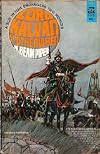
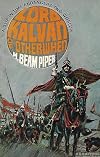
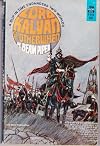
Lord Kalvan of Otherwhen-Piper's last science fiction novel-is part of his Paratime series and recounts the adventures of a Pennsylvania state trooper who is accidentally transported to a more backward parallel universe. It is an expanded version of his novelet "Gunpowder God."Tags
Recommendations


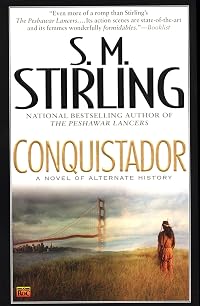

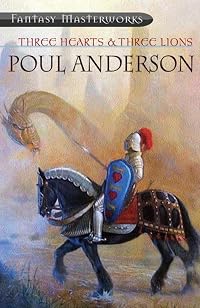


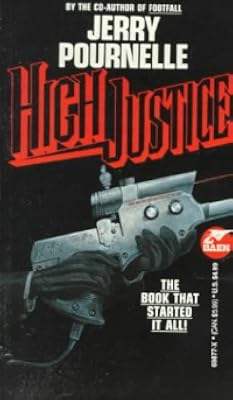


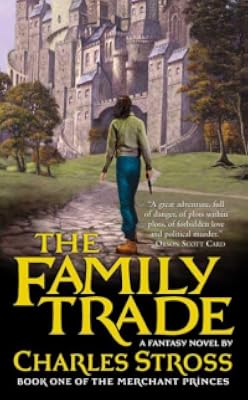




Member Recommendations



Member Reviews
Rating: 4.9* of five
The Book Report: It has been said since there were people to say it that you have to leave home to find yourself. It was never more truly said than with Corporal Calvin Morrison, Pennsylvania State Police. He had to leave Earth as he knew it in order to feel at home at last.
Calvin, you see, ran afoul of a glitch in an alien (though still Earthly) technology, was swept into a temporal conveyor, and despite being thrust into a unique environment, still managed to defend himself against a fellow cop's energy weapon (versus Calvin's .38 revolver), and escape from the unknown but self-evident threat of that weird place.
But where in the world was he? It looks like the same spot he just left, only...not.
He comes to discover show more that he's traveled laterally in timespace, he's in the same geography as the Pennsylvania he left, but the people in this place aren't like him in culture or language. They're early-Renaissance level of technology, polytheistic Aryans from Asia. And their kingdom, Hostigos, is about to be swatted like a mosquito by the Big Baddies: the priests of the House of Styphon, the Gunpowder God. Thus does Calvin morph into Kalvan, the war leader, the bringer of miracles, the architect of a complete shift in this world's future history.
Now remember that alien-but-Earthly technology? Those Earthlings are from a different time-stream from thee and me, and from the Hostigos (called “Aryan-Transpacific” which specifies the direction of the ancient migration) time-stream. They developed high technology long before we did, and consequently used up the resources of their own Earth before we have. The Paratime Secret, which is the existence of aliens who can't be told from the natives, is policed by the Paratime Police, now headed by Verkan Vall, whose observation of Kalvan was supposed to be an elimination until some bright academic realized Kalvan was a rare case of a man out of time who was IN his new element, more so than he was in his native time-stream.
And so is born the Kalvan Subsector, a set of adjacent time-streams that define a new direction in history. It's a priceless chance to see how one exceptional individual can change the course of the world.
My Review: I bought my first copy of this book, published in 1965, from The Book Stall on Burnet Road in Austin, Texas, in 1970. It was a dime, and my mama blew a fuse. She had given me the dime to buy two National Geographics, and was furious I chose mind-rot over edification. As a result of this tantrum on her part, I treasured that little book until it finally and definitively disintegrated in 2006.
I loved the parallel universes in the book. I eagerly looked into strangers' faces, hoping one of them would be a Paracop and whisk me away from the life I didn't much like into a romantic, exciting life hopping the time-streams. (Not long after this, I encountered The Warlord of the Air by Michael Moorcock, and my fate was sealed...I was a chrononaut/Paracop Without Portfolio, and still am.)
I loved every pulpy, overheated sentence of the book. I said things like “yesterday at the latest” and “Dralm dammit” so often that Mama finally blew a fuse and took the book away. I didn't know then, though I strongly suspected it, that Piper was a crappy writer with a gift for the cliché. But hell, who gives the ass of a rat when you're swept away into a world different from and better than your own?
I feel the same way today. It's just that, at mumblety-two, I know it's not good writing. But I still don't care, if the story can sweep my considerable intellectual and physical avoirdupois off my aching, elderly feet. show less
The Book Report: It has been said since there were people to say it that you have to leave home to find yourself. It was never more truly said than with Corporal Calvin Morrison, Pennsylvania State Police. He had to leave Earth as he knew it in order to feel at home at last.
Calvin, you see, ran afoul of a glitch in an alien (though still Earthly) technology, was swept into a temporal conveyor, and despite being thrust into a unique environment, still managed to defend himself against a fellow cop's energy weapon (versus Calvin's .38 revolver), and escape from the unknown but self-evident threat of that weird place.
But where in the world was he? It looks like the same spot he just left, only...not.
He comes to discover show more that he's traveled laterally in timespace, he's in the same geography as the Pennsylvania he left, but the people in this place aren't like him in culture or language. They're early-Renaissance level of technology, polytheistic Aryans from Asia. And their kingdom, Hostigos, is about to be swatted like a mosquito by the Big Baddies: the priests of the House of Styphon, the Gunpowder God. Thus does Calvin morph into Kalvan, the war leader, the bringer of miracles, the architect of a complete shift in this world's future history.
Now remember that alien-but-Earthly technology? Those Earthlings are from a different time-stream from thee and me, and from the Hostigos (called “Aryan-Transpacific” which specifies the direction of the ancient migration) time-stream. They developed high technology long before we did, and consequently used up the resources of their own Earth before we have. The Paratime Secret, which is the existence of aliens who can't be told from the natives, is policed by the Paratime Police, now headed by Verkan Vall, whose observation of Kalvan was supposed to be an elimination until some bright academic realized Kalvan was a rare case of a man out of time who was IN his new element, more so than he was in his native time-stream.
And so is born the Kalvan Subsector, a set of adjacent time-streams that define a new direction in history. It's a priceless chance to see how one exceptional individual can change the course of the world.
My Review: I bought my first copy of this book, published in 1965, from The Book Stall on Burnet Road in Austin, Texas, in 1970. It was a dime, and my mama blew a fuse. She had given me the dime to buy two National Geographics, and was furious I chose mind-rot over edification. As a result of this tantrum on her part, I treasured that little book until it finally and definitively disintegrated in 2006.
I loved the parallel universes in the book. I eagerly looked into strangers' faces, hoping one of them would be a Paracop and whisk me away from the life I didn't much like into a romantic, exciting life hopping the time-streams. (Not long after this, I encountered The Warlord of the Air by Michael Moorcock, and my fate was sealed...I was a chrononaut/Paracop Without Portfolio, and still am.)
I loved every pulpy, overheated sentence of the book. I said things like “yesterday at the latest” and “Dralm dammit” so often that Mama finally blew a fuse and took the book away. I didn't know then, though I strongly suspected it, that Piper was a crappy writer with a gift for the cliché. But hell, who gives the ass of a rat when you're swept away into a world different from and better than your own?
I feel the same way today. It's just that, at mumblety-two, I know it's not good writing. But I still don't care, if the story can sweep my considerable intellectual and physical avoirdupois off my aching, elderly feet. show less
I always enjoy reading "competent man" (or woman) books - regardless of the circumstances they use their skills and resourcefulness to make the most of whatever situation they find themselves in. And what a situation - Calvin Morrison is inadvertently transported to a parallel world, with technology roughly equivtti that of the medieval era.
Nearly every historical enthusiast must have imagined at one point or another what they would do if they were somehow thrown back and time - could their knowledge of the future and scientific advances change the world? In Calvin's case, or should I say Lord Kalvan, the answer is most assuredly yes. An entertaining adventure, and the last Piper wrote before he died - one can't help but wonder what show more other magnificent tales he would have written had he but loved a few years longer? show less
Nearly every historical enthusiast must have imagined at one point or another what they would do if they were somehow thrown back and time - could their knowledge of the future and scientific advances change the world? In Calvin's case, or should I say Lord Kalvan, the answer is most assuredly yes. An entertaining adventure, and the last Piper wrote before he died - one can't help but wonder what show more other magnificent tales he would have written had he but loved a few years longer? show less
I picked up this volume because it was mentioned in Armageddon: There Will be War volume VIII. Pournelle cited Piper as a great influence on his own work, especially his Janissaries series, and included in volume VIII was a sequel to Piper's trandimensional adventure story written by John F. Carr and Roland Green. That story was pretty good, so I picked up the original to see what it was all about.
I'm glad that I did. Piper told a great story, full of humor and action, but it is clear that he knew a great deal of history and science as well. Calvin Morrison is a Pennsylvania State Trooper who finds himself accidentally transported into an adjacent timeline by an industrial accident of a more advanced civilization, in the same place but show more another when. He immediately finds himself embroiled in a war between princes, and makes himself useful due to his interest in chemistry, military tactics, and industrial organization. He fights. He loves. He wins.
For a nerd like myself, this is a fun kind of counterfactual speculation: how could you shape the world differently if you knew all the secrets of modern science in a pre-modern world? There are a lot of ways to do this kind of story. Twain decided to go with a rather cynical satire. This is straight-forward adventure with a heavy dose of history and engineering. In addition to Jerry Pournelle, S. M. Stirling is a modern example of this same kind of story, which is immensely fun, and I also find very educational.
For example, I wondered once what kind of civilization you could rebuild following a technological disaster like the Carrington Event. Nearly all of our advanced technology could be destroyed by a sufficiently powerful solar storm. It turns out that Stirling's novels of the Change have asked almost exactly that question. I wish I had read Stirling sooner, I would have found some answers I was looking for.
This is hard scifi at its best. You take an insight about how the world really works, and you follow the implications in some interesting and otherworldly setting. In this case, it happens to be the Fourth Level, Aryan-Transpacific sector, Styrphon's House sub-sector. Since Piper lived and died at the height of American civilization, the gifts he brings are the first-fruits of industrialization, plus a boundless confidence in the methods of sociology and anthropology, unleavened by any fears of ecological or cultural collapse. If you want to try the latter, Stirling has explored that space pretty well.
While you can clearly see the influence of Piper on later authors, there are interesting differences as well. Religion plays a very different role on Tran than it does in the Stryphon's House sub-sector. Each author has their own take on what really makes the world work, and I've enjoyed them all so far.
I was saddened to learn that Piper took his life shortly after he wrote this book. It is a cracking good yarn, and I would have liked to enjoy more stories of Lord Kalvan. John Carr and Roland Green wrote several more books following on this one, one of which is the short story that brought me here in the first place. I'll pick up the sequels, with the expectation of a homage, true to the spirit of the original. show less
I'm glad that I did. Piper told a great story, full of humor and action, but it is clear that he knew a great deal of history and science as well. Calvin Morrison is a Pennsylvania State Trooper who finds himself accidentally transported into an adjacent timeline by an industrial accident of a more advanced civilization, in the same place but show more another when. He immediately finds himself embroiled in a war between princes, and makes himself useful due to his interest in chemistry, military tactics, and industrial organization. He fights. He loves. He wins.
For a nerd like myself, this is a fun kind of counterfactual speculation: how could you shape the world differently if you knew all the secrets of modern science in a pre-modern world? There are a lot of ways to do this kind of story. Twain decided to go with a rather cynical satire. This is straight-forward adventure with a heavy dose of history and engineering. In addition to Jerry Pournelle, S. M. Stirling is a modern example of this same kind of story, which is immensely fun, and I also find very educational.
For example, I wondered once what kind of civilization you could rebuild following a technological disaster like the Carrington Event. Nearly all of our advanced technology could be destroyed by a sufficiently powerful solar storm. It turns out that Stirling's novels of the Change have asked almost exactly that question. I wish I had read Stirling sooner, I would have found some answers I was looking for.
This is hard scifi at its best. You take an insight about how the world really works, and you follow the implications in some interesting and otherworldly setting. In this case, it happens to be the Fourth Level, Aryan-Transpacific sector, Styrphon's House sub-sector. Since Piper lived and died at the height of American civilization, the gifts he brings are the first-fruits of industrialization, plus a boundless confidence in the methods of sociology and anthropology, unleavened by any fears of ecological or cultural collapse. If you want to try the latter, Stirling has explored that space pretty well.
While you can clearly see the influence of Piper on later authors, there are interesting differences as well. Religion plays a very different role on Tran than it does in the Stryphon's House sub-sector. Each author has their own take on what really makes the world work, and I've enjoyed them all so far.
I was saddened to learn that Piper took his life shortly after he wrote this book. It is a cracking good yarn, and I would have liked to enjoy more stories of Lord Kalvan. John Carr and Roland Green wrote several more books following on this one, one of which is the short story that brought me here in the first place. I'll pick up the sequels, with the expectation of a homage, true to the spirit of the original. show less
To start I love this book. What I enjoy the most is the demonstration of how an individual might influence the world around him. Calvin Morrison is thrown into an alternate time-line, "Aryan Trans-Pacific", and has to deal with a seventeenth century society. So much to do, so little time!
I'm really so sorry that Piper was taken from us so quickly. Not the best decision by a mind that was otherwise so clear. Well if I ever get the Chrono-mobile up and running, this is one of the calls I plan to make!
I noted reading this 4 times, but it's like Forester's "The Gun", you can't put it down once opened!
I'm really so sorry that Piper was taken from us so quickly. Not the best decision by a mind that was otherwise so clear. Well if I ever get the Chrono-mobile up and running, this is one of the calls I plan to make!
I noted reading this 4 times, but it's like Forester's "The Gun", you can't put it down once opened!
A decent reinterpretation of 'A Connecticut Yankee in King's Arthurs Court', but though I haven't read 'Connecticut Yankee', I suspect that Twain did it better. Though the military aspects were greatly focused on in this novel.
This story is good, but a little too much a product of its times. There's the manly man state trooper, Lord Kalvan, who shows those savages how war is done. Though Piper definitely killed it with controverting some female stereotypes of the genre (I'm looking at you, Princess Rylla). I wasn't a fan of how the subject of war and torture were taken lightly.
But upon reading a couple of other reviews, and getting down from my freaking high horse, I think I was just reading a little too seriously. I've decided to bump show more the star rating up to embrace this novel in all of its wondrous, cheesy, pulpy glory. show less
This story is good, but a little too much a product of its times. There's the manly man state trooper, Lord Kalvan, who shows those savages how war is done. Though Piper definitely killed it with controverting some female stereotypes of the genre (I'm looking at you, Princess Rylla). I wasn't a fan of how the subject of war and torture were taken lightly.
But upon reading a couple of other reviews, and getting down from my freaking high horse, I think I was just reading a little too seriously. I've decided to bump show more the star rating up to embrace this novel in all of its wondrous, cheesy, pulpy glory. show less
My reaction to reading this novel in 2002.
This was a fairly engaging book.
Its battle sequences were clearer than the action sequences of some of the Paratime stories in Piper’s Paratime. I didn’t really try to keep track of the corresponding geographical locations in our world as Lord Kalvan aka Calvin Morrison of the Pennsylvania State Police builds an empire along this alternate version of the Atlantic coast of America. (Piper does, at one point, give a geographical listing which would make such a reconstruction at least partially possible though no maps are given. I kept thinking I was missing some in-jokes like some of the battle sites were fought on the site of American Civil War or Revolutionary War sites. I suspect Nostor is show more the same as Georgia since there is a song called “Marching Through Nostor” which sounds suspiciously like “Marching Through Georgia” from our world.)
While this is certainly far from the first work of military sf or even, probably (though I don’t know for sure), the first sf work where a man displaced from his time or dimension builds an empire with his technological and historical knowledge, I suspect it was influential on Piper’s friend Jerry Pournelle and others.
The book comes off as a more cynical version of L. Sprague de Camp’s Lest Darkness Fall. Its protagonist prevents the decay of a society and introduces democracy and other things. Lord Kalvan builds an empire amongst medieval style states and introduces religious war, abides torture, suggests executing enemy priests at the mouths of cannons a la the British during the Sepoy Rebellion (and an awful pun is made about “cannon-ized martyrs”), institutes auto de fes and a secret police.
In Kalvan’s defense, he is taking steps to wipe out the oppressive Styphon’s House cult which has a gunpowder monopoly before he arrives and modernize his new home. I like Piper’s observations that governments’ decisions are only ratified on the battlefield, that states borrow time on credit and have to pay via war. It’s obvious Piper knew a lot about warfare, particularly the wars of Gustavus Adolphus which form so much of an inspiration. I kept thinking that many of the battles were modeled on historical ones, but am unsure (though Adolphus’ Battle of Lutzen is mentioned in connection with Kalvan’s Battle of Fyk) of which ones exactly.
Of course, there is a lot of wish fulfillment here. Kalvan gets to use his historical knowledge to build an Empire, knows the use as well as the theory of edged weapons, and marry a princess. And, of course, he learns the language implausibly fast. I found that a flaw in the novel (though a flaw of convention).
The other one was the description, by Paratime Cop Verkan Vall, of Kalvan as a genius. If he was such a genius and liked soldiering, why didn’t he stay in the U.S. Army (he’s a veteran of the Korean War) rather than become a policeman?
Piper clearly sides with the great man theory of history in this novel. show less
This was a fairly engaging book.
Its battle sequences were clearer than the action sequences of some of the Paratime stories in Piper’s Paratime. I didn’t really try to keep track of the corresponding geographical locations in our world as Lord Kalvan aka Calvin Morrison of the Pennsylvania State Police builds an empire along this alternate version of the Atlantic coast of America. (Piper does, at one point, give a geographical listing which would make such a reconstruction at least partially possible though no maps are given. I kept thinking I was missing some in-jokes like some of the battle sites were fought on the site of American Civil War or Revolutionary War sites. I suspect Nostor is show more the same as Georgia since there is a song called “Marching Through Nostor” which sounds suspiciously like “Marching Through Georgia” from our world.)
While this is certainly far from the first work of military sf or even, probably (though I don’t know for sure), the first sf work where a man displaced from his time or dimension builds an empire with his technological and historical knowledge, I suspect it was influential on Piper’s friend Jerry Pournelle and others.
The book comes off as a more cynical version of L. Sprague de Camp’s Lest Darkness Fall. Its protagonist prevents the decay of a society and introduces democracy and other things. Lord Kalvan builds an empire amongst medieval style states and introduces religious war, abides torture, suggests executing enemy priests at the mouths of cannons a la the British during the Sepoy Rebellion (and an awful pun is made about “cannon-ized martyrs”), institutes auto de fes and a secret police.
In Kalvan’s defense, he is taking steps to wipe out the oppressive Styphon’s House cult which has a gunpowder monopoly before he arrives and modernize his new home. I like Piper’s observations that governments’ decisions are only ratified on the battlefield, that states borrow time on credit and have to pay via war. It’s obvious Piper knew a lot about warfare, particularly the wars of Gustavus Adolphus which form so much of an inspiration. I kept thinking that many of the battles were modeled on historical ones, but am unsure (though Adolphus’ Battle of Lutzen is mentioned in connection with Kalvan’s Battle of Fyk) of which ones exactly.
Of course, there is a lot of wish fulfillment here. Kalvan gets to use his historical knowledge to build an Empire, knows the use as well as the theory of edged weapons, and marry a princess. And, of course, he learns the language implausibly fast. I found that a flaw in the novel (though a flaw of convention).
The other one was the description, by Paratime Cop Verkan Vall, of Kalvan as a genius. If he was such a genius and liked soldiering, why didn’t he stay in the U.S. Army (he’s a veteran of the Korean War) rather than become a policeman?
Piper clearly sides with the great man theory of history in this novel. show less
I've read this so many times it's really hard to think about it - the whole story is part of the background for me. Triggered by reading When In the Course- in Federation - now that's an interesting story, with hints of mystery. Actually, it kind of reminds me of the mystery in the Fuzzy stories - how _did_ they get there? Though my viewpoint on that is warped by the Tuning and Mayhar 'sequels'... Yeah. I have a hard time discussing Lord Kalvan because it links with too many other things.
So, that aside - it's the usual story of the outsider coming in (from our universe/time. usually) and changing everything (at least theoretically, for the better). Piper does it nicely, with reasonable reasons for Kalvan to be listened to in the first show more place, and reasons for him to know what he needs to know to make a difference. And the Paratimers' comments on the whole sequence (and some of his own thoughts - like about beating Napoleon's jump in rank) illuminate the events nicely. The discussion at the end of the book about the Paratime Secret makes Lord Kalvan a major point in the Paratime universe - which is mostly interesting because it was apparently originally written for the Federation universe. Anyway, neat. Excellent characterization - well, it is a Piper. Oh, that reminds me - in this book, and also in When In the Course-, Piper breaks his usual pattern of linear characters - in most of his books, he introduces one character or set of characters at the beginning, and everyone else comes in as they relate to that original set. Here, three different sets of characters are introduced separately, and only after all three are established do the stories begin to braid. Interesting. show less
So, that aside - it's the usual story of the outsider coming in (from our universe/time. usually) and changing everything (at least theoretically, for the better). Piper does it nicely, with reasonable reasons for Kalvan to be listened to in the first show more place, and reasons for him to know what he needs to know to make a difference. And the Paratimers' comments on the whole sequence (and some of his own thoughts - like about beating Napoleon's jump in rank) illuminate the events nicely. The discussion at the end of the book about the Paratime Secret makes Lord Kalvan a major point in the Paratime universe - which is mostly interesting because it was apparently originally written for the Federation universe. Anyway, neat. Excellent characterization - well, it is a Piper. Oh, that reminds me - in this book, and also in When In the Course-, Piper breaks his usual pattern of linear characters - in most of his books, he introduces one character or set of characters at the beginning, and everyone else comes in as they relate to that original set. Here, three different sets of characters are introduced separately, and only after all three are established do the stories begin to braid. Interesting. show less
Members
- Recently Added By
Lists

Best Time Travel Novels
165 works; 125 members

Books Read in 2021
5,361 works; 113 members

Favorite Science Fiction
456 works; 218 members
Author Information

Some Editions
Series


Belongs to Publisher Series
Work Relationships
Is contained in
Contains
Has the (non-series) sequel
Common Knowledge
- Canonical title
- Lord Kalvan of Otherwhen
- Original title
- Lord Kalvan of Otherwhen
- Alternate titles
- Gunpowder God
- Original publication date
- 1965
- People/Characters
- Hadron Dalla; Kalvan (Calvin Morrison); Ptosphes; Rylla; Tortha Karf; Verkan Vall (show all 24); Xentos; Chartiphon; Kaiphranos; Phosg; Sthentros; Darro; Mytron; Zarvan; Valthor; Nyklos; Armanes; Sarra; Gormoth; Balthames; Ulthor; Kestohes; Kyblos; Tythanes
- Important places
- Pennsylvania, USA (alternate universe); Hos-Harphax; Hos-Hostigos; Hos-Ktemmos; Sask; Nostor (show all 7); Sashta
- First words
- Tortha Karf, Chief of Paratime Police, told himself to stop fretting.
- Last words
- (Click to show. Warning: May contain spoilers.)And he was holding it.
- Publisher's editor*
- Schelwokat, Günter M.
- Original language
- English
- Canonical DDC/MDS
- 813.087621; 813.08768
- Disambiguation notice
- Originally serialized in Analog as Gunpowder God; the book (with additional material) was published as Lord Kalvan of Otherwhen and (at least once) published as Gunpowder God. However, do not combine it with the... (show all) non-series sequel Gunpowder God by John F. Carr.
*Some information comes from Common Knowledge in other languages. Click "Edit" for more information.
Classifications
- Genres
- Science Fiction, Fiction and Literature
- DDC/MDS
- 813.087621 — Literature & rhetoric American literature in English American fiction in English By type Genre fiction Adventure fiction Speculative fiction Science fiction Time travel
- LCC
- PZ4 .P666 .L — Language and Literature Fiction and juvenile belles lettres Fiction and juvenile belles lettres Fiction in English
Statistics
- Members
- 651
- Popularity
- 44,376
- Reviews
- 17
- Rating
- (3.95)
- Languages
- English, French, German, Italian
- Media
- Paper, Ebook
- ISBNs
- 10
- ASINs
- 22