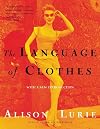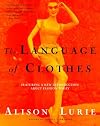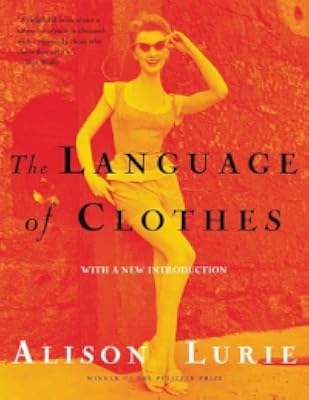
The Language of Clothes
by Alison Lurie
On This Page
Description
Discusses the social history of clothing, how clothing conveys information about the wearer, and how the person relates to the surrounding world.Tags
Recommendations















Member Reviews
This is an excellent study of fashion showing how history, class, economics and social mores influence the clothes we wear and how we wear them. A reminder that the language of clothes may be even more telling than body language. Well written, astute, and entertaining.
It was interesting in spots, but it's (obviously, since it was written in 1981) outdated.
A lot of her assertions were dubious at best, like her theory that the widely-set stripes on baseball uniforms symbolize the long periods of inaction in the game. Um, what?
Also, a lot of it just seemed to be personal opinions, e.g. wearing a Tyrolean hat makes you look like a "ninny". (Which, okay, is kind of true in most cases.)
A lot of her assertions were dubious at best, like her theory that the widely-set stripes on baseball uniforms symbolize the long periods of inaction in the game. Um, what?
Also, a lot of it just seemed to be personal opinions, e.g. wearing a Tyrolean hat makes you look like a "ninny". (Which, okay, is kind of true in most cases.)
Not content with recognizing the simple statements--your sex, age, and class--expressed in the language of dress, Lurie looks for the grammar and syntax. No actual linguistic structure is really presented, perhaps of course.
What is presented is brilliant, sensible, with many very acute photographs. For example: Jenny Churchill [71], the women of Sousa's family in Edwardian plummage [72]. Beautiful and interesting.
Primary focus is Americana, some British modes. Something "missing"--the unrelenting influence of product "advertising" is minimized or even dismissed. For example, "the lowering of the age of menarche has been exploited and even anticipated by manufacturers..." [47]. Isn't there really more causation here? Also missing is show more the enormous and direct influence of European--French, the Mata Hari postcard industry, and even Arab (as in veils, flowing and "arabesque" design)--fashion.
Her point seems to be that we can dissemble, costume, disguise and lie, but we cannot be "silent" in this language. She assumes the victims of the time and place of culture have actual "choice". The subject is far more complex than the disposition granted here; the writing is consistent and clear, and dilimited. show less
What is presented is brilliant, sensible, with many very acute photographs. For example: Jenny Churchill [71], the women of Sousa's family in Edwardian plummage [72]. Beautiful and interesting.
Primary focus is Americana, some British modes. Something "missing"--the unrelenting influence of product "advertising" is minimized or even dismissed. For example, "the lowering of the age of menarche has been exploited and even anticipated by manufacturers..." [47]. Isn't there really more causation here? Also missing is show more the enormous and direct influence of European--French, the Mata Hari postcard industry, and even Arab (as in veils, flowing and "arabesque" design)--fashion.
Her point seems to be that we can dissemble, costume, disguise and lie, but we cannot be "silent" in this language. She assumes the victims of the time and place of culture have actual "choice". The subject is far more complex than the disposition granted here; the writing is consistent and clear, and dilimited. show less
Ratings
Members
- Recently Added By
Author Information

33+ Works 6,194 Members
Novelist Alison Lurie was born September 3, 1926 in Chicago, Illinois to Harry and Bernice Stewart Lurie. She is an American novelist and academic. Lurie won the Pulitzer Prize for her 1984 novel Foreign Affairs. She received an A.B. from Radcliffe College in 1947. After finishing college, Lurie worked as an editorial assistant for Oxford show more University Press in New York, but she wanted to make a living as a writer. After years of receiving rejection slips, she devoted herself to raising her children. Lurie had taught at Cornell University since 1968, becoming a full professor in 1976 specializing in folklore and children's literature. Lurie's first novel was "Love and Friendship" (1962) and its characters were modeled on friends and colleagues. Afterwards, she published "The Nowhere City" (1965), "Imaginary Friends" (1967), "The War Between the Tates" (1974), which tells of the collapse of a perfect marriage between a professor and his wife, "Only Children" (1979), and "The Truth About Lorin Jones" (1988). "Foreign Affairs" (1984) won the Pulitzer Prize; it tells the story of two academics in England who learn more about love than academia. Her more recent books include the novels "Women and Ghosts" (1994), and "The Last Resort" (1998), and a work of nonfiction, "Familiar Spirits (2001)." Among her awards and honors, she received honorary degrees from the University of Oxford (2006) and the University of Nottingham (2007). And from 2012-2014, she was the official author of the state of New York. Alison Lurie died on December 3, 2020 in Ithaca, NY at the age of 94. (Bowker Author Biography) show less
Classifications
- Genres
- Nonfiction, Art & Design, Sociology, General Nonfiction, History
- DDC/MDS
- 391 — Society, government, & culture Customs, etiquette & folklore Costume and personal appearance
- LCC
- GT525 .L87 — Geography, Anthropology and Recreation Manners and customs (General) Manners and customs (General) Costume. Dress. Fashion
- BISAC
Statistics
- Members
- 223
- Popularity
- 146,608
- Reviews
- 3
- Rating
- (3.60)
- Languages
- English, Italian, Portuguese (Portugal), Spanish
- Media
- Paper
- ISBNs
- 11
- ASINs
- 5