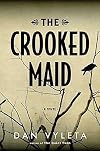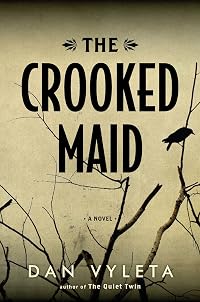
The Crooked Maid
by Dan Vyleta
On This Page
Description
Vienna, 1948. The war is over, and as the initial phase of de-Nazification winds down, the citizens of Vienna struggle to rebuild their lives amid the rubble. Anna Beer returns to the city she fled nine years earlier after discovering her husband's infidelity. She has come back to find him and, perhaps, to forgive him. Traveling on the same train from Switzerland is eighteen-year-old Robert Seidel, a schoolboy summoned home to his stepfather's sickbed and the secrets of his family's past. As show more Anna and Robert navigate an unrecognizable city, they cross paths with a war-widowed American journalist, a hunchbacked young servant girl, and a former POW whose primary purpose is to survive by any means--and to forget. Meanwhile, in the shells of burned-out houses and beneath the bombed-out ruins, a ghost of a man, his head wrapped in a red scarf, battles demons from his past and hides from a future deeply uncertain for all. show lessTags
Recommendations








Member Reviews
This story takes place in Vienna in 1948. The backdrop is the deNazification of Austria and the turmoil experienced by people trying to find a place for themselves after the war.
Robert is a young man searching for the answer to his father's suspicious fall from a top-floor window. Anna has come to Vienna to search for her husband - a man with secrets of his own - who has disappeared, They meet on the train to Vienna.
Although their paths rarely cross in the city, they are connected by the people that they encounter along the way - a war-widowed American journalist, a hunchbacked young servant girl, a former POW whose primary purpose is to survive by any means, a detective who yearns for human connection (love?) but accepts that it will show more never happen. On the simple face of it, this is a missing persons story; a murder mystery. But really, there is no simple face. These characters are neither good nor evil. There are no absolutes. They present themselves as one way to one, another way to others - all are true but none are completely so. It is an absolute pleasure to read this book and see how the author strips away layer after layer leaving us finally (perhaps) with a semblance of truth.
This novel was short listed for the Scotiabank Giller Prize in 2013. It lost to Lynn Coady's short story collection 'Hell Going' (another excellent book). I probably would have voted for 'The Crooked Maid'. show less
Robert is a young man searching for the answer to his father's suspicious fall from a top-floor window. Anna has come to Vienna to search for her husband - a man with secrets of his own - who has disappeared, They meet on the train to Vienna.
Although their paths rarely cross in the city, they are connected by the people that they encounter along the way - a war-widowed American journalist, a hunchbacked young servant girl, a former POW whose primary purpose is to survive by any means, a detective who yearns for human connection (love?) but accepts that it will show more never happen. On the simple face of it, this is a missing persons story; a murder mystery. But really, there is no simple face. These characters are neither good nor evil. There are no absolutes. They present themselves as one way to one, another way to others - all are true but none are completely so. It is an absolute pleasure to read this book and see how the author strips away layer after layer leaving us finally (perhaps) with a semblance of truth.
This novel was short listed for the Scotiabank Giller Prize in 2013. It lost to Lynn Coady's short story collection 'Hell Going' (another excellent book). I probably would have voted for 'The Crooked Maid'. show less
The Crooked Maid is well written and engaging. Set in post WWII Vienna, it has a cast of seemingly disparate characters who come together in a story filled with intrigue and secrets. No one protagonist stands out to empathize with. Instead, the reader is able to sit back and watch the story unfold as the players interact with one another. With the exception of Robert, there is a darkness pervading the various personalities, emphasized by the war-ruined city and the presence of crows. Like Vyleta's The Quiet Twin, the plot of The Crooked Maid is not simple and leaves the reader with much to think about.
This is a macabre but a fascinating story set in post WWII Vienna. This book was a 2013 Giller Prize finalist, and an odds-on favourite to take the coveted prize. It didn't win the prize, but it certainly is a book that belongs on the short list. This book's strength is it's remarkable sense of time and place. Vyleta describes post-war Vienna so well that it felt like I was there. The people and the city are all trying to recover from the war that took so much from them. It's almost post-apoplyptic as I'm sure a lot of German cities were after the allied invasion. Vyleta does a remarkable job with his characters too. As in so many books that I've been reading lately, I didn't really like any of the characters. They are certainly an show more imperfect lot in this book too, but I had to keep reading the book to see what happens to each of them. So many people that survived the War try to come back to their birthplace to try to determine what happened to their loved ones, their homes and their lives. There are so many pieces to try to find and a lot of the pieces are never found. Two very different people - Anna and Robert - are two of the people who are trying to come home to take up their lives, and they find that nothing is at all the same. Lost in a sea of uncertainty, they both turn to the strangest people for comfort and solace. The strangest of all is Eva, the crooked maid. Robert finds her at his familial home and is strangely drawn to this girl with the bent spine. Anna finds Karl, the Czech ex-soldier, and finds that she is inexplicably drawn to this huge and uncouth man. As events play out and as buried secrets come to light, Robert and Anna eventually are able to fill in some of the blanks from their previous lives. This is a dark and suspensful story that certainly kept me turning the pages. show less
this was my first time reading dan vyleta and i thought this book very strong. i do wish, now, that i had read his previous novel, The Quiet Twin, first. while each book can stand alone, characters recur. given the nature of my personality, i feel like i just did it wrong. heh!!
so, the crooked maid is many things - historical fiction, mystery, literary fiction, homage. vyleta's ticking a lot of boxes with this book. is it always awesome? no. but it's very good and vyleta can really write. his ability with description is pretty stellar.
in vyleta's acknowledgments, he says:
When I set out to write The Crooked Maid, I had contracted the Balzacian bug: I wanted to write a world, not a book. All the same, the world must be assembled piece by show more piece. The train ride came to me early, as did the theme of patricide, both in conscious homage to Dostoevsky, whose books I love. Other, less conscious, Dostoevskianisms have crept in, further proof that books are dangerous things: you read them and they impose on you not just their words but a whole sensibility; not incidents but a mode of seeing reality.
vyleta also notes dickens as another influence, because of dickens' “...daring in stacking incident upon incident (and coincidence upon coincidence); his ability to connect characters high and low through crime, family scandal, and the brittle threads of chance…”
vyleta is certainly not comparing himself (or his novel) to balzac, dostoevsky or dickens. he is only giving recognition to some heavy-weight writers with distinct styles who have impacted his writing. within 'the crooked maid' chekhov's gun makes an appearance, so that was cool too!
so, given all of these mentions, it's not surprising that, in 'the crooked maid', we have a story about parricide, making use of coincidence, with a side of social commentary. it's all a bit meta, but i enjoy that. (and usually i am not a fan of coincidence…at all. here, vyleta just makes it work in a way that didn't have me rolling my eyes while mumbling 'cop-out!'.)
i am not being terribly coherent here, so apologies for that. there's a lot going on in this novel - but it's not overwhelming or confusing. i really enjoyed unravelling it all and felt as thought i was in very good hands. show less
so, the crooked maid is many things - historical fiction, mystery, literary fiction, homage. vyleta's ticking a lot of boxes with this book. is it always awesome? no. but it's very good and vyleta can really write. his ability with description is pretty stellar.
in vyleta's acknowledgments, he says:
When I set out to write The Crooked Maid, I had contracted the Balzacian bug: I wanted to write a world, not a book. All the same, the world must be assembled piece by show more piece. The train ride came to me early, as did the theme of patricide, both in conscious homage to Dostoevsky, whose books I love. Other, less conscious, Dostoevskianisms have crept in, further proof that books are dangerous things: you read them and they impose on you not just their words but a whole sensibility; not incidents but a mode of seeing reality.
vyleta also notes dickens as another influence, because of dickens' “...daring in stacking incident upon incident (and coincidence upon coincidence); his ability to connect characters high and low through crime, family scandal, and the brittle threads of chance…”
vyleta is certainly not comparing himself (or his novel) to balzac, dostoevsky or dickens. he is only giving recognition to some heavy-weight writers with distinct styles who have impacted his writing. within 'the crooked maid' chekhov's gun makes an appearance, so that was cool too!
so, given all of these mentions, it's not surprising that, in 'the crooked maid', we have a story about parricide, making use of coincidence, with a side of social commentary. it's all a bit meta, but i enjoy that. (and usually i am not a fan of coincidence…at all. here, vyleta just makes it work in a way that didn't have me rolling my eyes while mumbling 'cop-out!'.)
i am not being terribly coherent here, so apologies for that. there's a lot going on in this novel - but it's not overwhelming or confusing. i really enjoyed unravelling it all and felt as thought i was in very good hands. show less
There are times I will pick up a book, read it, and then sit for a long time afterward, thinking about what I want to say about it. It's now December and I am still thinking about The Crooked Maid over three months after I finishing reading it. I'm extremely torn on what I want to say, because - as so often happens with literary fiction, what I hoped for and what I got were two very different things. The Crooked Maid deals with the time in Germany spent after the end of WWII - during the de-Nazification of Germany. It's such an unusual setting and I was looking forward to reading about it, but what I got in Vyleta's story was something a bit more confusing.
Read the rest of this review at The Lost Entwife on Dec. 6, 2013.
Read the rest of this review at The Lost Entwife on Dec. 6, 2013.
The thing that drives many of us to read literature is the fact is that we know humans are not just good or bad. There are complex levels in each of us depending on the situation we encounter and our station in life, etc. etc. Literature deals with the human condition and when a good writer explores the different hues of characters and leaves a reader wondering which of their characters is really moral or immoral, well, that makes for a fantastic read. And that is what Dan Vyleta has done in The Crooked Maid.
my complete review
my complete review
Ratings
Members
- Recently Added By
Published Reviews
ThingScore 100
While reading Dan Vyleta’s third novel, The Crooked Maid, I thought of Helma Sanders-Brahms’s Germany, Pale Mother. The 1980 film recounts the effects of Nazism and the Second World War on her parents, Hans and Lene, as stand-ins for the German public at large. ....The Crooked Maid doesn’t read as a conventional thriller. Instead, Vyleta crafts a subtle Gothic unease. For example, he show more describes bodies as being cut in half, visually, by picture frames, collars and trap doors. The novel is a taut psychological horror story, with shades of Shirley Jackson.
The Crooked Maid – like Germany, Pale Mother – examines identity in the aftermath of large-scale, national trauma...The Crooked Maid shows the possibility of horror in us all. show less
The Crooked Maid – like Germany, Pale Mother – examines identity in the aftermath of large-scale, national trauma...The Crooked Maid shows the possibility of horror in us all. show less
added by vancouverdeb
Vyleta’s The Crooked Maid is an exploration of morality, with the characters weaving complex relationships that push the boundaries of what is acceptable. There’s a grey zone after the war where everything has changed but social norms have yet to catch up. There’s no better time to explore good and evil, right and wrong, than when so many of our assumptions have been torn apart. ...There show more is plenty of literary resonance in the book, too, adding to the rich feast of a read his characters and plot have already given.... show less
added by vancouverdeb
Then there’s Dan Vyleta’s mesmerizing second novel, The Quiet Twin, a spider’s web of plot, atmosphere, and character. This finalist for the Rogers Writers’ Trust Fiction Prize reads like Rear Window jazzed up with Nazi-Euro-paranoia and more varied and vivid characters. It has all the tension, clammy closeness and voyeuristic pleasure of the Hitchcock thriller, but with added show more political and philosophical reverb....Despite the dark matters and moral complexity, the dialogue is lively, and there’s a sense of wit and playfulness to Vyleta’s prose style — he’s one of those writers who evidently received Italo Calvino’s posthumous Memos, as quickness and lightness abound (in addition to exactitude, visibility and multiplicity). show less
added by vancouverdeb
Author Information

6 Works 1,165 Members
Awards and Honors
Common Knowledge
- Canonical title
- The Crooked Maid
- Original title
- The Crooked Maid
- Original publication date
- 2013-07-29
- People/Characters
- Anna Beer; Robert Seidel
- Important places
- Vienna, Austria
- Important events
- post WW11
- Epigraph
- I am afraid of houses in which one grows comfortable and allows oneself
to be taken in by the banal truth that life goes on and time heals all wounds.
-Heinrich Boll, Billiards at Half-Past Nine
In answering them he said, among other things, that he had indeed been away from Russia for a long time, more than four years, that he had been sent abroad becaise of illness,...Listening to him, the swarthy man grinned sever... (show all)al times; he laughed particularly when, to his question,:"And did they cure you?" the blond man answered:" no, they didn't."
- Fyodor Dostoevsky, The Idiot , trans R. Pevear and L. Volokhonsky - Dedication
- In memory of my father, Michal. This is a story about angry sons, written by a grateful one.
- First words
- The train was running late.
- Last words
- (Click to show. Warning: May contain spoilers.)There could be little doubt that he was mad.
- Original language
- English
Classifications
Statistics
- Members
- 144
- Popularity
- 226,678
- Reviews
- 6
- Rating
- (3.61)
- Languages
- English, French
- Media
- Paper, Audiobook, Ebook
- ISBNs
- 17
- ASINs
- 3