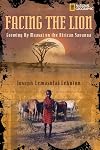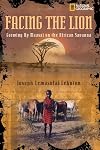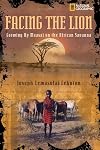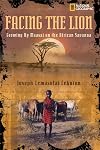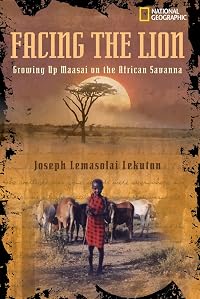
Facing the Lion: Growing Up Maasai on the African Savanna
by Joseph Lemasolai Lekuton
On This Page
Description
A member of the Masai people describes his life as he grew up in a northern Kenya village, travelled to America to attend college, and became an elementary school teacher in Virginia.Tags
Recommendations








Member Recommendations
_Zoe_ A different, but equally positive, story of growing up in Africa
20

Member Reviews
This is the autobiography of a Maasai man with a Western education. It was written for children, and focuses on Lekuton's childhood experiences. He comes from a family of nomadic cow-herders, but Kenyan law required each family to send one child to elementary school. Lekuton was the one chosen, and he ended up enjoying his studies and excelling at school. Throughout the book, he emphasizes the tensions involved in belonging to two completely separate worlds. He wants to preserve his Maasai heritage while at the same time taking advantage of the opportunities afforded by education, and I found that his situation was incredibly thought-provoking. It's generally taken as a foregone conclusion that education is a good thing that should be show more available to as many people as possible, but in this story it wasn't so clear-cut. The Maasai are shown as a people capable of surviving on their own, with their own culture and way of life, and I found it a bit disturbing that they were forced to send one of their children off to school run by Christian missionaries, where they were taught Christian values, wore Western-style school uniforms, and were baptized and given Christian names. Lekuton himself fully appreciates his education and the doors that it opened to him, but I still find myself wondering about the changes that are being imposed on traditional cultures. This is a good thing, since I love a book that makes me think.
I was also fascinated by the descriptions of Maasai culture itself, something that I had previously known very little about. I only wish that this book had been longer and more detailed--I know, it's for children, but still. This book has left me intrigued, and I'll probably be seeking out more books about the Maasai. I'd strongly recommend this one to just about anyone; the one good thing about its length is that there's no excuse not to read it! show less
I was also fascinated by the descriptions of Maasai culture itself, something that I had previously known very little about. I only wish that this book had been longer and more detailed--I know, it's for children, but still. This book has left me intrigued, and I'll probably be seeking out more books about the Maasai. I'd strongly recommend this one to just about anyone; the one good thing about its length is that there's no excuse not to read it! show less
This is, simply, the story of a boy who grew up as a poor "nomadic kid" in northern Kenya. The Kenyan government required even the nomadic tribal people to send one child from each family to school, and in his family it ended being Joseph who went. He tells of the culture shock he suffered in his own country upon coming into contact with students from other parts of the country, especially the wealthy students from the city. He eventually came to the United States for college and stayed to teach at a private school in Virginia. Each summer, he returns to his home in Kenya, taking groups of American students with him.
Several people have commented on the fact that, even as a child, he was expected to walk many miles - sometimes for days show more - between school and home. And the fact that he was forbidden to wear his traditional tribal clothing while at school - forced, instead, into a Western school uniform and given a Western name. But his familiarity and comfort in both cultures has enabled him to bridge a gap between low status African tribe and educated America. (Even in Kenya, his tribe was of low status.) His main goal seems to be to encourage people to accept others for who they are, not who we expect them to be based on their clothing or appearance or accent. I loved the anecdote in the epilogue about his contact with the American tourists while in traditional dress at home for the summer. In fact, I loved the entire book. It is short and doesn't take long to read - took me only about an hour - and I found myself wishing there was more. Highly recommended. show less
Several people have commented on the fact that, even as a child, he was expected to walk many miles - sometimes for days show more - between school and home. And the fact that he was forbidden to wear his traditional tribal clothing while at school - forced, instead, into a Western school uniform and given a Western name. But his familiarity and comfort in both cultures has enabled him to bridge a gap between low status African tribe and educated America. (Even in Kenya, his tribe was of low status.) His main goal seems to be to encourage people to accept others for who they are, not who we expect them to be based on their clothing or appearance or accent. I loved the anecdote in the epilogue about his contact with the American tourists while in traditional dress at home for the summer. In fact, I loved the entire book. It is short and doesn't take long to read - took me only about an hour - and I found myself wishing there was more. Highly recommended. show less
Facing the Lion: Growing Up Maasai on the African Savanna (2003) by Joseph Lemasolai Lekuton is a memoir written by a man who grew up in a nomadic herding community living in the traditional ways in Kenya. By fate he becomes the child who gets to go to the local mission school and finds that he likes education and eventually dedicates his life to reconciling these two different lifestyles. There are a lot of fascinating episodes including a chapter on a ceremony where he and several other young men are circumcised. Lekuton is excellent at describing the signifigance of this ceremony to him and his culture in a way that gets a reader like me past an initial revulsion.
The book also offers many details of Maasai life like a pinching man show more who keeps the children in line, the way cows are cared for and valued, and the roles of men and women in society. Lekuton's school life is equally detailed with humorous episodes about him playing soccer before the President of Kenya and going to America for the first time to study at (brrr) St. Lawrence University. At the time Lekuton published this book he was teaching at school in Virginia and spending the rest of the year with his tribe in Kenya. As of 2007, Lekuton is serving in the Kenyan Parliament.
I first learned about this book from an Unshelved comic. It is written with children in mind but definitely entertaining and informative for an adult as well. show less
The book also offers many details of Maasai life like a pinching man show more who keeps the children in line, the way cows are cared for and valued, and the roles of men and women in society. Lekuton's school life is equally detailed with humorous episodes about him playing soccer before the President of Kenya and going to America for the first time to study at (brrr) St. Lawrence University. At the time Lekuton published this book he was teaching at school in Virginia and spending the rest of the year with his tribe in Kenya. As of 2007, Lekuton is serving in the Kenyan Parliament.
I first learned about this book from an Unshelved comic. It is written with children in mind but definitely entertaining and informative for an adult as well. show less
Joseph Lemasolai Lekuton is from Northern Kenya. He was born into the Ariaal subgroup of the Maasai, and lived a nomadic lifestyle. This book tells his story from birth, where he immediately began his life as a nomad, till completing university in the U.S.A.
A fascinating story filled with lots of insight into the Maasai culture. It was written with a younger reader in mind, and is truly a very easy read. Joseph will not win any literary awards for this book, or at least should not, but he is adept at story telling. I particularly enjoyed his story of meeting President Daniel Arap Moi.
This is the first book about Kenya I have read, despite living here for five years now. Perhaps more will be in my future reading list.
My biggest complaint show more is that he did not challenge the deficiencies of his culture. I wish he would have talked more about the inequality that exist between the sexes. He did mention that girls often marry men 15 years older than themselves. However he failed to mention that those girls are very often children when they marry those older men.
A good book for the kids, as long as some follow up is added on gender issues, and the rights of children. show less
A fascinating story filled with lots of insight into the Maasai culture. It was written with a younger reader in mind, and is truly a very easy read. Joseph will not win any literary awards for this book, or at least should not, but he is adept at story telling. I particularly enjoyed his story of meeting President Daniel Arap Moi.
This is the first book about Kenya I have read, despite living here for five years now. Perhaps more will be in my future reading list.
My biggest complaint show more is that he did not challenge the deficiencies of his culture. I wish he would have talked more about the inequality that exist between the sexes. He did mention that girls often marry men 15 years older than themselves. However he failed to mention that those girls are very often children when they marry those older men.
A good book for the kids, as long as some follow up is added on gender issues, and the rights of children. show less
Joseph recounts his childhood as a nomadic Maasai boy who tends the family cows and is interested in education. His education and character allow him to become an individual who can bridge two cultural roles, the Kenyan tribal member and teacher in the United States. Readers will enjoy his detailed descriptions of life in the African Savanna.
Facing The Lion is a slim volume of 123 pages and is easily read in an evening. Joseph Lemasolai Lekuton grew up in a Maasai tribe in northern Kenya. He was chosen as his family's token child to attend school. His tenacity, intelligence, and spirit brought him contact with Daniel Arap Moi and opportunities for further education. In Facing the Lion, he tells some wonderful stories of his childhood and time as a student in America which give us a glimpse of how life in a Maasai nomadic group works and what is both difficult and wonderful about that life.
This would be an excellent addition to any elementary or middle school library.
This would be an excellent addition to any elementary or middle school library.
This book is about a 6 year old boy named Joseph Lemasolai Lekuton who is living in a dry village in Kenya. He tells about his life about facing the lion and the circumcision. There was a problem because Lekuton had to go to school but didn't have enough money to send to school. But after Joseph met the president of Kenya he goes to school in America and becomes a teacher and earn money. I like the part when Joseph has this circumcision because he tells how he felt, and what is happening and also he doesn't tell but shows that he is becoming a real man. When I read this part I thought that in Kenya it isn't easy to become a real man.
Members
- Recently Added By
Lists

Non-Fiction Worth Reading
1,016 works; 262 members

A Child's Book Tour of East Africa ::: Ethiopia, Kenya, Sudan, Uganda
68 works; 4 members

Unshelved Book Clubs
579 works; 5 members
Author Information
1 Work 512 Members
Joseph Lemasolai Lekuton grew up in a nomadic Maasai village in northern Kenya and came to the United States in his late teens to pursue his education
Awards and Honors
Common Knowledge
- Dedication
- These words are dedicated to my mother, Nkasiko. Although she is unable to read or write, she gave me a priceless education. And to my mothers in America, Bea, Ricki, Jackie, Anne, Betty, and Kathleen, who reflected and reinf... (show all)orced my mother's philosophy of life. And to all the nomadic boys and girls who have similar stories. My story is theirs; I just had the chance to tell mine.
- Quotations
- My aim was to make an impression. When those tourists got back home and looked at their pictures, maybe they would remember that someone might look ignorant and primitive, but that is no reason to try to take advantage of him... (show all). (p. 123)
- Last words
- (Click to show. Warning: May contain spoilers.)It's been very good.
(Click to show. Warning: May contain spoilers.)As Joseph says, "It has been good." (Afterword)
Classifications
Statistics
- Members
- 511
- Popularity
- 58,775
- Reviews
- 16
- Rating
- (3.94)
- Languages
- English, German
- Media
- Paper, Audiobook, Ebook
- ISBNs
- 13
- ASINs
- 2