My French Whore
by Gene Wilder
On This Page
Description
The beloved actor and screenwriter's first novel, set during World War I, delicately and elegantly explores a most unusual romance. It's almost the end of the war and Paul Peachy, a young railway employee and amateur actor in Milwaukee, realizes his marriage is one-sided. He enlists, and ships off to France. Peachy instantly realizes how out of his depth he is--and never more so than when he is captured. Risking everything, Peachy--who as a child of immigrants speaks German--makes the show more reckless decision to impersonate one of the enemy's most famous spies. As the urbane and accomplished spy Harry Stroller, Peachy has access to a world he could never have known existed--a world of sumptuous living, world-weary men, and available women. But when one of those women, Annie, a young, beautiful, and wary courtesan, turns out to be more than she seems, Peachy's life is transformed forever. show lessTags
Recommendations









Member Reviews
Written in a deceptively simple style, "My French Whore: a love story" is a profound story of love in the midst of war. Private Peachy enlisted to escape a stale life in Milwaukee. But a World War One battlefield predictably proves not to be the best place to start a new life. Shocked into an act of cowardice, he is immediately captured. Yet he surprises himself with daring born of desperation and some fortuitous inside information. He convinces his captors that he is a famous spy returning home. His fluent German and quick wit enable him to enter the privileged lifestyle of "Colonel Harry Stroller." Always alert for the chance to escape, he is haunted by shame and memories of battle. Then serendipity brings into this precarious show more balancing act a French prostitute and an American prisoner, and Peachy surprises himself again.
These are very human characters dealing with powerful themes: the realities of war, the shame of cowardice, revenge, unexpected courage, and of course, love. The perspective is personal but never maudlin. This is a quick read that leaves a lasting impression. show less
These are very human characters dealing with powerful themes: the realities of war, the shame of cowardice, revenge, unexpected courage, and of course, love. The perspective is personal but never maudlin. This is a quick read that leaves a lasting impression. show less
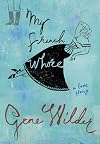
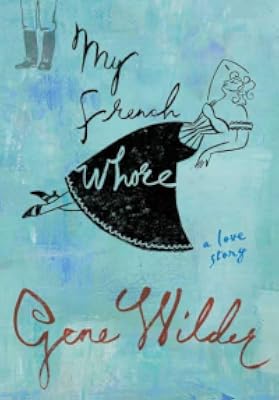
My French Whore was a used bookstore impulse buy. as much as i hate to admit it, book covers really do have an impact on whether i pick up books i don't know anything about and the cover of this one brought me in. as soon as i realized it was by Gene Wilder i had to buy it.
i was not disappointed in the least. this was a beautiful (albeit brief) story and the imagery was perfect. Wilder manages to create the perfect tone and pacing in a story that is only 192 pages in a small format book. that in itself is amazing. the characters, however brief they are with us, are instantly clear and fully realized.
my only complaint was that is too short. i want more. not because the story isn't complete, it certainly is, but... i could have read 1000 show more pages of Wilder's prose and probably still have wanted more. show less
i was not disappointed in the least. this was a beautiful (albeit brief) story and the imagery was perfect. Wilder manages to create the perfect tone and pacing in a story that is only 192 pages in a small format book. that in itself is amazing. the characters, however brief they are with us, are instantly clear and fully realized.
my only complaint was that is too short. i want more. not because the story isn't complete, it certainly is, but... i could have read 1000 show more pages of Wilder's prose and probably still have wanted more. show less
I was really impressed with this short and sweet of novel of WWI ad hoc espionage and star-crossed love. It seemed to quietly come out from one of my favorite actors with little fanfare and I feel it a bit of a triumph; nice twists and I hope they make it into a movie as it would have a better plot than many I have seen.
Let’s face it. There is only one reason this book was published – the author’s name. Now, if you are saying that about Steinbeck, or Salinger, or Silverberg, or several others, then it makes sense. If you are doing it to document the completeness of a good author’s body of work, then you have a good reason for publication. Even if it is a new work by that author (albeit uneven) then there are reasons to move forward. If on the other hand, you say that about Krantz, or Collins, or Dr. Phil, then you are only continuing to foist the work of people-whose-only-ability-is-to-put-words-on-paper on a more-than-willing-to-accept-it world. (Let us pause – the world does accept this work. [Silent tears fall.] Let us move on.) Somewhat show more less heinous is the publishing of books because the author is famous. Now, I am not talking about books that are truly just the thoughts of the author (in particular, books by comedians – Seinfeld, Paula Poundstone, Bill Cosby, even one by Gene Wilder). Those are a niche served well by the practice. (Come to think of it, Jackie Collins fills a niche that is served well by the practice – I guess I just don’t believe that niche should exist; that people should be a little more discerning. [Sorry - honest, I’ll walk away from this pulpit.]) I am referring to famous people trying to actually be authors. Publishers need to be more discerning – looking for quality, rather than a name. This is not to say that famous people do not have the ability to write. For example, I have heard (though have not actually read the books) that Carrie Fisher and Fannie Flagg do a pretty good job. And, one would hope, this is the work of discerning publishers and editors working with what they have perceived to be talented authors to build a quality product.
Mr. Wilder needs a good editor, a good publisher, a good advisor, or a mixture of all three. Then this book would be made into something worth reading, or he would be advised to stick with his strengths (of which writing fiction is not one). It is not that there is inherently anything wrong with the writing. It is that there is nothing in it worth praise. The narrative moves along, the story develops, and we just don’t care. The end is telegraphed from afar, and it is an ending that just – well, no other way to put it – it just ends. The only plausible excuse is that this is his first foray into fiction. But I stand by the opening sentence of this paragraph because, if any of those had been evident, then this book would not be out amongst us. However, a name seems to make the unnecessary happen. The good news is that this brief piece (more novelette than novel) didn’t take up much of my time. The bad news is that it did, indeed, take some of my time.
(Final aside. “Why did you read this book in the first place?” My wife had heard interesting things about it. After reading it she indicated she would be interested in my take. I read through it and we compared notes. We agreed.) show less
Mr. Wilder needs a good editor, a good publisher, a good advisor, or a mixture of all three. Then this book would be made into something worth reading, or he would be advised to stick with his strengths (of which writing fiction is not one). It is not that there is inherently anything wrong with the writing. It is that there is nothing in it worth praise. The narrative moves along, the story develops, and we just don’t care. The end is telegraphed from afar, and it is an ending that just – well, no other way to put it – it just ends. The only plausible excuse is that this is his first foray into fiction. But I stand by the opening sentence of this paragraph because, if any of those had been evident, then this book would not be out amongst us. However, a name seems to make the unnecessary happen. The good news is that this brief piece (more novelette than novel) didn’t take up much of my time. The bad news is that it did, indeed, take some of my time.
(Final aside. “Why did you read this book in the first place?” My wife had heard interesting things about it. After reading it she indicated she would be interested in my take. I read through it and we compared notes. We agreed.) show less
Wilder’s story, set during WWI, has several very nice light touches, which I also associate with his movies - sweetness and grace, human dignity under difficult circumstances, and humor. It is rather simple, but it’s hard to imagine anyone hating it.
I so wanted this story to have a different ending even though I knew it wouldn't.
It's a small, simple story told with grace.
It's a small, simple story told with grace.
-- MY FRENCH WHORE by Gene Wilder is a bittersweet love story set in WWII. At end of novel Wilder credits Ernest Hemingway for spare writing style, but the twists & turns are pure Wilder. Despite the subject of protagonist's affections MY FRENCH WHORE isn't bawdy. It sparkles like the protagonist's favorite wine. Wilder is a genius. --
Members
- Recently Added By
Lists

Authors from the United States
245 works; 3 members
Author Information

32+ Works 2,155 Members
Gene Wilder was born Jerome Silberman in Milwaukee, Wisconsin on June 11, 1933. He studied theater at the University of Iowa, at the Bristol Old Vic Theater School in England, and at the HB Studio in New York. He served a two-year Army stint as an aide in the psychiatric unit of the Valley Forge Army Hospital in Pennsylvania. After his discharge, show more he won a coveted spot at the Actors Studio. He became a stage actor, screenwriter, novelist, and the director of four movies in which he starred. His first major role on Broadway was the chaplain in a 1963 production of Bertolt Brecht's Mother Courage and Her Children. In 1967, he made his movie debut as an undertaker in Bonnie and Clyde. He went on to appear in numerous movies including The Producers; Willy Wonka and the Chocolate Factory; Everything You Always Wanted to Know About Sex but Were Afraid to Ask; Blazing Saddles; Young Frankenstein; Silver Streak; Stir Crazy; See No Evil, Hear No Evil; Another You; and Hanky Panky. In 1999, he was a writer for two TV movies in which he starred Murder in a Small Town and The Lady in Question. In 2003, he won an Emmy for his guest starring role in an episode of Will and Grace. He retired from acting soon afterward. His third wife, actress Gilda Radner, died of ovarian cancer in 1989. In her memory, he co- founded an ovarian cancer detection center in her name, in Los Angeles, and Gilda's Club, a network of support centers for women with cancer. He also contributed to a book entitled Gilda's Disease with Dr. M. Steven Piver. His memoir, Kiss Me Like a Stranger: My Search for Love and Art, was published in 2005. His first novel, My French Whore, was published in 2007. His other books included The Woman Who Wouldn't, Something to Remember You By, and What Is This Thing Called Love? He died from complications of Alzheimer's disease on August 29, 2016 at the age of 83. (Bowker Author Biography) show less
Common Knowledge
- Original publication date
- 2007-03
- People/Characters
- Paul Peachy; Harry Stroller; Annie Breton; Elsie Peachy; Wally Tsartsarlapidith; Captain Harrington
- Important places
- Germany; Milwaukee, Wisconsin, USA
- Important events
- World War I
- Dedication
- To Karen Wilder, the heart and part of the personality of any love story I write
&
To Elizabeth Beier, my editor, who always seems to know when and how and what to say - First words
- I used to be a conductor on the train that ran back and forth from Milwaukee to Chicago.
- Last words
- (Click to show. Warning: May contain spoilers.)"With all my heart I hope that it reaches you. Sincerely, Annie Breton"
Classifications
Statistics
- Members
- 277
- Popularity
- 116,722
- Reviews
- 18
- Rating
- (3.57)
- Languages
- English, Italian
- Media
- Paper, Audiobook, Ebook
- ISBNs
- 10
- ASINs
- 8