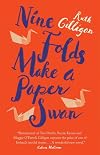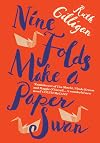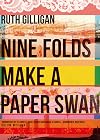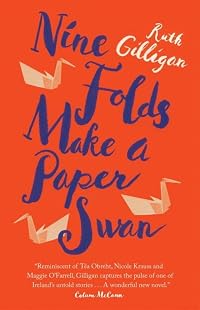
Nine Folds Make a Paper Swan
by Ruth Gilligan
On This Page
Description
"At the start of the twentieth century, a young girl and her family emigrate from Lithuania in search of a better life in America, only to land on the Emerald Isle instead. In 1958, a mute Jewish boy locked away in a mental institution outside of Dublin forms an unlikely friendship with a man consumed by the story of the love he lost nearly two decades earlier. And in present-day London, an Irish journalist is forced to confront her conflicting notions of identity and family when her Jewish show more boyfriend asks her to make a true leap of faith. These three arcs, which span generations and intertwine in revelatory ways, come together to tell the haunting story of Ireland's all-but-forgotten Jewish community."--Amazon.com. show lessTags
Recommendations





Member Reviews
This book made me ache. It's a glimpse into the Jewish community of Ireland throughout the twentieth century, told through three different characters in different times. Ruth is a Lithuanian immigrant at the turn of the century, accidentally calling Cork, rather than New York, her home. Shem is a mid-century teenager who has lost his voice and is locked away in one of Ireland's multitude of homes for the mentally ill. And finally, Aisling, a twenty-first century London resident dating a Jewish man who eventually tells her he can't imagine marrying a gentile woman. Gradually, their stories are woven together, an intricate tapestry weaving the past, present, and future of Irish Jews into a single narrative. This book was deeply moving and show more I highly recommend it.
Definite trigger warning for antisemtism, antisemetic slurs, ableism, and Ireland's frankly horrifying mental health institutions in the 20th century. Shem's story line bears the brunt of these problems; a mute Jewish boy in a Catholic institution that still views mental illness as bedevilment is never going to be a pleasant reading experience. show less
Definite trigger warning for antisemtism, antisemetic slurs, ableism, and Ireland's frankly horrifying mental health institutions in the 20th century. Shem's story line bears the brunt of these problems; a mute Jewish boy in a Catholic institution that still views mental illness as bedevilment is never going to be a pleasant reading experience. show less
This was an interesting merger of three intertwining stories about Jewish characters who live in Ireland. In the first, a young girl believes her family is emigrating to America, but they end up in Ireland. The second is about a teenager who has been committed to an asylum because he has suddenly become mute. We find out later what happened to cause this, but it's a family secret that he refuses to reveal to the doctors and therapists. In the third story, a young Irish journalist has decided to convert to Judaism so that she can marry her boyfriend. All of them face challenges in confronting the expectations of family, religion, and Irish society. I found the book interesting but kept thinking about Roddy Doyle's wonderful collection of show more stories about immigrants to Ireland, [The Deportees and Other Stories], which was a 5-star read for me. show less
Three stories that tell of a century of Jewish experiences in Ireland from different viewpoints. One a woman from Ireland whose boyfriend would like her to convert; the other a girl whose family accidently end up in Cork rather than New York and the last a Jewish man whose selective mutism has kept him in a mental institution for decades because of something he can't tell anyone. There is also a story of love and life and it's an interesting set of stories, that interweave in ways I wasn't expecting.
It took me a while to get into it and I'm not fond of the chapters cycling between eras way of telling a story but by the end I was very curious about it all.
It took me a while to get into it and I'm not fond of the chapters cycling between eras way of telling a story but by the end I was very curious about it all.
The American debut for Irish author and academic Ruth Gilligan. An interesting read, each chapter, written like a short story, intertwines to illuminate a relatively unknown bit of Irish-Jewish history. I didn't find it cohesive enough, my first impulse on finishing was to reread in light of the conclusions of the various streams. Lovely language, but too many bizarre lives for her characters.
The writing is very clever. There are five parts to the book, each with the English translation of the Jewish names of the first five books of the Bible: In the beginning, Names, And he called, In the Desert, and Words.
The connections among the three stories are gradually revealed; one link is only shown at the end. Going back to read the very beginning is useful. But two of the stories are frustratingly sad: If only Shem had talked to his rabbi or his mother about his problem; if only Ruth had introduced herself; if only . . . . If only I felt more sympathy for or closer to the characters.
The connections among the three stories are gradually revealed; one link is only shown at the end. Going back to read the very beginning is useful. But two of the stories are frustratingly sad: If only Shem had talked to his rabbi or his mother about his problem; if only Ruth had introduced herself; if only . . . . If only I felt more sympathy for or closer to the characters.
At the turn of the century, when Ruth was eight, her mother, father and older sister emigrated from Lithuania, heading for America and hope of am better life. After a sea journey of many days they arrive, knowing little English, they think they hear the crew yelling New York, but alas they are saying Cork, and instead of America they have arrived in Ireland. In the fifties a young man is institutionalized after he quit speaking at his Bar Mitzvah, and present day a woman's Jewish boyfriend asks her to convert. So three different threads, an though within two long we can see where the second story of the young man intersects with the story of Ruth, for the longest time I couldn't see where the third story did, or why it was even show more necessary. Brilliant though, when it is revealed, and in fact is rather startling and sad.
The Jewish settlements in Ireland, which I freely admit to knowing nothing about, most making a life in a place where they hadn't intended to be, many wanting to leave but for the present stuck. Ruth though, and I loved her strength and determination, makes the most of what is given her, wanting to make this place her home. We learn a little of the struggles of these early Jews, the discrimination they faced while trying to hold on to their own identity and a little Irish history as well. Her story was by far my favorite, but the young Jewish man in the institution and the legless man who is his roommate, whose story he writes down, was well done as well.
Taken in totality this was an amazing book, told in a clear and concise voice, it leaves an impression. I very much enjoyed this novel and learned some history as well. So glad I decided to try this one and another author to watch for, see what she does next.
ARC from Netgalley. show less
The Jewish settlements in Ireland, which I freely admit to knowing nothing about, most making a life in a place where they hadn't intended to be, many wanting to leave but for the present stuck. Ruth though, and I loved her strength and determination, makes the most of what is given her, wanting to make this place her home. We learn a little of the struggles of these early Jews, the discrimination they faced while trying to hold on to their own identity and a little Irish history as well. Her story was by far my favorite, but the young Jewish man in the institution and the legless man who is his roommate, whose story he writes down, was well done as well.
Taken in totality this was an amazing book, told in a clear and concise voice, it leaves an impression. I very much enjoyed this novel and learned some history as well. So glad I decided to try this one and another author to watch for, see what she does next.
ARC from Netgalley. show less
I wish the book had been more focused on the similarities between Irish and Jewish storytelling as the conversion storylines never really rang true to this reader and son of Irish Jews. Told in three time frames that never quite cohere to make a whole book, there was still much to like here.
Members
- Recently Added By
Published Reviews
ThingScore 75
The ambitions of the novel mean that elements of the story are laboured by self-consciousness, such as a scene between Moshe and Lady Gregory, or the inclusion of footnotes in a book that otherwise forgoes formal experimentation. But Nine Folds is rich in plot, and full of characters whose stories have been neglected by an Irish literature that, for all its vibrancy and talent, has focused on show more the white Catholic (and often rural) experience. The novel looks to those on the margins of that brand of Irishness, while tackling serious issues such as displacement, belonging, cultural stereotyping and antisemitism with a light touch. At a moment when we are preoccupied with migration, it offers a sympathetic perspective on the difficulties of adjusting to life in a new place over two generations. show less
added by vancouverdeb
Lists

Top Five Books of 2017
757 works; 231 members

Kirkus Starred Fiction Reviews of Books Published in 2017
412 works; 7 members
Author Information

6 Works 281 Members
Awards and Honors
Awards
Notable Lists
Common Knowledge
- Canonical title
- Nine Folds Make a Paper Swan
- Original publication date
- 2016
- People/Characters
- Ruth Greenberg; Esther Greenberg; Austeja Greenberg; Moshe Greenberg; Shem Sweeney; Aisling Creedon (show all 21); Alfred "Alf" Huff; Noah Geller; Linda Geller; Robert Geller; Niamh; Maire Doyle Sweeney (Ima); Joseph Sweeney (Abba); Sean Creedon; Geraldine Creedon; Mr. Creedon; Harry; Gerry Doyle; Bethel Solomons; Sister Monica; Sister Frances
- Important places
- Lithuania; County Cork, Ireland; Dublin, Ireland; London, England, UK; Montague House; Palestine (show all 9); Thirty-three Glenvar Road; Clanbrassil Street; Gleann na nGealt, County Kerry, Ireland
- Epigraph
- There are those of us who haven't yet told our stories, or refuse to tell them, and so we become them: we hide away inside the memory until we can no longer stand the shell or the shock---perhaps that's me, or perhaps I must ... (show all)tell it before it's forgotten or becomes, like everything else, something else.
---COLUM McCANN, Zoli - Dedication
- For Alex, forever,
and
For Debbie, where the story first began - First words
- In the bloodless light of the foyer she feels herself nothing but a stranger.
- Quotations
- The silences a family is made up of, to try and protect one another; the silences that shove us apart.
And she remembers then the word that she was looking for---the one that has been missing all along. A lamentation. A lamentation of swans. And she realizes that they must be the saddest birds in the world.
"What about a man who plays the fiddle, but as he grows older a string breaks every year so he adjusts his songs accordingly, until he finally has no strings left at all so just plays a jig of silence?"
Just as the snow begins to come, covering the car park, covering Dublin, the flakes like plumage too. A whole flock of frozen swans falling from the sky. - Last words
- (Click to show. Warning: May contain spoilers.)Because he had a friend once, in another life, who told him that it was better to be buried this way, just to be sure.
- Blurbers
- McCann, Colum; Baume, Sara; O'Connor, Joseph; McKeon, Belinda
Classifications
Statistics
- Members
- 101
- Popularity
- 319,996
- Reviews
- 7
- Rating
- (3.45)
- Languages
- English
- Media
- Paper, Ebook
- ISBNs
- 7
- ASINs
- 1