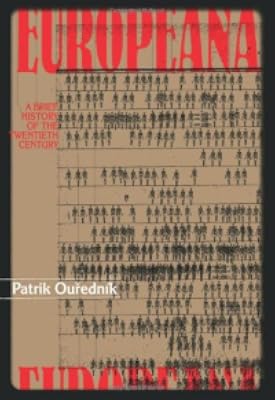
Europeana: A Brief History of the Twentieth Century
by Patrik Ouředník, Gerald Turner
On This Page
Description
Tracing the Great War through the Millennium Bug, 1999 through 1900, Dadaism through Scientology through Sierra Leonean bicycle riding and back, award-winning Czech author Patrik Ourednik explores the horror and absurdity of the twentieth century in an explosive deconstruction of historical memory. Europeana: A Brief History of the Twentieth Century opens on the beaches of Normandy in 1944, comparing the heights of different forces' soldiers and considering how tall, long, or good at show more fertilizing fields the men's bodies will be. Probing the depths of humanity and inhumanity, this is an account of history as it has never been told: "engaging, even frightening." At once recreating and uncreating the twentieth century, Ourednik explores the connections across the decades between the disparate figures, events, and politics we thought we knew. Patrik Ourednik's Europeana merits the author's reputation as a giant of post-1989 Czech literature. Now translated into 33 languages, the book is a masterwork of cubism, a polymorphic monologue of statistics and movements and fine print and discoveries that evokes the deadpan absurdity of Kafka and the gallows humor of Has?ek. Ourednik has created a mesmerizing, maddening account of the past, and his interrogation of "truth" and objectivity resonates now more than ever. show lessTags
Recommendations


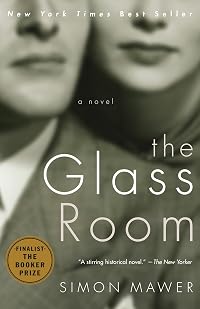
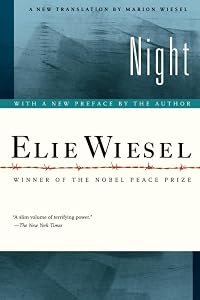

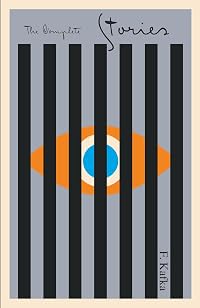
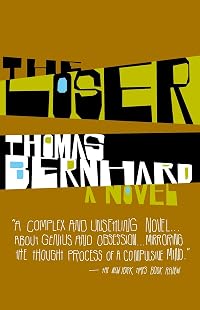
Member Recommendations

Member Reviews
On the surface, this strange book appears to be a history of the 20th century. The events of the 20th century (mainly in Europe, occasionally in America or other countries) are related in a dry, straightforward manner. The author doesn’t even use any names. When describing who did or said something, it’s “the Communists”, “doctors” or “young people”. Although major events are described–with a focus on WWI and II–the actions of random people, not necessarily famous or influential ones, are also related. There are also long lists, a focus on random subjects and a certain flattening of beliefs or events, which often leads to very strange descriptions. Clearly, the author was going for a quirky look at the strange, show more contradictory and sometimes horrifying history of the 20th century, but, although it was published in 2001, the book has even more relevance in our age of fake news.
The dry, straightforward tone leads the reader to wonder about the authority and focus of the author–of course, only certain things can be included, and there are some historical events that are too big to ignore, but the author is in fact choosing, while seeming to present an objective description. The random descriptions of individuals also made me wonder–I wasn’t aware of most of these incidents, which were likely chosen by the author as something strange or something that stuck in the memory, but without a name (which wasn’t included), they were difficult to fact check; it would certainly be easy to make up something and slide it in with actual history. The author often relates the beliefs of various groups. Sometimes these border on ridiculous (describing depictions of sex in movies over the years or Freudian theories) but others are obviously harmful–a list of the Nazis’ talking points, for example. Still, everything is related in the same dry factual manner, with not much commentary, which could seem to validate some of these beliefs (see: people declaring that both sides of an issue must always be presented or deciding that random person X on Facebook is equivalent to the consensus of doctors).
I found that the best way to read this book was straight through–it goes quickly, in a somewhat hypnotic way, and isn’t difficult to read despite the experimental structure. Reading large chunks of the book allows you to identify the author’s repeated quirks (sticking turtles into various lists) or juxtapositions (lists of antisemitic laws in pre-WWII Germany followed by lists of Jim Crow laws in America). show less
The dry, straightforward tone leads the reader to wonder about the authority and focus of the author–of course, only certain things can be included, and there are some historical events that are too big to ignore, but the author is in fact choosing, while seeming to present an objective description. The random descriptions of individuals also made me wonder–I wasn’t aware of most of these incidents, which were likely chosen by the author as something strange or something that stuck in the memory, but without a name (which wasn’t included), they were difficult to fact check; it would certainly be easy to make up something and slide it in with actual history. The author often relates the beliefs of various groups. Sometimes these border on ridiculous (describing depictions of sex in movies over the years or Freudian theories) but others are obviously harmful–a list of the Nazis’ talking points, for example. Still, everything is related in the same dry factual manner, with not much commentary, which could seem to validate some of these beliefs (see: people declaring that both sides of an issue must always be presented or deciding that random person X on Facebook is equivalent to the consensus of doctors).
I found that the best way to read this book was straight through–it goes quickly, in a somewhat hypnotic way, and isn’t difficult to read despite the experimental structure. Reading large chunks of the book allows you to identify the author’s repeated quirks (sticking turtles into various lists) or juxtapositions (lists of antisemitic laws in pre-WWII Germany followed by lists of Jim Crow laws in America). show less
Most 'experimental' literature fails, just as most scientific experiments fail to produce important data, and most experiments in the kitchen or even bedroom fail to spice up one's life. This doesn't keep anyone from trying again and again, just in case this time is the time.
Well, Europeana is the time. Ourednik avoids every possible literary characteristic--no characters, no plot, no personal investment, no meditating, an absolutely minimal narrator--while somehow providing, nonetheless, all the literary pleasures. The book is a very vaguely chronological history of Europe (with the odd side-trip to the U.S. or rest of the world), mainly between the first world war and the end of the twentieth century. It's told as you might tell show more history to a child: "After the First World War, Communism and Fascism spread though Europe because lots of people believed that the old world was rotten and it was necessary to seek new paths, and that democratic rule was not capable of preventing a world war and that capitalism has proved the economic crisis." I don't remember a single critical comment (there's no, e.g., 'communists said x, but really did y') and very few negatives. Sentences get longish, but never complicated.
Well, obviously it's grim reading at times, but you're never invited to wallow in the inhumanity-of-man-to-(wo)man silliness that much 'deep' contemporary literature prefers. The narrative voice is simply too neutral to create an overwhelming emotional response in that way.
Instead, Ourednik makes the reader uncomfortable in their complicity, as on page 97: "And the Jehovah's Witnesses said that smoking and alcohol soil the blood and they refused to eat black pudding and blood sausage and refused blood transfusions because the mixing of blood contradicted divine ordinances, just like the consumption of blood sausage or alcohol or extramarital sex." Presumably you, like I did, are laughing at the foolishness of the blood sausage bit, at the very least, and most likely at all of these hopelessly illiberal, out of date ideas. Ourednik goes on, "And they refused to enlist in the army and said that they belonged to the Kingdom of God and worldly matters were no concern of theirs," which you might think sounds vaguely sensible given the century we're dealing with, but also hopelessly naive and dangerously quietist. Then Ourednik throws in the kicker, as his sentence concludes, "and many of them died in the concentration camps in Germany and the Soviet Union because their attitude subverted the revolutionary ideal and propagated asocial and counterrevolutionary ideas in society."
Yes. Exactly how much better are we than than the Nazis and Stalinists?
There is a problem with the neutrality of the book's narrative: I'm not sure how much it could change anyone's ideas. I found many of my own concerns in the book, but then, almost anyone can find her concerns in a book this neutral and this distanced from judgment. But that's a minor complaint, and only those who refuse to think at all will find their entire world-view bolstered. There's also a danger in how much knowledge the book requires: if you don't know a bit of the history, you won't get too much out of it. And if you don't know much about the intellectual history, you'll miss the glorious destruction of the century's more obnoxious social sciences (particularly psychology) and philosophies.
On the other hand, nobody can read everything, and this is a much better way to spend an afternoon than trying to read Talcott Parsons or Martin Heidegger. show less
Well, Europeana is the time. Ourednik avoids every possible literary characteristic--no characters, no plot, no personal investment, no meditating, an absolutely minimal narrator--while somehow providing, nonetheless, all the literary pleasures. The book is a very vaguely chronological history of Europe (with the odd side-trip to the U.S. or rest of the world), mainly between the first world war and the end of the twentieth century. It's told as you might tell show more history to a child: "After the First World War, Communism and Fascism spread though Europe because lots of people believed that the old world was rotten and it was necessary to seek new paths, and that democratic rule was not capable of preventing a world war and that capitalism has proved the economic crisis." I don't remember a single critical comment (there's no, e.g., 'communists said x, but really did y') and very few negatives. Sentences get longish, but never complicated.
Well, obviously it's grim reading at times, but you're never invited to wallow in the inhumanity-of-man-to-(wo)man silliness that much 'deep' contemporary literature prefers. The narrative voice is simply too neutral to create an overwhelming emotional response in that way.
Instead, Ourednik makes the reader uncomfortable in their complicity, as on page 97: "And the Jehovah's Witnesses said that smoking and alcohol soil the blood and they refused to eat black pudding and blood sausage and refused blood transfusions because the mixing of blood contradicted divine ordinances, just like the consumption of blood sausage or alcohol or extramarital sex." Presumably you, like I did, are laughing at the foolishness of the blood sausage bit, at the very least, and most likely at all of these hopelessly illiberal, out of date ideas. Ourednik goes on, "And they refused to enlist in the army and said that they belonged to the Kingdom of God and worldly matters were no concern of theirs," which you might think sounds vaguely sensible given the century we're dealing with, but also hopelessly naive and dangerously quietist. Then Ourednik throws in the kicker, as his sentence concludes, "and many of them died in the concentration camps in Germany and the Soviet Union because their attitude subverted the revolutionary ideal and propagated asocial and counterrevolutionary ideas in society."
Yes. Exactly how much better are we than than the Nazis and Stalinists?
There is a problem with the neutrality of the book's narrative: I'm not sure how much it could change anyone's ideas. I found many of my own concerns in the book, but then, almost anyone can find her concerns in a book this neutral and this distanced from judgment. But that's a minor complaint, and only those who refuse to think at all will find their entire world-view bolstered. There's also a danger in how much knowledge the book requires: if you don't know a bit of the history, you won't get too much out of it. And if you don't know much about the intellectual history, you'll miss the glorious destruction of the century's more obnoxious social sciences (particularly psychology) and philosophies.
On the other hand, nobody can read everything, and this is a much better way to spend an afternoon than trying to read Talcott Parsons or Martin Heidegger. show less
Wat een uniek, ontregelend, confronterend en volkomen origineel boekje is dit zeg.
In 156 bladzijden wervelt de uit Tsjechisch-Frans/Italiaanse ouders geboren Patrik Ouředník door de gewelddadige geschiedenis van de 20ste eeuw in Europa.
Hij volgt geen tijdlijn of creëert geen historische blokken, maar bindt de geschiedenis samen rond thema's, ideeën, maatschappelijke evoluties of technologische stappen. Dat doet hij in een afstandelijke, droge stijl.
Soms lijk je ironie te proeven, soms ruik je een vleugje cynisme, maar dat zal dan allemaal wel aan de geschiedenis zelf ontsnappen: op de slotzin na, kan je de schrijver immers nergens echt op commentaar of standpunten betrappen.
De combinatie van de afstandelijke stijl, de show more ontregelende combinaties van feiten, het bijna speels omspringen met diepe sporen van de geschiedenis brengt je als lezer van slag, laat sommige feiten extra hard binnenkomen en schudt je netjes geordende blik op de geschiedenis grondig door elkaar.
Straf. Heel straf.
Niets moet. Maar dit boek lezen is de luttele tijd die je er aan besteed meer dan waard.
Hier mag je gerust verplicht leesvoer van maken voor scholieren en studenten.
Enfin, 'k ga stoppen want dit begint op gepreek en een zendingsmissie te gelijken. Exit.
(Maar lezen, die handel!) show less
In 156 bladzijden wervelt de uit Tsjechisch-Frans/Italiaanse ouders geboren Patrik Ouředník door de gewelddadige geschiedenis van de 20ste eeuw in Europa.
Hij volgt geen tijdlijn of creëert geen historische blokken, maar bindt de geschiedenis samen rond thema's, ideeën, maatschappelijke evoluties of technologische stappen. Dat doet hij in een afstandelijke, droge stijl.
Soms lijk je ironie te proeven, soms ruik je een vleugje cynisme, maar dat zal dan allemaal wel aan de geschiedenis zelf ontsnappen: op de slotzin na, kan je de schrijver immers nergens echt op commentaar of standpunten betrappen.
De combinatie van de afstandelijke stijl, de show more ontregelende combinaties van feiten, het bijna speels omspringen met diepe sporen van de geschiedenis brengt je als lezer van slag, laat sommige feiten extra hard binnenkomen en schudt je netjes geordende blik op de geschiedenis grondig door elkaar.
Straf. Heel straf.
Niets moet. Maar dit boek lezen is de luttele tijd die je er aan besteed meer dan waard.
Hier mag je gerust verplicht leesvoer van maken voor scholieren en studenten.
Enfin, 'k ga stoppen want dit begint op gepreek en een zendingsmissie te gelijken. Exit.
(Maar lezen, die handel!) show less
About to get rid of this book, I thought I would read it. It is a brilliant account of the madness, arrogance, cruelty and ignorance of the human race neatly interspersed with humour and incredulity at our behaviour.
Village Voice
Europeana
Patrik Ourednik
Dalkey Archive, 122 pp., $12.50
Europeana is like Harper's Weekly Review extended across the 20th century: a bunch of neutral sentences that promise via sequentiality to make an endlessly dissolving narrative from "events." Here the facts are weighted: more sentences about WW I than jogging, though both appear, and ghostly power is vested in the magical word and. "And writers and poets endeavored to find ways of expressing it best and in 1916 they invented Dadaism because everything seemed crazy to them. And in Russia they invented a revolution. And the soldiers wore around their neck or wrist a tag . . ." History, or a knifing of the progressive humanist delusion that there's such a thing as history show more in the first place? Yes, exactly. A tragicomic prose poem to make poets weep with envy, to make everyone weep. show less
Europeana
Patrik Ourednik
Dalkey Archive, 122 pp., $12.50
Europeana is like Harper's Weekly Review extended across the 20th century: a bunch of neutral sentences that promise via sequentiality to make an endlessly dissolving narrative from "events." Here the facts are weighted: more sentences about WW I than jogging, though both appear, and ghostly power is vested in the magical word and. "And writers and poets endeavored to find ways of expressing it best and in 1916 they invented Dadaism because everything seemed crazy to them. And in Russia they invented a revolution. And the soldiers wore around their neck or wrist a tag . . ." History, or a knifing of the progressive humanist delusion that there's such a thing as history show more in the first place? Yes, exactly. A tragicomic prose poem to make poets weep with envy, to make everyone weep. show less
Szavak, amelyek erről a könyvről eszembe jutottak:
1.) ZSÚFOLT. Jó, hát milyen legyen egy regény, ami a teljes európai XX. századot kívánja mint csiszolt követ, egyetlen 160 oldalnyi foglalatba szorítani? Szóval ezt elfogadom.
2.) CSAPONGÓ. Szálldos témáról témára, akár a szédült pille, aki épp az imént kortyolt bele egy kupica becherovkába. De még ennek szükségességét is aláírom – hisz végtére is amikor első és második világháború, kommunizmus és nácizmus, fogyasztói társadalom és totalitárius állam között ugrál ide-oda, akkor valami mélyebb dologra kíván rámutatni a történelmi kontinuitásról. Blaszfém persze, amikor a Barbie-baba meg a holokauszt egy mondatba kerül, de show more hát jó író nem megy a szomszédba egy kis blaszfémiáért, mert ha a szent dolgok tisztelete megköti a művész kezét, akkor onnantól kezdve nem is művész tán, hanem propagandista.
3.) FELÜLETES. Ezt viszont nem tudom megbocsátani. Úgy érzem, Ouředník a kisebb ellenállás felé ment el, amikor a regényt írta. Mert ugye a modernitás kritikája mindig értő fülekre talál a könyvolvasóknál, nagyot nem lehet bukni vele. A baj csak az, hogy szerzőnk csak a felszínt meri kapargatni – eseményeket ír le, amelyek frappánsak ugyan, de az események elemzésének mélységeibe nem mer, nem akar alászállni. Anekdotikus, nem pedig esszészerű ez a próza, bármennyire is esszéregénynek akar látszódni. Így aztán ha el is tudja érni, hogy egyetértsek vele, a legfontosabbat meg se próbálja: hogy egyetértésem felülvizsgálatára kényszerítsen, és ezzel valamivel többé tegyen, mint ami a könyv elolvasása előtt voltam. show less
1.) ZSÚFOLT. Jó, hát milyen legyen egy regény, ami a teljes európai XX. századot kívánja mint csiszolt követ, egyetlen 160 oldalnyi foglalatba szorítani? Szóval ezt elfogadom.
2.) CSAPONGÓ. Szálldos témáról témára, akár a szédült pille, aki épp az imént kortyolt bele egy kupica becherovkába. De még ennek szükségességét is aláírom – hisz végtére is amikor első és második világháború, kommunizmus és nácizmus, fogyasztói társadalom és totalitárius állam között ugrál ide-oda, akkor valami mélyebb dologra kíván rámutatni a történelmi kontinuitásról. Blaszfém persze, amikor a Barbie-baba meg a holokauszt egy mondatba kerül, de show more hát jó író nem megy a szomszédba egy kis blaszfémiáért, mert ha a szent dolgok tisztelete megköti a művész kezét, akkor onnantól kezdve nem is művész tán, hanem propagandista.
3.) FELÜLETES. Ezt viszont nem tudom megbocsátani. Úgy érzem, Ouředník a kisebb ellenállás felé ment el, amikor a regényt írta. Mert ugye a modernitás kritikája mindig értő fülekre talál a könyvolvasóknál, nagyot nem lehet bukni vele. A baj csak az, hogy szerzőnk csak a felszínt meri kapargatni – eseményeket ír le, amelyek frappánsak ugyan, de az események elemzésének mélységeibe nem mer, nem akar alászállni. Anekdotikus, nem pedig esszészerű ez a próza, bármennyire is esszéregénynek akar látszódni. Így aztán ha el is tudja érni, hogy egyetértsek vele, a legfontosabbat meg se próbálja: hogy egyetértésem felülvizsgálatára kényszerítsen, és ezzel valamivel többé tegyen, mint ami a könyv elolvasása előtt voltam. show less
Twentieth-century events, reordered and recontextualized into something that more closely resembles experimental fiction than a history book. With such a broad focus, it's unsurprising that the book chooses to work most commonly with collective masses such as 'scientists' or 'philosophers,' although a few individuals shimmer into focus on occasion. Ourednik is Eastern European, so it's perhaps unsurprising that fascism and communism factor in as the big baddies here, capitalism and neoliberalism getting more of a free pass than I'd be inclined to give. Intriguing nevertheless. (First read 2006-04-15)
Members
- Recently Added By
Lists

Time is out of joint
19 works; 3 members
Author Information

15+ Works 558 Members
2+ Works 374 Members
Some Editions
Awards and Honors
Awards
Distinctions
Series
Belongs to Publisher Series
Common Knowledge
- Canonical title
- Europeana: A Brief History of the Twentieth Century
- Original title
- Europeana. Stručné dějiny dvacátého věku
- Original publication date
- 2001
Classifications
Statistics
- Members
- 374
- Popularity
- 84,205
- Reviews
- 14
- Rating
- (3.65)
- Languages
- 15 — Chinese, traditional, Czech, Dutch, English, Estonian, Finnish, French, German, Hungarian, Italian, Lithuanian, Portuguese, Slovenian, Spanish, Swedish
- Media
- Paper, Ebook
- ISBNs
- 27
- ASINs
- 2