
On This Page
Description
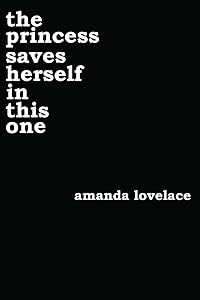
"From Amanda Lovelace, a poetry collection in four parts: the princess, the damsel, the queen, and you. The first three sections piece together the life of the author while the final section serves as a note to the reader. This moving book explores love, loss, grief, healing, empowerment, and inspiration."--Publisher's website.Tags
Recommendations
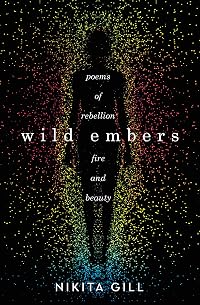
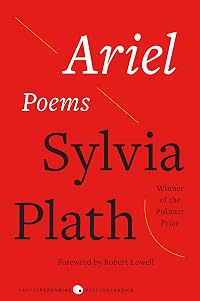
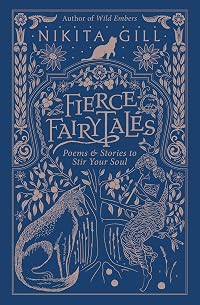
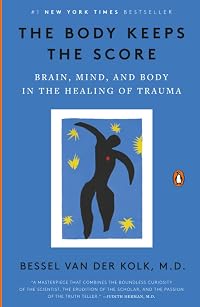

Member Recommendations
SandSing7 Both moody and angsty with a reliance on shock value.
Member Reviews
This was beautifully sad, heart-wrenching, disquieting, mind-opening, hopeful, and encouraging.
I felt so much while reading this book of poetry. The author bared her soul for the world to see and gave zero effs.
I love it.
I felt so much while reading this book of poetry. The author bared her soul for the world to see and gave zero effs.
I love it.
Thank you to Netgalley and Andrews McMeel Publishing for a free copy for review,
and to Goodreads, who put this on my radar when it won the top book in the poetry genre for 2016.
This book blew me away -- socks, hair, heart and soul -- from nearly the very first words dedicating it to The Boy Who Lived from The Girl Who Survived. I was hooked. I cried and choked, and saw myself in almost all of her poems. I saw the relationships with my mother, and my sisters, and food, and smoking and cancer. I saw the complicated way love and hurt are twined forever in a dance that exists both during the lives of those people and long after the parting from them.
I saw my own relationships with my dragons -- boys who loved me, but not enough or well show more enough, and girl friends who did not understand the friend part of that word the way I thought I did, or we did. I loved the discovery of self. Confused and faltering, fledging and demanding. The whole of love for the self, claimed slowly, and always with the ghosts of yesterday's which never leave entirely.
I nearly wept when she turned to the last chapter, the 'you', and she spoke out to all the people who have been hurt, marginalized and told so many things that are not true. I want to buy five hundred copies of this book and give it out to all my girlfriends on Galentines Day. I want to keep handing it out forever. This was gorgeous and it deserved every accolade laid at its feet and a million more on top of it. My heart now rests on that pile, with no regrets. show less
and to Goodreads, who put this on my radar when it won the top book in the poetry genre for 2016.
This book blew me away -- socks, hair, heart and soul -- from nearly the very first words dedicating it to The Boy Who Lived from The Girl Who Survived. I was hooked. I cried and choked, and saw myself in almost all of her poems. I saw the relationships with my mother, and my sisters, and food, and smoking and cancer. I saw the complicated way love and hurt are twined forever in a dance that exists both during the lives of those people and long after the parting from them.
I saw my own relationships with my dragons -- boys who loved me, but not enough or well show more enough, and girl friends who did not understand the friend part of that word the way I thought I did, or we did. I loved the discovery of self. Confused and faltering, fledging and demanding. The whole of love for the self, claimed slowly, and always with the ghosts of yesterday's which never leave entirely.
I nearly wept when she turned to the last chapter, the 'you', and she spoke out to all the people who have been hurt, marginalized and told so many things that are not true. I want to buy five hundred copies of this book and give it out to all my girlfriends on Galentines Day. I want to keep handing it out forever. This was gorgeous and it deserved every accolade laid at its feet and a million more on top of it. My heart now rests on that pile, with no regrets. show less
Here is the winner of the poetry category of the 2016 goodreads awards. In itself a reason why I will never be able to trust the winners voted by our community.
I really tried to like this book.
I think a feminist poem collection aimed at younger women is a wonderful thing. Poems to inspire and empower them, to show them their emotions and thoughts are valid, to promote self-love , to make them feel that other women have shared similar experiences, that they are not alone.
Maybe this is the only saving grace of this collection for me. Sure I think Love Is A Dog From Hell may have a greater "literary" value compared to this one - a value that's measured in using the correct words, that has nihilistic notes throughout, that aces all show more patriarchal tests with Bukowski's thriving misogyny; but; fuck literary value. I am sick of measuring things with a system that was created to exclude them. A system that taught that good poetry is the one that alludes, that talks in metaphors and riddles so as to be all-encompassing and poetic (lol) in it's ambiguity.
So let us not judge this collection in those terms. Because it is above all that, and culturally speaking, even the fact that it exists, that it can exist, is a sociological miracle.
Let us talk about why it sucks.
Firstly I have to admit that it's difficult for me to call this poetry when it's just prose, witty tweets, separated into verses with the "enter" key. They read like mini motivational cards, meant to impress quickly, to captivate the new audience of the internet era with sentences where each word creates more tension and surprise, meant to retain our interest and keep us focused. Like a movie trailer. A trailer can be well made, and pleasing to watch, sure, but it's not a movie.
"how many
funerals can
someone attend
before they turn
nineteen?
- the cursed family."
What makes these poems bad for me, is the fact that even though they tell of personal situations, they don't feel real. The whole collection reeks of artificiality, like a bad modern imitation of the romantics, through a mall goth lens.
It also reads very young. Young enough that the poet draws analogies from fairytales to describe her life. As a concept I can also support the deconstruction of the tropes fairytales encourage, especially those that are harmful to girls and women; so again I can find some merit to this. However. The use of fairytales in this volume is not there to facilitate younger readers but because the poet truly still sees her life through the lens of fairytales. A toxic mother is a queen, a caring partner is a prince, the young protagonist is a princess. This ends up ruining whatever deconstruction could have ever been, and rather enforces and encourages a more simplistic, black and white, fairytale view of the world.
Another thing that really irks me are the titles of each piece. Printed in italics at the end of each poem, a pompous declaration of severe teen angst. Some really good poems were destroyed by those titles.
She even has a poem about a person who committed suicide in front of her, and the title is "i never learned your name, but you mattered to me." Like, really girl? Mattered HOW? Because you wrote a poem and were shaken for a week thinking of your own mortality and place in the world? Because it made you go home and write the brilliant verses of "it is almost a rite of passage when someone jumps in front of your train"? This is ridiculously self-absorbed in a way they would make fun of in comedy sketches - and many of the poems suffer from the same traits.
Lets look at another gem, a poem that encapsulates all those awesome "not like other girls because I read books and therefore am special"-memes we used to love as teens:
"when i die,
do not
waste
a minute
mourning me.
i may go,
but i will
leave behind
all my
thousand & one
lives.
-a bookmad girl never dies."
A fine thing to write on your personal journal, a nice thing to print on a postcard and send to your niece.
Definitely not the best poem collection of 2016.
"he is
even better
than books.
-fiction has nothing on you."
Seriously I think my biggest problem with this one may be all the creative typography of it all. Every time I stumble upon those god-damned titles in italics i want to scream.
"his smile makes my bones ache.
- a pain i welcome."
There's a poem printed in the shape of a leaf, a heart and so on. It's all very commercial, very poor, very trite.
"is
there
such a
thing
as
dead
mother's day?"
They're not all hollow though, that's why I wrote the introduction to this review. There are some poems that are more, truer, that have a naivety that's not calculated.
Of course there's no shame in reading and liking this collection. It's wonderful if people manage to get something out of this, and I believe they have, seeing how it won first place after all.
But,
if
you like it
please
go read
Rupi Kaur,
or
something. show less
I really tried to like this book.
I think a feminist poem collection aimed at younger women is a wonderful thing. Poems to inspire and empower them, to show them their emotions and thoughts are valid, to promote self-love , to make them feel that other women have shared similar experiences, that they are not alone.
Maybe this is the only saving grace of this collection for me. Sure I think Love Is A Dog From Hell may have a greater "literary" value compared to this one - a value that's measured in using the correct words, that has nihilistic notes throughout, that aces all show more patriarchal tests with Bukowski's thriving misogyny; but; fuck literary value. I am sick of measuring things with a system that was created to exclude them. A system that taught that good poetry is the one that alludes, that talks in metaphors and riddles so as to be all-encompassing and poetic (lol) in it's ambiguity.
So let us not judge this collection in those terms. Because it is above all that, and culturally speaking, even the fact that it exists, that it can exist, is a sociological miracle.
Let us talk about why it sucks.
Firstly I have to admit that it's difficult for me to call this poetry when it's just prose, witty tweets, separated into verses with the "enter" key. They read like mini motivational cards, meant to impress quickly, to captivate the new audience of the internet era with sentences where each word creates more tension and surprise, meant to retain our interest and keep us focused. Like a movie trailer. A trailer can be well made, and pleasing to watch, sure, but it's not a movie.
"how many
funerals can
someone attend
before they turn
nineteen?
- the cursed family."
What makes these poems bad for me, is the fact that even though they tell of personal situations, they don't feel real. The whole collection reeks of artificiality, like a bad modern imitation of the romantics, through a mall goth lens.
It also reads very young. Young enough that the poet draws analogies from fairytales to describe her life. As a concept I can also support the deconstruction of the tropes fairytales encourage, especially those that are harmful to girls and women; so again I can find some merit to this. However. The use of fairytales in this volume is not there to facilitate younger readers but because the poet truly still sees her life through the lens of fairytales. A toxic mother is a queen, a caring partner is a prince, the young protagonist is a princess. This ends up ruining whatever deconstruction could have ever been, and rather enforces and encourages a more simplistic, black and white, fairytale view of the world.
Another thing that really irks me are the titles of each piece. Printed in italics at the end of each poem, a pompous declaration of severe teen angst. Some really good poems were destroyed by those titles.
She even has a poem about a person who committed suicide in front of her, and the title is "i never learned your name, but you mattered to me." Like, really girl? Mattered HOW? Because you wrote a poem and were shaken for a week thinking of your own mortality and place in the world? Because it made you go home and write the brilliant verses of "it is almost a rite of passage when someone jumps in front of your train"? This is ridiculously self-absorbed in a way they would make fun of in comedy sketches - and many of the poems suffer from the same traits.
Lets look at another gem, a poem that encapsulates all those awesome "not like other girls because I read books and therefore am special"-memes we used to love as teens:
"when i die,
do not
waste
a minute
mourning me.
i may go,
but i will
leave behind
all my
thousand & one
lives.
-a bookmad girl never dies."
A fine thing to write on your personal journal, a nice thing to print on a postcard and send to your niece.
Definitely not the best poem collection of 2016.
"he is
even better
than books.
-fiction has nothing on you."
Seriously I think my biggest problem with this one may be all the creative typography of it all. Every time I stumble upon those god-damned titles in italics i want to scream.
"his smile makes my bones ache.
- a pain i welcome."
There's a poem printed in the shape of a leaf, a heart and so on. It's all very commercial, very poor, very trite.
"is
there
such a
thing
as
dead
mother's day?"
They're not all hollow though, that's why I wrote the introduction to this review. There are some poems that are more, truer, that have a naivety that's not calculated.
Of course there's no shame in reading and liking this collection. It's wonderful if people manage to get something out of this, and I believe they have, seeing how it won first place after all.
But,
if
you like it
please
go read
Rupi Kaur,
or
something. show less
I'm so glad I didn't read other people's review of this book before I read it. Who are you to assign rules to poetry? Anyway...There is SO much to this poem. Read it to the end. Abuse, suicide, eating disorders, loss, love, and finally acceptance of self.
Favorite lines: "what are you going to do with your English degree?" "I plan to crack open the skulls of the masses & plant a colorful garden in every brain."
"2. there will be many times in which you will fail (miserably), but your failures are just what happened - they don't have to be who you are."
Favorite lines: "what are you going to do with your English degree?" "I plan to crack open the skulls of the masses & plant a colorful garden in every brain."
"2. there will be many times in which you will fail (miserably), but your failures are just what happened - they don't have to be who you are."
Heartbreaking, gentle, joyful, and full of hope in turn. A fairly complex and diverse collection of poetry that was really remarkable given the author's age. I really look forward to seeing what else she produces.
I feel slightly coated in dastardly horribleness for rating this two stars. It's sticky and rather uncomfortable. Ick. I'm also being trailed by a comic thought bubble whose intentions are dubious at best. Right now it's vacillating between rating this one or two stars. Earlier it captured a watercolor representation of my heart shrinking four sizes à la Grinch.
I respect the hell out of Amanda Lovelace for putting herself out there. Her medium of doing so may not have ticked the boxes for me but nothing diminishes my awe for the fortitude such vulnerability takes. I think that's my biggest takeaway from this collection. Well, this and
Yep, the presentation makes me harken back to Tumblr posts (not going to equivocate here, both posts reblogged and created by yours truly) with odd spacing and typewriter font. Still, it's a sentiment that resonates with anyone that's experienced the escapism the books lining our shelves have brought us. Emotion is the thing plainly clad in Lovelace's collection; her love of books equally visible. It's not surprising that plenty would find poignant comfort or enjoyment in The Princess.
It's also not surprising that reviews would span the polarized gamut. We're such a visual society– a cultural propensity that is a huge mainstay of the success of social media pillars, like Tumblr, where we might find this format easier to consume. We're also a society that is hammered over the head in machine gun staccato by what a poem should look like, sound like, feel like, and how it should be autopsied by the established and well-trod Lit class formula. If I'd stumbled onto Lovelace's collection as a high school version of myself, it might have held the same seductive quality as my first introduction to slam poetry that took place in a small classroom where a few students gathered under the name of the Dead Poet's Society to revel in junk food, poetry, and a considerable amount of black eyeliner between us. I had quite a lot of fun with what felt/feels like
random
spacing
then
as well.
In the face of structure, anything can seem a rebellion. In the face of experience, the evolution of the emotions caused should have a release. I'm all for that release; I'd consider form a minor consideration in comparison. Form certainly adds to whatever you're putting out into the world but it is also heavily about its consumption. It's a bridge to that third wall that you must travel no matter the medium of your release, the Ouroboros of any work. Someone isn't going to like the result while someone else may be profoundly moved by it.
Regardless of what camp you rally around, it feels like this was something Lovelace needed to write. Regardless of whether it ended up being a selection of Tumblr-esque posts floating from one blog to the next on the reblog tide, a journal entry, a book that would win a GR Choice Award in its category– it was a spark lit long before concept met form. I'm not sure that anything better could be said of an author than that they wrote what they needed to. I guess this must be why any earlier vacillation between one and two stars was unavailing. One-star ratings tend to signify a particular loathing for a book, in the absence of GR implementing a 'dump this in a pit of doom after it's been trampled by a herd of pogo sticks' rating option. I don't foresee me coming back to this book at any point but I like that it has a place out there in the world and there are people that appreciate it, are moved by it, may have needed something just like it. Future two-star ratings might have to become synonymous with 'eh, no pogo stick trampling or doom pits necessary.' That sounds about right.
I can't say
I ever thought
I might
discuss
POGO STICKS
in a
book review.
–the image of a herd of pogo sticks being oddly fascinating for no apparent reason. show less
I respect the hell out of Amanda Lovelace for putting herself out there. Her medium of doing so may not have ticked the boxes for me but nothing diminishes my awe for the fortitude such vulnerability takes. I think that's my biggest takeaway from this collection. Well, this and
when i hadshow more
no friends
i reached inside
my beloved
books
& sculpted some
out of
12 pt
times new roman.
–& it
was almost good enough.
Yep, the presentation makes me harken back to Tumblr posts (not going to equivocate here, both posts reblogged and created by yours truly) with odd spacing and typewriter font. Still, it's a sentiment that resonates with anyone that's experienced the escapism the books lining our shelves have brought us. Emotion is the thing plainly clad in Lovelace's collection; her love of books equally visible. It's not surprising that plenty would find poignant comfort or enjoyment in The Princess.
It's also not surprising that reviews would span the polarized gamut. We're such a visual society– a cultural propensity that is a huge mainstay of the success of social media pillars, like Tumblr, where we might find this format easier to consume. We're also a society that is hammered over the head in machine gun staccato by what a poem should look like, sound like, feel like, and how it should be autopsied by the established and well-trod Lit class formula. If I'd stumbled onto Lovelace's collection as a high school version of myself, it might have held the same seductive quality as my first introduction to slam poetry that took place in a small classroom where a few students gathered under the name of the Dead Poet's Society to revel in junk food, poetry, and a considerable amount of black eyeliner between us. I had quite a lot of fun with what felt/feels like
random
spacing
then
as well.
In the face of structure, anything can seem a rebellion. In the face of experience, the evolution of the emotions caused should have a release. I'm all for that release; I'd consider form a minor consideration in comparison. Form certainly adds to whatever you're putting out into the world but it is also heavily about its consumption. It's a bridge to that third wall that you must travel no matter the medium of your release, the Ouroboros of any work. Someone isn't going to like the result while someone else may be profoundly moved by it.
Regardless of what camp you rally around, it feels like this was something Lovelace needed to write. Regardless of whether it ended up being a selection of Tumblr-esque posts floating from one blog to the next on the reblog tide, a journal entry, a book that would win a GR Choice Award in its category– it was a spark lit long before concept met form. I'm not sure that anything better could be said of an author than that they wrote what they needed to. I guess this must be why any earlier vacillation between one and two stars was unavailing. One-star ratings tend to signify a particular loathing for a book, in the absence of GR implementing a 'dump this in a pit of doom after it's been trampled by a herd of pogo sticks' rating option. I don't foresee me coming back to this book at any point but I like that it has a place out there in the world and there are people that appreciate it, are moved by it, may have needed something just like it. Future two-star ratings might have to become synonymous with 'eh, no pogo stick trampling or doom pits necessary.' That sounds about right.
I can't say
I ever thought
I might
discuss
POGO STICKS
in a
book review.
–the image of a herd of pogo sticks being oddly fascinating for no apparent reason. show less
It will come as a shock to absolutely no one who knows me well why I chose this book. For those of you who don’t I’ll explain: fairy tales. I love fairy tales. I wrote my Master’s thesis on retelling fairy tales through Young Adult Literature. I made my husband watch “Once Upon a Time” on our honeymoon (he’s ridiculously understanding). My nickname was “Snow” once upon a… well, you get the idea. I’ve delved into the originals, retellings, television series, music, anything that touches on one of my favorite things in this world. I grew up wanting to be the princess and the knight; I wanted to befriend unicorns and ride dragons; I wanted all the magic and wonder that often seems missing in this world. So believe me show more when I tell you, I chose this book on purpose, and Amanda Lovelace and I see eye to eye on several things. But let’s start at the beginning…
I knew I was going to enjoy this book just from reading the dedication; a dedication so thoughtfully and poetically written to a fictional character who inspired her. I was caught.
Then the trigger warnings. I appreciate trigger warnings; there are some things I don’t want to read or watch, and others I need to mentally prepare myself for before I expose myself to such raw, painful issues. Lovelace does an excellent job outlining those for her readers, and I appreciate that.
Lovelace’s book is a compilation of modern poetry which works well for me at this stage in my life. (Four small kids, not a lot of “me” time.) She breaks “the princess saves herself in this one” into four parts, tackling hard issues like abuse (parental, relationship), eating disorders, death, and grief, to name a few. Throughout the book, Lovelace weaves together an overarching fairy tale theme the reader can choose to perceive in several ways: it could be an analogy for feminism or social justice, or perhaps maybe, just maybe, Lovelace is like me. Maybe this “book mad” author has read so much, collected words and phrases for so long that fairy tales, magic, and thousands of other fantastic, amazing, terrifying, beautiful stories have been etched into her so deeply over the years it’s now become a part of who she is.
Maybe it’s both. Or, maybe, I saw some of myself in her words. After all, I too, have “stardust running through [my] veins” (pg. 176). show less
I knew I was going to enjoy this book just from reading the dedication; a dedication so thoughtfully and poetically written to a fictional character who inspired her. I was caught.
Then the trigger warnings. I appreciate trigger warnings; there are some things I don’t want to read or watch, and others I need to mentally prepare myself for before I expose myself to such raw, painful issues. Lovelace does an excellent job outlining those for her readers, and I appreciate that.
Lovelace’s book is a compilation of modern poetry which works well for me at this stage in my life. (Four small kids, not a lot of “me” time.) She breaks “the princess saves herself in this one” into four parts, tackling hard issues like abuse (parental, relationship), eating disorders, death, and grief, to name a few. Throughout the book, Lovelace weaves together an overarching fairy tale theme the reader can choose to perceive in several ways: it could be an analogy for feminism or social justice, or perhaps maybe, just maybe, Lovelace is like me. Maybe this “book mad” author has read so much, collected words and phrases for so long that fairy tales, magic, and thousands of other fantastic, amazing, terrifying, beautiful stories have been etched into her so deeply over the years it’s now become a part of who she is.
Maybe it’s both. Or, maybe, I saw some of myself in her words. After all, I too, have “stardust running through [my] veins” (pg. 176). show less
Members
- Recently Added By
Lists

Modern Poetry Must Reads
7 works; 3 members

Books Read in 2019
4,052 works; 108 members

Dark Poetry
7 works; 1 member
Author Information

32+ Works 5,893 Members
Amanda Lovelace is an American poet. Her debut poetry collection is entitled, The Princess Saves Herself in This One. It was named Goodreads Choice Awards Best Poetry in 2016. (Bowker Author Biography)
Awards and Honors
Awards
Series

Common Knowledge
- Canonical title
- the princess saves herself in this one
- Original publication date
- 2016-04-23
- Dedication
- for the boy who lived. thank you for inspiring me to be the girl who survived. you may have a lightning bolt to show for it, but my body is a lightning storm.
- First words
- warning I: this is not a fairy tale.
- Last words
- (Click to show. Warning: May contain spoilers.)pending: your own happy ending. - you'll get there.
Classifications
Statistics
- Members
- 2,180
- Popularity
- 9,287
- Reviews
- 91
- Rating
- (3.62)
- Languages
- Dutch, English, Portuguese (Portugal)
- Media
- Paper, Audiobook, Ebook
- ISBNs
- 16
- UPCs
- 2
- ASINs
- 3