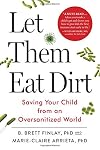
Let Them Eat Dirt: Saving Your Child from an Oversanitized World
by B. Brett Finlay, Marie-Claire Arrieta
On This Page
Description
"A must-read . . . Takes you inside a child's gut and shows you how to give kids the best immune start early in life." —William Sears, MD, coauthor of The Baby BookLike the culture-changing Last Child in the Woods, here is the first parenting book to apply the latest cutting-edge scientific research about the human microbiome to the way we raise our children.
In the two hundred years since we discovered that microbes cause infectious diseases, we've battled to keep them at bay. But a show more recent explosion of scientific knowledge has led to undeniable evidence that early exposure to these organisms is beneficial to a child's well-being. Our modern lifestyle, with its emphasis on hyper-cleanliness, is taking a toll on children's lifelong health.
In this engaging and important book, microbiologists Brett Finlay and Marie-Claire Arrieta explain how the trillions of microbes that live in and on our bodies influence childhood development; why an imbalance of those microbes can lead to obesity, diabetes, and asthma, among other chronic conditions; and what parents can do—from conception on—to positively affect their own behaviors and those of their children. They describe how natural childbirth, breastfeeding, and solid foods influence children's microbiota. They also offer practical advice on matters such as whether to sterilize food implements for babies, the use of antibiotics, the safety of vaccines, and why having pets is a good idea.
Forward-thinking and revelatory, Let Them Eat Dirt is an essential book in helping us to nurture stronger, more resilient, happy, and healthy kids.
. show less
Tags
Recommendations


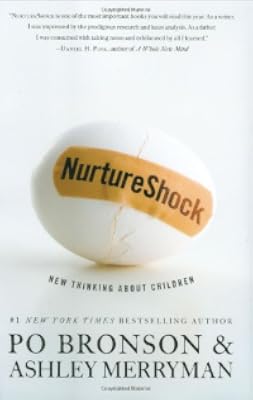
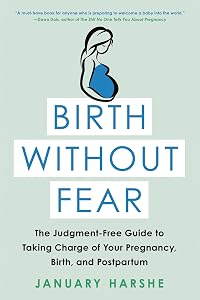
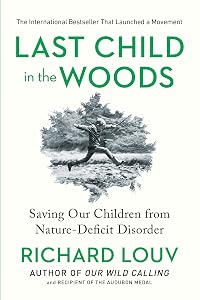
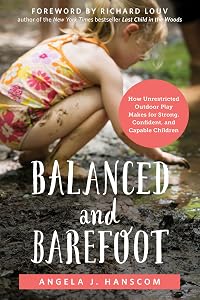


Member Recommendations
Member Reviews
An interesting read-- and quite an easy one, in truth. I assume later editions will have stricter editing practices, but aside from a few distracting instances, it was easily approachable for a lay person.
I was surprised by how much of the book was dedicated to prenatal life, and especially birth, judging by the title, but as an expectant mother I was glad to have that information. For me, the idea that probiotics, ingested or --um-- applied, can battle and kill group b strep (which, when present, present a huge inconvenience to birthing mothers and danger to newborns) was worth the price of admission.
Though there are some questions about the academic rigor of some of the conclusions drawn, I was fascinated by the information show more presented, and responded to the call to action by purchasing probiotics for myself and my toddler. They certainly won't do any harm, so there seems to be no downside to the practice. Additionally, I'm happy to cite this volume in casual conversation while explaining to friends or gawking strangers why I allow my toddler to continue eating a piece of toast he's dropped in the dirt :D
I imagine that anyone with a strict anti-antibiotic conviction will find confirmation for their position, and likely those who wish to use antibiotics for every sniffle will be skeptical of its claims. Still, it would be an interesting read for both sides. show less
I was surprised by how much of the book was dedicated to prenatal life, and especially birth, judging by the title, but as an expectant mother I was glad to have that information. For me, the idea that probiotics, ingested or --um-- applied, can battle and kill group b strep (which, when present, present a huge inconvenience to birthing mothers and danger to newborns) was worth the price of admission.
Though there are some questions about the academic rigor of some of the conclusions drawn, I was fascinated by the information show more presented, and responded to the call to action by purchasing probiotics for myself and my toddler. They certainly won't do any harm, so there seems to be no downside to the practice. Additionally, I'm happy to cite this volume in casual conversation while explaining to friends or gawking strangers why I allow my toddler to continue eating a piece of toast he's dropped in the dirt :D
I imagine that anyone with a strict anti-antibiotic conviction will find confirmation for their position, and likely those who wish to use antibiotics for every sniffle will be skeptical of its claims. Still, it would be an interesting read for both sides. show less
 This review was written for LibraryThing Early Reviewers.
I've got three kids ages 6-22 and I've never been a fan of antibacterial, antibiotic or antimicrobial anything. But unfortunately one of my kids suffered ear infections early and ended up with antibiotics at 2 mos of age.
He is the one with asthma, nut allergies and a host of other issues that this book claims can be caused by affecting the gut biome of microbes at a young age with the use of antibiotics.
I'm not saying my child is proof this argument is correct, but my child DOES support the theory since his sisters are fine and little else was different in their early days.
This book is technical enough that it will be over the heads of many readers which is sad since the message is so important. Question what mass media is telling you. show more Question what the drug companies tell you. Think before you slather on that antibacterial stuff. Let your kids try getting dirty....
I loved this book and wished I had been more forceful to avoid antibiotic use in my son since it probably wasn't necessary. Perhaps all the inhalers, nebulizer equipment and daily meds would not have been necessary.
If you are concerned about the future of the human race, this is a book you should read. And then you should start doing something to fix the future. show less
He is the one with asthma, nut allergies and a host of other issues that this book claims can be caused by affecting the gut biome of microbes at a young age with the use of antibiotics.
I'm not saying my child is proof this argument is correct, but my child DOES support the theory since his sisters are fine and little else was different in their early days.
This book is technical enough that it will be over the heads of many readers which is sad since the message is so important. Question what mass media is telling you. show more Question what the drug companies tell you. Think before you slather on that antibacterial stuff. Let your kids try getting dirty....
I loved this book and wished I had been more forceful to avoid antibiotic use in my son since it probably wasn't necessary. Perhaps all the inhalers, nebulizer equipment and daily meds would not have been necessary.
If you are concerned about the future of the human race, this is a book you should read. And then you should start doing something to fix the future. show less
This review was written for LibraryThing Early Reviewers.Modern germ theory and medicial practices would easily have us believe that microbes are nothing but detrimental to human health. So it would surprise many to know that bacteria can be, not only beneficial, but also vital to health and well-being especially in the area of the human digestive tract. Think of it as a party - you want a group that is interesting and diverse while leaving out mooches and serial killers. Authors B. Brett Finlay and Marie-Claire Arrieta set out to change our minds on the role of bacteria and our microbiome while also showing us what can be done to correct some of the imbalances that oversanitizing our environment has done.
From asthma to diabetes to mood disorders, the number of health issues that the show more microbiome affects is surprising. While this book focuses mainly on children, there is much here that an adult interested in health and well-being will find useful. The depth and breadth of the research was outstanding and I found the book to be a most enjoyable and informative read. I particularly liked the chapter explaining the health benefits of dogs as pets (and could imagine a number of children using the plea of "We need a dog - they're healthy"). I also appreciated the 'aside' information boxes at the end of many chapters - I found them to be quite enlightening.
I have to admit that there was a chapter in the book that I found less than enjoyable which I call the vaccine scolding chapter. Regardless of one's views on vaccines, the connection between vaccines and the human microbiome have not been strongly established (which the authors admitted) and I found the tone of the chapter to be stringent and harsh. As Dr. Finlay is one of the developers of the SARS vaccine I understand his strong feelings on the topic but I felt it was not the time or the place for what I felt was a lecture. It marred a book that I would consider to be some of the most cutting edge and important information in the area of human health. show less
From asthma to diabetes to mood disorders, the number of health issues that the show more microbiome affects is surprising. While this book focuses mainly on children, there is much here that an adult interested in health and well-being will find useful. The depth and breadth of the research was outstanding and I found the book to be a most enjoyable and informative read. I particularly liked the chapter explaining the health benefits of dogs as pets (and could imagine a number of children using the plea of "We need a dog - they're healthy"). I also appreciated the 'aside' information boxes at the end of many chapters - I found them to be quite enlightening.
I have to admit that there was a chapter in the book that I found less than enjoyable which I call the vaccine scolding chapter. Regardless of one's views on vaccines, the connection between vaccines and the human microbiome have not been strongly established (which the authors admitted) and I found the tone of the chapter to be stringent and harsh. As Dr. Finlay is one of the developers of the SARS vaccine I understand his strong feelings on the topic but I felt it was not the time or the place for what I felt was a lecture. It marred a book that I would consider to be some of the most cutting edge and important information in the area of human health. show less
This review was written for LibraryThing Early Reviewers.B. Brett Finlay and Marie-Claire Arrieta, present a very cogent, scientific and clinical treatise on the role and importance of a healthy microbial world in and on us and our children to maintain and promote health. Wow.. What the heck does that mean... Let them eat dirt.!! Finlay and Arrieta tell us the why and how that microbes are important to our everyday life. They explain how these microbes in our guts and our skin interact with our immune systems, our bodily functions, our brains and behaviors and our resistance to dangerous microbes. This book is focused chiefly on childhood, a critical time for the establishment of health microbial colonization of our bodies. The lessons are, however for all of us reguardless of age. I too show more learned much from their work, one gift this pair of authors has is the ability to make the complex simple to understand. If my 8 year old patient understands then his parents will as well - thus patient compliance and better clinical outcomes. After reading this book I found myself wanting to read more - What are the interactions of the microflora with biochemistry of the ageing. Are there links between dementias and cardiovascular disease and microbiota? How can we eat better to maximize health gut flora? Can we slow ageing or reduce the incidence of disease of old age through modifying our microflora? The authors give us simple do and don't advice, debunk myths and "old Wives tales" with referenced scientific data. No this is not a scientific review article, but is a great read for the layman. When's the next book coming out?? show less
This review was written for LibraryThing Early Reviewers.I requested this book through Librarything's Early Reviewers program, expecting it to confirm much of what I already knew and believed, as a "crunchy" mom. I wasn't disappointed. The over-use of antibiotics in this world scares me. The microbes in our guts are linked to many aspects of our health, including obesity, allergies and autism. Antibiotics, while extremely helpful for infections, also essentially "carpetbomb" one's microbiota. Because they're over-used, many bacteria have become antibiotic-resistant. Vaginal birth and breastfeeding are ideal to cultivate and maintain a strong and healthy microbiome in children (check and check!). I particularly appreciated the chapter on vaccines. As a parent just trying to do what's best for show more her kids, there is so much information out there on vaccines, pro and con, with much of it terrifying. Finley and Arrieta are primarily pro-science, and make their argument for vaccines without being condescending to anti-vax parents. The biggest lesson I took from this book is that my whole family should be taking probiotics, and we really need to eat more veggies! I will recommend this to my parent friends! show less
This review was written for LibraryThing Early Reviewers.I enjoyed this book and by reading it learned quite a bit about how an individual's exposure or lack thereof to microbes during gestation and birth might be related to their developing certain chronic medical conditions later in life. But therein lies the rub: judging by the title, I thought the content would focus on how what children eat and are exposed to during childhood can affect their susceptibility to disease. However, barring a few passages on farms and pets, the majority of the book is devoted to what mothers should consider during pregnancy (such as a discussion of how delivery by vaginal birth versus Caesarean section may influence a newborn's microbiota) and in the period following delivery, and not to how an individual's show more environment influences their microbiota during childhood.
The authors are obviously researchers and not writers, and the book could have done with more editing to remove unwieldy passive sentences, and jarring mid-sentence changes of verb tense or subject. But the authors are both knowledgeable and enthusiastic about the subject, and I appreciate their open acknowledgment of the limitations of some of the studies they cite. I also liked their efforts to balance use of gender pronouns in the text.
End verdict: while this book was not precisely what I expected, I found it an accessible discussion of the ground it does cover, at an appropriate level of detail for the lay reader. show less
The authors are obviously researchers and not writers, and the book could have done with more editing to remove unwieldy passive sentences, and jarring mid-sentence changes of verb tense or subject. But the authors are both knowledgeable and enthusiastic about the subject, and I appreciate their open acknowledgment of the limitations of some of the studies they cite. I also liked their efforts to balance use of gender pronouns in the text.
End verdict: while this book was not precisely what I expected, I found it an accessible discussion of the ground it does cover, at an appropriate level of detail for the lay reader. show less
This review was written for LibraryThing Early Reviewers.Let Them Eat Dirt by B.Brett Finlay, Marie-Claire Arrieta (2016)
The aim of this book is to explain the human dependency on the microbes in our digestive tract for much of our well-being and, increasingly, on our illnesses.
First let me comment that the tone of the book bothered me…."mom" is what I call my mother; it is not what I would expect to see as a generic term that identifies mothers in general. But, after becoming sensitized to the concept I notice it is indeed used today as a short-hand for "mother" amongst the generations younger than me. This, and a slightly 'folksy/cutesy' writing style I found distracting. But then the book was written for a different target audience.
The book was obviously not written for me, an over 60 show more male. This also bothered me. There is no question that this book was written for young, child-rearing females, but I was hoping for some information that I could use personally. The information is indeed "good" in describing the connection between what's in us and how it may be affecting us, but almost useless for me personally. According to the authors there's nothing a father can do to help the children that are growing up in the current environment of "death to all microbes", or himself, except, maybe, to fund the research.
However, there is more in this book that bothers me. There is a plethora of stories and anecdotes and studies that show that the zoos in our guts are no longer what they used to be. Why is it that the incidences of obesity, asthma, eczema, hay fever, animal allergies, food allergies, autism, hyper-activity, Asperger's, diabetes, etc. etc. have suddenly emerged as a growing problem in the world? It used to be odd to encounter someone with asthma—now it's odd to not encounter someone who has trouble breathing.
The authors go into much detail describing the studies that point to the microbes in our intestines as having been altered to the point where we're growing the bad kinds of microbes, if we're not trying to kill the good ones outright. Page after page, study after study, story after story…."here is how we used to be, here is what we've done to ourselves, here are the indications that the elimination of our internal bio-diversity is likely causing us problems, and here is what we probably should do to correct it."
And there lies the real weakness of this book. After every study described is a caution: "more study is needed", "inconclusive", "not enough evidence", "too few participants", over and over. They detail the tests and the results and then tell us that, for whatever reason, they're not enough. That we still "don't know". That we still do not have enough proof to be able to say, "do this and all will be well".
Sadly, this is a complicated subject. We have hundreds of different types of microbes in our guts, and we each have a different menagerie of microbes in our guts than everyone else, such that our stomach fauna could serve as fingerprints to uniquely identify our family grouping, if not each of us individually.
And that's a great part of the problem. There are so many different types of microbes that we can't identify which ones do what and why and how. We certainly can identify the worst of a bad bunch when we eat E.coli and other internal enemies. We know how to kill them, but not how to save the good microbes--the ones that help us digest food and release energy, the ones that help protect us from the bad germs, the ones that help us grow, and think, and feel. Indeed, the suggestions are strong that the microbes we get from our mothers as we're born, and, as children, the ones to which we're exposed as we roll in the dirt with our dogs (but NOT cats) are so crucial that if we miss this stage in our childhood we may be hopelessly hampered for the rest of our lives. (But we don't know for sure.)
My hope was that this book would tell me what to eat and drink that would "normalize" my internal landscape enough to eliminate the elements that are wreaking havoc with my immune system to produce allergies. But, alas, this book is for new or expecting mothers—with cautions and warnings and does and don'ts. So I have to guess, from all the clues, what might help me to stay healthy amongst all the antibacterial medicines that are growing the next generation of "man killers". Fortunately, the authors do give a large number of clues—I'm now drinking a lot of kefir and feeling very much better.
So, my opinion is that you should read this book to be ready to voice an informed opinion when it comes time to allocate research funds for extended studies. The book does not describe what can be done, but what might be done, when we have enough knowledge. Read this book, in spite of the irritating frustration of its ignorance. Read this book and get others to read it. If not for you, then for you children. If it's too late for them, then for your grandchildren. Just imagine a world where everybody has some form of life-threatening allergy or mental condition.
It would be so sad for us to work so hard to save the world from global-warming only to have us succumb to the super-germs that we're breeding. It would be catastrophic that we're mistakenly eating those foods (however good they taste) that dispose us to a life (however long-lived) of increasingly debilitating illnesses.
For all its weaknesses as a nutritional reference work this book is necessary for at least pointing the direction in which we MUST go; and, indeed, that we must GO. It has strengthened my resolve to minimize sugar and processed foods—even if I can't eliminate them completely from my diet. show less
The aim of this book is to explain the human dependency on the microbes in our digestive tract for much of our well-being and, increasingly, on our illnesses.
First let me comment that the tone of the book bothered me…."mom" is what I call my mother; it is not what I would expect to see as a generic term that identifies mothers in general. But, after becoming sensitized to the concept I notice it is indeed used today as a short-hand for "mother" amongst the generations younger than me. This, and a slightly 'folksy/cutesy' writing style I found distracting. But then the book was written for a different target audience.
The book was obviously not written for me, an over 60 show more male. This also bothered me. There is no question that this book was written for young, child-rearing females, but I was hoping for some information that I could use personally. The information is indeed "good" in describing the connection between what's in us and how it may be affecting us, but almost useless for me personally. According to the authors there's nothing a father can do to help the children that are growing up in the current environment of "death to all microbes", or himself, except, maybe, to fund the research.
However, there is more in this book that bothers me. There is a plethora of stories and anecdotes and studies that show that the zoos in our guts are no longer what they used to be. Why is it that the incidences of obesity, asthma, eczema, hay fever, animal allergies, food allergies, autism, hyper-activity, Asperger's, diabetes, etc. etc. have suddenly emerged as a growing problem in the world? It used to be odd to encounter someone with asthma—now it's odd to not encounter someone who has trouble breathing.
The authors go into much detail describing the studies that point to the microbes in our intestines as having been altered to the point where we're growing the bad kinds of microbes, if we're not trying to kill the good ones outright. Page after page, study after study, story after story…."here is how we used to be, here is what we've done to ourselves, here are the indications that the elimination of our internal bio-diversity is likely causing us problems, and here is what we probably should do to correct it."
And there lies the real weakness of this book. After every study described is a caution: "more study is needed", "inconclusive", "not enough evidence", "too few participants", over and over. They detail the tests and the results and then tell us that, for whatever reason, they're not enough. That we still "don't know". That we still do not have enough proof to be able to say, "do this and all will be well".
Sadly, this is a complicated subject. We have hundreds of different types of microbes in our guts, and we each have a different menagerie of microbes in our guts than everyone else, such that our stomach fauna could serve as fingerprints to uniquely identify our family grouping, if not each of us individually.
And that's a great part of the problem. There are so many different types of microbes that we can't identify which ones do what and why and how. We certainly can identify the worst of a bad bunch when we eat E.coli and other internal enemies. We know how to kill them, but not how to save the good microbes--the ones that help us digest food and release energy, the ones that help protect us from the bad germs, the ones that help us grow, and think, and feel. Indeed, the suggestions are strong that the microbes we get from our mothers as we're born, and, as children, the ones to which we're exposed as we roll in the dirt with our dogs (but NOT cats) are so crucial that if we miss this stage in our childhood we may be hopelessly hampered for the rest of our lives. (But we don't know for sure.)
My hope was that this book would tell me what to eat and drink that would "normalize" my internal landscape enough to eliminate the elements that are wreaking havoc with my immune system to produce allergies. But, alas, this book is for new or expecting mothers—with cautions and warnings and does and don'ts. So I have to guess, from all the clues, what might help me to stay healthy amongst all the antibacterial medicines that are growing the next generation of "man killers". Fortunately, the authors do give a large number of clues—I'm now drinking a lot of kefir and feeling very much better.
So, my opinion is that you should read this book to be ready to voice an informed opinion when it comes time to allocate research funds for extended studies. The book does not describe what can be done, but what might be done, when we have enough knowledge. Read this book, in spite of the irritating frustration of its ignorance. Read this book and get others to read it. If not for you, then for you children. If it's too late for them, then for your grandchildren. Just imagine a world where everybody has some form of life-threatening allergy or mental condition.
It would be so sad for us to work so hard to save the world from global-warming only to have us succumb to the super-germs that we're breeding. It would be catastrophic that we're mistakenly eating those foods (however good they taste) that dispose us to a life (however long-lived) of increasingly debilitating illnesses.
For all its weaknesses as a nutritional reference work this book is necessary for at least pointing the direction in which we MUST go; and, indeed, that we must GO. It has strengthened my resolve to minimize sugar and processed foods—even if I can't eliminate them completely from my diet. show less
This review was written for LibraryThing Early Reviewers.Members
- Recently Added By
Author Information

7 Works 116 Members

2 Works 77 Members
Classifications
Statistics
- Members
- 76
- Popularity
- 416,153
- Reviews
- 17
- Rating
- (4.25)
- Languages
- English
- Media
- Paper, Audiobook, Ebook
- ISBNs
- 7
- ASINs
- 1