
Benjamin Spock (1903–1998)
Author of Dr. Spock's Baby and Child Care
About the Author
Image credit: MDCarchives
Works by Benjamin Spock
Dr. Spock on Parenting: Sensible Advice from America's Most Trusted Child-Care Expert (1988) 49 copies
Dr. Spock's The First Two Years: The Emotional and Physical Needs of Children from Birth to Age 2 (2001) 14 copies
Criando filhos em tempos difíceis 3 copies
Dr. Spock: az első két év : a gyermek testi és lelki szükségletei újszülött kortól kétéves korig : Amerika… (2006) 2 copies
Baby and Child Care Excerpt 2 copies
Meu filho, meu tesouro 2 copies
Baby and Child Care 1 copy
Tinédzserek könyve 1 copy
Спок О Воспитании Детеи 1 copy
Bērns un tā kopšana 1 copy
Rodzicom o dzieciach 1 copy
Vaikas ir jo priežiūra 1 copy
تربية الأبناء فى الزمن الصعب 1 copy
Sunt förnuft i barnavård och barnuppfostran — Author — 1 copy
Problemas de los padres 1 copy
Dr. Spock's Baby and Child Care: A Handbook for Parents of the Developing Child from Birth through Adolescence (2007) 1 copy
موسوعة العناية بالطفل 1 copy
Associated Works
We Accuse: A Powerful Statement of the New Political Anger in America (1965) — Contributor — 8 copies
Tagged
Common Knowledge
- Canonical name
- Spock, Benjamin
- Legal name
- Spock, Benjamin McLane
- Birthdate
- 1903-05-02
- Date of death
- 1998-03-15
- Gender
- male
- Education
- Yale University (BA|1925)
Columbia University (MD|1929) - Occupations
- pediatrician
psychoanalyst
political activist
author - Organizations
- Mayo Clinic
University of Pittsburgh
Case Western Reserve University
United States Navy (WWII) - Awards and honors
- Olympic Gold Medal (rowing, 1924)
E. Mead Johnson Award (1948)
Peace Abbey Courage of Conscience Award (1992) - Nationality
- USA
- Birthplace
- New Haven, Connecticut, USA
- Places of residence
- La Jolla, California, USA
- Place of death
- La Jolla, California, USA
- Burial location
- Seaview Cemetery, Rockport, Maine, USA
- Associated Place (for map)
- USA
Members
Reviews
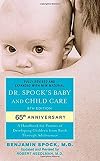
This book has entered our cultural legacy as one of the most important ones published within the last century. I've been able to appreciate it for that fact, but it hasn't stopped my overall disillusionment with the book and its premise. Part of it may stem from the fact that the book is constantly being updated. (I much prefer the older, original versions, even if solely for its value as an historical document rather than a must-have for parenting advice). Naturally I understand why, as the show more world is constantly changing and parents need to know what's going on. But there are some things about parenting, nurturing, and love that are constant, regardless of what happens.
A lot of the advice given here is very generic, and in an attempt to cover everything, the book gets bogged down with too much information. Although it advocates treating children as individuals, and supposedly puts control in the hands of the parents, one still senses a veneer of self-righteousness throughout: "You are the parent, but this really is the best way to go about the problem if you want a happy baby. But again, it's all up to you." (No one said this, I'm just giving an example of the tone). I can't speak for everyone, as this book may have been the best thing to happen for some parents. But I still say that if someone relies so heavily on a book to tell them what one hopes is instinctual, then all was not well in the state of Denmark to begin with. Although the premise of the book is that parents know more than they think they do, and that common sense is key, having an entire book to tell them what they apparently already know defeats the premise.
Furthermore, at least for me, the text doesn't provide enough room to discuss cultural differences in child-rearing and interaction, which may not fit into mainstream parenting ideas. These methods may seem different or unusual, but that doesn't mean that they're bad for children. For example, using a scarf or long strip of cloth to carry a baby around on one's back, versus a Snuggli carrier; not buying a high chair because a child is always on someone's lap, or letting children eat and drink certain foods when they're young. (I won't even get started on the whole spanking issue). I can't speak for everyone, but I would imagine that different groups might not see their own parental experiences/impressions expressed and validated throughout the text.
To sum up this review, I'd like to recount a conversation that I had with my mother. I asked her once whether she went to Lamaze classes or read books about different aspects of parenthood, such as breastfeeding, bathing, etc. She replied: "I didn't need a class to tell me how to breathe, or someone to show me how to feed my child." When the time comes for me to have children, I'm just going to ask my mother for advice. She's the best wellspring of knowledge I know. I realize that everyone's situation is different. But I wonder how better off we'd all be if others did the same, and just let nature take its course. show less
A lot of the advice given here is very generic, and in an attempt to cover everything, the book gets bogged down with too much information. Although it advocates treating children as individuals, and supposedly puts control in the hands of the parents, one still senses a veneer of self-righteousness throughout: "You are the parent, but this really is the best way to go about the problem if you want a happy baby. But again, it's all up to you." (No one said this, I'm just giving an example of the tone). I can't speak for everyone, as this book may have been the best thing to happen for some parents. But I still say that if someone relies so heavily on a book to tell them what one hopes is instinctual, then all was not well in the state of Denmark to begin with. Although the premise of the book is that parents know more than they think they do, and that common sense is key, having an entire book to tell them what they apparently already know defeats the premise.
Furthermore, at least for me, the text doesn't provide enough room to discuss cultural differences in child-rearing and interaction, which may not fit into mainstream parenting ideas. These methods may seem different or unusual, but that doesn't mean that they're bad for children. For example, using a scarf or long strip of cloth to carry a baby around on one's back, versus a Snuggli carrier; not buying a high chair because a child is always on someone's lap, or letting children eat and drink certain foods when they're young. (I won't even get started on the whole spanking issue). I can't speak for everyone, but I would imagine that different groups might not see their own parental experiences/impressions expressed and validated throughout the text.
To sum up this review, I'd like to recount a conversation that I had with my mother. I asked her once whether she went to Lamaze classes or read books about different aspects of parenthood, such as breastfeeding, bathing, etc. She replied: "I didn't need a class to tell me how to breathe, or someone to show me how to feed my child." When the time comes for me to have children, I'm just going to ask my mother for advice. She's the best wellspring of knowledge I know. I realize that everyone's situation is different. But I wonder how better off we'd all be if others did the same, and just let nature take its course. show less

This was the first book I bought in 1977 when I was a young married woman with a tiny baby girl and a big heart full of insecurities. And as hard as it is to now imagine, that was back in the day before The Internet. Thus, this book was well used and well appreciated.

Reassuring and Valuable Advice --
"Dr. Spock's Baby and Child Care" is an essential resource for parents. The book is well organized and covers its subject matter in a clear, common sense manner. I relied on it, along with How to Raise a Healthy Child in Spite of Your Doctor by Dr. Robert Mendelsohn. These books provided essential parenting support: they helped me cope and successfully manage many crises, incidents, and minor problems through my daughter's infancy, childhood, and early show more teens.
Dr. Spock's respect for his readers helped me gain self-confidence and follow my own instincts and judgment. His encouragement to "trust yourself" is coupled with medical information and parameters that enable appropriate decisions. show less
"Dr. Spock's Baby and Child Care" is an essential resource for parents. The book is well organized and covers its subject matter in a clear, common sense manner. I relied on it, along with How to Raise a Healthy Child in Spite of Your Doctor by Dr. Robert Mendelsohn. These books provided essential parenting support: they helped me cope and successfully manage many crises, incidents, and minor problems through my daughter's infancy, childhood, and early show more teens.
Dr. Spock's respect for his readers helped me gain self-confidence and follow my own instincts and judgment. His encouragement to "trust yourself" is coupled with medical information and parameters that enable appropriate decisions. show less

Didn't we all think we needed this book to raise our babies right? There's some good common sense in here, but I relied mainly on phone calls to my mother!
Lists
Awards


You May Also Like


Associated Authors
Statistics
- Works
- 60
- Also by
- 1
- Members
- 1,583
- Popularity
- #16,301
- Rating
- 3.6
- Reviews
- 9
- ISBNs
- 144
- Languages
- 15
- Favorited
- 1