

T. Berry Brazelton (1918–2018)
Author of Touchpoints-Birth to Three
About the Author
Thomas Berry Brazelton Jr. was born in Waco, Texas on May 10, 1918. He received a bachelor's degree from Princeton University in 1940 and a medical degree from Columbia University College of Physicians and Surgeons in 1943. He took his pediatric training at Boston Children's Hospital in 1947 and show more went on to study child psychiatry at Massachusetts General and the James Jackson Putnam Children's Center. In 1950, he began a private practice in pediatrics and was an instructor at Harvard Medical School. He also went on to teach at Brown University. He revolutionized people's understanding of how children develop psychologically. He wrote around 40 books including Infants and Mothers: Differences in Development, wrote a column in Family Circle magazine, and was the host of the show What Every Baby Knows, which ran for 12 years. He received the World of Children Award for his achievements in child advocacy in 2002 and the Presidential Citizens Medal in 2013. His memoir, Learning to Listen: A Life Caring for Children, was published in 2013. He died on March 13, 2018 at the age of 99. (Bowker Author Biography) show less
Works by T. Berry Brazelton
The Irreducible Needs of Children: What Every Child Must Have to Grow, Learn, and Flourish (2000) 140 copies
Touchpoints: Both Volumes of the Nation's Most Trusted Guide to the First Six Years of Life (1994) 13 copies
Il tuo bambino e... il sonno. Una guida autorevole per aiutare vostro figlio a dormire (2003) 4 copies
Il tuo bambino e... il vasino. Una guida autorevole per insegnare a vostro figlio la pulizia e l'igiene (2004) 3 copies
Il tuo bambino e... la disciplina. Una guida autorevole per porre «limiti» a vostro figlio (2003) 3 copies
A Maternidade e a vida profissinal 2 copies
O DESENVOLVIMENTO DO APEGO 1 copy
O Grande Livro da Criança 1 copy
National Seminar Series 1 copy
What Should Kids Be Told? 1 copy
Touchpoints, Volume 1 1 copy
Touchpoints, Volume 2 1 copy
Touchpoints, Volume 3 1 copy
Il tuo bambino e... la gelosia. Una guida autorevole per contenere la rivalità tra fratelli (2007) 1 copy
Il tuo bambino e... il pianto. Una guida autorevole per decifrare il pianto di vostro figlio (2003) 1 copy
Und was ist mit den Kindern?. Beruf und Kinder. Beispiele, Erfahrungen, Hilfen für berufstätige Mütter und Väter (1989) 1 copy
Associated Works
A World of Ideas : Conversations With Thoughtful Men and Women About American Life Today and the Ideas Shaping Our Future (1989) — Interviewee — 603 copies, 1 review
At A Loss For Words: How America Is Failing Our Children And What We Can Do About It (2005) — Foreword — 7 copies
Tagged
Common Knowledge
- Canonical name
- Brazelton, T. Berry
- Legal name
- Brazelton, Thomas Berry
- Birthdate
- 1918-05-10
- Date of death
- 2018-03-13
- Gender
- male
- Education
- Princeton University
Columbia University - Occupations
- pediatrician
columnist
television host
professor emeritus (Clinical Pediatrics) - Organizations
- The New York Times Syndicate
Lifetime
Boston Children’s Hospital - Nationality
- USA
- Birthplace
- Waco, Texas, USA
- Place of death
- Barnstable, Massachusetts, USA
- Associated Place (for map)
- USA
Members
Reviews

Dr. Brazelton, the internationally famous pediatrician, in collaboration with an eminent child psychiatrist, has brought his unique insights to the preschool and first-grade years. In his warm, funny, empathic tone, he again listens to the child's perspective while also showing his characteristic compassion for the parents' feelings.
First the authors profile four very different children, followed throughout these years in a delightful and revealing narrative that applies the touchpoints show more theory to each of the great cognitive, behavioral, and emotional leaps that a child makes from ages three through six.
The second part of the book, arranged alphabetically by topic, offers guidance to parents facing contemporary pressures and stresses, such as how to keep a child safe without instilling fear, countering the electronic barrage of violent games and marketing aimed at children, coping successfully with varied family configurations, shifting gender roles, over-scheduling, competition, and more. show less
First the authors profile four very different children, followed throughout these years in a delightful and revealing narrative that applies the touchpoints show more theory to each of the great cognitive, behavioral, and emotional leaps that a child makes from ages three through six.
The second part of the book, arranged alphabetically by topic, offers guidance to parents facing contemporary pressures and stresses, such as how to keep a child safe without instilling fear, countering the electronic barrage of violent games and marketing aimed at children, coping successfully with varied family configurations, shifting gender roles, over-scheduling, competition, and more. show less
Touchpoints: The Essential Reference--Your Child's Emotional and Behavioral Development by T. Berry Brazelton

Touchpoints by T. Berry Brazelton, MD. Epiphany library section 8 I: Life Skills, Learning K-12. This book by kindly pediatrician Dr. Brazelton defines a “touchpoint” as a predictable time that occurs just before a surge in rapid growth in any line of development – motor, cognitive, or emotional– where, for a short time, the child’s behavior falls apart. Parents can no longer rely on baby’s past accomplishments. The child often regresses in several areas and becomes difficult to show more understand. Parents become unglued. Over the years, Dr. Brazelton has found that these periods of regression become a window through which parents can view the great energy that fuels the child for learning. It’s almost as if the child puts into the background new things he has recently learned in order to marshal his forces to accomplish something brand new – learning to walk, become toilet-trained, and so on. A child’s particular strengths, vulnerabilities, temperament and coping style are highly visible at these times. This enables parents to understand their child more fundamentally as an individual.
Part 1 of this book is organized around these touchpoints from pregnancy to three years old. Part 2 takes up specific issues of child-rearing from birth to age six that can challenge normal development, such as sibling rivalry, crying, tantrums, fears, emotional manipulations, and so on. Part 3 examines ways in which children’s development is affected by those around them. Each close relationship – with mothers, fathers, grandparents, friends, teachers – all contribute to the child’s emotional and behavioral growth.
Dr. Brazelton says that no child’s development is a steady rise upward. There are peaks, valleys and plateaus. Each new task a baby learns is demanding, and requires all of baby’s energy as well as those of the caregivers. For example, when a baby is learning to walk, everyone pays a price – it is costly to everyone’s peace of mind. The next phase of development will be spent consolidating and enriching this last achievement. The child gains a new skill, and the pressure is off, at least for a little while until the next spurt begins.
Who knew? This book goes a long way into explaining why those peaks, valleys and plateaus occur and why one month a baby is a placid little love and the next month is a shrieking imp. Lucky is the child whose parents read books like this so that they can learn about child development and predict what will happen next in their child’s development. This makes child-rearing easier for parents.
If there were three child development experts I most depended upon they were this author, Mister Rogers, and Dr. Spock. Though this book is now 20 years old all of his comments still apply. The only thing I found outdated was the fact that he did not recommend laying a baby on its back to sleep. Emerging data on SIDS has, since the writing of this book, recommended that babies no longer be placed on their stomachs to sleep. I made a note of that where necessary in the margins. (I don’t generally write in our library books, but in this case I make an exception because it’s important.) show less
Part 1 of this book is organized around these touchpoints from pregnancy to three years old. Part 2 takes up specific issues of child-rearing from birth to age six that can challenge normal development, such as sibling rivalry, crying, tantrums, fears, emotional manipulations, and so on. Part 3 examines ways in which children’s development is affected by those around them. Each close relationship – with mothers, fathers, grandparents, friends, teachers – all contribute to the child’s emotional and behavioral growth.
Dr. Brazelton says that no child’s development is a steady rise upward. There are peaks, valleys and plateaus. Each new task a baby learns is demanding, and requires all of baby’s energy as well as those of the caregivers. For example, when a baby is learning to walk, everyone pays a price – it is costly to everyone’s peace of mind. The next phase of development will be spent consolidating and enriching this last achievement. The child gains a new skill, and the pressure is off, at least for a little while until the next spurt begins.
Who knew? This book goes a long way into explaining why those peaks, valleys and plateaus occur and why one month a baby is a placid little love and the next month is a shrieking imp. Lucky is the child whose parents read books like this so that they can learn about child development and predict what will happen next in their child’s development. This makes child-rearing easier for parents.
If there were three child development experts I most depended upon they were this author, Mister Rogers, and Dr. Spock. Though this book is now 20 years old all of his comments still apply. The only thing I found outdated was the fact that he did not recommend laying a baby on its back to sleep. Emerging data on SIDS has, since the writing of this book, recommended that babies no longer be placed on their stomachs to sleep. I made a note of that where necessary in the margins. (I don’t generally write in our library books, but in this case I make an exception because it’s important.) show less
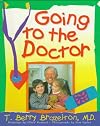
Going to the Doctor by T. Berry Brazelton, MD. Epiphany library section 9 B: Juvenile (gr. K-5), Science. From my favorite pediatrician comes this warm, delightful book for parents and their kids age 4-8 about going to the doctor. Dr. Brazelton tells kids why they go to the doctor’s office even when they are not sick, and covers what the doctor does during a check-up, from measuring a child’s height and weight, to using a stethoscope, otoscope, blood pressure cuff, eye chart, medicines, show more and sometimes....gulp...shots! He discusses the various body systems such as heart, lungs, muscles, and nerves. His years of pediatric experience have enabled him to discover children’s fears and questions about doctor visits. He addresses these concerns with warmth, honesty, good humor, and a touch of medical knowledge which teaches children the basics of good health.
Dr. Brazelton asked his grandson to draw pictures about various aspects of a visit to the doctor, and readers will find them hilarious and so, so true. There are also colorful photos of Dr. Brazelton performing parts of a checkup with various children. His friendly smile would win any child’s trust. I have found his books very helpful over the years. Enjoy this book with your children, especially if they are less than thrilled with going to the doctor. show less
Dr. Brazelton asked his grandson to draw pictures about various aspects of a visit to the doctor, and readers will find them hilarious and so, so true. There are also colorful photos of Dr. Brazelton performing parts of a checkup with various children. His friendly smile would win any child’s trust. I have found his books very helpful over the years. Enjoy this book with your children, especially if they are less than thrilled with going to the doctor. show less
Touchpoints: Birth to 3 : Your Child's Emotional and Behavioral Development (Touchpoints) by T. Berry Brazelton
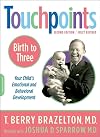
This was nice to have read. It's not a go-to book--not what you'll look in when your kid has a fever, but a pretty useful reference for where you could should be/will be/has been, developmentally.
Awards

You May Also Like


Associated Authors
Statistics
- Works
- 76
- Also by
- 3
- Members
- 1,881
- Popularity
- #13,680
- Rating
- 3.9
- Reviews
- 12
- ISBNs
- 193
- Languages
- 9