
On This Page
Description
NEW YORK TIMES BESTSELLER • A NEW YORK TIMES NOTABLE BOOK • “Sharply, evocatively written and elaborately plotted . . . [Red Square] should find as many friends as did Gorky Park.”—The Washington Post Book WorldBack from exile in the hellish reaches of the Soviet Union, homicide investigator Arkady Renko discovers that his country, his Moscow, even his job, are nearly dead. But his enemies are very much alive, and foremost among them are the powerful black-market crime lords of show more the Russian mafia. Hounded by this terrifying new underworld, chased by the ruthless minions of the newly rich and powerful, and tempted by his great love, defector Irina Asanova, Arkady can only hope desperately for escape. But fate has something else in store.
“Gripping . . . Smith at his best.”—The Wall Street Journal
“A crackling suspense thriller.”—The Boston Globe
“Fascinating . . . powerful.”—The Philadelphia Inquirer
“Absorbing.”—The New York Times
“Extraordinary.”—Time. show less
Tags
Recommendations






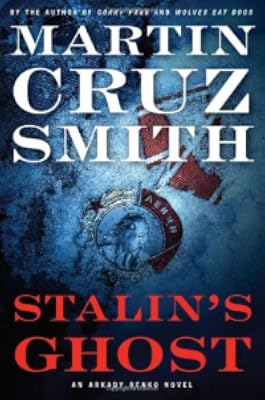



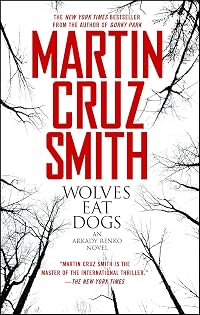





Member Reviews
I grew up with my parents getting a succession of Cold War spy thrillers from the library every two weeks, where the evil agents of the Soviet Union enacted arcane and incomprehensible plots against The West that often resulted in a climactic and suspenseful climax involving the threat of global thermonuclear war. It tends to shape your perceptions a little, and I got into the habit of reading the last page of these books to see if the world survived, perhaps hoping to read auguries of our likely future, and mostly the spies and the soldiers of the West saved the day. Though not always.
Anyway, Gorky Park comes along, a police thriller set in Russia with Russian characters and a Russian hero and apparently nothing to do with global show more thermonuclear war and it felt like an anomaly. I never read it, just in case the world sneakily blew up halfway through, but I saw the film. Russian life from a Russian POV as portrayed by a western author. Weird.
So I recently rewatched the film on Netflix and that spurred me to order up Red Square from the library, since at some point in the intervening years I did read Polar Star. And... wow.
Though written near enough to contemporaneous with events, this has the feel of a historical thriller that engages in carefully and meticulous world-building to recreate a lost period - the sights, sounds, smells and lives of Russia after the fall of the Wall, with the people wretched and starving, queuing endlessly for food and vodka, gangs on rise and gangster hypercapitalism revving up to its various excesses.
Arkady Renko, back from exile in Siberia, now with his own team. When an informant is murdered horribly one night at a black market he finds himself pushing against all the usual sorts of official and unofficial resistance, even rediscovering the voice of his lost love. Renko follows the tangled bloody trail with dogged determination, all the way to a climax on the steps of the Moscow White House during the coup.
This is so astonishingly well-written, it's almost mesmerising. I'm definitely getting the rest of the books in the series, and might even loop back to the first two. Its possible the world will blow up before I get to the end, or perhaps that's just another silly childhood fear. show less
Anyway, Gorky Park comes along, a police thriller set in Russia with Russian characters and a Russian hero and apparently nothing to do with global show more thermonuclear war and it felt like an anomaly. I never read it, just in case the world sneakily blew up halfway through, but I saw the film. Russian life from a Russian POV as portrayed by a western author. Weird.
So I recently rewatched the film on Netflix and that spurred me to order up Red Square from the library, since at some point in the intervening years I did read Polar Star. And... wow.
Though written near enough to contemporaneous with events, this has the feel of a historical thriller that engages in carefully and meticulous world-building to recreate a lost period - the sights, sounds, smells and lives of Russia after the fall of the Wall, with the people wretched and starving, queuing endlessly for food and vodka, gangs on rise and gangster hypercapitalism revving up to its various excesses.
Arkady Renko, back from exile in Siberia, now with his own team. When an informant is murdered horribly one night at a black market he finds himself pushing against all the usual sorts of official and unofficial resistance, even rediscovering the voice of his lost love. Renko follows the tangled bloody trail with dogged determination, all the way to a climax on the steps of the Moscow White House during the coup.
This is so astonishingly well-written, it's almost mesmerising. I'm definitely getting the rest of the books in the series, and might even loop back to the first two. Its possible the world will blow up before I get to the end, or perhaps that's just another silly childhood fear. show less
Arkady is sort of returned to his former self. Reluctantly I think, but the new regime has to maintain at least the appearance of change. His reputation precedes him and no one knows whether they should trust him or whose side he’s on and he has no allies as usual. They know he’s talented, but I get the feeling they only put him on shit detail because of this. Despite his broken and battered state, his characteristic deviousness and intelligence comes to the fore to crack the case and stay alive.
Again, we’ve got an up close and personal view into Soviet life. At this point in time the Communist Party is losing control of the country and with the wall in Germany now down, time is short for life as they know it. When Arkady lands in show more Germany he sees exactly how much the Soviet Union is suffering. Suddenly there is food aplenty and consumer goods as far as the eye can see.
The reunion with Irina is painful to read. She is hurt and trying not to let herself become vulnerable to him again. At first she seems overly bitchy and cold. Later she tells him that she looked for him. She tried to find him. Moved all around and tried to figure ways to draw him out of the Soviet Union. But Arkady’s conviction that if he so much as thinks about Irina their enemies will find her and kill her keeps him from even considering the possibility that she might try to find him. It’s heart wrenching and painful, but when they do come together it is very sweet and very poignant.
In a sense I wish this were the last Arkady Renko novel because it ends on a relatively high note. With Irina home and by his side and his professional prospects somewhat intact, they have hope. We have hope that they will succeed. After all they’ve been through it’s the least the world can do for them. show less
Again, we’ve got an up close and personal view into Soviet life. At this point in time the Communist Party is losing control of the country and with the wall in Germany now down, time is short for life as they know it. When Arkady lands in show more Germany he sees exactly how much the Soviet Union is suffering. Suddenly there is food aplenty and consumer goods as far as the eye can see.
The reunion with Irina is painful to read. She is hurt and trying not to let herself become vulnerable to him again. At first she seems overly bitchy and cold. Later she tells him that she looked for him. She tried to find him. Moved all around and tried to figure ways to draw him out of the Soviet Union. But Arkady’s conviction that if he so much as thinks about Irina their enemies will find her and kill her keeps him from even considering the possibility that she might try to find him. It’s heart wrenching and painful, but when they do come together it is very sweet and very poignant.
In a sense I wish this were the last Arkady Renko novel because it ends on a relatively high note. With Irina home and by his side and his professional prospects somewhat intact, they have hope. We have hope that they will succeed. After all they’ve been through it’s the least the world can do for them. show less
Red Square is the third book in Martin Cruz Smith’s Arkady Renko series, following Renko’s introduction in Gorky Park and Siberian exile in Polar Star. In Red Square, Renko is back in Moscow, reinstated as an investigator with the militia. His efforts to discover the killer of a black market financier lead him to the world of high-stakes art smuggling, the Munich studios of Radio Liberty, and the arms of his lost love Irina.
Set at the brink of the 1991 “August Coup” that precipitated the final breakup of the Soviet Union, Red Square is as moody and grim as all the Renko novels. Mafioso capitalists – still more robber than baron – vie for control of the fledgling new economy while people stand in line for beets and Party show more apparatchiks cling to the shreds of power. Smith captures the inherent dichotomies with snapshots such as this scene at the end of Renko’s interview of a suspect at the man’s Western-style sports bar:
Borya . . . dropped his voice. . . . “[D]o you think I’d endanger all this, everything I’ve achieved, to take some sort of primitive revenge? That’s the old mentality. We have to catch up with the rest of the world or we’re going to be left behind. We’ll all be in empty buildings and starving to death. We have to change. Do you have a card?” he asked suddenly.
“Party card?”
“We collect business cards and have a drawing once a month for a bottle of Chivas Regal.” Borya controlled a smile, barely.
It is detailed touches like this – as well as emotionally evocative lines such as “despair saturated the air” and “the threadbare overcoats of Soviet crime” – that create the authentic atmosphere in Smith’s novels and raise them above the typical thriller.
Also posted on Rose City Reader. show less
Set at the brink of the 1991 “August Coup” that precipitated the final breakup of the Soviet Union, Red Square is as moody and grim as all the Renko novels. Mafioso capitalists – still more robber than baron – vie for control of the fledgling new economy while people stand in line for beets and Party show more apparatchiks cling to the shreds of power. Smith captures the inherent dichotomies with snapshots such as this scene at the end of Renko’s interview of a suspect at the man’s Western-style sports bar:
Borya . . . dropped his voice. . . . “[D]o you think I’d endanger all this, everything I’ve achieved, to take some sort of primitive revenge? That’s the old mentality. We have to catch up with the rest of the world or we’re going to be left behind. We’ll all be in empty buildings and starving to death. We have to change. Do you have a card?” he asked suddenly.
“Party card?”
“We collect business cards and have a drawing once a month for a bottle of Chivas Regal.” Borya controlled a smile, barely.
It is detailed touches like this – as well as emotionally evocative lines such as “despair saturated the air” and “the threadbare overcoats of Soviet crime” – that create the authentic atmosphere in Smith’s novels and raise them above the typical thriller.
Also posted on Rose City Reader. show less
This is the third Renko book and it was OK. It has to do with the black marketing of artwork, though it took awhile before that becomes clear. Part of the mystery is the question "Where is Red Square?" which Arkady hears on the phone of a recently murdered black market money launderer. The "red" herring is the misunderstanding of the word "square" in Russian versus English. Anyway, not to give too much away -- it is all figured out by the end.
A very good representation of the chaos in Russia after the fall of the Iron Curtain.
A very good representation of the chaos in Russia after the fall of the Iron Curtain.
This book is set in the former USSR and Germany in the summer of 1991. Those of us who can remember that far back will recall that summer as a time when the fate of Russia could have gone a different way. If you don't remember that summer this article from wikipedia provides an excellent summary of the events.
So that is the background of the book which tells the story of Investigator Arkady Renko looking for the murderer of a Jewish mafia boss who was collaborating with Renko. Renko has recently returned to Moscow after spending some time in Siberia and aboard fishing trawlers for infractions under the Communist rule which put him into exile. Now, with glasnost and perestroika, Renko has been returned to his office as Chief show more Investigator and he even has a staff although equipment for forensic investigation is virtually nonexistent. As Renko follows the clues he learns that there is some connection with Munich, Germany. He has also just heard his former lover and defector, Irina, broadcasting for Liberty Radio from Munich. He manages to get to Munich and, despite having no official status and almost no money, he starts to zero in on the culprit(s). He also contacts Irina who initially professes to have almost forgotten him. As the story unfolds he and Irina keep interacting. In fact, Irina has some key information for Renko although she is not aware of the connection. Irina and Renko return to Moscow just after the coup attempt and the story concludes on the steps of the White House (the Soviet parliamentary building).
Smith evokes the tenor of the times magnificently. This is a work of history as well as mystery and it was superbly written. The contrast between life in Moscow with shortages of everything and the excessive opulence in Germany are shocking. The mystery itself takes so many twists and turns that at times I had trouble keeping up but it was worth it. I haven't read the book that is set between Gorky Park and Red Square but that is a lack I intend to remedy soon. show less
So that is the background of the book which tells the story of Investigator Arkady Renko looking for the murderer of a Jewish mafia boss who was collaborating with Renko. Renko has recently returned to Moscow after spending some time in Siberia and aboard fishing trawlers for infractions under the Communist rule which put him into exile. Now, with glasnost and perestroika, Renko has been returned to his office as Chief show more Investigator and he even has a staff although equipment for forensic investigation is virtually nonexistent. As Renko follows the clues he learns that there is some connection with Munich, Germany. He has also just heard his former lover and defector, Irina, broadcasting for Liberty Radio from Munich. He manages to get to Munich and, despite having no official status and almost no money, he starts to zero in on the culprit(s). He also contacts Irina who initially professes to have almost forgotten him. As the story unfolds he and Irina keep interacting. In fact, Irina has some key information for Renko although she is not aware of the connection. Irina and Renko return to Moscow just after the coup attempt and the story concludes on the steps of the White House (the Soviet parliamentary building).
Smith evokes the tenor of the times magnificently. This is a work of history as well as mystery and it was superbly written. The contrast between life in Moscow with shortages of everything and the excessive opulence in Germany are shocking. The mystery itself takes so many twists and turns that at times I had trouble keeping up but it was worth it. I haven't read the book that is set between Gorky Park and Red Square but that is a lack I intend to remedy soon. show less
Martin Cruz Smith creates a fully formed protagonist in Arkady Renko. His character is at odds with almost everything around him in the freshly created ruins behind the Iron Curtain. His disgust at the government he works for, despite his love of Mother Russia make him a pariah wherever he finds himself. Dogged determination is his only virtue, and it seems to be all he needs.
Through his eyes, Smith allows us a rare glimpse into the sad world of emerging capitalism - one without capital for the vast majority. The peculiarities of everyday life are deliciously captured in sardonic wit, and expose the absurd desperation of Russian life circa 1991. The story line is a bit convoluted, but that's what you expect from the author of Gorky show more Park, or any well written spy novel. show less
Through his eyes, Smith allows us a rare glimpse into the sad world of emerging capitalism - one without capital for the vast majority. The peculiarities of everyday life are deliciously captured in sardonic wit, and expose the absurd desperation of Russian life circa 1991. The story line is a bit convoluted, but that's what you expect from the author of Gorky show more Park, or any well written spy novel. show less
Each time I read one of his novels I'm impressed by the ability of the author to create a palpable atmosphere. The Soviet Union of this novel is one in free fall, run by rival crime gangs where hard currency reigns supreme. It truly is an insane world where a man who is supposed to find the truth can hardly keep his bearings. I liked the reunion of Arkady and someone significant from his past.
Members
- Recently Added By
Lists

Best Contemporary Literary Fiction (Around the Last 30 Years)
388 works; 124 members

Stories set in a cold Mother Russia
24 works; 1 member

Favourite Books
1,820 works; 308 members

1990s
309 works; 17 members

20th Century Literature
1,161 works; 55 members

Great American Novels
158 works; 42 members
Author Information

37+ Works 18,980 Members
Martin Cruz Smith is a writer of suspense novels. He was born in Reading, Pennsylvania, on November 3, 1942 but grew up in New Mexico and the Philadelphia area. Smith earned a B.A. from the University of Pennsylvania. Smith worked for local television stations, newspapers, and the Associated Press. His early work was published under the names show more Simon Quinn, Jake Logan, and Martin Smith. Smith is best known for a series of suspense/thrillers featuring Investigator Arkady Renko. The first of these books, Gorky Park, was published in 1981 and adapted as a film starring William Hurt and Lee Marvin two years later. An earlier film of his work, Nightwing, directed by Arthur Hiller, was released in 1979. Smith is a member of the Authors League of America and the Authors Guild. In 2013 his title Tatiana made The New York Times Best Seller List. The Girl from Venice also became a bestseller. (Bowker Author Biography) show less
Awards and Honors
Distinctions
Series

Work Relationships
Common Knowledge
- Canonical title*
- Красная площадь
- Original title
- Red Square
- Original publication date
- 1992
- People/Characters
- Arkady Renko; Irina Asanova
- Important places
- Moscow, Russia
- Dedication*
- For Em
- First words*
- In Moscow, the summer night looks like fire and smoke.
- Last words*
- (Click to show. Warning: May contain spoilers.)Overhead a helicopter shook the air and shot a flair that dropped, a matchhead in a well.
*Some information comes from Common Knowledge in other languages. Click "Edit" for more information.
Classifications
Statistics
- Members
- 1,647
- Popularity
- 13,658
- Reviews
- 27
- Rating
- (3.79)
- Languages
- 12 — Danish, Dutch, English, Finnish, French, German, Greek, Italian, Norwegian (Bokmål), Russian, Spanish, Swedish
- Media
- Paper, Audiobook, Ebook
- ISBNs
- 58
- ASINs
- 11