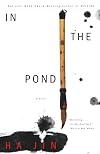
In the Pond
by Ha Jin
On This Page
Description
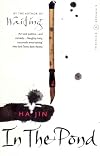
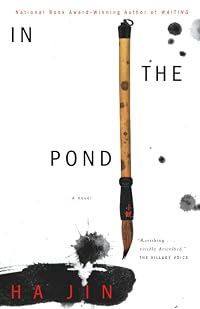
Fiction. Literature. "Ravishing . . . vividly described.". HTML:"Though art and politics figure in the action, In the Pond is first and foremost a comedy-naughty, lusty, raucously entertaining. Ha Jin's language echoes working-class Chinese at its rough, bawdy best.". "Fascinating . . . spare and taut. . . . A fable about morality and power.". HTML:National Book Award-winner Ha Jin's arresting debut novel , In the Pond, is a darkly funny portrait of an amateur calligrapher who wields his show more delicate artist's brush as a weapon against the powerful party bureaucrats who rule his provincial Chinese town.Shao Bin is a downtrodden worker at the Harvest Fertilizer Plant by day and an aspiring artist by night. Passed over on the list to receive a decent apartment for his young family, while those in favor with the party's leaders are selected ahead of him, Shao Bin chafes at his powerlessness. When he attempts to expose his corrupt superiors by circulating satirical cartoons, he provokes an escalating series of merciless counterattacks that send ripples beyond his small community. Artfully crafted and suffused with earthy wit, In the Pond is a moving tale about humble lives caught up in larger social forces. show less
Tags
Recommendations




Member Reviews
Ha Jin's first novel, In The Pond, tells the story of Shao Bin - a worker at a factory in a small Chinese town whose artistic talents go unappreciated by his superiors. What starts as trouble over housing allocations in the centrally-planned economy soon escalates into an exposé of corruption and allegations of persecution as Shao Bin's troubles continue to increase.
The concept of satire is at the heart of this novel both in its narrative and theme. Shao Bin is an artist and satirist foremost and Ha Jin uses satire and comedy to tell a fable of power and morality. A comedy of political pettiness, Ha Jin captures perfectly the small-minded nature of bureaucracy amidst the turbulent setting of China in the 1970s.
Yet despite all his show more struggles to improve his standing at the plant where he works and to expose corruption therein, he is easily placated by a new job offer that removes his antagonistic stance from the plant; he chooses to remain a big fish "in the [small] pond" where his talents can be displayed, rather than working to change himself and his family's life (as seen during the climax of the novel). Though this conclusion feels somewhat anticlimactic, since one would hope Shao Bin would achieve all that he set out to do, it perfectly encapsulates the mentality of this era in China and serves as a reminder of the allure of even a little bit of power.
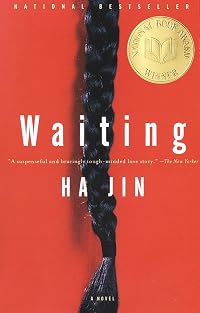
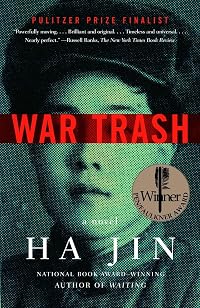
Nevertheless, this short novel is an excellent introduction to Ha Jin's works and reveals (as [b:Waiting|235773|Waiting|Ha Jin|https://d202m5krfqbpi5.cloudfront.net/books/1327881519s/235773.jpg|985211] and [b:War Trash|14729|War Trash|Ha Jin|https://d202m5krfqbpi5.cloudfront.net/books/1386922155s/14729.jpg|1267529] also do) a fascinating and little-known aspect of contemporary Chinese social history. show less
The concept of satire is at the heart of this novel both in its narrative and theme. Shao Bin is an artist and satirist foremost and Ha Jin uses satire and comedy to tell a fable of power and morality. A comedy of political pettiness, Ha Jin captures perfectly the small-minded nature of bureaucracy amidst the turbulent setting of China in the 1970s.
Yet despite all his show more struggles to improve his standing at the plant where he works and to expose corruption therein, he is easily placated by a new job offer that removes his antagonistic stance from the plant; he chooses to remain a big fish "in the [small] pond" where his talents can be displayed, rather than working to change himself and his family's life (as seen during the climax of the novel). Though this conclusion feels somewhat anticlimactic, since one would hope Shao Bin would achieve all that he set out to do, it perfectly encapsulates the mentality of this era in China and serves as a reminder of the allure of even a little bit of power.
Nevertheless, this short novel is an excellent introduction to Ha Jin's works and reveals (as [b:Waiting|235773|Waiting|Ha Jin|https://d202m5krfqbpi5.cloudfront.net/books/1327881519s/235773.jpg|985211] and [b:War Trash|14729|War Trash|Ha Jin|https://d202m5krfqbpi5.cloudfront.net/books/1386922155s/14729.jpg|1267529] also do) a fascinating and little-known aspect of contemporary Chinese social history. show less
The first use of his now classic cyclic structure, National Book Award winner (WAITING) Ha Jin tells of Shao Bin, a worker in a commune town and a fertilizer plant, who vies for a bigger apartment and repeatedly comes up against Party petty politics. He attempts change using cartoons, which create enough havoc to gain him the desired attention, only to be foiled again, at the end. Oh the irony. And the frustration of hitting the same wall, only harder each time until one's head explodes. Accomplished prose from this Chinese-American onetime poet.
Fictional account of morality and power in Communist China, short tightly written, vivid; will be seeking out other titles by him.
Shao Bin es un trabajador en la China maoísta que ademas es calígrafo y emprende una cruzada periodística contra sus jefes locales ante lo que entiende una profunda injusticia. Sorprendente mundo el de China, donde a veces los personajes parecen caricaturizados, sobre todo los jefes locales. Interesante.
May 4, 2011Spanish
Ratings
Members
- Recently Added By
Lists

Bureaucracies
25 works; 2 members
Author Information

34+ Works 10,452 Members
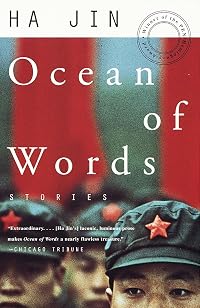
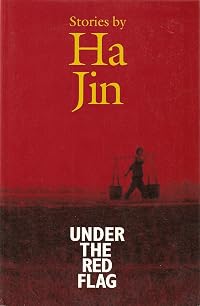
Ha Jin left his native China in 1985 and is now a professor of English at Emory University. He is author of, among other works, two short-story collections: Ocean of Words, which won the PEN/Hemingway Award, and Under the Red Flag, which won the Flannery O'Connor Award for short fiction. His novel Waiting won the National Book Award for fiction in show more 1999. He lives in Atlanta. (Bowker Author Biography) show less
Series
Belongs to Publisher Series
Common Knowledge
- People/Characters
- Shao Bin
- Dedication
- for Wen
- First words
- Shao Bin felt sick of Dismount Fort, a commune town where he had lived for over six years.
Classifications
Statistics
- Members
- 477
- Popularity
- 63,841
- Reviews
- 4
- Rating
- (3.61)
- Languages
- 6 — Chinese, Danish, Dutch, English, German, Spanish
- Media
- Paper, Ebook
- ISBNs
- 15
- ASINs
- 2