On This Page
Description
Acclaimed author Emma Newman returns to the captivating universe she created in Planetfall with a stunning science fiction mystery where one man's murder is much more than it seems ... Govcorp detective Carlos Moreno was only a baby when Atlas left Earth to seek truth among the stars. But in that moment, the course of Carlos's entire life changed. Atlas is what took his mother away; what made his father lose hope; what led Alejandro Casales, leader of the religious cult known as the Circle, show more to his door. And now, on the eve of the fortieth anniversary of Atlas's departure, it's got something to do why Casales was found dead in his hotel room--and why Carlos is the man in charge of the investigation. To figure out who killed one of the most powerful men on Earth, Carlos is supposed to put aside his personal history. But the deeper he delves into the case, the more he realises that escaping the past is not so easy. There's more to Casales's death than meets the eye, and something much more sinister to the legacy of Atlas than anyone realises. show lessTags
Recommendations

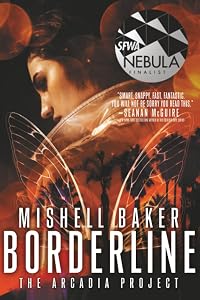
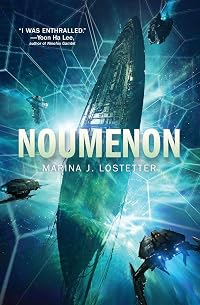
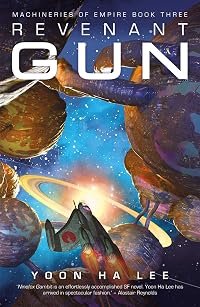


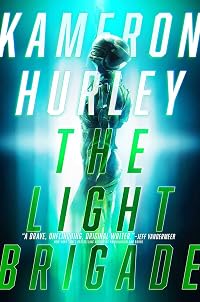

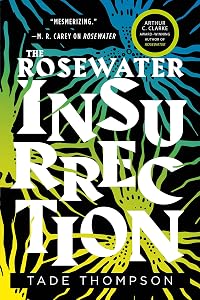
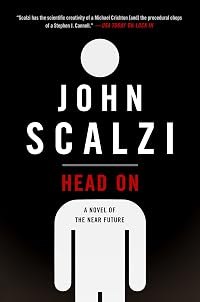
Member Recommendations
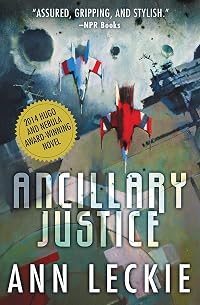
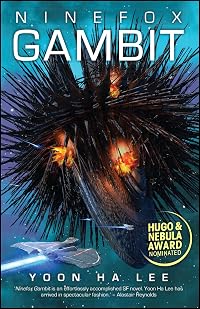
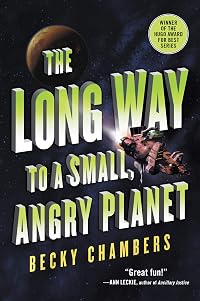
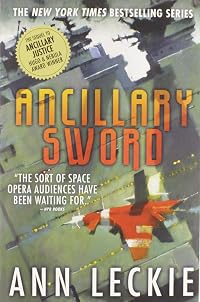
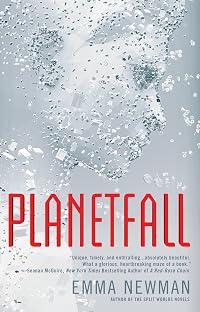
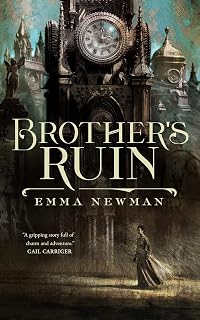
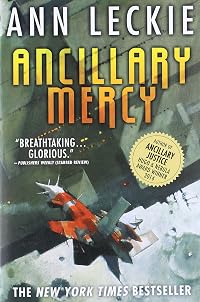
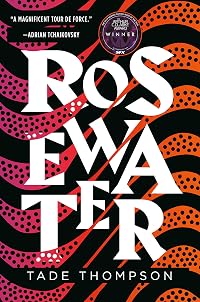
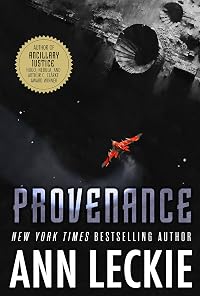
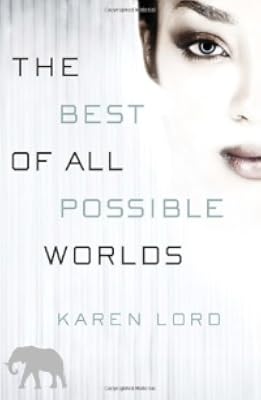
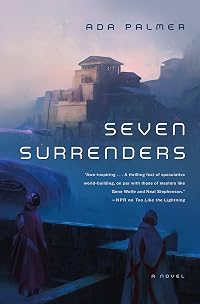
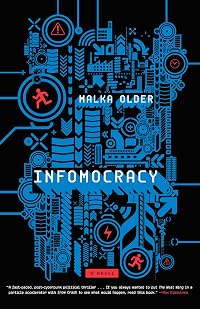
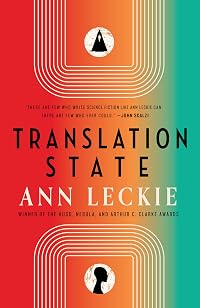
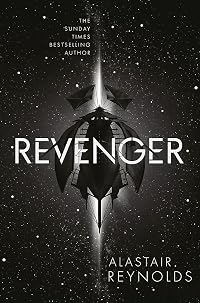
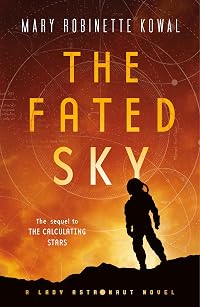
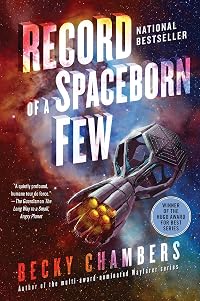
Hystoriosity Both exploring worlds with embedded AI assistants, extent of control/invasion by state/other actors, and protagonists investigating with leverage of tech.
Member Reviews
This one was one rather huge surprise for me. I mean, I liked the exploration bits and the mental disability bits in the first novel. It felt genuine and fascinating.
But this one took on a whole different feel. Cyberpunk, a heavily populated society, massive injustice, social inequality, and institutionalized slavery based on credits and indenture. I loved this aspect. I felt harrowed and despairing even as I railed against it with our main character... who has been S*** upon for 23 years, dreams of decent meals, and lives a life equivalent to a labor camp... AS a murder investigator.
Say what? Yep, specialized training, a chip in his head, wide powers to hunt down mysteries... and yet he's still pretty much a slave.
Cool, right?
The show more characterizations are all fantastic, claustrophobic, and I FEEL the need to solve the murder if only to get my mind off my horrible situation. Ahem. I mean, the CHARACTER's situation. :)
As a full-on murder mystery, I had a great time. As a worldbuilding novel, I was fascinated by so many of these details... especially the Circle. But as a character novel, I think I loved it the best.
Very well worth the read and my personal favorite between the two novels and one novelette I read. :) show less
But this one took on a whole different feel. Cyberpunk, a heavily populated society, massive injustice, social inequality, and institutionalized slavery based on credits and indenture. I loved this aspect. I felt harrowed and despairing even as I railed against it with our main character... who has been S*** upon for 23 years, dreams of decent meals, and lives a life equivalent to a labor camp... AS a murder investigator.
Say what? Yep, specialized training, a chip in his head, wide powers to hunt down mysteries... and yet he's still pretty much a slave.
Cool, right?
The show more characterizations are all fantastic, claustrophobic, and I FEEL the need to solve the murder if only to get my mind off my horrible situation. Ahem. I mean, the CHARACTER's situation. :)
As a full-on murder mystery, I had a great time. As a worldbuilding novel, I was fascinated by so many of these details... especially the Circle. But as a character novel, I think I loved it the best.
Very well worth the read and my personal favorite between the two novels and one novelette I read. :) show less
In my experience, the second book of a series is rarely better than the first book, but this is the exception. I had enjoyed "Planetfall" but was somewhat disappointed with the end. "After Atlas" kept up the good writing and had an ending which satisfied and actually has me looking forward to the next book in the series.
At first, the book hardly seems a sequel at all. The only connection is that the main character, Detective Moreno, is the son of the Pathfinder, the visionary genius whose spaceship design, the Atlas, enabled a group to colonize an alien world. Moreno was left behind as a child and has suffered an a world much like our own, but much, much worse. He is charged with solving the apparent murder of a cult leader (also one of show more the left behind) who had taken him in as a child. Moreno is conflicted. He loved this man but hated him as well.
The solving of the crime had all the aspects of a great police procedural with added tech, like a chip in his head, an Artificial Personal Assistant, instant communication through the chip, fully immersive environments to recreate the crime scene and instant DNA analysis. The tech was overlaid on the story very naturally. Well done.
The last 50 pages or so finally connects this book to "Planetfall" where we learn what's really happening. This is usually where I expect a book like this to fall apart. This one didn't. show less
At first, the book hardly seems a sequel at all. The only connection is that the main character, Detective Moreno, is the son of the Pathfinder, the visionary genius whose spaceship design, the Atlas, enabled a group to colonize an alien world. Moreno was left behind as a child and has suffered an a world much like our own, but much, much worse. He is charged with solving the apparent murder of a cult leader (also one of show more the left behind) who had taken him in as a child. Moreno is conflicted. He loved this man but hated him as well.
The solving of the crime had all the aspects of a great police procedural with added tech, like a chip in his head, an Artificial Personal Assistant, instant communication through the chip, fully immersive environments to recreate the crime scene and instant DNA analysis. The tech was overlaid on the story very naturally. Well done.
The last 50 pages or so finally connects this book to "Planetfall" where we learn what's really happening. This is usually where I expect a book like this to fall apart. This one didn't. show less
This was a bit of a chocolate box of many of my favourite things, so I really enjoyed it, though it did take a couple of chapters to properly draw me in and I might have liked the stakes to surface a little sooner.
Second in the Planetfall sequence, this novel stands alone while significantly expanding the shared world. There is no meaningful character overlap, but rather a continuation of global consequences. The story follows Carlos Moreno, a detective who is also an indentured employee of the Norope Gov-Corp. He is specially requested to investigate the death of Alejandro Casales, found in a hotel in England. Casales was the leader of a religious cult known as The Circle, which formed in the wake of Atlas’s departure from Earth, and show more one that Carlos himself escaped at sixteen. That rupture shaped the path that led him to his current role as a Ministry of Justice agent.
On the surface, this is a whodunnit mystery, and at times it even feels quaintly domestic despite its wider dystopian and geopolitical frame. Much of the investigation takes place in a luxury resort designed for people who are unchipped and therefore living without constant technological augmentation, effectively recreating something close to our contemporary world. This is a smart and welcoming entry point for readers less familiar with science fiction. From that grounded base, Newman layers in future-facing technology and social systems. I particularly enjoyed the exploration of APAs and their anticipatory behaviour, and Carlos’s deep frustration with them, which opens out into thoughtful commentary on cyber security, data privacy, autonomy, and human connection.
The political world-building is one of the novel’s real strengths. Democratic governments have been replaced by powerful Gov-Corps, and the use of indentured contracts as a mechanism of control over citizens like Carlos is chilling. Resource scarcity permeates daily life, driving inflated prices for physical space and real food, while virtual environments become commodified. Premium private cloud spaces and immersive environments come at a cost, whether that’s Carlos’s own virtual office or his meetings with superiors. Printed food, automation, and corporate control are all pushed to their logical extremes in ways that feel uncomfortably plausible.
There are, however, a couple of drawbacks. Despite an underlying time pressure, the novel rarely feels pacy. The investigation unfolds methodically, focused on careful scene reconstruction and forensic analysis of technological data rather than chases or confrontations. This is intellectually engaging, and I found it fascinating, but it's not going to tick boxes if you like hectic chases. More significantly, the geopolitical framing feels heavily Western. The primary competing powers are the US Gov-Corp, Norope, and Europe, with comparatively little depth given to South America, Africa, or Asia beyond fleeting references. This may reflect the time of writing or the sheer volume of ideas already in play, but it is noticeable.
Another area that didn’t fully work for me was the sheer accumulation of trauma in Carlos’s backstory: abandonment by his mother when she leaves on Atlas, neglect by his father, abuse after leaving The Circle, and eventual indenture. These experiences certainly contextualise his isolation, lack of trust, and emotional regulation strategies, and Newman’s engagement with mental health is something I deeply appreciate. Still, I would have preferred a lighter touch here. Those traits can exist without being rooted in such an extreme concentration of abuse, and I felt the character could have been equally convincing without quite so much being layered on.
That said, Carlos is a refreshing protagonist. A largely non-romance-driven lead, with a quietly signalled bisexuality that avoids cliché or promiscuity, felt genuinely welcome. His lack of heroics, his reliance on coping strategies, and the presence of a competent (if context-appropriately uncaring) female boss all contribute to a grounded, believable character. I also didn’t find the billionaire antagonist as cartoonish as some other reviewers have suggested. While extreme, the arc from controlling and abusive spouse to the chilling dehumanisation enabled by purchased contracts felt thematically coherent and disturbingly effective.
Overall, my reservations don’t outweigh the value and enjoyment I get from books like this. After Atlas asks sharp questions about power, technology, and social responsibility, and its concerns feel even more relevant now than at the time of publication. It’s an unsettling, thoughtful entry in the series, and likely to linger with me well beyond the final chapter. show less
Second in the Planetfall sequence, this novel stands alone while significantly expanding the shared world. There is no meaningful character overlap, but rather a continuation of global consequences. The story follows Carlos Moreno, a detective who is also an indentured employee of the Norope Gov-Corp. He is specially requested to investigate the death of Alejandro Casales, found in a hotel in England. Casales was the leader of a religious cult known as The Circle, which formed in the wake of Atlas’s departure from Earth, and show more one that Carlos himself escaped at sixteen. That rupture shaped the path that led him to his current role as a Ministry of Justice agent.
On the surface, this is a whodunnit mystery, and at times it even feels quaintly domestic despite its wider dystopian and geopolitical frame. Much of the investigation takes place in a luxury resort designed for people who are unchipped and therefore living without constant technological augmentation, effectively recreating something close to our contemporary world. This is a smart and welcoming entry point for readers less familiar with science fiction. From that grounded base, Newman layers in future-facing technology and social systems. I particularly enjoyed the exploration of APAs and their anticipatory behaviour, and Carlos’s deep frustration with them, which opens out into thoughtful commentary on cyber security, data privacy, autonomy, and human connection.
The political world-building is one of the novel’s real strengths. Democratic governments have been replaced by powerful Gov-Corps, and the use of indentured contracts as a mechanism of control over citizens like Carlos is chilling. Resource scarcity permeates daily life, driving inflated prices for physical space and real food, while virtual environments become commodified. Premium private cloud spaces and immersive environments come at a cost, whether that’s Carlos’s own virtual office or his meetings with superiors. Printed food, automation, and corporate control are all pushed to their logical extremes in ways that feel uncomfortably plausible.
There are, however, a couple of drawbacks. Despite an underlying time pressure, the novel rarely feels pacy. The investigation unfolds methodically, focused on careful scene reconstruction and forensic analysis of technological data rather than chases or confrontations. This is intellectually engaging, and I found it fascinating, but it's not going to tick boxes if you like hectic chases. More significantly, the geopolitical framing feels heavily Western. The primary competing powers are the US Gov-Corp, Norope, and Europe, with comparatively little depth given to South America, Africa, or Asia beyond fleeting references. This may reflect the time of writing or the sheer volume of ideas already in play, but it is noticeable.
Another area that didn’t fully work for me was the sheer accumulation of trauma in Carlos’s backstory: abandonment by his mother when she leaves on Atlas, neglect by his father, abuse after leaving The Circle, and eventual indenture. These experiences certainly contextualise his isolation, lack of trust, and emotional regulation strategies, and Newman’s engagement with mental health is something I deeply appreciate. Still, I would have preferred a lighter touch here. Those traits can exist without being rooted in such an extreme concentration of abuse, and I felt the character could have been equally convincing without quite so much being layered on.
That said, Carlos is a refreshing protagonist. A largely non-romance-driven lead, with a quietly signalled bisexuality that avoids cliché or promiscuity, felt genuinely welcome. His lack of heroics, his reliance on coping strategies, and the presence of a competent (if context-appropriately uncaring) female boss all contribute to a grounded, believable character. I also didn’t find the billionaire antagonist as cartoonish as some other reviewers have suggested. While extreme, the arc from controlling and abusive spouse to the chilling dehumanisation enabled by purchased contracts felt thematically coherent and disturbingly effective.
Overall, my reservations don’t outweigh the value and enjoyment I get from books like this. After Atlas asks sharp questions about power, technology, and social responsibility, and its concerns feel even more relevant now than at the time of publication. It’s an unsettling, thoughtful entry in the series, and likely to linger with me well beyond the final chapter. show less
Almost a standalone, even though it's mid-trilogy, it's the best of the set by far. Really clever and well written with an engaging character, and a well developed world.
The setting is London, some forty years after the Atlas rocket left Earth for pastures new taking a select few colonist with them (see planetfall). Our hero, Charlos, is the child of one of the women who made the flight abandoning her family (as they see it). Resource wars mean that no future expedition were ever launched and everyone's grown up with the status quo - real food a pricey luxury, but everyone apart from a few rare refuseniks, is chipped with a neural assistant, instant access and the ability to facilitate everything - and of course provide the gov-corps show more with everything they need or want to know about you. One of the refuseniks is Alejandro, charismatic leader of the Circle (a religious cult who launched the Atlas expedition). Charlos is abruptly summoned from cooking his black-market dinner, to a meeting with his boss in the Ministry of Justice. Alejandro has been found murdered and dismembered in an exclusive Devon hotel. His lack of chip, and nature of the resort, means they can't just pull the data and reconstruct the crime. They need a rare investigator in person - Charlos. His first hurdle is that legal complications between the US,EU and UK/Nor Gov-corps have held up matters for three days, giving the prime suspect (one of tow attending Circle flunkies) that much head start, but they're sure he hasn't yet left the UK.
It's just clever and really well done. A thoughtful police-procedural set in a technologically advanced, but politically restricted world. The interaction between the technology and human abilities is just brilliantly done, allowing intuition to shine, and pulling in, and sorting through the vast amount of data available is the realm of the AI. It fairly quickly becomes clear what happened, but proving who and more importantly why is just as important to Charlos, even if his contract is just to find the murderer.
Probably improved by only lightly referencing those ideas and characters from PlanetFall. The only loose end is that we never get to find out what was kept in the capsule that the Pathfinder left behind.
Well worth reading and excellent cross over between SF and crime. show less
The setting is London, some forty years after the Atlas rocket left Earth for pastures new taking a select few colonist with them (see planetfall). Our hero, Charlos, is the child of one of the women who made the flight abandoning her family (as they see it). Resource wars mean that no future expedition were ever launched and everyone's grown up with the status quo - real food a pricey luxury, but everyone apart from a few rare refuseniks, is chipped with a neural assistant, instant access and the ability to facilitate everything - and of course provide the gov-corps show more with everything they need or want to know about you. One of the refuseniks is Alejandro, charismatic leader of the Circle (a religious cult who launched the Atlas expedition). Charlos is abruptly summoned from cooking his black-market dinner, to a meeting with his boss in the Ministry of Justice. Alejandro has been found murdered and dismembered in an exclusive Devon hotel. His lack of chip, and nature of the resort, means they can't just pull the data and reconstruct the crime. They need a rare investigator in person - Charlos. His first hurdle is that legal complications between the US,EU and UK/Nor Gov-corps have held up matters for three days, giving the prime suspect (one of tow attending Circle flunkies) that much head start, but they're sure he hasn't yet left the UK.
It's just clever and really well done. A thoughtful police-procedural set in a technologically advanced, but politically restricted world. The interaction between the technology and human abilities is just brilliantly done, allowing intuition to shine, and pulling in, and sorting through the vast amount of data available is the realm of the AI. It fairly quickly becomes clear what happened, but proving who and more importantly why is just as important to Charlos, even if his contract is just to find the murderer.
Probably improved by only lightly referencing those ideas and characters from PlanetFall. The only loose end is that we never get to find out what was kept in the capsule that the Pathfinder left behind.
Well worth reading and excellent cross over between SF and crime. show less
A very good read! Newman's ability to make me feel for the protagonist is truly impressive -- his craving for real foodstuffs, his longing to make his own decisions, his deeply troubled past with its long list of different traumas, and his obsession with solving the murder of a man he both hated and loved and hadn't seen in thirty years -- everything is made real to the reader. Add to that a very plausible-feeling future dystopia (all the more plausible in not being terribly dystopian to _everyone_, even if it is to the indentured protagonist), an excellent murder investigation and some gut-wrenching twists, I can warmly recommend this. It's a stand-alone novel in the same world as Newman's previous novel "Planetfall", and I chose to show more start here as the murder mystery angle sounded a bit fresh and interesting, but I will now definitely go back and read the other one as well. show less
Carlos is essentially a slave of the justice branch of the UK gov-corp (the replacement for democracy worldwide), and he’s sent to investigate the murder of an important political figure—who was also personally important to him: the founder of the Circle, a cult-like American group that rejects the technology that monitors and controls everyone else’s lives. Carlos left the Circle as a teenager and then worse things happened to him; he ended up “contracted” to the justice branch for decades, hoping to be free someday. The murder investigation forces him to confront old events and emotions, and sends him to even more dangerous places. Compelling and painful, with a killer ending.
Emma Newman's ability to craft a story is just blowing my mind. I loved every detail about this book: the characters and their arcs, the main murder mystery, the complex background plotlines, the little clues for each plotline throughout, and how they all intersect in the end.
The best part might be how the author creates a totally believable futuristic world with tech we don't have, but she never infodumps how it works. She weaves it into the narrative seamlessly so that we don't just understand what exists, but the context in which it's used in society. This feature is especially important when shit hits the fan and I, as a reader, am feeling the exact impact it has on the main character because the author wrote it all so well. At one show more point about 3/4 in the main character was basically going "WTF? WTF?!?!?!" and I was caught up WTFing right with him.
The audiobook narrator was just as perfect as Emma Newman was for the first book, really bringing the main character to life. So goddamn perfect. show less
The best part might be how the author creates a totally believable futuristic world with tech we don't have, but she never infodumps how it works. She weaves it into the narrative seamlessly so that we don't just understand what exists, but the context in which it's used in society. This feature is especially important when shit hits the fan and I, as a reader, am feeling the exact impact it has on the main character because the author wrote it all so well. At one show more point about 3/4 in the main character was basically going "WTF? WTF?!?!?!" and I was caught up WTFing right with him.
The audiobook narrator was just as perfect as Emma Newman was for the first book, really bringing the main character to life. So goddamn perfect. show less
Members
- Recently Added By
Lists

Best Dystopias
280 works; 277 members

Favorite Science Fiction by Women Authors
737 works; 202 members

Arthur C. Clarke Award Winners and Shortlisted Books
219 works; 14 members
LGBTQ+ Speculative Fiction
821 works; 51 members

2017 Hugo Eligible Novels
145 works; 14 members

Top Five Books of 2017
757 works; 231 members
Books Read in 2018
4,360 works; 110 members

Books Read in 2019
4,052 works; 110 members

Books Read in 2025
4,091 works; 97 members
Author Information

21+ Works 3,389 Members
Some Editions
Awards and Honors
Series

Common Knowledge
- Canonical title
- After Atlas
- Original publication date
- 2016-11-08
- People/Characters
- Carlos Moreno; Travis Gabor
- Dedication
- For my Mum:
the only person in the world who could go through what she has and come out the other side looking even more fabulous than before - First words
- It's times like these, when I'm hunkered in a doorway, waiting for a food market of dubious legality to be set up, that I find myself wishing I could eat like everyone else.
- Last words
- (Click to show. Warning: May contain spoilers.)There is nothing from Earth after Atlas.
Classifications
Statistics
- Members
- 423
- Popularity
- 73,064
- Reviews
- 29
- Rating
- (4.02)
- Languages
- English, French
- Media
- Paper, Audiobook, Ebook
- ISBNs
- 13
- ASINs
- 3