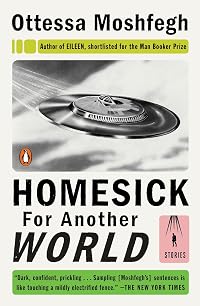
Homesick for Another World: Stories
by Ottessa Moshfegh
On This Page
Description
"An electrifying first collection from one of the most exciting short story writers of our time. Ottessa Moshfegh's debut novel Eileen was one of the literary events of 2015. Garlanded with critical acclaim, it was named a book of the year by The Washington Post and the San Francisco Chronicle, nominated for a National Book Critics Circle Award, short-listed for the Man Booker Prize, and won the PEN/Hemingway Award for debut fiction. But as many critics noted, Moshfegh is particularly held show more in awe for her short stories. Homesick for Another World is the rare case where an author's short story collection is if anything more anticipated than her novel. And for good reason. There's something eerily unsettling about Ottessa Moshfegh's stories, something almost dangerous, while also being delightful, and even laugh-out-loud funny. Her characters are all unsteady on their feet in one way or another; they all yearn for connection and betterment, though each in very different ways, but they are often tripped up by their own baser impulses and existential insecurities. Homesick for Another World is a master class in the varieties of self-deception across the gamut of individuals representing the human condition. But part of the unique quality of her voice, the echt Moshfeghian experience, is the way the grotesque and the outrageous are infused with tenderness and compassion. Moshfegh is our Flannery O'Connor, and Homesick for Another World is her Everything That Rises Must Converge or A Good Man is Hard to Find. The flesh is weak; the timber is crooked; people are cruel to each other, and stupid, and hurtful. But beauty comes from strange sources. And the dark energy surging through these stories is powerfully invigorating. We're in the hands of an author with a big mind, a big heart, blazing chops, and a political acuity that is needle-sharp. The needle hits the vein before we even feel the prick"-- show lessTags
Recommendations
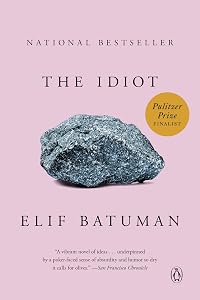
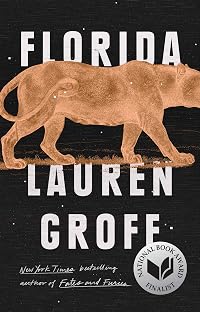
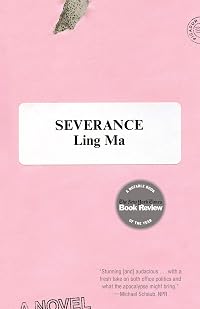

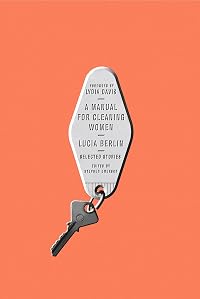
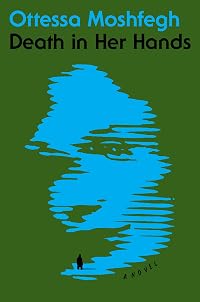
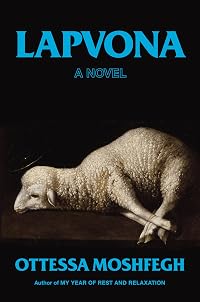
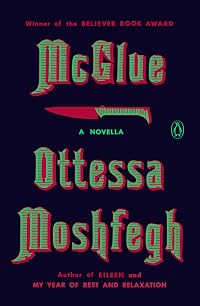
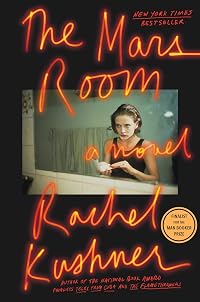
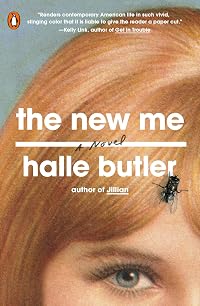
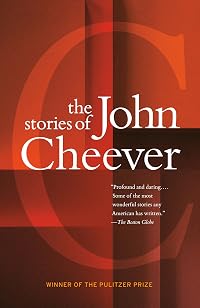
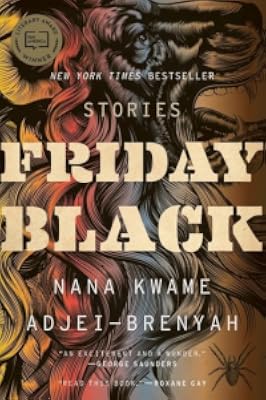
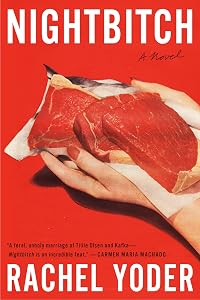
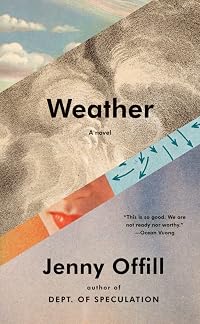
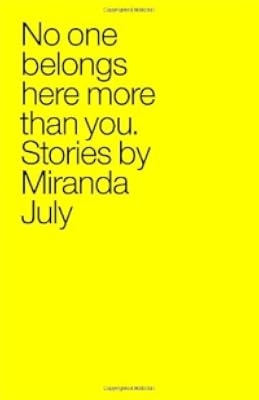
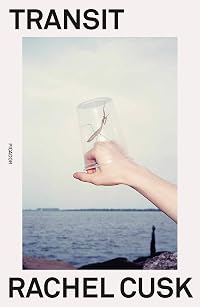
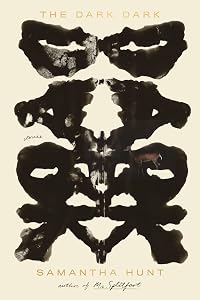

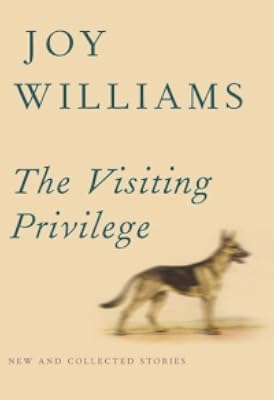
Member Recommendations
j_aroche If you ever feel like an alien in the wrong planet.
Member Reviews
I think this is the only contemporary fiction I've read set in the world in which I live, that is to say, one filled with junk food, Diet Coke, guys who think planet earth is actually the Matrix, people who ride the bus, party drugs, GI problems, halfway homes, Hooters, tabloid magazines and idiotic small talk. These stories are short, muscular, misanthropic, and very, very funny. I love Ottessa Moshfegh b/c she doesn't ask to be liked, I never felt manipulated, there are no kids in this book who know more than the adults, no symbolic colors except "piss yellow." That said, there are at least two stories in here that are heartbreaking: "God, make me feel good."
Also if you think these are science fiction stories I would say yes, they are show more science fiction stories set on planet Earth from the alien's POV. This is the work of someone who has watched & listened to human beings very closely, as if for a documentary.
I think I'm supposed to disclose that I got a free copy of this book from the publisher but that does not figure into my review. I loved it! What would they do if I didn't, ask for it back? show less
Also if you think these are science fiction stories I would say yes, they are show more science fiction stories set on planet Earth from the alien's POV. This is the work of someone who has watched & listened to human beings very closely, as if for a documentary.
I think I'm supposed to disclose that I got a free copy of this book from the publisher but that does not figure into my review. I loved it! What would they do if I didn't, ask for it back? show less
Compared to Flannery O’Connor, but they seem to me profoundly different. They both deal in what you could call the grotesque, but O’Connor’s stories offer their characters divine grace and redemption. Moshfegh’s offer nihilism. This is a collection for your favorite misanthrope, where the physicality of human flesh is disgusting, human behaviors similar, and that’s pretty much what there is. O’Connor’s writing is famously imbued with her Catholicism; Moshfegh can only be an atheist.
It could make for unrelentingly grim reading, and sure that could be one’s takeaway, but the stories are wired with a dark energy and black humor and usually don’t fail to be interesting.
It could make for unrelentingly grim reading, and sure that could be one’s takeaway, but the stories are wired with a dark energy and black humor and usually don’t fail to be interesting.
Much like Eileen, her Booker prize-shortlisted novel, Ottessa Moshfegh’s stories revel in and celebrate everything that is detestable, squalid, rank, and filthy in human existence. These are stories about people misled by desire, whose moral compass has long since malfunctioned, whose disfigurements are more than skin deep, whose weirdness does not raise eyebrows because it’s just standard operating procedure in the bizarre, morally lax world where they reside. These are people who are in all probability destined for lives of solitary misery and self-abuse. But it would be reductive to state that Moshfegh’s characters, men and women alike, have chosen self-loathing and self-destruction over some happier, healthier alternative. show more Moshfegh never shows us a character actually choosing self-harm or immoderate drinking or casual drug use or some other self-destructive behaviour. When we meet them, these behaviours are already ingrained and habitual. The sordid and desolate fate that awaits them is already a foregone conclusion: not only are they immune to redemption and recovery, but even a tentative step in that direction, even a smidgen of self-improvement, is never really considered as a viable or even desirable option. Many of Moshfegh’s characters simply want to be left alone so they can get back to their boozing and self-medicating in order to make their lives tolerable. Such as the self-loathing Miss Mooney, in the ironically titled “Bettering Myself,” an alcoholic teacher in a Catholic school who falsifies her students’ exam results and sleeps on her desk. Other characters are hilariously self-deluded, such as the emotionally reticent Mr. Wu in the eponymous story, who has fallen hopelessly and ridiculously in love with the woman who works the front desk at the video arcade. But Mr. Wu, who regularly engages in kinky sex with prostitutes, finds many aspects of human intimacy disgusting and ultimately lacks the courage to declare his love and risk rejection. In “Slumming,” another teacher-narrator owns a summer house in the ramshackle town of Alna, where poverty and boredom are endemic, but where “The cost of living was a joke,” making it possible for her to live as if she’s rich. Her needs are simple: cheap drugs and dime-store junk. This description probably makes it obvious that the stories in Homesick for Another World are not for all tastes. Moshfegh’s characters are indifferent to just about everything, including their health and well-being and what happens to themselves and those around them. Again and again she shocks us with explicit descriptions of human stupidity, cruelty, sexuality, excretions and deformities. You will not find happiness in these pages. What you will find is people exploiting one another and feeding off each other’s weakness, seeking gratification by any means at hand. Be warned that when you open this book you enter a dimly lit, malodorous underworld of human degradation. However, the payoff is enormous. These are frightening, uninhibited works of fiction. They are perverse, brazenly grotesque and deeply disturbing. But they are also darkly comical, tirelessly inventive and endlessly entertaining. show less
“She was probably my age, but she looked like a woman with a hundred years of suffering behind her-no love, no transformations, no joy, just junk food and bad television, ugly, mean-spirited men creaking in and out of stuffy rooms to take advantage of her womb and impassive heft. One of these obese offspring would soon overtake her throne...”
It will be no surprise, to my fellow book lovers, that I love dark and edgy stories. Well, this collection of stories delivers that in spades. Moshfegh seems to strongly identify with the squalid lives of misfits and outcasts. These troubled and slightly twisted characters are her “peeps”. It also helps she is a good writer, with a sharp, acute mind. Obviously, this is not for all tastes, show more but if you are willing to get your hands dirty a bit, give this collection a try. show less
It will be no surprise, to my fellow book lovers, that I love dark and edgy stories. Well, this collection of stories delivers that in spades. Moshfegh seems to strongly identify with the squalid lives of misfits and outcasts. These troubled and slightly twisted characters are her “peeps”. It also helps she is a good writer, with a sharp, acute mind. Obviously, this is not for all tastes, show more but if you are willing to get your hands dirty a bit, give this collection a try. show less
The fourteen stories in this collection are challenging. They may also be very good, though sometimes the challenges they present may confound even the heartiest desire to admire them. Liking them would be a stretch, but perhaps Moshfegh is sanguine about the fact that her fiction will require a bit of a stretch.
The stories are peopled with marginal characters, flawed in both obvious and subtle ways. They are rarely self-aware. And although life seems, to them, to merely happen, for the reader events are more often seen as a consequence of the character’s action or inaction. Some of the protagonists are, apparently, merely waiting, as though in holding mode. What exactly they are waiting for is less clear, especially since they show more themselves have such odd misapprehensions of the world around them that their stated aims are less than reliable.
Moshfegh is unafraid of taking on identities far from her own, be that in gender, time, or ethnicity. Surprisingly, even though a reader might not conclude that she loves her own creations, she does show them the respect of spending time with them, in their lives and in their minds, however uncomfortable that might be. And she invites us to join her there. I’m just wary, or at least uncertain, of what I might be gaining from such an experience.
There is a great deal of anxiety, sadness, ill feeling, and self-loathing in these stories. And not a lot of joy or humour. Which is a bit disappointing because, on the evidence of her novels, it’s clear that Moshfegh is entirely capable of embracing the absurd and the ridiculous. Does she withhold these aspects of life because of the short story form? I wonder.
Gently recommended. show less
The stories are peopled with marginal characters, flawed in both obvious and subtle ways. They are rarely self-aware. And although life seems, to them, to merely happen, for the reader events are more often seen as a consequence of the character’s action or inaction. Some of the protagonists are, apparently, merely waiting, as though in holding mode. What exactly they are waiting for is less clear, especially since they show more themselves have such odd misapprehensions of the world around them that their stated aims are less than reliable.
Moshfegh is unafraid of taking on identities far from her own, be that in gender, time, or ethnicity. Surprisingly, even though a reader might not conclude that she loves her own creations, she does show them the respect of spending time with them, in their lives and in their minds, however uncomfortable that might be. And she invites us to join her there. I’m just wary, or at least uncertain, of what I might be gaining from such an experience.
There is a great deal of anxiety, sadness, ill feeling, and self-loathing in these stories. And not a lot of joy or humour. Which is a bit disappointing because, on the evidence of her novels, it’s clear that Moshfegh is entirely capable of embracing the absurd and the ridiculous. Does she withhold these aspects of life because of the short story form? I wonder.
Gently recommended. show less
To anyone who read Ottessa Moshfegh's excellent and distasteful noir, Eileen, her new collection of short stories follows much of the same ground, being full of creepy, repulsive and lonely people interacting with other repulsive characters. It rarely ends well.
But a short story collection isn't the best platform for her writing. Most of the stories would do very well set apart from the others, but all together, they form an unrelenting repetition of misery that becomes less effective when read one after the other, although I did try to only read one story a day. In the form of a novel, an off-putting character creates an effective atmosphere of unpleasantness that is a great deal of fun to read. In a series of short stories, with each show more main character as creepy as the last, the effectiveness is reduced.
That said, the story called Mr. Wu encapsulated Moshfegh's style perfectly. In it, a shy older man wonders how to approach a neighbor, a woman he has fallen in love with from afar. As he tries to work up the courage and to find the right approach, the reader slowly realizes how terrible it would be for this relationship to blossom. show less
But a short story collection isn't the best platform for her writing. Most of the stories would do very well set apart from the others, but all together, they form an unrelenting repetition of misery that becomes less effective when read one after the other, although I did try to only read one story a day. In the form of a novel, an off-putting character creates an effective atmosphere of unpleasantness that is a great deal of fun to read. In a series of short stories, with each show more main character as creepy as the last, the effectiveness is reduced.
That said, the story called Mr. Wu encapsulated Moshfegh's style perfectly. In it, a shy older man wonders how to approach a neighbor, a woman he has fallen in love with from afar. As he tries to work up the courage and to find the right approach, the reader slowly realizes how terrible it would be for this relationship to blossom. show less
All of the characters in this collection of odd short stories range from pathetic to positively repellent. Almost none of their stories have any real resolution, never mind a good one. And Moshfegh's writing focuses so much on off-putting details that it makes not only the characters' lives but the universe in general feel tawdry and depressing.
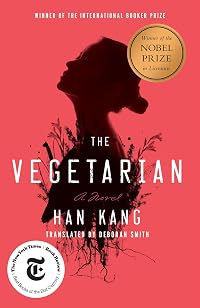
Which might make it sound like the stories are bad. They're not. They're really, really not. They're unpleasant. But they're far from bad. These are very well-written stories that do, I think, exactly what the author is trying to make them do. And having read through all of them, I think I feel about this book a milder version of what I felt after reading Han Kang's The Vegetarian: I appreciate show more the author's skill and the fact that this is good, effective writing that touches on something that feels meaningful... and I don't really ever want to read any more of it. show less
Which might make it sound like the stories are bad. They're not. They're really, really not. They're unpleasant. But they're far from bad. These are very well-written stories that do, I think, exactly what the author is trying to make them do. And having read through all of them, I think I feel about this book a milder version of what I felt after reading Han Kang's The Vegetarian: I appreciate show more the author's skill and the fact that this is good, effective writing that touches on something that feels meaningful... and I don't really ever want to read any more of it. show less
Members
- Recently Added By
Lists

Kirkus Starred Fiction Reviews of Books Published in 2017
412 works; 7 members

Books Read in 2017
4,249 works; 130 members

sad girl books
41 works; 2 members

sad girl books
51 works; 3 members

To Read (Prospector)
86 works; 1 member

el
1,139 works; 1 member
Author Information

20+ Works 12,703 Members
Ottessa Moshfegh is a fiction writer. She was awarded the Plimpton Prize for her stories in The Paris Review and granted a creative writing fellowship from the National Endowment for the Arts. She is currently a Wallace Stegner fellow at Stanford. Her title My Year of Rest and Relaxation made the bestseller list in 2018. (Bowker Author Biography)
Some Editions
Awards and Honors
Awards
Distinctions
Notable Lists
Work Relationships
Common Knowledge
- Canonical title*
- Nostalgie d'un autre monde
- Original title
- Homesick for Another World
- Original publication date
- 2017; 2022 (Spanish) (Spanish)
- First words
- My classroom was on the first floor, next to the nuns’ lounge.
- Original language
- English
- Canonical DDC/MDS
- 813.6
- Canonical LCC
- PS3613.O77936
*Some information comes from Common Knowledge in other languages. Click "Edit" for more information.
Classifications
Statistics
- Members
- 1,419
- Popularity
- 16,677
- Reviews
- 55
- Rating
- (3.60)
- Languages
- 9 — Catalan, Dutch, English, French, German, Italian, Polish, Spanish, Swedish
- Media
- Paper, Audiobook, Ebook
- ISBNs
- 25
- ASINs
- 8