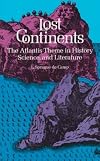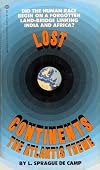
Lost Continents: The Atlantis Theme
by L. Sprague de Camp
On This Page
Description
A leading authority examines the facts and fancies behind the Atlantis theme in history, science, and literature. Sources include the classical works from which Plato drew his proposal of the existence of an island continent, Sir Thomas More's Utopia, the Lemurian Continent theory, K. T. Frost's equation of Atlantis with Crete, and many other citations of Atlantis in both famous and lesser-known literature. Related legends are also recounted and refuted, and reports include accounts of show more actual expeditions searching for the sunken continent and attempts to prove its existence through comparative anatomy and zoology. show lessTags
Recommendations




















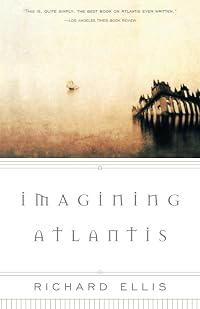

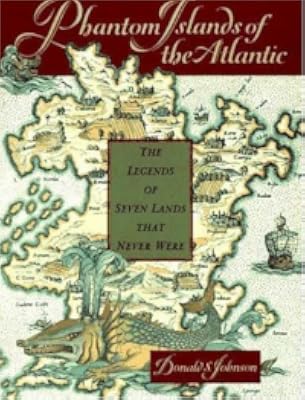
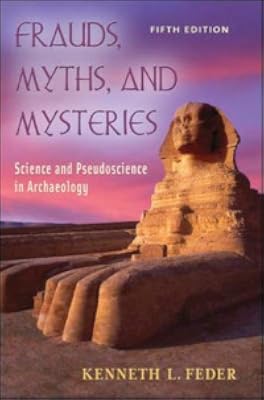
Member Recommendations
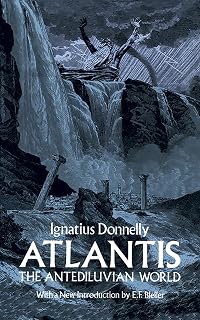
AndreasJ While Romm's book is distinctly more scholarly, it too deals with what may be called "geographical mythology".
Member Reviews
A very well written and intense study of the theory of lost continents with special emphasis on Atlantis which sadly, drove me to tears of boredom. Lost continents make for excellent fiction but as Sprague de Camp shows so well, there is no history of Atlantis for it is fictional with no basis in geology or history.
A very entertaining book. In the first half de Camp goes back to the source of the myth, categorises the different branches of belief and traces their development through time. Very interesting, and also very funny. It’s not just how bonkers some of these ideas are, but also the comments with which de Camp dismisses them. It’s not a nasty book. These people may be mad or they may be con-artists, but all of them have published. He has nothing to say about people who are taken in by it.
In the second half it’s down to business and he has a whole host of arguments to undermine the belief. He obviously a very knowledgable man. Strange to see such a breadth of subjects marshalled in the pursuit of one point. Very well, and fairly, show more argued. This book would be of real use if you had to deal with someone who believed in Atlantis.
The book is not perfect. I have the 1970 edition, revised from the first book edition in 1954. You can often see where he’s revised. He mentions the moon landing for example. However, one of the apendices has been removed but there is still a reference to it in the text. There is a massive bibliography, but it does not contain all the books mentioned in the text. Not all of his quotations are properly referenced. The notes from 1954 have been removed. I’ve not seen the earlier edition, but if they were these lost references then it’s a sad loss. The biggest problem is that the chapter on geology does not mention the theory of plate tectonics. I understand that the theory had been accepted only a couple of years before. It may be that he simply hadn’t heard of it, or it may be that including it would have necessitated the rewrite of an entire chapter.
An excellent book, but could perhaps do with a new edition. show less
In the second half it’s down to business and he has a whole host of arguments to undermine the belief. He obviously a very knowledgable man. Strange to see such a breadth of subjects marshalled in the pursuit of one point. Very well, and fairly, show more argued. This book would be of real use if you had to deal with someone who believed in Atlantis.
The book is not perfect. I have the 1970 edition, revised from the first book edition in 1954. You can often see where he’s revised. He mentions the moon landing for example. However, one of the apendices has been removed but there is still a reference to it in the text. There is a massive bibliography, but it does not contain all the books mentioned in the text. Not all of his quotations are properly referenced. The notes from 1954 have been removed. I’ve not seen the earlier edition, but if they were these lost references then it’s a sad loss. The biggest problem is that the chapter on geology does not mention the theory of plate tectonics. I understand that the theory had been accepted only a couple of years before. It may be that he simply hadn’t heard of it, or it may be that including it would have necessitated the rewrite of an entire chapter.
An excellent book, but could perhaps do with a new edition. show less
First published in 1954 and revised in 1970, de Camp's book is outdated in some respects (and obviously all literary use of the theme in recent decades is absent), but not ones that affect his main conclusions, viz. that Atlantis is a literary invention by Plato, taking inspiration from various real-world phenomena - islands do sometimes sink - but not based on any particular historical or prehistorical event.
Now, I do doubt that the book has found or will find many readers that both need being convinced Atlantis isn't real and are willing to be swayed by facts. Rather, the book's valuable as a look at a strand of intellectual history and for de Camp's wry commentary.
Now, I do doubt that the book has found or will find many readers that both need being convinced Atlantis isn't real and are willing to be swayed by facts. Rather, the book's valuable as a look at a strand of intellectual history and for de Camp's wry commentary.
Though more known as a fantasy/sf writer than a professional scholar, L.Sprague de Camp was an intelligent widely read who put together a very full survey of the myth of Atlantis (and related lost continents like Lemuria), retailing the many bizarre theories with cheerful skepticism.
Almost forty years on, this is still the best overview of the Atlantis mythos in classical and modern literature; scientifically debunks a lot of crackpot theories, tongue-in-cheeckly reviews Atlantis as a venue for both fantasy and "seious" literature, and it is a delight to read. This is Lyon Sprague De Camp at his non-fiction best.
written 1948; serialized in Other Worlds Science Fiction 1952-53; hardcover Gnome Press (1954); this edition corrected with additions
Ratings
Members
- Recently Added By
Lists

Books cited in The Artificial Kingdom: A Treasury of the Kitsch Experience
114 works; 1 member
Author Information

330+ Works 25,148 Members
L. Sprague de Camp, winner of the World Fantasy Award for Life Achievement, was fluent in several languages and traveled the world. He was chased by a hippopotamus in Uganda and sea lions in the Galapagos Islands. He saw tigers and rhinoceroses from elephantback in India, and he was bitten by a lizard in the jungles of Guatemala. His fascinating show more autobiography. Time and Chance, won the 1997 Hugo Award for best nonfiction. L. Sprague de Camp passed away in May 2000 show less
Series
Belongs to Publisher Series
Common Knowledge
- Canonical title
- Lost Continents: The Atlantis Theme
- Original title
- Lost Continents: The Atlantis Theme in History, Science, and Literature
- Original publication date
- 1954; 1970 (revised edition) (revised edition)
- Important places
- Atlantis; Lemuria; Mu
Classifications
- Genres
- Nonfiction, History, Literature Studies and Criticism, Religion & Spirituality
- DDC/MDS
- 398.23 — Society, government, & culture Customs, etiquette & folklore Folklore & Folktales Folk literature Multicultural Folktales
- LCC
- GN751 .D38 — Geography, Anthropology and Recreation Anthropology Anthropology Prehistoric archaeology
- BISAC
Statistics
- Members
- 263
- Popularity
- 123,623
- Reviews
- 6
- Rating
- (3.77)
- Languages
- English, Finnish, German, Italian
- Media
- Paper, Ebook
- ISBNs
- 7
- UPCs
- 1
- ASINs
- 5