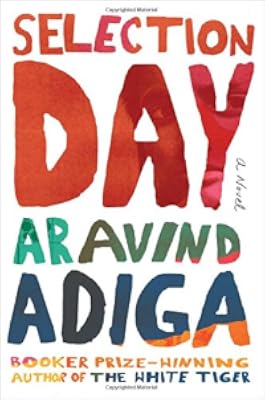
Selection Day
by Aravind Adiga
On This Page
Description
From the bestselling, Booker Prize-winning author of The White Tiger, a novel about two brothers coming of age in a Mumbai slum, raised by their crazy, obsessive father to be cricket champions. Manjunath Kumar is fourteen and living in a slum in Mumbai. He knows he is good at cricket-if not as good as his older brother, Radha. He knows that he fears and resents his domineering and cricket-obsessed father, admires his brilliantly talented sibling, and is fascinated by curious scientific facts show more and the world of CSI. But there are many things, about himself and about the world, that he doesn't know. Sometimes it even seems as though everyone has a clear idea of who Manju should be, except Manju himself. When Manju meets Radha's great rival, a mysterious Muslim boy privileged and confident in all the ways Manju is not, everything in Manju's world begins to change, and he is faced by decisions that will challenge his sense of self and of the world around him. Filled with unforgettable characters from across India's social strata-the old scout everyone calls Tommy Sir; Anand Mehta, the big-dreaming investor; Sofia, a wealthy, beautiful girl and the boys' biggest fan-Selection Day. show lessTags
Recommendations







Member Reviews
Selection Day, the newest novel by Booker Prize winning Aravind Adigo tells the story of a poor, abusive father who has driven away his wife and dedicated himself to making his two sons profession cricket players. At first it seems the older brother, Radha, will be the one to make it to Selection Day, but soon it appears that in fact his younger brother Manju has the natural build and ability. Adigo easily weaves in and out of the minds of all three characters plus a legendary coach and a sports agent, providing a multi-sided narrative of the boys' life and the city of Mumbai. In the slums where Manju and Radha grow up, cricket is the only escape to a better life. Their talent and hard work get them accepted into the famous Ali Weinberg show more International School where the coach hones in on talent. "Chubby, mustached Pramod Sawant, now in his early forties, was a man of some importance in Bombay cricket—head coach at the Ali Weinberg International School, runner-up in last year’s Harris Shield. Head Coach Sawant was, in other words, a fat pipe in the filtration system that sucks in strong wrists, quick reflexes, and supple limbs from every part of the city, channels them through school teams, club championships, and friendly matches for years and years, and then one sudden morning pours them out into an open field where two or maybe three new players will be picked for the Mumbai Ranji Trophy team."
The other thread of the narrative is the wavering confusion of Manju's desires, both sexually and athletically. An attractive adversary, Javed Ansari, tries to lure Manju away from the sport to pursue college and an alternative life style. Manju's decision becomes the central conflict of the story.
I will be interested in reading other novels by Adigo and in seeing Netflicks version of this story.
Wash. Post
There’s nothing boring here, though. Adiga’s paragraphs bounce along like a ball hit hard down a dirt street. One gets the general direction, but the vectors of his story can change at any moment as we chase after these characters. They’re all men and boys enamored of cricket, “the triumph of civilization over instinct” — or a fraud perpetrated against impoverished kids who have no options.
Good lines:
Revenge is the capitalism of the poor: Conserve the original wound, defer immediate gratification, fatten the first insult with new insults, invest and reinvest spite, and keep waiting for the perfect moment to strike back.
between a store that sold golden sporting trophies and another that sold hard liquor in 180 ml “quarters,” like the starting and finishing points of the average Indian male’s trajectory in life,
We’re missing about ten million women from our population, due to female infanticide. This extraordinary fact is known to you, I assume? Do not make any business decision in India until you familiarize yourself with our male-to-female sex ratio, the result of decades of selective abortion. I predict that young Indian males, lacking women to marry or even to mate with, are likely to become progressively more deranged. This is already visible. Now, only one thing on earth can save us from all this rogue Hindu testosterone. Cri-cket.
“A cock is this: When you’re a boy, it’s your manhood. When you’re a man, it’s your boyhood.”
In the next few minutes, Anand Mehta came up with the following observations about cricket: that it was a fraud, and at the most fundamental level. Only ten countries play this game, and only five of them play it well. If we had any self-respect, we’d finally grow up as a people and play football. No: Let’s not expose ourselves to real competition, much safer to be in a “world cup” against St. Kitts and Bangladesh. Self-obsession without self-belief: the very definition of the Indian middle class, which is why it loves this fraud sport.
Radha had the fastidious good looks of the perennially unemployed rake: His long black hair was gelled and brushed back until it curled up around his neck, he wore a silver ring in his left ear, and looked like a prince out of a Sanskrit romance. His beautiful irises, those “film-star eyes,” were now battered in by drink, but Manju could still see their color.
A son’s true opinion of his parents is written on the back of his teeth. Radha, who had gnashed his just thinking about Mohan Kumar so often that his upper incisors had moved from the pressure, opening up a gap between them and ruining his once perfect smile (one more thing he blamed his father for), bit his teeth. show less
The other thread of the narrative is the wavering confusion of Manju's desires, both sexually and athletically. An attractive adversary, Javed Ansari, tries to lure Manju away from the sport to pursue college and an alternative life style. Manju's decision becomes the central conflict of the story.
I will be interested in reading other novels by Adigo and in seeing Netflicks version of this story.
Wash. Post
There’s nothing boring here, though. Adiga’s paragraphs bounce along like a ball hit hard down a dirt street. One gets the general direction, but the vectors of his story can change at any moment as we chase after these characters. They’re all men and boys enamored of cricket, “the triumph of civilization over instinct” — or a fraud perpetrated against impoverished kids who have no options.
Good lines:
Revenge is the capitalism of the poor: Conserve the original wound, defer immediate gratification, fatten the first insult with new insults, invest and reinvest spite, and keep waiting for the perfect moment to strike back.
between a store that sold golden sporting trophies and another that sold hard liquor in 180 ml “quarters,” like the starting and finishing points of the average Indian male’s trajectory in life,
We’re missing about ten million women from our population, due to female infanticide. This extraordinary fact is known to you, I assume? Do not make any business decision in India until you familiarize yourself with our male-to-female sex ratio, the result of decades of selective abortion. I predict that young Indian males, lacking women to marry or even to mate with, are likely to become progressively more deranged. This is already visible. Now, only one thing on earth can save us from all this rogue Hindu testosterone. Cri-cket.
“A cock is this: When you’re a boy, it’s your manhood. When you’re a man, it’s your boyhood.”
In the next few minutes, Anand Mehta came up with the following observations about cricket: that it was a fraud, and at the most fundamental level. Only ten countries play this game, and only five of them play it well. If we had any self-respect, we’d finally grow up as a people and play football. No: Let’s not expose ourselves to real competition, much safer to be in a “world cup” against St. Kitts and Bangladesh. Self-obsession without self-belief: the very definition of the Indian middle class, which is why it loves this fraud sport.
Radha had the fastidious good looks of the perennially unemployed rake: His long black hair was gelled and brushed back until it curled up around his neck, he wore a silver ring in his left ear, and looked like a prince out of a Sanskrit romance. His beautiful irises, those “film-star eyes,” were now battered in by drink, but Manju could still see their color.
A son’s true opinion of his parents is written on the back of his teeth. Radha, who had gnashed his just thinking about Mohan Kumar so often that his upper incisors had moved from the pressure, opening up a gap between them and ruining his once perfect smile (one more thing he blamed his father for), bit his teeth. show less
You don't have to love cricket to enjoy Selection Day - but it helps. More focus on the personal and less on societal ills than his previous excellent novels, White Tiger and Last Man In Tower, here Adiga delves into the heart of a family with two budding National Team cricket players, teenage brothers, and their father who has sacrificed all. There are the rulers of the cricket world, a greedy entrepreneur and a long time scout, but most of the corruption comes from the father who has made miserable, artificial lives for his sons. There's a tiny gem is a scene with lovely, expensive shirts that mirrors the scene with Daisy in The Great Gatsby. And there's also a fraught relationship that reminds me very much of the movie Moonlight, and show more the nature of adolescent confusion is well portrayed. show less
Adiga continues his string of strong novels set in India with ‘Selection Day’, a coming of age tale about two brothers being pushed hard by their father to become great cricket players and get selected for India’s national team. As always, Adiga is unflinching in his description of squalor, corruption, superstition, and ignorance in India, and yet he does so in a way that’s engaging and often humorous. I loved his two page ‘Glossary of Cricketing Terms’ at the back of the book. One of the brothers has a growing attraction for another boy, and his conflicting feelings add another dimension to the story. This other boy is an aspiring poet, and his ‘Three Poems about Manju’ is fantastic. How fitting is it that 266 of the show more books pages comprise part one, with the boys in their formative years, and there are just 19 pages in part two, which is eleven years later – for aren’t those events and decisions we make while young the most impactful in our lives?
Just this quote, on India:
“He summed up his predicament in a recurring midmorning fantasy: ‘Nuclear war has broken out, Anand. You can save only one city on earth. Choose.’ Anand Mehta saved Mumbai, home of his family and culture of course – but then flew to New York and unbuttoned his shirt to die with everyone there.” show less
Just this quote, on India:
“He summed up his predicament in a recurring midmorning fantasy: ‘Nuclear war has broken out, Anand. You can save only one city on earth. Choose.’ Anand Mehta saved Mumbai, home of his family and culture of course – but then flew to New York and unbuttoned his shirt to die with everyone there.” show less
Eine lose Abfolge von Anekdoten, in einem Stück gehalten durch die Geschichte einer Familie, deren zwei Söhne mithilfe von Cricket den Slums von Mumbai entfliehen (sollen). Ein Meisterstück der Erzählkunst, in einer entwaffnend herzlichen und kindlich naiven Sprache. Themen wie Bisexualität, Kasten, Jugendträume und die Kultur einer Nation, die von ihrer Vielfalt erdrückt wird, vermittelt Adiga mit Worten, die den Gerüchen, den Sehnsüchten und den Nöten einer ganzen Kultur Ausdruck verleihen. Nicht zu verkennen ist auch das Fortkommen von Adiga selbst, der vom Inder zum Weltmann wurde. Für mich persönlich einer der ganz grossen kontemporären Autoren.
About two-thirds of this is excellent. Two brothers seem destined for cricketing greatness, if they can just navigate the maze of politics that is the Mumbai junior cricket circle, and the obsessive demands and bullying of their slightly deranged, but vastly ambitious, chutney selling father. The older brother, Radha, seems to be the most likely to succeed and the one who wants it more. His younger brother Manju, is perhaps the more naturally talented, but perhaps he doesn't want it; he's more interested in science, CSI Las Vegas, and has his head turned by the attractive, rich, Muslim cricketing prodigy, Javed Ansari - who gives cricket up to pursue a less conventional lifestyle.
As the brothers weave their way towards Selection Day, show more the day that the Mumbai U-19 team is picked, the make or break day for an aspiring Mumbai cricketer, Aravind Adiga paints a picture of modern Mumbai - a city that I personally love for all its energy and chaos - through larger than life characters such as Anand Mehta, the would be sports entrepreneur, Tommy Sir, the much respected, at least in his own estimation, talent scout, and of course Mohan Kumar, chutney raja, a figure of fun but admirable in his grit and determination for his children's success, less admirable in the methods he uses.
So far then, so good. Its insightful, often very funny, and an absorbing portrait of a a very male world - there's scarcely a female voice here. But then - something happens. The plot falters, the main characters' actions and motivations become unclear, the narrative spell is broken. "Why?" the reader keeps asking, "why is he doing that?" . A Part Two - set eleven years after Selection Day - seems like a last minute addition, and it serves less to clarify than to further confuse. In his acknowledgments the author says that it took him 5 years to finish the book, and we may speculate that getting the ending right was one of the reasons it took so long. But unfortunately I don't think it works
In summary, this is mostly excellent, but runs out of steam and leaves the reader somewhat unsatisfied at the end show less
As the brothers weave their way towards Selection Day, show more the day that the Mumbai U-19 team is picked, the make or break day for an aspiring Mumbai cricketer, Aravind Adiga paints a picture of modern Mumbai - a city that I personally love for all its energy and chaos - through larger than life characters such as Anand Mehta, the would be sports entrepreneur, Tommy Sir, the much respected, at least in his own estimation, talent scout, and of course Mohan Kumar, chutney raja, a figure of fun but admirable in his grit and determination for his children's success, less admirable in the methods he uses.
So far then, so good. Its insightful, often very funny, and an absorbing portrait of a a very male world - there's scarcely a female voice here. But then - something happens. The plot falters, the main characters' actions and motivations become unclear, the narrative spell is broken. "Why?" the reader keeps asking, "why is he doing that?" . A Part Two - set eleven years after Selection Day - seems like a last minute addition, and it serves less to clarify than to further confuse. In his acknowledgments the author says that it took him 5 years to finish the book, and we may speculate that getting the ending right was one of the reasons it took so long. But unfortunately I don't think it works
In summary, this is mostly excellent, but runs out of steam and leaves the reader somewhat unsatisfied at the end show less
Adiga’s 2017 novel purports to be about two brothers, growing up in a Mumbai slum, under the obsessive protection of their cricket-crazy father—a helicopter parent with a swinging cricket bat for a rotor blade. Adiga’s debut novel The White Tiger was such a witty, penetrating exploration of economics and capitalism and how they affect the average person (and a winner of the Man Booker Prize) that I eagerly awaited this one. If he can make economics entertaining, cricket should be a snap, right?
To read the book, it thankfully isn’t necessary to understand cricket’s impenetrable mysteries. The novel is in essence a coming-of-age story, a story of when to hold on to parental values and when to abandon them, of the choices that show more come the boys’ way and what they do with them, and the intrusions of fate.
There are some wonderful characters: the boys Radha Kumar and his principal rival in cricket and in life, his younger brother Manju, their clueless dad—the lowly chutney salesman Mohan—and the local cricket talent scout Tommy Sir, among many others. Years of effort are guiding the boys’ efforts to “selection day,” when just a couple of up-and-coming 17-year-olds will be chosen to play for Bombay Cricket. That one day will make the boys’ future or break their father’s heart. Possibly both.
One of the best aspects of the book is the relationship between the boys. Said Carmela Ciuraru in the San Francisco Chronicle, “Adiga superbly captures the intimacy between the two brothers, as they bicker, tease and protect each other” and as Manju struggles with his sexuality. Also entertaining were the cricket officials’ efforts to keep the father away from the playing fields. Anyone who’s been especially close to a brother or who’s observed the obsessive parents at their children’s sporting events can identify with the dilemmas of this striving family. Again, says Ciuraru, Adiga’s take is “both satirical and affectionate as he shows how the sport is less a means of lifting gifted kids out of poverty than reinforcing boundaries of privilege in rather ruthless ways.”
The book begins three years before the Selection Day in which Radha will participate and a short concluding section takes place eleven years later. As a tremendous fan of audio books, I was quite disappointed in the narration by Sartaj Garewal and believe it is at least partly responsible for my not becoming fully engaged with this book. Read a print version. show less
To read the book, it thankfully isn’t necessary to understand cricket’s impenetrable mysteries. The novel is in essence a coming-of-age story, a story of when to hold on to parental values and when to abandon them, of the choices that show more come the boys’ way and what they do with them, and the intrusions of fate.
There are some wonderful characters: the boys Radha Kumar and his principal rival in cricket and in life, his younger brother Manju, their clueless dad—the lowly chutney salesman Mohan—and the local cricket talent scout Tommy Sir, among many others. Years of effort are guiding the boys’ efforts to “selection day,” when just a couple of up-and-coming 17-year-olds will be chosen to play for Bombay Cricket. That one day will make the boys’ future or break their father’s heart. Possibly both.
One of the best aspects of the book is the relationship between the boys. Said Carmela Ciuraru in the San Francisco Chronicle, “Adiga superbly captures the intimacy between the two brothers, as they bicker, tease and protect each other” and as Manju struggles with his sexuality. Also entertaining were the cricket officials’ efforts to keep the father away from the playing fields. Anyone who’s been especially close to a brother or who’s observed the obsessive parents at their children’s sporting events can identify with the dilemmas of this striving family. Again, says Ciuraru, Adiga’s take is “both satirical and affectionate as he shows how the sport is less a means of lifting gifted kids out of poverty than reinforcing boundaries of privilege in rather ruthless ways.”
The book begins three years before the Selection Day in which Radha will participate and a short concluding section takes place eleven years later. As a tremendous fan of audio books, I was quite disappointed in the narration by Sartaj Garewal and believe it is at least partly responsible for my not becoming fully engaged with this book. Read a print version. show less
Selection Day is the story of Radha and Manju, two boys who are being moulded for cricket stardom by their father. He has brought them from his village to the slums of Mumbai to give them the opportunity. He is controlling, eccentric and ruthlessly determined. The boys, as children, have no choice but to do what he wants.
Although the story follows both brothers, it mainly focuses on the younger, Manju. Manju is a talented cricketer but he really wants to be a scientist. His father is so convinced that both he and Radha will succeed that he wants him to give up his education. Then Manju notices Javed, a handsome, privileged and determinedly unconventional cricketer who is also their rival. Manju’s attraction to Javed further confuses show more his sense of what he wants and what is right.
I found Selection Day a little slow going at first. I thought it was just another coming-of-age story. But as the boys grow older, and the decisive day approaches, it becomes about much more.
The talent scout and coach Tommy Sir is a historian of cricket, but also a man of wide-ranging interests, from military history to geology. He sees the changes in cricket representing a shift in his country’s values. He laments the power of money and fame.
Javed’s affluence means he is free to rebel in ways which Radha and Manju are not. Their father takes on a sponsorship arrangement which leaves them in virtually slavery, prey to corruption. But each brother attempts to assert himself in a different way, and much of the story is about how they respond to the increasing pressures placed upon them.
Selection Day is a vivid portrait of Mumbai, cricket, obsession and ambition. It is about belonging and competing and the cost of both.
*
I received a copy of Selection Day from the publisher via Netgalley.
This review first appeared on my blog https://katevane.wordpress.com/ show less
Although the story follows both brothers, it mainly focuses on the younger, Manju. Manju is a talented cricketer but he really wants to be a scientist. His father is so convinced that both he and Radha will succeed that he wants him to give up his education. Then Manju notices Javed, a handsome, privileged and determinedly unconventional cricketer who is also their rival. Manju’s attraction to Javed further confuses show more his sense of what he wants and what is right.
I found Selection Day a little slow going at first. I thought it was just another coming-of-age story. But as the boys grow older, and the decisive day approaches, it becomes about much more.
The talent scout and coach Tommy Sir is a historian of cricket, but also a man of wide-ranging interests, from military history to geology. He sees the changes in cricket representing a shift in his country’s values. He laments the power of money and fame.
Javed’s affluence means he is free to rebel in ways which Radha and Manju are not. Their father takes on a sponsorship arrangement which leaves them in virtually slavery, prey to corruption. But each brother attempts to assert himself in a different way, and much of the story is about how they respond to the increasing pressures placed upon them.
Selection Day is a vivid portrait of Mumbai, cricket, obsession and ambition. It is about belonging and competing and the cost of both.
*
I received a copy of Selection Day from the publisher via Netgalley.
This review first appeared on my blog https://katevane.wordpress.com/ show less
Members
- Recently Added By
Lists


Author Information

5+ Works 12,914 Members
Awards and Honors
Awards
Distinctions
Notable Lists
Common Knowledge
- Canonical title
- Selection Day
- Original title
- Selection Day
- Original publication date
- 2016
- People/Characters
- Radha Krishna Kumar; Manjunath Kumar; Mohan Kumar; Javed Ansari; Tommy Sir; Pramod Sawant (show all 7); Anand Mehta
- Important places
- Mumbai, India
- Epigraph
- "My heritage is....like a lion in the forest; it cries out against me" Jeremiah 12:8
- Dedication
- My Mother, Ushan Mohan Rao
- Blurbers
- Shamsie, Kamila; Greif, Mark
Classifications
Statistics
- Members
- 374
- Popularity
- 83,513
- Reviews
- 19
- Rating
- (3.12)
- Languages
- 5 — English, French, German, Italian, Serbian
- Media
- Paper, Audiobook, Ebook
- ISBNs
- 29
- ASINs
- 7