On This Page
Description
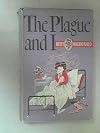
Thanks to vaccines, tuberculosis is rare in North America today and, thanks to antibiotics, relatively treatable. This wasn't the case in 1938, when Betty MacDonald was diagnosed. It was more common and often deadly. The only hope for a cure was treatment in a sanitorium, which was costly. For those who couldn't afford it, there were public facilities with long wait lists. It was into one of these, Firland Sanitorium (The Pines in The Plague and I), that Betty MacDonald was lucky enough to show more go in 1938. With the same abundant wry humor and keen observation of people that made her first book, The Egg and I, so immensely popular, MacDonald describes life at The Pines. show lessTags
Recommendations













































Member Recommendations

agmlll Also set in TB ward.
Member Reviews
In the 1930s, author Betty MacDonald spent nine months in a Seattle sanatorium recovering from tuberculosis. In this memoir, she recalls her treatment at The Pines, her fellow patients, and the doctors, nurses, and other staff who cared for the patients.
I found parts of the book laugh-out-loud funny. I particularly loved Betty’s first roommate Kimi, a Japanese American teenager whose combination of wisdom and wit triggered most of my laughter. I found other parts of the book disturbing. The Pines was a public sanatorium for those who could not afford private treatment. The patients were constantly reminded of this, and the threat of discharge was used as a means of behavior control.
Besides my love for MacDonald’s writing, I also show more wanted to read her memoir because I had a great uncle who died from tuberculosis in the 1930s after spending time in a sanatorium. MacDonald’s detailed account of sanatorium life gives me an idea of what my uncle might have experienced during his own illness and ultimately unsuccessful treatment. show less
I found parts of the book laugh-out-loud funny. I particularly loved Betty’s first roommate Kimi, a Japanese American teenager whose combination of wisdom and wit triggered most of my laughter. I found other parts of the book disturbing. The Pines was a public sanatorium for those who could not afford private treatment. The patients were constantly reminded of this, and the threat of discharge was used as a means of behavior control.
Besides my love for MacDonald’s writing, I also show more wanted to read her memoir because I had a great uncle who died from tuberculosis in the 1930s after spending time in a sanatorium. MacDonald’s detailed account of sanatorium life gives me an idea of what my uncle might have experienced during his own illness and ultimately unsuccessful treatment. show less
I don't know how someone can find humor in having tuberculosis, but then again, I'm not Betty MacDonald. She can find the funny in just about everything. This serious illness has come late to Betty. She is almost thirty, already married and divorced and a mother to two small children. Everything about tuberculosis is a mystery to her. The Pine's list of treatments includes a long list of rules for new patients: no reading, no writing, no talking, no singing, no laughing, no plants, no flowers, no outside medications, no talking to other patients' visitors, no personal clothes, and most damning of all, no hot water bottles. The goal is rest, rest, rest. When Betty first arrives at the sanitarium she doesn't know if being cold all the show more time is a sign her disease is worse than others. Then she realizes it is cold all the time...for everyone. There is a great deal made of analyzing one's sputum - determine color and measuring exactly how much is expelled. Betty wishes she had a more ladylike disease such as a brain tumor or a hot climate disease like jungle rot.
Despite the rules, the constant cold, and the overbearing Charge nurse, Betty makes friends and finds something to laugh at the entire time. How she leaves The Pines was a bit of a surprise to me but I'll leave that for you to read. show less
Despite the rules, the constant cold, and the overbearing Charge nurse, Betty makes friends and finds something to laugh at the entire time. How she leaves The Pines was a bit of a surprise to me but I'll leave that for you to read. show less
'The Plague and I' was a wonderful surprise, full of good humour but also magnificent detail and descriptions by a writer poorly remembered in the twenty-first century. Betty MacDonald was diagnosed as having tuberculosis, having been ill for quite some time, her symptoms always being disregarded by impatient, uncaring doctors. The treatment at the time, or at least the better part of it, was long-term bed rest in a special sanatorium; hardly the best basis for a book, and yet MacDonald does such a marvelous job of describing her adventure and the characters she meets (the sardonic Kimi is the most memorable by far) that the tale flies by, and before you know it, the author is on the road to recovery.
Interesting memoir set in a time when there weren't antibiotics available to treat tuberculosis. Betty MacDonald has a fun turn of phrase, making even the most dreary of patients at the sanitorium into someone I enjoyed hearing about. The differences in treatment were also interesting, in a way where I am very glad that I don't have to get my ribs removed in order to collapse my lung in order to treat a pulmonary disease. Heather Henderson is also a delight as the narrator, full of personality just like Betty MacDonald.
Betty MacDonald’s humorous accounts of life continue! This time, she takes us through the year she spent in a tuberculosis sanitorium in Washington in 1938. She pokes fun at everyone, including herself.
This was such a fun book! I know, I’m saying that about a woman’s story of a year away from her life (kids, family, work, fun, friends, etc.), and I may have to spend a little time in purgatory for having laughed so much at such a serious subject. Betty MacDonald does a great job of telling how truthfully horrible being sick is, but also laughing at the situation herself.
I really enjoyed her previous book, The Egg and I, andI found this book even more enjoyable. Tuberculosis isn’t fun for anyone, but in the late 1930s, treatment show more was something that put your life on hold. Betty was lucky to have spent only a year in the sanitorium. She was also lucky to have close family nearby to take care of her young girls while she was away. Also, she found a sanitorium that offered her free treatment, based on her need. Of course, since she was there are charity, the staff often reminded her that if she didn’t adhere to the strict rules (many of which made little to no sense), she would be asked to leave, still sick.
While there is humor throughout this book, I was also fascinated by life in a sanitorium in the 1930s. It seems the staff were perpetually afraid of the patients commingling and hitting up quickie romances; I think Betty had never received so much warnings against lust in her life! Then there were other rules, like how often a patient was allowed to pee in a day, women patients not being allowed the papers (because it would excite them too much and tax their brains!), and how tatting was allowed but not composing a book.
Patients weren’t allowed to bathe often – once a week for a bath and once a month for hair washing! If family and friends brought special food on their limited visits, all food had to be eaten before the end of the day and whatever wasn’t had to be tossed! Can you imagine receiving a favorite batch of cookies and having to give up any uneaten ones to the trash?
I also had a morbid fascination with the medical practices of the time as well. Betty does a great job describing them from the patient’s view point. In The Egg and I, there were some disparaging racial remarks made. For this book, I am happy to say that Betty points out the silliness of such attitudes of other patients (which were directed at Japanese and African-Americans). All around it’s a very entertaining book and a fascinating look into medical care in the late 1930s.
I received a free copy of this book via The Audiobookworm.
The Narration: Heather Henderson has done another great job portraying Betty MacDonald with her narration of this book. I really enjoyed her warm voice for all the humor. During the occasional serious or emotional moment, she did a wonderful job of imbuing the characters with emotion. show less
This was such a fun book! I know, I’m saying that about a woman’s story of a year away from her life (kids, family, work, fun, friends, etc.), and I may have to spend a little time in purgatory for having laughed so much at such a serious subject. Betty MacDonald does a great job of telling how truthfully horrible being sick is, but also laughing at the situation herself.
I really enjoyed her previous book, The Egg and I, andI found this book even more enjoyable. Tuberculosis isn’t fun for anyone, but in the late 1930s, treatment show more was something that put your life on hold. Betty was lucky to have spent only a year in the sanitorium. She was also lucky to have close family nearby to take care of her young girls while she was away. Also, she found a sanitorium that offered her free treatment, based on her need. Of course, since she was there are charity, the staff often reminded her that if she didn’t adhere to the strict rules (many of which made little to no sense), she would be asked to leave, still sick.
While there is humor throughout this book, I was also fascinated by life in a sanitorium in the 1930s. It seems the staff were perpetually afraid of the patients commingling and hitting up quickie romances; I think Betty had never received so much warnings against lust in her life! Then there were other rules, like how often a patient was allowed to pee in a day, women patients not being allowed the papers (because it would excite them too much and tax their brains!), and how tatting was allowed but not composing a book.
Patients weren’t allowed to bathe often – once a week for a bath and once a month for hair washing! If family and friends brought special food on their limited visits, all food had to be eaten before the end of the day and whatever wasn’t had to be tossed! Can you imagine receiving a favorite batch of cookies and having to give up any uneaten ones to the trash?
I also had a morbid fascination with the medical practices of the time as well. Betty does a great job describing them from the patient’s view point. In The Egg and I, there were some disparaging racial remarks made. For this book, I am happy to say that Betty points out the silliness of such attitudes of other patients (which were directed at Japanese and African-Americans). All around it’s a very entertaining book and a fascinating look into medical care in the late 1930s.
I received a free copy of this book via The Audiobookworm.
The Narration: Heather Henderson has done another great job portraying Betty MacDonald with her narration of this book. I really enjoyed her warm voice for all the humor. During the occasional serious or emotional moment, she did a wonderful job of imbuing the characters with emotion. show less
I don't normally read memoirs, but I picked this one up because I loved the Mrs. Piggle Wiggle books as a kid, MacDonald lived in Seattle, and her writing is humorous. This did turn out to be an entertaining and funny read, although the humor lags a lot in the middle chapters. The book focuses on the eight months that MacDonald spent in a sanatorium recovering from tuberculosis.
I found MacDonald to be surprisingly modern - I assumed from her attitudes that the book was set in the 1960s, until I looked up the dates and realized it was set in the 1930s.
Although the book covers all the grim details of recovering from tuberculosis, it's ultimately about friendships: she made close friends at the sanatorium, and it was the friendships that show more made the recovery time tolerable. show less
I found MacDonald to be surprisingly modern - I assumed from her attitudes that the book was set in the 1960s, until I looked up the dates and realized it was set in the 1930s.
Although the book covers all the grim details of recovering from tuberculosis, it's ultimately about friendships: she made close friends at the sanatorium, and it was the friendships that show more made the recovery time tolerable. show less
"I have always hated morning. It is a horrible time of day. It is too early and it brings out the worst in everybody."
This kind of humor makes what could have been a long, dreary book about illness fly by and easily finished in one day. Possibly it would drag for some, but I found the description of the treatment of tuberculosis and the running of a sanatorium in the 1930s fascinating.
This kind of humor makes what could have been a long, dreary book about illness fly by and easily finished in one day. Possibly it would drag for some, but I found the description of the treatment of tuberculosis and the running of a sanatorium in the 1930s fascinating.
Members
- Recently Added By
Lists

Ten Books That Have Stayed With Me
160 works; 29 members

Publisher's Weekly NON-Fiction list - 1912 - 1975
486 works; 4 members

Best Biographies of Notable Women
277 works; 101 members
Author Information

19+ Works 19,172 Members
Some Editions
Awards and Honors
Distinctions
Series

Work Relationships
Common Knowledge
- Original publication date
- 1948
- People/Characters
- Betty MacDonald
- Important places
- The Pines, a sanatorium
- Dedication
- For Dr. Robert M. Stith, Dr. Clyde R. Jensen
and Dr. Bernard P. Mullen without whose gen-
erous hearts and helping hands I would probably
be just another name on a tombstone. - First words
- Getting tuberculosis in the middle of your life is like starting downtown to do a lot of urgent errands and being hit by a bus.
- Last words
- (Click to show. Warning: May contain spoilers.)The most important thing of all is Whom's with Who.
Classifications
Statistics
- Members
- 436
- Popularity
- 70,449
- Reviews
- 20
- Rating
- (4.05)
- Languages
- 6 — Czech, Danish, English, French, German, Slovak
- Media
- Paper, Audiobook, Ebook
- ISBNs
- 18
- ASINs
- 24