
On This Page
Description
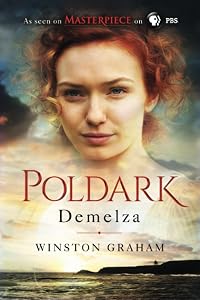
As Seen on Masterpiece? on PBS®: Book 2 of the beloved Poldark seriesIn the enchanting second novel in Winston Graham's beloved Poldark series, Demelza Carne, an impoverished miner's daughter Ross Poldark rescued from a fairground brawl, now happily finds herself his wife. But the events of these turbulent years test their marriage and their love.
As Ross launches into a bitter struggle for the right of the mining communities, Demelza's efforts to adapt to the ways of the gentry (and her show more husband) place her in increasingly odd and embarrassing situations. When tragedy strikes and sows the seeds of an enduring rivalry between Ross and the powerful George Warleggan, will Demelza manage to bridge their differences before they destroy her and her husband's chance at happiness?
Against the stunning backdrop of eighteenth century Cornwall, Demelza sweeps readers into one of the greatest love stories of all time.
. show less
Tags
Recommendations














Member Reviews
Demelza, the second book in the Poldark series, is what second books should be, even better than the first. The story builds to a crescendo, and even though I knew from watching the TV series exactly what was in store, I was glued to every page and full of emotion by the end.
What I love the most about this story is that every character is fully developed and very real. No one is always right, no one always wrong. They do things without fully understanding the consequences of their actions; they endeavor to right things and frequently make them worse; they love and hate--and sometimes both emotions are thrown at the same individual. There are complicated family relationships (and who doesn’t have those?) and there is jealousy and show more greed and every other aspect of being human and fallible.
I am not one who generally reads a series. I seldom want to commit that kind of time and energy to one story, and I fear that, like a TV show that goes on too long, the author will begin to short change his audience because he should have closed out a story that he is milking along. If the second book of this series is any indicator, I will be glad that I made an exception in this case. show less
What I love the most about this story is that every character is fully developed and very real. No one is always right, no one always wrong. They do things without fully understanding the consequences of their actions; they endeavor to right things and frequently make them worse; they love and hate--and sometimes both emotions are thrown at the same individual. There are complicated family relationships (and who doesn’t have those?) and there is jealousy and show more greed and every other aspect of being human and fallible.
I am not one who generally reads a series. I seldom want to commit that kind of time and energy to one story, and I fear that, like a TV show that goes on too long, the author will begin to short change his audience because he should have closed out a story that he is milking along. If the second book of this series is any indicator, I will be glad that I made an exception in this case. show less
The Poldark novels are always a joy to come back to. All the drama and community of a soap opera, but with believable characters; more romance than anything turned out by Harlequin or Mills and Boon, portraying passion and comfort, heroism and humanity, in equal measure; and a host of lively personalities who will quickly and firmly win the following of every reader. The only difficulty is tackling all twelve novels in the series at once - this time, I aim to succeed!
Following on from Ross' marriage to Demelza in the first book, Demelza opens with the birth of the Poldarks' first child in 1789. They seem happy together, with Demelza adjusting to her new place in society, and Ross beginning to appreciate his wife's vivacity and open show more nature. The title character is but one narrative thread, however, weaving into the lives of the gentry and mining communities of west Cornwall. Verity and her lost love are reunited, Ross risks all in a speculative business venture, Jinny Carter faces further hardship, Mark Daniel and his wayward new wife supply the scandal, and tragedy strikes at the heart of Nampara. There are even two shipwrecks thrown in for good measure!
And in the rare moments of calm, Winston Graham's emotive writing fits every mood from wry humour (Jud and Francis) to black misery (the final chapters). Graham also paints a truly evocative, living portrait of the Cornish landscape, so that even land-locked readers like myself can hear the waves crashing in the cove and taste the salt on the air! show less
Following on from Ross' marriage to Demelza in the first book, Demelza opens with the birth of the Poldarks' first child in 1789. They seem happy together, with Demelza adjusting to her new place in society, and Ross beginning to appreciate his wife's vivacity and open show more nature. The title character is but one narrative thread, however, weaving into the lives of the gentry and mining communities of west Cornwall. Verity and her lost love are reunited, Ross risks all in a speculative business venture, Jinny Carter faces further hardship, Mark Daniel and his wayward new wife supply the scandal, and tragedy strikes at the heart of Nampara. There are even two shipwrecks thrown in for good measure!
And in the rare moments of calm, Winston Graham's emotive writing fits every mood from wry humour (Jud and Francis) to black misery (the final chapters). Graham also paints a truly evocative, living portrait of the Cornish landscape, so that even land-locked readers like myself can hear the waves crashing in the cove and taste the salt on the air! show less
This 1970s version of the cover of Winston Graham's second Poldark novel, Demelza, keeps cracking me up. I wouldn't have touched it in a million years, with its emphasis on lustiness and defiant love and whatnot. I would though, have been missing out.
As I observed recently, I was sold on the idea of reading these by the BBC TV adaptation (America's Grandest New TV Saga the little green label on this book cover says), but even so was not quite prepared for how much I would like these books, like Graham's writing, like the characters and their world.
It's a small world, is late 18th Century Cornwall, populated by struggling tin and copper miners, struggling farmers and the odd ridiculous bastion of Georgian gentility, but it feels the show more effects of the wider world in its own way, as last novel showed us in the hard homecoming of Captain Ross Poldark after Britain's loss of its American colonies, and this one shows us in its tiny echoes of the nascent French Revolution happening just across the water from its wind-and sea-swept shores -- mostly in the form of food riots in the bigger towns, but still, rumblings all the same.
But for our purposes, the biggest stirring is still Ross's decision to marry his kitchen wench Demelza, who has turned out to be the perfect wife for him and, in her own novel here, to be a fascinating character all on her own. Unbelievably happy in her marriage and motherhood, she thinks everybody should be so, and so a lot of the plot of Demelza spins out from her efforts to secure her kind of happiness for Ross's cousin Verity, long separated from her man by family and social disapproval of his past as a wife-beater, violent drunk and all-around less-than-ideal prospect for any daughter. But it's true love! Can't anyone see it but Demelza? No, apparently not, so off she goes on her errand, with surprising and far-reaching results.
For while Demelza is off match-making, Ross is busy trying to do his bit as a social reformer, trying to keep his workers' offspring out of trouble, their livelihood from going belly-up, and to keep himself from decking every ponce in a powdered wig who winks at his wife, cheats him at cards, or outmaneuvers him in business. Oh, and to do all of this mostly in secrecy, which is hard to do in a small world with a busybody wife running around playing cupid and touching off family and social drama.
And again, there are lots of lovely moments, poignant and well crafted, like when the great old Grambler mine, on which the Poldark fortune seems largely to have originally been built, closes down and the gentlemen gather around the huge steam pumps that keep its galleries more or less clear of water to watch their last ups and downs and Ross's cousin Francis chalks the word "Resurgam" ("I shall rise again") on the side of the biggest of them to express the hope that someday what's still down in the Grambler will be economically worth digging for again. I hope it will, I do! But those darn Warleggans, the upstart banking family who are always on the verge of becoming the Poldarks' nemesis but never quite manifest as same, seem destined to keep copper prices low and the mine owners and their employees poor and dependent, those bastards!
Thrown into the mix is a High Romantic sub-plot involving a fancy lass who marries an honest, big-but-dim mining man and regrets it to the ruin of, well, just about everybody in some fashion or another. It's this sub-plot that raises a lot of modern eyebrows, because of course it all ends tragically, but then, oh, what's this? All of these characters we have come to love and sympathize with are loving and sympathizing the guy who killed his wife! To quite an extraordinary degree. Because the fancy lass had it coming, I guess? Um.
So no, I didn't like that bit either, but such has been the way of the world. If there's one thing a reader of novels learns over and over again, it sure do suck to be a girl. But then again, it mostly seems to suck to be a guy, too, though the old saw about being laughed at versus being murdered still comes to mind. Or at least until everybody is up against bigger problems, like rampant deadly disease, economic ruin and shipwrecks with pickings for all to fight over!
ALL THE MELODRAMA. show less
As I observed recently, I was sold on the idea of reading these by the BBC TV adaptation (America's Grandest New TV Saga the little green label on this book cover says), but even so was not quite prepared for how much I would like these books, like Graham's writing, like the characters and their world.
It's a small world, is late 18th Century Cornwall, populated by struggling tin and copper miners, struggling farmers and the odd ridiculous bastion of Georgian gentility, but it feels the show more effects of the wider world in its own way, as last novel showed us in the hard homecoming of Captain Ross Poldark after Britain's loss of its American colonies, and this one shows us in its tiny echoes of the nascent French Revolution happening just across the water from its wind-and sea-swept shores -- mostly in the form of food riots in the bigger towns, but still, rumblings all the same.
But for our purposes, the biggest stirring is still Ross's decision to marry his kitchen wench Demelza, who has turned out to be the perfect wife for him and, in her own novel here, to be a fascinating character all on her own. Unbelievably happy in her marriage and motherhood, she thinks everybody should be so, and so a lot of the plot of Demelza spins out from her efforts to secure her kind of happiness for Ross's cousin Verity, long separated from her man by family and social disapproval of his past as a wife-beater, violent drunk and all-around less-than-ideal prospect for any daughter. But it's true love! Can't anyone see it but Demelza? No, apparently not, so off she goes on her errand, with surprising and far-reaching results.
For while Demelza is off match-making, Ross is busy trying to do his bit as a social reformer, trying to keep his workers' offspring out of trouble, their livelihood from going belly-up, and to keep himself from decking every ponce in a powdered wig who winks at his wife, cheats him at cards, or outmaneuvers him in business. Oh, and to do all of this mostly in secrecy, which is hard to do in a small world with a busybody wife running around playing cupid and touching off family and social drama.
And again, there are lots of lovely moments, poignant and well crafted, like when the great old Grambler mine, on which the Poldark fortune seems largely to have originally been built, closes down and the gentlemen gather around the huge steam pumps that keep its galleries more or less clear of water to watch their last ups and downs and Ross's cousin Francis chalks the word "Resurgam" ("I shall rise again") on the side of the biggest of them to express the hope that someday what's still down in the Grambler will be economically worth digging for again. I hope it will, I do! But those darn Warleggans, the upstart banking family who are always on the verge of becoming the Poldarks' nemesis but never quite manifest as same, seem destined to keep copper prices low and the mine owners and their employees poor and dependent, those bastards!
Thrown into the mix is a High Romantic sub-plot involving a fancy lass who marries an honest, big-but-dim mining man and regrets it to the ruin of, well, just about everybody in some fashion or another. It's this sub-plot that raises a lot of modern eyebrows, because of course it all ends tragically, but then, oh, what's this? All of these characters we have come to love and sympathize with are loving and sympathizing the guy who killed his wife! To quite an extraordinary degree. Because the fancy lass had it coming, I guess? Um.
So no, I didn't like that bit either, but such has been the way of the world. If there's one thing a reader of novels learns over and over again, it sure do suck to be a girl. But then again, it mostly seems to suck to be a guy, too, though the old saw about being laughed at versus being murdered still comes to mind. Or at least until everybody is up against bigger problems, like rampant deadly disease, economic ruin and shipwrecks with pickings for all to fight over!
ALL THE MELODRAMA. show less
This second novel in the Poldark saga begins with Demelza giving birth to her and Ross’s first child, a baby girl named Julia. Uneasy at the thought of her lower-class, illiterate relatives mixing with Ross’s family and friends among the gentry, Demelza decides to hold two different parties for Julia’s christening. Of course, this plan goes terribly awry and ends in social disaster — the first of many situations in this novel where Demelza struggles with her new position in society as Ross’s wife. Meanwhile, low copper prices are causing trouble for Ross and the other mine owners, and many of the mine workers are facing dire poverty. Desperate, Ross joins a risky scheme that would give mine owners more control over copper show more prices, but the Warleggans are formidable enemies to this project. Personal tragedies, reversals of fortune, and love affairs gone wrong (or right) all play a part in this novel, but ultimately it’s the strength of Ross and Demelza’s relationship that gets them through it all.
I enjoyed this continuation of the Poldark series, which I think is a little more eventful and interesting than the first book. One of my favorite aspects of this novel is the portrayal of Ross and Demelza’s marriage. It’s a strong relationship but definitely not a perfect one: they argue, keep secrets from each other, and frequently become trapped in misunderstandings that a little honest communication could have prevented. But I love that Demelza isn’t afraid to speak her mind and that Ross genuinely respects her, notwithstanding her lower-class origins. I also liked the introduction of a few new characters, particularly Dwight Enys, a forward-thinking young doctor who becomes a fast friend of the Poldarks. Overall, this book got me excited about reading the entire series this year, and I’d definitely recommend it to fans of historical fiction or period dramas. show less
I enjoyed this continuation of the Poldark series, which I think is a little more eventful and interesting than the first book. One of my favorite aspects of this novel is the portrayal of Ross and Demelza’s marriage. It’s a strong relationship but definitely not a perfect one: they argue, keep secrets from each other, and frequently become trapped in misunderstandings that a little honest communication could have prevented. But I love that Demelza isn’t afraid to speak her mind and that Ross genuinely respects her, notwithstanding her lower-class origins. I also liked the introduction of a few new characters, particularly Dwight Enys, a forward-thinking young doctor who becomes a fast friend of the Poldarks. Overall, this book got me excited about reading the entire series this year, and I’d definitely recommend it to fans of historical fiction or period dramas. show less
*SPOILER ALERT*Like his first in the Poldark series, Graham again delivers a fascinating novel of late 18th century life in the Cornwall, England region. This time we get more of Demelza's perspective, her inner life, and her growing maturity and confidence as miner's daughter married into a noble family. All the characters introduced in book one are continued here with several plot lines expertly interwoven throughout the novel's expanse. So much happens to Demelza, Ross, Verity- Ross' cousin, and the others, chapters shifting between Demelza's domestic life with new baby Julia and her marriage to Ross, Verity's life (the dedicated, faithful spinster sister to Francis, his wife Elizabeth and little Geoffrey, as well as the rest of the show more household), the emerging economics of copper and tin mining, Ross' newly re-opened mine, and his strenuos efforts to help himself and fellow mining owners to create their own smeltering company, and the social complexities and intrigues of the upstart, avaricious Warleggans, Francis Poldark, and the other families, both great and humble, in the towns and villages of the Poldark home. Graham provides subtle counterpoints to Ross' and Demelza's happy marriage to that of the stolid, uneducated Mark Daniel and his unstable, promiscious young wife, Keren, to Verity's forbidden romance to the sea captain Blamey, to the sad demise of Ross' childhood friend Jim Carter, and long suffering wife Jinnny, as he wastes away in a deathtrap of a regional prison.
The story's two bookends: Ross' and Demelza's first child's birth and her unexpected death near the end illustrates the bitter disappointments Ross must suffer in this up and down year: his own cousin Francis' treachery in business matters and false accusations, his grief over the ailing Jim's death, his dismay over Demelza's secret doings to help his cousin Verity marry Blamey; and then his tiny daughter's death - is there anything more poignantly written than the country village's winter funeral scene of little Julia Poldark, the noble and commonfolk alike thronging to the ceremony (a small comfort and surprise to the stunned Ross), the white coffin carried by the young girl pallbearers, all dressed in white, the silence between the impromptu singing of the psalms? *sigh*
And just when we readers cannot stand any more sadness - Graham writes so movingly of the fierce despair and numbing grief of both Demelza and Ross- he provides an amazing shipwreck chapter, not one but two ships breaking up in the dangerous gale and terrible tides near Hendrawna Beach, and the dramatic looting, drownings, and grateful scavangeing of the locals, half starving in the bitter winter of 1790. Here too he provides a fitting demise for one of the story's villians and the recovery of Ross' better nature, his sense of decency and care as he invites the captain and his passengers to their home.
I can't wait to read the next book, and like every good saga, I so want to know more about all these characters and their lives!! show less
The story's two bookends: Ross' and Demelza's first child's birth and her unexpected death near the end illustrates the bitter disappointments Ross must suffer in this up and down year: his own cousin Francis' treachery in business matters and false accusations, his grief over the ailing Jim's death, his dismay over Demelza's secret doings to help his cousin Verity marry Blamey; and then his tiny daughter's death - is there anything more poignantly written than the country village's winter funeral scene of little Julia Poldark, the noble and commonfolk alike thronging to the ceremony (a small comfort and surprise to the stunned Ross), the white coffin carried by the young girl pallbearers, all dressed in white, the silence between the impromptu singing of the psalms? *sigh*
And just when we readers cannot stand any more sadness - Graham writes so movingly of the fierce despair and numbing grief of both Demelza and Ross- he provides an amazing shipwreck chapter, not one but two ships breaking up in the dangerous gale and terrible tides near Hendrawna Beach, and the dramatic looting, drownings, and grateful scavangeing of the locals, half starving in the bitter winter of 1790. Here too he provides a fitting demise for one of the story's villians and the recovery of Ross' better nature, his sense of decency and care as he invites the captain and his passengers to their home.
I can't wait to read the next book, and like every good saga, I so want to know more about all these characters and their lives!! show less
Another great read. I love Graham's writing style. He's got the bon-homie of Alexandre Dumas but it's not as long winded, and therefore, less tiring. I love Ross' spirit, how he struggles to endure and I can't wait to see how Graham furthers the plot with the Warleggans in the rest of the series. I like the development we've seen in Demelza and how her relationship with Ross has changed. I've said before that I enjoy the class struggle in the Poldark books and that continues to be true.
I love this passage where Ross is observing both Elizabeth (his former love) and Demelza, his wife:
"Hers was the loveliness of gracious, aristocratic womanhood, used to leisure and bred to refinement. She came from uncounted generations of small landed show more gentlefolk. There had been a Chynoweth before Edward the Confessor, and, as well as the grace and breeding, she seemed to have in her a susceptibility to fatigue, as if the fine pure blood was flowing a little thin. Against her Demelza was the upstart: bred in drunkenness and filth,a waif in a parlor, an urchin climbing on the shoulders of chance to peer into the drawing rooms of her betters; lusty, crude, unsubtle, all her actions and feelings were a stage nearer nature. But each of them had something the other lacked." show less
I love this passage where Ross is observing both Elizabeth (his former love) and Demelza, his wife:
"Hers was the loveliness of gracious, aristocratic womanhood, used to leisure and bred to refinement. She came from uncounted generations of small landed show more gentlefolk. There had been a Chynoweth before Edward the Confessor, and, as well as the grace and breeding, she seemed to have in her a susceptibility to fatigue, as if the fine pure blood was flowing a little thin. Against her Demelza was the upstart: bred in drunkenness and filth,a waif in a parlor, an urchin climbing on the shoulders of chance to peer into the drawing rooms of her betters; lusty, crude, unsubtle, all her actions and feelings were a stage nearer nature. But each of them had something the other lacked." show less
One of the reasons I wanted to read this series is to see how it differs from the show and to compare and contrast them. This book was not a let down (as if it ever could have been!) The story lines were engaging, the writing was beautiful, and the characters will wrench your heart out. A wonderful addition to this series and I can't wait to see what book three has to offer! I would recommend this book. 5 out of 5 stars.
Members
- Recently Added By
Lists

Best family sagas
244 works; 34 members

things to read next
23 works; 1 member
Talk Discussions
Past Discussions
Poldark Group Read (February): Demelza in 2017 Category Challenge (March 2017)
Author Information

83+ Works 11,226 Members
Series

Work Relationships
Common Knowledge
- Canonical title
- Demelza
- Original title
- Elizabeth's Story
- Alternate titles
- Elizabeth's Story
- Original publication date
- 1946
- People/Characters
- Demelza Poldark; Ross Poldark; Francis Poldark; Elizabeth Poldark; Verity Poldark; George Warleggan (show all 10); Dwight Enys; Mark Daniel; Keren Daniel; Andrew Blamey
- Important places
- Cornwall, England, UK
- Related movies
- Poldark (1975 | IMDb); Poldark (2015 | IMDb)
- Quotations
- Ross slid into the room. She was playing the music from one of Arne's operas. He listened for some minutes, glad of the scene, glad of the music, and the bordering quiet. This was what he came home for.
He stepped silently... (show all) across the room and kissed the back of her neck.
She squeaked, and the spinet stopped on a discord.
"A slip o' the finger and phit, yer dead," said Ross in Jud's voice.
"Judas! you give me a fright, Ross. Always I'm getting frights of some sort. No wonder I'm a bag of nerves. This is a new device, creeping in like a tomcat."
Hers was the loveliness of gracious, aristocratic womanhood, used to leisure and bred to refinement. She came from uncounted generations of small landed gentlefolk. There had been a Chynoweth before Edward the Confessor, and,... (show all) as well as the grace and breeding, she seemed to have in her a susceptibility to fatigue, as if the fine pure blood was flowing a little thin. Against her Demelza was the upstart: bred in drunkenness and filth,a waif in a parlor, an urchin climbing on the shoulders of chance to peer into the drawing rooms of her betters; lusty, crude, unsubtle, all her actions and feelings were a stage nearer nature. But each of them had something the other lacked. - Disambiguation notice
- aka Elizabeth's Story
Classifications
Statistics
- Members
- 1,214
- Popularity
- 20,348
- Reviews
- 31
- Rating
- (4.14)
- Languages
- 12 — Dutch, English, Estonian, Finnish, French, Italian, Korean, Polish, Portuguese, Romanian, Spanish, Swedish
- Media
- Paper, Audiobook, Ebook
- ISBNs
- 70
- UPCs
- 1
- ASINs
- 28