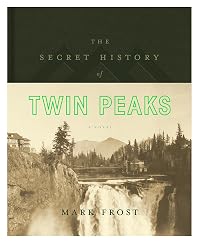
The Secret History of Twin Peaks: A Novel
by Mark Frost
Twin Peaks Novels (2016-10-18), Twin Peaks (Novels — novel)
On This Page
Description
"From the co-creator of the landmark series, the story millions of fans have been waiting to get their hands on for 25 long years. The Secret History of Twin Peaks enlarges the world of the original series, placing the unexplained phenomena that unfolded there into a vastly layered, wide-ranging history, beginning with the journals of Lewis and Clark and ending with the shocking events that closed the finale."--provided by Amazon.com.Tags
Recommendations







Member Reviews
Part of me suspects the Secret History of Twin Peaks was written just for me. During the weeks I devoted to reading Mark Frost’s novel, I spent my days looking forward to digging comfortably into the couch and getting lost in the world of Twin Peaks again and again, of getting a preview of the show we’d all be watching come May. This book devours you, with its layers of mystery, layers of implication — it makes you simultaneously an accomplice to ‘the Archivist,’ dutifully collating Twin Peaks’ historical records and connecting supernatural dots, and an investigative FBI agent along T_____ P______, reviewing and studying the mysterious Archivist’s dossier.
Yes, the Secret History of Twin Peaks was written just for me, but show more that also makes it a hard tale to recommend. The audience is a niche one — Twin Peaks fans, and not just casual Twin Peaks fans, but die-hards; those who have been waiting with baited breath for 25 years to get answers creators Mark Frost and David Lynch left us with in ’92.
[N.B. This review features images and formatting specific to my book site, dendrobibliography: Check it out here.]
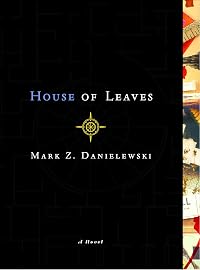
Frost’s epistolary structure and lack of a singular narrative easy or inviting. Instead of telling a focused story, the Secret History of Twin Peaks offers only suggestions and snippets — through hand-written letters, transcripts, historical photos, news and magazine articles, medical records, receipts, book excerpts (often real), commentary, and commentary-on-commentary. (Think Mark Z. Danielewski’s House of Leaves, or, more recently, Doug Dorst and J.J. Abrams’ S. The physical edition is recommended.) Nor is it hard to call Frost’s reliance on historical documents and writing — so much so that it’s nearly academic — exciting. No, this felt like my book because of convergences:
The social history of the Pacific Northwest, of the timber industry, of environmentalism, of native oppression, of the small-town personalities that shaped our present-day Seattle and other cities — it’s all fascinating to me, and much of it a personal hobby.* The elaborate and often real history of the Pacific Northwest is interwoven with a century of ‘real’ conspiracy theories and modern mythology. Characters from the town of Twin Peaks step in and out of otherwise-genuine history books, adding a touch of conspiracy and sinister awareness to their television appearances.
We see a gap in the Lewis and Clark journals filled in with a spiritual visit to the Owl Cave not long before Lewis’ suspicious ‘suicide’; rumblings of a mysterious pale tribe suspected to be the descendants of the 12th-century traveler, Madoc; the Weyerhaeuser Company moves across the forests of the Pacific Northwest, inspiring the founding of lumber mills like the Packard Mill; the slow removal of the Nez Perce (and other tribes) from what will eventually become the Hanford Nuclear Site, featuring personalities like Liver-Eating Johnson and Chief Joseph; vulgar letters by pioneers and forgotten in Spokane’s Masonic Lodge, where the authors stumble upon Owl Cave and then vanish — the meaner of whom is named Bob; things get far more complicated once we hit the 20th century.
Douglas Milford, the brother of Dwayne Milford, long-time mayor of Twin Peaks, is at the center of almost every story. His appearance in the TV show was fleeting and seemingly benign: He appeared briefly as an old coot, a rapscallion who fell for the red-haired seductress Lana Budding. His real role is much broader, we learn. He spent his 20s in a drunken haze after an encounter with alien entities at Owl Cave. By 1947, however, he’s joined the Air Force, and is deepening an involvement in government cover-ups of alien conspiracy theories. Like the X-Files‘ Cigarette-Smoking Man, Douglas Milford seems to be at the center of every conspiracy theory connecting the dots between the government and aliens or supernatural. Roswell, Harold Dahl, Kenneth Arnold, Ray Palmer, Paul Lantz, Jack Parsons, Aleister Crowley, L. Ron Hubbard, Fred Crisman, Richard Nixon, Project Sign, Project Grudge, the Bohemian Grove, Majestic-12 — he seems connected to everything, including the events of the original series. Even Gordon Cole, the FBI Deputy Director played by David Lynch in the original series, has a close relationship with Douglas Milford.
While Douglas Milford is the primary focus of Mark Frost’s novel, we also get insight into most personalities from the show. Obnoxious anti-heroes like Hank Jennings have their backgrounds filled-in and explained: Once a star of the town, he was dragged own both by his abusive drunk of a father (who, of course, was tied to UFO conspiracies) and falling under manipulative villains like Jacques Renault. Nadine’s family history, excusing a couple plotholes, gives sanity to her character’s apparent insanity — and it’s a sad tale. The story of Margaret ‘Log Lady’ Lanterman, however, is the saddest of all. She’s not just another quirky David Lynch character, quirky for the sake of being quirky, but a woman rich in history — she has an advanced degree in forestry; she was an environmentalist long before Earth Day; she was married for just a single day; and was abducted within Owl Cave in 1947.
I felt unsatisfied with the fates of Andrew and Josie Packard on the show. Secret History expands on those two (and a few other neglected characters) extensively. Andrew Packard isn’t so much a conniving genius as he is a bumbling one. Josie Packard is a sociopathic monster, responsible for many triad-related murders in China (including her father’s). Her triad ties came up in the show, but for whatever reason they never stuck with me as defining character traits: I still get sucked into her innocent act every time.
Additionally, we learn more about Dale Cooper (who, it’s implied, ran into trouble between the finale and the present-day investigation), Dwayne Milford (a former scout leader), Thomas Eckhardt, Big Ed, Norma, Catherine and Pete Martell, Carl Rodd (abducted alongside the Log Lady in ’47), Audrey Horne, Ben Horne, the Bookhouse Boys, Tommy ‘Hawk’ Hill, Dr. Jacoby andhis brother Robert Jacoby (a local journalist who passed away in 1988). Not everyone, however, makes an appearance: We don’t learn much about ShellyJohnston, Leo Johnston, Bobby Briggs, Jacques Renault’s brothers, Donna Hayward, or the rest of the Horne family (Johnny, Sylvia, Jerry). Lucy Moran and Andy Brennan get about one joke in, each. James Hurley is briefly mentioned, just enough to state he’s as boring as he seemed in the show: He likes Charlotte’s Web.
There are many stones left unturned, however, and answers stop roughly around the time of the original series finale. We get closure on the bomb blast that may or may not have killed certain characters, but not much beyond the year 1989 for any characters or events.
There are echoes of Dale Cooper in Special Agent T_____ P______, who fills the borders of the dossier with notes verifying information, adding their own research on top of the dossier, and a lot of obscure movie trivia and recommendations. (Making T.P. more similar to Special Agent Francis York Morgan from the 2010 game Deadly Premonition, himself modeled after Dale Cooper.) Word is T.P. will be either a fixture of the revived TV show in 2017, or in future novels — Twin Peaks: The Final Dossier is scheduled for October 2017.
For fans of Twin Peaks (and fans of puzzles), the Secret History is an absolute delight — but a tough one. Mark Frost shows a wild and careful degree of research to connect the history of Twin Peaks into every conspiracy to touch not just the Pacific Northwest, but American politics. The breadth of dots connected to the show’s mythology is mindboggling, and feeling like I was in on the take made the return trip to Twin Peaks one of the most fun outings I’ve had this year. show less
Yes, the Secret History of Twin Peaks was written just for me, but show more that also makes it a hard tale to recommend. The audience is a niche one — Twin Peaks fans, and not just casual Twin Peaks fans, but die-hards; those who have been waiting with baited breath for 25 years to get answers creators Mark Frost and David Lynch left us with in ’92.
[N.B. This review features images and formatting specific to my book site, dendrobibliography: Check it out here.]
Frost’s epistolary structure and lack of a singular narrative easy or inviting. Instead of telling a focused story, the Secret History of Twin Peaks offers only suggestions and snippets — through hand-written letters, transcripts, historical photos, news and magazine articles, medical records, receipts, book excerpts (often real), commentary, and commentary-on-commentary. (Think Mark Z. Danielewski’s House of Leaves, or, more recently, Doug Dorst and J.J. Abrams’ S. The physical edition is recommended.) Nor is it hard to call Frost’s reliance on historical documents and writing — so much so that it’s nearly academic — exciting. No, this felt like my book because of convergences:
The social history of the Pacific Northwest, of the timber industry, of environmentalism, of native oppression, of the small-town personalities that shaped our present-day Seattle and other cities — it’s all fascinating to me, and much of it a personal hobby.* The elaborate and often real history of the Pacific Northwest is interwoven with a century of ‘real’ conspiracy theories and modern mythology. Characters from the town of Twin Peaks step in and out of otherwise-genuine history books, adding a touch of conspiracy and sinister awareness to their television appearances.
We see a gap in the Lewis and Clark journals filled in with a spiritual visit to the Owl Cave not long before Lewis’ suspicious ‘suicide’; rumblings of a mysterious pale tribe suspected to be the descendants of the 12th-century traveler, Madoc; the Weyerhaeuser Company moves across the forests of the Pacific Northwest, inspiring the founding of lumber mills like the Packard Mill; the slow removal of the Nez Perce (and other tribes) from what will eventually become the Hanford Nuclear Site, featuring personalities like Liver-Eating Johnson and Chief Joseph; vulgar letters by pioneers and forgotten in Spokane’s Masonic Lodge, where the authors stumble upon Owl Cave and then vanish — the meaner of whom is named Bob; things get far more complicated once we hit the 20th century.
Douglas Milford, the brother of Dwayne Milford, long-time mayor of Twin Peaks, is at the center of almost every story. His appearance in the TV show was fleeting and seemingly benign: He appeared briefly as an old coot, a rapscallion who fell for the red-haired seductress Lana Budding. His real role is much broader, we learn. He spent his 20s in a drunken haze after an encounter with alien entities at Owl Cave. By 1947, however, he’s joined the Air Force, and is deepening an involvement in government cover-ups of alien conspiracy theories. Like the X-Files‘ Cigarette-Smoking Man, Douglas Milford seems to be at the center of every conspiracy theory connecting the dots between the government and aliens or supernatural. Roswell, Harold Dahl, Kenneth Arnold, Ray Palmer, Paul Lantz, Jack Parsons, Aleister Crowley, L. Ron Hubbard, Fred Crisman, Richard Nixon, Project Sign, Project Grudge, the Bohemian Grove, Majestic-12 — he seems connected to everything, including the events of the original series. Even Gordon Cole, the FBI Deputy Director played by David Lynch in the original series, has a close relationship with Douglas Milford.
While Douglas Milford is the primary focus of Mark Frost’s novel, we also get insight into most personalities from the show. Obnoxious anti-heroes like Hank Jennings have their backgrounds filled-in and explained: Once a star of the town, he was dragged own both by his abusive drunk of a father (who, of course, was tied to UFO conspiracies) and falling under manipulative villains like Jacques Renault. Nadine’s family history, excusing a couple plotholes, gives sanity to her character’s apparent insanity — and it’s a sad tale. The story of Margaret ‘Log Lady’ Lanterman, however, is the saddest of all. She’s not just another quirky David Lynch character, quirky for the sake of being quirky, but a woman rich in history — she has an advanced degree in forestry; she was an environmentalist long before Earth Day; she was married for just a single day; and was abducted within Owl Cave in 1947.
I felt unsatisfied with the fates of Andrew and Josie Packard on the show. Secret History expands on those two (and a few other neglected characters) extensively. Andrew Packard isn’t so much a conniving genius as he is a bumbling one. Josie Packard is a sociopathic monster, responsible for many triad-related murders in China (including her father’s). Her triad ties came up in the show, but for whatever reason they never stuck with me as defining character traits: I still get sucked into her innocent act every time.
Additionally, we learn more about Dale Cooper (who, it’s implied, ran into trouble between the finale and the present-day investigation), Dwayne Milford (a former scout leader), Thomas Eckhardt, Big Ed, Norma, Catherine and Pete Martell, Carl Rodd (abducted alongside the Log Lady in ’47), Audrey Horne, Ben Horne, the Bookhouse Boys, Tommy ‘Hawk’ Hill, Dr. Jacoby andhis brother Robert Jacoby (a local journalist who passed away in 1988). Not everyone, however, makes an appearance: We don’t learn much about ShellyJohnston, Leo Johnston, Bobby Briggs, Jacques Renault’s brothers, Donna Hayward, or the rest of the Horne family (Johnny, Sylvia, Jerry). Lucy Moran and Andy Brennan get about one joke in, each. James Hurley is briefly mentioned, just enough to state he’s as boring as he seemed in the show: He likes Charlotte’s Web.
There are many stones left unturned, however, and answers stop roughly around the time of the original series finale. We get closure on the bomb blast that may or may not have killed certain characters, but not much beyond the year 1989 for any characters or events.
There are echoes of Dale Cooper in Special Agent T_____ P______, who fills the borders of the dossier with notes verifying information, adding their own research on top of the dossier, and a lot of obscure movie trivia and recommendations. (Making T.P. more similar to Special Agent Francis York Morgan from the 2010 game Deadly Premonition, himself modeled after Dale Cooper.) Word is T.P. will be either a fixture of the revived TV show in 2017, or in future novels — Twin Peaks: The Final Dossier is scheduled for October 2017.
For fans of Twin Peaks (and fans of puzzles), the Secret History is an absolute delight — but a tough one. Mark Frost shows a wild and careful degree of research to connect the history of Twin Peaks into every conspiracy to touch not just the Pacific Northwest, but American politics. The breadth of dots connected to the show’s mythology is mindboggling, and feeling like I was in on the take made the return trip to Twin Peaks one of the most fun outings I’ve had this year. show less
The Secret History of Twin Peaks is a tour-de-force in conspiracy theories of the 20th century. Starting with the Lewis and Clarke expedition into the Louisiana Purchase, the book summarizes theories about the Freemasons, the Illuminati, Native American curses, UFO sightings, the government’s subsequent coverup of UFO knowledge, and even, briefly, the JFK assassination.
So what does this have to do with an early 1990s TV show about the murder of a prom queen in a remote logging town in Washington State? Lots.
In mid-1990, a TV show by David Lynch and Mark Frost began airing on ABC that would influence television for years to come. Yes, it was about the murder of a prom queen in the town of Twin Peaks, Washington and the strange show more surrounding events uncovered by FBI agent Dale Cooper’s investigation into that murder, but even more so, it was about the humanity that continues to exist in places that seem to be stuck in time. The mysteries, and the dark secrets, and the ancient enigmas, those draw the viewer in, but it’s the characters and relationships that make people continue to visit this small TV town over twenty-seven years later.
The book has only a slight tie-in to the new season of Twin Peaks being produced twenty-five years later (something unheard of in television). In fact, you don’t need to be a Twin Peaks fan to read this, though the references to a wide assortment of characters are probably ineffective without that knowledge. In fact, the subtle references peppered throughout the novel to the show are my favorite bit, such as the continual reference to a small jade ring (in the show, the ring is associated with the spirit world), or to the bits and pieces of MIKE’s chant that ends “fire walk with me”.
What is perhaps most interesting is the way that the personality of Frost and Lynch are revealed into the characters of Milford and Briggs, respectively. Milford says mysteries create within us a desire to seek both intimate and ultimate truths, while Briggs disagrees, saying mysteries are their own truth, ultimately unknowable, and faith must bridge that gap. A conversation, I’m sure, that happened often both in the writer’s room twenty-seven years ago and over the last few years of development for the new season.
I love this book. The design is outstanding. Mark Frost’s ability to warp history around his own narrative is amazing, for it’s hard to tell where reality ends and his narrative begins. I’d highly recommend this for any Twin Peaks fan. For anyone else, maybe start with episode one? You won’t be disappointed.
Lines I loved -
- Moving forward in time, it is important that we learn to distinguish between mysteries and secrets. Mysteries precede humankind, develop us and draw us forward into exploration and wonder. Secrets are the work of humankind, a covert and often insidious way to gather, withhold or impose power. Do not confuse the pursuit of one with the manipulation of the other.
- And good thing he knew how mechanical stuff worked, ‘cause when it came to the human heart, the poor bastard didn’t have a clue.
- It’s better to know than not know, that’s what you always said, right? Someday I’ll probably agree with you…
- To my eyes, he now seems about as stable as a soufflé.
- Storytellers don’t run out of stories, they just run out of time.
- This is ‘now’, and now will never be again. show less
So what does this have to do with an early 1990s TV show about the murder of a prom queen in a remote logging town in Washington State? Lots.
In mid-1990, a TV show by David Lynch and Mark Frost began airing on ABC that would influence television for years to come. Yes, it was about the murder of a prom queen in the town of Twin Peaks, Washington and the strange show more surrounding events uncovered by FBI agent Dale Cooper’s investigation into that murder, but even more so, it was about the humanity that continues to exist in places that seem to be stuck in time. The mysteries, and the dark secrets, and the ancient enigmas, those draw the viewer in, but it’s the characters and relationships that make people continue to visit this small TV town over twenty-seven years later.
The book has only a slight tie-in to the new season of Twin Peaks being produced twenty-five years later (something unheard of in television). In fact, you don’t need to be a Twin Peaks fan to read this, though the references to a wide assortment of characters are probably ineffective without that knowledge. In fact, the subtle references peppered throughout the novel to the show are my favorite bit, such as the continual reference to a small jade ring (in the show, the ring is associated with the spirit world), or to the bits and pieces of MIKE’s chant that ends “fire walk with me”.
What is perhaps most interesting is the way that the personality of Frost and Lynch are revealed into the characters of Milford and Briggs, respectively. Milford says mysteries create within us a desire to seek both intimate and ultimate truths, while Briggs disagrees, saying mysteries are their own truth, ultimately unknowable, and faith must bridge that gap. A conversation, I’m sure, that happened often both in the writer’s room twenty-seven years ago and over the last few years of development for the new season.
I love this book. The design is outstanding. Mark Frost’s ability to warp history around his own narrative is amazing, for it’s hard to tell where reality ends and his narrative begins. I’d highly recommend this for any Twin Peaks fan. For anyone else, maybe start with episode one? You won’t be disappointed.
Lines I loved -
- Moving forward in time, it is important that we learn to distinguish between mysteries and secrets. Mysteries precede humankind, develop us and draw us forward into exploration and wonder. Secrets are the work of humankind, a covert and often insidious way to gather, withhold or impose power. Do not confuse the pursuit of one with the manipulation of the other.
- And good thing he knew how mechanical stuff worked, ‘cause when it came to the human heart, the poor bastard didn’t have a clue.
- It’s better to know than not know, that’s what you always said, right? Someday I’ll probably agree with you…
- To my eyes, he now seems about as stable as a soufflé.
- Storytellers don’t run out of stories, they just run out of time.
- This is ‘now’, and now will never be again. show less
What can I say about Twin Peaks that hasn't already been said?
This book bridges the gap between S2 and S3 (The Return) of the show. I wouldn't recommend it to anyone who hasn't yet seen the first two seasons, but would recommend it to anyone who had yet to see The Return. It answers some questions, and raises more mysteries. It fills in many blanks that existed within the first two seasons and colors them a new shade that I didn't entirely expect. The focus, as the title implies, is upon the town of Twin Peaks itself. It will march you through extraterrestrial (or is it extradimensional) life, through Majestic 12 and Thelema, and any number of other mysteries. Between these pages are conspiracy theories galore, and this book is indeed show more a far better bit of X-Files mythos than the mythos episodes of that show ever offered us.
And still, there's more.
The opening of the book defines firmly the difference between a mystery and a secret. A secret is something kept malevolently in many cases, it is omitted information willfully withheld that often does harm. A mystery, though, a mystery invites speculation and wonder - it enriches life through its contemplation and brings back to us a sense of childlike curiosity. This book engenders mystery, and I'll be contemplating it for some time to come.
I can't wait for the next one to come out soon. I'm counting the days! show less
This book bridges the gap between S2 and S3 (The Return) of the show. I wouldn't recommend it to anyone who hasn't yet seen the first two seasons, but would recommend it to anyone who had yet to see The Return. It answers some questions, and raises more mysteries. It fills in many blanks that existed within the first two seasons and colors them a new shade that I didn't entirely expect. The focus, as the title implies, is upon the town of Twin Peaks itself. It will march you through extraterrestrial (or is it extradimensional) life, through Majestic 12 and Thelema, and any number of other mysteries. Between these pages are conspiracy theories galore, and this book is indeed show more a far better bit of X-Files mythos than the mythos episodes of that show ever offered us.
And still, there's more.
The opening of the book defines firmly the difference between a mystery and a secret. A secret is something kept malevolently in many cases, it is omitted information willfully withheld that often does harm. A mystery, though, a mystery invites speculation and wonder - it enriches life through its contemplation and brings back to us a sense of childlike curiosity. This book engenders mystery, and I'll be contemplating it for some time to come.
I can't wait for the next one to come out soon. I'm counting the days! show less
As a huge Twin Peaks fan, this "authorial fanfiction" was of course on my list to accompany the long-awaited third season, because a good fan is always willing to vacuum up any amount of fluff and nerdery, no matter how tangentially-related, just for the chance to get more deeply into the world that attracted them. Frost co-created the series ride alongside David Lynch, and even if the back half of the second season he did without Lynch wasn't quite as good as what came before, it certainly wasn't terrible, and I blame studio interference more than any fault of his specifically for what went down. I wasn't expecting any of the glorious conceptual weirdness of Lynch, just more Twin Peaks mythology to ponder, and Frost delivered at least show more a bit of the glamour of the show. While I wouldn't say any of this is essential, per se (the first half of this slightly metafictional dossier almost reads more like a crossover fan-fiction with the X-Files before it settles down for the Twin Peaks-focused history of the second half), if you like the world of Twin Peaks you will get lost in all the lore - the murder of explorer Meriwether Lewis, Freemasons vs Bavarian Illuminati, the last days of Chief Joseph of the Nez Percé, wendigos, Lemurian/Zeta Reticulian aliens, L Ron Hubbard, the JFK assassination, Majestic-12, and above all UFOs, everything in this little town of 5,120.1 people - and can expect to have a good time laughing at all the inside references piled in here without feeling like Frost didn't get the joke himself. show less
I'm a fan of Twin Peaks and recently re-watched all three seasons, so I figured it was time to read these books hanging out on the ol TBR shelf, written by co-creator of the show, Mark Frost. This sort of book is like catnip to me. It's almost like a "found footage" situation, in which Director of the FBI Gordon Cole has found this locked box of documents, collected by a mysterious "Archivist". A particular favorite is a photo of a bookshelf in the Bookhouse containing favorite books of members of the Bookhouse. (Who would have guessed 'The World According to Garp' is Andy's favorite?!) The only shock to me is that there is VERY little fiction here! Much of this stuff is real history, and Mark Frost has added a few fictional details to show more connect it all. Even that the "history" of Dale Cooper's ring was pre- Lewis & Clark is very fun. It's impressive that Frost could connect so many of these historical things, even fictionally. I think this is meant to be read before watching season three, especially as that is where the narrative here ends: it aligns with the ending of season two. This is major hype for season three, for sure! This was weird, wonderful, and just as I had wished and expected it to be. Reminds me that the whole Twin Peaks project was NOT just from David Lynch. show less
Well here we are in 2017 and I'm, reading a Twin Peaks tie-in novel while news series is weirding up the networks more than a quarter century after the last one ended in an orgy of enigmas. Go figure. Secret History is a novel in the form of a file containing documents about the, yes, secret history of the town in Twin Peaks, going right back to the original Native Americans who lived nearby and the Lewis and Clarke expedition. Myth and conspiracy and strangeness swirl around every story here, going on to incorporate UFO phenomena and Twin Peak's very own Man In Black.
If the whole thing appears coherent and grounded and carefully constructed despite the subject matter, that appears to be because this is the work of Mark Frost, one of show more the co-writers of the series. This seems to be the stuff that provides the frame which David Lynch dances in and out of, over and above and through with such abandon, elevating the now-mundane and worn conspiracies and mysteries to something surreal and illogical and nightmarish, which is what makes Twin Peaks such a work of genius.
Anyway, I enjoyed this. It reminded me of a similar sort of book that went with The Blair Witch Project, which transcended the source film in its layering of spooky history and chilling legend. I'm glad I read it just as the new series is coming out, and that I've noticed a follow-up volume said to bridge the gap between the end of the old series and the start of the new - this book ends more or less at the same time as the old series concludes, in a bit of a cliffhanger of its own. show less
If the whole thing appears coherent and grounded and carefully constructed despite the subject matter, that appears to be because this is the work of Mark Frost, one of show more the co-writers of the series. This seems to be the stuff that provides the frame which David Lynch dances in and out of, over and above and through with such abandon, elevating the now-mundane and worn conspiracies and mysteries to something surreal and illogical and nightmarish, which is what makes Twin Peaks such a work of genius.
Anyway, I enjoyed this. It reminded me of a similar sort of book that went with The Blair Witch Project, which transcended the source film in its layering of spooky history and chilling legend. I'm glad I read it just as the new series is coming out, and that I've noticed a follow-up volume said to bridge the gap between the end of the old series and the start of the new - this book ends more or less at the same time as the old series concludes, in a bit of a cliffhanger of its own. show less
The best thing about "The Secret History of Twin Peaks" is how the author mixed in real, historical people and events into the history of this make-believe TV town. You don't have to be a "Twin Peaks" fanatic to enjoy this book, but if you are--it is a hoot. Every conspiracy theory you've ever pondered about aliens, Roswell, the Kennedy Assassination, Men in Black, Freemasons and the Illuminati is there.
I found myself looking up historical persons and events as I read to find out what the real story was and surprisingly found out that, yes, Merriweather Lewis (of the Lewis and Clark expedition) did either commit suicide or was murdered--the jury is still out--and he had had interesting encounters around the area where Twin Peaks show more supposedly is located, and, yes, several of our presidents were Freemasons and had very shady people around them, and, yes, Woody Harrelson's (the actor) estranged father was a hitman and claimed to have assassinated JFKennedy! The stories go on and on making the Twin Peaks TV show just the tip of the iceberg. You also learned more about the backgrounds and relationships of various characters from the original show and the latest incarnation of it, which explain some things while leaving a lot still to be explored. Fun stuff! show less
I found myself looking up historical persons and events as I read to find out what the real story was and surprisingly found out that, yes, Merriweather Lewis (of the Lewis and Clark expedition) did either commit suicide or was murdered--the jury is still out--and he had had interesting encounters around the area where Twin Peaks show more supposedly is located, and, yes, several of our presidents were Freemasons and had very shady people around them, and, yes, Woody Harrelson's (the actor) estranged father was a hitman and claimed to have assassinated JFKennedy! The stories go on and on making the Twin Peaks TV show just the tip of the iceberg. You also learned more about the backgrounds and relationships of various characters from the original show and the latest incarnation of it, which explain some things while leaving a lot still to be explored. Fun stuff! show less
Members
- Recently Added By
Lists

Reading Glasses Podcast
410 works; 3 members
Author Information

Mark Frost is a novelist, television/film writer, director, and producer. Frost is the son of actor Warren Frost, brother of writer Scott Frost and actress Lindsay Frost. He studied acting, directing, and playwriting at Carnegie Mellon. Frost worked on the TV shows Hill Street Blues (as a writer), Twin Peaks (as a co-creator, writer, and show more co-executive producer with David Lynch) and On the Air (as a co-creator, writer, and co-executive producer with David Lynch). He received an Emmy nomination in 1984 for Outstanding Writing for a Drama Series for Hill Street Blues. He received 2 Emmy nominations in 1990 for Twin Peaks. Mark Frost published his first novel, The List of Seven, in 1993. His other published works include The Six Messiahs (1996), Before I Wake (1997 under the pseudonym Eric Bowman), The Greatest Game Ever Played (2002), The Match (2007) and The Palladin Prophecy Series. He provided the story for Fantastic Four: Rise of the Silver Surfer that was released in 2007. Twin Peaks: The Final Dossier was published in 2017. (Bowker Author Biography) show less
Some Editions
Awards and Honors
Distinctions
Series


Common Knowledge
- Alternate titles
- The Secret Lives of Twin Peaks
- Original publication date
- 2016-10-18
- People/Characters
- Dwight Milford; Douglas Milford; Andrew Packard; Merriwether Lewis; Chief Joseph; Gordon Cole (show all 21); Kenneth Arnold; Fred Chisman; Audrey Horne; Josie Packard; L. Ron Hubbard; Aleister Crowley; John Parsons; Richard M. Nixon; Thomas "Hawk" Hill; Sheriff Harry S. Truman; Laura Palmer; Big Ed Hurley; Nadine Hurley; Hank Jennings; Norma Jennings
- Important places
- Twin Peaks, Washington, USA; Roswell, New Mexico, USA; Area 51, Nevada, USA
- Important events
- Assassination of John F. Kennedy
- Related movies
- Twin Peaks (1990 | IMDb); Twin Peaks: Fire Walk with Me (1992 | IMDb); Twin Peaks (2017 | IMDb)
- Quotations*
- A mesure que l'on progresse dans le temps, il est important d'apprendre à distinguer les mystères des secrets. Antérieurs à l'humanité, les mystères nous enveloppent et nous poussent à explorer et nous émerveiller. Le... (show all)s secrets sont quant à eux l'oeuvre du genre humain, une façon discrète et souvent insidieuse d'obtenir, de conserver ou d'imposer le pouvoir. Ne confondons pas la recherche des uns et la manipulation des autres.
*Some information comes from Common Knowledge in other languages. Click "Edit" for more information.
Classifications
- Genres
- Fiction and Literature, Horror
- DDC/MDS
- 791.45 — Arts & recreation Recreation, sports, and performing arts Movies, TV, Video Motion pictures, radio, television, podcasting Television
- LCC
- PS3556 .R599 .S44 — Language and Literature American literature American literature Individual authors 1961-
- BISAC
Statistics
- Members
- 1,097
- Popularity
- 23,167
- Reviews
- 25
- Rating
- (3.75)
- Languages
- 11 — Danish, English, Finnish, French, German, Hungarian, Italian, Polish, Portuguese, Russian, Spanish
- Media
- Paper, Audiobook, Ebook
- ISBNs
- 23
- ASINs
- 4