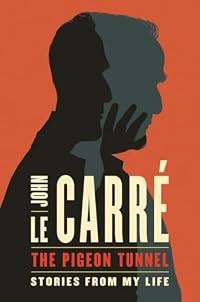
The Pigeon Tunnel: Stories From My Life
by John le Carré
On This Page
Description
“Recounted with the storytelling élan of a master raconteur — by turns dramatic and funny, charming, tart and melancholy.” -Michiko Kakutani, The New York TimesThe New York Times bestselling memoir from John le Carré, the legendary author of Tinker, Tailor, Soldier, Spy; The Spy Who Came in from the Cold; and The Night Manager, now an Emmy-nominated television series starring Tom Hiddleston and Hugh Laurie.
From his years serving in British Intelligence during the Cold War, to show more a career as a writer that took him from war-torn Cambodia to Beirut on the cusp of the 1982 Israeli invasion to Russia before and after the collapse of the Berlin Wall, le Carré has always written from the heart of modern times. In this, his first memoir, le Carré is as funny as he is incisive, reading into the events he witnesses the same moral ambiguity with which he imbues his novels. Whether he's writing about the parrot at a Beirut hotel that could perfectly mimic machine gun fire or the opening bars of Beethoven’s Fifth; visiting Rwanda’s museums of the unburied dead in the aftermath of the genocide; celebrating New Year’s Eve 1982 with Yasser Arafat and his high command; interviewing a German woman terrorist in her desert prison in the Negev; listening to the wisdoms of the great physicist, dissident, and Nobel Prize winner Andrei Sakharov; meeting with two former heads of the KGB; watching Alec Guinness prepare for his role as George Smiley in the legendary BBC TV adaptations of Tinker, Tailor, Soldier, Spy and Smiley’s People; or describing the female aid worker who inspired the main character in The Constant Gardener, le Carré endows each happening with vividness and humor, now making us laugh out loud, now inviting us to think anew about events and people we believed we understood.
Best of all, le Carré gives us a glimpse of a writer’s journey over more than six decades, and his own hunt for the human spark that has given so much life and heart to his fictional characters. show less
Tags
Recommendations












Member Reviews
"Out of the secret world I once knew, I have tried to make a theatre for the larger worlds we inhabit. First comes the imagining, then the search for reality. Then back to the imagining, and to the desk where I'm sitting now." From his years serving in British Intelligence during the Cold War, to a career as a writer that took him from war-torn Cambodia to Beirut on the cusp of the 1982 Israeli invasion to Russia before and after the collapse of the Berlin Wall, le Carré has always written from the heart of modern times. In this, his first memoir, le Carré is as funny as he is incisive, reading into the events he witnesses the same moral ambiguity with which he imbues his novels. Whether he's writing about the parrot at a Beirut hotel show more that could perfectly mimic machine gun fire or the opening bars of Beethoven’s Fifth, visiting Rwanda’s museums of the unburied dead in the aftermath of the genocide, celebrating New Year’s Eve 1982 with Yasser Arafat and his high command, interviewing a German woman terrorist in her desert prison in the Negev, listening to the wisdoms of the great physicist, dissident, and Nobel Prize winner Andrei Sakharov, meeting with two former heads of the KGB, watching Alec Guinness prepare for his role as George Smiley in the legendary BBC TV adaptations, or describing the female aid worker who inspired the main character in The Constant Gardener, le Carré endows each happening with vividness and humor, now making us laugh out loud, now inviting us to think anew about events and people we believed we understood. Best of all, le Carré gives us a glimpse of a writer’s journey over more than six decades, and his own hunt for the human spark that has given so much life and heart to his fictional characters. show less
"The Pigeon Tunnel: Stories from my life" is exactly what it says in the subtitle, stories from the life of John Le Carré, or David Cornwell if we are to use his real name, the only name he responded to.
I came to this book as someone who greatly admires Cornwell’s books and articles, has watched the majority of the screen adaptations of his novels, and who has enjoyed the few interviews he has given and that I have watched or read. You might claim I was biased in a way that means I was bound to enjoy this book. I always say, “There is no harm being biased when you are right*.”
Biased or not, this book did not give me any evidence that my admiration for David Cornwell and his works has been misplaced.
The structure of this book show more supports dipping in and out. There are many short sections describing incidents of note, or describing a character who provided the inspiration for one of Cornwell’s characters or who was a significant person in their own right and whom Cornwell encountered in his life, either incidentally or through his efforts to do research. I enjoyed the whole book and found the bite-size snippets for the author’s life to be intriguing and informative.
While Cornwell did not describe or discuss any of his activities while working in MI5 and MI6, the incidents he did discuss left me with a sense of a parallel world of intrigue and secrecy that most people do not see in their everyday life. There was a sense of everything you know not necessarily being real. I was reminded of Umberto Eco’s stories that, to me, were mostly about showing how the world we know, the history in the books, and the actions of governments and public figures, are not really the world that is around us.
David Cornwell’s father, Ronnie, was a conman, serial seducer, and a real charmer. The longest, most intense and most harrowing part of the book to read was, “Son of the author’s father”. In this thirty-five page chapter, Cornwell describes incidents that shed light on his relationship with his father and his mother, but predominantly his father. It was the one part of the book where one could get a sense of real angst and emotion about the matter being discussed. He describes how he had investigators seek out evidence to verify the veracity of his own memories. This chapter struck me as very personal.
If someone asked me to recommend a single section from this book, and I had to give a one section answer, I would propose the Introduction. The Introduction is twelve pages full of interesting detail and background, but also a warning. Cornwell explains that in describing the incidents he has been true to his memory, but goes on to say that his writing career has involved using memory and imagination, that his previous occupation as a spy in MI5 and MI6 was, by its nature, prone to deception, and that he was brought up by a father whose whole life was devoted to confidence tricks. In this context he questions the concept of “pure memory” and begs the question of how accurate his own memory might be.
If that hypothetical person were to ask me to recommend a single section from this book, my real response would be, “Read the whole book”.
Would I recommend this book?
Most definitely.
Who would I recommend it to?
Anyone.
Would I read more works by this author?
Certainly.
Did this book inspire me in any way?
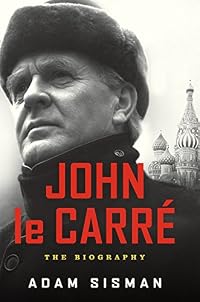
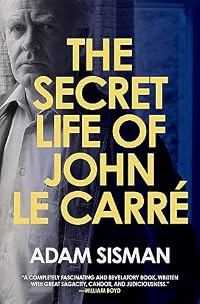
I am inspired to read the Sisman biography of David Cornwell and to read the few Le Carré novels I have not yet reached.
*”Right” as in “correct”; not “Right” as in “politics”. show less
I came to this book as someone who greatly admires Cornwell’s books and articles, has watched the majority of the screen adaptations of his novels, and who has enjoyed the few interviews he has given and that I have watched or read. You might claim I was biased in a way that means I was bound to enjoy this book. I always say, “There is no harm being biased when you are right*.”
Biased or not, this book did not give me any evidence that my admiration for David Cornwell and his works has been misplaced.
The structure of this book show more supports dipping in and out. There are many short sections describing incidents of note, or describing a character who provided the inspiration for one of Cornwell’s characters or who was a significant person in their own right and whom Cornwell encountered in his life, either incidentally or through his efforts to do research. I enjoyed the whole book and found the bite-size snippets for the author’s life to be intriguing and informative.
While Cornwell did not describe or discuss any of his activities while working in MI5 and MI6, the incidents he did discuss left me with a sense of a parallel world of intrigue and secrecy that most people do not see in their everyday life. There was a sense of everything you know not necessarily being real. I was reminded of Umberto Eco’s stories that, to me, were mostly about showing how the world we know, the history in the books, and the actions of governments and public figures, are not really the world that is around us.
David Cornwell’s father, Ronnie, was a conman, serial seducer, and a real charmer. The longest, most intense and most harrowing part of the book to read was, “Son of the author’s father”. In this thirty-five page chapter, Cornwell describes incidents that shed light on his relationship with his father and his mother, but predominantly his father. It was the one part of the book where one could get a sense of real angst and emotion about the matter being discussed. He describes how he had investigators seek out evidence to verify the veracity of his own memories. This chapter struck me as very personal.
If someone asked me to recommend a single section from this book, and I had to give a one section answer, I would propose the Introduction. The Introduction is twelve pages full of interesting detail and background, but also a warning. Cornwell explains that in describing the incidents he has been true to his memory, but goes on to say that his writing career has involved using memory and imagination, that his previous occupation as a spy in MI5 and MI6 was, by its nature, prone to deception, and that he was brought up by a father whose whole life was devoted to confidence tricks. In this context he questions the concept of “pure memory” and begs the question of how accurate his own memory might be.
If that hypothetical person were to ask me to recommend a single section from this book, my real response would be, “Read the whole book”.
Would I recommend this book?
Most definitely.
Who would I recommend it to?
Anyone.
Would I read more works by this author?
Certainly.
Did this book inspire me in any way?
I am inspired to read the Sisman biography of David Cornwell and to read the few Le Carré novels I have not yet reached.
*”Right” as in “correct”; not “Right” as in “politics”. show less
“…We all reinvent our pasts…but writers are in a class of their own. Even when they know the truth, it’s never enough for them.”
“I’m a liar…born to lying, bred to it, trained to it by an industry that lies for a living, practiced in it as a novelist.”
David Cornwell, aka John Le Carre, is no armchair author. He has lived the life and in this beautifully written memoir, by one of the best spy novelists of our time, he takes the reader on a journey, that touches down in many historical and personal locales, over six decades. His years, working for MI6, the British intelligence service, working in Hollywood, interviewing terrorists and meeting luminaries like, Arafat, Richard Burton, Andrei Sakharov and Stanley Kubrick. show more His warm friendship with Alec Guinness, aka George Smiley. And those are just snippets, of what is in these glorious pages but what really stands out, for me, is the profile of his father, who was a true con-man and rapscallion.
I think I have only read about six of his books and mostly the earlier classic stuff. This has inspired me to pick him back up again, especially his later work.
Le Carre also narrates the audiobook and does a wonderful job, with wit and nuance. The perfect storyteller. Do yourself a big favor and track this one down. show less
“I’m a liar…born to lying, bred to it, trained to it by an industry that lies for a living, practiced in it as a novelist.”
David Cornwell, aka John Le Carre, is no armchair author. He has lived the life and in this beautifully written memoir, by one of the best spy novelists of our time, he takes the reader on a journey, that touches down in many historical and personal locales, over six decades. His years, working for MI6, the British intelligence service, working in Hollywood, interviewing terrorists and meeting luminaries like, Arafat, Richard Burton, Andrei Sakharov and Stanley Kubrick. show more His warm friendship with Alec Guinness, aka George Smiley. And those are just snippets, of what is in these glorious pages but what really stands out, for me, is the profile of his father, who was a true con-man and rapscallion.
I think I have only read about six of his books and mostly the earlier classic stuff. This has inspired me to pick him back up again, especially his later work.
Le Carre also narrates the audiobook and does a wonderful job, with wit and nuance. The perfect storyteller. Do yourself a big favor and track this one down. show less
John le Carré (David Cornwell) says that every one of his books was titled The Pigeon Tunnel at some point in the early stages. He finally nails a book worthy of the title with this memoir of his writing life, his time working for British Intelligence, and between the lines, a sense of the man behind the stories of espionage and intrigue.
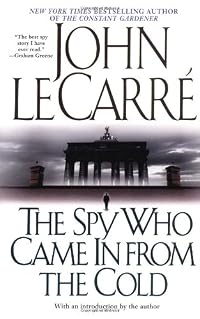
Le Carré tells stories about meeting Arafat, about fellow author and intelligence operative Graham Greene, and letting Robert Redford borrow his Swiss ski chalet, which he’d built with the proceeds of his first smash hit book The Spy Who Came in from the Cold… But le Carré doesn’t splay these stories before readers, pushing his own life before us like a wordy, mercenary paparazzi, exploiting show more his limelight-adjacent life. He also comes across as a man trying to sort things out, but barely mentions marriages and children. Perhaps out of respect for their privacy, or perhaps because they’ve been covered in past interviews. I don’t know, but for me, it’s a curious absence.
Some stories are well-polished yarns le Carré has no doubt shared for many years over drinks, at readings, or over dinner. Like the time he was with Joseph Brodsky when he found out he won the Nobel Prize. Or being summoned by Margaret Thatcher to Number 10.
Then there are the stories of his father. Ronnie Cornwell, le Carré’s father, was a con man of the very highest order. A few of his schemes and cons are outlined here by le Carré, but again, as a man trying to make heads or tails of what information he’s been able to gather, and willing to share. You can almost see him shaking his head throughout the retelling. However, it does give readers a glimpse into how the son of con-man would be drawn into the life of Intelligence.
John le Carré speaking at the German Embassy in London in June 2017.
It’s an excellent book. You won’t find much of “the writer’s life” type of musings, but I doubt many readers will be all that interested in that. No, over his long and productive life, I get a sense that le Carré has been just as busy managing his intellectual property rights, film rights, and fighting off lawsuits and inquiries to make the actual writing of fiction a wonderful respite when he’s able to get down to it. I recommend Pigeon Tunnel if you’re interested in his books, Cold War stories, or Hollywood.
And about that title. After reading his explanation, which takes readers along on a gambling escapade in Monte Carlo, I can see just about any one of his books carrying the title, and it’s meaning, very well. It’s perhaps the aptest metaphor I’ve read in a very long time for not only the life of people working in intelligence but also for writers. I don’t think Le Carré sat on the title all these years because he kept finding titles that suited his novels better. I think he knew it was a title with only one story worthy of it: His own.
https://benjaminlclark.com/book-review-the-pigeon-tunnel-by-john-le-carre/ show less
Le Carré tells stories about meeting Arafat, about fellow author and intelligence operative Graham Greene, and letting Robert Redford borrow his Swiss ski chalet, which he’d built with the proceeds of his first smash hit book The Spy Who Came in from the Cold… But le Carré doesn’t splay these stories before readers, pushing his own life before us like a wordy, mercenary paparazzi, exploiting show more his limelight-adjacent life. He also comes across as a man trying to sort things out, but barely mentions marriages and children. Perhaps out of respect for their privacy, or perhaps because they’ve been covered in past interviews. I don’t know, but for me, it’s a curious absence.
Some stories are well-polished yarns le Carré has no doubt shared for many years over drinks, at readings, or over dinner. Like the time he was with Joseph Brodsky when he found out he won the Nobel Prize. Or being summoned by Margaret Thatcher to Number 10.
Then there are the stories of his father. Ronnie Cornwell, le Carré’s father, was a con man of the very highest order. A few of his schemes and cons are outlined here by le Carré, but again, as a man trying to make heads or tails of what information he’s been able to gather, and willing to share. You can almost see him shaking his head throughout the retelling. However, it does give readers a glimpse into how the son of con-man would be drawn into the life of Intelligence.
John le Carré speaking at the German Embassy in London in June 2017.
It’s an excellent book. You won’t find much of “the writer’s life” type of musings, but I doubt many readers will be all that interested in that. No, over his long and productive life, I get a sense that le Carré has been just as busy managing his intellectual property rights, film rights, and fighting off lawsuits and inquiries to make the actual writing of fiction a wonderful respite when he’s able to get down to it. I recommend Pigeon Tunnel if you’re interested in his books, Cold War stories, or Hollywood.
And about that title. After reading his explanation, which takes readers along on a gambling escapade in Monte Carlo, I can see just about any one of his books carrying the title, and it’s meaning, very well. It’s perhaps the aptest metaphor I’ve read in a very long time for not only the life of people working in intelligence but also for writers. I don’t think Le Carré sat on the title all these years because he kept finding titles that suited his novels better. I think he knew it was a title with only one story worthy of it: His own.
https://benjaminlclark.com/book-review-the-pigeon-tunnel-by-john-le-carre/ show less
A nice collection of short autobiographical pieces from the established master of the spy-story. No big revelations, of course - he's still as professionally tight-lipped as ever about what was involved in the "bit of this and that" he did for MI5 and MI6 in his time - but a lot of charming little anecdotes about his experiences as a working novelist, mostly cast in the classic English self-deprecatory mould where the name-dropping is always balanced by some kind of embarrassment - an invitation to No. 10 from Mrs Thatcher, when it turns out that the real guest of honour (the recently-elected Ruud Lubbers) has never heard of him; meetings with Arafat who treats him with great affection one day and has forgotten him the next; encounters show more with famous film directors who go on not to make films of his books; leaders who wrongly assume that he's an expert they can consult about espionage and security; hotel concierges who don't know him but still remember his conman father with affection, and so on.
All written with his characteristic economy and eye for jargon and dialogue, and very entertaining. show less
All written with his characteristic economy and eye for jargon and dialogue, and very entertaining. show less
"if you were reporting on human pain, you had a duty to share it"
- John le Carré, quoting a dictum of Graham Greene, in 'The Pigeon Tunnel"
First, a disclosure, I was given this book by Viking Books. These types of offers I typically refuse. I don't like feeling under obligation to review or even read a book just because it was given to me. I might do it for friends, but even then, I am VERY picky about what I read. I have thousands of unread books and thousands of others I that are on my radar to read. I usually feel a bit like Melville's Bartleby, aroused only to the level of wanting to reply "I would prefer not to.". But this is John le Carré. Anyone who knows me knows I'VE been pimping John le Carré books for years. My goal is to show more be a le Carré completest by the end of next year (I still have yet to read The Night Manager, The Tailor of Panama, Absolute Friends, Our Game, or The Naive and Sentimental Lover) but there is a sadness that comes with finishing, with having no country left to visit or no book left to read. I, however, own them all. Often multiple copies. So, how could I refuse a free le Carré? Also, so I wouldn't feel completely like I was writing for free books, I also went out to purchase the Audiobook so I could listen to le Carré talk about his own life.
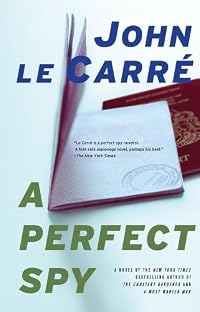
Surprisingly, this is le le Carré's first memoir. That both feels a bit strange and a bit right. First, le Carré is a master at timing and also understands when is the proper point to introduce a character and how much to show. John le Carré, the pen name for David Cornwell, is often reluctant to do interviews (their is a bit about that in this book) and is a bit publicity shy. He isn't Pynchon or Salinger for sure, but the energy of pimping his stuff and his reluctance sometimes to delve into the narrative of his own life (he worked for awhile for both MI-5 and MI-6) and his relationship with his father seems to be something he is often reluctant to discuss. Ironically, these two issues feed his fiction heavily. His father and his relationship with his father's ghost seems to push through most of his fiction. So, too, obviously does le Carré time as David Cornwell the spy. There is a thin, unbleached muslin shroud between fact and fiction (le Carré talks about his in this book). Perhaps le Carré's greatest book, A Perfect Spy, which Philip Roth (yes, that Philip F'ing Roth) once called "the best English novel since the War" was grown out of David Cornwell's relationship with his own father.
The memoir itself is filled with anecdotes and loosely goes from past to present, but also breaks time's arrow to describe certain relationships with certain people or movies made of his books. I loved especially the parts of this book where le Carré writes about Graham Greene and the craft of writing. I knew le Carré got around, but after reading the memoir, I can safely say he belongs with George Orwell, Graham Greene, William T. Vollmann, Paul Theroux family of adventure writers whose fiction is informed from the trenches. They don't just know where some bodies are actually buried, they may have seen the corpse AND the murder.
So, why only four stars? Because I'm judging this book against his best fiction. This is a fun memoir and a very good le Carré. Again, going back to how this is his first memoir, I wonder why now? I hope he is not done with fiction. I hope this is not him saying, I'm done. He is in his 80s, and after he is done, I'm not sure what to do. We have been waiting for 400 years for another playwright to equal Shakespeare. How many centuries will we have to wait for another le Carré. Dear GOD, I fear too long. show less
- John le Carré, quoting a dictum of Graham Greene, in 'The Pigeon Tunnel"
First, a disclosure, I was given this book by Viking Books. These types of offers I typically refuse. I don't like feeling under obligation to review or even read a book just because it was given to me. I might do it for friends, but even then, I am VERY picky about what I read. I have thousands of unread books and thousands of others I that are on my radar to read. I usually feel a bit like Melville's Bartleby, aroused only to the level of wanting to reply "I would prefer not to.". But this is John le Carré. Anyone who knows me knows I'VE been pimping John le Carré books for years. My goal is to show more be a le Carré completest by the end of next year (I still have yet to read The Night Manager, The Tailor of Panama, Absolute Friends, Our Game, or The Naive and Sentimental Lover) but there is a sadness that comes with finishing, with having no country left to visit or no book left to read. I, however, own them all. Often multiple copies. So, how could I refuse a free le Carré? Also, so I wouldn't feel completely like I was writing for free books, I also went out to purchase the Audiobook so I could listen to le Carré talk about his own life.
Surprisingly, this is le le Carré's first memoir. That both feels a bit strange and a bit right. First, le Carré is a master at timing and also understands when is the proper point to introduce a character and how much to show. John le Carré, the pen name for David Cornwell, is often reluctant to do interviews (their is a bit about that in this book) and is a bit publicity shy. He isn't Pynchon or Salinger for sure, but the energy of pimping his stuff and his reluctance sometimes to delve into the narrative of his own life (he worked for awhile for both MI-5 and MI-6) and his relationship with his father seems to be something he is often reluctant to discuss. Ironically, these two issues feed his fiction heavily. His father and his relationship with his father's ghost seems to push through most of his fiction. So, too, obviously does le Carré time as David Cornwell the spy. There is a thin, unbleached muslin shroud between fact and fiction (le Carré talks about his in this book). Perhaps le Carré's greatest book, A Perfect Spy, which Philip Roth (yes, that Philip F'ing Roth) once called "the best English novel since the War" was grown out of David Cornwell's relationship with his own father.
The memoir itself is filled with anecdotes and loosely goes from past to present, but also breaks time's arrow to describe certain relationships with certain people or movies made of his books. I loved especially the parts of this book where le Carré writes about Graham Greene and the craft of writing. I knew le Carré got around, but after reading the memoir, I can safely say he belongs with George Orwell, Graham Greene, William T. Vollmann, Paul Theroux family of adventure writers whose fiction is informed from the trenches. They don't just know where some bodies are actually buried, they may have seen the corpse AND the murder.
So, why only four stars? Because I'm judging this book against his best fiction. This is a fun memoir and a very good le Carré. Again, going back to how this is his first memoir, I wonder why now? I hope he is not done with fiction. I hope this is not him saying, I'm done. He is in his 80s, and after he is done, I'm not sure what to do. We have been waiting for 400 years for another playwright to equal Shakespeare. How many centuries will we have to wait for another le Carré. Dear GOD, I fear too long. show less
January 2021:
I decided to re-read this after the death of John le Carré in December 2020. His books have provided so much entertainment for me and I found reading about his life and personality in this excellent memoir just as pleasing, even on the second time around.
My 2017 review:
Although I've enjoyed many of le Carré's books, I knew little about the person, aka David Cornwell - until now. This book is an autobiography of sorts, made up of stories from his life as a spy and as a writer. Each chapter is a story in itself without diversions into irrelevant details, a common fault of the genre. As in his fiction, the writing is excellent - except in this case there is the addition of humour and a friendly, affable quality when show more appropriate. Difficult to pick a favourite chapter, but I particularly enjoyed "The Wrong Horse's Mouth" that includes accounts of his meetings with the President of Italy and with PM Margaret Thatcher. This book was a pleasure to read and I can heartily recommend it. show less
I decided to re-read this after the death of John le Carré in December 2020. His books have provided so much entertainment for me and I found reading about his life and personality in this excellent memoir just as pleasing, even on the second time around.
My 2017 review:
Although I've enjoyed many of le Carré's books, I knew little about the person, aka David Cornwell - until now. This book is an autobiography of sorts, made up of stories from his life as a spy and as a writer. Each chapter is a story in itself without diversions into irrelevant details, a common fault of the genre. As in his fiction, the writing is excellent - except in this case there is the addition of humour and a friendly, affable quality when show more appropriate. Difficult to pick a favourite chapter, but I particularly enjoyed "The Wrong Horse's Mouth" that includes accounts of his meetings with the President of Italy and with PM Margaret Thatcher. This book was a pleasure to read and I can heartily recommend it. show less
Members
- Recently Added By
Lists

Top Five Books of 2016
795 works; 229 members
Author Information

208+ Works 98,955 Members
David John Moore Cornwell was born in Poole, Dorsetshire, England in 1931. He attended Bern University in Switzerland from 1948-49 and later completed a B.A. at Lincoln College, Oxford. He taught at Eton from 1956-58 and was a member of the British Foreign Service from 1959 to 1964. He writes espionage thrillers under the pseudonym John le Carré. show more The pseudonym was necessary when he began writing, in the early 1960s because, at that time, he held a diplomatic position with the British Foreign Office and was not allowed to publish under his own name. When his third book, The Spy Who Came in from the Cold, became a worldwide bestseller in 1964, he left the foreign service to write full time. His other works include Call for the Dead; A Murder of Quality; Tinker, Tailor, Soldier, Spy; The Honourable Schoolboy; and Smiley's People. He has received numerous awards for his writing, including the Grand Master Award from the Mystery Writers of America in 1986 and the Diamond Dagger from the Crime Writers Association in 1988. In 2011 he accepted the Goethe Medal. And in 2020, he accepted the Olof Palme Prize. Ten of his books have been adapted for television and motion pictures including The Spy Who Came in from the Cold, The Russia House, The Constant Gardener, A Most Wanted Man, and Our Kind of Traitor. Le Carré's memoir, The Pigeon Tunnel: Stories from my Life, became a New York Times bestseller in 2016. In 2019, he published a spy thriller, Agent Running in the Field. John Le Carré died on December 12, 2020 from pneumonia at the age of 89. (Bowker Author Biography) John le Carre was born in 1931. After attending the univesities of Berne and Oxford, he spent five years in the British Foreign Service. He's the author of eighteen novels, translated into twenty-five languages. He lives in England. (Publisher Provided) show less
Awards and Honors
Distinctions
Notable Lists
Common Knowledge
- Canonical title
- The Pigeon Tunnel: Stories From My Life
- Original title
- The Pigeon Tunnel. Stories From My Life
- Original publication date
- 2016
- People/Characters
- Vivian Green; Graham Greene; George Blake; Kim Philby; Konrad Adenauer; Hans Josef Maria Globke (show all 37); Johannes Ullrich; Fritz Erler; Quintin Hogg; August Hanning; Reinhard Gehlen; Heinz Felfe; Murat Kurnaz; Yvette Pierpaoli; Jerry Westerby; Peter Simms; Yasser Arafat; Salah Tamari; Andrei Sakharov; Spetsnaz; Rupert Murdoch; Robert Maxwell; Vadim Bakatin; Yevgeny Primakov; Oldřich Černý; Issa Kostoev; Nicholas Elliott; Jason Stearns; Richard Burton; Alec Guinness; Fritz Lang; Bernard Pivot; Jean-Paul Kauffmann; Learie Constantine; Olive Moore Cornwell; Reginald Bosanquet; Vladimir Pucholt
- Related movies
- The Pigeon Tunnel (2023 | IMDb)
- Quotations
- To the creative writer, fact is raw material, not his taskmaster, but his instrument. And his task is to make it sing. Real truth lies, if anywhere, not in facts, but in nuance.
- Original language*
- Engels
*Some information comes from Common Knowledge in other languages. Click "Edit" for more information.
Classifications
Statistics
- Members
- 1,092
- Popularity
- 23,235
- Reviews
- 53
- Rating
- (4.00)
- Languages
- 13 — Chinese, Danish, Dutch, English, French, German, Hungarian, Italian, Russian, Spanish, Swedish, Turkish, Portuguese (Portugal)
- Media
- Paper, Audiobook, Ebook
- ISBNs
- 51
- ASINs
- 15