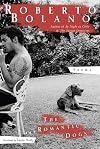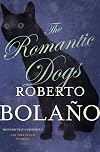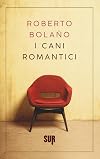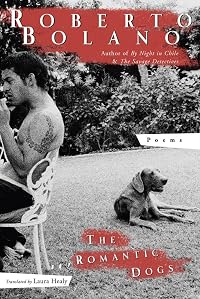
The Romantic Dogs
by Roberto Bolaño
On This Page
Description
Collects some of the Chilean poet's earliest verse, including love poems, political pieces, and works that highlight such themes as the search for poetry, detectives, and the interrelationship of life, death, and the weather.Tags
Recommendations











Member Reviews
X-Rays.
If we look with X-rays at the patients house,
we’ll see the ghosts of books in silent shelves
or piled in the hall or on the nightstands and tables.
We’ll also see a small notebook with drawings, lines
and arrows
that diverge and intersect: they are voyages in death’s
company.But death, despite its arrogant aide-memoir,
still hasn’t won. the X-rays tell us time
is expanding and thinning like the tail of a comet
inside the house. Life still gives its best
fruits. And as the sea promised Jaufre Rudel *
the vision of love, so this house near the sea promises
its dweller the dream of the destroyed and constructed tower.
If we look, however, with X-rays inside of the man,
we’ll see bones and shadows: ghosts of fiestas
and landscapes in show more motion as if viewed from an airplane
in tailspin. We’ll see the eyes he saw, the lips
his fingers brushed, a body emerged
from a snowstorm. And we’ll see the naked body,
just as he saw it, and the eyes and the lips he brushed,
and we’ll know that there’s no cure.
The poem above is one of forty-three in a collection of poetry by Chilean writer Roberto Bolano, originally published in 2006, this, the bilingual edition was published two years later, and was translated by Laura Healy (publisher New Directions). This collection spans just under twenty years (1980 to 1998) and covers a lot of the subject matter covered in his novels, his obsessions with detectives, with the lost and exiled, and with poetry itself. In fact anyone who has read 2666, The Savage Detectives, Amulet etc. will be familiar with the subject matter and although the books are shot through with poetry, you get the impression that these are more personal. Bolano has always considered himself a poet, he wrote fiction to fulfil the need to support his family more than as an abiding wish to write the books, explaining, “I blush less when I reread my poems.” Yet it was through his novels, translated after his death, that he gained recognition outside the Spanish language world, that allowed this work to be published alongside other works from his back catalogue.
This book has an air of nostalgia, of looking back at a youth and it’s freedoms, of a time of living the poetry, of it being the essence, in the title poem Bolano writes;
Back then, I’d reach the age of twenty
and I was crazy.
I’d lost a country
but won a dream
nothing else mattered.
Not working, not praying
not studying in the morning light
alongside the romantic dogs.
And through these poems you follow his journey, meeting the many characters, the good, the lost, the evil. This is the story of artists, writers & poets exiled from all that could be called home. Individuals caught in their own private quests, hunted by nightmares, always on the edge, and yet the penultimate poem is about love (possibly his wife) and it ends with these lovely words suffused with hope.
Muse,
more beautiful than the sun,
more beautiful
than the stars
http://parrishlantern.blogspot.co.uk/2011/08/romantic-dogs-by-roberto-bolano.htm... show less
If we look with X-rays at the patients house,
we’ll see the ghosts of books in silent shelves
or piled in the hall or on the nightstands and tables.
We’ll also see a small notebook with drawings, lines
and arrows
that diverge and intersect: they are voyages in death’s
company.But death, despite its arrogant aide-memoir,
still hasn’t won. the X-rays tell us time
is expanding and thinning like the tail of a comet
inside the house. Life still gives its best
fruits. And as the sea promised Jaufre Rudel *
the vision of love, so this house near the sea promises
its dweller the dream of the destroyed and constructed tower.
If we look, however, with X-rays inside of the man,
we’ll see bones and shadows: ghosts of fiestas
and landscapes in show more motion as if viewed from an airplane
in tailspin. We’ll see the eyes he saw, the lips
his fingers brushed, a body emerged
from a snowstorm. And we’ll see the naked body,
just as he saw it, and the eyes and the lips he brushed,
and we’ll know that there’s no cure.
The poem above is one of forty-three in a collection of poetry by Chilean writer Roberto Bolano, originally published in 2006, this, the bilingual edition was published two years later, and was translated by Laura Healy (publisher New Directions). This collection spans just under twenty years (1980 to 1998) and covers a lot of the subject matter covered in his novels, his obsessions with detectives, with the lost and exiled, and with poetry itself. In fact anyone who has read 2666, The Savage Detectives, Amulet etc. will be familiar with the subject matter and although the books are shot through with poetry, you get the impression that these are more personal. Bolano has always considered himself a poet, he wrote fiction to fulfil the need to support his family more than as an abiding wish to write the books, explaining, “I blush less when I reread my poems.” Yet it was through his novels, translated after his death, that he gained recognition outside the Spanish language world, that allowed this work to be published alongside other works from his back catalogue.
This book has an air of nostalgia, of looking back at a youth and it’s freedoms, of a time of living the poetry, of it being the essence, in the title poem Bolano writes;
Back then, I’d reach the age of twenty
and I was crazy.
I’d lost a country
but won a dream
nothing else mattered.
Not working, not praying
not studying in the morning light
alongside the romantic dogs.
And through these poems you follow his journey, meeting the many characters, the good, the lost, the evil. This is the story of artists, writers & poets exiled from all that could be called home. Individuals caught in their own private quests, hunted by nightmares, always on the edge, and yet the penultimate poem is about love (possibly his wife) and it ends with these lovely words suffused with hope.
Muse,
more beautiful than the sun,
more beautiful
than the stars
http://parrishlantern.blogspot.co.uk/2011/08/romantic-dogs-by-roberto-bolano.htm... show less
I haven't read Bolano's prose yet. I started with his poetry because the author first considered himself a poet. I can say, having read and reread this book, that there were moments while reading this book when I felt like Salieri from the movie Amadeus. There is such raw talent and more than honesty coursing through these lines. There are disappointments, flirtations, jokes, and brutal acts waiting here.
I highly recommend this as an inspiration to read Bolano's other work.
I highly recommend this as an inspiration to read Bolano's other work.
Dreadful. The characters in Bolaño's novels write better poetry than this! The title of the volume is pretty apt. Rambling free verse descriptions of cheap hotel rooms and tawdry people, fraught with juvenile self-mythologizing in a "lying in the gutter looking up at the stars" style and sprinkled with ham-fisted high-culture references.
There's no sign here of the maturity and moral nuance seen in the author's best novels, and there's absolutely nothing to admire technically.
There's no sign here of the maturity and moral nuance seen in the author's best novels, and there's absolutely nothing to admire technically.
By the time an English translation of Chilean author Roberto Bolaño’s novel The Savage Detectives was finally released in 2007, he had already passed like a glowing comet, having succumbed to a failing liver in 2003. Bolaño’s novel followed every drunken debauch and whim of a group of young Mexico City poets calling themselves visceral realists, but while the prose was beautifully crafted, the book was starkly short on actual poems.
His biographers make a point of saying that Bolaño’s first love was poetry. Supposedly he only turned to writing novels at the age of 40 after the birth of his son forced him to give up a more bohemian lifestyle. This collection spans his career from 1980 through 1998, the year The Savage Detectives show more was first published. There are many allusions to the novel and, as in much of his work, some of the same territories are traveled, making this a good companion piece to the novel, or visa versa. Several poems deal with the enigmatic figure of a detective, questioning but never solving the seemingly random and unending violence of South America.
I dreamt of frozen detectives, Latin American detectives
who were trying to keep their eyes open
in the middle of the dream.
I dreamt of hideous crimes
and of careful guys
who were wary not to step in pools of blood
while taking in the crime scene
with a single sweeping glance.
His fascination with forensics would find full flower in 2666, by many accounts, his crowning achievement. At nearly 900 pages, the book is a mammoth project that Bolaño struggled to finish before he died. It is rumored that he even went as far as to postpone a much-needed liver transplant so as to not break stride on his defining work. This struggle is reflected in one of the most moving poems near the end of The Romantic Dogs.
Muse, wherever you
might go
I go.
I follow your radiant trail
across the long night.
Not caring about years
or sickness
Not caring about the pain
or the effort I must make
to follow you. show less
His biographers make a point of saying that Bolaño’s first love was poetry. Supposedly he only turned to writing novels at the age of 40 after the birth of his son forced him to give up a more bohemian lifestyle. This collection spans his career from 1980 through 1998, the year The Savage Detectives show more was first published. There are many allusions to the novel and, as in much of his work, some of the same territories are traveled, making this a good companion piece to the novel, or visa versa. Several poems deal with the enigmatic figure of a detective, questioning but never solving the seemingly random and unending violence of South America.
I dreamt of frozen detectives, Latin American detectives
who were trying to keep their eyes open
in the middle of the dream.
I dreamt of hideous crimes
and of careful guys
who were wary not to step in pools of blood
while taking in the crime scene
with a single sweeping glance.
His fascination with forensics would find full flower in 2666, by many accounts, his crowning achievement. At nearly 900 pages, the book is a mammoth project that Bolaño struggled to finish before he died. It is rumored that he even went as far as to postpone a much-needed liver transplant so as to not break stride on his defining work. This struggle is reflected in one of the most moving poems near the end of The Romantic Dogs.
Muse, wherever you
might go
I go.
I follow your radiant trail
across the long night.
Not caring about years
or sickness
Not caring about the pain
or the effort I must make
to follow you. show less
I haven't read Bolano's prose yet. I started with his poetry because the author first considered himself a poet. I can say, having read and reread this book, that there were moments while reading this book when I felt like Salieri from the movie Amadeus. There is such raw talent and more than honesty coursing through these lines. There are disappointments, flirtations, jokes, and brutal acts waiting here.
I highly recommend this as an inspiration to read Bolano's other work.
I highly recommend this as an inspiration to read Bolano's other work.
This is a collection of forty-odd love poems whose chosen emblem is a dog, man’s best friend but a lowly animal still. Politics and regimes, its cloak, are inescapable from the experience of poetry because the experience is a Latin American one. But at the same time, the tone strives for freedom from the ideological banality of history because the experience is also universal and, in the light of the poet’s path-breaking prose, bridges the global post-national territory.
The poems are about ceaseless and aimless wanderings, encounters with friends and lovers, casual sex, poverty, isolation, and dialogues with established poets. The idealism and innocence of youth are being tested.
It is notable that the poet’s efforts of a conscious show more artistry, for such a highbrow subject as poetry and a dangerous calling as living on the edge of poetry, is peopled with individuals coming from low standing (prostitutes, vagrants, homosexuals, emigrants, and exiles), lowlifes who in their pathetic fates and decadence are pictured sympathetically in poetry even as they also took centerstage in the novels. Clearly the inner workings of Bolañoland are metaphorical identifications with the oppressed and their progress in this hostile civilization.
The backdrop of the poet’s romances is the dark undercurrents of history (Nazism, dictatorship, torture, kidnapping), which is often likened to a horror movie. The escape is through sexual trysts but the comfort they bring is ephemeral, sometimes artificial, and oftentimes do not really bring comfort at all.
My full review here: http://booktrek.blogspot.com/2009/06/romantic-dogs-roberto-bolano.html show less
The poems are about ceaseless and aimless wanderings, encounters with friends and lovers, casual sex, poverty, isolation, and dialogues with established poets. The idealism and innocence of youth are being tested.
It is notable that the poet’s efforts of a conscious show more artistry, for such a highbrow subject as poetry and a dangerous calling as living on the edge of poetry, is peopled with individuals coming from low standing (prostitutes, vagrants, homosexuals, emigrants, and exiles), lowlifes who in their pathetic fates and decadence are pictured sympathetically in poetry even as they also took centerstage in the novels. Clearly the inner workings of Bolañoland are metaphorical identifications with the oppressed and their progress in this hostile civilization.
The backdrop of the poet’s romances is the dark undercurrents of history (Nazism, dictatorship, torture, kidnapping), which is often likened to a horror movie. The escape is through sexual trysts but the comfort they bring is ephemeral, sometimes artificial, and oftentimes do not really bring comfort at all.
My full review here: http://booktrek.blogspot.com/2009/06/romantic-dogs-roberto-bolano.html show less
Romantic dogs is the first appearance in English translation of the late Roberto Bolano's poetry. In the last couple years the publishing of his two major novels The Savage Dectectives andd 2666 have been media events nonetheless Bolano seems to have considered himself a poet first and foremost.
Translating from one language to another especially in poetry can be a tricky thing. The text being in both languages I would rather leave Laura Healy's translation abilities to someone more expert in the Spanish language. In any case there are no clinkers. Going in one might have expected Bolano's work would depend much on the lucid insights his novels are known for and that turned out to be pretty much the case. He is not Nicanor Parra show more though--so he is not even the best Chilean poet but there is nothing to be ashamed of there as nobody is--Parra IMO is just simply the best and as a matter of fact the two major South American poets he cites in his work here are Parra and the Nicaraguan libertarian theologian priest Ernesto Cardenal.
So a couple examples--short ones however:
Resurrection
Poetry slips into dreams
like a diver in a lake.
Poetry, braver than anyone,
slips in and sinks
like lead
through a lake infinite as Loch Ness
or tragic and turbid as Lake Balaton.
Consider it from below:
a diver
innocent
covered in feathers
of will.
Poetry slips into dreams
like a diver who's dead
in the eyes of God.
Godzilla in Mexico
Listen carefully, my son: bombs were falling
over Mexico City
but no one even noticed.
The air carried poison through
the streets and open windows.
You'd just finished eating and were watching
cartoons on the TV.
I was reading in the bedroom next door
when I realized we were going to die.
Despite the dizziness and nausea I dragged myself
to the kitchen and found you on the floor.
We hugged. You asked what was happening
and I didn't tell you we were on death's program
but instead that we were going on a journey,
one more, together, and you shouldn't be afraid.
When it left, death didn't even
close our eyes.
What are we? you asked a week or year later,
ants, bees, wrong numbers
in the big rotten soup of chance?
We're human beings, my son, almost birds,
public heroes and secrets.
Overall it is an excellent collection and if you are a Bolano fan you should make sure to pick it up. show less
Translating from one language to another especially in poetry can be a tricky thing. The text being in both languages I would rather leave Laura Healy's translation abilities to someone more expert in the Spanish language. In any case there are no clinkers. Going in one might have expected Bolano's work would depend much on the lucid insights his novels are known for and that turned out to be pretty much the case. He is not Nicanor Parra show more though--so he is not even the best Chilean poet but there is nothing to be ashamed of there as nobody is--Parra IMO is just simply the best and as a matter of fact the two major South American poets he cites in his work here are Parra and the Nicaraguan libertarian theologian priest Ernesto Cardenal.
So a couple examples--short ones however:
Resurrection
Poetry slips into dreams
like a diver in a lake.
Poetry, braver than anyone,
slips in and sinks
like lead
through a lake infinite as Loch Ness
or tragic and turbid as Lake Balaton.
Consider it from below:
a diver
innocent
covered in feathers
of will.
Poetry slips into dreams
like a diver who's dead
in the eyes of God.
Godzilla in Mexico
Listen carefully, my son: bombs were falling
over Mexico City
but no one even noticed.
The air carried poison through
the streets and open windows.
You'd just finished eating and were watching
cartoons on the TV.
I was reading in the bedroom next door
when I realized we were going to die.
Despite the dizziness and nausea I dragged myself
to the kitchen and found you on the floor.
We hugged. You asked what was happening
and I didn't tell you we were on death's program
but instead that we were going on a journey,
one more, together, and you shouldn't be afraid.
When it left, death didn't even
close our eyes.
What are we? you asked a week or year later,
ants, bees, wrong numbers
in the big rotten soup of chance?
We're human beings, my son, almost birds,
public heroes and secrets.
Overall it is an excellent collection and if you are a Bolano fan you should make sure to pick it up. show less
Members
- Recently Added By
Author Information

101+ Works 28,230 Members
Common Knowledge
- Canonical title*
- I cani romantici
- Original title
- Los perros románticos: Poemas 1980-1998
- Original publication date
- 1993 (1st ∙ 1977-1990) (1st ∙ 1977-1990); 2000 (2nd ∙ 1980-1998) (2nd ∙ 1980-1998); 2006 (3rd) (3rd); 2008 (English: Healy) (English: Healy)
- Dedication
- For Carolina López and Lautaro Bolaño
- Blurbers
- Prose, Francine; Anderson, Sam; Gander, Forrest
*Some information comes from Common Knowledge in other languages. Click "Edit" for more information.
Classifications
- Genres
- Poetry, Fiction and Literature
- DDC/MDS
- 861.64 — Literature & rhetoric Spanish Literature Spanish poetry 20th Century 1945-2000
- LCC
- PQ8098.12 .O38 .P4713 — Language and Literature French, Italian, Spanish and Portuguese literatures Spanish literature Provincial, local, colonial, etc. Spanish America
- BISAC
Statistics
- Members
- 293
- Popularity
- 110,268
- Reviews
- 12
- Rating
- (3.55)
- Languages
- 6 — English, French, German, Italian, Norwegian (Bokmål), Spanish
- Media
- Paper, Ebook
- ISBNs
- 14
- ASINs
- 1