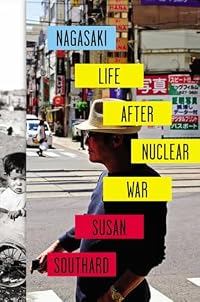
Nagasaki: Life After Nuclear War
by Susan Southard
On This Page
Description
This book is a powerful and unflinching account of the enduring impact of nuclear war, told through the stories of those who survived. On August 9, 1945, three days after the atomic bombing of Hiroshima, the United States dropped a second atomic bomb on Nagasaki, a small port city on Japan's southernmost island. An estimated 74,000 people died within the first five months, and another 75,000 were injured. Published on the seventieth anniversary of the bombing, Nagasaki takes readers from the show more morning of the bombing to the city today, telling the first-hand experiences of five survivors, all of whom were teenagers at the time of the devastation. Susan Southard has spent years interviewing hibakusha ("bomb-affected people") and researching the physical, emotional, and social challenges of post-atomic life. She weaves together dramatic eyewitness accounts with searing analysis of the policies of censorship and denial that colored much of what was reported about the bombing both in the United States and Japan. A gripping narrative of human resilience, Nagasaki will help shape public discussion and debate over one of the most controversial wartime acts in history. - Publisher. Published to coincide with the seventieth anniversary of the bombing of Nagasaki, a narrative of human resilience, told through first-hand experiences of five survivors, reveals the physical, emotional, and social challenges of post-atomic life. show lessTags
Recommendations







Member Reviews
Nagasaki: Life After Nuclear War is a haunting account of the second atomic bomb to fall on a civilian populace. As the title implies, this book goes far beyond the events of August 9, 1945, though it is in the initial weeks and months after the bombing that the story of Nagasaki is most gripping. Southard has clearly devoted significant time and energy researching the bombing, but she does an admirable job keeping her personal feelings from clouding her narrative.
A book that removes the layers of shame, pride, and decades of censorship, Nagasaki: Life After Nuclear War takes a fresh look at the bomb that “ended the war.” As seventy years have passed and survivors of nuclear war are dwindling, I think it is time we approach the show more subject with a fresh perspective and asks ourselves if we really want to do this ever again. show less
A book that removes the layers of shame, pride, and decades of censorship, Nagasaki: Life After Nuclear War takes a fresh look at the bomb that “ended the war.” As seventy years have passed and survivors of nuclear war are dwindling, I think it is time we approach the show more subject with a fresh perspective and asks ourselves if we really want to do this ever again. show less
The signature line of one of the atomic bomb survivors, who participated in educating youth about the bombing, whose life is one of the five main survivors’ lives followed in this account says a lot of what needs to be said: “The basis of peace is for people to understand the pain of others.”
With all the reading I thought I’d done I should have known the word hibakusha and its pronunciation but I didn’t. I do now.
This was not easy reading or particularly wise bedtime reading, but it was worth it. It’s excellent, powerfully told, incredibly well researched. It’s the perfect mix of history & biography. The research done was extensive. The personal stories, while heartbreaking, were also inspiring, and made the history show more perfectly come to life.
I felt such a mix of emotions as I read, mostly painful ones.
I think that the author’s choice to present the account(s) chronologically is brilliant, and I was glad to be introduced to the main people covered, with a bit of their histories too, at the time of the bombing, all ages 13 to 18 years old. The reader eventually sees why these five people in particular were chosen to follow. Many of their stories were heartbreaking, even prior to the bomb.
The five main people, for all their suffering, were strong and successful survivors, and many other specific people are more than mentioned too, but I couldn’t help thinking of all the unknown people killed outright, died as a result, or were otherwise affected, and remain anonymous.
This is a book that made me think, a lot. I wished I could talk to/tell my father, who parroted back the American government/military propaganda about the necessity/right choice of dropping the atomic bombs. I think he would have wanted to know the truth. Also, while there are lots of inspiring actions that were done, good people working for others as well as for themselves after the bombing, but my faith in human nature didn’t improve. Even in this instance, the activists fought for people’s rights only because they’d been personally affected. While laudable, I didn’t see too much involvement from people who hadn’t been involved in some way. I just kept thinking that this world is a horrible place for those who are alone, sick/injured, poor. It’s just one more historical/current instance where this seems true.
I really appreciated the maps (I always love maps in books) and one of the maps has information that wouldn’t easily be found on the internet as is, and I frequently referred to it.
I loved all the included photographs, with the people and places shown at different time periods.
The notes are much more interesting and well organized, by topic, than in most books, and are well worth reading.
I want all military leaders and world leaders and scientists and anyone with any power to read this book. I’m thinking in particular of 2 leaders, but I don’t know if this book has been translated into Korean and the other one doesn’t read, even briefs for work, and I don’t know if either care at all about other people, but all I know is that anyone who ever suggests for any reason the use of nuclear weapons should never be in a position of power to use them.
Even though I know the Contents page can likely be found online, many will not check it out, and reading it gives a good idea of the book’s contents & presentation, and its rigorous research, so:
Contents:
Maps viii
Preface vi
A Note on Japanese Names and Terms xix
Prologue 1
Chapter 1: Convergence 7
Chapter 2: Flashpoint 41
Chapter 3: Embers 65
Chapter 4: Exposed 96
Chapter 5: Time Suspended 131
Chapter 6: Emergence 164
Chapter 7: Afterlife 203
Chapter 8: Against Forgetting 236
Chapter 9: Gaman 273
Acknowledgments 303
Notes 307
Hibakusha Sources and Selected Bibiography 349
Index 373 (book ends on page 389) show less
With all the reading I thought I’d done I should have known the word hibakusha and its pronunciation but I didn’t. I do now.
This was not easy reading or particularly wise bedtime reading, but it was worth it. It’s excellent, powerfully told, incredibly well researched. It’s the perfect mix of history & biography. The research done was extensive. The personal stories, while heartbreaking, were also inspiring, and made the history show more perfectly come to life.
I felt such a mix of emotions as I read, mostly painful ones.
I think that the author’s choice to present the account(s) chronologically is brilliant, and I was glad to be introduced to the main people covered, with a bit of their histories too, at the time of the bombing, all ages 13 to 18 years old. The reader eventually sees why these five people in particular were chosen to follow. Many of their stories were heartbreaking, even prior to the bomb.
The five main people, for all their suffering, were strong and successful survivors, and many other specific people are more than mentioned too, but I couldn’t help thinking of all the unknown people killed outright, died as a result, or were otherwise affected, and remain anonymous.
This is a book that made me think, a lot. I wished I could talk to/tell my father, who parroted back the American government/military propaganda about the necessity/right choice of dropping the atomic bombs. I think he would have wanted to know the truth. Also, while there are lots of inspiring actions that were done, good people working for others as well as for themselves after the bombing, but my faith in human nature didn’t improve. Even in this instance, the activists fought for people’s rights only because they’d been personally affected. While laudable, I didn’t see too much involvement from people who hadn’t been involved in some way. I just kept thinking that this world is a horrible place for those who are alone, sick/injured, poor. It’s just one more historical/current instance where this seems true.
I really appreciated the maps (I always love maps in books) and one of the maps has information that wouldn’t easily be found on the internet as is, and I frequently referred to it.
I loved all the included photographs, with the people and places shown at different time periods.
The notes are much more interesting and well organized, by topic, than in most books, and are well worth reading.
I want all military leaders and world leaders and scientists and anyone with any power to read this book. I’m thinking in particular of 2 leaders, but I don’t know if this book has been translated into Korean and the other one doesn’t read, even briefs for work, and I don’t know if either care at all about other people, but all I know is that anyone who ever suggests for any reason the use of nuclear weapons should never be in a position of power to use them.
Even though I know the Contents page can likely be found online, many will not check it out, and reading it gives a good idea of the book’s contents & presentation, and its rigorous research, so:
Contents:
Maps viii
Preface vi
A Note on Japanese Names and Terms xix
Prologue 1
Chapter 1: Convergence 7
Chapter 2: Flashpoint 41
Chapter 3: Embers 65
Chapter 4: Exposed 96
Chapter 5: Time Suspended 131
Chapter 6: Emergence 164
Chapter 7: Afterlife 203
Chapter 8: Against Forgetting 236
Chapter 9: Gaman 273
Acknowledgments 303
Notes 307
Hibakusha Sources and Selected Bibiography 349
Index 373 (book ends on page 389) show less
If you read nothing else this year, make it this book. Hugely important. A terrible story, told through the lives of 5 people. Full of agonizing details. The best kind of popular history. I believe the author spent something like 11 years researching and writing this masterpiece of historical witness. Meticulous scholarship and completely compelling.
Although meticulously researched I feel at times this actually hindered the story. Chapters 8-10 weighed the story down and although the information written was different it started to feel repetitive. I think these chapters could easily have been edited down to one. I would have liked more information on the personal lives of the survivors throughout the years. By the time I got through the above chapters I just wanted to finish the book.
Three days after the bombing of Hiroshima, a second nuclear bomb was dropped on Nagasaki, and the devastation of two of their cities in one week finally convinced the Japanese government to surrender and end World War II. The debate has gone on ever since whether or not using nuclear weapons was necessary or moral ever since.
In this book author Susan Southard follows fie residents of Nagasaki from just before the bomb was dropped on their city and follows them through their experiences afterwards both in the immediate aftermath of the bombing and their struggles to live as hibakusha (survivors) in the years afterwards. Ms. Southard's point of view is definitely with the people who believe that the bombs should never have been used, but show more her even-handed reporting brings up doubts about whether or not Japan would have actually surrendered if they hadn't been deployed. show less
In this book author Susan Southard follows fie residents of Nagasaki from just before the bomb was dropped on their city and follows them through their experiences afterwards both in the immediate aftermath of the bombing and their struggles to live as hibakusha (survivors) in the years afterwards. Ms. Southard's point of view is definitely with the people who believe that the bombs should never have been used, but show more her even-handed reporting brings up doubts about whether or not Japan would have actually surrendered if they hadn't been deployed. show less
Great story. The following of five individuals is a great way to tell the story and get us into the details of what was going on. The thought that the weapons today are tens of hundreds of times more powerful are just so frightening.
A little whiney
Members
- Recently Added By
Lists

2016 Notable Books for Adults
26 works; 7 members

History: Asia
103 works; 1 member

Club Read's Recommended Nonfiction Written by Women
618 works; 30 members

History: War & Terrorism
64 works; 1 member
Author Information
2 Works 354 Members
Some Editions
Awards and Honors
Awards
Common Knowledge
- Important places
- Nagasaki, Japan
- Important events
- Atomic Bombings of Hiroshima and Nagasaki
- Blurbers
- Dower, John W.; Masao, Tomonaga; Pilling, David; Birmingham, Lucy
- Canonical DDC/MDS
- 940.548252
- Canonical LCC
- D767.25.N3
Classifications
- Genres
- History, Nonfiction, General Nonfiction, Biography & Memoir
- DDC/MDS
- 940.548252 — History & geography History of Europe History of Europe 1918- Military history of World War II Other Topics
- LCC
- D767.25 .N3 — History of Europe, Asia, Africa and Oceania History (General) World War II (1939-1945)
- BISAC
Statistics
- Members
- 349
- Popularity
- 89,960
- Reviews
- 9
- Rating
- (4.11)
- Languages
- Danish, English, Spanish
- Media
- Paper, Audiobook, Ebook
- ISBNs
- 14
- ASINs
- 4