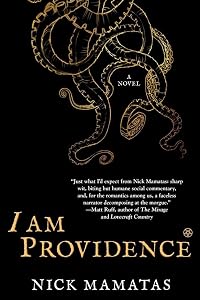
I Am Providence
by Nick Mamatas
On This Page
Description
"For fans of legendary pulp author H.P. Lovecraft, there is nothing bigger than the annual Providence-based convention the Summer Tentacular. Horror writer Colleen Danzig doesn't know what to expect when she arrives, but is unsettled to find that among the hobnobbing between scholars and literary critics are a group of real freaks: book collectors looking for volumes bound in human skin, and true believers claiming the power to summon the Elder God Cthulhu, one of their idol's most horrific show more fictional creations, before the weekend is out. Colleen's trip spirals into a nightmare when her roommate for the weekend, an obnoxious novelist known as Panossian, turns up dead, his face neatly removed. What's more unsettling is that, in the aftermath of the murder, there is little concern among the convention goers. The Summer Tentacular continues uninterrupted, except by a few bumbling police. Everyone at the convention is a possible suspect, but only Colleen seems to show any interest in solving the murder. So she delves deep into the darkness, where occult truths have been lurking since the beginning of time. A darkness where Panossian is waiting, spending a lot of time thinking about Colleen, narrating a new Lovecraftian tale that could very well spell her doom."-- show lessTags
Recommendations





Member Reviews
Content warning for violence, and for several uses of the N-word. A murder mystery, wherein a writer is murdered at a literary convention. The killer has to be one of the small circle of people at the convention - right?
Many there are who might take issue with the word "literary" here. The Summer Tentacular is a gathering of fans - and haters, the categories overlap - of the late [[H. P. Lovecraft]] (1890-1937), snob, racist, anti-Semite, and crafter of stories of cosmic horror, stories notable for their bad prose which have nonetheless caught the imaginations of generations of readers and writers. New writer Colleen Danzig is attending this Providence, Rhode Island weekend for her first time, meeting the longterm fans and professionals show more who have been coming for decades while nurturing friendships and - more commonly - grudges. The more normal of these folks could be called quirky or eccentric. Others...well, established, and widely detested, writer Panos Panossian has turned up dead in the laundry room, his face sliced off. He had had in his possession a valuable book bound in human skin, and that tome is missing. Will Colleen leave the detecting to the Providence police department? Of course not; she sets out to discover who in this small world has done the deed.
Later writers have produced numerous novels and stories set in Lovecraft's imagined "Mythos". Stephen King, Charles Stross, and Catherynne M. Valente are among the much better artists working with HPL's basic insight: that the universe is vast and old and utterly indifferent to humans, and we are perhaps better off not seeking too deeply into forbidden knowledge.
These real professionals do attend conventions, but the Summer Tentacular is Mamatas's invention, populated with a much less successful cohort, many of whom lead extremely marginal lives, earning little from their work. Most would have reasons for killing Panossian. Mamatas knows his milieu. His satire is not that much more extreme than the reality of actual science fiction/fantasy/horror conventions, filled with successful writers and editors and fans, but also with some who have nothing else in their lives.
The book is also a work of cosmic horror. Half the chapters are narrated by Panossian as he lies dead in a drawer in the morgue. Death, he learns, takes longer to complete than doctors understand. He follows the progress of his case by overhearing conversations among the witnesses who view his body, and recalls his hungry, angry life over the weekend, as he feels his brain decay toward a final oblivion. His fate will be shared by everyone whose brain is not destroyed at death; you, too, are a character in this story.
The horror is leavened with humor, e.g.: "the horror small press rule of thumb is this—the fancier the physical object, the worse the actual text between the covers..." or: "Now the stuff he produced wasn't very good, but if you're a fan and just want to consume nothing but Cthulhu all day while waiting for Cthulhu to come consume you, then it was fine." We're cosmically doomed, but that's no reason not to have a chuckle sometimes.
I don't read much Lovecraftian fiction, but in my limited experience Mamatas is uniquely interesting. show less
Many there are who might take issue with the word "literary" here. The Summer Tentacular is a gathering of fans - and haters, the categories overlap - of the late [[H. P. Lovecraft]] (1890-1937), snob, racist, anti-Semite, and crafter of stories of cosmic horror, stories notable for their bad prose which have nonetheless caught the imaginations of generations of readers and writers. New writer Colleen Danzig is attending this Providence, Rhode Island weekend for her first time, meeting the longterm fans and professionals show more who have been coming for decades while nurturing friendships and - more commonly - grudges. The more normal of these folks could be called quirky or eccentric. Others...well, established, and widely detested, writer Panos Panossian has turned up dead in the laundry room, his face sliced off. He had had in his possession a valuable book bound in human skin, and that tome is missing. Will Colleen leave the detecting to the Providence police department? Of course not; she sets out to discover who in this small world has done the deed.
Later writers have produced numerous novels and stories set in Lovecraft's imagined "Mythos". Stephen King, Charles Stross, and Catherynne M. Valente are among the much better artists working with HPL's basic insight: that the universe is vast and old and utterly indifferent to humans, and we are perhaps better off not seeking too deeply into forbidden knowledge.
These real professionals do attend conventions, but the Summer Tentacular is Mamatas's invention, populated with a much less successful cohort, many of whom lead extremely marginal lives, earning little from their work. Most would have reasons for killing Panossian. Mamatas knows his milieu. His satire is not that much more extreme than the reality of actual science fiction/fantasy/horror conventions, filled with successful writers and editors and fans, but also with some who have nothing else in their lives.
The book is also a work of cosmic horror. Half the chapters are narrated by Panossian as he lies dead in a drawer in the morgue. Death, he learns, takes longer to complete than doctors understand. He follows the progress of his case by overhearing conversations among the witnesses who view his body, and recalls his hungry, angry life over the weekend, as he feels his brain decay toward a final oblivion. His fate will be shared by everyone whose brain is not destroyed at death; you, too, are a character in this story.
The horror is leavened with humor, e.g.: "the horror small press rule of thumb is this—the fancier the physical object, the worse the actual text between the covers..." or: "Now the stuff he produced wasn't very good, but if you're a fan and just want to consume nothing but Cthulhu all day while waiting for Cthulhu to come consume you, then it was fine." We're cosmically doomed, but that's no reason not to have a chuckle sometimes.
I don't read much Lovecraftian fiction, but in my limited experience Mamatas is uniquely interesting. show less
What an odd and uncomfortable read. Which is exactly what I expect from Mamatas, but I'm currently at a loss as to whether I liked it or not.
The novel is set at a Lovecraft convention in Providence, Rhode Island. It is told in alternate chapters from the point of view of two characters--one who has been murdered, and the other who is trying to figure out who did it. Overall, I think I preferred the sections narrated by the deceased.
To anyone who has attended SF (or horror, I suppose, though I don't have any personal experience of them) conventions, much of the setting and the behaviors of the characters will be familiar. We've all met people like that, perhaps even done some of the things Mamatas is skewering. It is familiar and show more uncomfortable at the same time, as the con culture is described pretty unflatteringly but at the same time quite accurately. Even the characters themselves, who are there voluntarily, are aware of how pathetic they all are.
I often enjoy books that straddle genres, and this one certainly does. It involves Lovecraft and fannish culture, but it's also a murder mystery, and yet again the sections narrated by Colleen had more of a horror feel to me than a mystery. It is sometimes uncomfortable for me to read books in which the protagonist seems likely to do something stupid that's going to make things worse, not better. Colleen pretty much embodies that character type, and it's something I associate with horror more than mysteries, though I am not particularly well-read in the horror field. But there is a certain horror in watching the main character do the wrong thing, and you know it, and it's probably going to go badly, but they don't seem to get it.
This is also one of those books that, at the end, leaves me wondering if it didn't entirely make sense, or if I'm just not clever enough to understand it. (I don't necessarily consider that a problem.) But I Am Providence does feel like a clever book, and sometimes the reader can feel clever along with it for recognizing references in the story. Doubtless there were others that I missed, but the book does reward readers familiar with certain aspects of fannish culture going back 20 years or more. I don't know how well it would work for someone who wasn't.
Overall, though, the book was interesting enough that I read it in one sitting, and I had no idea where it was going, which is a trait I greatly appreciate. So I think this is successful, for me, even if I can't exactly describe my reaction to it as enjoyment. show less
The novel is set at a Lovecraft convention in Providence, Rhode Island. It is told in alternate chapters from the point of view of two characters--one who has been murdered, and the other who is trying to figure out who did it. Overall, I think I preferred the sections narrated by the deceased.
To anyone who has attended SF (or horror, I suppose, though I don't have any personal experience of them) conventions, much of the setting and the behaviors of the characters will be familiar. We've all met people like that, perhaps even done some of the things Mamatas is skewering. It is familiar and show more uncomfortable at the same time, as the con culture is described pretty unflatteringly but at the same time quite accurately. Even the characters themselves, who are there voluntarily, are aware of how pathetic they all are.
I often enjoy books that straddle genres, and this one certainly does. It involves Lovecraft and fannish culture, but it's also a murder mystery, and yet again the sections narrated by Colleen had more of a horror feel to me than a mystery. It is sometimes uncomfortable for me to read books in which the protagonist seems likely to do something stupid that's going to make things worse, not better. Colleen pretty much embodies that character type, and it's something I associate with horror more than mysteries, though I am not particularly well-read in the horror field. But there is a certain horror in watching the main character do the wrong thing, and you know it, and it's probably going to go badly, but they don't seem to get it.
This is also one of those books that, at the end, leaves me wondering if it didn't entirely make sense, or if I'm just not clever enough to understand it. (I don't necessarily consider that a problem.) But I Am Providence does feel like a clever book, and sometimes the reader can feel clever along with it for recognizing references in the story. Doubtless there were others that I missed, but the book does reward readers familiar with certain aspects of fannish culture going back 20 years or more. I don't know how well it would work for someone who wasn't.
Overall, though, the book was interesting enough that I read it in one sitting, and I had no idea where it was going, which is a trait I greatly appreciate. So I think this is successful, for me, even if I can't exactly describe my reaction to it as enjoyment. show less
It's an interesting read, told between the alternating views of the murder victim (after his death, natch) and our protagonist. Reminded me of a couple old Sharyn McCrumb murder mysteries set at SF conventions, only lots more tentacles. What impressed me was that he stuck the ending, balancing the convention of mysteries with the reveal of whodunnit with the existential horror of a true Lovecraftian horror tale. Nicely done.
This book sounded like it would be so much fun! A murder mystery set at a Lovecraft Convention called the Summer Tentacular. I thought it would be quirky and interesting, and at first I was enjoying it. There was quite a bit of information on H.P. Lovecraft and his Cthulhu Mythos, him as a person (including his horrible racism), and the reason his books have continued to have such an impact on the horror genre. The characters seemed somewhat interesting, but I quickly found myself at odds with the way some of the characters seemed to be portrayed ...or at least the way the author wanted the reader to see them. The first victim, for instance, was supposed to be very unlikeable, as many of the murder victims often are in the murder show more mystery genre... but he just didn't come across that way to me. If anything, I felt he was harassed and treated badly by most of the others for no real reason. I didn't really find him that unlikeable. Many of the other characters were much more unlikeable in my opinion, and the longer the story went on, the more they annoyed me. I also found some of the later things that happen to be so unlikely that it was impossible to suspend disbelief. It just didn't make sense to me and felt beyond ridiculous in parts. Clearly it wasn't a book for me. I did finish it, hoping that somehow I'd find more to enjoy once all the loose ends wrapped up, but if anything, the ending made me like it even less. Too bad, I had such high hopes for it. show less
Colleen Danzig is an aspiring writer of Lovecraftian fiction. While attending the biggest gathering for Lovecraftian literary types: The Summer Tentacular in Providence, Rhode Island, she finds the hardcore fans more than a little off-putting. When her roommate–a widely admired and equally despised writer named Panossian–is murdered and his face surgically removed, Colleen finds that she is the only one who seems to care about Panossian’s death. Deciding to start her own investigation, she delves into the underbelly of the Lovecraftian fandom, a place where racism and sexism merge with mystical thinking, and more than one convention goer seems to be searching for a book bound in human skin . . .
This is a meta-fiction, a Lovecraft show more book about Lovecraft folks. There are no cosmic horrors here, though, just the banal horror of truly terrible people. I do like the split narrative between the well-meaning and frustrated Colleen and the dead, decomposing, but still conscious Panossian, which did give the book a touch of Lovecraftian horror. the tone of the book is bitter and snarky, focusing on the trouble that arises when you have too many socially-backward folks in one place. Despite the occasionally sour-grapes-esque tone, Mamatas does bring forward some legitimate problems both with Lovecraft himself and with a subset of his fans (see previous: racism, sexism, etc.).
The plot of the book stumbles at times, switching viewpoints or segueing with little warning. In addition, the various secondary characters tend to be a bit one dimensional, which occasionally makes it difficult to keep these players straight.
The book is quite funny at times, but I would recommend it more for the serious Lovecraft fan, and not a casual reader. show less
This is a meta-fiction, a Lovecraft show more book about Lovecraft folks. There are no cosmic horrors here, though, just the banal horror of truly terrible people. I do like the split narrative between the well-meaning and frustrated Colleen and the dead, decomposing, but still conscious Panossian, which did give the book a touch of Lovecraftian horror. the tone of the book is bitter and snarky, focusing on the trouble that arises when you have too many socially-backward folks in one place. Despite the occasionally sour-grapes-esque tone, Mamatas does bring forward some legitimate problems both with Lovecraft himself and with a subset of his fans (see previous: racism, sexism, etc.).
The plot of the book stumbles at times, switching viewpoints or segueing with little warning. In addition, the various secondary characters tend to be a bit one dimensional, which occasionally makes it difficult to keep these players straight.
The book is quite funny at times, but I would recommend it more for the serious Lovecraft fan, and not a casual reader. show less
Fans gather in Providence for a H.P. Lovecraft convention called the Summer Tentacular. When one of the authors attending the con ends up dead, his roommate tries to find out what really happened.
This book feels like someone who had heard of cozy mysteries and horror novels, but had never read any of either, decided to try and write a mash up of the two genres...and didn't do a particularly good job at either.
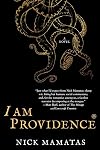
For positives, I liked the images of tentacles running throughout the book and I liked the inclusion of the the fanzine graphic, they were unexpected surprises.
I really liked the conceit behind the male characters point of view, I can't say that it's never been done before but it was new to me and his sections were the most show more enjoyable and well written in the book and I found myself trying to rush through Colleen's sections so I could get back to his.
I found the rest of the book sadly disappointing though. Early events felt totally random with no basis on anything that came before, the other POV character, Colleen I found to be flat and seriously annoying. Actually, I found all of the other characters so annoying, in fact, they felt more like caricatures to make fun of people rather than real characters. No ones actions made any sense.
The setting of the con itself, it may have been intended to gently poke fun at fandom, but to me it came across as mocking fandom and the people who are drawn to it, it really came across as mean-spirited to me. Possibly because not only were everyone eccentric to an extreme degree, but they all acted like complete idiots.
About half way through I started skimming the Colleen sections, they were starting to make me angry and the ending was very frustrating, I think I could see where the author was trying to go with it, but the payoff just wasn't enough after the struggle I had just getting through the book.
Worth reading for the chapters that were from Panossian's POV, but I can't say that I enjoyed it which is a shame because I was really looking forward to this one. show less
This book feels like someone who had heard of cozy mysteries and horror novels, but had never read any of either, decided to try and write a mash up of the two genres...and didn't do a particularly good job at either.
For positives, I liked the images of tentacles running throughout the book and I liked the inclusion of the the fanzine graphic, they were unexpected surprises.
I really liked the conceit behind the male characters point of view, I can't say that it's never been done before but it was new to me and his sections were the most show more enjoyable and well written in the book and I found myself trying to rush through Colleen's sections so I could get back to his.
I found the rest of the book sadly disappointing though. Early events felt totally random with no basis on anything that came before, the other POV character, Colleen I found to be flat and seriously annoying. Actually, I found all of the other characters so annoying, in fact, they felt more like caricatures to make fun of people rather than real characters. No ones actions made any sense.
The setting of the con itself, it may have been intended to gently poke fun at fandom, but to me it came across as mocking fandom and the people who are drawn to it, it really came across as mean-spirited to me. Possibly because not only were everyone eccentric to an extreme degree, but they all acted like complete idiots.
About half way through I started skimming the Colleen sections, they were starting to make me angry and the ending was very frustrating, I think I could see where the author was trying to go with it, but the payoff just wasn't enough after the struggle I had just getting through the book.
Worth reading for the chapters that were from Panossian's POV, but I can't say that I enjoyed it which is a shame because I was really looking forward to this one. show less
I'm having trouble writing a review for this book without pissing people off or giving people the wrong idea about myself.
This book is supposedly about Colleen Danzig a writer who goes to a HP Lovecraft convention and gets more than she bargains for when her roommate for the convention turns up dead.
Ugh, ok here we go.... 😩
First off, I really do not care for the writing style. This book is written with two different points of view, one in first person the other in third person, and it bounces back and forth between the two. I personally think that the author should have left the first chapter written in the first-person narration and then the rest of the book written in third person rather than constantly going back to the first show more person point of view. It's disorienting and annoying to say the least.
Secondly, the first person point of view is narrated by a dead guy. Yes that's right, a dead guy! He is already dead when he begins to narrate this book for us. Not only is he dead but he is a total pretentious asshole. The back of book summary describes him as being "annoying" and no he is just a downright asshole. Like I hate to say it but I'm kind of glad he dies. But then I still have to listen to him rattling on even though he's already dead so I guess that defeats the purpose. Also the other main character (who is not dead) Colleen has to be one of the most annoying characters I've ever read. So basically both of the main characters are insufferable.
Thirdly, this is not a book about Lovecraft's mythos but more about bashing him and his fans. Very sad 💔
I guess that's all I have to say on this one. I definitely can't recommend this book. show less
This book is supposedly about Colleen Danzig a writer who goes to a HP Lovecraft convention and gets more than she bargains for when her roommate for the convention turns up dead.
Ugh, ok here we go.... 😩
First off, I really do not care for the writing style. This book is written with two different points of view, one in first person the other in third person, and it bounces back and forth between the two. I personally think that the author should have left the first chapter written in the first-person narration and then the rest of the book written in third person rather than constantly going back to the first show more person point of view. It's disorienting and annoying to say the least.
Secondly, the first person point of view is narrated by a dead guy. Yes that's right, a dead guy! He is already dead when he begins to narrate this book for us. Not only is he dead but he is a total pretentious asshole. The back of book summary describes him as being "annoying" and no he is just a downright asshole. Like I hate to say it but I'm kind of glad he dies. But then I still have to listen to him rattling on even though he's already dead so I guess that defeats the purpose. Also the other main character (who is not dead) Colleen has to be one of the most annoying characters I've ever read. So basically both of the main characters are insufferable.
Thirdly, this is not a book about Lovecraft's mythos but more about bashing him and his fans. Very sad 💔
I guess that's all I have to say on this one. I definitely can't recommend this book. show less
Members
- Recently Added By
Lists

2017 Hugo Eligible Novels
145 works; 14 members
Author Information

87+ Works 2,446 Members
Some Editions
Awards and Honors
Work Relationships
Has as a commentary on the text
Common Knowledge
- Canonical title
- I Am Providence
- Original title
- I Am Providence
- Original publication date
- 2016
- People/Characters
- Colleen Danzig; Pannosian
- Important places
- Providence, Rhode Island, USA
- Dedication
- For Molly Tanzer, L & O.
- First words
- On any other weekend, my body would have been discovered more quickly.
- Last words
- (Click to show. Warning: May contain spoilers.)"Don’t worry, everything will be okay, okay? Okay..."
- Blurbers
- Ruff, Matt; Tidhar, Lavie
- Original language
- English
Classifications
Statistics
- Members
- 231
- Popularity
- 141,053
- Reviews
- 11
- Rating
- (3.22)
- Languages
- English
- Media
- Paper, Ebook
- ISBNs
- 2
- ASINs
- 3