
Saul and Patsy
by Charles Baxter
On This Page
Description
Five Oaks, Michigan is not exactly where Saul and Patsy meant to end up. Both from the East Coast, they met in college, fell in love, and settled down to married life in the Midwest. Saul is Jewish and a compulsively inventive worrier; Patsy is gentile and cheerfully pragmatic. On Saul’s initiative (and to his continual dismay) they have moved to this small town–a place so devoid of irony as to be virtually “a museum of earlier American feelings”–where he has taken a job teaching show more high school. Soon this brainy and guiltily happy couple will find children have become a part of their lives, first their own baby daughter and then an unloved, unlovable boy named Gordy Himmelman. It is Gordy who will throw Saul and Patsy’s lives into disarray with an inscrutable act of violence. As timely as a news flash yet informed by an immemorial understanding of human character, Saul and Patsy is a genuine miracle. show lessTags
Recommendations







































Member Reviews
As a novel, Charles Baxter's Saul and Patsy is a failure.
As a collection of short stories wryly observing the irresolute state of modern man, however, it approaches brilliance. It approaches it, but never quite reaches the heights of Baxter's 2000 National Book Award finalist The Feast of Love. The shortcomings of Saul and Patsy lie in its very nature as a novel: midway through, the foundation starts to wobble and you realize the house has been built on stilts, not cinder blocks; by the final chapter (or "story," as I'd prefer to call it), the whole thing collapses into scattered splinters of wonderful writing. In and of themselves, the splintered timbers are often miniature works of art, but there's little to hold them together.
Saul show more and Patsy is perhaps the most anticipated book of Baxter's career. Scores of fans have been waiting for years to read more about the continuing saga of the couple so memorably established in the short stories "Saul and Patsy Are Getting Comfortable in Michigan," "Saul and Patsy Are in Labor" and "Saul and Patsy Are Pregnant." Like John Updike's stories about Richard and Joan Maple, Baxter casts a wry eye on marriage and all its befuddlements.
Saul and Patsy the novel includes versions of those stories and adds transitional material to fill out the novel…much like a sausage maker stuffing in extra-special secret ingredients to plump out the casing. Baxter's writing, while always dead-on in its observations of the inner tickings of men and women (On some days he could not get out of bed to go to work without groaning and reaching for his hair, as if to drag himself up bodily for the working day), suffers from the uneven rhythms of the narrative. It's like driving down a dirt road somewhere in the Rockies at sunset: the scenery is gorgeous but the bumps and ruts are enough to jar your teeth loose from your head.
It would have been better, perhaps, to release this as The Saul and Patsy Stories without trying to force the material to span the distances between events in the lives of this angst-ridden couple who live in "the rural middle of American nowhere."
Most Baxter novels will be forever held to the standard of Feast of Love, which is just a couple sentences short of a flat-out masterpiece. Granted, Feast of Love had its episodic moments—in fact, the whole damned thing was just one patchwork quilt of scenes from Modern American Love—but Baxter somehow held everything together consistently, making the seams hard to detect.
There are no such smooth stitches in Saul and Patsy. There's the semblance of a plot: high school teacher Saul Bernstein, an impatient and agitated Jew trying to adjust his temperament to the Midwest, is stalked by a pitiful loner from his remedial English class and must eventually protect his wife and daughter from the violence invading small-town Michigan. There's a sudden, shocking gunshot midway through the book which causes more strain on the marriage and sends Saul spiraling off into more tooth-grinding ruminations. It all comes to a head (sort of) in a mystical encounter with a young girl at a sidewalk stand selling hope and redemption along with refreshing glasses of lemonade.
But, looking back at that summary, that's not really what Saul and Patsy is "about." It's not easy to pin down the theme of the book (I suspect Baxter struggled with this problem, too), but taken individually the moments and messages are persuasively accurate portraits of Americans in the new millennium. Even though most of the Saul and Patsy stories were written in the 1980s, they are timeless enough to impact readers who have seen shuttle explosions, school shootings and jetliners used as weapons of mass destruction. Saul is distracted ("he felt his attention disperse into the landscape, floating gradually into the topsoil, like pollen"), even as he struggles to discover the true secret of the universe—which, according to an ad on a matchbook, is available for a check or money order in the amount of $6.
We are all looking for something, Baxter seems to be saying, but it's not necessarily happiness. In Saul's case, it might just be satisfaction, a sense of knowing that there is indeed an answer out there, even if that answer is never revealed. Chances are, Saul will never be satisfied with his lot in life—certainly not in the blank anonymity of the Midwest. Even his own mother (laying on the Jewish matriarch stereotype) warns him: "You're living in nothingness. It'll eat you up. As anyone with a brain in his head would tell you. But I won't interfere. Maybe nothingness suits you."
Nonetheless, Michigan is where he's at and where he'll stay, for better or for worse. His overactive imagination will just have to make the best of the situation:
The blankness of the midwestern landscape excited him. There was a sensual loneliness here that belonged to him now, that was truly his. He thought that fate had perhaps turned him into one of those characters in Russian literature abandoned to haphazard fortune and solitude on the steppes.
Saul and Patsy go through their haphazard lives like most of us: they play Scrabble, they bowl, they drink too much at a friend's barbecue, they clean rain gutters, they glare out the window at "the unappeasable darkness that was pressed against the glass." They make love, they make babies, they make the best of things even as the worst of things are pressing against their windows. As the popularity of Baxter's stories attests, there's something appealing about this man and his wife—whether it's the love the creator has for his characters or whether it's just the way he delivers them to us on the page:
They had an oddball marriage, and they both knew it. Their love for each other had created a magic circle around themselves that outsiders could not penetrate. No one who had ever met them knew what made the two of them tick; the whole arrangement looked mildly fraudulent, a Hallmark Card sort of thing.
And later, when Baxter shifts to Patsy's perspective:
Saul, Patsy thought, was like one of those pastries you couldn't get enough of at first—you'd gorge on them. And then, it seemed, once you'd had enough of them, you wanted to get rid of that addiction, but you couldn't, there was no way to stop. You were always going to have those jelly doughnuts in your life because you had once craved them. Slowly but surely, they would put weight on you.
It's individual moments like these—Saul as a jelly doughnut—that make Saul and Patsy worth reading. It's too bad the whole is lesser than the sum of its parts. show less
As a collection of short stories wryly observing the irresolute state of modern man, however, it approaches brilliance. It approaches it, but never quite reaches the heights of Baxter's 2000 National Book Award finalist The Feast of Love. The shortcomings of Saul and Patsy lie in its very nature as a novel: midway through, the foundation starts to wobble and you realize the house has been built on stilts, not cinder blocks; by the final chapter (or "story," as I'd prefer to call it), the whole thing collapses into scattered splinters of wonderful writing. In and of themselves, the splintered timbers are often miniature works of art, but there's little to hold them together.
Saul show more and Patsy is perhaps the most anticipated book of Baxter's career. Scores of fans have been waiting for years to read more about the continuing saga of the couple so memorably established in the short stories "Saul and Patsy Are Getting Comfortable in Michigan," "Saul and Patsy Are in Labor" and "Saul and Patsy Are Pregnant." Like John Updike's stories about Richard and Joan Maple, Baxter casts a wry eye on marriage and all its befuddlements.
Saul and Patsy the novel includes versions of those stories and adds transitional material to fill out the novel…much like a sausage maker stuffing in extra-special secret ingredients to plump out the casing. Baxter's writing, while always dead-on in its observations of the inner tickings of men and women (On some days he could not get out of bed to go to work without groaning and reaching for his hair, as if to drag himself up bodily for the working day), suffers from the uneven rhythms of the narrative. It's like driving down a dirt road somewhere in the Rockies at sunset: the scenery is gorgeous but the bumps and ruts are enough to jar your teeth loose from your head.
It would have been better, perhaps, to release this as The Saul and Patsy Stories without trying to force the material to span the distances between events in the lives of this angst-ridden couple who live in "the rural middle of American nowhere."
Most Baxter novels will be forever held to the standard of Feast of Love, which is just a couple sentences short of a flat-out masterpiece. Granted, Feast of Love had its episodic moments—in fact, the whole damned thing was just one patchwork quilt of scenes from Modern American Love—but Baxter somehow held everything together consistently, making the seams hard to detect.
There are no such smooth stitches in Saul and Patsy. There's the semblance of a plot: high school teacher Saul Bernstein, an impatient and agitated Jew trying to adjust his temperament to the Midwest, is stalked by a pitiful loner from his remedial English class and must eventually protect his wife and daughter from the violence invading small-town Michigan. There's a sudden, shocking gunshot midway through the book which causes more strain on the marriage and sends Saul spiraling off into more tooth-grinding ruminations. It all comes to a head (sort of) in a mystical encounter with a young girl at a sidewalk stand selling hope and redemption along with refreshing glasses of lemonade.
But, looking back at that summary, that's not really what Saul and Patsy is "about." It's not easy to pin down the theme of the book (I suspect Baxter struggled with this problem, too), but taken individually the moments and messages are persuasively accurate portraits of Americans in the new millennium. Even though most of the Saul and Patsy stories were written in the 1980s, they are timeless enough to impact readers who have seen shuttle explosions, school shootings and jetliners used as weapons of mass destruction. Saul is distracted ("he felt his attention disperse into the landscape, floating gradually into the topsoil, like pollen"), even as he struggles to discover the true secret of the universe—which, according to an ad on a matchbook, is available for a check or money order in the amount of $6.
We are all looking for something, Baxter seems to be saying, but it's not necessarily happiness. In Saul's case, it might just be satisfaction, a sense of knowing that there is indeed an answer out there, even if that answer is never revealed. Chances are, Saul will never be satisfied with his lot in life—certainly not in the blank anonymity of the Midwest. Even his own mother (laying on the Jewish matriarch stereotype) warns him: "You're living in nothingness. It'll eat you up. As anyone with a brain in his head would tell you. But I won't interfere. Maybe nothingness suits you."
Nonetheless, Michigan is where he's at and where he'll stay, for better or for worse. His overactive imagination will just have to make the best of the situation:
The blankness of the midwestern landscape excited him. There was a sensual loneliness here that belonged to him now, that was truly his. He thought that fate had perhaps turned him into one of those characters in Russian literature abandoned to haphazard fortune and solitude on the steppes.
Saul and Patsy go through their haphazard lives like most of us: they play Scrabble, they bowl, they drink too much at a friend's barbecue, they clean rain gutters, they glare out the window at "the unappeasable darkness that was pressed against the glass." They make love, they make babies, they make the best of things even as the worst of things are pressing against their windows. As the popularity of Baxter's stories attests, there's something appealing about this man and his wife—whether it's the love the creator has for his characters or whether it's just the way he delivers them to us on the page:
They had an oddball marriage, and they both knew it. Their love for each other had created a magic circle around themselves that outsiders could not penetrate. No one who had ever met them knew what made the two of them tick; the whole arrangement looked mildly fraudulent, a Hallmark Card sort of thing.
And later, when Baxter shifts to Patsy's perspective:
Saul, Patsy thought, was like one of those pastries you couldn't get enough of at first—you'd gorge on them. And then, it seemed, once you'd had enough of them, you wanted to get rid of that addiction, but you couldn't, there was no way to stop. You were always going to have those jelly doughnuts in your life because you had once craved them. Slowly but surely, they would put weight on you.
It's individual moments like these—Saul as a jelly doughnut—that make Saul and Patsy worth reading. It's too bad the whole is lesser than the sum of its parts. show less
This is lightweight fluff, masquerading as something deeper. Baxter violates the first rule of fiction: show, don't tell. His main character, Saul, is an urban Jew who takes up a teaching job in "Middle America" (Michigan), and discovers that maybe people are more multi-faceted than he might have at first suspected. Well, duh!
It's shallow stuff, with characters as stage props and scenery as mere backdrop.
It's shallow stuff, with characters as stage props and scenery as mere backdrop.
Saul and Patsy move from the city to a small town in Michigan, where Saul teaches high school and Patsy works as a bank teller. The book tells their story, including ups and downs and at least one shocking event. None of the characters are very likable, many events are dubiously portrayed (lacking the feel of authenticity) and the book seems disjointed and dated in parts. All of that said, there was some really excellent prose and interesting insights from the author. I was not entirely satisfied with the book, but it did generate a long discussion with my book group, so it must have had some substance, even if it wasn't substance I particularly enjoyed.
Saul reminded me of someone I knew who, while interesting, was hard to stand talking to. I guess a lot of the story came out that way to me- semi-philosophical wandering musings that didn't get to the point and just tell the story or give answers. The ending, specifically that last chapter, seemed like it was trying to prove a point or give a message, but it bothered me. The story was already over- why stick that on? Maybe, as a mom to an 18 month old, I'm too worn out to deal with it, but what I want right now is a story that takes me quickly and doesn't come across as attempting a great metaphor.
OMG! Do not waste your time (as I did) trying to wade through and make sense of this non-sensical novel! It took me a week to finally get through it. It is worse than boring! I would realize my eyes had covered two paragraphs or two pages and that I had been so bored that my mind had drifted (once again!) to more interesting matters! It's just a weird book. It mixes up fantasy with reality with just stupid and strange characters. It really is almost as if ten people sat down to write a book, agreed on the characters and main theme and all wrote a chapter going in completely separate directions.
My advice: AVOID at all costs!
My advice: AVOID at all costs!
Although the first hundred pages had me evocatively remembering summer '09 (for reasons I can't quite quantify, although I tried to in the big review), the last two-thirds go to something simply good. It's the Midwest, it's the story of a couple and their building of a family - what more could it really be? We've all read so many stories like this, what makes this one different? The thing that makes this one different is the character of Gordy, who only appears for a short while but impacts the rest of the story in a way that I wish... well, I wish Baxter had really taken that plot to its full extension. Instead, there's an attempt to be [b:Stoner|166997|Stoner|John show more Williams|http://photo.goodreads.com/books/1320600716s/166997.jpg|1559207] or something like it in the capturing of small-town life... but it's less interesting than it could've been.
Still, Baxter has a way with prose and it was an enjoyable lite read.
Thanks, as always, to The Biblioracle over at The Morning News.
More on the book at RB: http://wp.me/pGVzJ-ph show less
Still, Baxter has a way with prose and it was an enjoyable lite read.
Thanks, as always, to The Biblioracle over at The Morning News.
More on the book at RB: http://wp.me/pGVzJ-ph show less
The writing was fine but the story was non-existent and weird. I wanted to like Saul and Patsy but they just weren't that interesting or appealing. Maybe the author's point was that there isn't a meaning to life, but if so, it doesn't make for very good reading. Oh, and what 15 month old is just learning to pull herself up? or is just starting to eat solid food (apart from children with delays, which this one wasn't)?
Members
- Recently Added By
Lists

Llibres que he llegit el 2020
50 works; 1 member
Author Information

34+ Works 5,671 Members
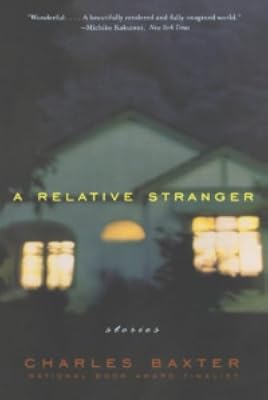
Charles Baxter is the author of novels and short story collections. His novels include The Feast of Love, The Soul Thief, Saul and Patsy, Shadow Play, and First Light. His short story collections include Gryphon, Believers, A Relative Stranger, Through the Safety Net, Harmony of the World, and There's Something I Want You to Do. He teaches at the show more University of Minnesota and in the MFA Program for Writers at Warren Wilson College. (Bowker Author Biography) Charles Baxter is author of several novels, including "The Feast of Love", "Shadow Play", & "First Light", & collections of stories including "Believers" & "A Relative Stranger". He teaches writing at the University of Michigan. (Publisher Provided) He lives in Ann Arbor, Michigan. He is the recipient of a Lila Wallace-Reader's Digest Foundation Award for Writers & an Academy Award in Literature from the American Academy of Arts & Letters. (Publisher Provided) show less
Awards and Honors
Awards
Notable Lists
Common Knowledge
- Original publication date
- 2003
- Epigraph
- I very much wanted to manage in that first movement without using trombones, and tried to...But...I must confess to you that I am a profoundly melancholy man, that black wings flap incessantly above us...no-I must have my tro... (show all)mbones. -Johannes Brahms, in a letter to Vincenz Lachner
Michigan seems like a dream to me now. -Paul Simon, "America" - Dedication
- For Lewis Baxter and John Thayer Baxter
- First words
- About a year after they had rented the farmhouse with loose brown aluminum siding on Whitefeather Road, Saul began glaring out the west window after dinner into the unappeasable darkness that pressed against the glass, as if ... (show all)he were angry at the flat uncultivated farmland for being farmland instead of glass and cement.
- Last words
- (Click to show. Warning: May contain spoilers.)Secretly he had admired the little girl, who had found her vocation-salemanship that thrived on indifference, peddling worthless commodities, infused with auras, to strangers-and, gazing down the hallway to where Patsy was sitting with Theo asleep in her lap, he thought with gratitude of his own skills and gifts, such as they were.
Classifications
Statistics
- Members
- 400
- Popularity
- 78,180
- Reviews
- 11
- Rating
- (3.38)
- Languages
- Catalan, Dutch, English, Spanish
- Media
- Paper, Audiobook, Ebook
- ISBNs
- 12
- ASINs
- 3