
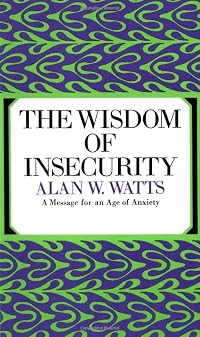
The Wisdom of Insecurity
by Alan W. Watts
On This Page
Description
An acclaimed philosopher shows us how—in an age of unprecedented anxiety—we can find fulfillment by embracing the present and living more fully in the now. He is "the perfect guide for a course correction in life" (from the Introduction by Deepak Chopra).The brain can only assume its proper behavior when consciousness is doing what it is designed for: not writhing and whirling to get out of present experience, but being effortlessly aware of it.
Alan Watts draws on the wisdom of show more Eastern philosophy and religion in this timeless and classic guide to living a more fulfilling life. His central insight is more relevant now than ever: when we spend all of our time worrying about the future and lamenting the past, we are unable to enjoy the present moment—the only one we are actually able to inhabit.
Watts offers the liberating message that true certitude and security come only from understanding that impermanence and insecurity are the essence of our existence. He highlights the futility of endlessly chasing moving goalposts, whether they consist of financial success, stability, or escape from pain, and shows that it is only by acknowledging what we do not know that we can learn anything truly worth knowing.
In The Wisdom of Insecurity, Watts explains complex concepts in beautifully simple terms, making this the kind of book you can return to again and again for comfort and insight in challenging times.
“Perhaps the foremost interpreter of Eastern disciplines for the contemporary West, Watts had the rare gift of ‘writing beautifully the unwritable.’” —Los Angeles Times. show less
Tags
Recommendations









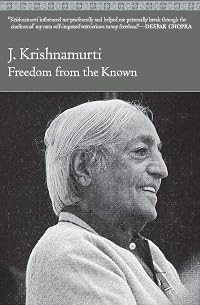
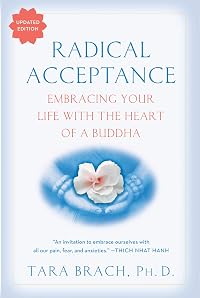
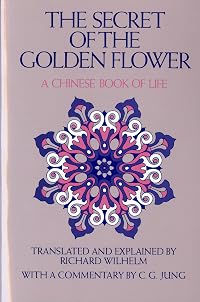
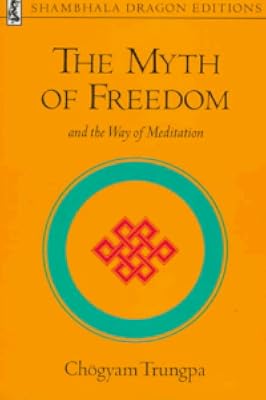




Member Reviews
What can possibly be the “wisdom” of insecurity? Watts says it’s the truth that lies behind some of our deepest anxieties, the sense that there is no higher order, and no larger meaning to life. Rather than attempt to deny the feeling of existential angst, the feeling of ‘why are we here?’, Watts starts by embracing these feelings as valid.
The dilemma, as he puts it, is this: “Man, as a being of sense, wants his life to make sense, and he has found it hard to believe that it does so unless there is more than what he sees – unless there is an eternal order and an eternal life behind the uncertain and momentary experience of life-and-death.”
What are the coping mechanisms he suggests? First, recognize that we’re all part show more of a larger whole, and our individual selves are all a bit illusory. Next, stop worrying about trying to define a meaning; trying to grasp the meaning of life is as pointless as trying to pinch water between one’s fingers. Instead, be in this moment, and live in this now. Let go. Let go of your ego, let go of your clinging to conventional morality and religion, and let go of the past. Connect to a higher meaning by no longer seeking a meaning. Connect to one’s self by releasing it, and embracing everything around you.
Watts puts it much more eloquently and profoundly than that. :) He was ahead of his time in writing this in 1951, and his message is just as true today as it was 61 years ago.
Quotes:
On God:
“The modern scientist is not so naïve as to deny God because he cannot be found with a telescope, or the soul because it is not revealed by the scalpel. He has merely noted that the idea of God is logically unnecessary. He even doubts that it has any meaning. It does not help him to explain anything which he cannot explain in some other, and simpler, way.”
On living in the now, and happiness:
“The art of living in this ‘predicament’ is neither careless drifting on the one hand nor fearful clinging to the past and the known on the other. It consists in being completely sensitive to each moment, in regarding it as utterly new and unique, in having the mind open and wholly receptive.”
On morality:
“Nothing is really more inhuman than human relations based on morals. When a man gives bread in order to be charitable, lives with a woman in order to be faithful, eats with a Negro in order to be unprejudiced, and refuses to kill in order to be peaceful, he is as cold as a clam. He does not actually see the other person. … But there is no formula for generating the authentic warmth of love. It cannot be copied. … This conviction will not come through condemnations, through hating oneself, through calling self-love all the bad names in the universe. It comes only in the awareness that one has no self to love.”
On religion:
“’Most atheists and agnostics are neurotic, whereas most simple Catholics are happy and at peace with themselves. Therefore the views of the former are false, and of the latter true.’
Even if the observation is correct, the reasoning based on it is absurd. It is as if to say, ‘You say there is a fire in the basement. You are upset about it. Because you are upset, there is obviously no fire.’ The agnostic, the sceptic, is neurotic, but this does not imply a false philosophy; it implies the discovery of facts to which he does not know how to adapt himself.”
And:
“That is why all philosophical and theological systems must ultimately fall apart. To ‘know’ reality you cannot stand outside it and define it; you must enter into it, be it, and feel it.”
On security:
“Belief clings, but faith lets go. In this sense of the word, faith is the essential virtue of science, and likewise of any religion that is not self-deception.
Most of us believe in order to feel secure, in order to make our individual lives seem valuable and meaningful. Belief has thus become an attempt to hang on to life, to grasp and keep it for one’s own. But you cannot understand life and its mysteries as long as you try to grasp it. Indeed, you cannot grasp it, just as you cannot walk off with a river in a bucket.”
On transience:
“Perhaps the most exasperating thing about ‘me,’ about nature and the universe, is that it will never ‘stay put.’ It is like a beautiful woman who will never be caught, and whose very flightiness is her charm.” show less
The dilemma, as he puts it, is this: “Man, as a being of sense, wants his life to make sense, and he has found it hard to believe that it does so unless there is more than what he sees – unless there is an eternal order and an eternal life behind the uncertain and momentary experience of life-and-death.”
What are the coping mechanisms he suggests? First, recognize that we’re all part show more of a larger whole, and our individual selves are all a bit illusory. Next, stop worrying about trying to define a meaning; trying to grasp the meaning of life is as pointless as trying to pinch water between one’s fingers. Instead, be in this moment, and live in this now. Let go. Let go of your ego, let go of your clinging to conventional morality and religion, and let go of the past. Connect to a higher meaning by no longer seeking a meaning. Connect to one’s self by releasing it, and embracing everything around you.
Watts puts it much more eloquently and profoundly than that. :) He was ahead of his time in writing this in 1951, and his message is just as true today as it was 61 years ago.
Quotes:
On God:
“The modern scientist is not so naïve as to deny God because he cannot be found with a telescope, or the soul because it is not revealed by the scalpel. He has merely noted that the idea of God is logically unnecessary. He even doubts that it has any meaning. It does not help him to explain anything which he cannot explain in some other, and simpler, way.”
On living in the now, and happiness:
“The art of living in this ‘predicament’ is neither careless drifting on the one hand nor fearful clinging to the past and the known on the other. It consists in being completely sensitive to each moment, in regarding it as utterly new and unique, in having the mind open and wholly receptive.”
On morality:
“Nothing is really more inhuman than human relations based on morals. When a man gives bread in order to be charitable, lives with a woman in order to be faithful, eats with a Negro in order to be unprejudiced, and refuses to kill in order to be peaceful, he is as cold as a clam. He does not actually see the other person. … But there is no formula for generating the authentic warmth of love. It cannot be copied. … This conviction will not come through condemnations, through hating oneself, through calling self-love all the bad names in the universe. It comes only in the awareness that one has no self to love.”
On religion:
“’Most atheists and agnostics are neurotic, whereas most simple Catholics are happy and at peace with themselves. Therefore the views of the former are false, and of the latter true.’
Even if the observation is correct, the reasoning based on it is absurd. It is as if to say, ‘You say there is a fire in the basement. You are upset about it. Because you are upset, there is obviously no fire.’ The agnostic, the sceptic, is neurotic, but this does not imply a false philosophy; it implies the discovery of facts to which he does not know how to adapt himself.”
And:
“That is why all philosophical and theological systems must ultimately fall apart. To ‘know’ reality you cannot stand outside it and define it; you must enter into it, be it, and feel it.”
On security:
“Belief clings, but faith lets go. In this sense of the word, faith is the essential virtue of science, and likewise of any religion that is not self-deception.
Most of us believe in order to feel secure, in order to make our individual lives seem valuable and meaningful. Belief has thus become an attempt to hang on to life, to grasp and keep it for one’s own. But you cannot understand life and its mysteries as long as you try to grasp it. Indeed, you cannot grasp it, just as you cannot walk off with a river in a bucket.”
On transience:
“Perhaps the most exasperating thing about ‘me,’ about nature and the universe, is that it will never ‘stay put.’ It is like a beautiful woman who will never be caught, and whose very flightiness is her charm.” show less
I took away some important new insights from this book, but I found it to be too repetitive.
The Matrix captures the essence of this book quite simply: "Do not try and bend the spoon. That's impossible. Instead... only try to realize the truth." Neo: "What truth?" Boy: "There is no spoon."
The Matrix captures the essence of this book quite simply: "Do not try and bend the spoon. That's impossible. Instead... only try to realize the truth." Neo: "What truth?" Boy: "There is no spoon."
Alan Watts was a British and American writer, speaker and self-styled philosophical entertainer known for interpreting and popularising Buddhist, Taoist and Hindu philosophy for a Western audience. His most popular book was The Way of Zen 1957 and he was a regular broadcaster on American radio. He died in 1973, but his lectures have been subject to mini revivals since his heyday
The Wisdom of Insecurity was published in 1951 and I approached it with caution as religion and philosophy especially a mixture of the two are not my favourite subjects. I needn't have worried because I found the first six chapters interesting reading and found myself warming to his ideas, however I felt throughout that he was teetering on the brink of becoming show more too mystical and this happened in chapter 7 three quarters of the way through and my interest faded a little.
He starts by saying that man (women too I suppose) are looking to make sense of their lives increasingly so because they are in an age of insecurity (1951). He says as a matter of fact our age is no more insecure than any other but science has noted that the idea of God is logically unnecessary and Watts thinks religion; especially in the West is handicapped by spiritual dogma. Man it seems can't live without his myths so what should we do: invent new myths or face the fact that life 'is a tale told by an idiot' and make of it what we can. He says there is another way: a complete revolution in our ordinary habitual ways of thinking and feeling.
Unlike animals man is much more concerned to have enjoyable memories and expectations, but it is useless for us to remember and predict if we do not fully live in the present. Life is a flowing process change and death are necessary parts and the only way to make sense of it is to plunge into it. Religion has given us fixed ideas and tends to try and give fixity to the flux. Man must accept the fact that he cannot know; it is this moving vital now (the present) which eludes all the definitions and descriptions.
In a chapter called the wisdom of the body he says that our brains have developed out of all proportion to our bodily needs. We have put all faith in our brains so that they dominate our lives out of all proportion to what he calls 'instinctual wisdom'. We are so anxious for pleasure that we can never get enough of it. Modern civilisation is insatiably hungry and its way of life condemns it to perpetual frustration. In a chapter titled 'On Being Aware' he expands on his idea that life is entirely momentary, there is no permanence or security and so there is no protection for the essential essence of us which he calls "I". The art of living consists of being sensitive to each moment, in regarding it as completely new and unique, in having the mind open and wholly receptive.
It was in his chapter 'The Transformation of Life' that I fell out of sympathy with what he was saying when he suddenly stated that: "this transformation consists of knowing and feeling that the world is an organic unity." I could see that his previous arguments were pointing this way, but I could not make the leap of faith needed to follow him on this idea. There were two further chapters: one on Creative Morality and the other entitled Religion Reviewed, both of which seemed to be add ons to his more powerfully argued earlier chapters.
One has got to admire a writer who tackles the big questions and probably there is no bigger question than the meaning of life. An unanswerable question as Watt's himself makes clear, but he provides some pointers, readily admitting he is advising on things to be aware of, to strip away perhaps to enable people to come to terms with the question. He says some thought provoking things along the way, such as the impact of religion and science and he saw back in 1951 the dangers of computer machines:
"If then man's principle asset and value is his brain and his ability to calculate, he will become an unsaleable commodity in an era when the mechanical operation of reasoning can be done more effectively by machines."
In describing himself as a philosophical entertainer; therefore not quite a guru, he needed to come up with some catch phrases and I like this one:
"The mystery of life is not a problem to be solved, but a reality to be experienced"
Thank you Alan Watts I enjoyed spending time with you although I didn't understand or agree with everything you said and so 3.5 stars. show less
The Wisdom of Insecurity was published in 1951 and I approached it with caution as religion and philosophy especially a mixture of the two are not my favourite subjects. I needn't have worried because I found the first six chapters interesting reading and found myself warming to his ideas, however I felt throughout that he was teetering on the brink of becoming show more too mystical and this happened in chapter 7 three quarters of the way through and my interest faded a little.
He starts by saying that man (women too I suppose) are looking to make sense of their lives increasingly so because they are in an age of insecurity (1951). He says as a matter of fact our age is no more insecure than any other but science has noted that the idea of God is logically unnecessary and Watts thinks religion; especially in the West is handicapped by spiritual dogma. Man it seems can't live without his myths so what should we do: invent new myths or face the fact that life 'is a tale told by an idiot' and make of it what we can. He says there is another way: a complete revolution in our ordinary habitual ways of thinking and feeling.
Unlike animals man is much more concerned to have enjoyable memories and expectations, but it is useless for us to remember and predict if we do not fully live in the present. Life is a flowing process change and death are necessary parts and the only way to make sense of it is to plunge into it. Religion has given us fixed ideas and tends to try and give fixity to the flux. Man must accept the fact that he cannot know; it is this moving vital now (the present) which eludes all the definitions and descriptions.
In a chapter called the wisdom of the body he says that our brains have developed out of all proportion to our bodily needs. We have put all faith in our brains so that they dominate our lives out of all proportion to what he calls 'instinctual wisdom'. We are so anxious for pleasure that we can never get enough of it. Modern civilisation is insatiably hungry and its way of life condemns it to perpetual frustration. In a chapter titled 'On Being Aware' he expands on his idea that life is entirely momentary, there is no permanence or security and so there is no protection for the essential essence of us which he calls "I". The art of living consists of being sensitive to each moment, in regarding it as completely new and unique, in having the mind open and wholly receptive.
It was in his chapter 'The Transformation of Life' that I fell out of sympathy with what he was saying when he suddenly stated that: "this transformation consists of knowing and feeling that the world is an organic unity." I could see that his previous arguments were pointing this way, but I could not make the leap of faith needed to follow him on this idea. There were two further chapters: one on Creative Morality and the other entitled Religion Reviewed, both of which seemed to be add ons to his more powerfully argued earlier chapters.
One has got to admire a writer who tackles the big questions and probably there is no bigger question than the meaning of life. An unanswerable question as Watt's himself makes clear, but he provides some pointers, readily admitting he is advising on things to be aware of, to strip away perhaps to enable people to come to terms with the question. He says some thought provoking things along the way, such as the impact of religion and science and he saw back in 1951 the dangers of computer machines:
"If then man's principle asset and value is his brain and his ability to calculate, he will become an unsaleable commodity in an era when the mechanical operation of reasoning can be done more effectively by machines."
In describing himself as a philosophical entertainer; therefore not quite a guru, he needed to come up with some catch phrases and I like this one:
"The mystery of life is not a problem to be solved, but a reality to be experienced"
Thank you Alan Watts I enjoyed spending time with you although I didn't understand or agree with everything you said and so 3.5 stars. show less
Written nearly sixty years ago, some of Watts's wisdom can seem outdated (the metaphor where he notes electrons have never been seen fails today) on the surface, but this is only if you expect it to change you in great ways while reading this short treatise. In today's post-70s guru-saturated, post-EST, seminar-flooded, self-help-flooded society with any number of tools designed to help you fix what is wrong with you, Watts can actually seem downright counterintuitive.
Watts is not offering concrete plans, he is not offering three keys to being more successful, nor is he even offering a real path to stand on for any type of success, happiness or other -ess. Instead, this is a mix of eastern philosophy, a backing of science as a companion show more to faith, and a clear-cut difference between faith and belief. There is some guidance on how not to implement these ideas, but for the most part, it is designed to be thought-provoking.
In today's age of guaranteed quick-fixes that fall short, something that's simply thought-provoking may just be the thing we need. show less
Watts is not offering concrete plans, he is not offering three keys to being more successful, nor is he even offering a real path to stand on for any type of success, happiness or other -ess. Instead, this is a mix of eastern philosophy, a backing of science as a companion show more to faith, and a clear-cut difference between faith and belief. There is some guidance on how not to implement these ideas, but for the most part, it is designed to be thought-provoking.
In today's age of guaranteed quick-fixes that fall short, something that's simply thought-provoking may just be the thing we need. show less
The solution to a life spent chasing one's own tail and a futile death? Live in the moment. Realise that there is no "I" separate from the universe. Stop trying to make permanent what is impermanent.
I'm a fan of Alan W. Watts's speeches and monologues. There are many audio-recordings available on YouTube and other platforms. Some of the ones I like:
Live in the Now
Life and Music
Why Money Rules Your Life
The Dream of Life
and many more, some as long as one or more hour(s).
But one isn't always connected to the internet - that's one of the contemporary diseases, always online, never letting your mind and body come to rest -, so it can then be useful to have, for example, a book by the man. One that instantly grabbed my attention several years ago, was this one here, 'The Wisdom of Insecurity'. The summary at the back is quite clear:
We live in an age of unprecedented anxiety. Spending all our time trying to anticipate and plan for the show more future and to lamenting the past, we forget to embrace the here and now. We are so concerned with tomorrow that we forget to enjoy today. Drawing from Eastern philosophy and religion, Alan Watts shows that it is only by acknowledging what we do not—and cannot—know that we can learn anything truly worth knowing. In The Wisdom of Insecurity, he shows us how, in order to lead a fulfilling life, we must embrace the present—and live fully in the now. Featuring an Introduction by Deepak Chopra.
The book consists of nine chapters, all fairly quick to read, but it's recommended to be focused, even re-read phrases to understand what Watts is saying/has written. Ok, sometimes a comma is missing so that also requires you to re-read certain phrases. The material presented here is profound, makes you rethink your life, your behaviour, your outlook on life. It's also the kind of book that you have to re-read now and then, which is the case for me. Let it sink in, go on with your life, come back, repeat and see how it affects your behaviour when you apply a change of mind.
A recommended, quick, but not so light read.
Watts's "teachings" remind(ed) me in a way of, for example, Jiddu Krishnamurti's little book, 'The First and last Freedom', of which I read the Dutch translation a few years ago, as you can read here (in Dutch). In addition, I hope to read - in bits and pieces, as it's one gigantic encyclopaedia - [b:De verbeelding van het denken: Geschiedenis van de westerse en oosterse filosofie|24179358|De verbeelding van het denken Geschiedenis van de westerse en oosterse filosofie|Jan Bor|https://images.gr-assets.com/books/1423871839s/24179358.jpg|13558406] (translatable as 'The Imagination of Thinking: the History of western and eastern philosophy) by Jan Bor and Errit Petersma. show less
Live in the Now
Life and Music
Why Money Rules Your Life
The Dream of Life
and many more, some as long as one or more hour(s).
But one isn't always connected to the internet - that's one of the contemporary diseases, always online, never letting your mind and body come to rest -, so it can then be useful to have, for example, a book by the man. One that instantly grabbed my attention several years ago, was this one here, 'The Wisdom of Insecurity'. The summary at the back is quite clear:
We live in an age of unprecedented anxiety. Spending all our time trying to anticipate and plan for the show more future and to lamenting the past, we forget to embrace the here and now. We are so concerned with tomorrow that we forget to enjoy today. Drawing from Eastern philosophy and religion, Alan Watts shows that it is only by acknowledging what we do not—and cannot—know that we can learn anything truly worth knowing. In The Wisdom of Insecurity, he shows us how, in order to lead a fulfilling life, we must embrace the present—and live fully in the now. Featuring an Introduction by Deepak Chopra.
The book consists of nine chapters, all fairly quick to read, but it's recommended to be focused, even re-read phrases to understand what Watts is saying/has written. Ok, sometimes a comma is missing so that also requires you to re-read certain phrases. The material presented here is profound, makes you rethink your life, your behaviour, your outlook on life. It's also the kind of book that you have to re-read now and then, which is the case for me. Let it sink in, go on with your life, come back, repeat and see how it affects your behaviour when you apply a change of mind.
A recommended, quick, but not so light read.
Watts's "teachings" remind(ed) me in a way of, for example, Jiddu Krishnamurti's little book, 'The First and last Freedom', of which I read the Dutch translation a few years ago, as you can read here (in Dutch). In addition, I hope to read - in bits and pieces, as it's one gigantic encyclopaedia - [b:De verbeelding van het denken: Geschiedenis van de westerse en oosterse filosofie|24179358|De verbeelding van het denken Geschiedenis van de westerse en oosterse filosofie|Jan Bor|https://images.gr-assets.com/books/1423871839s/24179358.jpg|13558406] (translatable as 'The Imagination of Thinking: the History of western and eastern philosophy) by Jan Bor and Errit Petersma. show less
Meh. I think Watts was one of the first to bring Eastern philosophy to the West (in a way other than just literal translation), and while it's different reading/reviewing it 70 years later, when the good parts of this have been more thoroughly adopted by the culture (and where a certain form of this is cliche), this doesn't seem like a particularly insightful or interesting book.
The good part is asserting that reality is real, and the present is important; Western thought for hundreds of years seemed to be building increasingly toward sacrifice and deferral of reward (exemplified by the Christian idea of sacrifice and horrible lives being a temporary problem compared to eternal salvation; Islam doubles down on this even show more more...).
Overall, I'd probably skip it today, although I can see how in historical context this kind of book was useful -- in 1960 on Goodreads I probably would have given it a 4.5 rounded up to 5, and then rejoiced at having modern Web and computing technology 70 years too early. show less
The good part is asserting that reality is real, and the present is important; Western thought for hundreds of years seemed to be building increasingly toward sacrifice and deferral of reward (exemplified by the Christian idea of sacrifice and horrible lives being a temporary problem compared to eternal salvation; Islam doubles down on this even show more more...).
Overall, I'd probably skip it today, although I can see how in historical context this kind of book was useful -- in 1960 on Goodreads I probably would have given it a 4.5 rounded up to 5, and then rejoiced at having modern Web and computing technology 70 years too early. show less
Members
- Recently Added By
Lists

Top Five Books of 2020
982 works; 350 members

Used books to buy next
565 works; 1 member

Books Read in 2020
4,379 works; 123 members

Seeking the Soul
46 works; 1 member

Men's healing resources
746 works; 1 member

Books Read in 2021
5,361 works; 114 members
Author Information

224+ Works 17,201 Members
Alan Watts (1915-1973) was a renowned lecturer and the author of nearly thirty books, including The Way of Zen and The Book. Born in Chislehurst, England, he moved to the United States in 1938 and began Zen training in New York. He received a master's degree in theology from Seabury-Western Theological Seminary and served as an Episcopal priest show more before leaving the ministry in 1950 to move to California, where he joined the faculty of the American Academy of Asian Studies (now the California Institute of Integral Studies). show less
Work Relationships
Common Knowledge
- Canonical title
- The Wisdom of Insecurity
- Original title
- The Wisdom of Insecurity: A Message for an Age of Anxiety
- Alternate titles
- Wisdom of Insecurity
- Original publication date
- 1951
- Dedication
- To Dorothy
- First words
- By all outward appearances our life is a spark of light between one eternal darkness and another.
- Quotations
- Belief clings, but faith lets go.
Seeing that it is unreasonable to worry does not stop worrying; rather, you worry the more at being unreasonable.
If a problem can be solved at all, to understand it and to know what to do about it are the same thing. - Last words
- (Click to show. Warning: May contain spoilers.)In this moment it is finished.
- Blurbers
- Wheelwright, Philip
- Original language
- English
Classifications
Statistics
- Members
- 2,086
- Popularity
- 9,849
- Reviews
- 29
- Rating
- (3.96)
- Languages
- 7 — Dutch, English, French, German, Italian, Serbian, Spanish
- Media
- Paper, Audiobook, Ebook
- ISBNs
- 29
- UPCs
- 2
- ASINs
- 20