On This Page
Description
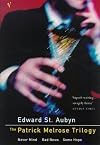
Patrick Melrose Volume 1 contains the first three novels in Edward St Aubyn's Emmy nominated semi-autobiographical series, filmed for Sky Atlantic and starring Benedict Cumberbatch as aristocratic Patrick.Moving from Provence to New York to Gloucestershire, from the savageries of a childhood with a cruel father and an alcoholic mother to an adulthood fraught with addiction, Patrick Melrose is on a mission to escape himself.But the drugs don't make him forget his past, and the glittering show more parties offer him no redemption ...Searingly funny and deeply humane, Patrick Melrose Volume 1 contains the first three novels in the Patrick Melrose series, Never Mind, Bad News and Some Hope. show lessTags
Recommendations









Member Reviews
I really shouldn't enjoy these novels. All the characters are vacuous bastards whose thin veneer of polished manners hide a vile nest of hatred, bigotry, and judgement.
And yet I can't look away. The characters fascinate me. The situations are entertaining as hell, and the narrative style is wonderful.
I love these books. And it's nice to see some of the stuff from book one paying off in this third volume.
And yet I can't look away. The characters fascinate me. The situations are entertaining as hell, and the narrative style is wonderful.
I love these books. And it's nice to see some of the stuff from book one paying off in this third volume.
Some Hope was originally published as three novellas, each one a snapshot of a period in the life of Patrick Melrose. In the first, Never Mind, Patrick is a young boy and the focus of the story is on his monstrous father; in the second, Bad News, that father has just died and Patrick is in his early twenties; and in the third, also called Some Hope, Patrick is coming up to thirty and is also, perhaps, coming to terms with the difficulties of his early childhood.
The story is a bit of a triptych, with books one and three both structured around a social occasion and sharing similar themes (gossip, bitchiness, social power dynamics), while book two focuses much more on Patrick himself and what's going on inside his head.
In the first few show more pages of the first book, as we are being introduced to the unhappy marriage of Patrick's parents, the following lines appear:
When she had met David, she thought that he was the first person who really understood her. Now he was the last person she would go to for understanding. it was hard to explain this change and she tried to resist the temptation of thinking that he had been waiting all along for her money to subsidize his fantasies of how he deserved to live. Perhaps, on the contrary, it was her money that had cheapened him. He had stopped his medical practice soon after their marriage. At the beginning, there had been talk of using some of her money to start a home for alcoholics. In a sense they had succeeded.
That last sentence is a perfect example of the way that this book makes you gasp - at once with horror and with admiration for the subtlety of the writing. On the following page - after Patrick's mother shakes off her hangover jitters with a handful of uppers and downers ("the yellow pills for keeping her alert and the white ones for taking away the dread and panic that alertness brought with it"), we see her "recognizing herself in the mirror for the first time that day". At this point I knew that it would be a gruelling but breathtaking read, and that's what it turned out to be.
There were times when I felt the book was suffering from diminishing returns. In particular, much of it is a vicious skewering of the British upper classes, and at moments I felt I just couldn't be bothered to be plunged back into the obnoxious idiocy of this snobbish world. But then the quality of the writing would make me smile - we are introduced to one character like this:
Kitty Harrow, at home in the country, lay in bed propped up by a multitude of pillows, her King Charles spaniels hidden in the troughs of her undulating bedspread, and a ravaged breakfast tray abandoned beside her like an exhausted lover.
Within this context, we have the story of Patrick himself - sometimes awful, sometimes funny, sometimes infuriating, sometimes even moving. I don't want to talk too much about what happens to avoid spoilers. But I found myself stretched in all sorts of different ways while reading this. Very good. show less
The story is a bit of a triptych, with books one and three both structured around a social occasion and sharing similar themes (gossip, bitchiness, social power dynamics), while book two focuses much more on Patrick himself and what's going on inside his head.
In the first few show more pages of the first book, as we are being introduced to the unhappy marriage of Patrick's parents, the following lines appear:
When she had met David, she thought that he was the first person who really understood her. Now he was the last person she would go to for understanding. it was hard to explain this change and she tried to resist the temptation of thinking that he had been waiting all along for her money to subsidize his fantasies of how he deserved to live. Perhaps, on the contrary, it was her money that had cheapened him. He had stopped his medical practice soon after their marriage. At the beginning, there had been talk of using some of her money to start a home for alcoholics. In a sense they had succeeded.
That last sentence is a perfect example of the way that this book makes you gasp - at once with horror and with admiration for the subtlety of the writing. On the following page - after Patrick's mother shakes off her hangover jitters with a handful of uppers and downers ("the yellow pills for keeping her alert and the white ones for taking away the dread and panic that alertness brought with it"), we see her "recognizing herself in the mirror for the first time that day". At this point I knew that it would be a gruelling but breathtaking read, and that's what it turned out to be.
There were times when I felt the book was suffering from diminishing returns. In particular, much of it is a vicious skewering of the British upper classes, and at moments I felt I just couldn't be bothered to be plunged back into the obnoxious idiocy of this snobbish world. But then the quality of the writing would make me smile - we are introduced to one character like this:
Kitty Harrow, at home in the country, lay in bed propped up by a multitude of pillows, her King Charles spaniels hidden in the troughs of her undulating bedspread, and a ravaged breakfast tray abandoned beside her like an exhausted lover.
Within this context, we have the story of Patrick himself - sometimes awful, sometimes funny, sometimes infuriating, sometimes even moving. I don't want to talk too much about what happens to avoid spoilers. But I found myself stretched in all sorts of different ways while reading this. Very good. show less
Although I was horrified at first, I came to really appreciate the sheer virtuosity of his writing. Paradoxically, I found the first part the most horrifiying as well as the most fascinating. I have a real love for British literature and grew up on a diet of disaffected, upper class, way-too-witty-for-their-own-good authors. The malaise that began in the late nineteenth century (or who knows, maybe it has always been there among the leisure class-it is hard to find meaning when you do not do anything meaningful I suspect) and culminated with the pointlessness and tragedy of World War I, and consequently the decadence of the 1920s, that desperate, danse macabre of the jazz years seems to come to its logical conclusion with the character show more of David Melrose. Now how was that for a run-on sentence? The idea of effort being vulgar is so ridiculous and typical of that class it’s genius! How he justifies the rape of his child is also so satyrical, and delusionary –St-Aubyn constructed a truly fascinating character.
As for the other two novels, Bad News and Some Hope, I didn’t find them as thought provoking. Although the writing becomes absolutely lyrical in Bad News- « Do you ask a lobster to disrobe? » I find stories about drug addicts just plain boring. I can only take so much of people’s self-destruction. And the concepts of forgiveness and « moving on » in Some Hope seemed stuck on to the story like a fig leaf over Apollo’s man parts.
Still, on the whole, I enjoyed it. I couldn’t help wishing Patrick would just get his head out of his ass for a moment but hey, you can’t have everything in life can you? Besides that particular journey (that is from your ass to lucidity) is probably too much to ask of any of us… show less
As for the other two novels, Bad News and Some Hope, I didn’t find them as thought provoking. Although the writing becomes absolutely lyrical in Bad News- « Do you ask a lobster to disrobe? » I find stories about drug addicts just plain boring. I can only take so much of people’s self-destruction. And the concepts of forgiveness and « moving on » in Some Hope seemed stuck on to the story like a fig leaf over Apollo’s man parts.
Still, on the whole, I enjoyed it. I couldn’t help wishing Patrick would just get his head out of his ass for a moment but hey, you can’t have everything in life can you? Besides that particular journey (that is from your ass to lucidity) is probably too much to ask of any of us… show less
Somewhat incredibly, Patrick Melrose has not only survived the previous novel ([b:Bad News|1077554|Bad News (The Patrick Melrose Novels, #2)|Edward St. Aubyn|https://images.gr-assets.com/books/1180794768s/1077554.jpg|2241620]), but is free of drug addiction. He has not escaped from his parents social circle, however, and finds himself at a tedious, intensely snobby party where guests continually tell him his father was a great man. Patrick is a much quieter, more in control person without drugs and is therefore able to deliver some brilliant one-liners. His position is ambivalent, though. He seems to disdain the gossipy, vapid, amoral upper class, yet remains part thereof. As I noted of the first book of this trilogy, Edward St Aubyn show more has an absolutely brilliant insight into poisonous English snobbery. Some of the guests say appalling, incredible things (trivialising rape, child abuse, etc), yet to me they always ring true. Party guests who feel comfortable amongst company as elevated as themselves, people that they wish to impress yet know embarrassing gossip about, will make outrageous, terrible comments in an off-hand manner. Perhaps to display how very avant garde and above life’s trivialities they are? I’ve watched it happen, a hideous and very strange social phenomenon.
I found this novel a little harder to follow that the previous two, as there is less of a tight focus on Patrick. The point of view flits between the hosts and guests of the party, of which there are many. I sometimes found them hard to differentiate as they all seem like such terrible people. At least Patrick is conscious of his snobbery and of the unpleasant realities concealed beneath social conventions. Most of the guests appear too wrapped up in themselves and the appearance of things to notice or care. It’s the little details that really bite - like Virginia having to pay for her own taxis, as her rich daughter promises to then forgets. The cameo by Princess Margaret is mean yet very funny. Perhaps my favourite exchange is between Patrick and his best friend, though:
I found this novel a little harder to follow that the previous two, as there is less of a tight focus on Patrick. The point of view flits between the hosts and guests of the party, of which there are many. I sometimes found them hard to differentiate as they all seem like such terrible people. At least Patrick is conscious of his snobbery and of the unpleasant realities concealed beneath social conventions. Most of the guests appear too wrapped up in themselves and the appearance of things to notice or care. It’s the little details that really bite - like Virginia having to pay for her own taxis, as her rich daughter promises to then forgets. The cameo by Princess Margaret is mean yet very funny. Perhaps my favourite exchange is between Patrick and his best friend, though:
”It takes about a hundred of these ghosts to precipitate one flickering and disreputable sense of identity,” said Patrick. “These are the sort of people who were around during my childhood: hard dull people who seemed quite sophisticated but were in fact as ignorant as swans.”show less
“They’re the last Marxists,” said Johnny unexpectedly. “The last people who believe that class is a total explanation. Long after that doctrine has been abandoned in Moscow and Peking it will continue to flourish under the marquees of England. Although most of them have the courage of a half-eaten worm,” he continued, warming to his theme, “and the intellectual vigour of dead sheep, they are the true heirs to Marx and Lenin.”
“You’d better go and tell them,” said Patrick, “I think most of them were expecting to inherit a bit of Gloucestershire instead.”
The novels in Edward St. Aubyn's five part Patrick Melrose series are heavily based on St. Aubyn's life, growing up in a highly dysfunctional British upper middle class family with a cruel abusive father and an unprotective substance abusing mother. As he said in a recent article in The Guardian, "The whole Melrose series is an attempt to tell the truth, and is based on the idea that there is some salutary or liberating power in telling the truth. So it would have been quite tiresome to lie about it after having done it. But I can still say what I think is true – that I have spent 22 years trying to transform painful lived experience into what I hope is pleasurable reading experience. The intention was to make a work of art rather show more than a confession."
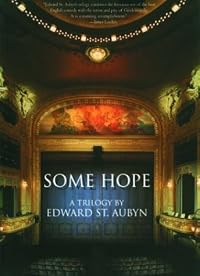
Some Hope includes the first three Patrick Melrose novels, which were initally published as The Patrick Melrose Trilogy in a single volume by Vintage in 1998. This version of the trilogy was released by Picador in 2006. The fourth novel, Mother's Milk, was shortlisted for the 2006 Booker Prize, and At Last, the final book in the series, was published in 2011.
St. Aubyn was born in 1960, and he was repeatedly sodomized by his father between the ages of five and eight, as Patrick Melrose was in the first novel of the series, Never Mind. In it, St. Aubyn portrays Patrick's parents, David and Eleanor. David is a jack of several trades but a master of none, as he briefly practiced as a physician and as a pianist, both under the withering opposition of his own father, who all but disinherited him upon his death. David's upper middle class upbringing leads him to look at nearly everyone with extreme disdain, including his "friends" and those who share his values, and his frustration with his failed life is expressed toward them and especially Eleanor, his well to do American wife, and Patrick, his only son. Eleanor is able to escape David by sleeping in a separate room, driving away in her car, which no one else is allowed to command, and her frequent use of drugs and alcohol. Patrick, however, suffers the full brunt of his father's anger, as he tortures and verbally belittles him in order to make him a tough and independent young man. Other characters are introduced in the novel, who will appear in the subsequent two novels, most notably Nicholas Pratt, who is as close to David as anyone and finds him both admirable for his firmly held opinions and loyalty to British tradition, and misanthropic, for his virulent hatred of everyone, including himself. These characters meet for dinner at the Melrose house in a French country town populated by like minded Britons, as Nicholas and his latest girlfriend come there for a brief visit. The conversation is witty and acerbic, with wicked humor interspersed between the sharp barbs fired by these supposed friends.
The trauma of his childhood led St. Aubyn to become addicted to heroin between the ages of 16 and 28. In Bad News, the second novel, Patrick Melrose, now aged 22, travels to New York City for a brief visit to claim his father's body, after he died suddenly there. Patrick's crippling and all encompassing addiction to heroin, cocaine and a bevy of other medications is the main theme of the novel, and this reader was amazed by the massive amount of drugs that Patrick consumed, the use of one drug to counteract the effects of another, and the utter depravity that he had fallen into. The account comes across as authentic, and it was obvious to me that St. Aubyn had lived through or witnessed events such as these as a young adult. Included in this novel are tedious dialogues with several Britons who mourn David's death, while they engage in maudlin admiration for him, their dying breed, and their own trivial accomplishments and acquisitions.
In the final novel, Some Hope, Patrick is now 30 years old and he has recently stopped using drugs, replacing them with frequent meaningless sexual encounters and alcohol, while he wallows in self pity and ennui. He is financially independent and abhors the thought of work. He receives an invitation from Nicholas Pratt to attend a lavish party in honor of Princess Margaret in the English countryside, which is meant to ensure his connection with the right people. Characters from both previous novels appear in this one, and the dinner is highlighted by a delightfully amusing encounter between Princess Margaret and the French ambassador.
The strength of these three novels is St. Aubyn's gifted writing and dialogue, as he repeatedly skewers the British upper middle class, portraying them as vacuous, utterly useless and despicable excuses for human beings. His description of a drug fueled weekend in Bad News is powerful and disturbing, and that novel should be required reading for all teenagers or any adult who is thinking of using illegal drugs. Many of the characters are so unlikable that I could barely stand to spend any time with them, which is the main reason I only gave the trilogy four stars overall. However, this trilogy was an excellent read, which I would highly recommend. show less
Some Hope includes the first three Patrick Melrose novels, which were initally published as The Patrick Melrose Trilogy in a single volume by Vintage in 1998. This version of the trilogy was released by Picador in 2006. The fourth novel, Mother's Milk, was shortlisted for the 2006 Booker Prize, and At Last, the final book in the series, was published in 2011.
St. Aubyn was born in 1960, and he was repeatedly sodomized by his father between the ages of five and eight, as Patrick Melrose was in the first novel of the series, Never Mind. In it, St. Aubyn portrays Patrick's parents, David and Eleanor. David is a jack of several trades but a master of none, as he briefly practiced as a physician and as a pianist, both under the withering opposition of his own father, who all but disinherited him upon his death. David's upper middle class upbringing leads him to look at nearly everyone with extreme disdain, including his "friends" and those who share his values, and his frustration with his failed life is expressed toward them and especially Eleanor, his well to do American wife, and Patrick, his only son. Eleanor is able to escape David by sleeping in a separate room, driving away in her car, which no one else is allowed to command, and her frequent use of drugs and alcohol. Patrick, however, suffers the full brunt of his father's anger, as he tortures and verbally belittles him in order to make him a tough and independent young man. Other characters are introduced in the novel, who will appear in the subsequent two novels, most notably Nicholas Pratt, who is as close to David as anyone and finds him both admirable for his firmly held opinions and loyalty to British tradition, and misanthropic, for his virulent hatred of everyone, including himself. These characters meet for dinner at the Melrose house in a French country town populated by like minded Britons, as Nicholas and his latest girlfriend come there for a brief visit. The conversation is witty and acerbic, with wicked humor interspersed between the sharp barbs fired by these supposed friends.
The trauma of his childhood led St. Aubyn to become addicted to heroin between the ages of 16 and 28. In Bad News, the second novel, Patrick Melrose, now aged 22, travels to New York City for a brief visit to claim his father's body, after he died suddenly there. Patrick's crippling and all encompassing addiction to heroin, cocaine and a bevy of other medications is the main theme of the novel, and this reader was amazed by the massive amount of drugs that Patrick consumed, the use of one drug to counteract the effects of another, and the utter depravity that he had fallen into. The account comes across as authentic, and it was obvious to me that St. Aubyn had lived through or witnessed events such as these as a young adult. Included in this novel are tedious dialogues with several Britons who mourn David's death, while they engage in maudlin admiration for him, their dying breed, and their own trivial accomplishments and acquisitions.
In the final novel, Some Hope, Patrick is now 30 years old and he has recently stopped using drugs, replacing them with frequent meaningless sexual encounters and alcohol, while he wallows in self pity and ennui. He is financially independent and abhors the thought of work. He receives an invitation from Nicholas Pratt to attend a lavish party in honor of Princess Margaret in the English countryside, which is meant to ensure his connection with the right people. Characters from both previous novels appear in this one, and the dinner is highlighted by a delightfully amusing encounter between Princess Margaret and the French ambassador.
The strength of these three novels is St. Aubyn's gifted writing and dialogue, as he repeatedly skewers the British upper middle class, portraying them as vacuous, utterly useless and despicable excuses for human beings. His description of a drug fueled weekend in Bad News is powerful and disturbing, and that novel should be required reading for all teenagers or any adult who is thinking of using illegal drugs. Many of the characters are so unlikable that I could barely stand to spend any time with them, which is the main reason I only gave the trilogy four stars overall. However, this trilogy was an excellent read, which I would highly recommend. show less
This trilogy of novellas presents the Melrose family in which David Melrose and his son Patrick play leading roles. It is the story of a man’s abusive father and the effects of a decadent upper class. Patrick Melrose, as a boy in “Never Mind” experiences the attention of his sadistic father David, who makes his wife eat like a dog just to verify his power, and holds his son up by the ears to teach him to make important decisions for himself. In fact, one of David's personal mottoes is " to break even the smallest rules." David certainly is unconcerned with society's rules when meting out his ritual humiliations. Patrick is on the receiving end of much of this behavior as he thinks to himself, “He did not know who this man was, show more it could not be his father who was crushing him like this.”
The second volume, “Bad News”, finds an older Patrick with residual personal issues, not the least of which is a drug addiction, spending at least $5K/week on heroine or cocaine: “How could he ever hope to give up drugs? They filled him with such intense emotion.” Also, father David has just died. We follow Patrick as he visits the funeral home abroad to gloat over the body, then allows himself to indulge in the best smack in the world, fending off the voices that are the evidence of his trauma: “Every thought or hint of a thought took on a personality stronger than his own.” Patrick heads back to England, after bemoaning his own lot in life with bon mots like: " God, imagine having and opposite number instead of always being one's own opposite number". He seems to have missed out on experiencing either satisfying spite or legitimate grief. Finally, in “Some Hope,” set eight years later, Patrick has dropped the drugs but is still haunted by the memory of his father. His life is not improving enough to convince you, dear reader, that he has any more than some hope -- and little at that. St. Aubyn has a wonderful style filled with intelligent metaphors and a lucid understanding of British upper-class life. The Trilogy reminded me a bit of Evelyn Waugh without the brightness or sparkle. show less
The second volume, “Bad News”, finds an older Patrick with residual personal issues, not the least of which is a drug addiction, spending at least $5K/week on heroine or cocaine: “How could he ever hope to give up drugs? They filled him with such intense emotion.” Also, father David has just died. We follow Patrick as he visits the funeral home abroad to gloat over the body, then allows himself to indulge in the best smack in the world, fending off the voices that are the evidence of his trauma: “Every thought or hint of a thought took on a personality stronger than his own.” Patrick heads back to England, after bemoaning his own lot in life with bon mots like: " God, imagine having and opposite number instead of always being one's own opposite number". He seems to have missed out on experiencing either satisfying spite or legitimate grief. Finally, in “Some Hope,” set eight years later, Patrick has dropped the drugs but is still haunted by the memory of his father. His life is not improving enough to convince you, dear reader, that he has any more than some hope -- and little at that. St. Aubyn has a wonderful style filled with intelligent metaphors and a lucid understanding of British upper-class life. The Trilogy reminded me a bit of Evelyn Waugh without the brightness or sparkle. show less
Scathing (and very funny) analysis of the shallow nature of upper class society, told through many points of view. Every character is caught up in their own bubble of existence and Patrick is beginning to gain some awareness of what constitutes his own. In these later passages, we are afforded a glimpse into his nascent compassion, and his growing ambivalence to his own irony. Brilliant book.
Members
- Recently Added By
Lists

A Novel Cure
742 works; 23 members
Author Information

26+ Works 5,872 Members
Series

Belongs to Publisher Series
Otavan kirjasto (265)
Work Relationships
Contains
Common Knowledge
- Canonical title*
- Loistava menneisyys : Patrick Melrosen tarina, I-III
- Original title
- The Patrick Melrose Trilogy
- Alternate titles
- Some Hope: A Trilogy
- Original publication date
- 1994
- People/Characters
- Patrick Melrose
- First words
- At half past seven in the morning, carrying the laundry she had ironed the night before, Yvette came down the drive on her way to the house.
At half-past seven in the morning, carrying the laundry she had ironed the night before, Yvette came down the drive on her way to the house. - Last words
- (Click to show. Warning: May contain spoilers.)Patrick flicked his cigarette into the snow, and not quite knowing what had happened, headed back to his car with a strange feeling of elation.
- Disambiguation notice
- This LT Work is Edward St. Aubyn's complete trilogy, "The Patrick Melrose Trilogy," a/k/a "Some Hope: A Trilogy." The Trilogy includes volume 1, Never Mind (1992); volume 2, Bad News (1992); and volume ... (show all)3, also titled Some Hope (1994). Please distinguish between this complete trilogy and the single novel that is volume 3. Thank you.
*Some information comes from Common Knowledge in other languages. Click "Edit" for more information.
Classifications
Statistics
- Members
- 391
- Popularity
- 79,385
- Reviews
- 17
- Rating
- (3.93)
- Languages
- 11 — Czech, Danish, Dutch, English, Finnish, French, Polish, Portuguese, Slovenian, Spanish, Swedish
- Media
- Paper, Audiobook, Ebook
- ISBNs
- 37
- ASINs
- 7