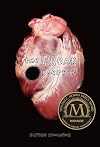
There are some books that you do an unkindness to when you read them too fast. I think this might be one of those books. Although I love thinking about physics, especially the quantum kind, I don't have a physics brain. Or a math brain. Or a very practical brain in general. But I understand the need for patterns, if only in a metaphorical sense and appreciate the beauty inherent in science and scientific theories.
Loa Lundgren, the protagonist in Woolston's The Freak Observer, loves physics too for the same reasons. The difference is she actually understands what she is talking about. Yet her love of physics is not enough ballast to support her through the grief of losing her little sister, who was ill with a rare genetic mutation, and her family's inability to cope with it. Nor is it enough to help her through the death of her only friend which may or may not have been a suicide and her abandonment of her debate partner/friends with benefits who left her to go to a school in Europe. She has terrible nightmares and a growing obsession/fear of death, who she calls the bony man, but there's nobody there to help her. She must deal with her bad dreams, her fears, she must deal with everything on her own.
Sounds cheerful hey? I realize that this summary is enough to make most people run the other way. Don't. I think there's is more than meets the eye here. I have that sensation you get when you are walking down the street and you pass somebody you know but your reaction is so show more delayed that by the time you register their face you have already passed them.
Or does that only happen to me? I can be very slow on the uptake, clearly.
I hate to use these adjectives, but I think this book might be complicated and subtle. The reason I say might is because I am not sure...I read it so fast I think I missed a major theme which tied in tot he concept of the Freak Observer, which I also failed to grasp (and the internet doesn't have much on it either. An indecipherable abstract for a scholarly paper on the multiverse is about it. Googling Botzmann's brain helps though). I think this book might be about observing our world. Interpreting it and how the lenses of our own experiences/fears/emotional insanity can steer us wrong- we see signs and meaning where there is none and ignore the real stuff. I think. I might have to read it again.
Either way, I liked it. I liked how each chapter starts with either a physics problem , or an astronomy fact. I liked the character of Loa, so lost and vulnerable yet witty and tough. The boys in her life were also very original, complicated ands real- sort of the mirror image of John Green's girl characters, so bravo Woolston on that. There are also some laugh out loud moments. I think the book might wrap up rather quickly- at least it seemed to spiral into a conclusion a little too fast, where Loa goes from being not all right to all right pretty fast. Still. Good characters. Good insights. Good preoccupations with life, death, love, friendship and what the hell it all means. In a nutshell, good stuff. show less
Loa Lundgren, the protagonist in Woolston's The Freak Observer, loves physics too for the same reasons. The difference is she actually understands what she is talking about. Yet her love of physics is not enough ballast to support her through the grief of losing her little sister, who was ill with a rare genetic mutation, and her family's inability to cope with it. Nor is it enough to help her through the death of her only friend which may or may not have been a suicide and her abandonment of her debate partner/friends with benefits who left her to go to a school in Europe. She has terrible nightmares and a growing obsession/fear of death, who she calls the bony man, but there's nobody there to help her. She must deal with her bad dreams, her fears, she must deal with everything on her own.
Sounds cheerful hey? I realize that this summary is enough to make most people run the other way. Don't. I think there's is more than meets the eye here. I have that sensation you get when you are walking down the street and you pass somebody you know but your reaction is so show more delayed that by the time you register their face you have already passed them.
Or does that only happen to me? I can be very slow on the uptake, clearly.
I hate to use these adjectives, but I think this book might be complicated and subtle. The reason I say might is because I am not sure...I read it so fast I think I missed a major theme which tied in tot he concept of the Freak Observer, which I also failed to grasp (and the internet doesn't have much on it either. An indecipherable abstract for a scholarly paper on the multiverse is about it. Googling Botzmann's brain helps though). I think this book might be about observing our world. Interpreting it and how the lenses of our own experiences/fears/emotional insanity can steer us wrong- we see signs and meaning where there is none and ignore the real stuff. I think. I might have to read it again.
Either way, I liked it. I liked how each chapter starts with either a physics problem , or an astronomy fact. I liked the character of Loa, so lost and vulnerable yet witty and tough. The boys in her life were also very original, complicated ands real- sort of the mirror image of John Green's girl characters, so bravo Woolston on that. There are also some laugh out loud moments. I think the book might wrap up rather quickly- at least it seemed to spiral into a conclusion a little too fast, where Loa goes from being not all right to all right pretty fast. Still. Good characters. Good insights. Good preoccupations with life, death, love, friendship and what the hell it all means. In a nutshell, good stuff. show less
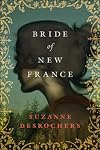
Laure Beauséjour was taken from her beggar parents by the Paris authorities when she was just seven years old and placed in the Salpêtrière, a catch all institute for poor, sick, mentally ill, or criminal women (and by criminal read prostitutes). She was lucky enough to spend a few years as the serving girl of an elderly matron, who treated her as if she was her own daughter. The matron taught her to read, dressed her up in fancy clothes, doted on her. When the matron died, Laure found herself back in the Salpêtrière where she had to work her way up to the dorm of the bijoux, the model girls of the institute. there she works on her needlepoint and dreams of getting out and being a seamstress.
Her hopes are dashed when one of her dorm mates falls ill and dies. Laure, who never like the girl, is shaken to her core and writes a letter to the king to ask for better and more food for the girls. For her trouble she is sent on the next boat to Canada as a Fille du roi.
Desrochers has given us a historical novel with a capital H, with this glimpse into the before and after life of one of the poor girls shipped from France in order to populate the colony. Laure and all the other poor waifs from Paris were malnourished, uneducated and without any of the skills needed for their new life. Yet, the roughness of the new land is softened a little bit (not by much) by the new found freedom. There is nobody watching over her anymore- no superiors , no police, not even any of the old show more social norms that used to keep the women in place in the old world. In Laure, Desrochers has painted us a picture of a young, bitter woman who was not happy with her lot in Paris and is definitely not happy to find herself in Canada, which rings true to my ears. Yet she survives and soldiers on even if she never really reconciles herself to her fate. The plot gathers speed when she gets to the new world and she meets a young native man who seems as between two worlds as herself. Yet, the new world has its own rules and Laure must follow them even if it goes against her own heart.
Did I enjoy this book? Yes, but...I am struggling to understand my own lukewarm reaction to it. Perhaps it is because, though Laure's bitterness was understandable, it made it hard to empathise with her. I never felt directly affected by her plight, but more as if I was reading the Typical Trajectory of a Filles du Roi for social studies class. Though I found it interesting enough to keep reading, all the visceral reactions you have when you are reading a good book were not there: I did not feel horrified when I should have felt horrified, I did not feel the terrible loneliness of her first winter though I know it was terribly lonely. I did not feel too bad or worried for Laure when she made her bad decisions.
Perhaps my humming and hawing comes from the fact that it probably would be a good compliment for a Social Studies Class. I just wish I liked it more than I did. show less
Her hopes are dashed when one of her dorm mates falls ill and dies. Laure, who never like the girl, is shaken to her core and writes a letter to the king to ask for better and more food for the girls. For her trouble she is sent on the next boat to Canada as a Fille du roi.
Desrochers has given us a historical novel with a capital H, with this glimpse into the before and after life of one of the poor girls shipped from France in order to populate the colony. Laure and all the other poor waifs from Paris were malnourished, uneducated and without any of the skills needed for their new life. Yet, the roughness of the new land is softened a little bit (not by much) by the new found freedom. There is nobody watching over her anymore- no superiors , no police, not even any of the old show more social norms that used to keep the women in place in the old world. In Laure, Desrochers has painted us a picture of a young, bitter woman who was not happy with her lot in Paris and is definitely not happy to find herself in Canada, which rings true to my ears. Yet she survives and soldiers on even if she never really reconciles herself to her fate. The plot gathers speed when she gets to the new world and she meets a young native man who seems as between two worlds as herself. Yet, the new world has its own rules and Laure must follow them even if it goes against her own heart.
Did I enjoy this book? Yes, but...I am struggling to understand my own lukewarm reaction to it. Perhaps it is because, though Laure's bitterness was understandable, it made it hard to empathise with her. I never felt directly affected by her plight, but more as if I was reading the Typical Trajectory of a Filles du Roi for social studies class. Though I found it interesting enough to keep reading, all the visceral reactions you have when you are reading a good book were not there: I did not feel horrified when I should have felt horrified, I did not feel the terrible loneliness of her first winter though I know it was terribly lonely. I did not feel too bad or worried for Laure when she made her bad decisions.
Perhaps my humming and hawing comes from the fact that it probably would be a good compliment for a Social Studies Class. I just wish I liked it more than I did. show less
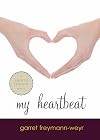
Ellen is a fourteen year-old who doesn't need many friends. She has all the company she needs in her older brother Link and his best friend James, with whom she is "totally madly in love". But as they enter their senior year of high school and Ellen is finally going to the same school as her two favourite people in the world, she sees how the two boys are the objects of much speculation and begins to ask questions of her own. About the nature of Link and James' relationship. About the nature of love and of whether or not you can really know somebody else and about the art of seeing.
What this novel lacks in volume it makes up for in intensity. Written in the first person, Ellen is from the very beginning struggling to understand the "unwritten social laws" that remain just beyond her comprehension. She doesn't understand a lot of what is going on with her brilliant but secretive brother and James. And when she finally decides to ask the question, "Are you gay?". The result is not an answer so much as a catalyst to a watershed of events and experiences that lead to a particularly moving coming of age.
I myself am struggling to put into words why this book moved me so much. Perhaps it is because on some level I identify with quiet, socially awkward Ellen. How the unwritten social laws have always seemed as mysterious as the Kabbala to me just as they are to Ellen. Maybe it is the beautiful relationship she has with her brother- their relationship is full of mutual love and show more respect and even admiration. But I think it might be Ellen's acute vulnerability in general but especially when it comes to her relationship with James, who loves her as much as he loves her brother. About how love is complicated and means so much more than just sex but how sex , touching, tenderness is also a big part of it.
I also love how Freymann-Weyr approaches the issue of homosexuality and bisexuality- how it doesn't really matter what kind of plumbing the person has or who they are attracted to but that the other person is willing to reciprocate the love. How love is the same for everyone, no matter what their sexuality: we all just want to love and be loved back.
For only 154 pages, this book packs in a lot of heady stuff. This is one of the best, most lovely, tender, heart-breaking love stories/coming of age (the two so often go hand in hand) I have ever read for young adults. show less
What this novel lacks in volume it makes up for in intensity. Written in the first person, Ellen is from the very beginning struggling to understand the "unwritten social laws" that remain just beyond her comprehension. She doesn't understand a lot of what is going on with her brilliant but secretive brother and James. And when she finally decides to ask the question, "Are you gay?". The result is not an answer so much as a catalyst to a watershed of events and experiences that lead to a particularly moving coming of age.
I myself am struggling to put into words why this book moved me so much. Perhaps it is because on some level I identify with quiet, socially awkward Ellen. How the unwritten social laws have always seemed as mysterious as the Kabbala to me just as they are to Ellen. Maybe it is the beautiful relationship she has with her brother- their relationship is full of mutual love and show more respect and even admiration. But I think it might be Ellen's acute vulnerability in general but especially when it comes to her relationship with James, who loves her as much as he loves her brother. About how love is complicated and means so much more than just sex but how sex , touching, tenderness is also a big part of it.
I also love how Freymann-Weyr approaches the issue of homosexuality and bisexuality- how it doesn't really matter what kind of plumbing the person has or who they are attracted to but that the other person is willing to reciprocate the love. How love is the same for everyone, no matter what their sexuality: we all just want to love and be loved back.
For only 154 pages, this book packs in a lot of heady stuff. This is one of the best, most lovely, tender, heart-breaking love stories/coming of age (the two so often go hand in hand) I have ever read for young adults. show less
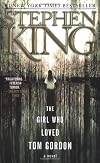
Trisha McFarland gets lost in the woods while on a six-mile hike in the Appalachians with her recently divorced mother and her angry older brother.
And that, folks, sums up the plot of this tightly crafted, superb novel for young adults by Mr. King. In fact, I don't think I even knew what "tightly crafted" meant until I read this novel. I am in awe. From the very first sentence he had my hooked: "The World had teeth and it could bite you with them anytime it wanted."
It is so simple, so elegant: A little girl gets lost in the woods. As Trisha would say, "Yeah baby."
But then how would she act? What would she be thinking? What would she do right? What would she do wrong? What would she encounter? From this small thread, Stephen King weaves a complicated, tense and yes, extremely creepy tale. Trisha McFarland is a kid whose parent just got divorced. Who's brother is unhappy and acting out. Whose mother is preoccupied with getting them settled in a new place, with dealing with her older brother. Trisha's face hurts from trying to be the family's sole source of cheer and optimism. So when she lags behind on the hike and feels the urge to pee, she doesn't have the energy to interrupt her mother and brother's squabbling and simply ducks behind some tress. And then one bad decision leads to another. And they are all so plausible. You can see why she would choose to go one way instead of the other. Why she would try to keep going instead of sitting still and waiting to be show more rescued.
King uses Trisha's love of baseball and her crush on player Tom Gordon as a structure for the novel. Each chapter is an inning. The question is, will Trisha be able to "close" the game like her Boston Red Sox hero? As time goes on and Trisha gets more and more lost, she must rely on her own inner strength to carry her through. But her inner strength isn't incredible or fraught with mad skillz à la Katniss Everdeen. Trisha is a city girl and only has a bare bones knowledge of nature survival. But she is smart and she is feisty and she does want to live. So despite getting stung, falling down a cliff, drinking bad water and starving, despite the feeling that she is being constantly watched, she soldiers on.
Though there are no monsters in this book, no evil men bent on evil deeds, King still manages to make your adrenaline start pumping at every snap of the branch, at every shadow. You are so much in Trisha's head that you see her fears come to life and jump out of the bushes claws at the ready, teeth salivating for your flesh.
I would recommend this book to anybody who loves a good yarn, but especially those young people who enjoy a thrilling survival story. If this story leaves you with anything it will leave you with this one truth:
Nature sure is scary. show less
And that, folks, sums up the plot of this tightly crafted, superb novel for young adults by Mr. King. In fact, I don't think I even knew what "tightly crafted" meant until I read this novel. I am in awe. From the very first sentence he had my hooked: "The World had teeth and it could bite you with them anytime it wanted."
It is so simple, so elegant: A little girl gets lost in the woods. As Trisha would say, "Yeah baby."
But then how would she act? What would she be thinking? What would she do right? What would she do wrong? What would she encounter? From this small thread, Stephen King weaves a complicated, tense and yes, extremely creepy tale. Trisha McFarland is a kid whose parent just got divorced. Who's brother is unhappy and acting out. Whose mother is preoccupied with getting them settled in a new place, with dealing with her older brother. Trisha's face hurts from trying to be the family's sole source of cheer and optimism. So when she lags behind on the hike and feels the urge to pee, she doesn't have the energy to interrupt her mother and brother's squabbling and simply ducks behind some tress. And then one bad decision leads to another. And they are all so plausible. You can see why she would choose to go one way instead of the other. Why she would try to keep going instead of sitting still and waiting to be show more rescued.
King uses Trisha's love of baseball and her crush on player Tom Gordon as a structure for the novel. Each chapter is an inning. The question is, will Trisha be able to "close" the game like her Boston Red Sox hero? As time goes on and Trisha gets more and more lost, she must rely on her own inner strength to carry her through. But her inner strength isn't incredible or fraught with mad skillz à la Katniss Everdeen. Trisha is a city girl and only has a bare bones knowledge of nature survival. But she is smart and she is feisty and she does want to live. So despite getting stung, falling down a cliff, drinking bad water and starving, despite the feeling that she is being constantly watched, she soldiers on.
Though there are no monsters in this book, no evil men bent on evil deeds, King still manages to make your adrenaline start pumping at every snap of the branch, at every shadow. You are so much in Trisha's head that you see her fears come to life and jump out of the bushes claws at the ready, teeth salivating for your flesh.
I would recommend this book to anybody who loves a good yarn, but especially those young people who enjoy a thrilling survival story. If this story leaves you with anything it will leave you with this one truth:
Nature sure is scary. show less
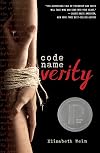
I read Code Name Verity by Elizabeth Wein right before the Christmas break so bear with me- my memory is worst than Lance Armstrong's credibility (couldn't help myself. Sorry.)
I think I am going to be lazy and just copy the description from amazon as I can't figure out how to give a summary of this book without major spoilers:
Two young women from totally different backgrounds are thrown together during World War II: one a working-class girl from Manchester, the other a Scottish aristocrat, one a pilot, the other a wireless operator. Yet whenever their paths cross, they complement each other perfectly and before long become devoted friends. But then a vital mission goes wrong, and one of the friends has to bail out of a faulty plane over France. She is captured by the Gestapo and becomes a prisoner of war. The story begins in "Verity's" own words, as she writes her account for her captors. amazon.ca
Code Name Verity is that rarity among rarities in Young Adult Fiction these days: it is a book about a friendship between women without any bullshit. They are not fighting over a guy. One does not become popular and leave the other behind. Neither is the other's sidekick- Verity and Maddie are equally skilled in their different professions, they have equally strong personalities. There is no pettiness, no jealousy, no weird obsessions with each other. No need to spend every freaking moment together talking about asinine things (sorry. I obviously have a beef about how women show more friendships are portrayed in popular media).
But it is also a very well-researched, as historically-accurate-as-you-can-ask-fiction to-be story. Verity is a wireless operator who becomes a covert operative, and Maddie is a pilot - two jobs women were doing during WWII.
Part I is devoted to Verity's confession after she gets caught in enemy territory. Her flippant, devil-may-care tone belies the very precarious situation she finds herself in and lulls the reader into a certain sense of complacency as she tells the story of her and Maddie. Although this section is entertaining it is really with Maddie's version in Part two that the tension ramps up and the danger Verity is in (as well as Maddie- heck the whole freaking European continent) is really felt.
Original in its format, topic and (unfortunately) in its portrayal of women friendship, this is an excellent addition to the canon of Young Adult WWII books. show less
I think I am going to be lazy and just copy the description from amazon as I can't figure out how to give a summary of this book without major spoilers:
Two young women from totally different backgrounds are thrown together during World War II: one a working-class girl from Manchester, the other a Scottish aristocrat, one a pilot, the other a wireless operator. Yet whenever their paths cross, they complement each other perfectly and before long become devoted friends. But then a vital mission goes wrong, and one of the friends has to bail out of a faulty plane over France. She is captured by the Gestapo and becomes a prisoner of war. The story begins in "Verity's" own words, as she writes her account for her captors. amazon.ca
Code Name Verity is that rarity among rarities in Young Adult Fiction these days: it is a book about a friendship between women without any bullshit. They are not fighting over a guy. One does not become popular and leave the other behind. Neither is the other's sidekick- Verity and Maddie are equally skilled in their different professions, they have equally strong personalities. There is no pettiness, no jealousy, no weird obsessions with each other. No need to spend every freaking moment together talking about asinine things (sorry. I obviously have a beef about how women show more friendships are portrayed in popular media).
But it is also a very well-researched, as historically-accurate-as-you-can-ask-fiction to-be story. Verity is a wireless operator who becomes a covert operative, and Maddie is a pilot - two jobs women were doing during WWII.
Part I is devoted to Verity's confession after she gets caught in enemy territory. Her flippant, devil-may-care tone belies the very precarious situation she finds herself in and lulls the reader into a certain sense of complacency as she tells the story of her and Maddie. Although this section is entertaining it is really with Maddie's version in Part two that the tension ramps up and the danger Verity is in (as well as Maddie- heck the whole freaking European continent) is really felt.
Original in its format, topic and (unfortunately) in its portrayal of women friendship, this is an excellent addition to the canon of Young Adult WWII books. show less
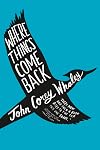
During the last month of Cullen Witter's junior year, his junkie cousin overdoses. That is the most normal thing that happens to Cullen during the summer before his senior year. The Lazarus Woodpecker, thought to be extinct, is spotted in the woods causing the residents of his little town to go woodpecker crazy. He starts dating the girl of his dreams. But biggest thing of all, Cullen's younger brother Gabriel disappears. In order to survive, Cullen must empty his pockets and look under the couch for any hope he can muster, anything that will keep him afloat while he waits to find out if his brother is dead or not.
This is a weird little book. And when I say weird, I mean it in a good way.
It is a book about taking chaos and trying to string it into order. A book about random coincidences glued to random personal meanings and then presented as a version of reality.
I also mean that in a good way.
Oh, I wasn't sure at first. At first it seemed like an entertaining if not wholly remarkable narrative from the perspective of a slightly nerdy seventeen-year old boy who doesn't quite fit any of the convenient pigeon holes. But very soon the book becomes so much more.
Everybody in Lily seems a little damaged, from Cullen's aunt to the pretty Alma Ember who managed to be both a college drop out and a divorcée at the tender age of nineteen. Perhaps one of the most damaged and most empathetic characters is Cullen's best friend Lucas Cader, who tries very hard to fill the hole in his show more life left by the death of his own brother. No wonder when the Lazarus bird shows up it is seen as proof that everybody can have a second chance just like the woodpecker's namesake, old Lazarus himself. The frenzied, manic hope of the townspeople is in direct contrast to the Witters, who are islanded in their anxiety and fear for their son and brother Gabriel.
Cullen's story is punctuated by the story of Benton Sage, a failed missionary to Africa and then by his roommate Cabot Searcy. It isn't clear until the very end where the two stories will intersect but when they do, I found it very hard to breathe. The escalating tension, the madness, the hope, the fragile broken-ness of everyone made the climax avalanche toward the denouement. I am not surprised this book one both the Michael Printz award and the William C. Morris award. It is wholly original, thought-provoking, heart-breaking and hopeful at the same time. show less
This is a weird little book. And when I say weird, I mean it in a good way.
It is a book about taking chaos and trying to string it into order. A book about random coincidences glued to random personal meanings and then presented as a version of reality.
I also mean that in a good way.
Oh, I wasn't sure at first. At first it seemed like an entertaining if not wholly remarkable narrative from the perspective of a slightly nerdy seventeen-year old boy who doesn't quite fit any of the convenient pigeon holes. But very soon the book becomes so much more.
Everybody in Lily seems a little damaged, from Cullen's aunt to the pretty Alma Ember who managed to be both a college drop out and a divorcée at the tender age of nineteen. Perhaps one of the most damaged and most empathetic characters is Cullen's best friend Lucas Cader, who tries very hard to fill the hole in his show more life left by the death of his own brother. No wonder when the Lazarus bird shows up it is seen as proof that everybody can have a second chance just like the woodpecker's namesake, old Lazarus himself. The frenzied, manic hope of the townspeople is in direct contrast to the Witters, who are islanded in their anxiety and fear for their son and brother Gabriel.
Cullen's story is punctuated by the story of Benton Sage, a failed missionary to Africa and then by his roommate Cabot Searcy. It isn't clear until the very end where the two stories will intersect but when they do, I found it very hard to breathe. The escalating tension, the madness, the hope, the fragile broken-ness of everyone made the climax avalanche toward the denouement. I am not surprised this book one both the Michael Printz award and the William C. Morris award. It is wholly original, thought-provoking, heart-breaking and hopeful at the same time. show less
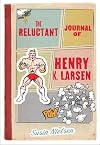
Henry is a 13 year-old boy who loves wrestling, trivia and uses food as a coping mechanism. He is also a boy with a secret, one that gives him nightmares and threatens to break up his family. His journal is reluctant because his therapist is the one that suggested it. Henry, like any red-blood 13 year old, resents having to see a therapist, resents anyone who tries to bring up the reason why they moved in the first place. He wants to forget IT ever happened. When he is befriended by the kid who looks like "the model for that nerd action figure you can buy in novelty stores" at his new school and starts crushing on his Home Ec partner, Henry realises that certain walls are hard to keep up.
The description at the back of the book sums up Nielsen's Governor General Award winning book perfectly: a young teen rebuilds his life after the worst-case scenario. Despite the shopworn plot technique of the therapeutic journal, Nielsen manages to do what I think might be very difficult in a novel, what Sherman Alexie manages in the Absolutely True Diary of a Part-Time Indian and John Green in every book he has ever written: she manages to write a character that is as funny as he is moving and tragic. The original perspective is also refreshing; Henry iss not the bully, not the bullied (though there are moments where he is in danger of becoming this) and not even the bystander. He is the brother of the victim and the aggressor (tad bit of a spoiler alert, though Nielsen reveals this show more very soon in the book.)
Although I think Nielsen might have made a mistake by having Henry refer constantly to his excess fat as his "wobblies" - it felt too cutesy cutesy and young for a 13 year-old boy who is trying to be exactly the opposite - Henry's smart, sensitive nature still shines through.
This is a very good addition to the canon of middle-grade books about bullying. show less
The description at the back of the book sums up Nielsen's Governor General Award winning book perfectly: a young teen rebuilds his life after the worst-case scenario. Despite the shopworn plot technique of the therapeutic journal, Nielsen manages to do what I think might be very difficult in a novel, what Sherman Alexie manages in the Absolutely True Diary of a Part-Time Indian and John Green in every book he has ever written: she manages to write a character that is as funny as he is moving and tragic. The original perspective is also refreshing; Henry iss not the bully, not the bullied (though there are moments where he is in danger of becoming this) and not even the bystander. He is the brother of the victim and the aggressor (tad bit of a spoiler alert, though Nielsen reveals this show more very soon in the book.)
Although I think Nielsen might have made a mistake by having Henry refer constantly to his excess fat as his "wobblies" - it felt too cutesy cutesy and young for a 13 year-old boy who is trying to be exactly the opposite - Henry's smart, sensitive nature still shines through.
This is a very good addition to the canon of middle-grade books about bullying. show less
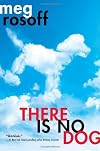
What if God was a teenage boy? That is the question Meg Rosoff asks in her thought-experiment-in-novel-format, There is No Dog. God, a lanky, self-centered teen named Bob, got the job as Earth’s Allmighty because his mom won it in a poker game. But Earth is a backwater, in a little known and not wanting to be known part of the universe. Because of this, the higher-than-God-powers-that-be assented, with the condition that Mr. B., a fastidious, efficient bureaucrat comes with him as his assistant.
So Bob goes crazy for about six days, where he creates really weird creatures, experiments with different lighting systems (once the earth was lit solely by crystal chandeliers) and decides it would be fun to create creatures in his own image. Hahahahahahaha.
Then he gets tired and lets Mr. B. take over. Bob only rouses himself from his junk food-induced coma when a pretty girl crosses his path. Then he spends all his energy and that of Mr. B, pursuing the girl until he gets her to sleep with him and he grows bored and goes back to bed (some of his less than stellar wooing ideas included disguising himself as a swan and appearing to the maiden in question as a bull).
Then his mother loses Bob’s pet in yet another poker game, Mr. B. can’t take Bob’s self-centered, lazy whinging anymore and resigns, and Bob falls head over heels for a young zookeeper’s assistant.
In a nutshell, everything goes to hell (pun intended.)
Although there are some funny bits (and just the premise show more alone makes me happy), this book feels more bitter and sad than anything. God comes off as a total wanker. Honestly, if I was a teenage boy, I might have some words for Ms. Rosoff because if all teenage boys are made in the image of Bob, then that would mean they are all self-centered, mother-hating, lazy, slobs driven by an excessive libido with no empathy or foresight or sense of responsibility.
Oh, but sometimes they have rare moments of genius. That is Rosoff’s God.
The real pathos comes with Mr. B, who is the real god-a beleaguered middle-aged man who has spent tens of thousands of years trying to clean up Bob’s mess. The only creatures he was allowed to create were the whales, for which he has a soft spot. But like everything else on the planet, they are suffering because of the mess Bob’s “made in his own image” creatures have wreaked. Mr. B. spends his days answering as many prayers as he can and attempting to cajole Bob into actually fixing something. Basically attempting to fix a burst pipe with a band-aid.
Although there are rare moments of transcendence, when everything in the world seems right, and the joy of being alive on Earth is palpable, those moments are few and far between (which I guess mirrors reality). The message Rosoff conveys with her usual ferocity is that God is an asshat and his creation absurd at best and criminal at worst. show less
So Bob goes crazy for about six days, where he creates really weird creatures, experiments with different lighting systems (once the earth was lit solely by crystal chandeliers) and decides it would be fun to create creatures in his own image. Hahahahahahaha.
Then he gets tired and lets Mr. B. take over. Bob only rouses himself from his junk food-induced coma when a pretty girl crosses his path. Then he spends all his energy and that of Mr. B, pursuing the girl until he gets her to sleep with him and he grows bored and goes back to bed (some of his less than stellar wooing ideas included disguising himself as a swan and appearing to the maiden in question as a bull).
Then his mother loses Bob’s pet in yet another poker game, Mr. B. can’t take Bob’s self-centered, lazy whinging anymore and resigns, and Bob falls head over heels for a young zookeeper’s assistant.
In a nutshell, everything goes to hell (pun intended.)
Although there are some funny bits (and just the premise show more alone makes me happy), this book feels more bitter and sad than anything. God comes off as a total wanker. Honestly, if I was a teenage boy, I might have some words for Ms. Rosoff because if all teenage boys are made in the image of Bob, then that would mean they are all self-centered, mother-hating, lazy, slobs driven by an excessive libido with no empathy or foresight or sense of responsibility.
Oh, but sometimes they have rare moments of genius. That is Rosoff’s God.
The real pathos comes with Mr. B, who is the real god-a beleaguered middle-aged man who has spent tens of thousands of years trying to clean up Bob’s mess. The only creatures he was allowed to create were the whales, for which he has a soft spot. But like everything else on the planet, they are suffering because of the mess Bob’s “made in his own image” creatures have wreaked. Mr. B. spends his days answering as many prayers as he can and attempting to cajole Bob into actually fixing something. Basically attempting to fix a burst pipe with a band-aid.
Although there are rare moments of transcendence, when everything in the world seems right, and the joy of being alive on Earth is palpable, those moments are few and far between (which I guess mirrors reality). The message Rosoff conveys with her usual ferocity is that God is an asshat and his creation absurd at best and criminal at worst. show less
Ahhh, here's a book set in the 19th century. No Jack the Ripper wannabe ghosts in this here book.
When Mary's mother dies, Mary assumes all the responsibilities of keeping their poor, rural household together and caring for her younger siblings. It is a hard life, but Mary loves her brothers and especially her baby sister. When her father remarries her mean-spirited stepmother sends her away to work at her sister's inn. While at the inn, Mary meets a young, upper class mother who has no idea what to do with her baby. They hire Mary for the journey to London and give her a place in their house as a scullery maid. Mary falls in love with a young boy from the regiment nearby and well, you can guess the rest.
Told from the perspective of four of the main players and slipping in and out of past and present, Jocelyn uses this Dickensian story of a young woman at the mercy of her time to describe aspects of Victorian London (I love Victorian London- it is so delightfully contrapuntal). Descriptions of the upper crust Victorian houses, as well as the fear of the workhouse and an in-depth glimpse into the foundling hospital give this short novel a lot of flavour.
Jocelyn also brings the character of Mary alive by writing her character in a first person, with a dialect I can only guess would be close to what the rural poor would be speaking at the time. Eliza, the bitter, jealous maid is less crafted, if not perhaps more interesting. Her story smells of the sort of Downton Abbey-esque show more machinations. Oliver, the former foundling turned history teacher is kind if a little benign and the little foundling James rambunctious.
Having said all that, I can't help feeling that the novel fell a little short. The plot is typically Victorian - the tale of a fallen woman who finds redemption. As predictable as the happy ending unbelievable. The links between the characters is guessed at very soon in the book, making the reader wonder less what is going to happen and more how will it all come together.
Still, an enjoyable read and one I would not hesitate to recommend for the grade 7 historical fiction reading circle. show less
When Mary's mother dies, Mary assumes all the responsibilities of keeping their poor, rural household together and caring for her younger siblings. It is a hard life, but Mary loves her brothers and especially her baby sister. When her father remarries her mean-spirited stepmother sends her away to work at her sister's inn. While at the inn, Mary meets a young, upper class mother who has no idea what to do with her baby. They hire Mary for the journey to London and give her a place in their house as a scullery maid. Mary falls in love with a young boy from the regiment nearby and well, you can guess the rest.
Told from the perspective of four of the main players and slipping in and out of past and present, Jocelyn uses this Dickensian story of a young woman at the mercy of her time to describe aspects of Victorian London (I love Victorian London- it is so delightfully contrapuntal). Descriptions of the upper crust Victorian houses, as well as the fear of the workhouse and an in-depth glimpse into the foundling hospital give this short novel a lot of flavour.
Jocelyn also brings the character of Mary alive by writing her character in a first person, with a dialect I can only guess would be close to what the rural poor would be speaking at the time. Eliza, the bitter, jealous maid is less crafted, if not perhaps more interesting. Her story smells of the sort of Downton Abbey-esque show more machinations. Oliver, the former foundling turned history teacher is kind if a little benign and the little foundling James rambunctious.
Having said all that, I can't help feeling that the novel fell a little short. The plot is typically Victorian - the tale of a fallen woman who finds redemption. As predictable as the happy ending unbelievable. The links between the characters is guessed at very soon in the book, making the reader wonder less what is going to happen and more how will it all come together.
Still, an enjoyable read and one I would not hesitate to recommend for the grade 7 historical fiction reading circle. show less

When I picked this book up, I thought I was indulging in my particular affection for a yarn set in the nitty gritty Victorian London. Jack the Ripper, Boarding Schools, a young, vulnerable heroine that is stronger than she looks. Perfect for this dozy winter days.
Imagine my surprise when the first scene takes place in an airplane. Wait. That can't be right- this book is about Jack the Ripper, right?
Right. And it is also set in Modern Day London. Rory Deveaux, a teenager from Louisiana is going to spend a year in London at a boarding school while her parents take a sabbatical to teach in Bristol. The day she arrives happens to coincide with the first murder in what is beginning to look like a copycat Jack the Ripper case and her new school happens to be right smack dab in the middle of Jack's old killing ground. The murders continue on the same exact dates of the original Jack the Ripper killings and, despite the quantity of surveillance cameras and footage of the murders, the police still cannot identify the murderer. It is only when Rory has a near death experience that she understands why.
After a bit of a mental adjustment, I could not put this book down. Rory is a funny, smart teen who mostly closely resembles your average, run -of-the-mill teenage girl that I have had the pleasure to read in a while. She's not Hermione smart though she's not stupid. She's not overly gorgeous though she's pretty. Her friendship with her new room mate and her boy crush all feel right. show more
But where Johnson really shines is in creep factor. All is well , Rory is adjusting to her life in an English prep school, she makes friends, gets intimidated by her classes and likes a boy. Lalalalalala, everything is good. But in the background are these grizzly murders. Until the next corpse is found in the middle of the school courtyard, murdered only minutes after she crossed it. Oh, and she's seeing people that nobody else is seeing. Creepy guys that appear out of nowhere. And then the book just ramps up the pace until I was left breathless, and I'll admit it, really really wanting a night light.
Quibble time: I did notice a few places where I was conscious of an info dump through dialogue. Now, this is a very hard thing to avoid when you are a writer, especially if your novel has an element that isn't part of people's everyday experience (in this case a supernatural element- and no- not vampires). You need to convey certain things to the reader without them feeling like you are trying to shove a whole bunch of info up their nostrils. There were certain bits in this novel where my nostrils were feeling quite packed.
Still, this did not diminish my need to find out what happens at all costs. Work shmork. Kids shmids. Who needs them when you are in the grip of a good Jacke the ripper mystery ghost story? show less
Imagine my surprise when the first scene takes place in an airplane. Wait. That can't be right- this book is about Jack the Ripper, right?
Right. And it is also set in Modern Day London. Rory Deveaux, a teenager from Louisiana is going to spend a year in London at a boarding school while her parents take a sabbatical to teach in Bristol. The day she arrives happens to coincide with the first murder in what is beginning to look like a copycat Jack the Ripper case and her new school happens to be right smack dab in the middle of Jack's old killing ground. The murders continue on the same exact dates of the original Jack the Ripper killings and, despite the quantity of surveillance cameras and footage of the murders, the police still cannot identify the murderer. It is only when Rory has a near death experience that she understands why.
After a bit of a mental adjustment, I could not put this book down. Rory is a funny, smart teen who mostly closely resembles your average, run -of-the-mill teenage girl that I have had the pleasure to read in a while. She's not Hermione smart though she's not stupid. She's not overly gorgeous though she's pretty. Her friendship with her new room mate and her boy crush all feel right. show more
But where Johnson really shines is in creep factor. All is well , Rory is adjusting to her life in an English prep school, she makes friends, gets intimidated by her classes and likes a boy. Lalalalalala, everything is good. But in the background are these grizzly murders. Until the next corpse is found in the middle of the school courtyard, murdered only minutes after she crossed it. Oh, and she's seeing people that nobody else is seeing. Creepy guys that appear out of nowhere. And then the book just ramps up the pace until I was left breathless, and I'll admit it, really really wanting a night light.
Quibble time: I did notice a few places where I was conscious of an info dump through dialogue. Now, this is a very hard thing to avoid when you are a writer, especially if your novel has an element that isn't part of people's everyday experience (in this case a supernatural element- and no- not vampires). You need to convey certain things to the reader without them feeling like you are trying to shove a whole bunch of info up their nostrils. There were certain bits in this novel where my nostrils were feeling quite packed.
Still, this did not diminish my need to find out what happens at all costs. Work shmork. Kids shmids. Who needs them when you are in the grip of a good Jacke the ripper mystery ghost story? show less
Oh how I like me some interesting Dystopian fiction. I like it even more when said Dystopia is caused by chemical corporations. And Catherine Austen gets double points for the portrayal of a teenage boy that well, feels like a teenage boy.
But I get ahead of myself. Maxwell Connors lives in New Middletown with his mother and sister. New Middletown is centered around Old folk homes, which are big business in the future. Built, owned and managed by Chemrose. The people who live in New Middletown are all employed by the corporation. Their children go to schools run by the corporation. And everybody, whether living in a large house or a small apartment, pay rent to the corporation. Maxwell and his little sister, Ally, miss the first week of school due to their aunt’s death. When they get back, they notice that the kids in Ally’s class are acting weird. They no longer play, scream, or even fight. Most terrifying of all, they are perfectly behaved and worse, it is spreading.
In her acknowledgments, Austen quips that she, “did not intend to write this as George and Harold Meet Teen Zombie Nerds in Stepford.” That pretty much sums it up. Max and his friend Dallas jump off the page as real teenage boys. Not too sensitive, not perfect with the overwhelming need to do stupid things. Yet Max loves his sister. He works hard at school despite his ‘tude and is obsessed with art, a love which he honed through illegally “decorating” the buildings in his neighborhood.
I don’t show more want to give too much away, but at one point Max and his friend put two and two together and realise what is going on with the younger kids and that they are going to be next. The struggle to hold on to their identity in a sea of friends-turned-zombies is both moving and terrifying. Austen grows this tension until it reaches an insane pitch.
The world she builds is also rich with detail. It is the world how it might be in a few years- where it works pretty much the same- the opening scene has Maxwell being frisked by an airport security guard. But the uniformity, the disparity between those allowed to live in the city and the those who are not, the hierarchy created by those who can afford the best genes for their children and those who can’t all ring prophetic. Austen takes not only at the environmental devastation caused by the large chemical corporations (there is a city on the banks of the St. Lawrence that has been turned into Freaktown because of a chemical spill), but she also takes aim at our current education system and the whole idea of streaming our children. These aspects might be exaggerated in All Good Children but they are still very identifiable.
My only quibble with the book would be the abrupt ending. Austen slowly grows the tension until the reader is vibrating with it, but then never tones it down. I would have liked a slower descent to match the slow ascent.
Still, an excellent read for those who liked the Hunger Games, Matched, The Maze Runner, and well, all the other dystopian lit out there. It also won the Sunburst prize for speculative fiction as well as the CLA award for Young Adult fiction, just in case you need a gold sticker on the cover to appreciate a book. show less
But I get ahead of myself. Maxwell Connors lives in New Middletown with his mother and sister. New Middletown is centered around Old folk homes, which are big business in the future. Built, owned and managed by Chemrose. The people who live in New Middletown are all employed by the corporation. Their children go to schools run by the corporation. And everybody, whether living in a large house or a small apartment, pay rent to the corporation. Maxwell and his little sister, Ally, miss the first week of school due to their aunt’s death. When they get back, they notice that the kids in Ally’s class are acting weird. They no longer play, scream, or even fight. Most terrifying of all, they are perfectly behaved and worse, it is spreading.
In her acknowledgments, Austen quips that she, “did not intend to write this as George and Harold Meet Teen Zombie Nerds in Stepford.” That pretty much sums it up. Max and his friend Dallas jump off the page as real teenage boys. Not too sensitive, not perfect with the overwhelming need to do stupid things. Yet Max loves his sister. He works hard at school despite his ‘tude and is obsessed with art, a love which he honed through illegally “decorating” the buildings in his neighborhood.
I don’t show more want to give too much away, but at one point Max and his friend put two and two together and realise what is going on with the younger kids and that they are going to be next. The struggle to hold on to their identity in a sea of friends-turned-zombies is both moving and terrifying. Austen grows this tension until it reaches an insane pitch.
The world she builds is also rich with detail. It is the world how it might be in a few years- where it works pretty much the same- the opening scene has Maxwell being frisked by an airport security guard. But the uniformity, the disparity between those allowed to live in the city and the those who are not, the hierarchy created by those who can afford the best genes for their children and those who can’t all ring prophetic. Austen takes not only at the environmental devastation caused by the large chemical corporations (there is a city on the banks of the St. Lawrence that has been turned into Freaktown because of a chemical spill), but she also takes aim at our current education system and the whole idea of streaming our children. These aspects might be exaggerated in All Good Children but they are still very identifiable.
My only quibble with the book would be the abrupt ending. Austen slowly grows the tension until the reader is vibrating with it, but then never tones it down. I would have liked a slower descent to match the slow ascent.
Still, an excellent read for those who liked the Hunger Games, Matched, The Maze Runner, and well, all the other dystopian lit out there. It also won the Sunburst prize for speculative fiction as well as the CLA award for Young Adult fiction, just in case you need a gold sticker on the cover to appreciate a book. show less
I recently read Jo Walton’s Hugo award winning book, Among Others.
Pause. Yes, it was that heady for me, that I need to put a lot of white space between that sentence in the next.
Now I have talked about how there are some books that evoke a visceral reaction from me. They happen randomly, with no rhyme or reason. One book will kill me with its lyrical prose. Or a character will get so far under my skin I can’t shake them for days. Sometimes the whole humanity of the situation is enough to leave me in the dimension between my daily ‘real’ life and the world in the book. Finishing these books is a paradox of greedy can’t-put-downess and bereavement at being done so quickly.
Among Others was this kind of book.
Here is a curt description of it from amazon.ca:
Startling, unusual, and yet irresistably readable, Among Others is at once the compelling story of a young woman struggling to escape a troubled childhood, a brilliant diary of first encounters with the great novels of modern fantasy and SF, and a spellbinding tale of escape from ancient enchantment.
Of course, this doesn’t do it justice. It is written after the major confrontation, and takes place in the deflated, empty space of grief and tension. Nothing happens in this book and yet everything happens. It is a slow-paced, lyrical ride written in epistolary form by a teenaged girl narrator. Basically it is a paen to how living a life in books can be healing, therapeutic, and ultimately empowering and show more self-affirming.
But the aspect that killed me took me a long time to identify. Yes, Mor, the fifteen-year old broken girl who narrates the story made me want to hug her then talk about books with her. Yes, the world Mor builds around her, her insight into the nature of magic, her naive yet wise observations, her brokenness moved me. But what was giving me this sense of loss? This sense of longing?
It was Mor’s description of going to the library.
I know, right? I work in a friggin’ library. I am a librarian for the love of pete. I spend my days in the center of ten thousand books. Have I gone completely mental? Do I need an intervention?
Well probably, but that is another issue.
What I miss are the weekly/twice weekly trips to my local library, a bag full of books to return and the promise of filling up my bag with more. Like Mor, I spent a lot of my youth with my nose buried in a book. The library was my haven, my sanctuary. A place where I knew I wasn’t expected to talk or where the glass armour of my terrible shyness would not be repeatedly assaulted by people who wanted to “draw me out”. Though I never read in the library, or spent anymore time in the space than required to pick my pile of books for the week, it was my place, where I was the most filled with a sense of belonging.
I don’t go to public libraries anymore, mainly because my needs are met by my own library. It doesn’t help that the public libraries in Quebec are still way behind the public libraries in the rest of the country. But I miss it. I miss the trek to the physical space. The browsing the shelves. The excitement at a book’s potential.
I think I also miss being able to read so voraciously. Being an adult means a serious lack of reading time. Whereas I had ample opportunity to pull out my book when I was a teenager- at the breakfast table, on the bus. Walking (I had a lot of bruises from walking into fire hydrants). Waiting for my sisters. After homework. Well, you get the picture. Now it is usually a few minutes before bed and maybe fifteen minutes on the bus in the morning and at lunch (if nobody interrupts me).
What was also great about Miss Walton’s book was all the sci-fi and fantasy titles Mor reads. It made me realise how woefully ignorant I am of that genre and am determined to read more. Luckily some fabulous person on Goodreads made a list of the books mentioned in Among others. I went through it and I have only read a few of the titles:
Lord of the rings trilogy
Emma
A Canticle for Lievbowitz
The Communist Manifesto
The Republic
The Aeneid
I, Claudius
The Dark is rising
The Symposium
Four Quartets by T.S. Eliot (which I am re-reading and holy SHITE and ONIONS it is so so good).
Crow by Ted Hughes
A Wizard of Earthsea
That is out of 119 books, so I guess I have some reading to do. show less
Pause. Yes, it was that heady for me, that I need to put a lot of white space between that sentence in the next.
Now I have talked about how there are some books that evoke a visceral reaction from me. They happen randomly, with no rhyme or reason. One book will kill me with its lyrical prose. Or a character will get so far under my skin I can’t shake them for days. Sometimes the whole humanity of the situation is enough to leave me in the dimension between my daily ‘real’ life and the world in the book. Finishing these books is a paradox of greedy can’t-put-downess and bereavement at being done so quickly.
Among Others was this kind of book.
Here is a curt description of it from amazon.ca:
Startling, unusual, and yet irresistably readable, Among Others is at once the compelling story of a young woman struggling to escape a troubled childhood, a brilliant diary of first encounters with the great novels of modern fantasy and SF, and a spellbinding tale of escape from ancient enchantment.
Of course, this doesn’t do it justice. It is written after the major confrontation, and takes place in the deflated, empty space of grief and tension. Nothing happens in this book and yet everything happens. It is a slow-paced, lyrical ride written in epistolary form by a teenaged girl narrator. Basically it is a paen to how living a life in books can be healing, therapeutic, and ultimately empowering and show more self-affirming.
But the aspect that killed me took me a long time to identify. Yes, Mor, the fifteen-year old broken girl who narrates the story made me want to hug her then talk about books with her. Yes, the world Mor builds around her, her insight into the nature of magic, her naive yet wise observations, her brokenness moved me. But what was giving me this sense of loss? This sense of longing?
It was Mor’s description of going to the library.
I know, right? I work in a friggin’ library. I am a librarian for the love of pete. I spend my days in the center of ten thousand books. Have I gone completely mental? Do I need an intervention?
Well probably, but that is another issue.
What I miss are the weekly/twice weekly trips to my local library, a bag full of books to return and the promise of filling up my bag with more. Like Mor, I spent a lot of my youth with my nose buried in a book. The library was my haven, my sanctuary. A place where I knew I wasn’t expected to talk or where the glass armour of my terrible shyness would not be repeatedly assaulted by people who wanted to “draw me out”. Though I never read in the library, or spent anymore time in the space than required to pick my pile of books for the week, it was my place, where I was the most filled with a sense of belonging.
I don’t go to public libraries anymore, mainly because my needs are met by my own library. It doesn’t help that the public libraries in Quebec are still way behind the public libraries in the rest of the country. But I miss it. I miss the trek to the physical space. The browsing the shelves. The excitement at a book’s potential.
I think I also miss being able to read so voraciously. Being an adult means a serious lack of reading time. Whereas I had ample opportunity to pull out my book when I was a teenager- at the breakfast table, on the bus. Walking (I had a lot of bruises from walking into fire hydrants). Waiting for my sisters. After homework. Well, you get the picture. Now it is usually a few minutes before bed and maybe fifteen minutes on the bus in the morning and at lunch (if nobody interrupts me).
What was also great about Miss Walton’s book was all the sci-fi and fantasy titles Mor reads. It made me realise how woefully ignorant I am of that genre and am determined to read more. Luckily some fabulous person on Goodreads made a list of the books mentioned in Among others. I went through it and I have only read a few of the titles:
Lord of the rings trilogy
Emma
A Canticle for Lievbowitz
The Communist Manifesto
The Republic
The Aeneid
I, Claudius
The Dark is rising
The Symposium
Four Quartets by T.S. Eliot (which I am re-reading and holy SHITE and ONIONS it is so so good).
Crow by Ted Hughes
A Wizard of Earthsea
That is out of 119 books, so I guess I have some reading to do. show less
There are some books that pry long-forgotten memories out of the dusty corners of your brain, unfold them on a table and force you to look at them. Alice Bliss was like this for me.
Alice Bliss is a 14-year old girl who loves her father very much. So when his reserve unit is called up to go to Iraq, her world turns upside down. Although she goes through the motions of her everyday- joins the track team, explores love, deals with the glimpses she gets of the adult relationship between her mother and father, the worry and anxiety she feels for her absent father colours everything she does.
Where do I begin reviewing this? I could talk about Harrington’s interesting decisions when it comes to viewpoint- the book is in third person close, but not always from Alice’s perspective. She flits from character to character, like a butterfly who can read minds. At first this jarred me, but ultimately I think it works. We get Alice’s perspective as well as that of her mother, her grandmother, her best friend Henry. It is like getting a sweeping cinematic landscape shot but inside the brains of the characters.
Or the mounting tension, of seeing each member of the family slowly crumble under the weight of their own grief.
Or maybe how it is a simple book, with a simple plot and yet encompasses all the meat of our everyday- of growing up, of the complexity and simplicity of love. Of how we keep on keeping on even when we don’t think we can…
How each of the characters are flawed, show more beautiful, believable, from the mother who struggles to keep the family together with varying success, to the little sister who finds refuge in the dictionary and long words.
On a personal note, I read this book in one day, sitting on the couch, crying my eyes out. Though it is true, books have been known to bring me to tears from time to time, none as much as this one. The memories it brought back were of heading back to my class after a dictée and seeing the Base Commander with his arms around my sobbing mother. Of being ushered in the class by my teacher and then minutes later being told to come with her. Of my mother taking me by the shoulders and telling me my father was dead. Of the funeral with all my father’s friends in their uniforms, nightmarish copies of my own father. Of my mother crying in her room in the dark, inconsolable.
Christ. It was a good book. You should read it. It probably won’t slice you in half like it did me. show less
Alice Bliss is a 14-year old girl who loves her father very much. So when his reserve unit is called up to go to Iraq, her world turns upside down. Although she goes through the motions of her everyday- joins the track team, explores love, deals with the glimpses she gets of the adult relationship between her mother and father, the worry and anxiety she feels for her absent father colours everything she does.
Where do I begin reviewing this? I could talk about Harrington’s interesting decisions when it comes to viewpoint- the book is in third person close, but not always from Alice’s perspective. She flits from character to character, like a butterfly who can read minds. At first this jarred me, but ultimately I think it works. We get Alice’s perspective as well as that of her mother, her grandmother, her best friend Henry. It is like getting a sweeping cinematic landscape shot but inside the brains of the characters.
Or the mounting tension, of seeing each member of the family slowly crumble under the weight of their own grief.
Or maybe how it is a simple book, with a simple plot and yet encompasses all the meat of our everyday- of growing up, of the complexity and simplicity of love. Of how we keep on keeping on even when we don’t think we can…
How each of the characters are flawed, show more beautiful, believable, from the mother who struggles to keep the family together with varying success, to the little sister who finds refuge in the dictionary and long words.
On a personal note, I read this book in one day, sitting on the couch, crying my eyes out. Though it is true, books have been known to bring me to tears from time to time, none as much as this one. The memories it brought back were of heading back to my class after a dictée and seeing the Base Commander with his arms around my sobbing mother. Of being ushered in the class by my teacher and then minutes later being told to come with her. Of my mother taking me by the shoulders and telling me my father was dead. Of the funeral with all my father’s friends in their uniforms, nightmarish copies of my own father. Of my mother crying in her room in the dark, inconsolable.
Christ. It was a good book. You should read it. It probably won’t slice you in half like it did me. show less
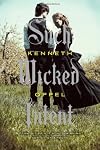
I love Kenneth Oppel. Well, at least I love his books. His Airborn series was one of the best middle grade series I have ever read. The only reason why I did not read his bat series is because a personal disinclination towards talking animals (unless it is Manchee from the Knife of Never Letting Go. Poo Todd! Poo. Squirrel, Todd), but I hear it is fabulous.
So imagine my excitement when I discovered he wrote a book riffing on Mary Shelley’s Frankenstein! Oppel. Historical fiction. Old-fashioned 18th century Gothic horror. I. am. so. there.
As usual, Mr. Oppel does not disappoint. The Frankensteins live an idyllic life. They are well off, having a country house in the countryside outside of Geneva as well as a townhouse. Victor and his twin brother Konrad are very close to each other as well as their cousin, the beautiful and spunky Elisabeth. But the picturesque scene crumbles when Konrad falls ill. Victor turns to the alchemical secrets in a hidden chamber, secrets his father does not want him to investigate in order to find a cure for the wasting disease afflicting his brother.
Oppel does a brilliant job of telling a story from the perspective of the villain. And as villains go, Victor is complicated, nuanced and arrives at his villainy not through bad intentions but through a twisted desire to do good. As the saying goes, the road to hell is paved with good intentions. Add a heart-breaking love triangle, shady alchemists, rare cave-dwelling fish as big as small whales show more and you’ve got yourself a fine tale to wile away a winter’s eve.
I am doing some homework in terms of my own writing these days, and am thinking a lot about scene. How they need to be tight. How they have their own story arcs, with beginning, middle and ends. How nothing can be superfluous. Oppel sets his scenes brilliantly- in fact the first scene of the book is genius. The reader is immediately drawn into the story by the first sentence: “We found the monster on a rocky ledge high above the lake.” Then a few pages comes the unexpected twist. The reader then thinks the surprise is over, lets their shoulders down, takes a breath, only to be thrust right back into the tension. The first scene also serves as a wonderful foreshadowing for Victor’s journey into the dark side of alchemy. Oppel is indeed a master craftsman- I am looking forward to reading the sequel, which is now waiting for me on my desk! show less
So imagine my excitement when I discovered he wrote a book riffing on Mary Shelley’s Frankenstein! Oppel. Historical fiction. Old-fashioned 18th century Gothic horror. I. am. so. there.
As usual, Mr. Oppel does not disappoint. The Frankensteins live an idyllic life. They are well off, having a country house in the countryside outside of Geneva as well as a townhouse. Victor and his twin brother Konrad are very close to each other as well as their cousin, the beautiful and spunky Elisabeth. But the picturesque scene crumbles when Konrad falls ill. Victor turns to the alchemical secrets in a hidden chamber, secrets his father does not want him to investigate in order to find a cure for the wasting disease afflicting his brother.
Oppel does a brilliant job of telling a story from the perspective of the villain. And as villains go, Victor is complicated, nuanced and arrives at his villainy not through bad intentions but through a twisted desire to do good. As the saying goes, the road to hell is paved with good intentions. Add a heart-breaking love triangle, shady alchemists, rare cave-dwelling fish as big as small whales show more and you’ve got yourself a fine tale to wile away a winter’s eve.
I am doing some homework in terms of my own writing these days, and am thinking a lot about scene. How they need to be tight. How they have their own story arcs, with beginning, middle and ends. How nothing can be superfluous. Oppel sets his scenes brilliantly- in fact the first scene of the book is genius. The reader is immediately drawn into the story by the first sentence: “We found the monster on a rocky ledge high above the lake.” Then a few pages comes the unexpected twist. The reader then thinks the surprise is over, lets their shoulders down, takes a breath, only to be thrust right back into the tension. The first scene also serves as a wonderful foreshadowing for Victor’s journey into the dark side of alchemy. Oppel is indeed a master craftsman- I am looking forward to reading the sequel, which is now waiting for me on my desk! show less
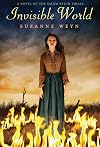
It is rare that I give a completely negative review. However, it is also rare that I read a book as bad as this one. I think it deserves to be talked about as it illustrates many of the Do Nots that I try to avoid in my own writing. I am also helping a young student edit her book for an independent project. The same mistakes I see in her manuscript I see in spades in this book.
To give you an idea of the absolutely insane plot:
Set in the 17th century, Weyn takes us from England where we meet our protagonist, Elsabeth, who can read minds, to America so she can try to read the minds of the “animalcules” (cells) the inventor of the microscope had just discovered (why they need to go to the Americas is never fully revealed). Their ship crashes in the Bermuda triangle and she floats in a barrel to an island where she meets a slave and falls in love with him. She lives with the slaves where she is taught magic by a formidable African woman until the owners get back and find her and ship her as an indentured servant to Massachusetts. She brings an evil with her from the Bermuda triangle and that causes the witch trials. She saves the day by astral projecting with her governess and by the prayer of her catholic friend who calls on Teresa of Avila to come help as well as a native shaman. It tidily wraps up by having a native Indian come and ask her and her slave love and her catholic friend and weary governess to go live with them.
Yep. I am reeling by the badness.
Besides the show more ridiculous plot, the writing was terrible. The author uses dialogue for amazingly long and complex info dumps about history. They are totally inappropriate and out of the blue. It gives me the feeling of one of those failed educational videos or textbooks where they have cartoon characters that “talk” to each other about the subject. For example, this is one of the first conversations she has with the slave boy who finds her washed up on the island. Keep in mind: 17th century. White girl. Black boy. Washed up desert island. First meeting.
“You speak English. Where am I?” I asked.
“Of course I speak English. Back in Africa — before I came here — I worked for the Richards and George company. They export palm oil from Africa. My father and I were employed by them since I was a buhbuh.”
“A what?”
“A little boy.”
“I speak English and I have never heard the word buhbuh,” I said. “Is it more Gullah?”
“Yes.”
“What is Gullah?”
“It’s what we speak here. Some words are English; others are from my home in Africa, Sierra Leone, and other nearby places and tribes.”
Oh thank you, nice African slave boy, for explaining the historical reasons and cultural significance of the language I speak in such a textbook fashion.
The behaviour of the characters does not fit the time period as well. It is like the historical setting has been tacked on to a modern day character like a dress on a paper doll (or breasts on a Michelangelo sculpture). There is hardly any detail about the time period- what they wore, what they ate, the social moors of the time. Not to mention the fact that Weyn tries to cram too many different aspects of that society into a slim novel. The witch trials in Massachusetts. Anton van Leeuwenhoek and the microscope. The slave trade in the Carribbean. Tacked on to this a magical plot with demons and angels. The book read like a fifth grade composition: And then the ship sinks. And then I was sold to Reverend Parris. And then… and then the nice Native Indian came and we talked as equals and we all went off into the sunset and lived happily after.
Finally, though the novel begins with van Leeuwenhoek and the interesting concept of being able to read the minds of cells (called animalcules in the book) this thread is completely dropped. We hear nothing more about it.
After reading this book, I googled the author to see if she was indeed a teenager herself. Perhaps this was a first attempt and I was being too harsh. But no. It turns out she is the author of the Barcode tattoo, a popular science-fiction novel among teens and one that has peaked my interest. She is a veteran writer and as such should know better.
I give it one star because my daughter liked it (that is why I read it). This book must have had something in it that appealed to her. And when I was retrieving the image from amazon, I noticed that booklist gave it a starred review and Kirkus as well, to my great mystification. It is definitely fast-paced and Weyn does cover a lot of ground.
So maybe I’m wrong. Who knows? Though YA literature is not synonymous with bad literature- there are way too many good YA novels that help disprove that myth, this book does not help the cause.
The sloppy writing, anachronistic characters, slapdash historical details and haphazard plot make me wonder how it ever got published in the first place, let alone garner good reviews. show less
To give you an idea of the absolutely insane plot:
Set in the 17th century, Weyn takes us from England where we meet our protagonist, Elsabeth, who can read minds, to America so she can try to read the minds of the “animalcules” (cells) the inventor of the microscope had just discovered (why they need to go to the Americas is never fully revealed). Their ship crashes in the Bermuda triangle and she floats in a barrel to an island where she meets a slave and falls in love with him. She lives with the slaves where she is taught magic by a formidable African woman until the owners get back and find her and ship her as an indentured servant to Massachusetts. She brings an evil with her from the Bermuda triangle and that causes the witch trials. She saves the day by astral projecting with her governess and by the prayer of her catholic friend who calls on Teresa of Avila to come help as well as a native shaman. It tidily wraps up by having a native Indian come and ask her and her slave love and her catholic friend and weary governess to go live with them.
Yep. I am reeling by the badness.
Besides the show more ridiculous plot, the writing was terrible. The author uses dialogue for amazingly long and complex info dumps about history. They are totally inappropriate and out of the blue. It gives me the feeling of one of those failed educational videos or textbooks where they have cartoon characters that “talk” to each other about the subject. For example, this is one of the first conversations she has with the slave boy who finds her washed up on the island. Keep in mind: 17th century. White girl. Black boy. Washed up desert island. First meeting.
“You speak English. Where am I?” I asked.
“Of course I speak English. Back in Africa — before I came here — I worked for the Richards and George company. They export palm oil from Africa. My father and I were employed by them since I was a buhbuh.”
“A what?”
“A little boy.”
“I speak English and I have never heard the word buhbuh,” I said. “Is it more Gullah?”
“Yes.”
“What is Gullah?”
“It’s what we speak here. Some words are English; others are from my home in Africa, Sierra Leone, and other nearby places and tribes.”
Oh thank you, nice African slave boy, for explaining the historical reasons and cultural significance of the language I speak in such a textbook fashion.
The behaviour of the characters does not fit the time period as well. It is like the historical setting has been tacked on to a modern day character like a dress on a paper doll (or breasts on a Michelangelo sculpture). There is hardly any detail about the time period- what they wore, what they ate, the social moors of the time. Not to mention the fact that Weyn tries to cram too many different aspects of that society into a slim novel. The witch trials in Massachusetts. Anton van Leeuwenhoek and the microscope. The slave trade in the Carribbean. Tacked on to this a magical plot with demons and angels. The book read like a fifth grade composition: And then the ship sinks. And then I was sold to Reverend Parris. And then… and then the nice Native Indian came and we talked as equals and we all went off into the sunset and lived happily after.
Finally, though the novel begins with van Leeuwenhoek and the interesting concept of being able to read the minds of cells (called animalcules in the book) this thread is completely dropped. We hear nothing more about it.
After reading this book, I googled the author to see if she was indeed a teenager herself. Perhaps this was a first attempt and I was being too harsh. But no. It turns out she is the author of the Barcode tattoo, a popular science-fiction novel among teens and one that has peaked my interest. She is a veteran writer and as such should know better.
I give it one star because my daughter liked it (that is why I read it). This book must have had something in it that appealed to her. And when I was retrieving the image from amazon, I noticed that booklist gave it a starred review and Kirkus as well, to my great mystification. It is definitely fast-paced and Weyn does cover a lot of ground.
So maybe I’m wrong. Who knows? Though YA literature is not synonymous with bad literature- there are way too many good YA novels that help disprove that myth, this book does not help the cause.
The sloppy writing, anachronistic characters, slapdash historical details and haphazard plot make me wonder how it ever got published in the first place, let alone garner good reviews. show less
I miss beautiful ideas. More specifically, I miss reading a book where, interspersed with an intense and riveting story, are beautiful ideas. Ideas about how the world should work, about the human condition. Ideas to make the soul and brain expand. (and no, I am not talking about unfortunate bloating or swelling. Expanding in the good way.)
The thing about beautiful ideas is that you don’t know you are missing them until you come into contact with them again. And mostly they come from places you never expected them to be. In this case the beautiful ideas came disguised as an old, browning paperback with a ridiculous cover.
ursulaleguin
But holy bells in hells, if ever there was an argument for NOT judging a book by its cover, it would be The Dispossessed by Ursula Leguin. I have a new love, a new mentor, a new political allegiance now. I am in love with Shevek the phycisist, the man, the anarchist. Or maybe I am in love with Ursula Leguin. Or maybe I am in love with the beautiful ideas in the book. I don’t know.
As I would only harm the beautiful ideas by trying to describe them, here will follow a selection of passages I want to memorize. To needlepoint and frame and then fling into the world.
On Suffering:
“Suffering is a misunderstanding….It exists,”Shevek said, spreading out his hands. “It’s real. I can call it a misunderstanding, but I can’t pretend that it doesn’t exist, or will ever cease to exist. Suffering is the condition on which we live. And when show more it comes you know it. You know it as the truth. Of course it’s right to cure diseases, to prevent hunger and injustice, as the social organism does. Nut no society can change the nature of existence. We can’t prevent suffering. This pain and that pain, yes, but not Pain. A society can only relieve social suffering, unnecessary suffering. The rest remains. The root, the reality. All of us here are going to know grief; if we live fifty years, we’ll have no pain for fifty years. And in the end we’ll die. That’s the condition we’re born on. I’m afraid of life! There are times I– I am very frightened. Any happiness seems trivial. And yet I wonder if it isn’t all a misunderstanding–this grasping for happiness, this fear of pain…If instead of fearing it and running from it, one could…get through it, go beyond it. There is something beyond it. It’s the self that suffers, and there’s a place where the self–ceases.I don’t know how to say it. But I believe that the reality–the truth that I recognize in suffering as I don’t in comfort and happiness–that the reality of pain is not pain. If you can get through it, if you can endure it all the way.”
I think this passage might explain much of the book. Shevek makes a journey out of his world, experiences the pain of misunderstanding, the grief of injustice, the ache of dissatisfaction and comes back.
On Education:
“They were superbly trained, these students. Their minds were fine, keen, ready. When they weren’t working, they rested. They were not blunted and distracted by a dozen other obligations. They never fell asleep in class because they were tired from having worked on rotational duty the day before. Their society maintained them in complete freedom from want, distractions, and cares.
What they were free to do, however, was another question. It appeared to Shevek that their freedom from obligation was in exact proportion to their lack of freedom of initiative.”
Wham, bam thank you ma’am. This issue has been on my mind for a while now. Our children have everything they need- the best schools, adequate food, parents who are willing to give up significant portions of their lives to make sure their young get the best grades, get fit, stay safe. And yet, when asked to solve a simple problem where they are not given the exact formula, thy are unable to do so.
For example, a student today stood before the printer today. She stood there until I looked up and then she said, “Miss, only one page of my essay was printed.” She didn’t look at the printer. She didn’t go back to see if she had made a mistake in her printing options. She just stood there clutching her first page, looking at me blankly, waiting for me to fix it. (If she had simply looked down at the printer, the yellow flashing light and the wordf “tray empty” would have given her a huge hint).
This bothers me.
LeGuin continues:
“He was appalled by the examination system, when it was explained to him; he could not imagine a greater deterrent to the natural wish to learn than this pattern of cramming in information and disgorging it at demand.”
And there we have one of the most succinct, scathing indictments of our modern school system.
On Relationships:
“An Odonian undertook monogamy just as he might undertake a joint enterprise in production, a ballet or a soap works. Partnership was a voluntarily constituted federation like any other. So long as it worked, it worked and if it didn’t work it stopped being. It was not an institution but a function. It had no sanction but private conscience.
This was fully in accord with Odonian social theory. The validity of the promise, even promise of indefinite term, was deep in the grain of Odo’s thinking; though it might seem her insistence on freedom to change would invalidate the idea of promise or vow, in fact the freedom made the promise meaningful. A promise is a direction taken, a self-limitation of choice. As Odo pointed out, if no direction is taken, if one goes nowhere, no change will occur. One’s freedom to choose and to change will be unused, exactly as if one were in jail, a jail of one’s own building, a maze in which no one way is better than any other. So Odo came to see the promise, the pledge, the idea of fidelity, as essential in the complexity of freedom.”
This is the first time I have ever read such a clear description of my own view of a monogamous relationship. It moved me. I always considered monogamy a choice, not a biological or societal prerogative. I do not believe in the concept of the soul mate- I find it very narrow-minded and ultimately harmful (not to mention the fodder of asinine twilight-esque romance novels) What I do believe is that you can build a life with someone, a life that is more productive, more meaningful by being with that person. The rules of fidelity or non-fidelity should howver only be the business of the couple. Society has no right to tell us who or how we should be with people. Besides “the idea of fidelity as essential in the complexity of freedom”? Isn’t that one of the most beautiful thoughts you ever did hear?
And these are just a few of the moments in the book that made me think of how my world is structured and what my role is in it. What is choice? What is freedom? Jealousy? Longing?
Besides being chock full of beautiful, thought-provoking ideas, Ms. LeGuin also writes a mean story. Some of her scenes are so visceral I physically cringed, felt the claw of horror and grief clutch at my heart. Two in particular stand out for me- one when Shevek is young and they are playing a pretend game of jail. Jail is a foreign concept to them as they live in an anarchist society that has no police, no law enforcement, no law. It is a harrowing scene where these innocents get a taste for power over another. So simple and beautifully done, it was a gut-wrenching demonstration of that old adage, power corrupts.
The other scene is when Shevek is on the mother planet, the planet where his group of anarchists left a couple of hundred years ago. He has not realised until now that he has been living in a guilded cage. He escapes one night to visit a woman he met with a fellow professor. She has a party, and he drinks alcohol for the first time. His drunkenness and sense of desolation contribute to a sequence of humiliating events.
I won’t tell you what happens -nothing and everything, really. Suffice it to say, if I could ever write a scene like that, I would die happy.
In short, my first foray into classic science-fiction (brought on by my reading of Jo Walton’s Among Others) was a resounding success. I now want to go purchase all of Ms. Leguin’s books. The idea of laying them out on an altar beside her picture has crossed my mind, but that would be distinctly un-Odonian. I will content myself with simply reading the books I have in the library, at least for now… show less
The thing about beautiful ideas is that you don’t know you are missing them until you come into contact with them again. And mostly they come from places you never expected them to be. In this case the beautiful ideas came disguised as an old, browning paperback with a ridiculous cover.
ursulaleguin
But holy bells in hells, if ever there was an argument for NOT judging a book by its cover, it would be The Dispossessed by Ursula Leguin. I have a new love, a new mentor, a new political allegiance now. I am in love with Shevek the phycisist, the man, the anarchist. Or maybe I am in love with Ursula Leguin. Or maybe I am in love with the beautiful ideas in the book. I don’t know.
As I would only harm the beautiful ideas by trying to describe them, here will follow a selection of passages I want to memorize. To needlepoint and frame and then fling into the world.
On Suffering:
“Suffering is a misunderstanding….It exists,”Shevek said, spreading out his hands. “It’s real. I can call it a misunderstanding, but I can’t pretend that it doesn’t exist, or will ever cease to exist. Suffering is the condition on which we live. And when show more it comes you know it. You know it as the truth. Of course it’s right to cure diseases, to prevent hunger and injustice, as the social organism does. Nut no society can change the nature of existence. We can’t prevent suffering. This pain and that pain, yes, but not Pain. A society can only relieve social suffering, unnecessary suffering. The rest remains. The root, the reality. All of us here are going to know grief; if we live fifty years, we’ll have no pain for fifty years. And in the end we’ll die. That’s the condition we’re born on. I’m afraid of life! There are times I– I am very frightened. Any happiness seems trivial. And yet I wonder if it isn’t all a misunderstanding–this grasping for happiness, this fear of pain…If instead of fearing it and running from it, one could…get through it, go beyond it. There is something beyond it. It’s the self that suffers, and there’s a place where the self–ceases.I don’t know how to say it. But I believe that the reality–the truth that I recognize in suffering as I don’t in comfort and happiness–that the reality of pain is not pain. If you can get through it, if you can endure it all the way.”
I think this passage might explain much of the book. Shevek makes a journey out of his world, experiences the pain of misunderstanding, the grief of injustice, the ache of dissatisfaction and comes back.
On Education:
“They were superbly trained, these students. Their minds were fine, keen, ready. When they weren’t working, they rested. They were not blunted and distracted by a dozen other obligations. They never fell asleep in class because they were tired from having worked on rotational duty the day before. Their society maintained them in complete freedom from want, distractions, and cares.
What they were free to do, however, was another question. It appeared to Shevek that their freedom from obligation was in exact proportion to their lack of freedom of initiative.”
Wham, bam thank you ma’am. This issue has been on my mind for a while now. Our children have everything they need- the best schools, adequate food, parents who are willing to give up significant portions of their lives to make sure their young get the best grades, get fit, stay safe. And yet, when asked to solve a simple problem where they are not given the exact formula, thy are unable to do so.
For example, a student today stood before the printer today. She stood there until I looked up and then she said, “Miss, only one page of my essay was printed.” She didn’t look at the printer. She didn’t go back to see if she had made a mistake in her printing options. She just stood there clutching her first page, looking at me blankly, waiting for me to fix it. (If she had simply looked down at the printer, the yellow flashing light and the wordf “tray empty” would have given her a huge hint).
This bothers me.
LeGuin continues:
“He was appalled by the examination system, when it was explained to him; he could not imagine a greater deterrent to the natural wish to learn than this pattern of cramming in information and disgorging it at demand.”
And there we have one of the most succinct, scathing indictments of our modern school system.
On Relationships:
“An Odonian undertook monogamy just as he might undertake a joint enterprise in production, a ballet or a soap works. Partnership was a voluntarily constituted federation like any other. So long as it worked, it worked and if it didn’t work it stopped being. It was not an institution but a function. It had no sanction but private conscience.
This was fully in accord with Odonian social theory. The validity of the promise, even promise of indefinite term, was deep in the grain of Odo’s thinking; though it might seem her insistence on freedom to change would invalidate the idea of promise or vow, in fact the freedom made the promise meaningful. A promise is a direction taken, a self-limitation of choice. As Odo pointed out, if no direction is taken, if one goes nowhere, no change will occur. One’s freedom to choose and to change will be unused, exactly as if one were in jail, a jail of one’s own building, a maze in which no one way is better than any other. So Odo came to see the promise, the pledge, the idea of fidelity, as essential in the complexity of freedom.”
This is the first time I have ever read such a clear description of my own view of a monogamous relationship. It moved me. I always considered monogamy a choice, not a biological or societal prerogative. I do not believe in the concept of the soul mate- I find it very narrow-minded and ultimately harmful (not to mention the fodder of asinine twilight-esque romance novels) What I do believe is that you can build a life with someone, a life that is more productive, more meaningful by being with that person. The rules of fidelity or non-fidelity should howver only be the business of the couple. Society has no right to tell us who or how we should be with people. Besides “the idea of fidelity as essential in the complexity of freedom”? Isn’t that one of the most beautiful thoughts you ever did hear?
And these are just a few of the moments in the book that made me think of how my world is structured and what my role is in it. What is choice? What is freedom? Jealousy? Longing?
Besides being chock full of beautiful, thought-provoking ideas, Ms. LeGuin also writes a mean story. Some of her scenes are so visceral I physically cringed, felt the claw of horror and grief clutch at my heart. Two in particular stand out for me- one when Shevek is young and they are playing a pretend game of jail. Jail is a foreign concept to them as they live in an anarchist society that has no police, no law enforcement, no law. It is a harrowing scene where these innocents get a taste for power over another. So simple and beautifully done, it was a gut-wrenching demonstration of that old adage, power corrupts.
The other scene is when Shevek is on the mother planet, the planet where his group of anarchists left a couple of hundred years ago. He has not realised until now that he has been living in a guilded cage. He escapes one night to visit a woman he met with a fellow professor. She has a party, and he drinks alcohol for the first time. His drunkenness and sense of desolation contribute to a sequence of humiliating events.
I won’t tell you what happens -nothing and everything, really. Suffice it to say, if I could ever write a scene like that, I would die happy.
In short, my first foray into classic science-fiction (brought on by my reading of Jo Walton’s Among Others) was a resounding success. I now want to go purchase all of Ms. Leguin’s books. The idea of laying them out on an altar beside her picture has crossed my mind, but that would be distinctly un-Odonian. I will content myself with simply reading the books I have in the library, at least for now… show less
It is that time of year again, the time of year when I gravitate towards book that punch me in the gut. Either because the character is so palpable I feel like I know them intimately (A Complicated Kindness), or because the book introduces me to so many new and beautiful ideas I want to spend more time than I have sifting through them, examining them (The Dispossessed). And then there are the books that are so close to my own experience I feel exposed somehow, naked in front of the author. Among Others was one book like that. But the part of me that felt exposed was the lonely, reading me, an aspect of myself that I have long embraced.
Prep by Curtis Sittenfield is a different story. Told from the perspective of Lee Fiora, a young girl who gets a scholarship to a fancy boarding school, this book hurled me into the murkiest, most devastating waters of my own adolescence. No- I never got a scholarship, or ended up at a fancy boarding school, though the high school I went to for the last couple of years of my secondary education was quite a bit like Beverley HIlls 9021, but the friendly Canadian version.
It is Lee’s complete lack of self-confidence. Actually, it is deeper than lack of self-confidence, lower even, to nigh self-annihilation.
Actually, even writing this hurts. I never realized it until I recognized it in Lee’s character, but I spent my whole teenage years just assuming that I was not worth knowing. Therefore, why would people want to hang out with me? Why show more would anybody like me? I best not foist myself on people- that would be unkind. Better to leave them alone. Stay in my little corner. Never ever put myself out there.
Like Lee in the book, I had a family that loved me (loves me still I am pretty sure but you can’t be really sure of anything, can you?) I had everything I needed- lived a comfortable middle-class existence in a beautiful little town. No, all my problems as a teenager were completely self-inflicted. I don’t know what happened to me. I don’t know if something happens in the brains of certain teenage girls, some sort of chemical imbalance that makes them think they are not worth the space they take up in the world. I know it is not every girl- my sisters most definitely had no problem taking up space. Most sane people don’t even question it.
So encountering a character who never sits at a table of her peers because she assumes they don’t want to talk to her, or if someone does talk to her, say like the cute boy she has been crushing on since the beginning of time, it must be out of pity. (This scenario leads to one of the most devastating parts of the book. I’m not going to tell you. You have to read it for yourself.)
I made a lot of mistakes in my life. And I am realizing now that a lot of the ones I made during my adolescent and young adult life stem from these terrible, self-hating assumptions. Regrets for not having participated in the world around me as much as I could have, or wanted to. Regrets with people I loved and couldn’t see how they could love me back and consequently making some devastatingly stupid mistakes.
I wish I could say that as an adult it is better, that like the case of adolescent acne, it has cleared away. Well, yes and no. Every time I am in a social gathering, my instinct is to not talk to anybody. Whatever I do, I shouldn’t foist my presence on other people. I must wait for people to come talk to me. But when they do, I always wonder if it is out of pity.
That is my first instinct. Luckily it is as faded as my acne scars, palpably there but easy to ignore.
As for the book itself, it is worth reading. Lee Fiora is up there with Nomi Nickel from A Complicated Kindness, Baby from Lullabies for Little Criminals and yes, even my first love, that ubiquitous comparison, Mr. Holden Caulfield. She is funny, smart, and so tragically flawed I wanted to simultaneously take her in my arms and shake some sense into her. Now that I think about it, that was probably how my mom felt… show less
Prep by Curtis Sittenfield is a different story. Told from the perspective of Lee Fiora, a young girl who gets a scholarship to a fancy boarding school, this book hurled me into the murkiest, most devastating waters of my own adolescence. No- I never got a scholarship, or ended up at a fancy boarding school, though the high school I went to for the last couple of years of my secondary education was quite a bit like Beverley HIlls 9021, but the friendly Canadian version.
It is Lee’s complete lack of self-confidence. Actually, it is deeper than lack of self-confidence, lower even, to nigh self-annihilation.
Actually, even writing this hurts. I never realized it until I recognized it in Lee’s character, but I spent my whole teenage years just assuming that I was not worth knowing. Therefore, why would people want to hang out with me? Why show more would anybody like me? I best not foist myself on people- that would be unkind. Better to leave them alone. Stay in my little corner. Never ever put myself out there.
Like Lee in the book, I had a family that loved me (loves me still I am pretty sure but you can’t be really sure of anything, can you?) I had everything I needed- lived a comfortable middle-class existence in a beautiful little town. No, all my problems as a teenager were completely self-inflicted. I don’t know what happened to me. I don’t know if something happens in the brains of certain teenage girls, some sort of chemical imbalance that makes them think they are not worth the space they take up in the world. I know it is not every girl- my sisters most definitely had no problem taking up space. Most sane people don’t even question it.
So encountering a character who never sits at a table of her peers because she assumes they don’t want to talk to her, or if someone does talk to her, say like the cute boy she has been crushing on since the beginning of time, it must be out of pity. (This scenario leads to one of the most devastating parts of the book. I’m not going to tell you. You have to read it for yourself.)
I made a lot of mistakes in my life. And I am realizing now that a lot of the ones I made during my adolescent and young adult life stem from these terrible, self-hating assumptions. Regrets for not having participated in the world around me as much as I could have, or wanted to. Regrets with people I loved and couldn’t see how they could love me back and consequently making some devastatingly stupid mistakes.
I wish I could say that as an adult it is better, that like the case of adolescent acne, it has cleared away. Well, yes and no. Every time I am in a social gathering, my instinct is to not talk to anybody. Whatever I do, I shouldn’t foist my presence on other people. I must wait for people to come talk to me. But when they do, I always wonder if it is out of pity.
That is my first instinct. Luckily it is as faded as my acne scars, palpably there but easy to ignore.
As for the book itself, it is worth reading. Lee Fiora is up there with Nomi Nickel from A Complicated Kindness, Baby from Lullabies for Little Criminals and yes, even my first love, that ubiquitous comparison, Mr. Holden Caulfield. She is funny, smart, and so tragically flawed I wanted to simultaneously take her in my arms and shake some sense into her. Now that I think about it, that was probably how my mom felt… show less
I read pure fantasy infrequently, though the ones I have read I have enjoyed for the most part. Witchlanders , the debut novel by Lena Coakley, falls into that category. Full disclosure: I picked it up only because I heard her speak at a conference recently, where she was accepting an award. I very much liked what she had to say and it made me want to read her book. I am happy to say that I do not regret my decision.
Since his father's death, Ryder has been in charge of the small patch of scraggy earth he and his family farms to eke out a meager existence. On top of the grueling work, he also must look after his younger sisters and most of all his mother, who is descending into madness, reverting to her old ways when she was young and lived with the Red witches. She is eating Maiden's woe to cause the visions and is making crazy prophecies. But when a new magic comes and threatens the village, Ryder is forced to consider that his mother might not be crazy after all. If he wants to save his sisters and his village, he will have to rethink everything he has ever believed in.
The best thing by far about this book is Coakley's lyrical writing style. The way she describes the Chilling, the coming of winter. The way magic works in the Witchlands, by singing voices. It is very beautiful her world. Though the story can be hard to follow- with many characters and all that world-building exposition necessary when you are creating a whole new place, it is worth while. The characters show more are well-rounded - flawed but well meaning. There are enough twists and turns to keep the reader doubting about the cause of the evil- red herrings well-placed and subtle.
All in all, this is a strong first novel, with a different take on the way magic works. Although the book begs for a sequel, Coakley seems reticent to announce one. Will there? Won't there? I hope there will be. show less
Since his father's death, Ryder has been in charge of the small patch of scraggy earth he and his family farms to eke out a meager existence. On top of the grueling work, he also must look after his younger sisters and most of all his mother, who is descending into madness, reverting to her old ways when she was young and lived with the Red witches. She is eating Maiden's woe to cause the visions and is making crazy prophecies. But when a new magic comes and threatens the village, Ryder is forced to consider that his mother might not be crazy after all. If he wants to save his sisters and his village, he will have to rethink everything he has ever believed in.
The best thing by far about this book is Coakley's lyrical writing style. The way she describes the Chilling, the coming of winter. The way magic works in the Witchlands, by singing voices. It is very beautiful her world. Though the story can be hard to follow- with many characters and all that world-building exposition necessary when you are creating a whole new place, it is worth while. The characters show more are well-rounded - flawed but well meaning. There are enough twists and turns to keep the reader doubting about the cause of the evil- red herrings well-placed and subtle.
All in all, this is a strong first novel, with a different take on the way magic works. Although the book begs for a sequel, Coakley seems reticent to announce one. Will there? Won't there? I hope there will be. show less
I went to Jian Ghomeshi’s launch of his new book, 1982 in early October. Though it took me a while to warm up to Mister Ghomeshi when his dulcet tones began to waft from the maw of CBC Radio 1, he has since become one of my favourite radio personalities. He is smart, finds amazing guests and gives insightful and in-depth interviews. And yes, his graceful yet uncompromising method of dealing with Mr. Billy Bob Thorton during the infamous interview made me respect him even more. Not many people can be so calm and collected after such a confrontation. I really hope that Mr. Ghomeshi (Jian, can I call you Jian?) went home and drank a bottle of whiskey while sobbing and shaking in a corner; it would prove that he is merely human like the rest of us and not some sort of zen saint (sorry for the cross-religious metaphor)…
But I digress.
So I was very intrigued about his new book, a memoir of his first year in high school. I am exercising considerable restraint by not committing an americanism and calling it his freshman year. Here in lil ol’ Canada we call it like it is: grade nine. Or at least how it was in Ontario in 1982. First year of high school in Montreal is called Secondary 1. Which is Grade 7 for the rest of the world.
Oh, how I digress…
But back to Mr. Jian Ghomeshi and his memoir. At the launch he told the audience that he wanted to revisit this year of his life for several reasons. One was to explore the challenges/nuances/complexities of being a first generation show more Iranian in a predominantly white suburban Toronto neighborhood. The second was to highlight how our relationship with music (and arguably any other media) has changed as the distribution means become quicker, easier, and more ubiquitous (eg. in 1982 you had to go to the record store and buy the record. In 2012 you press a button on your computer at home – you don’t even have to put on pants.) Thirdly because it was a pivotal year in his life (again, we could all probably argue the same thing for our 14th year).
Did he succeed? Well, yes and no. Here is how he sums up that year of his life (this is the quote on the back of his book):
“And so it turns out 1982 was a pivotal year in my life. 1982 [he wrote it out but I am too lazy] was the year I became New Wave. In my goal to be like Bowie, I acquired the black clothing, the hair gel, and some of the attitude to fit in with the punks and New Wavers. Or at least, I cam close by the end of the year. And it didn’t help that all the heroes in New Wave were white like Bowie – although I liked to imagine that Bowie had no race. he was too cool.”
Ghomeshi writes in a style that attempts to mimick the voice of a fourteen-year old. I am pretty sure that is intentional. The book is about his 14th year after all. But it is a memoir so he is speaking to us as an adult remembering his past. Though I appreciate what he is trying to do, I really do, it is only half successful. There is a weird disconnect between the tone when he is remembering a certain event and his very Q-like (Q is the name of his radio show for all of you who are not addicted to CBC as I am) soliloquies about technology or music. It also borders on the annoying- but perhaps neurotic fourteen-year old boy’s internal dialogue is tiresome for everyone, including the 14-year old boy. Maybe that’s the point.
I so often miss the point.
He does touch on the feeling he had of never fitting in because of his ethnicity, but honestly, with a few exceptions, most of the ill-ease was in his own head. Which I guess is an interesting insight into how New Canadians must feel in general. As for the issue of technology, the point was made once and didn’t need to be belaboured again and again. The joke of the phone with the cord on it, or the fact that we didn’t have cell phones at the time and were not always available, or worse had to actually (gasp) share a communal phone that was permanently affixed to a wall got a little redundant to the point of feeling a tad condescending. Yes, golly gee, how things have changed. Let us now move on…
Where Ghomeshi did shine, in fact shined so much I got shivers, was when he was talking about the music that influenced him and the concerts he attended during that year. The most notable in terms of his own musical influences and the plot of the story (he attends the concert with his crush at the time) was the Police Picnic of that year. His description of the Talking Heads and their impact on him made me very sad that I was too young to have seen them in concert:
I had never seen or experienced anything quite like the Talking Heads. Ever. All of a sudden, it was as though there were a hundred people onstage. I barely knew where to focus my attention. There was a cool blond woman playing bass….And at the centre of it all was a tall, thin guy with an elastic body that was contorting in ways I had never witnessed. He was like a rubber man. He was also somewhat androgynous. And then he started singing/ Or speaking. Or announcing. And his words were profound. And weird. And funny. And he captured my attention like no one had beyond Bowie.- 1982, p.173
Me dorking out at the book signing. See? We are never too old for some adolescent angst…
Good stuff. In all, 1982 was an entertaining if slightly inconsistent read. Perhaps much of its value will be for people my age or slightly older who will recognise the music and the style as well as themselves in Ghomeshi’s 14-year old incarnation.
Though I gotta say. what a bloody awkward age. Wait- I take it back Mr. Ghomeshi. I don’t need you to curl up with a bottle of whiskey after a bad interview anymore. Proof of your regular-ness is here in all its 284 page glory. As if to confirm this, I am listening to your new wave station and The Human League are crooning I’m Only Human.
Indeed. show less
But I digress.
So I was very intrigued about his new book, a memoir of his first year in high school. I am exercising considerable restraint by not committing an americanism and calling it his freshman year. Here in lil ol’ Canada we call it like it is: grade nine. Or at least how it was in Ontario in 1982. First year of high school in Montreal is called Secondary 1. Which is Grade 7 for the rest of the world.
Oh, how I digress…
But back to Mr. Jian Ghomeshi and his memoir. At the launch he told the audience that he wanted to revisit this year of his life for several reasons. One was to explore the challenges/nuances/complexities of being a first generation show more Iranian in a predominantly white suburban Toronto neighborhood. The second was to highlight how our relationship with music (and arguably any other media) has changed as the distribution means become quicker, easier, and more ubiquitous (eg. in 1982 you had to go to the record store and buy the record. In 2012 you press a button on your computer at home – you don’t even have to put on pants.) Thirdly because it was a pivotal year in his life (again, we could all probably argue the same thing for our 14th year).
Did he succeed? Well, yes and no. Here is how he sums up that year of his life (this is the quote on the back of his book):
“And so it turns out 1982 was a pivotal year in my life. 1982 [he wrote it out but I am too lazy] was the year I became New Wave. In my goal to be like Bowie, I acquired the black clothing, the hair gel, and some of the attitude to fit in with the punks and New Wavers. Or at least, I cam close by the end of the year. And it didn’t help that all the heroes in New Wave were white like Bowie – although I liked to imagine that Bowie had no race. he was too cool.”
Ghomeshi writes in a style that attempts to mimick the voice of a fourteen-year old. I am pretty sure that is intentional. The book is about his 14th year after all. But it is a memoir so he is speaking to us as an adult remembering his past. Though I appreciate what he is trying to do, I really do, it is only half successful. There is a weird disconnect between the tone when he is remembering a certain event and his very Q-like (Q is the name of his radio show for all of you who are not addicted to CBC as I am) soliloquies about technology or music. It also borders on the annoying- but perhaps neurotic fourteen-year old boy’s internal dialogue is tiresome for everyone, including the 14-year old boy. Maybe that’s the point.
I so often miss the point.
He does touch on the feeling he had of never fitting in because of his ethnicity, but honestly, with a few exceptions, most of the ill-ease was in his own head. Which I guess is an interesting insight into how New Canadians must feel in general. As for the issue of technology, the point was made once and didn’t need to be belaboured again and again. The joke of the phone with the cord on it, or the fact that we didn’t have cell phones at the time and were not always available, or worse had to actually (gasp) share a communal phone that was permanently affixed to a wall got a little redundant to the point of feeling a tad condescending. Yes, golly gee, how things have changed. Let us now move on…
Where Ghomeshi did shine, in fact shined so much I got shivers, was when he was talking about the music that influenced him and the concerts he attended during that year. The most notable in terms of his own musical influences and the plot of the story (he attends the concert with his crush at the time) was the Police Picnic of that year. His description of the Talking Heads and their impact on him made me very sad that I was too young to have seen them in concert:
I had never seen or experienced anything quite like the Talking Heads. Ever. All of a sudden, it was as though there were a hundred people onstage. I barely knew where to focus my attention. There was a cool blond woman playing bass….And at the centre of it all was a tall, thin guy with an elastic body that was contorting in ways I had never witnessed. He was like a rubber man. He was also somewhat androgynous. And then he started singing/ Or speaking. Or announcing. And his words were profound. And weird. And funny. And he captured my attention like no one had beyond Bowie.- 1982, p.173
Me dorking out at the book signing. See? We are never too old for some adolescent angst…
Good stuff. In all, 1982 was an entertaining if slightly inconsistent read. Perhaps much of its value will be for people my age or slightly older who will recognise the music and the style as well as themselves in Ghomeshi’s 14-year old incarnation.
Though I gotta say. what a bloody awkward age. Wait- I take it back Mr. Ghomeshi. I don’t need you to curl up with a bottle of whiskey after a bad interview anymore. Proof of your regular-ness is here in all its 284 page glory. As if to confirm this, I am listening to your new wave station and The Human League are crooning I’m Only Human.
Indeed. show less
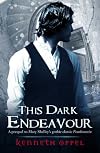
I love Kenneth Oppel. Well, at least I love his books. His Airborn series was one of the best middle grade series I have ever read. The only reason why I did not read his bat series is because a personal disinclination towards talking animals (unless it is Manchee from the Knife of Never Letting Go. Poo Todd! Poo. Squirrel, Todd), but I hear it is fabulous.
So imagine my excitement when I discovered he wrote a book riffing on Mary Shelley’s Frankenstein! Oppel. Historical fiction. Old-fashioned 18th century Gothic horror. I. am. so. there.
As usual, Mr. Oppel does not disappoint. The Frankensteins live an idyllic life. They are well off, having a country house in the countryside outside of Geneva as well as a townhouse. Victor and his twin brother Konrad are very close to each other as well as their cousin, the beautiful and spunky Elisabeth. But the picturesque scene crumbles when Konrad falls ill. Victor turns to the alchemical secrets in a hidden chamber, secrets his father does not want him to investigate in order to find a cure for the wasting disease afflicting his brother.
Oppel does a brilliant job of telling a story from the perspective of the villain. And as villains go, Victor is complicated, nuanced and arrives at his villainy not through bad intentions but through a twisted desire to do good. As the saying goes, the road to hell is paved with good intentions. Add a heart-breaking love triangle, shady alchemists, rare cave-dwelling fish as big as small whales show more and you’ve got yourself a fine tale to wile away a winter’s eve.
I am doing some homework in terms of my own writing these days, and am thinking a lot about scene. How they need to be tight. How they have their own story arcs, with beginning, middle and ends. How nothing can be superfluous. Oppel sets his scenes brilliantly- in fact the first scene of the book is genius. The reader is immediately drawn into the story by the first sentence: “We found the monster on a rocky ledge high above the lake.” Then a few pages comes the unexpected twist. The reader then thinks the surprise is over, lets their shoulders down, takes a breath, only to be thrust right back into the tension. The first scene also serves as a wonderful foreshadowing for Victor’s journey into the dark side of alchemy. Oppel is indeed a master craftsman- I am looking forward to reading the sequel, which is now waiting for me on my desk! show less
So imagine my excitement when I discovered he wrote a book riffing on Mary Shelley’s Frankenstein! Oppel. Historical fiction. Old-fashioned 18th century Gothic horror. I. am. so. there.
As usual, Mr. Oppel does not disappoint. The Frankensteins live an idyllic life. They are well off, having a country house in the countryside outside of Geneva as well as a townhouse. Victor and his twin brother Konrad are very close to each other as well as their cousin, the beautiful and spunky Elisabeth. But the picturesque scene crumbles when Konrad falls ill. Victor turns to the alchemical secrets in a hidden chamber, secrets his father does not want him to investigate in order to find a cure for the wasting disease afflicting his brother.
Oppel does a brilliant job of telling a story from the perspective of the villain. And as villains go, Victor is complicated, nuanced and arrives at his villainy not through bad intentions but through a twisted desire to do good. As the saying goes, the road to hell is paved with good intentions. Add a heart-breaking love triangle, shady alchemists, rare cave-dwelling fish as big as small whales show more and you’ve got yourself a fine tale to wile away a winter’s eve.
I am doing some homework in terms of my own writing these days, and am thinking a lot about scene. How they need to be tight. How they have their own story arcs, with beginning, middle and ends. How nothing can be superfluous. Oppel sets his scenes brilliantly- in fact the first scene of the book is genius. The reader is immediately drawn into the story by the first sentence: “We found the monster on a rocky ledge high above the lake.” Then a few pages comes the unexpected twist. The reader then thinks the surprise is over, lets their shoulders down, takes a breath, only to be thrust right back into the tension. The first scene also serves as a wonderful foreshadowing for Victor’s journey into the dark side of alchemy. Oppel is indeed a master craftsman- I am looking forward to reading the sequel, which is now waiting for me on my desk! show less
One of my favourite young adult writers is Libba Bray, and not only because she has the same initials as me, or because as my husband pointed out, if you squint your eyes her name resembles “library”. She is not afraid to experiment with different genres- indeed her first trilogy was a wonderful 19th century Victorian boarding school magical mystery tour. Her next endeavour, Going Bovine, an insane romp through the dying mind of a hapless teenage boy afflicted with mad cow disease, won her the Michael Printz award. I reviewed it in this post.
And now Beauty Queens (Actually I am a little late on the uptake. I think she has an actual new one out very soon, and once again on a totally different subject). So here is a quote from the acknowledgement section of the book, just to give you an idea of what it is about:
A huge thanks to my editor and uber-mensch [there is a funny footnote here which I am not going to quote here. You will just have to buy the book and read it yourself], David Levithan, who years ago, said, ” A plane full of beauty queens crashes on a deserted island. And…Go!”
Yep. That is essentially the plot of this wonderful tome I think all girls should read.
Why?
Because of shite like this:
Female Olympians fight back against shamers and haters
And like this:
The 12 Sexiest Olympic Women
WTF?I have to say, when I read that first article, it felt personal. No, not because I equate myself in anyway with the pinnacle of physical fitness these women have show more attained, but because it has taken me a very long time to realise that I don’t want to be thin so much as strong and healthy.
I know. Duh.
But I don’t want that just for myself. I want my daughters to feel the joy of having their bodies function well. Have the feeling of strength as you run, or muscles as you lift things. I want them to feel the sense of accomplishment that comes from pushing yourself physically, of doing something you couldn’t do before. I want them to eat right so they can have the energy to get through their day without being exhausted, to use exercise and diet (as in what you eat daily not as in some weird eat-only-grapefruit-until-your-pee-turns-to-acid insanity) as a catapult to launch them into the socratic “examined life.”
Basically, I want them to feel like Wonder Woman, without having to wear the stupid costume.
But really, if we live in a society that can still objectify the body of our world’s top athletes and judge them as wanting, I want out. Really. I give back my ticket. I am saying a hail and hearty fuck you to all thoughts of trying to fit in body-wise.
That is mostly what I want my daughters to do too.
As Twisted Sister said, “We’re not going to take it anymore.”
Okay. I guess a lot of people have said that, but none with such panache.
And that is why Libba Bray’s book is so wonderful. It does exactly that. Part Miss Congeniality, part James Bond thriller, part Mel Brooks satire, and yes, part Lord of the Flies, Bray takes an outlandish plot and manages to plunk down some very fleshed out (no pun intended) characters.
Now don’t think this book is simply a polemic against the beauty industry and the insane standards women must try to live up to (though there is that, but done in such a hilarious way you won’t mind). There a nuances as well. The individual contestants all have different issues to deal with besides trying to figure out who you are when the world insists on seeing you only one way.
Questions like why is our sexuality something to hide instead of embrace (slut vs. stud anyone?) come up. Transgendered issues. Gay issues. And the age old question of how do you survive your parents expectations of you, as well as navigate the rocky shoals of your hormones while retaining your good sense. All of that plus more awaits you. So pick it up now.
That’s all I have to say. show less
And now Beauty Queens (Actually I am a little late on the uptake. I think she has an actual new one out very soon, and once again on a totally different subject). So here is a quote from the acknowledgement section of the book, just to give you an idea of what it is about:
A huge thanks to my editor and uber-mensch [there is a funny footnote here which I am not going to quote here. You will just have to buy the book and read it yourself], David Levithan, who years ago, said, ” A plane full of beauty queens crashes on a deserted island. And…Go!”
Yep. That is essentially the plot of this wonderful tome I think all girls should read.
Why?
Because of shite like this:
Female Olympians fight back against shamers and haters
And like this:
The 12 Sexiest Olympic Women
WTF?I have to say, when I read that first article, it felt personal. No, not because I equate myself in anyway with the pinnacle of physical fitness these women have show more attained, but because it has taken me a very long time to realise that I don’t want to be thin so much as strong and healthy.
I know. Duh.
But I don’t want that just for myself. I want my daughters to feel the joy of having their bodies function well. Have the feeling of strength as you run, or muscles as you lift things. I want them to feel the sense of accomplishment that comes from pushing yourself physically, of doing something you couldn’t do before. I want them to eat right so they can have the energy to get through their day without being exhausted, to use exercise and diet (as in what you eat daily not as in some weird eat-only-grapefruit-until-your-pee-turns-to-acid insanity) as a catapult to launch them into the socratic “examined life.”
Basically, I want them to feel like Wonder Woman, without having to wear the stupid costume.
But really, if we live in a society that can still objectify the body of our world’s top athletes and judge them as wanting, I want out. Really. I give back my ticket. I am saying a hail and hearty fuck you to all thoughts of trying to fit in body-wise.
That is mostly what I want my daughters to do too.
As Twisted Sister said, “We’re not going to take it anymore.”
Okay. I guess a lot of people have said that, but none with such panache.
And that is why Libba Bray’s book is so wonderful. It does exactly that. Part Miss Congeniality, part James Bond thriller, part Mel Brooks satire, and yes, part Lord of the Flies, Bray takes an outlandish plot and manages to plunk down some very fleshed out (no pun intended) characters.
Now don’t think this book is simply a polemic against the beauty industry and the insane standards women must try to live up to (though there is that, but done in such a hilarious way you won’t mind). There a nuances as well. The individual contestants all have different issues to deal with besides trying to figure out who you are when the world insists on seeing you only one way.
Questions like why is our sexuality something to hide instead of embrace (slut vs. stud anyone?) come up. Transgendered issues. Gay issues. And the age old question of how do you survive your parents expectations of you, as well as navigate the rocky shoals of your hormones while retaining your good sense. All of that plus more awaits you. So pick it up now.
That’s all I have to say. show less
I have been on a tad of a Dystopian novel kick lately. While reading this last addition to the increasing list of Dystopian YA books, I had an epiphany. No, perhaps that is too strong a word for the small glimmer of light that brightened my brain pan for a millisecond.
A mental flash. Yes that's it.
It has occurred to me (and I am 100% sure that I am not the only one to have come to this conclusion) that to be considered Dystopian a novel must:
1. Set itself up as a Utopia that can't see the cracks in its own infrastructure (or at least the cracks are only known by a select few).
2. Use the idea of a peaceful society, where everyone's basic needs are met (using the Mazlow's hierarchy of needs, that would be the first two rungs of the pyramid) as the reason for inhibiting freedom of choice.
Roth's Divergent does just this. In her Dystopia, the city (future Chicago) is divided into factions: Abnegation, Amity, Candor, Dauntless and Erudite (all freakin' awesome words, by the by.) When a citizen turns sixteen, they are issued a test, a serum injected into your neck that shows what your aptitude is by how you react to the various simulations. If you are Abnegation, you are selfless and thoughtful and self-sacrificing. Abnegation are the leaders of the city as they are deemed to be incorruptible. Amity wants peace and friendship above all else. Candor, truth. Dauntless need to live their lives on the edge- courting danger, pushing their physical and mental limits. Erudite are the show more thinkers of the society, the builders, inventors, innovators.
When Beatrice goes for her test, however, her result does not fit into any of the above categories. She is a word she has never heard before, a dangerous word: she is divergent. With the help of her tester, she is able to keep it a secret until the choosing ceremony, where she will have to choose which faction. Her own Abnegation, where she has never felt worthy, or another? But when you have an aptitude for three out of the five factions, which one to choose?
Thus begins Roth's dark, scary, fast-paced trilogy (two of which have been published the third will be out...I don't know when it will be out- Ms. Roth has just finished Insurgent so must be taking a break now) and when I say fast-paced I mean speed-of-light paced. Warp-speed paced. So fast that I finished the first and HAD TO BUY THE SEQUEL IMMEDIATELY. Which I did as an e-book. Too cheap to buy the hardcover.
That is not to say that the book didn't have its flaws. I am still not convinced about the premise - how people can have only one dominant trait. This rings extremely false to me. We are complicated folk, us humans, apt to act one way in one situation and another way in the same situation on a different day. So to have a whole society based on whether they value honesty over anything else, or peace above anything else, or, well you get the picture, seems a little contrived. So right from the get go I was suspicious.
What drew me in, then? Well some pretty horrific fight scenes, I guess. Be warned: there will be blood. There are some interesting ideas about reality and non-reality and dealing with fear, as well as some good tension building as the fabric of their society crumbles.
Oh, and there is also a boy.A cute, angst-ridden, complicated boy, in the tradition of cute angst-ridden YA boys as love interests.
Need I say more? I will conclude by saying that though I don't think it lives up to the crazy hype, if you are looking for a quick, fun, gripping summer read, you could do worse. show less
A mental flash. Yes that's it.
It has occurred to me (and I am 100% sure that I am not the only one to have come to this conclusion) that to be considered Dystopian a novel must:
1. Set itself up as a Utopia that can't see the cracks in its own infrastructure (or at least the cracks are only known by a select few).
2. Use the idea of a peaceful society, where everyone's basic needs are met (using the Mazlow's hierarchy of needs, that would be the first two rungs of the pyramid) as the reason for inhibiting freedom of choice.
Roth's Divergent does just this. In her Dystopia, the city (future Chicago) is divided into factions: Abnegation, Amity, Candor, Dauntless and Erudite (all freakin' awesome words, by the by.) When a citizen turns sixteen, they are issued a test, a serum injected into your neck that shows what your aptitude is by how you react to the various simulations. If you are Abnegation, you are selfless and thoughtful and self-sacrificing. Abnegation are the leaders of the city as they are deemed to be incorruptible. Amity wants peace and friendship above all else. Candor, truth. Dauntless need to live their lives on the edge- courting danger, pushing their physical and mental limits. Erudite are the show more thinkers of the society, the builders, inventors, innovators.
When Beatrice goes for her test, however, her result does not fit into any of the above categories. She is a word she has never heard before, a dangerous word: she is divergent. With the help of her tester, she is able to keep it a secret until the choosing ceremony, where she will have to choose which faction. Her own Abnegation, where she has never felt worthy, or another? But when you have an aptitude for three out of the five factions, which one to choose?
Thus begins Roth's dark, scary, fast-paced trilogy (two of which have been published the third will be out...I don't know when it will be out- Ms. Roth has just finished Insurgent so must be taking a break now) and when I say fast-paced I mean speed-of-light paced. Warp-speed paced. So fast that I finished the first and HAD TO BUY THE SEQUEL IMMEDIATELY. Which I did as an e-book. Too cheap to buy the hardcover.
That is not to say that the book didn't have its flaws. I am still not convinced about the premise - how people can have only one dominant trait. This rings extremely false to me. We are complicated folk, us humans, apt to act one way in one situation and another way in the same situation on a different day. So to have a whole society based on whether they value honesty over anything else, or peace above anything else, or, well you get the picture, seems a little contrived. So right from the get go I was suspicious.
What drew me in, then? Well some pretty horrific fight scenes, I guess. Be warned: there will be blood. There are some interesting ideas about reality and non-reality and dealing with fear, as well as some good tension building as the fabric of their society crumbles.
Oh, and there is also a boy.A cute, angst-ridden, complicated boy, in the tradition of cute angst-ridden YA boys as love interests.
Need I say more? I will conclude by saying that though I don't think it lives up to the crazy hype, if you are looking for a quick, fun, gripping summer read, you could do worse. show less
I have been on a tad of a Dystopian novel kick lately. While reading this last addition to the increasing list of Dystopian YA books, I had an epiphany. No, perhaps that is too strong a word for the small glimmer of light that brightened my brain pan for a millisecond.
A mental flash. Yes that's it.
It has occurred to me (and I am 100% sure that I am not the only one to have come to this conclusion) that to be considered Dystopian a novel must:
1. Set itself up as a Utopia that can't see the cracks in its own infrastructure (or at least the cracks are only known by a select few).
2. Use the idea of a peaceful society, where everyone's basic needs are met (using the Mazlow's hierarchy of needs, that would be the first two rungs of the pyramid) as the reason for inhibiting freedom of choice.
Roth's Divergent does just this. In her Dystopia, the city (future Chicago) is divided into factions: Abnegation, Amity, Candor, Dauntless and Erudite (all freakin' awesome words, by the by.) When a citizen turns sixteen, they are issued a test, a serum injected into your neck that shows what your aptitude is by how you react to the various simulations. If you are Abnegation, you are selfless and thoughtful and self-sacrificing. Abnegation are the leaders of the city as they are deemed to be incorruptible. Amity wants peace and friendship above all else. Candor, truth. Dauntless need to live their lives on the edge- courting danger, pushing their physical and mental limits. Erudite are the show more thinkers of the society, the builders, inventors, innovators.
When Beatrice goes for her test, however, her result does not fit into any of the above categories. She is a word she has never heard before, a dangerous word: she is divergent. With the help of her tester, she is able to keep it a secret until the choosing ceremony, where she will have to choose which faction. Her own Abnegation, where she has never felt worthy, or another? But when you have an aptitude for three out of the five factions, which one to choose?
Thus begins Roth's dark, scary, fast-paced trilogy (two of which have been published the third will be out...I don't know when it will be out- Ms. Roth has just finished Insurgent so must be taking a break now) and when I say fast-paced I mean speed-of-light paced. Warp-speed paced. So fast that I finished the first and HAD TO BUY THE SEQUEL IMMEDIATELY. Which I did as an e-book. Too cheap to buy the hardcover.
That is not to say that the book didn't have its flaws. I am still not convinced about the premise - how people can have only one dominant trait. This rings extremely false to me. We are complicated folk, us humans, apt to act one way in one situation and another way in the same situation on a different day. So to have a whole society based on whether they value honesty over anything else, or peace above anything else, or, well you get the picture, seems a little contrived. So right from the get go I was suspicious.
What drew me in, then? Well some pretty horrific fight scenes, I guess. Be warned: there will be blood. There are some interesting ideas about reality and non-reality and dealing with fear, as well as some good tension building as the fabric of their society crumbles.
Oh, and there is also a boy.A cute, angst-ridden, complicated boy, in the tradition of cute angst-ridden YA boys as love interests.
Need I say more? I will conclude by saying that though I don't think it lives up to the crazy hype, if you are looking for a quick, fun, gripping summer read, you could do worse. show less
A mental flash. Yes that's it.
It has occurred to me (and I am 100% sure that I am not the only one to have come to this conclusion) that to be considered Dystopian a novel must:
1. Set itself up as a Utopia that can't see the cracks in its own infrastructure (or at least the cracks are only known by a select few).
2. Use the idea of a peaceful society, where everyone's basic needs are met (using the Mazlow's hierarchy of needs, that would be the first two rungs of the pyramid) as the reason for inhibiting freedom of choice.
Roth's Divergent does just this. In her Dystopia, the city (future Chicago) is divided into factions: Abnegation, Amity, Candor, Dauntless and Erudite (all freakin' awesome words, by the by.) When a citizen turns sixteen, they are issued a test, a serum injected into your neck that shows what your aptitude is by how you react to the various simulations. If you are Abnegation, you are selfless and thoughtful and self-sacrificing. Abnegation are the leaders of the city as they are deemed to be incorruptible. Amity wants peace and friendship above all else. Candor, truth. Dauntless need to live their lives on the edge- courting danger, pushing their physical and mental limits. Erudite are the show more thinkers of the society, the builders, inventors, innovators.
When Beatrice goes for her test, however, her result does not fit into any of the above categories. She is a word she has never heard before, a dangerous word: she is divergent. With the help of her tester, she is able to keep it a secret until the choosing ceremony, where she will have to choose which faction. Her own Abnegation, where she has never felt worthy, or another? But when you have an aptitude for three out of the five factions, which one to choose?
Thus begins Roth's dark, scary, fast-paced trilogy (two of which have been published the third will be out...I don't know when it will be out- Ms. Roth has just finished Insurgent so must be taking a break now) and when I say fast-paced I mean speed-of-light paced. Warp-speed paced. So fast that I finished the first and HAD TO BUY THE SEQUEL IMMEDIATELY. Which I did as an e-book. Too cheap to buy the hardcover.
That is not to say that the book didn't have its flaws. I am still not convinced about the premise - how people can have only one dominant trait. This rings extremely false to me. We are complicated folk, us humans, apt to act one way in one situation and another way in the same situation on a different day. So to have a whole society based on whether they value honesty over anything else, or peace above anything else, or, well you get the picture, seems a little contrived. So right from the get go I was suspicious.
What drew me in, then? Well some pretty horrific fight scenes, I guess. Be warned: there will be blood. There are some interesting ideas about reality and non-reality and dealing with fear, as well as some good tension building as the fabric of their society crumbles.
Oh, and there is also a boy.A cute, angst-ridden, complicated boy, in the tradition of cute angst-ridden YA boys as love interests.
Need I say more? I will conclude by saying that though I don't think it lives up to the crazy hype, if you are looking for a quick, fun, gripping summer read, you could do worse. show less
Oh, John Green. What can I say? This time the Greenster, the Greenmeister the Greenonator , has penned a tome that deals with such heady topics as love in the midst of death. And when I say " in the midst" I mean in the chomping down on your internal organs kind of way.
He departs from his usual goofy and witty but always charming and kind main male protagonist to tell this story from the point of view of a sixteen-year old Hazel Grace Lancaster, who just happened to be dying of lung cancer. At the moment, her cancer has been stalled by a new drug, which, though it doesn't cure her cancer, stops it from taking her over. So though her lungs work as well as a twenty year old Russian Lada left to rot in a swamp, she is still pretty functional. However, she is a tad depressed. She spends her days reading or watching America's Top model and worrying about how her parents are going to deal with her death. Her only regular outing is a cancer survivor support group her mother forces her to attend. Most days, it is the same old, same old: same stories, same platitudes, nothing helpful. Until one day Augustus Waters shows up and he can't stop staring at her.
I won't say anymore.
Okay I will say more but not about the plot. John Green has taken a terrible situation, an ugly situation and made it beautiful without denying the terribleness and the ugliness. Though the plot twist is predictable, it was pleasantly so- in that it did not take away from the pathos of the situation.Never show more does it deteriorate into cheesy sentimentality nor become insipidly maudlin, a feat worth noting given the tear-jerker subject.
With the same with and humour we see in his other books, he introduces two intelligent, kind, unique characters that make you think if these are modeled on real teenagers then perhaps there is yet hope for humanity (not that I don't see amazing teenagers on a regular basis- I do. And they give me the same hope). I also give him kudos for writing parents that don't suck. Hazel's parents are flawed yes, but loving and worried and sympathetic and funny and even, sometimes, have little nuggets of wisdom that actually comfort Hazel.
I like that.
A love story islanded by a sea of grief, this novel will make you laugh, cry and think carefully about the way you treat sick people. I am swiftly coming to the conclusion that Mr. Green might be one of the best YA authors writing today. show less
He departs from his usual goofy and witty but always charming and kind main male protagonist to tell this story from the point of view of a sixteen-year old Hazel Grace Lancaster, who just happened to be dying of lung cancer. At the moment, her cancer has been stalled by a new drug, which, though it doesn't cure her cancer, stops it from taking her over. So though her lungs work as well as a twenty year old Russian Lada left to rot in a swamp, she is still pretty functional. However, she is a tad depressed. She spends her days reading or watching America's Top model and worrying about how her parents are going to deal with her death. Her only regular outing is a cancer survivor support group her mother forces her to attend. Most days, it is the same old, same old: same stories, same platitudes, nothing helpful. Until one day Augustus Waters shows up and he can't stop staring at her.
I won't say anymore.
Okay I will say more but not about the plot. John Green has taken a terrible situation, an ugly situation and made it beautiful without denying the terribleness and the ugliness. Though the plot twist is predictable, it was pleasantly so- in that it did not take away from the pathos of the situation.Never show more does it deteriorate into cheesy sentimentality nor become insipidly maudlin, a feat worth noting given the tear-jerker subject.
With the same with and humour we see in his other books, he introduces two intelligent, kind, unique characters that make you think if these are modeled on real teenagers then perhaps there is yet hope for humanity (not that I don't see amazing teenagers on a regular basis- I do. And they give me the same hope). I also give him kudos for writing parents that don't suck. Hazel's parents are flawed yes, but loving and worried and sympathetic and funny and even, sometimes, have little nuggets of wisdom that actually comfort Hazel.
I like that.
A love story islanded by a sea of grief, this novel will make you laugh, cry and think carefully about the way you treat sick people. I am swiftly coming to the conclusion that Mr. Green might be one of the best YA authors writing today. show less
I am going to just come out and say it. I loved this book. Told from the perspective of Jake Upshore, a train wreck of a teenage boy almost à la Holden Caulfield but for the small facts that he lives in small town Nova Scotia, he's poor, learning disabled, a recovering alcoholic/addict and cobbled by his anger issues.
Here is a little bit of Jake's voice:
"Murderer. It's one kick in the belly of a word isn't it? Has a taste, too. It tastes like barbed wire and has wild hyena eyes. Murderer. Murder-her. Did he? Did I? That's when I remember what I want to forget."
We first meet Jake in a cemetery where he is hauled away by the police. A body is taken away in an ambulance. We don't know what he has done. We don't know what happened. But slowly his story starts to unravel. It begins when he was five years old, the year his mother died and he met and fell in love with Sky Derucci, the smart, beautiful, daughter of the local police chief. Who, by the way, does not like Jake, not at all.
Now they are almost out of high school and are secretly seeing each other. But when Sky disappears suddenly with rumours that she is pregnant, Jake goes ballistic. He has to find her, he has to help. With only pages from her journal to guide him, he follows her and ends up on a journey where he must confront his own demons.
Fitch's prose is fiercely lyrical, a roiling ocean of pathos and humour. The character of Jake so fleshed out, so beautifully flawed and self-sabotaging, so damn...lyrical show more (there is that word again) I could not put it down. Her ending though hopeful was not sitcom-y nor unrealistic. This is a coming of age story, a gorgeous, moving love story, heck it is almost poetry. Sheree Fitch has popped up on my radar with big neon letters, spelling YA CANLIT CANON!
Hmmm. I wish that had a better ring to it... show less
Here is a little bit of Jake's voice:
"Murderer. It's one kick in the belly of a word isn't it? Has a taste, too. It tastes like barbed wire and has wild hyena eyes. Murderer. Murder-her. Did he? Did I? That's when I remember what I want to forget."
We first meet Jake in a cemetery where he is hauled away by the police. A body is taken away in an ambulance. We don't know what he has done. We don't know what happened. But slowly his story starts to unravel. It begins when he was five years old, the year his mother died and he met and fell in love with Sky Derucci, the smart, beautiful, daughter of the local police chief. Who, by the way, does not like Jake, not at all.
Now they are almost out of high school and are secretly seeing each other. But when Sky disappears suddenly with rumours that she is pregnant, Jake goes ballistic. He has to find her, he has to help. With only pages from her journal to guide him, he follows her and ends up on a journey where he must confront his own demons.
Fitch's prose is fiercely lyrical, a roiling ocean of pathos and humour. The character of Jake so fleshed out, so beautifully flawed and self-sabotaging, so damn...lyrical show more (there is that word again) I could not put it down. Her ending though hopeful was not sitcom-y nor unrealistic. This is a coming of age story, a gorgeous, moving love story, heck it is almost poetry. Sheree Fitch has popped up on my radar with big neon letters, spelling YA CANLIT CANON!
Hmmm. I wish that had a better ring to it... show less
Pignat triangulates the typical bullying story from three different perspectives: the bully, the bullied and the bystander. Will is that awkward kid. You know. The one who doesn't understand social cues. Who dresses weird. Who acts like an idiot without realising it. Katie is Will's friend, or at least the closest thing he has to one, but he doesn't make it easy. Devan is one of the gang of boys who follows Shane, the high school's prime 9th grade bully. Lewis gets on Shane and co's bully radar from day one when, in orientation, he is found in the middle of the gym, bent down staring intently at an ant. Katie tries to defend him, but no one else will come to his rescue. As the year progresses so does the bullying, until it reaches a tragic climax.
Written one part novel in verse for Will and in first person for both Katie and Devan, Pignat 's skillful, nuanced storytelling demonstrates how no situation is black and white. Everybody has a story we don't know about that influences the way we act. The storyline is simple and familiar, making it accessible to a young audience. However, never does Pignat let the moral of her story (which is a heady one and most definitely present) interfere with the development of her characters.
Katie is especially interesting as the bystander. She wants to help Will, but at the same time she is embarrassed by him and worried about her own reputation in the school. She doesn't always make the right choices though her heart is in the right show more place.
Egghead is a small but powerful book about bullying for about grade 5 to 7. I tried it with an older crowd and though they liked it, it wasn't sophisticated enough for them- the story was too typical (something that works for the younger audiences) and the moral too obvious. Still, it would be a great classroom conversation starter not only on the subject of bullying but also as an example of voice. show less
Written one part novel in verse for Will and in first person for both Katie and Devan, Pignat 's skillful, nuanced storytelling demonstrates how no situation is black and white. Everybody has a story we don't know about that influences the way we act. The storyline is simple and familiar, making it accessible to a young audience. However, never does Pignat let the moral of her story (which is a heady one and most definitely present) interfere with the development of her characters.
Katie is especially interesting as the bystander. She wants to help Will, but at the same time she is embarrassed by him and worried about her own reputation in the school. She doesn't always make the right choices though her heart is in the right show more place.
Egghead is a small but powerful book about bullying for about grade 5 to 7. I tried it with an older crowd and though they liked it, it wasn't sophisticated enough for them- the story was too typical (something that works for the younger audiences) and the moral too obvious. Still, it would be a great classroom conversation starter not only on the subject of bullying but also as an example of voice. show less
I have not picked up Kagawa's Iron Fey series, but have many fans of it in my library. So when I saw there was a galley for the first installment in her new series, Blood of Eden, entitled Immortal Rules, I jumped at the chance. One, because I haven't yet read a book on my iPad and it was about time I give it a whirl, and two, because my taxed brain can't take anything deeper right now than a vampire story.
Not that there is anything wrong with vampire stories.
So. Immortal Rules. Allison Sekemoto is an unregistered, which means she does not belong to the vampire rulers of the city. Though life is hard and dangerous in the Fringe, she prefers it to being the property of a vampire, where she would have to give her blood up once a month. She hates the vampires, hates what they have done to the human race. When she discovers a cache of food outside the walls of the city and convinces her gang to come help her reap the spoils, they are attacked by the rabids, sort of a mixture of zombie/vampires. She is fatally injured. A mysterious vampire saves her and offers her this choice: he can turn her into a vampire, or he can kill her before she turns into a rabid.
As you can probably tell by the summary, Kagawa has a lot of setting up to do for the reader to be able to understand her post-apocalyptic, plague-ridden, vampire dystopia. The first part is basically exposition. Though I found the writing a little onerous at first, I do appreciate her world building.
Because it is Dark show more (capital D intended). Before Allison turns into a vampire, her life consists of pure survival. She spends her days looking for food and not being killed by the many, many predators, vampires, rabids, human or otherwise (there is a blood curdling scene with a rabid doe- Bambi it is not). And when she does choose (spoiler alert!) to become a vampire her life consists mainly of...well, survival. Vampires rule the city. Rabids roam the country. There are gangs of merciless humans. Everybody wants to kill her.
In short, it was kind of awesome. Throw in some unease about her new vampire stat, a cute boy met on the road who happens to have been indoctrinated and trained to hate and hunt vampires, some major 'tude from Allison herself and pretty horrible villains ranging from the complex to the no so complex and you got a pretty bitchin' beginning to a new series.
The story ends the way that most series end these days, which is not at all. She manages to get her group of ragtag humans to their destination without eating any of them, but the romance is left hanging as is any sort of closure with any of the villains. show less
Not that there is anything wrong with vampire stories.
So. Immortal Rules. Allison Sekemoto is an unregistered, which means she does not belong to the vampire rulers of the city. Though life is hard and dangerous in the Fringe, she prefers it to being the property of a vampire, where she would have to give her blood up once a month. She hates the vampires, hates what they have done to the human race. When she discovers a cache of food outside the walls of the city and convinces her gang to come help her reap the spoils, they are attacked by the rabids, sort of a mixture of zombie/vampires. She is fatally injured. A mysterious vampire saves her and offers her this choice: he can turn her into a vampire, or he can kill her before she turns into a rabid.
As you can probably tell by the summary, Kagawa has a lot of setting up to do for the reader to be able to understand her post-apocalyptic, plague-ridden, vampire dystopia. The first part is basically exposition. Though I found the writing a little onerous at first, I do appreciate her world building.
Because it is Dark show more (capital D intended). Before Allison turns into a vampire, her life consists of pure survival. She spends her days looking for food and not being killed by the many, many predators, vampires, rabids, human or otherwise (there is a blood curdling scene with a rabid doe- Bambi it is not). And when she does choose (spoiler alert!) to become a vampire her life consists mainly of...well, survival. Vampires rule the city. Rabids roam the country. There are gangs of merciless humans. Everybody wants to kill her.
In short, it was kind of awesome. Throw in some unease about her new vampire stat, a cute boy met on the road who happens to have been indoctrinated and trained to hate and hunt vampires, some major 'tude from Allison herself and pretty horrible villains ranging from the complex to the no so complex and you got a pretty bitchin' beginning to a new series.
The story ends the way that most series end these days, which is not at all. She manages to get her group of ragtag humans to their destination without eating any of them, but the romance is left hanging as is any sort of closure with any of the villains. show less
At the risk of giving away too much at the beginning, I LOVED THIS BOOK!
There. I said it. You can leave for the library now. Go put your name on the holds list.
No? Want to know why I loved it?
Blood Red Road is an adventure story, a post-apocalyptic western. When Saba's twin brother Lugh is kidnapped by a gang of cloaked men who coincidentally kill their father as well, Saba is determined to get him back. Accompanied by her little sister Emmi (whom Saba still can't forgive for being the cause of her mother's death) they set out on the trail. Their world is dark, hard and barren, the legacy of the Wreckers (us) whose technological debris still dot the landscape.
On their journey, the get caught by a ruthless couple who makes Saba participate in the fights (think Roman coliseum). They meet a gang of female warriors called the Hawks and a charming scoundrel named Jack. In order to save her brother, Saba is going to have to figure out how to trust people, something that does not come easy to her.
What I loved about this book:
1. It doesn't pretend to be anything else but a really great , exciting story. There is no deep meaning, though the characters are textured and complex, and the world building is meticulously developed and elegantly executed.
2. The writing. Not once did I stumble over a sentence or a thought. I read a lot of books and notice that great world building or exciting plot usually comes at the expense of careful writing. Young pulls off a western dialect show more perfectly- words misspelled, but not too much, a lilting rhythm to the speech and to Saba's thoughts. The description is sparse but evocative, the characters well-drawn.
3. Young does not make the man subservient to the strong female protagonist. Jack (yes, the charming scoundrel) is equal to Saba and even teaches her some things. Too often in YA lit, we get the brooding, self-hating, angst-ridden idiot for the love interest ( I am thinking of Jace in City of Bones- let the angry rants begin). Jack is Saba's equal. The last book I read with equally strong characters is Graceling by Kirstin Cashore (yes, Peeta and Gale are both strong characters, but still feel a little subservient to Katniss- just Peeta's unabashed love alone feels a tad pupp dog-ish.) Jack is just as strong, just as good as a fighter. They are mutually attracted to each other. Thank you M,. Young, for not perpetrating the myth that all relationships must be passionate and doomed. They can be passionate and joyful and right. Of course, it takes the characters a while to figure that out...
4. The villain! Oh the villain! The king, hands down, has been my favourite villain for a very very long while. Modeling himself after Louis the IVth, he speaks of himself in the third person (which is creepy and psychotic). I won't say anymore, but he is truly frightening.
I would recommend this book to anyone who liked the Hunger Games and other post-apocalyptic fiction. heck, I would recommend this book to anyone who needs a book that will sweep them up and away from the drudgery of their daily existence. Because it was fun fun fun! show less
There. I said it. You can leave for the library now. Go put your name on the holds list.
No? Want to know why I loved it?
Blood Red Road is an adventure story, a post-apocalyptic western. When Saba's twin brother Lugh is kidnapped by a gang of cloaked men who coincidentally kill their father as well, Saba is determined to get him back. Accompanied by her little sister Emmi (whom Saba still can't forgive for being the cause of her mother's death) they set out on the trail. Their world is dark, hard and barren, the legacy of the Wreckers (us) whose technological debris still dot the landscape.
On their journey, the get caught by a ruthless couple who makes Saba participate in the fights (think Roman coliseum). They meet a gang of female warriors called the Hawks and a charming scoundrel named Jack. In order to save her brother, Saba is going to have to figure out how to trust people, something that does not come easy to her.
What I loved about this book:
1. It doesn't pretend to be anything else but a really great , exciting story. There is no deep meaning, though the characters are textured and complex, and the world building is meticulously developed and elegantly executed.
2. The writing. Not once did I stumble over a sentence or a thought. I read a lot of books and notice that great world building or exciting plot usually comes at the expense of careful writing. Young pulls off a western dialect show more perfectly- words misspelled, but not too much, a lilting rhythm to the speech and to Saba's thoughts. The description is sparse but evocative, the characters well-drawn.
3. Young does not make the man subservient to the strong female protagonist. Jack (yes, the charming scoundrel) is equal to Saba and even teaches her some things. Too often in YA lit, we get the brooding, self-hating, angst-ridden idiot for the love interest ( I am thinking of Jace in City of Bones- let the angry rants begin). Jack is Saba's equal. The last book I read with equally strong characters is Graceling by Kirstin Cashore (yes, Peeta and Gale are both strong characters, but still feel a little subservient to Katniss- just Peeta's unabashed love alone feels a tad pupp dog-ish.) Jack is just as strong, just as good as a fighter. They are mutually attracted to each other. Thank you M,. Young, for not perpetrating the myth that all relationships must be passionate and doomed. They can be passionate and joyful and right. Of course, it takes the characters a while to figure that out...
4. The villain! Oh the villain! The king, hands down, has been my favourite villain for a very very long while. Modeling himself after Louis the IVth, he speaks of himself in the third person (which is creepy and psychotic). I won't say anymore, but he is truly frightening.
I would recommend this book to anyone who liked the Hunger Games and other post-apocalyptic fiction. heck, I would recommend this book to anyone who needs a book that will sweep them up and away from the drudgery of their daily existence. Because it was fun fun fun! show less

Reviewed from a librarything early reviewer copy
Mel and her mother Cecily have left Craig, drug dealer and all round creep in the middle of the night. They threw what belongings they could find into the pinto and headed toward Cecily's hometown, where they hope to stay with Gladys, Cecily's mother until they can get back on their feet.
But things don't go the way they planned. Gladys won't open her door to them. The pinto breaks down under an overpass. They are forced to live out of their car, while Cecily looks for work. When that fails, they sing on the street for money. When Cecily ends up in jail, Mel must go live with Gladys. To her surprise, she finds a home where she least expected it.
Tinfoil Sky is a simple story about how it is to be homeless and how it must feel to be the child of an unstable adult. Cecily is flighty, has big dreams but no practical skills and gives up very easily. Although she loves her daughter, she does not provide any stability or guidance.
Sand-Eveland's skill at tackling hard issues for young readers is evident in the slim offering. The characters are well-rounded. Mel's actions and reactions seem very plausible and never too overwrought (I think the danger with books about hard issues is a tendency to over-dramatize the emotions of the protagonist). Cecily, is flawed and sympathetic at the same time. The author also does a good job at building tension in the story without going overboard. What will happen to Mel when Cecily doesn't come show more back to the overpass? Was that Craig she saw in the distance? Did he follow them? What about her new friend Paul? Although simple and economic, I could not stop reading Tinfoil Sky.
There were a few threads I felt could have been better developed, however: Gladys for instance. She is bitter, uncommunicative and rude. She begins to thaw eventually, but the extent of her bitterness is never quite addressed. The reader is given hints that Cecily stole from her and her husband and then left in the middle of the night. She hasn't heard anything for over 9 years. But this is just sketched in and her eventual warming up to Mel feels abrupt and unexplained. As is her habit of plastering tinfoil over the windows. Although I assume it is a symbol for shutting herself off from life, something as weird as tinfoil on windows should be at least cursorily explained. But Sand-Eveland gives us no clue as to why Gladys decided to live like a frozen dinner.
Having said that, this is still a solid story to give to a middle school girl (you could try a boy but in my experience they don't love simple stories about girls- why is it that girls can enjoy either and boys can't?). In fact, I am thinking of suggesting it to my English department for a Grade 7 book circle read. show less
Mel and her mother Cecily have left Craig, drug dealer and all round creep in the middle of the night. They threw what belongings they could find into the pinto and headed toward Cecily's hometown, where they hope to stay with Gladys, Cecily's mother until they can get back on their feet.
But things don't go the way they planned. Gladys won't open her door to them. The pinto breaks down under an overpass. They are forced to live out of their car, while Cecily looks for work. When that fails, they sing on the street for money. When Cecily ends up in jail, Mel must go live with Gladys. To her surprise, she finds a home where she least expected it.
Tinfoil Sky is a simple story about how it is to be homeless and how it must feel to be the child of an unstable adult. Cecily is flighty, has big dreams but no practical skills and gives up very easily. Although she loves her daughter, she does not provide any stability or guidance.
Sand-Eveland's skill at tackling hard issues for young readers is evident in the slim offering. The characters are well-rounded. Mel's actions and reactions seem very plausible and never too overwrought (I think the danger with books about hard issues is a tendency to over-dramatize the emotions of the protagonist). Cecily, is flawed and sympathetic at the same time. The author also does a good job at building tension in the story without going overboard. What will happen to Mel when Cecily doesn't come show more back to the overpass? Was that Craig she saw in the distance? Did he follow them? What about her new friend Paul? Although simple and economic, I could not stop reading Tinfoil Sky.
There were a few threads I felt could have been better developed, however: Gladys for instance. She is bitter, uncommunicative and rude. She begins to thaw eventually, but the extent of her bitterness is never quite addressed. The reader is given hints that Cecily stole from her and her husband and then left in the middle of the night. She hasn't heard anything for over 9 years. But this is just sketched in and her eventual warming up to Mel feels abrupt and unexplained. As is her habit of plastering tinfoil over the windows. Although I assume it is a symbol for shutting herself off from life, something as weird as tinfoil on windows should be at least cursorily explained. But Sand-Eveland gives us no clue as to why Gladys decided to live like a frozen dinner.
Having said that, this is still a solid story to give to a middle school girl (you could try a boy but in my experience they don't love simple stories about girls- why is it that girls can enjoy either and boys can't?). In fact, I am thinking of suggesting it to my English department for a Grade 7 book circle read. show less
 This review was written for LibraryThing Early Reviewers.
I just read The Hunchback Assignments, the Governor general award winning book by Arthur Slade, targeted to the same audience. Also set in Victorian London, this book is not as historical as steampunk (there is an argument to be made about the historicity of steam punk though as the father of the genre would be Mr. Verne, in my humble opinion).
The Hunchback Assignments follow Modo, an ugly changeling taken in by the mysterious Mr. Socrates and trained in all things spy-related from a young age. That is until he turns 14 ( I think) and Mr. Socrates gives him his final test: pushing him out of the carriage, he tells him to fend for himself. But Modo's true face is so horrifying he cannot go into society without causing panic. So he must rely on his cunning, his training, and his ability to shift into any shape he wants to make a living. He does okay, setting himself up in business as a mysterious private investigator. Everything goes well, until a lovely young lady knock on his door with a job for him.
This is a fun book, full of steam-powered wonders, mad scientists, and secret associations. There is not much more to say really. There is nothing deep or meaningful about it. It is a darn good adventure story with two likeable protagonists, a morally ambiguous, politically powerful boss and some rip-roaring villains (one is a female pirate with a steam-powered hand).
I would give this to any kid who enjoyed Westerfeld's Leviathan or anything based in Victorian London. Oh! And show more the sewers also make an appearance in this book, as well as the Scientific societies, a bit of Prussian paranoia and a half built underground station. show less
The Hunchback Assignments follow Modo, an ugly changeling taken in by the mysterious Mr. Socrates and trained in all things spy-related from a young age. That is until he turns 14 ( I think) and Mr. Socrates gives him his final test: pushing him out of the carriage, he tells him to fend for himself. But Modo's true face is so horrifying he cannot go into society without causing panic. So he must rely on his cunning, his training, and his ability to shift into any shape he wants to make a living. He does okay, setting himself up in business as a mysterious private investigator. Everything goes well, until a lovely young lady knock on his door with a job for him.
This is a fun book, full of steam-powered wonders, mad scientists, and secret associations. There is not much more to say really. There is nothing deep or meaningful about it. It is a darn good adventure story with two likeable protagonists, a morally ambiguous, politically powerful boss and some rip-roaring villains (one is a female pirate with a steam-powered hand).
I would give this to any kid who enjoyed Westerfeld's Leviathan or anything based in Victorian London. Oh! And show more the sewers also make an appearance in this book, as well as the Scientific societies, a bit of Prussian paranoia and a half built underground station. show less