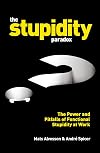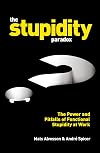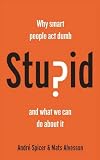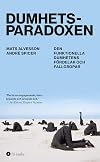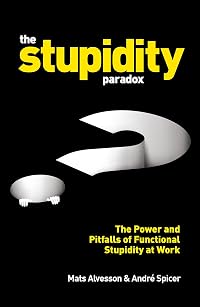
The Stupidity Paradox: The Power and Pitfalls of Functional Stupidity at Work
by Mats Alvesson, André Spicer
On This Page
Description
Functional stupidity can be catastrophic. It can cause organisational collapse, financial meltdown and technical disaster. And there are countless, more everyday examples of organisations accepting the dubious, the absurd and the downright idiotic, from unsustainable management fads to the cult of leadership or an over-reliance on brand and image. And yet a dose of stupidity can be useful and produce good, short-term results: it can nurture harmony, encourage people to get on with the job show more and drive success. This is the stupidity paradox. The Stupidity Paradox tackles head-on the pros and cons of functional stupidity. You'll discover what makes a workplace mindless, why being stupid might be a good thing in the short term but a disaster in the longer term, and how to make your workplace a little less stupid by challenging thoughtless conformity. It shows how harmony and action in the workplace can be balanced with a culture of questioning and challenge. The book is a wake-up call for smart organisations and smarter people. It encourages us to use our intelligence fully for the sake of personal satisfaction, organisational success and the flourishing of society as a whole. show lessTags
Recommendations



















Member Reviews
Based on what is still only my cursory view, this book strikes me as not only quite interesting, important and much-needed, it's more than that. Reading it, one finds example after example of what we face every day in our ordinary lives. The book treats the general uses of deliberate retreats into mind-numbing stupidity as an unfortunately useful coping mechanism in so much of contemporary life. It's also a virtual 'travel-log' and guide to the amazing but routine stupidity which is rife at this very site's own discussion groups. Library Thing is clearly a model example of the key points made in The Stupidity Paradox.
Read it and weep--literally.
Read it and weep--literally.
A sceptical look at how modern organizations work. Some of the points I liked the most:
- a lot of what is called knowledge work isn't in fact very complicated or knowledge-intensive
- fancy titles can make boring jobs bearable
- documenting what you do has become more important than the actual doing and the results
- having a "positive mindset" can mean that problems are ignored
- not questioning what you do, or why, at work can make you feel good about work, and make things run more smoothly (even if what you do is stupid).
Although a bit repetitive, I liked how the others question a lot of established practices in organizations. There are also 285 references to studies illustrating their points.
- a lot of what is called knowledge work isn't in fact very complicated or knowledge-intensive
- fancy titles can make boring jobs bearable
- documenting what you do has become more important than the actual doing and the results
- having a "positive mindset" can mean that problems are ignored
- not questioning what you do, or why, at work can make you feel good about work, and make things run more smoothly (even if what you do is stupid).
Although a bit repetitive, I liked how the others question a lot of established practices in organizations. There are also 285 references to studies illustrating their points.
As very often happens with management books, a very good idea - functional stupidity as the core competence of contemporary business organizations - reiterated for 200 pages and used to re-frame more common organizational problems. Anyway, still a good idea.
Ratings
Members
- Recently Added By
Author Information
40 Works 376 Members
Mats Alvesson is Professor in Business Administration at the University of Lund, the University of Queensland Business School, and Cass Business School. Kaj Skldberg is Professor Emeritus in Business Administration at the School of Business, University of Stockholm.
2 Works 85 Members
Some Editions
Common Knowledge
- Canonical title*
- Dumhetsparadoxen : den funktionella dumhetens fördelar och fallgropar
*Some information comes from Common Knowledge in other languages. Click "Edit" for more information.
Classifications
- Genres
- Business, Nonfiction, Sociology, General Nonfiction
- DDC/MDS
- 658.403 — Applied science & technology Management & public relations General management Executive Decision-making And Knowledge Management
- LCC
- HD30.23 — Social sciences Industries. Land use. Labor Industries. Land use. Labor Management. Industrial management
- BISAC
Statistics
- Members
- 76
- Popularity
- 415,574
- Reviews
- 3
- Rating
- (3.90)
- Languages
- English, Swedish
- Media
- Paper, Ebook
- ISBNs
- 4
- ASINs
- 2