On This Page
Description
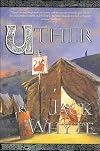
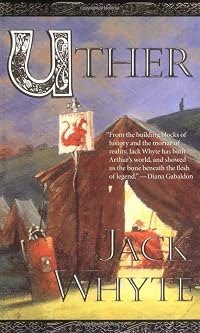
A retelling of the story of Uther, the father of King Arthur, follows his boyhood and adventures throughout Britain, his close friendship with Merlyn, and his desire for a woman who is forbidden to him.Tags
Recommendations







Member Reviews
The seventh book in the Camulod Chronicles. It’s set during the same time period as The Eagles’ Brood (book three), but from the perspective of Uther Pendragon. This is the story of Uther’s childhood in the Pendragon clan, the duty he feels to follow in his father’s footsteps and become their king (even if he would secretly prefer to live in Camulod), his romance with Igraine of Cornwall and the birth of their son Arthur. I liked that we finally got an answer to the mystery of who killed Merlyn’s wife Cassandra, and I loved that Uther knew Merlyn suspected him but was certain that if he could just talk to his cousin and explain, all would be right between them again. He loved Merlyn like a brother until the day he died, even show more when Merlyn hated him, and he would have been glad that Merlyn took charge of his son and raised him to be king - in fact, it would probably be his ideal scenario. That makes me feel much better about that whole arrangement.
This book was different from the others in the series, because it was told in third person instead of first person. Uther isn’t the type to write memoirs, unlike Merlyn or his grandfather Varrus. This means that for the first time, we got women as POV characters. At first I wasn’t thrilled about this, because what it mostly seemed to mean was more rape/attempted rape scenes. But then we got to Igraine, and having her point of view was excellent. I enjoyed her romance with Uther more than any other romance so far in the series. show less
This book was different from the others in the series, because it was told in third person instead of first person. Uther isn’t the type to write memoirs, unlike Merlyn or his grandfather Varrus. This means that for the first time, we got women as POV characters. At first I wasn’t thrilled about this, because what it mostly seemed to mean was more rape/attempted rape scenes. But then we got to Igraine, and having her point of view was excellent. I enjoyed her romance with Uther more than any other romance so far in the series. show less
This is challenging to review. On the one hand, I read it, and didnt put it down. On the other hand, I cant really say that this book “worked” for me. The parallel narrative with the previous book made me slightly curious about filling in the gaps, but also made the book drag a bit at times (and the points where the author “fast forwards” while reminding you of Merlyn’s perspective were very jarring). The main issue I had is that the character development and progression of Uther is just not great. Honestly, Merlyn’s wasnt either, and I found myself missing Publius Varrus and the general tone and theme of the first two books. There’s a lot of chaos in this one - armies appearing out of nowhere to put Uther into bigger and show more bigger messes that, while atmospheric, never really made a lot of sense. If Lot is so unlikable and nuts, how is he convincing thousands of mercenaries to show up and fight whomever they see on the road? Maybe the world was really like this, but from a reader’s perspective, it just felt like senseless chaos, and Uther’s abnormally developed sense of honor was completely at odds with the situations he found himself in. Concepts didnt develop in this book the way they promised to in the first 2-3. We didnt learn more about the concept of Camulod, or even Cambria, and overall the philosophical style of the first two books was totally absent.
Maybe all of this was intentional (to some extent, it surely was), but the books are definitely trending in a direction I’m less curious about, and thats disappointing. I’ll keep reading, but I look forward to the next less than I did before.
As a note, I read this after The Eagles’ Brood because that’s how my books were numbered. Realizing now that maybe that was not the correct reading order, but while reading it felt reasonable/natural. show less
Maybe all of this was intentional (to some extent, it surely was), but the books are definitely trending in a direction I’m less curious about, and thats disappointing. I’ll keep reading, but I look forward to the next less than I did before.
As a note, I read this after The Eagles’ Brood because that’s how my books were numbered. Realizing now that maybe that was not the correct reading order, but while reading it felt reasonable/natural. show less
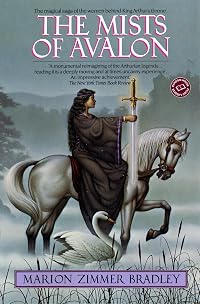
Jack Whyte is a competent romancer, but his penultimate contribution to Arthuriana is a mixed product. The love story is relatively mawkish, and his dependence on co-incidence and false climaxes rather than sup plotting is in full flower. this is an embedded story, that is to say that it occurs while the main line novel "The Eagle's Brood" is also happening to many of the minor characters in both works. This technique was done far more effectively by Stephen Grundy in his working of the Nibelungen Lied into two works, "Rhinegold" and "Attila's Treasure." I think the Grundys are far more likely to be permanently retained should a weeding of my shelves prove necessary. Returning to Whytes ethos, he remains principally in the very poorly show more documented fifth Century Britannia, and his cast still centres about the family of Caius "Merlyn" Britannicus who ends this chapter as the guardian, or uncle of the fully orphaned Arthur, an infant of several weeks age. The plot is primarily that of the gradual maturing of Uther Pendragon, here cast a a Celtic king, albeit fully accepted into the survivalist community of Camelud, set up by his Grandfather. Other than the names, there is little yet to link this collection of stories to the Mallory characters and motivations, or to what we do know about the history of the declining roman presence in the West of England. Does it move, yes! Are the battle scenes still far to complex for the technology of the times? Yes. Has Mr. Whyte learned how to write effectively of atrocities? Not yet. Has he really comprehended the morality and personal habits of the Celtic Society that existed alongside the Roman parts of Britannia? No, I read in however errors that might arise of a Presbyterian boyhood? I think I do. So far the Camelud Chronicles remain in my list of ineffective Arthuriana, with "The Mists of Avalon" by Bradley? Yes they do. However, the reading public does continue to buy both these works, sooo... Those who like this sort of thing, will like this chapter of the chronicles. show less
Book suffers from vague POV which shifts unexpectedly sometimes from once sentence to the next. I did enjoy less preachiness from Uther than we usually get from Merlyn.
This is an historical fiction series about King Arthur, and they are my favorite books of ALL time. Whyte is an amazing author, and his descriptions are amazing. The books tell a realistic story of King Arthur, without all of the magic and sorcery we see in modern myths. These books start off with King Arthur's great great grandfather, and chronicle the family until the death of King Arthur. The charectors are so well developed you feel as if you know them. The other great thing about these books is that they are written in journal-like form. So as different members of the family are "writing" the different books, the writing style and methods change slightly.
Southwest Britain tale, after Romans left, 800 plus pgs, good story to keep me busy for 5 days. I'd hate to have lived then, I'm to soft and kids learned to cope then like only few adults do now. Would our generation & our kids ever drop over dead if we had to live as they did then.
This was another great book in the Camulod series. I really enjoyed it but my only complaint was that it was a bit long. It sometimes felt like the story would never end. I have really enjoyed this whole series.
Members
- Recently Added By
Lists

Very Very Bad
22 works; 7 members
Author Information

37 Works 11,770 Members
Writer Jack Whyte was born in Scotland in 1940. He was raised in Scotland, but educated in England and France before migrating to Canada in 1967. He spent one year teaching English in high school, before focusing on a career as a professional singer, musician, and actor. He wrote, directed and appeared in a one man show about Scotland's national show more poet Robert Burns in the early 1970's. Due to the show's success, he started writing for CBC national television and eventually went into advertising. He is the author of The Camulod Chronicles or A Dream of Eagles series which sets the tales of King Arthur in Roman Britain and Templar Trilogy which deals with the rise and fall of the Order of the Knights of the Temple of Solomon. (Bowker Author Biography) show less
Awards and Honors
Series


Work Relationships
Is contained in
Contains
Common Knowledge
- Canonical title
- Uther
- Original title
- Uther
- Original publication date
- 2000
- Dedication
- To my wife, Beverley,
and the Clan:
Jode, Mitch, Holly,
Jeanne & Michael,
and Phyllis - First words
- This was no spontaneous gathering to welcome her as a young bride to her new home; Vernica Varrus recognized that truth very quickly.
- Last words
- (Click to show. Warning: May contain spoilers.)"But you, young eagle, with those golden eyes...I'll wager here and now that everyone will know and remember Arthur of Camulod."
- Blurbers
- Gabaldon, Diana
Classifications
- Genres
- Fiction and Literature, General Fiction, Fantasy, Historical Fiction
- DDC/MDS
- 813.54 — Literature & rhetoric American literature in English American fiction in English 1900-1999 1945-1999
- LCC
- PR9199.3 .W4589 .U84 — Language and Literature English English Literature English literature: Provincial, local, etc.
- BISAC
Statistics
- Members
- 877
- Popularity
- 31,063
- Reviews
- 9
- Rating
- (3.90)
- Languages
- English
- Media
- Paper, Audiobook, Ebook
- ISBNs
- 12
- ASINs
- 6