On This Page
Description
Ruth Galloway is called in to investigate when builders, demolishing a large old house in Norwich to make way for a housing development, uncover the bones of a child beneath a doorway -- minus the skull. Is it some ritual sacrifice or just plain straightforward murder? DCI Harry Nelson would like to find out -- and fast. It turns out the house was once a children's home. Nelson traces the Catholic priest who used to run the home. Father Hennessey tells him that two children did go missing show more from the home forty years before -- a boy and a girl. They were never found. When carbon dating proves that the child's bones predate the home and relate to a time when the house was privately owned, Ruth is drawn ever more deeply into the case. But as spring turns into summer it becomes clear that someone is trying very hard to put her off the scent by frightening her half to death ... show lessTags
Recommendations

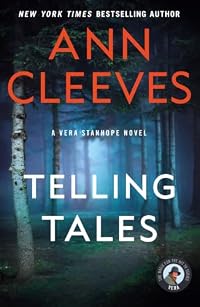
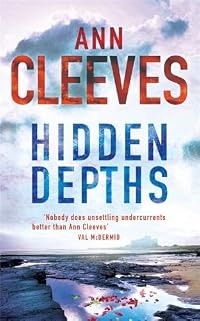
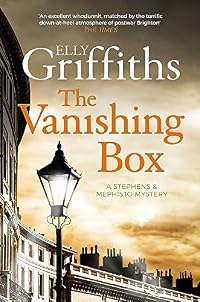
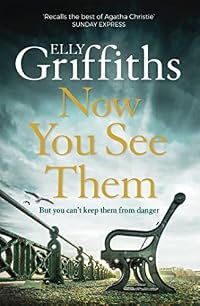
Member Recommendations
Menagerie European history, murder mystery, lots of atmosphere, small town politics and relationships
20
Member Reviews
This second book of Ruth Galloway's life as a forensic archaeologist did not grab me as did Crossing Places. The plot had too much divided action for my liking, and more than a bit far-fetched intrigue. Another drawback to an engaging read were the chapters in Italics, in which a deliberately-concealed character is musing about himself and killing children. If these mini-chapters are meant to heighten tension, they just did not work for me.
The book's plot felt like there were separate themes running at the same time: with two different digs, two different eras, and, obviously different motives. As a whole, the storyline became a less compelling read, despite there being a tenuous connection betweenthe burials of decapitated bodies. show more Even more distracting, Ruth sustained an implausible number of bashes to her head, a crazy kidnapping, and Nelson leaps off a canal boat in thick fog, thinking he can rescue her, which was quite outside his sensible, police character .
On the plus side, the Cathbad character is developed into an intriguing participant with tantalizing, almost-clairvoyant abilities. Griffiths does a great job of keeping this character in a plausible atmosphere and I quite delighted reading more about him.
I recommend the book, because Griffiths does write well in enough of the story that carries the day. The Norfolk archaeological history is represented with interesting background research and the author creates an effective character in Ruth, the chief protagonist coping with her unexpected pregnancy. Looking forward to Book #3! show less
The book's plot felt like there were separate themes running at the same time: with two different digs, two different eras, and, obviously different motives. As a whole, the storyline became a less compelling read, despite there being a tenuous connection between
On the plus side, the Cathbad character is developed into an intriguing participant with tantalizing, almost-clairvoyant abilities. Griffiths does a great job of keeping this character in a plausible atmosphere and I quite delighted reading more about him.
I recommend the book, because Griffiths does write well in enough of the story that carries the day. The Norfolk archaeological history is represented with interesting background research and the author creates an effective character in Ruth, the chief protagonist coping with her unexpected pregnancy. Looking forward to Book #3! show less
How does one decide that an author is worth his, or her, salt?
There are, of course, as many answers to this as there are readers. I would put forward the following:
A good author of fiction is one who takes an unlikely set of circumstances and suspends the reader's credence for the length of the novel. Elly Griffiths is an expert at this skill. Were I to lay before you the plot of this book, apart from spoiling an excellent whodunnit, I would leave you with the view that spending time with such a tale would be a waste of your time. This would be unfair to a fine author and to your good self, as a reader.
Griffiths has created a fine pair of detective characters in Ruth Galloway, an archaeologist, and DCI Harry Nelson. They have planned show more characters whilst, as with people in the real world, having the ability to surprise on occasion. These characters grow during the story, without it ever feeling that there development impinges upon the action.
Like any good whodunnit, this book takes one down several blind alleys and the final denouement still surprises. From the first chapter to the final line, this book entertains. I have the next half dozen in the series awaiting my pleasure - and I can't wait! show less
There are, of course, as many answers to this as there are readers. I would put forward the following:
A good author of fiction is one who takes an unlikely set of circumstances and suspends the reader's credence for the length of the novel. Elly Griffiths is an expert at this skill. Were I to lay before you the plot of this book, apart from spoiling an excellent whodunnit, I would leave you with the view that spending time with such a tale would be a waste of your time. This would be unfair to a fine author and to your good self, as a reader.
Griffiths has created a fine pair of detective characters in Ruth Galloway, an archaeologist, and DCI Harry Nelson. They have planned show more characters whilst, as with people in the real world, having the ability to surprise on occasion. These characters grow during the story, without it ever feeling that there development impinges upon the action.
Like any good whodunnit, this book takes one down several blind alleys and the final denouement still surprises. From the first chapter to the final line, this book entertains. I have the next half dozen in the series awaiting my pleasure - and I can't wait! show less
"The Janus Stone", the second Ruth Galloway book, is as original and compelling as the first book, "The Crossing Places"
The story, which takes place a few months after "The Crossing Places", revolves around the discovery of the headless skeleton of a child, beneath an archway in a Victorian building being converted into apartments.
We weave through a web of myths and rituals related to sacrificing children to protect entrances and the history of the building, once an orphanage run by the Catholic Church, now being developed by a rich local family.
Some of the story is revealed in flashbacks that are purposely difficult to locate in time but which are quite chilling.
The thing that makes this book compelling for me is not the plot, which is show more interesting even if it requires disbelief to be suspended from time to time, but the ensemble cast of characters, especially the two leads: Ruth and Nelson.
Ruth, a forensic archaeologist at a Norfolk university, is one of the most plausible and likeable women I've read in British crime thrillers. She's practical, competent, organised but a little isolated and a little disappointed in her life. The way she comes to terms first with being pregnant by another woman's husband and second with the looming reality of having a child in her life, of being a mother, resonate as real. Her relationships with her parents (born again Christians, horrified, at least in principle, at the prospect of a bastard grandchild), her one-time best friend (a serial mistress, now dating Ruth's married Department Head), Nelson (the father of her child and a man she enjoys but does not expect to be with) and Nelson's wife (who, as a mother of two, takes Ruth under her wing) are rich and real.
Nelson, the curmudgeonly, Northern Detective Inspector, always makes me smile. He is so different from the clichéd broken policeman with a dark past, a drinking problem and an inability to deal with real life. He is married to a beautiful woman whose love for him still astonishes him on a daily basis and has two young daughters that he dotes. He is abrasive, demanding, drives too fast, shouts at computers and is intolerant of the schmoozing with local dignitaries that his job sometimes requires of him. He is charmingly unaware of the impact he has on his team, who work hard for his respect. He is focused, logical, and capable of gentleness. He has a great respect and affection for Ruth because she is competent and organised, stands up to him effortlessly and is both brave and vulnerable.
Both books in the series so far have given me a mix of murder and madness, wrapped in plausible and novel archeological detail to be good entertainment. What makes me look forward to the rest of the series is the interest I now have in what happens next to the ensemble cast, built of people I recognise and empathise with.
My enjoyment of the books has been enhanced by the excellent narration by Jane McDowell.
Click on the link below to hear her performance of "The Crossing Places"
https://www.voices.com/player/demo/RGVtbzo0MzA3NA/dark-standard show less
The story, which takes place a few months after "The Crossing Places", revolves around the discovery of the headless skeleton of a child, beneath an archway in a Victorian building being converted into apartments.
We weave through a web of myths and rituals related to sacrificing children to protect entrances and the history of the building, once an orphanage run by the Catholic Church, now being developed by a rich local family.
Some of the story is revealed in flashbacks that are purposely difficult to locate in time but which are quite chilling.
The thing that makes this book compelling for me is not the plot, which is show more interesting even if it requires disbelief to be suspended from time to time, but the ensemble cast of characters, especially the two leads: Ruth and Nelson.
Ruth, a forensic archaeologist at a Norfolk university, is one of the most plausible and likeable women I've read in British crime thrillers. She's practical, competent, organised but a little isolated and a little disappointed in her life. The way she comes to terms first with being pregnant by another woman's husband and second with the looming reality of having a child in her life, of being a mother, resonate as real. Her relationships with her parents (born again Christians, horrified, at least in principle, at the prospect of a bastard grandchild), her one-time best friend (a serial mistress, now dating Ruth's married Department Head), Nelson (the father of her child and a man she enjoys but does not expect to be with) and Nelson's wife (who, as a mother of two, takes Ruth under her wing) are rich and real.
Nelson, the curmudgeonly, Northern Detective Inspector, always makes me smile. He is so different from the clichéd broken policeman with a dark past, a drinking problem and an inability to deal with real life. He is married to a beautiful woman whose love for him still astonishes him on a daily basis and has two young daughters that he dotes. He is abrasive, demanding, drives too fast, shouts at computers and is intolerant of the schmoozing with local dignitaries that his job sometimes requires of him. He is charmingly unaware of the impact he has on his team, who work hard for his respect. He is focused, logical, and capable of gentleness. He has a great respect and affection for Ruth because she is competent and organised, stands up to him effortlessly and is both brave and vulnerable.
Both books in the series so far have given me a mix of murder and madness, wrapped in plausible and novel archeological detail to be good entertainment. What makes me look forward to the rest of the series is the interest I now have in what happens next to the ensemble cast, built of people I recognise and empathise with.
My enjoyment of the books has been enhanced by the excellent narration by Jane McDowell.
Click on the link below to hear her performance of "The Crossing Places"
https://www.voices.com/player/demo/RGVtbzo0MzA3NA/dark-standard show less
Newly pregnant and dealing with morning sickness, Forensic Archaeologist Ruth Galloway is called to a dig to examine a headless skeleton to determine its age. She is also called to a construction site, a former children's home, to examine another headless skeleton of a child. Since this one is obviously recent, in archaeological terms, DCI Harry Nelson is called in with his team to investigate.
Ruth hasn't yet told Nelson that the baby she's carrying is his, the result of a one-night stand. When she does, she has an interesting result. Nelson wants to be part of the baby's life but doesn't want to blow-up his marriage or his relationship with his two teenage daughters. Ruth and Nelson clearly have a lot of things to work out. It further show more complicates things when Nelson's wife develops a friendship with Ruth and wants to help her out with her pregnancy. I'm curious about how her attitude could change when she finds out that her husband is the father.
Religion from ancient Celtic head cults to Roman beliefs to the modern-day Catholic Church plays a part in this story. Nelson, a lapsed Roman Catholic, has his own prejudices to deal with when he interviews the priest who used to run the children's home. And Ruth who doesn't believe in religion perhaps because of her born-again Christian parents has prejudices of her own.
The mystery was intriguing as was the information about the Ancient Romans in Britain and archaeology in general. show less
Ruth hasn't yet told Nelson that the baby she's carrying is his, the result of a one-night stand. When she does, she has an interesting result. Nelson wants to be part of the baby's life but doesn't want to blow-up his marriage or his relationship with his two teenage daughters. Ruth and Nelson clearly have a lot of things to work out. It further show more complicates things when Nelson's wife develops a friendship with Ruth and wants to help her out with her pregnancy. I'm curious about how her attitude could change when she finds out that her husband is the father.
Religion from ancient Celtic head cults to Roman beliefs to the modern-day Catholic Church plays a part in this story. Nelson, a lapsed Roman Catholic, has his own prejudices to deal with when he interviews the priest who used to run the children's home. And Ruth who doesn't believe in religion perhaps because of her born-again Christian parents has prejudices of her own.
The mystery was intriguing as was the information about the Ancient Romans in Britain and archaeology in general. show less
The Janus Stone was very cleverly done. It definitely builds on the first book, but provides enough back fill to help any reader who starts with this one. Ruth Galloway is a forensic archaeologist who specializes in bones. The author is skillful in mixing old Celtic and Roman history with modern day technology, dating methodology, and historic research. In this story, there is an unidentified headless skeleton that obviously is that of a murdered child. There are several suspects from different areas of the country, from different time periods, and with different motivations. There are gory theories, but little actual gore. There are scary claustrophobic episodes, but they are not enough to turn off this queen of the claustrophobics. I show more especially like the way Ruth's private life is highlighted, but not allowed to get in the way of solving the murder and the mystery. In fact, the timing of events in her life is such that I'm really looking forward to the next book in the series, because something has to give soon. Even with a very thoughtful and thought-provoking ending that seemingly resolves many of the issues Ruth is dealing with, there is still plenty to look forward to in the next book in the series. I've already got it on reserve. show less
This second entry in the Ruth Galloway series is even stronger than the first (and I do recommend reading them in order-- it's not entirely necessary, but I think, in terms of events that take place and character development, you'd enjoy them more if you read them in order). Luxury apartments are going up on the site of an old Catholic orphanage, and a headless skeleton is found buried beneath one of the doorways. Archaeologist and bone specialist Ruth is called in by Harry Nelson, the DCI making his reappearance from The Crossing Places, to make a determination of whether or not they're looking at a recent murder. While it's not recent, it is possibly connected to a disappearance from the orphanage during its years of operation and show more therefore gains the attention of the police. A cast of characters begins to assemble, including a priest, a nun, the family involved in the construction, the redoubtable Cathbad, and a fellow archaelogist. In addition to this group of characters, Griffiths adds a nice bonus in that she develops to characters who were only at the periphery of her previous novel, the police officers Clough and Judy.
Ruth remains rough around the edges and rather unapologetic about it. This may rub some readers the wrong way, but I find it quite refreshing: she's an expert in her field but isn't spouting off technological jargon every other page. She's not thin and beautiful; she's overweight and pregnant by a married man. She's not socially outgoing, preferring to keep to a close circle of friends. She's not some untouchable master detective; she's your next-door neighbor, a professor at the local university who generally prefers the company of her cat and can't always be trusted to make the most flattering fashion decisions. She has her own ideas and will be open about expressing them. All of Ruth's strong character traits do make the perhaps over-frequent spots of danger she finds herself in within the course of the narrative a little less credible, but I'm willing to sacrifice a few plot points for a heroine that I can truly like.
This novel doesn't have the haunting marshland atmosphere of the first in the series, but there's a certain something in the lingering past of the orphanage, too, and it's hard not to be affected by the memories brought up by the people who lived and worked at the orphanage. The past truly does haunt. The creepy journal-like entries of the psychopathic, mythology-obsessed murderer that are interspersed throughout the novel add a resonance of otherworldly pagan overtones. The fact that this case took place in the relatively recent past gives a sense of immediacy to the need to solve it and provides opportunities for some very interesting interviews for DCI Nelson and his peers to conduct. However, the case is old enough that the witnesses are rapidly aging, so there's also a suspenseful sense that the clock is ticking down.
There's a lot going on in this novel: archeology, forensics, maybe-romance, pregnancy, past and present colliding, mythology, stalking, and more. Griffiths juggles many balls at once, but it's never really overwhelming. I did see the ending coming, but that really didn't detract from my enjoyment of the novel because there were so many other elements of it that I liked. I will look forward to the next Ruth Galloway mystery.
Update, May 2016: I have continued to read the Ruth Galloway mysteries, and I continue to vouch for them. They're an unusual entry in a crowded genre. show less
Ruth remains rough around the edges and rather unapologetic about it. This may rub some readers the wrong way, but I find it quite refreshing: she's an expert in her field but isn't spouting off technological jargon every other page. She's not thin and beautiful; she's overweight and pregnant by a married man. She's not socially outgoing, preferring to keep to a close circle of friends. She's not some untouchable master detective; she's your next-door neighbor, a professor at the local university who generally prefers the company of her cat and can't always be trusted to make the most flattering fashion decisions. She has her own ideas and will be open about expressing them. All of Ruth's strong character traits do make the perhaps over-frequent spots of danger she finds herself in within the course of the narrative a little less credible, but I'm willing to sacrifice a few plot points for a heroine that I can truly like.
This novel doesn't have the haunting marshland atmosphere of the first in the series, but there's a certain something in the lingering past of the orphanage, too, and it's hard not to be affected by the memories brought up by the people who lived and worked at the orphanage. The past truly does haunt. The creepy journal-like entries of the psychopathic, mythology-obsessed murderer that are interspersed throughout the novel add a resonance of otherworldly pagan overtones. The fact that this case took place in the relatively recent past gives a sense of immediacy to the need to solve it and provides opportunities for some very interesting interviews for DCI Nelson and his peers to conduct. However, the case is old enough that the witnesses are rapidly aging, so there's also a suspenseful sense that the clock is ticking down.
There's a lot going on in this novel: archeology, forensics, maybe-romance, pregnancy, past and present colliding, mythology, stalking, and more. Griffiths juggles many balls at once, but it's never really overwhelming. I did see the ending coming, but that really didn't detract from my enjoyment of the novel because there were so many other elements of it that I liked. I will look forward to the next Ruth Galloway mystery.
Update, May 2016: I have continued to read the Ruth Galloway mysteries, and I continue to vouch for them. They're an unusual entry in a crowded genre. show less
First Line: A light breeze runs through the long grass at the top of the hill.
An old house is being torn down in Norwich to make way for a housing development. When the bones of a child are uncovered beneath a doorway, Detective Chief Inspector Harry Nelson knows whom to call: Dr. Ruth Galloway, head of Forensic Archaeology at the University of North Norfolk.
Nelson wants answers, and he wants them fast-- the house used to be a children's home. In contacting the priest who ran the home at the time, he learns that two children did go missing forty years ago, but carbon dating proves the child's bones predate the home and relate to a time when the house was privately owned. For reasons of her own, Ruth is drawn deeper and deeper into the show more case, but someone is attempting to put her off by trying to scare her to death.
Nothing makes a serial reader like me happier than when the second book in a series fulfills the promise made by the first. The gruff DCI Harry Nelson and the slightly awkward Ruth Galloway are very appealing main characters, but it's Ruth who really worms her way into my heart:
"Ruth is dreadful at shopping. It is a female ritual that she has never mastered. Other women can disappear into a shop for half an hour and come out with piles of tasteful clothes in the right size, artfully matching accessories, and the perfect pair of shoes. Ruth can shop all day and still only have a T-shirt two sizes too small to show for it."
Plot, pacing and the Norfolk setting match Griffiths' skill in characterization, as well as her dryly humorous writing style. I also enjoy the archaeology angle, learning about pagan and Roman Britain as I turn the pages.
For any of you coming late to the Ruth Galloway party, you'll be happy to note that you don't have to start reading the series from the beginning (although it's much better if you do). The author provides enough backstory to keep you from being confused.
I've barely finished reading The Janus Stone, and I already can't wait to read the next, The House at Sea's End! show less
An old house is being torn down in Norwich to make way for a housing development. When the bones of a child are uncovered beneath a doorway, Detective Chief Inspector Harry Nelson knows whom to call: Dr. Ruth Galloway, head of Forensic Archaeology at the University of North Norfolk.
Nelson wants answers, and he wants them fast-- the house used to be a children's home. In contacting the priest who ran the home at the time, he learns that two children did go missing forty years ago, but carbon dating proves the child's bones predate the home and relate to a time when the house was privately owned. For reasons of her own, Ruth is drawn deeper and deeper into the show more case, but someone is attempting to put her off by trying to scare her to death.
Nothing makes a serial reader like me happier than when the second book in a series fulfills the promise made by the first. The gruff DCI Harry Nelson and the slightly awkward Ruth Galloway are very appealing main characters, but it's Ruth who really worms her way into my heart:
"Ruth is dreadful at shopping. It is a female ritual that she has never mastered. Other women can disappear into a shop for half an hour and come out with piles of tasteful clothes in the right size, artfully matching accessories, and the perfect pair of shoes. Ruth can shop all day and still only have a T-shirt two sizes too small to show for it."
Plot, pacing and the Norfolk setting match Griffiths' skill in characterization, as well as her dryly humorous writing style. I also enjoy the archaeology angle, learning about pagan and Roman Britain as I turn the pages.
For any of you coming late to the Ruth Galloway party, you'll be happy to note that you don't have to start reading the series from the beginning (although it's much better if you do). The author provides enough backstory to keep you from being confused.
I've barely finished reading The Janus Stone, and I already can't wait to read the next, The House at Sea's End! show less
Members
- Recently Added By
Lists

Majkia's Mystery/ Thriller TBR
86 works; 3 members

infjsarah's wishlist
408 works; 2 members

Books Read in 2015
3,298 works; 126 members

Books Read in 2018
4,360 works; 110 members

Books Read in 2019
4,052 works; 108 members

READ IN 2020
172 works; 1 member

Books Read in 2022
5,164 works; 113 members

Books read in 2024
26 works; 1 member

Kindle Mystery/Thriller
310 works; 2 members
Author Information

54+ Works 24,499 Members
Some Editions
Awards and Honors
Distinctions
Series

Ruth Galloway (2)
Work Relationships
Common Knowledge
- Canonical title
- The Janus Stone
- Original title
- The Janus Stone
- Original publication date
- 2010-02-04
- People/Characters
- Ruth Galloway; Harry Nelson; Cathbad/Michael Malone; Max Grey; Martin Black; Edward Spens (show all 17); Father Patrick Hennessey; Michelle Nelson; Shona; Trace Richards; Dave Clough; Sister Immaculata; Judy Johnson; Tanya Fuller; Sir Roderick Spens; Kate Galloway; Orla McKinney
- Important places
- Norwich, Norfolk, England, UK; Swaffham, Norfolk, England, UK
- Dedication
- For my nieces and nephews:
Francesca, William, Robert, Charlotte and Eleanor - First words
- The house is waiting.
A light breeze runs through the long grass at the top of the hill. - Last words
- (Click to show. Warning: May contain spoilers.)Everything changes but nothing is destroyed.
- Publisher's editor
- Wood, Jane
- Original language
- English
Classifications
Statistics
- Members
- 1,704
- Popularity
- 12,933
- Reviews
- 128
- Rating
- (3.74)
- Languages
- 13 — Danish, Dutch, English, Estonian, Finnish, French, German, Greek, Italian, Polish, Spanish, Swedish, Turkish
- Media
- Paper, Audiobook, Ebook
- ISBNs
- 49
- ASINs
- 18