All the Little Live Things
by Wallace Stegner
On This Page
Description
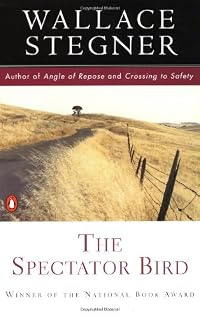
Joe Allston, the retired literary agent in Stegner's National Book Award-winning novel, The Spectator Bird, returns in this disquieting and keenly observed novel. Scarred by the senseless death of their son and baffled by the engulfing chaos of the 1960s, Allston and his wife, Ruth, have left the coast for a California retreat. And although their new home looks like Eden, it also has its serpents: Jim Peck, a messianic exponent of drugs, yoga, and sex, and Marian Catlin, an attractive young show more woman whose otherwordly innocence is far more appealing-and far more dangerous. show lessTags
Recommendations







Member Reviews
Stegner's eye for "all the little live things" around him is as keen as Annie Dillard's, or Barbara Kingsolver's. Some of those live things are gophers, some are weeds, some are hippies, some are mushrooms...but the most alive of them all is a dying pregnant woman whose brief appearance in the life of Stegner's main character, Joe Allston, challenges his resolve to withdraw from both pain and pleasure, into a "twilight sleep" where there are no emotional demands, and where non-involvement serves to blunt the grief he has determined to put behind him. This is a complex novel, emotionally troublesome at times, full of literary allusions, and the symbols roll and tumble over each other. I would have given this 5 stars, except for the show more awkward chapter "filling in" the story of Allston's son. It was necessary, but it didn't blend. Despite the title, a good bit of what is being explored here involves death. Like Allston's cat with its gruesome offerings, Stegner has left us a gift on the mat, which we are meant to examine, and admire with a shudder. show less
What a beautifully agonizing book. The writing, as usual, is elegant, poignant and unexpectedly funny. Spectator Bird was the same and I think it's Joe's character and curmudgeonly outlook on life. Some of it is cringe-worthy, but some of his opinions line up with mine. I like him despite his old-fashioned beliefs.
What I thought would be the ultimate clash turned out not to be and the story moves in a different direction at the very end. The pivotal scene was so horrific that I had to fast-forward through it because I couldn't take it. Yes, it involves humans, but not only them and it was the suffering of another that pushed me out.
It isn't a cheerful book, but worthy even through its sadness and death. What a writer he was.
Oh and what show more an actor Edward Herrmann was - he makes Joe come alive. His narration was perfect. show less
What I thought would be the ultimate clash turned out not to be and the story moves in a different direction at the very end. The pivotal scene was so horrific that I had to fast-forward through it because I couldn't take it. Yes, it involves humans, but not only them and it was the suffering of another that pushed me out.
It isn't a cheerful book, but worthy even through its sadness and death. What a writer he was.
Oh and what show more an actor Edward Herrmann was - he makes Joe come alive. His narration was perfect. show less
If there has ever been a writer who can cut you open, pull out your heart, and make you sit and contemplate it while it beats in your hands, Wallace Stegner is that man. He does it so casually sometimes that you cannot feel it coming, but I felt it in almost every page of this novel. I felt tension and anger as Joe Allston dealt with the encroaching hippie, Jim Peck, and his out of control lifestyle that spreads destruction all around him, while preaching love that has a cost to everyone but himself. And I felt anger and sadness as, with Joe, I watched Marian Catlin, a lovely soul whose love is real and universal, slowly losing her battle against cancer.
Written at the height of the “free love” hippie movement in California, Wallace show more Stegner captures to perfection what is wrong with this philosophy and how detrimental it can be to society in general. Both Ruth, Joe’s wife, and Marian want Joe to be indulgent and understanding of the young hippies, but I felt complete sympathy with Joe, who wants to be kinder and more tolerant, but who cannot help seeing the truth of the situation and the danger in it. The idea that a person should never have to work, should be allowed to live off the land (anyone’s land) and put nothing in, but only take things out, is shown for the hypocrisy it is, as Jim Peck takes water and electricity, scatters filth and trash, and preys upon the innocence of a rebellious young girl who is too young for the sexual awareness she embraces.
Marian Catlin wants the world to be taken for what it is. She believes that we have to experience the pain in order to experience the joy. It is Marian who loves the “little live things”. She celebrates all life, even the downside, and she refuses to believe in evil as anything real.
Maybe what we call evil is only, as she told me the first day we met, what conflicts with our interests; but maybe there are realities as ignorance, selfishness, jealousy, malice, criminal carelessness, and maybe these things are evil no matter whose interests they serve or conflict with."
Again, I understood Marian's argument, but ascribed to Joe’s.
Dangerousness is not necessarily a function of malicious intent. If I were painting a portrait of the father of evil, I wonder if I wouldn't give him the face of a high-minded fool."
Joe is not perfect, nor does he think he is. He often feels guilty for things he should not regret, and sometimes he does things that I found just crass, hurtful and unnecessary. What sets him apart is his inability to pretend to himself. He doesn’t persuade himself to believe what he doesn’t believe, even when he thinks he should. I like his honesty and his strong sense of observation and his ability to love without worshipping or excusing. He wonders if he could have had a better relationship with his dead son, and he ponders whether he handled things as well as he could have, but he never pretends he could have or would want to have behaved differently where his beliefs were concerned.
There is no way to step off the treadmill. It is all treadmill.
Sadly, he is right. If you have lived as long as I have, you come to realize that there is at least as much of life that you cannot control as there is of what you exercise even minimal control over. Death, our own or that of those we love, is one of those things we cannot control, but even with death looming, Stegner seems to say, life is a trip worth taking.
If you have not ever read Wallace Stegner, please do yourself the favor of experiencing him. I waited far too long before I read my first Stegner. He has become a favorite author and one of the few that is guaranteed to make me laugh, cry, seriously ponder, and always treasure every word he writes. show less
Written at the height of the “free love” hippie movement in California, Wallace show more Stegner captures to perfection what is wrong with this philosophy and how detrimental it can be to society in general. Both Ruth, Joe’s wife, and Marian want Joe to be indulgent and understanding of the young hippies, but I felt complete sympathy with Joe, who wants to be kinder and more tolerant, but who cannot help seeing the truth of the situation and the danger in it. The idea that a person should never have to work, should be allowed to live off the land (anyone’s land) and put nothing in, but only take things out, is shown for the hypocrisy it is, as Jim Peck takes water and electricity, scatters filth and trash, and preys upon the innocence of a rebellious young girl who is too young for the sexual awareness she embraces.
Marian Catlin wants the world to be taken for what it is. She believes that we have to experience the pain in order to experience the joy. It is Marian who loves the “little live things”. She celebrates all life, even the downside, and she refuses to believe in evil as anything real.
Maybe what we call evil is only, as she told me the first day we met, what conflicts with our interests; but maybe there are realities as ignorance, selfishness, jealousy, malice, criminal carelessness, and maybe these things are evil no matter whose interests they serve or conflict with."
Again, I understood Marian's argument, but ascribed to Joe’s.
Dangerousness is not necessarily a function of malicious intent. If I were painting a portrait of the father of evil, I wonder if I wouldn't give him the face of a high-minded fool."
Joe is not perfect, nor does he think he is. He often feels guilty for things he should not regret, and sometimes he does things that I found just crass, hurtful and unnecessary. What sets him apart is his inability to pretend to himself. He doesn’t persuade himself to believe what he doesn’t believe, even when he thinks he should. I like his honesty and his strong sense of observation and his ability to love without worshipping or excusing. He wonders if he could have had a better relationship with his dead son, and he ponders whether he handled things as well as he could have, but he never pretends he could have or would want to have behaved differently where his beliefs were concerned.
There is no way to step off the treadmill. It is all treadmill.
Sadly, he is right. If you have lived as long as I have, you come to realize that there is at least as much of life that you cannot control as there is of what you exercise even minimal control over. Death, our own or that of those we love, is one of those things we cannot control, but even with death looming, Stegner seems to say, life is a trip worth taking.
If you have not ever read Wallace Stegner, please do yourself the favor of experiencing him. I waited far too long before I read my first Stegner. He has become a favorite author and one of the few that is guaranteed to make me laugh, cry, seriously ponder, and always treasure every word he writes. show less
This 1967 story takes us back to the days when hippies were an oddity and the South Bay was still the land of large homesteads and a habitat for all manner of living things. Joe Allston narrates his and his wife's adjustment to retired life in the country after a literary life in New York. We see them move incrementally from their chosen solitary life to the inevitable meshing and clashing with neighbors and a squatter who camps on their property. They are smitten with a young couple Marian and John, who buy a nearby house, and much of the story revolves around the tolerant and idealistic Marian as a counterpoint to Allston's mordant, skeptical worldview. Marian's effect on Allston is a thread running through the book along with a host show more of tragicomic and just plain tragic events. You find out early on that there will be no happy ending, yet the book is full of suspense as events move the story inevitably to a dramatic finish.
What I loved about this book: (1) Wallace Stegner is self searching and I'm here for it. Joe Allston ruminates, regrets, puzzles over and reacts to his past and present . When John Peck, a student, asks to camp on his property, his first reaction is to say no, but with a little coaxing from his wife he agrees. As that situation evolves, Allston constantly questions what is driving his reaction to it. It's interesting to read this book as an older person and to wonder how much, if at all, a 20 year old would empathize with Allston. (2) California. This is as vivid a description of the climate, flora and fauna of the hills around Santa Cruz and San Jose (or what remains of it) as you're going to get. The writing is just magnificent. All the little live things indeed - Stegner breathes life into every bird, plant and gust of wind. (3) It's hard to believe that the 60s are now the stuff of history, but the book realistically documents what the so-called generation gap looked like 50 years ago. Allston looks down on (and finds hopelessly naive) the hippies who invade his property, and at the same time is enchanted by the 30-ish Marian, who embraces their peace, love and understanding view of the world. There is much arguing that my 63 year old self understands much better than my 20 year old self would have. show less
What I loved about this book: (1) Wallace Stegner is self searching and I'm here for it. Joe Allston ruminates, regrets, puzzles over and reacts to his past and present . When John Peck, a student, asks to camp on his property, his first reaction is to say no, but with a little coaxing from his wife he agrees. As that situation evolves, Allston constantly questions what is driving his reaction to it. It's interesting to read this book as an older person and to wonder how much, if at all, a 20 year old would empathize with Allston. (2) California. This is as vivid a description of the climate, flora and fauna of the hills around Santa Cruz and San Jose (or what remains of it) as you're going to get. The writing is just magnificent. All the little live things indeed - Stegner breathes life into every bird, plant and gust of wind. (3) It's hard to believe that the 60s are now the stuff of history, but the book realistically documents what the so-called generation gap looked like 50 years ago. Allston looks down on (and finds hopelessly naive) the hippies who invade his property, and at the same time is enchanted by the 30-ish Marian, who embraces their peace, love and understanding view of the world. There is much arguing that my 63 year old self understands much better than my 20 year old self would have. show less
Not Stegner's best, but still very good indeed. His main character, Joe Allston, a retired educated man living with his wife in the California hills, meditates on the nature of intrusive youth, intrusive disease, intrusive wildlife.
He introduces himself: "I am concerned with gloomier matters: the condition of being flesh, susceptible to pain, infected with consciousness and the consciousness of consciousness, doomed to death and the awareness of death. My life stains the air around me. I am a tea bag left too long in the cup, and my steepings grow darker and bitterer."
As the story shows, sorrow and death find us all out - we can never 'retire' from these - and, in Allston's estimation, makes our life richer for it. It's a sobering and show more grim book in some ways, but full of 'wild' life too. show less
He introduces himself: "I am concerned with gloomier matters: the condition of being flesh, susceptible to pain, infected with consciousness and the consciousness of consciousness, doomed to death and the awareness of death. My life stains the air around me. I am a tea bag left too long in the cup, and my steepings grow darker and bitterer."
As the story shows, sorrow and death find us all out - we can never 'retire' from these - and, in Allston's estimation, makes our life richer for it. It's a sobering and show more grim book in some ways, but full of 'wild' life too. show less
This book was first published in 1967 and it's very much a story of its time, but it is also much more than that. For me it's a story about what it's like to be old-ish and starting to think seriously about your own death and how that context affects the way you look at the way younger people are living their lives. I found it to be a sad book - there isn't too much optimism at all. But to me, that's reality. The schemes and ideas of the young idealistic man come to nothing. The optimism and self-sacrifice of the young mother turn out to be entirely mistaken and fruitless. The older narrator is left with a lot of regrets. Although he does end on a slightly upbeat note, this reader was left pondering the loss, the damage, and the waste.
It's hard to know what to say about this book. It's a story of neighbors, an account so vivid in detail feels like a real experience. The narrator and his wife are in their retirement, come to the California hillside community for some peace and quiet, which they fail to actually find. His wife has more patience, but the narrator is constantly irritated by a close neighbor's neglect of certain aspects of his land, and rough improvements in other areas, that end up eyesores. He is further perturbed by the constant barrage of insect pests, gophers, moles and diseases that attack the garden he tries to cultivate. And even more irate at a hippy squatter who lives across the creekbed, taking outrageous advantage of the owner's blind eye to show more his constant stretching of their unwritten agreement that allows him to be there. Into this uneasy circumstance comes a new set of neighbors- a young couple with a daughter and a baby on the way- even while the wife, gentle and wise and allowing of all things their right to live- down to the gnats, fleas, ticks and germs that plague people- is slowly dying of cancer. This is a story in which not much happens- and you see the ending coming from very far off- yet it is all told with such depth of perception and wry humor it took me an incredibly long time to read it because I could not get through more than one chapter, if even that, in a sitting. It is a story of people, and their depth of feeling. It is so dense with meaning and thought and bitter, bitter irony. Marian's character is lovely and sad, the hippy kid is interesting and repugnant, some other neighbors and acquaintances thrown together at a Fourth of July barbecue are all curious in their own way. I think the most amusing passage was when the narrator tried to appraise this lady's hideous metal sculptures honestly at said party, without hurting her feelings. Even though I saw the ending coming, there were still a few shocking surprises, and the reappearance of the hippy guy added an unfortunate twist to the final incident. A book I will definitely not forget anytime soon, and must keep to read again. Reminds me in some parts of Zen and the Art of Motorcycle Maintenance.
from the Dogear Diary show less
from the Dogear Diary show less
Members
- Recently Added By
Lists

Top Five Books of 2020
982 works; 350 members

Books Read in 2020
4,379 works; 124 members
Author Information

92+ Works 20,798 Members
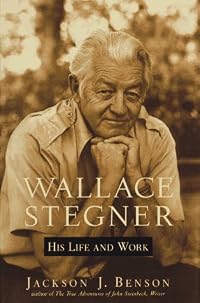
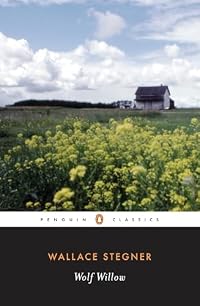
In 1972, Wallace Earle Stegner won a Pulitzer Prize for Angle of Repose (1971), a novel about a wheelchair-bound man's recreation of his New England grandmother's experience in a late nineteenth-century frontier town. Stegner was born on February 18, 1909 in Lake Mills, Iowa. He was an American novelist, short story writer, environmentalist, and show more historian; he has been called "The Dean of Western Writers". He also won the US National Book Award in 1977 for The Spectator Bird. Stegner grew up in Great Falls, Montana; Salt Lake City, Utah; and in the village of Eastend, Saskatchewan, which he wrote about in his autobiography Wolf Willow. Stegner taught at the University of Wisconsin and Harvard University. Eventually he settled at Stanford University, where he initiated the creative writing program. His students included Wendell Berry, and Sandra Day O'Connor. The Stegner Fellowship program at Stanford University is a two-year creative writing fellowship. The house Stegner lived in from age 7 to 12 in Eastend, Saskatchewan, Canada, was restored by the Eastend Arts Council in 1990 and established as a Residence for Artists; the Wallace Stegner Grant For The Arts offers a grant of $500 and free residency at the house for the month of October for published Canadian writers. Stegner died in Santa Fe, New Mexico, on April 13, 1993, from a car accident on March 28, 1993. (Bowker Author Biography) show less
Awards and Honors
Distinctions
Common Knowledge
- Canonical title
- All the Little Live Things
- Original publication date
- 1967
- Important places
- California, USA
- Epigraph
- Oh Sir! the good die first,
And they whose hearts are dry as summer dust
Burn to the socket.
- William Wordsworth - Dedication
- For Trudy, Franny, Judy, Peg
- First words
- A half hour after I came down here, the rains began.
- Last words
- (Click to show. Warning: May contain spoilers.)I shall be richer all my life for this sorrow.
- Disambiguation notice
- 1967 edition: All the little live things [by] Wallace Stegner
Classifications
Statistics
- Members
- 786
- Popularity
- 35,307
- Reviews
- 26
- Rating
- (4.13)
- Languages
- English, French, German, Swedish
- Media
- Paper, Audiobook, Ebook
- ISBNs
- 25
- ASINs
- 18